

Planning a trip to Florence? Here are the 10 best things to do in Florence, with museum tips, food stops, daily budgets, sustainable travel ideas, and honest advice
First, Let’s Admit Something About Florence
Florence is not subtle. It does not quietly tap you on the shoulder and ask if you might be interested in some art. It grabs you by the collar, points at a marble saint, shoves a plate of ribollita in front of you, and says, “Look properly.”
The first time I walked through Piazza del Duomo, I had one of those ridiculous travel moments where my brain got embarrassingly quiet. Not poetic quiet. More like computer-freezing quiet. There was Santa Maria del Fiore, all stripes and marble and impossible geometry, standing there as if building something that huge and strange was the most normal thing in the world. Then someone rolled a suitcase over my foot, a tour guide lifted an umbrella like a battlefield flag, and Florence snapped back into real life. Good. Cities should have elbows.
Later that day, I tripped over a cobblestone near Santa Croce while trying to protect a cup of gelato with the seriousness of a surgeon carrying a human heart. I saved the gelato. My dignity stayed somewhere on the pavement. That, honestly, is Florence: high art above your head, uneven stone under your shoes, and pistachio cream on your wrist.
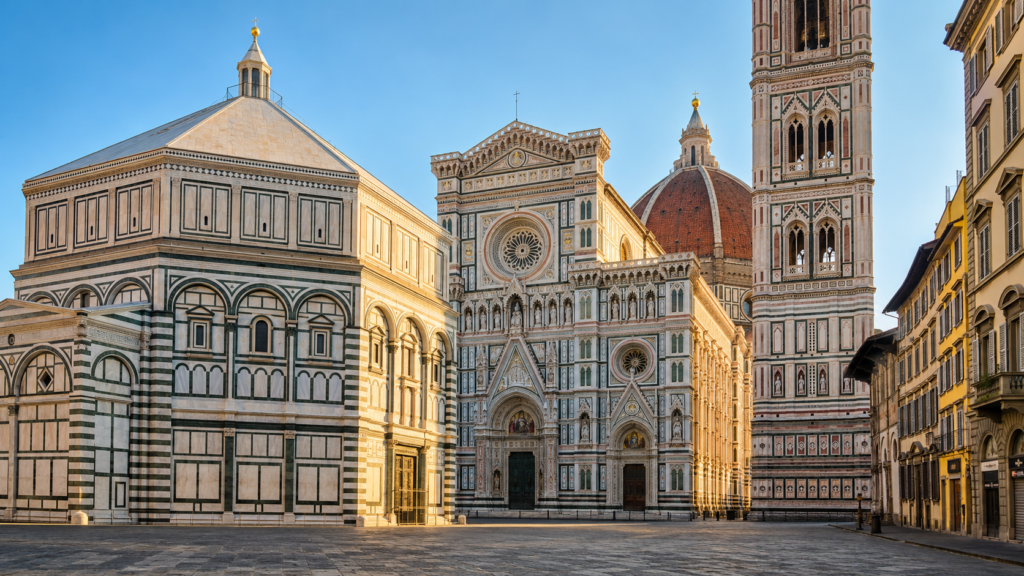
This guide is for travelers who want the famous things, yes, but not in the “follow the flag, take the photo, leave hungry” way. You’ll get the big hitters: Uffizi Gallery, Accademia Gallery, Ponte Vecchio, Brunelleschi’s Dome, Palazzo Pitti, and all that Renaissance thunder. But I’ll also show you where to slow down, how much money to expect, where to eat without being emotionally mugged by tourist menus, and how to visit Florence without becoming part of the problem.
Before You Book: Florence Budgets, Prices, and Tiny Financial Ambushes
Florence is not the cheapest city in Italy, and anyone who tells you otherwise has either inherited an apartment or hasn’t bought museum tickets recently. Still, you can visit without selling a kidney. You just need to plan.
Daily Budget for Florence
| Travel Style | Daily Budget Per Person | What It Covers |
|---|---|---|
| Shoestring but sane | €70–€110 | Hostel bed, bakery breakfast, market lunch, cheap dinner, mostly free sights, one paid attraction |
| Comfortable mid-range | €150–€260 | B&B or simple hotel, good casual meals, two paid attractions, gelato without guilt |
| Treat-yourself mode | €300+ | Central hotel, guided tours, good restaurants, taxis/transfers, wine bars, fewer compromises |
Useful Florence Price Guide
| Essential | Expected Price |
|---|---|
| Espresso standing at the bar | €1.20–€1.80 |
| Cappuccino + pastry | €3–€5 |
| Good gelato | €3–€5 |
| Panino or schiacciata sandwich | €6–€10 |
| Casual trattoria meal | €18–€35 |
| Bus/tram ticket | around €1.70–€2 |
| Uffizi Gallery ticket | about €25–€29, depending on booking method |
| Accademia Gallery ticket | about €20, before booking extras |
| Brunelleschi Pass for the Duomo complex | €30 |
| Santa Croce ticket | €10 |
Tip: Book your biggest museum visits before you book your lunch dreams. In Florence, your day often revolves around timed entry slots. Pasta can wait. Michelangelo’s David will not care that you overslept.
Where to Stay in Florence Without Regretting Your Life Choices
Stay near Santa Maria Novella if you want convenience
Santa Maria Novella is practical. Not always romantic, but extremely useful. You’re close to the main train station, the airport tram, buses, and most central sights. It’s good for short trips, early departures, and travelers who do not want to drag luggage across medieval stones while muttering curses.
Stay near the Duomo if you want to be in the middle of everything
The Duomo area is central, dramatic, and expensive. You’ll be close to almost every major attraction, but you’ll also hear rolling suitcases at dawn and groups discussing dinner plans loudly enough to wake old Medici ghosts.
Stay in Oltrarno if you want Florence with fewer sharp elbows
Oltrarno, across the Arno River, is my favorite area for a slower stay. Think artisan workshops, small bars, antique shops, and evening streets that feel less like a queue with buildings attached. Santo Spirito is especially good if you like eating late and wandering home happy.
The 10 Best Things to Do in Florence
1. Climb Into the Madness of Brunelleschi’s Dome
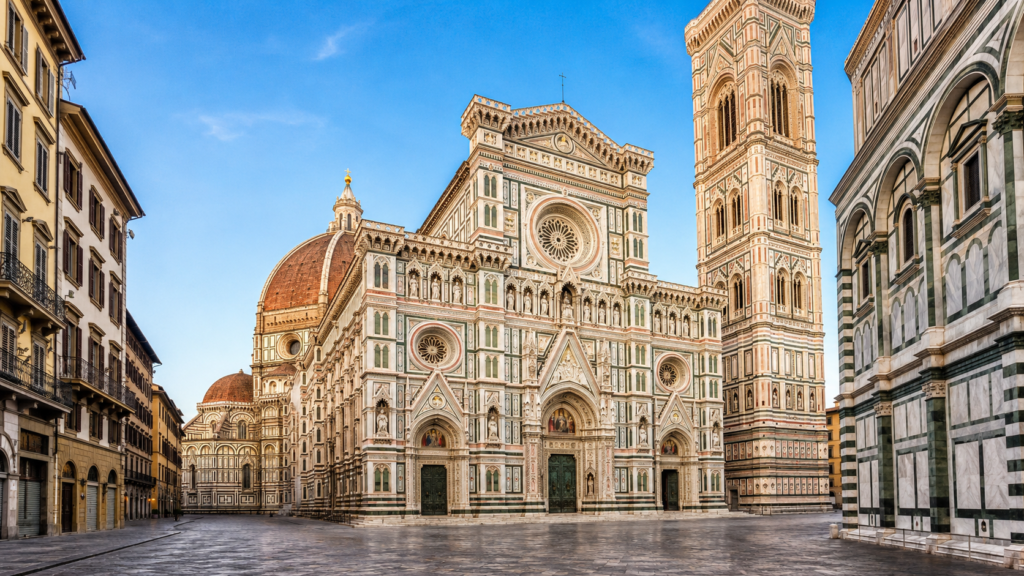
If Florence has a main character, it is Santa Maria del Fiore. The cathedral does not simply sit in the city; it bosses the city around. You see the red dome from side streets, hotel windows, hilltops, and random corners where you were only trying to find coffee.
The real prize is Brunelleschi’s Dome. Climbing it is sweaty, narrow, and mildly ridiculous. You squeeze through old passages, pass close to frescoes that look much calmer than you feel, and eventually pop out above the city. The rooftops spread below like terracotta scales. Church bells start throwing sound around. Someone nearby will whisper “wow,” and for once, you may allow it.
What the Duomo Complex Includes
The Brunelleschi Pass includes access to:
- Brunelleschi’s Dome
- Giotto’s Bell Tower
- Baptistery of San Giovanni
- Opera del Duomo Museum
- Santa Reparata
- Cathedral, which is free but often has a separate queue
How to Do It Properly
Book the Dome climb in advance. This is not a “let’s see how we feel after lunch” attraction. Time slots go. Knees complain. Summer heat has no mercy.
Tip: Climb the Dome early, then visit the Opera del Duomo Museum afterward. The museum gives context to what you just sweated through, and it is far calmer than the square outside.
2. Let the Uffizi Gallery Rearrange Your Brain
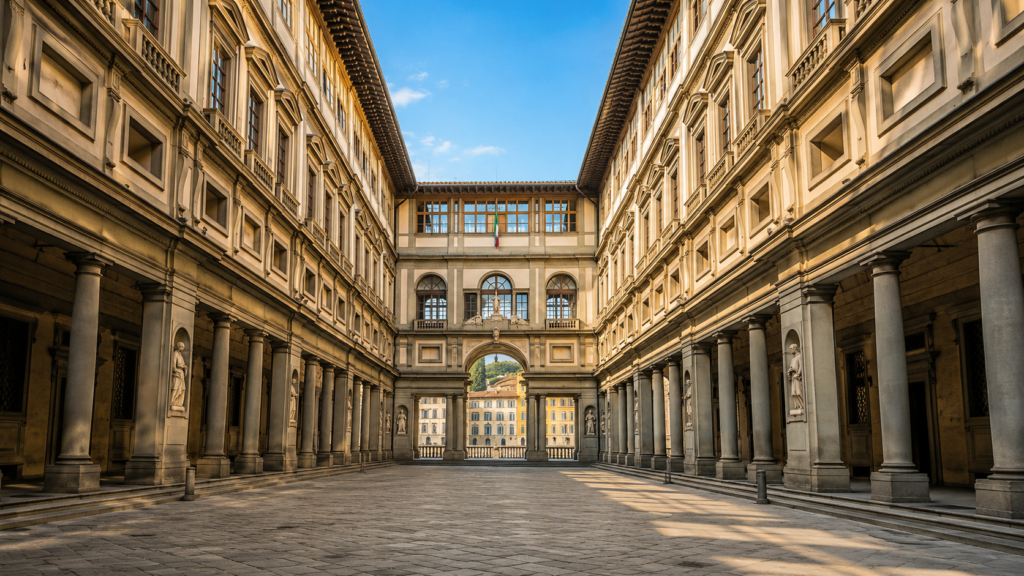
The Uffizi Gallery is where good intentions go to be humbled. You enter thinking, “I’ll just see the famous paintings.” Cute. Soon you’re standing in front of Botticelli, then Leonardo da Vinci, then Caravaggio, then some saint with a facial expression that says he has seen your browser history.
This is one of the best things to do in Florence, but it can be too much if you attack it like a checklist. Do not try to see everything. That way lies museum fatigue, sore feet, and the haunted look of someone who has stared at too many gilded frames.
What Not to Miss at the Uffizi
Make time for:
- Botticelli’s Birth of Venus
- Botticelli’s Primavera
- Leonardo da Vinci’s Annunciation
- Caravaggio’s Medusa
- The views toward Ponte Vecchio
- The sculpture-filled corridors
My Honest Uffizi Strategy
Give yourself 2.5 to 3 hours. Choose five to seven works you truly want to see. Then allow yourself to wander. The best museum moments often happen between the famous rooms, when you stop chasing names and start noticing hands, fabrics, dogs, wounds, faces, and all the weird little details painters smuggled into history.
Tip: Book a late-afternoon ticket if you want a slightly calmer visit and possible savings. The light near the river gets soft, the groups thin a little, and your brain may still function afterward.
A guided tour is worth it if you usually walk through art museums thinking, “This is important, but I’m not sure why.”
3. Meet Michelangelo’s David, Then Go Look at His Hands
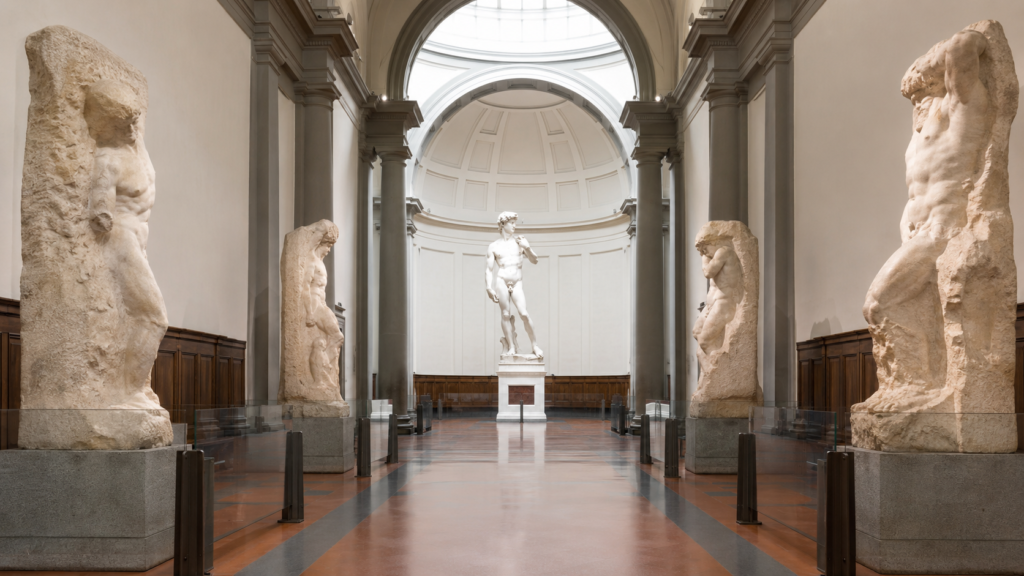
Yes, Michelangelo’s David is famous. Annoyingly famous. Printed-on-aprons famous. Plastic-magnet famous. But the actual sculpture inside the Accademia Gallery still hits differently.
The first thing people notice is the size. Fair enough. He is enormous. But the second thing, if you slow down, is the tension. The hand is huge. The veins look alive. The neck seems ready to tighten. This is not a relaxed heroic statue. This is a young man standing before violence, trying not to blink first.
How Long Do You Need at the Accademia Gallery?
Most travelers need 60 to 90 minutes. The Accademia Gallery is much smaller than the Uffizi, which is good news if you’ve already spent the morning being spiritually beaten up by Renaissance masterpieces.
Should You Book Ahead?
Yes. Especially in spring, summer, weekends, and basically any time other humans also want to see David, which is always.
Tip: Do not leave immediately after David. Look at the unfinished Prisoners by Michelangelo. They seem to be fighting their way out of stone, which is oddly relatable after three days of Italian carbs.
4. Cross Ponte Vecchio, Then Escape Into Oltrarno
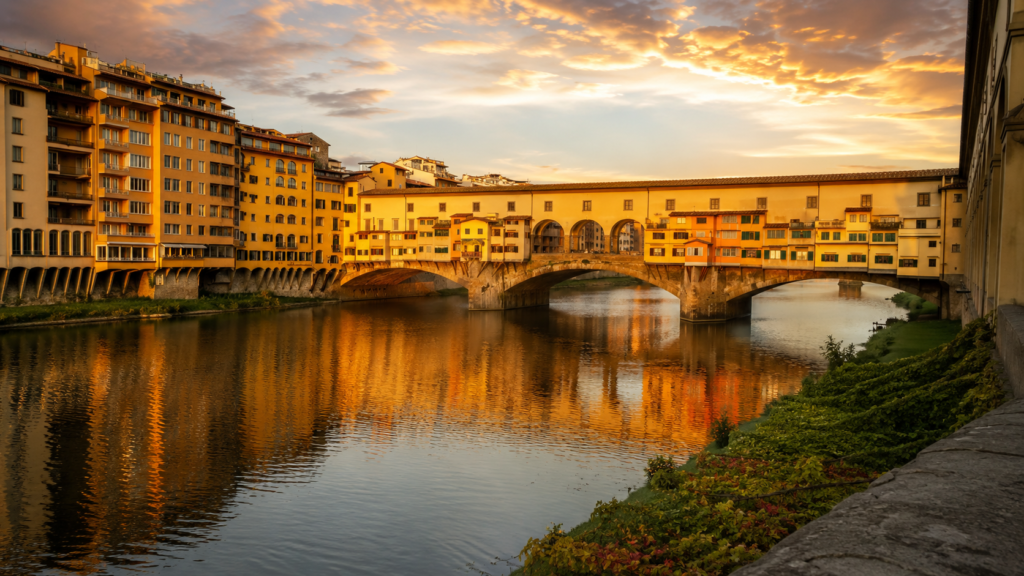
Ponte Vecchio is the old bridge with jewelry shops hanging off its sides like a very rich barnacle colony. It is touristy. It is packed. It is also strangely moving when you remember how old it is and how many feet have crossed it before yours.
Walk across, look at the gold displays, wonder who buys a necklace between gelato and dinner, then keep going. The real reward is on the other side: Oltrarno.
What to Do in Oltrarno
In Oltrarno, wander toward:
- Piazza Santo Spirito
- Via Maggio
- San Frediano
- Small artisan workshops
- Wine bars and casual trattorias
- Gelato shops with fewer giant neon mountains
This side of Florence feels more lived-in. Not untouched, not secret, not the fantasy version. Just more breathable. You see laundry, scooters, old men with opinions, students smoking near doorways, and shop windows full of things made by hands instead of algorithms.
Tip: Go to Oltrarno in the early evening. The day-trippers start thinning, the aperitivo glasses come out, and Florence becomes less museum and more city.
5. Eat Your Way Through Mercato Centrale and San Lorenzo
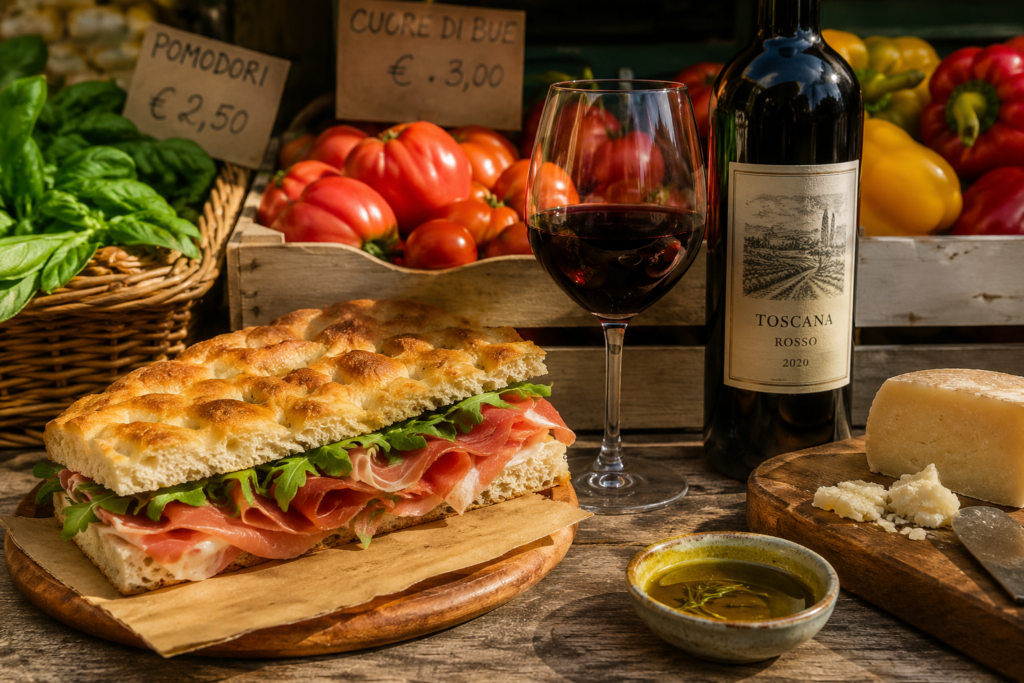
Mercato Centrale is part food hall, part market, part edible chaos. Downstairs you’ll find produce, meat, cheese, oil, and vendors who look like they can judge tomato quality from across a room. Upstairs is easier for travelers: quick meals, wine, pasta, truffle things, fried things, and plenty of places to sit.
Nearby San Lorenzo is full of leather stalls and souvenir temptation. Some of it is good. Some of it is “genuine Italian leather” in the same way my kitchen dancing is “professional ballet.” Look carefully. Ask questions. Do not panic-buy a bag because a man called you beautiful.
What to Eat in Florence
Try:
- Schiacciata with cured meat, cheese, or vegetables
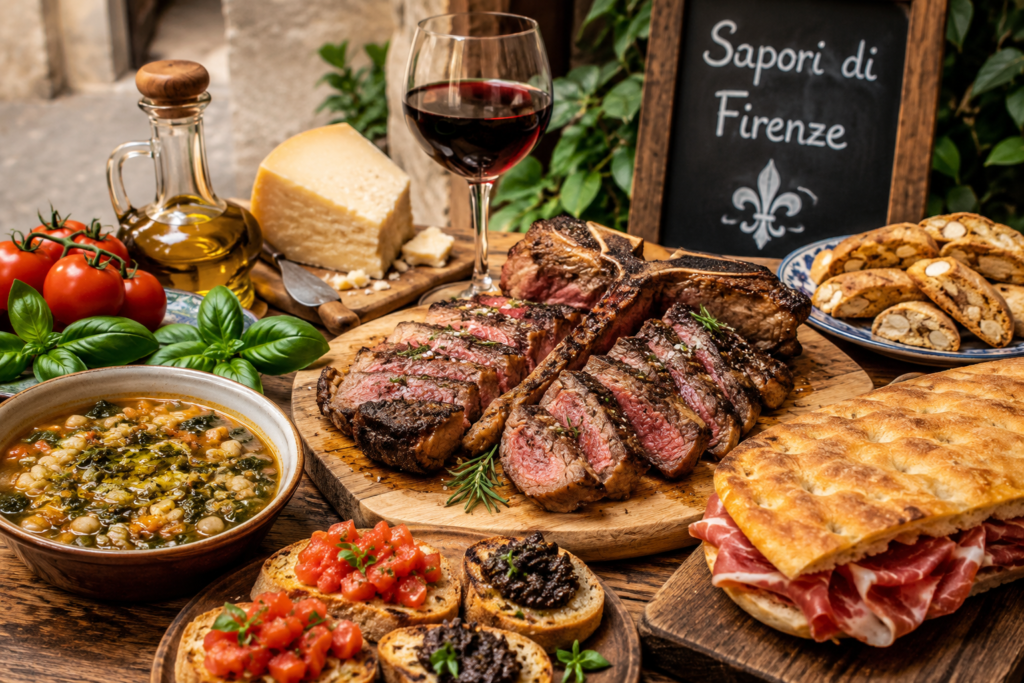
- Ribollita, a thick Tuscan bread-and-vegetable soup
- Pappa al pomodoro, tomato and bread turned into comfort
- Lampredotto, if you are adventurous and trust your sandwich maker
- Bistecca alla Fiorentina, if you eat meat and like steak served rare
- Cantucci with vin santo
- Proper gelato, not neon-blue nonsense
How to Spot Better Gelato
Tip: Avoid gelato piled high like frozen shaving foam. Look for muted colors, covered tubs, seasonal flavors, and pistachio that is beige-green rather than radioactive.
6. Visit Santa Croce, Where Florence Keeps Its Ghosts
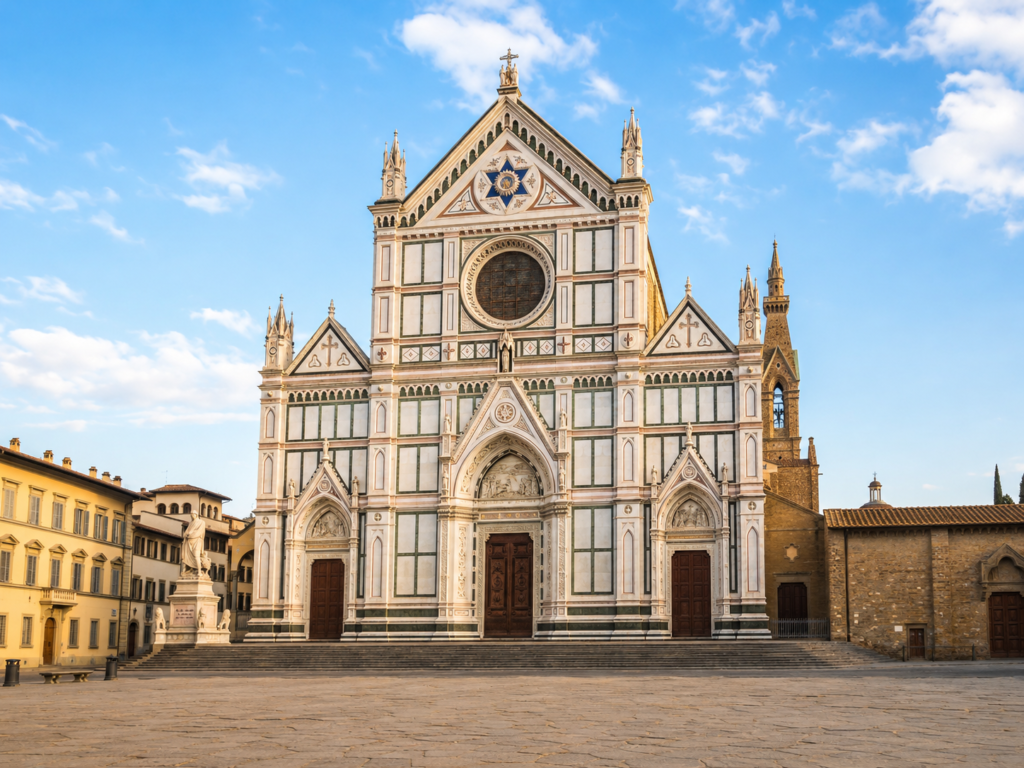
Basilica di Santa Croce is where Florence lowers its voice. The square outside can be noisy, but inside the church, the mood changes. You walk past tombs and memorials for Michelangelo, Galileo, Machiavelli, and Rossini, and suddenly your own deadlines feel a bit silly.
The church is also full of frescoes, chapels, cloisters, and the Pazzi Chapel, which is one of those spaces that makes proportion feel emotional. Not flashy. Controlled. Human. The sort of place where you understand that architecture can calm your nervous system.
Why Santa Croce Is Worth Your Time
Come here if you want:
- History without the crush of the Uffizi
- Giotto frescoes
- Tombs of major Italian figures
- A quieter cultural stop
- A good rainy-day plan
Respectful Visit Tip
Santa Croce is still a religious site. Cover shoulders and knees. Keep your voice down. Do not treat tombs like selfie furniture. This should not need saying, and yet, humanity keeps making me nervous.
Tip: Visit Santa Croce after lunch, then walk toward the river. The neighborhood has good cafés, small shops, and a less frantic rhythm than the Duomo zone.
7. Play Royal for an Afternoon at Palazzo Pitti and Boboli Gardens
Cross into Oltrarno, and you’ll find Palazzo Pitti, a massive palace that looks less like a home and more like a stone warning. Inside are the Palatine Gallery, royal apartments, paintings, costume collections, and rooms that make minimalism look like a cry for help.
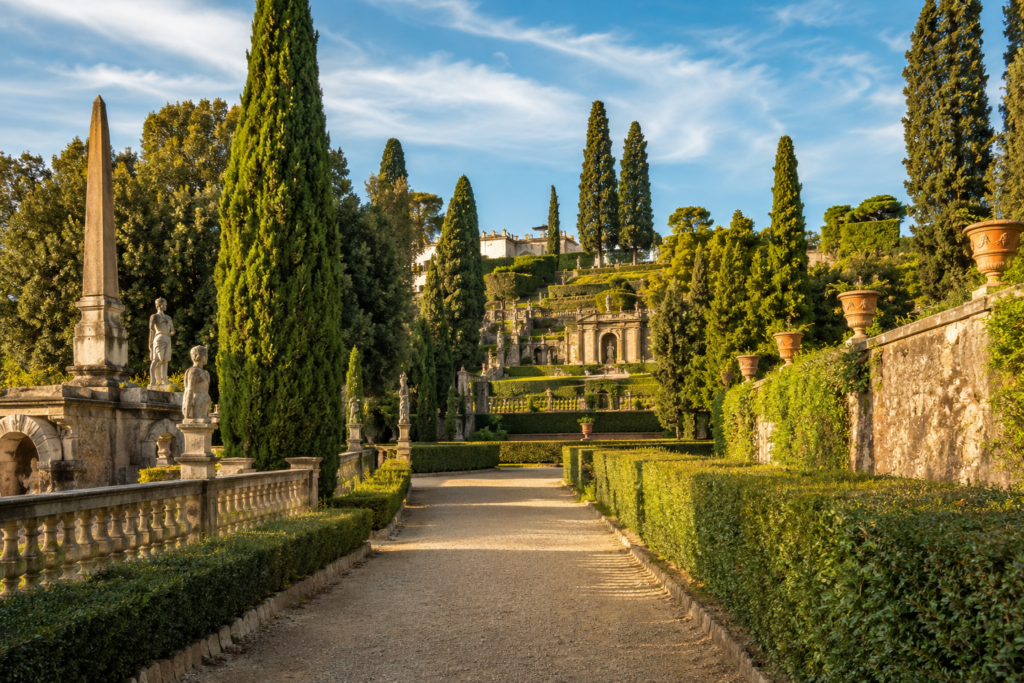
Behind it, Boboli Gardens climb uphill in terraces, paths, fountains, statues, gravel, shade, and long views. Do not expect a soft little flower garden. Boboli is grand, formal, and occasionally hard on the calves.
Should You Visit Both Pitti and Boboli?
If you have time, yes. But do not cram them between Uffizi and Accademia unless you enjoy turning your brain into porridge.
A good plan:
- Morning: Pitti Palace
- Lunch: Oltrarno
- Afternoon: Boboli Gardens
- Evening: Santo Spirito
Who Will Love This Most?
Palazzo Pitti is perfect for travelers who like royal rooms, art collections, fashion history, and interiors. Boboli Gardens are best if you want greenery, views, and a break from indoor museums.
Tip: Wear shoes with grip. The garden paths can be gravelly, sloped, and rude to delicate sandals.
8. Watch Florence Turn Gold from Piazzale Michelangelo
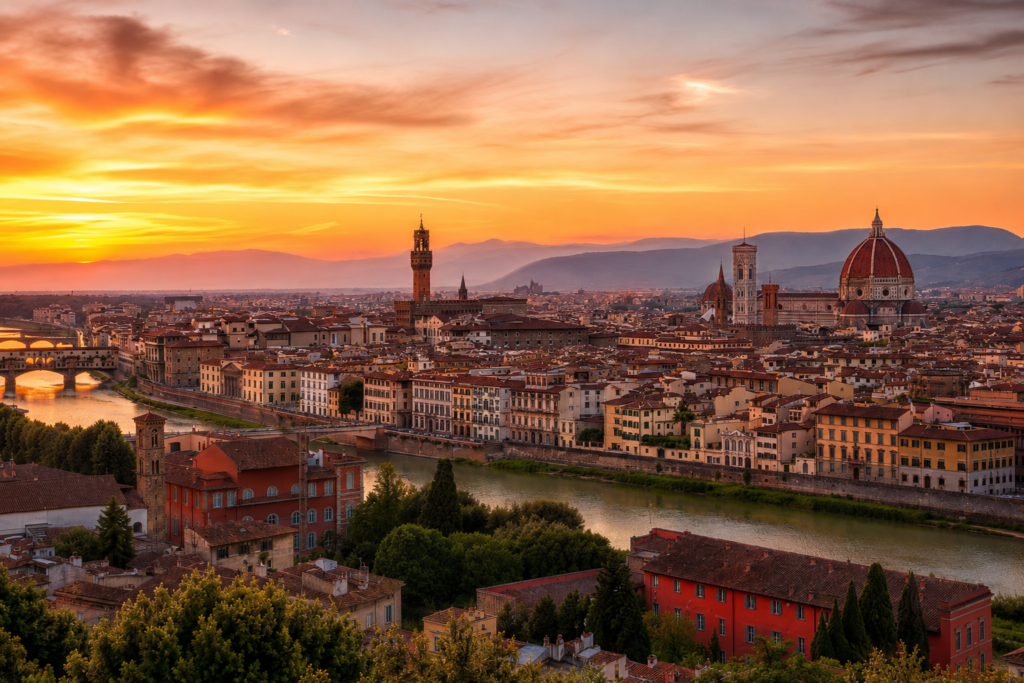
Yes, Piazzale Michelangelo is popular. Yes, everyone knows about it. Yes, you should still go. Some places are famous because the view genuinely earns the crowd.
From up here, Florence arranges itself beautifully: the Duomo, Palazzo Vecchio, the Arno, the bridges, the hills beyond. Sunset is the obvious time, which means it is also the busiest. I like arriving earlier, finding a wall, and watching the city slowly change color while people perform the ancient ritual of taking 400 versions of the same photo.
How to Get to Piazzale Michelangelo
You can walk from Oltrarno, but it is uphill. Not a dramatic mountain uphill. More “why did I eat so much pasta” uphill.
You can also take the bus, then walk the last bit. If you have mobility concerns or limited time, a taxi or transfer can make sense.
Do Not Stop at the Viewpoint
Walk a little higher to San Miniato al Monte. This church is one of the most rewarding stops in Florence. It has a calm, old soul, and the view from nearby is often better than the main viewpoint below.
Tip: Bring water and go earlier than sunset. If you arrive at peak sunset time in summer, you may find yourself sharing personal space with half of Europe.
9. Stand in Piazza della Signoria and Let the Drama Happen
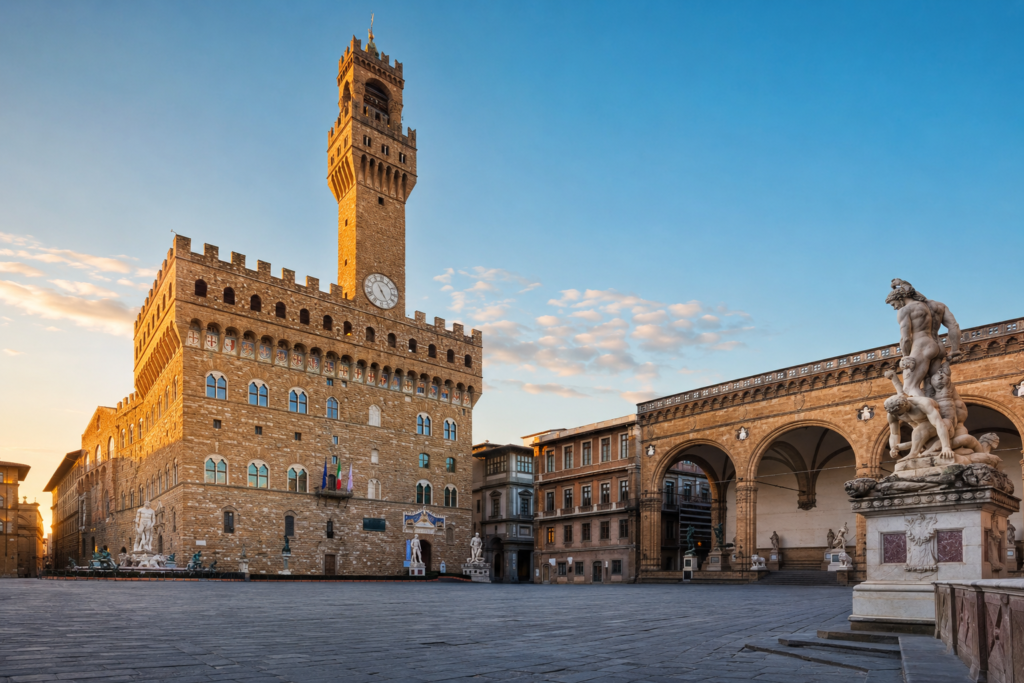
Piazza della Signoria is where Florence becomes theatrical. You have Palazzo Vecchio with its tower, the Loggia dei Lanzi with sculptures, a copy of David, the Fountain of Neptune, and enough political history to fuel ten prestige dramas.
This square was not built to be cute. It was built for power. Announcements, punishments, celebrations, conflict, image-making. The stones have seen people cheer, panic, scheme, and probably complain about prices.
Visit Palazzo Vecchio
Inside Palazzo Vecchio, you’ll find frescoed halls, secretive corridors, political rooms, and the feeling that Florence was once run by people who understood branding better than most modern companies.
The Salone dei Cinquecento is the big showpiece: huge, ceremonial, and almost aggressively impressive. If you like city history, this is one of the best things to do in Florence.
Free Thing to Do Nearby
The Loggia dei Lanzi is free to view from the square. It is basically an open-air sculpture gallery, except with more people eating gelato nearby.
Tip: Come early in the morning or late at night. Midday can feel like a slow-moving human soup. At night, the square gets moodier, and the statues look less like museum pieces and more like witnesses.
10. Give Yourself One Slow Florence Day
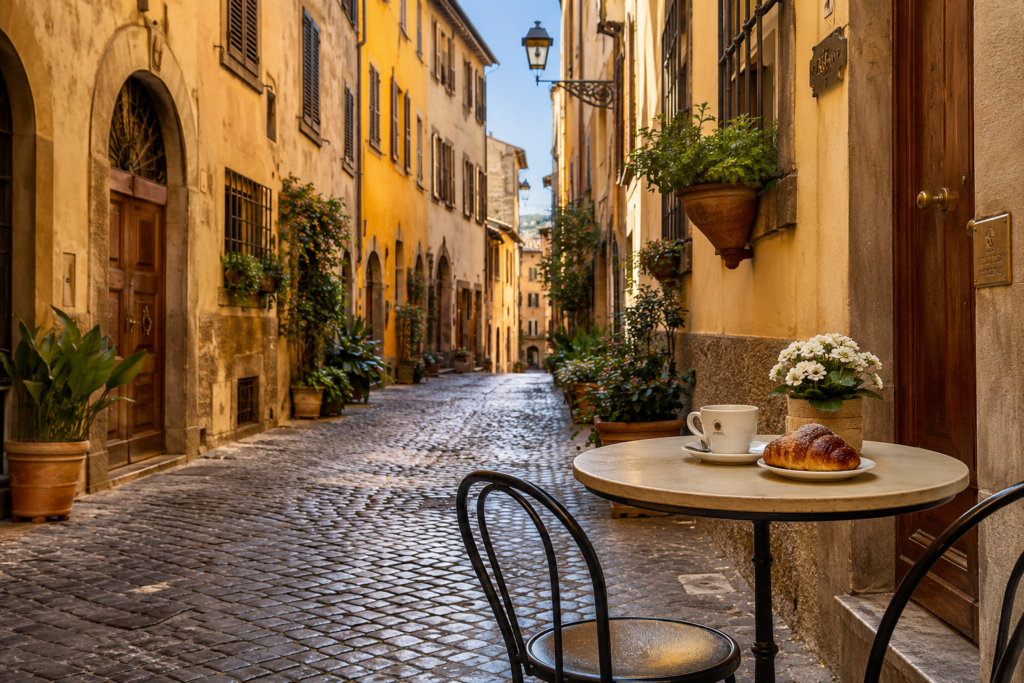
This might be the most important thing on the list: stop scheduling every minute. Florence punishes the greedy traveler. You cannot properly absorb three major museums, climb two towers, eat steak, shop for leather, and have a meaningful sunset in one day. You can attempt it. You will become unpleasant.
A slow day in Florence might look like this:
- Coffee near Santa Maria Novella
- A walk to San Lorenzo
- Lunch at Mercato Centrale
- One museum, not three
- Gelato while walking toward the Arno
- Wandering through Oltrarno
- Aperitivo in Santo Spirito
- A late dinner that involves no spreadsheet
Small Places Worth Adding If You Have Time
Consider:
- Bargello Museum for sculpture without the same crush as bigger museums
- Medici Chapels for drama, marble, and family ambition
- Orsanmichele for a strange and wonderful church-granary story
- Santa Maria Novella Basilica for art near the station
- Bardini Gardens for views and fewer crowds than Boboli
- Sant’Ambrogio Market for a more local food-market feel
Tip: Leave space for accidents. The wrong turn, the tiny bar, the church you didn’t plan to enter, the old man arguing with a parking machine. These are not interruptions. They are the trip.
A Practical Florence Itinerary for First-Time Visitors
If You Have 1 Day in Florence
Do not try to conquer the city. Pick your battles.
Morning: Duomo exterior, Brunelleschi’s Dome or Giotto’s Bell Tower
Lunch: Mercato Centrale or a schiacciata sandwich
Afternoon: Uffizi Gallery or Accademia Gallery
Evening: Ponte Vecchio, Oltrarno, dinner near Santo Spirito
If You Have 2 Days in Florence
Day 1: Duomo, Uffizi, Piazza della Signoria, Ponte Vecchio
Day 2: Accademia, Santa Croce, Oltrarno, Piazzale Michelangelo, San Miniato al Monte
If You Have 3 Days in Florence
Add Palazzo Pitti, Boboli Gardens, Bargello Museum, and a slower food-focused afternoon. This is the sweet spot. Three days lets Florence breathe a little.
Getting Around Florence Without Losing Your Temper
Florence is a walking city. Most major sights are close enough to reach on foot, but the stone streets can be hard on your feet. Bring shoes you trust. This is not the place to test new sandals unless you enjoy blisters as souvenirs.
From Florence Airport to the City Center
The T2 tram connects Florence Airport with the area around Santa Maria Novella. It is usually the easiest budget option. Taxis and private transfers are better if you arrive late, carry heavy luggage, or are traveling with family.
Public Transport
Buses and trams are useful for Piazzale Michelangelo, outer neighborhoods, and tired feet. Validate tickets or tap correctly. Ticket inspectors in Italy do not accept “I am confused and charming” as currency.
Should You Rent a Car in Florence?
Not for the city. Absolutely not. Driving in central Florence is a recipe for stress, restricted traffic zones, and expensive mistakes. Rent a car only if you’re leaving for Tuscany, such as Chianti, Val d’Orcia, Siena, or countryside stays.
Best Time to Visit Florence
The best months for Florence are usually April, May, early June, September, and October. The weather is kinder, the light is lovely, and you may avoid the most oven-like part of the year.
Summer in Florence
Summer can be hot, crowded, and expensive. The stone streets hold heat. Museums become survival zones. Gelato becomes medical equipment.
Winter in Florence
Winter is quieter and cheaper, though some days are damp and grey. I actually like Florence in winter. The city feels less like it’s performing for visitors and more like it’s drinking coffee before work.
My Pick
Late October. Cooler air, better prices, softer crowds, and food that starts leaning into autumn. Very persuasive.
Sustainable Tourism Tips for Florence
Florence has a tourism problem because everyone wants the same bridge, the same sandwich street, the same museum rooms, and the same sunset wall. I understand. I also want those things. The trick is to take them without being a menace.
Travel Better in Florence
- Stay at least two nights instead of rushing in for a few hours.
- Visit early or late to reduce pressure on peak times.
- Use public transport or walk instead of taxis when possible.
- Carry a reusable water bottle and refill where you can.
- Do not sit on church steps or monuments to eat.
- Support local restaurants and artisans, not only souvenir chains.
- Explore beyond the Duomo corridor, especially Oltrarno, Sant’Ambrogio, and quieter museums.
- Keep noise down at night, especially in residential streets.
- Dress respectfully in churches.
- Never touch, climb, lean on, or “just quickly pose with” monuments.
Tip: The most sustainable thing you can do in Florence is slow down. Spend more time, spend more locally, and stop treating the city like an art-themed obstacle course.
What to Book Before You Arrive
Book these early:
- Uffizi Gallery
- Accademia Gallery
- Brunelleschi’s Dome
- Popular food tours
- Good central accommodation
- Airport transfers if arriving late
- Travel insurance
- e-SIM or mobile data
Florence Food Rules I Would Like to Gently Tattoo on Every Visitor
I say this with affection: do not eat beside the biggest monument you can find just because you are hungry. Walk three streets away. Your wallet and stomach will both improve.
How to Eat Better in Florence
- Avoid restaurants with giant photo menus beside major squares.
- Do not chase only viral sandwich shops.
- Book dinner if you want a specific trattoria.
- Stand at the bar for cheaper coffee.
- Order house wine without fear.
- Try Tuscan soups, not only pasta.
- Eat steak with people who agree on rare meat.
- Never trust neon gelato.
Tip: If a restaurant has someone outside begging you to come in, keep walking. Good food rarely needs a street-level hostage negotiator.
The Part Where Florence Follows You Home
Florence is easy to admire and hard to understand. That is why I like it. A simpler city would give you one clear mood: romantic, pretty, peaceful, wild. Florence gives you a marble cathedral, a butcher’s sandwich, a saint’s skull, a designer window, a nun crossing the street, a waiter ignoring you with Olympic focus, and a sunset that makes everyone briefly forgive each other.
The best things to do in Florence are not only the famous things, though the famous things are famous for a reason. Climb Brunelleschi’s Dome because the engineering is outrageous. Visit the Uffizi Gallery because you should stand in front of Botticelli at least once and decide what you actually feel. See Michelangelo’s David because the postcards do not capture the tension in the stone. Cross Ponte Vecchio, then keep going into Oltrarno where the city loosens its collar. Eat soup. Drink wine. Look up. Trip over a cobblestone if necessary, though I do recommend protecting the gelato.
My strongest advice is this: do less than you think you should. Florence is not a checklist city, even though travel blogs, including this one, are structurally guilty of making lists. Use this guide as a map, not a prison sentence. Pick your ten, then let the city interrupt you.
Before you go, book the parts that genuinely need booking: your hotel, major museum tickets, airport transfer if needed, travel insurance, and mobile data. Then leave space for the rest. The wrong turn. The second gelato. The chapel you entered because it was raining. The quiet street behind the loud one.
If this guide helped you plan your Florence trip, subscribe to A Tiny Traveler for more honest city guides, practical travel budgets, food tips, sustainable travel ideas, and mildly dramatic opinions about train stations. Follow along on social media too, because I’ll be sharing more Italy travel guides, Europe itineraries, Pinterest-ready travel tips, and the kind of useful advice that usually comes from making mistakes first so you don’t have to.
Follow A Tiny Traveler on social media too, because the next guide might save your budget, your feet, or at the very least, your dinner plans.
- Follow me on Pinterest (A Tiny Traveler): My Pinterest is your ultimate travel vision board! It’s where I share stunning photography, quick visual guides, and, most importantly, links to all my in-depth blog posts.
- Follow me on Instagram (a.tinytraveler): For daily doses of wanderlust, stunning travel photography, behind-the-scenes glimpses of my trips, and quick tips that will inspire your next getaway. See the world through my eyes!
- Like my Facebook Page (A Tiny Traveler): Join our vibrant community of fellow travel lovers! This is a great place to ask questions, share your own travel experiences, and connect with other readers and me.
And when you finally reach Piazzale Michelangelo, sweaty and slightly annoyed and secretly thrilled, look back at the red dome. Stay a little longer than planned. That is usually where Florence gets you.
Frank


