
A Confession Before We Begin
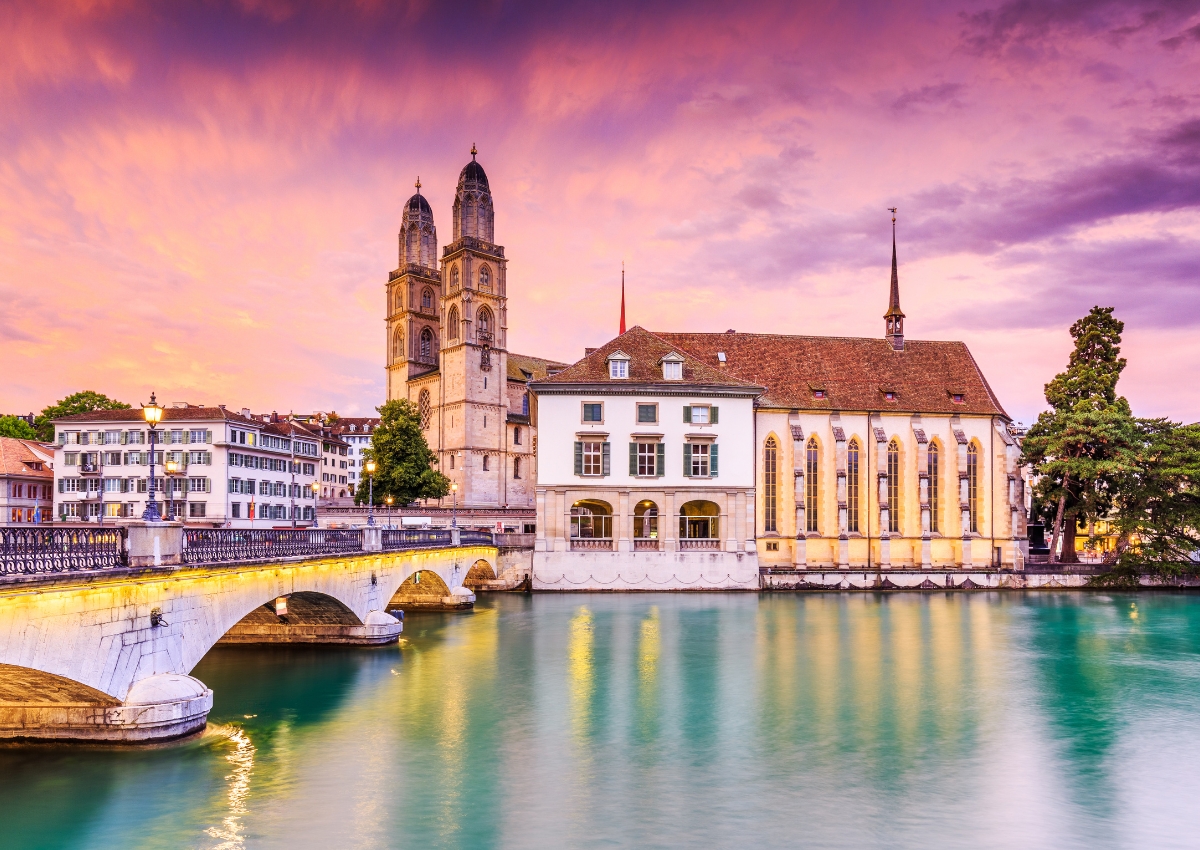
I’m going to be honest with you from the start. When people think of Zurich, they picture pristine lakes, precision Swiss watches, and bankers in three-piece suits. What don’t you picture? The fact that some of the most jaw-dropping moments of my Swiss adventures happened about 45 minutes outside the city, on trains that run so reliably you could set your watch by them—and honestly, why wouldn’t you in Switzerland?
I spent two weeks bouncing around this region like a pinball in a very expensive, very orderly machine. I got lost trying to find a specific hiking trail. I accidentally ordered seventeen types of cheese at a market (the vendor thought I was opening a shop). I watched a 70-year-old Swiss woman out-hike me on a mountain pass. And through it all, I discovered something crucial: Zurich isn’t really the destination. It’s the launching pad.
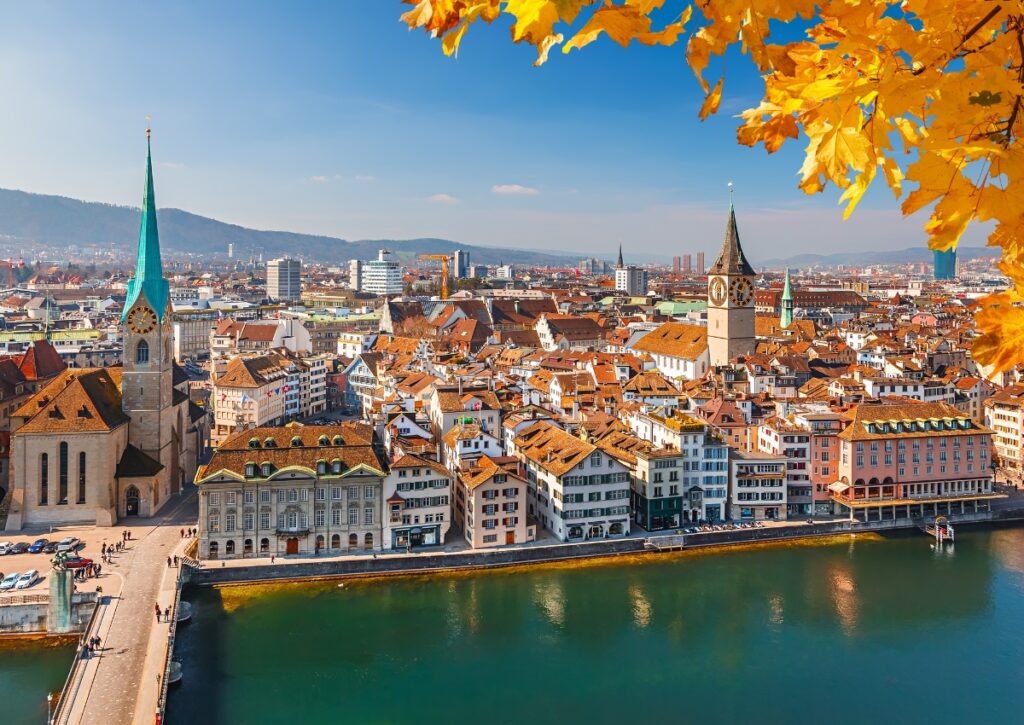
Here’s the thing about being based in Zurich—and this is important if you’re planning your trip—you’re sitting at the exact center of some of Europe’s most accessible day-trip magic. The Swiss have perfected the art of public transportation to an almost unsettling degree. You can wake up in your Zurich hotel, eat an overpriced croissant for CHF 6-8, hop on a train that departs at exactly 9:47 AM, and by lunchtime, you’re somewhere completely different. The trains are so reliable that if one is delayed by more than three minutes, the Swiss collectively lose their minds. It’s kind of their thing.
I’m going to walk you through five-day trips that genuinely changed how I see this part of the world. Not the Instagram-filtered version. The real version—the one with grumpy train conductors, incredible food, moments where you’re standing on a mountain thinking, “How is this real?” and also moments where you’re wondering if you’ve made a terrible mistake by wearing the wrong shoes. That’s travel. This is how you do it from Zurich.
What You Need to Know Before We Start
Daily Budget Reality Check: Before we dive into the specific destinations, let’s talk money. Switzerland isn’t going to let you travel cheaply—it’s Switzerland, after all. But day trips are significantly cheaper than staying overnight. Here’s what I discovered:
- Train tickets: Depending on where you’re going, expect to pay CHF 20-70 (USD $22-77 / EUR €20-70) for a round-trip ticket
- Meals: A casual lunch runs CHF 15-25 (USD $16-27 / EUR €14-23), dinner at a decent restaurant CHF 30-60 (USD $33-66 / EUR €27-55)
- Attractions: Museum entries typically cost CHF 12-20 (USD $13-22 / EUR €11-18)
- Coffee (the real point of visiting): CHF 4.50-6.50 (USD $5-7 / EUR €4-6)
- Daily realistic budget per person: CHF 80-120 (USD $88-132 / EUR €72-108) if you’re being thoughtful about meals
Pro tip: Grab a Swiss Travel Pass if you’re planning multiple-day trips. The 3-day pass costs CHF 209 (USD $230 / EUR €191) and includes most trains and cable cars. It’s like the Golden Ticket of Swiss transportation, except less whimsical and more mathematically calculated.
For booking trains and checking real-time connections, use the SBB (Swiss Federal Railways) app or website—it’s the Swiss version of Google Maps for trains, and it works with frightening precision. You’ll also want to book accommodations near Zurich to serve as your base. Booking.com has excellent options ranging from budget hostels (CHF 40-60 per night) to mid-range hotels (CHF 150-250 per night) throughout the city. Load it up with Revolut or Wise cards before you arrive to avoid the horrifying exchange rates that banks charge. Trust me on this one.
Now, let’s get into the destinations where the real adventure happens.
1. Rigi: Where Mountains Go to Feel Important
The “I Didn’t Expect to Fall in Love with a Mountain” Department
The first time someone told me about Rigi, I nodded politely and assumed it was just another Swiss mountain. You know how that goes—mountains in Switzerland are like celebrities in Los Angeles. There are a lot of them, they’re technically impressive, and they get uncomfortable amounts of attention. What I didn’t expect was how absurdly charming it would be.
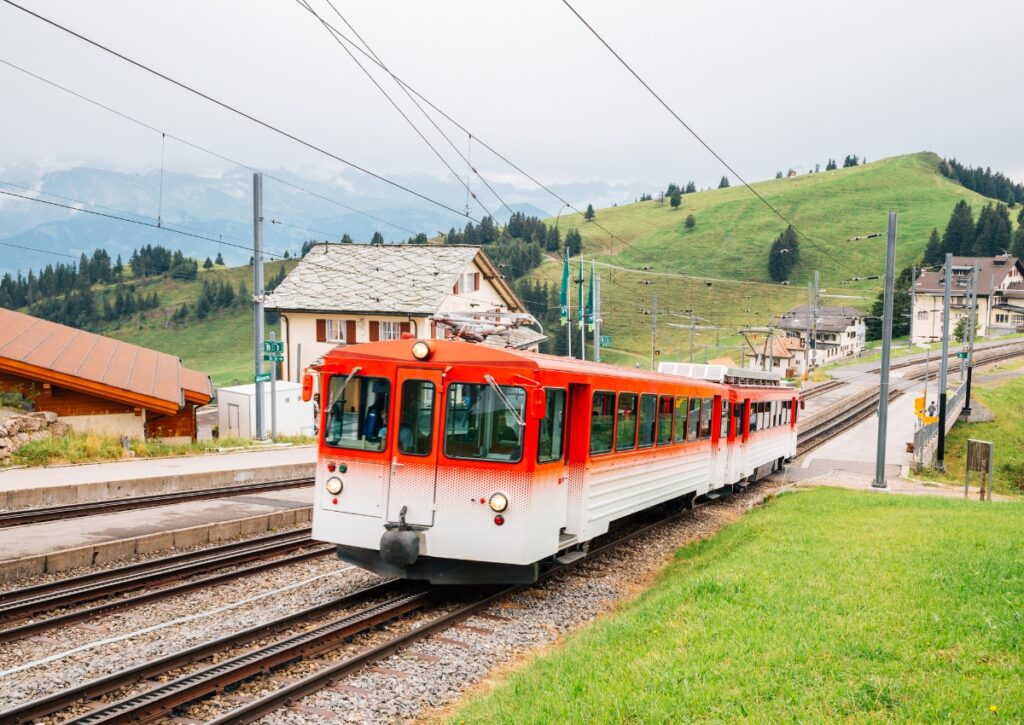
Rigi sits between Lake Lucerne and Lake Zurich (yes, there are two lakes and I was confused too), and it’s been attracting tourists since 1871 when they built a rack railway up the side. That’s not a typo. There’s literally a train that climbs a mountain on a track with a cog system. I watched my phone’s altimeter go up and up and up while the train somehow defied gravity and common sense.
Here’s what actually happens: you take a train or bus from Zurich to Arth-Goldau (about 60 minutes), then you board the Rigi Bahn—this impossibly steep train that climbs 1,550 meters (5,085 feet) while you sit in a compartment, wondering if this is how Swiss people conduct their daily commute. The whole process takes about 90 minutes from Zurich center to the top.
What You’ll Actually See (And Feel)
Standing at the top of Rigi Kulm, I understood why the Victorian-era tourists made such a fuss about this place. On a clear day—and you should hold out for a clear day; don’t be a hero and go in fog—you can see 13 Alpine peaks. Thirteen. Your phone camera will fail you. I don’t care what resolution you have; no camera captures the scale of seeing that many mountains at once.
The platform at the top is crowded with exactly the demographic you’d expect: German families, Swiss tourists, a few lost Australians like myself, and one man who was definitely here to break a world record for something (he had a stopwatch and intense eyes). But here’s the thing—the mountain is big enough that you can walk away from the crowds in about seven minutes and find yourself genuinely alone.
The Hike: If you’re not content to just take the train up and stand around like a tourist (which, to be clear, is completely valid), there are trails everywhere. The Rigi Scheidegg to Rigi Kulm section is a relatively easy hour-long walk with views that don’t require you to sign a waiver. I did the full traverse from Arth-Goldau to Vitznau (about four hours), which involved descending into meadows so green they looked photoshopped, passing tiny Alpine huts where old women were selling Älplermagronen (a carb-heavy pasta dish that I don’t recommend eating at 1,500 meters if you plan to keep walking), and wondering if I’d somehow stumbled into a Sound of Music set.
The Vitznau side is less crowded than the Arth-Goldau side, which means if you’re willing to do the full hike, you end up descending into relative peace while everyone else is standing at the viewpoint taking selfies.
Practical Details (The Stuff You Actually Need)
How to get there: From Zurich, take the train toward Lucerne, get off at Arth-Goldau, then transfer to the Rigi Bahn. Total time: about 90 minutes. Round-trip train cost: approximately CHF 50-65, depending on which route you choose. The Rigi Bahn itself costs CHF 36 one-way, CHF 56 for a round trip (USD $39-61 / EUR €36-56).
Best time to go: May through October. I went in early September when the crowds had thinned out, but the weather was still reliable. If you go in summer (June-August), expect the top to be heaving with humanity. Winter is technically possible, but you’re gambling with visibility.
Where to eat: The Rigi Kulm Hotel operates a restaurant at the top—predictably expensive (lunch mains CHF 28-45), but it’s the only option up there, so you’re not really negotiating. Book GetYourGuide ahead of time if they offer meal packages; I found some bundled options that made it slightly less painful for the wallet. Otherwise, pack a sandwich and pretend you’re more adventurous than you are.
What to bring: Layers. Always layers. The temperature drops about 1°C for every 100 meters of elevation, which sounds boring until you’re standing at the top in September, wondering why you didn’t bring a jacket. Comfortable hiking shoes if you plan to walk. Sunscreen, because the mountain sun is aggressive and at this altitude, it’s personal.
Why This Matters for Your Day Trip
Rigi takes about 3-4 hours to do properly (train up, wander around, train down), which means you can do it from Zurich and be back for dinner without feeling rushed. It’s the perfect entry-level mountain experience if you’re not sure about your Alpine credentials. It’s also genuinely accessible—I saw an 8-year-old doing this hike, and I saw a woman who had to be in her mid-80s at the top. The Swiss have somehow made mountain tourism democratic.
Sustainable Tourism Angle: The Rigi Bahn was revolutionary when it opened in 1871 because it allowed people to visit mountains without the previous requirement of being an experienced mountaineer and owning several yodeling outfits. Today, using public transportation to access the mountains is the most sustainable way to visit. You’re not driving a rental car up a narrow mountain road (though technically the road exists). You’re using energy-efficient trains. Feel good about yourself.
2. Appenzell: Where Switzerland Forgets It’s Switzerland
The Problem with Most Travel Writing About Appenzell
Literally every travel blog will tell you that Appenzell is a “charming medieval town” where people still wear traditional dress and make hand-embroidered linen. That’s all technically true, but it misses the actual experience: Appenzell is a place that exists slightly outside of normal time. You don’t feel like you’re visiting a tourist attraction. You feel like you’ve somehow stumbled into an alternate Switzerland.
I arrived on a Wednesday at 11:00 AM. There was a woman hand-embroidering fabric in a shop window—not as a demonstration, but as actual work. A man was sitting on a bench reading a newspaper in German-Swiss dialect (which, fun fact, is basically incomprehensible if your German is from school). And somehow, despite being a major tourist destination, it didn’t feel like one.
Getting There (The Surprisingly Long Journey)
From Zurich, the journey to Appenzell takes about 90 minutes and involves at least one train change. You’ll head east toward St. Gallen, then take a regional train north. It’s not complicated, but it’s long enough that you genuinely feel like you’ve traveled somewhere, which is exactly the point. By the time you arrive, you’ve mentally shifted gears.
The train pulls into the station, and suddenly you’re in a town where the architecture hasn’t changed much since about 1650. I’m not exaggerating. The buildings are a chaos of wood and whitewash and flowers bursting out of window boxes like they’re being paid to be photogenic. The main square—Landsgemeindeplatz—is surrounded by these architectural treasures, and it genuinely takes your breath away, though I’m trying to avoid doing that travel-blogger thing where everything is “breathtaking.”
Let me try again: You round the corner, and suddenly there’s this open plaza surrounded by buildings so quaint they borderline look fake. Period-correct details everywhere. Window shutters in the exact shade of red that you’ve never been able to describe. The overall effect is something like walking into a very expensive, very accurate diorama, except you can buy coffee in it.
What Actually Happens in Appenzell
Embroidery Shopping: This is the main commercial activity. Appenzell has been famous for hand-embroidered linen since the 1700s. You’ll see shops everywhere selling the real thing—tablecloths, napkins, aprons, blouses. A genuine hand-embroidered tablecloth will set you back CHF 200-500 (USD $220-550 / EUR €182-455). It’s expensive because it represents about 40-60 hours of actual labor. You can also buy cheaper machine-embroidered stuff if you want the aesthetic without the investment or the ethical comfort.
The Museum Situation: The Appenzell Museum is in an old mansion and does a reasonable job explaining why this place is obsessed with embroidery (basically, in the 1700s, someone figured out they could make money by decorating fabric with thread, and the town has been professionally committed to this idea ever since). Entry is CHF 12 (USD $13 / EUR €11). It’s worth an hour of your time if you’re into textile history or are just looking to hide from crowds.
The Local Food: Here’s where Appenzell gets interesting. The region is famous for Appenzeller Biber (a type of spiced bread), Appenzeller cheese, and something called Appenzeller Alpbitter—a digestive liqueur that tastes like hiking through a forest and then being hit with alcohol. It’s not unpleasant; it’s just very specific. Local restaurants serve Appenzeller Käsesnitte (cheese toast) for around CHF 12-18, which is carb-heavy comfort food. I had it three times because I have poor impulse control.
The best restaurant I found was the Gast zum Säntis—traditional food, reasonable portions, and the owner seemed genuinely pleased when I ordered the local specialty instead of asking if they had pasta. Mains run CHF 18-28 (USD $20-30 / EUR €16-26). Book ahead; it’s popular with tourists and locals alike.
The Hike That Makes You Feel Like You Accomplished Something
If you don’t want to just wander around a pretty town (and honestly, wandering around is perfectly valid), there’s the Säntis trek. The Säntis is the highest mountain in the region at 2,502 meters. You can’t actually get to the top from Appenzell without a serious commitment, but you can hike to the Säntis Saddle via the Schäfler Trail, which takes about 3 hours and gives you a real sense of accomplishment without requiring rock-climbing equipment or previous mountaineering experience.
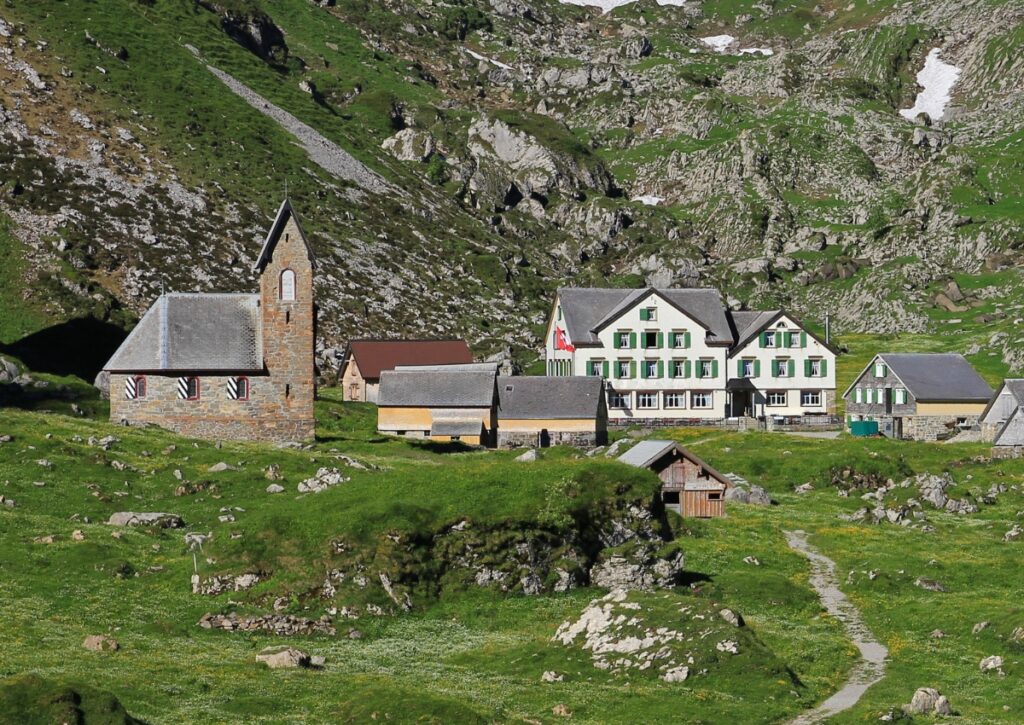
The trail climbs through meadows and forests, passes the Meglisalp hut (where you can stop for a beer if you’ve earned it, and after a 2-hour hike, you absolutely have), and offers views back down toward Appenzell and out toward the Alps. It’s not technically difficult, but it is genuinely steep in parts. Bring proper hiking shoes. I saw someone in flip-flops at the trailhead and genuinely concerned-for-them energy.
The Sneaky Part About Appenzell
Despite being a major tourist destination, Appenzell somehow maintains the vibe of a place that’s primarily inhabited by Swiss people living their lives. There are school playgrounds, regular grocery stores, and people doing regular jobs. You’re not walking through a theme park; you’re walking through a functioning town that happens to have very good architecture and a strong cultural identity.
This is why sustainable tourism works here—the town isn’t built around tourism. Tourism is something that happens around the edges of normal life. You can show up, eat local food, talk to people who live there, buy locally-made products (the embroidery is legitimately made in the region), and feel like you’re supporting actual people and traditions rather than just feeding an industry.
Budget Breakdown for Appenzell
- Train from Zurich: CHF 35-55 round trip (USD $38-60 / EUR €32-50)
- Museum entry: CHF 12 (USD $13 / EUR €11)
- Lunch: CHF 15-25 (USD $16-27 / EUR €14-23)
- Embroidery item (if you break): CHF 50-200+ (USD $55-220+ / EUR €45-182+)
- Realistic daily budget: CHF 80-120 (USD $88-132 / EUR €72-108)
3. Jungfraujoch: The Place Where the Mountain Wins
Why Jungfraujoch Is Complicated to Recommend
Here’s the honest truth about Jungfraujoch: it’s expensive. Like, genuinely expensive in a way that will make you question your life choices. It costs CHF 178-217 (USD $195-238 / EUR €162-198) just to get to the top, and that’s one-way. The round trip is CHF 327-409 (USD $358-448 / EUR €298-372). I’m telling you this upfront because there’s no point in being coy about it.
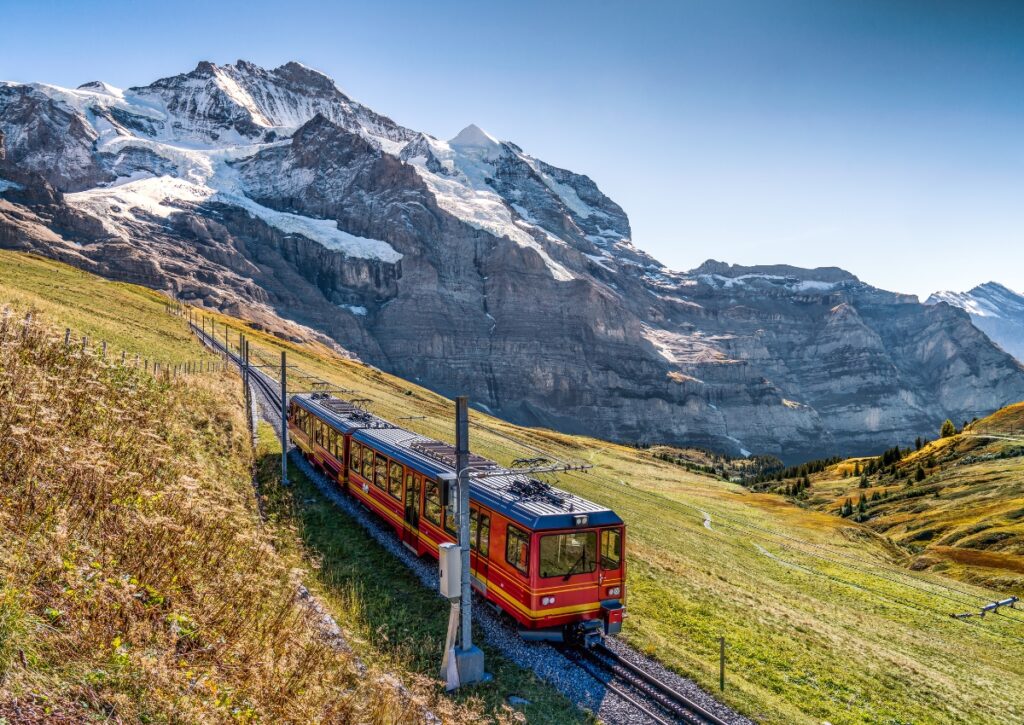
That said, there are approximately three good reasons to go anyway:
- It’s the highest train station in Europe (3,454 meters)
- You will literally stand above the clouds
- Some views are worth the money, even when the money is objectively ridiculous
The Journey (Which Is Part of the Experience)
From Zurich, you take a train to Interlaken (about 2 hours), then to Lauterbrunnen (30 minutes), then to Kleine Scheidegg (40 minutes), then finally up to Jungfraujoch (another 40 minutes). Each train is with a different company, each has different rules, and the whole process takes about 4-5 hours.
Here’s the thing, though—that time isn’t wasted. The Kleine Scheidegg to Jungfraujoch section climbs through mountains that get progressively more impressive. You watch the landscape shift from green meadows to rock and snow. You pass through tunnels cut directly into the mountain. Your ears pop. The person next to you might suddenly get motion sickness (this happened on my train; the Swiss person across from them handed them a sickness bag with the efficiency of someone who expected this exact situation).
What’s Actually Up There
The station itself is inside a mountain. You emerge into a complex that includes:
- The Top of Europe viewing platform (because yes, they’re calling it that)
- The Sphinx Observation Terrace (actual glass platforms where you stand and feel like you’re standing on nothing)
- The Ice Palace (an entire palace carved into a glacier, which is as gimmicky as it sounds but also kind of amazing)
- Various restaurants that charge prices that will make you weep
The views, on a clear day, are genuinely unreal. You can see peaks in multiple countries. You can see the Aletsch Glacier, which is the largest glacier in the Alps. You can also see absolutely nothing if clouds show up, which is the risk you take.
I went on a day with partial clouds. The top was covered. I sat in the restaurant drinking overpriced hot chocolate (CHF 8 for a tiny cup) and watched the clouds, waited for a break, and got about 20 minutes of clear views before they rolled back in. The people in the group were mixed—some were furious about the expense and lack of visibility. Others (including me) found it kind of beautiful because the clouds were dramatic and the light was weird, and it felt like you were in a mountain drama.
Sustainable Tourism at Altitude
This is actually a really good example of sustainable tourism because:
- You’re using trains to get there, not driving
- The infrastructure is designed to handle tourism without requiring new roads to be cut up the mountain
- The experience genuinely relies on the mountain staying intact
The downside is that a lot of people visiting means a lot of impact. The glacier is visibly retreating. The ice palace requires maintenance. But the alternative would be people driving up somehow, which would be worse. Sometimes, sustainable tourism is just the least bad option.
Practical Matters
Best time: June-September. Any other time, and you’re basically gambling with visibility.
What to bring: Warm jacket (it’s about 15 degrees colder at the top than in the valley), sunscreen (the Alpine sun bounces off snow), layers (because weather changes constantly).
Budget reality:
- Train tickets: CHF 327-409 round trip (USD $358-448 / EUR €298-372)
- Lunch at the top: CHF 30-50 (USD $33-55 / EUR €27-45)
- Hot chocolate with existential dread: CHF 8 (USD $9 / EUR €7)
- Overall daily budget: CHF 400-500 (USD $438-548 / EUR €364-455)
It’s expensive. Book everything through GetYourGuide ahead of time because they often have slight discounts, and you’ll feel marginally less like you’re being robbed. Use Revolut or Wise for the purchase to avoid credit card foreign exchange fees that would add another CHF 20-30 to the damage.
The View That Makes It Worth Considering
If you go on a good-visibility day, you will have one of those views that you remember for the rest of your life. Not because it’s pretty in an abstract way, but because it fundamentally changes how you think about scale and mountains and weather patterns and your own insignificance. I’m not exaggerating. You will think differently about mountains after seeing what the Alps look like from above the clouds.
4. Rapperswil & Lake Zurich: The Lakeside Day Trip Nobody Talks About
Why Rapperswil Is Underrated
Most tourists visiting Switzerland head straight for the dramatic Alpine mountains. Rapperswil gets overlooked because it doesn’t have elevations measured in the thousands of meters. It doesn’t have glaciers. It just has a lake, a castle, and the kind of charm that isn’t immediately Instagram-ready but absolutely grows on you.
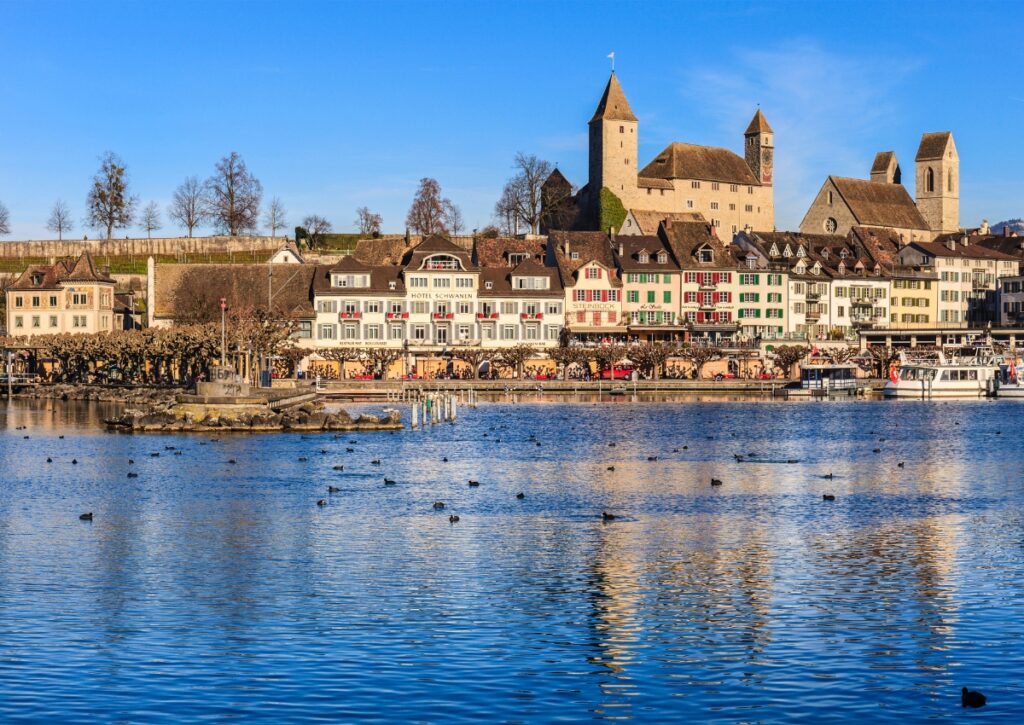
From Zurich, Rapperswil is absurdly accessible. You take a train for about 35-45 minutes heading southeast, and suddenly you’re in a small town built on a peninsula jutting into Lake Zurich. There’s a castle overlooking the town. There are swans. There are gardens full of roses. There are cafes where you can actually afford to eat lunch.
The Reality on the Ground
The castle—Schloss Rapperswil—dates back to the 13th century. It’s been restored extensively (by which I mean they basically rebuilt half of it because the original fell apart), but it’s still genuinely old in the way that matters. You can tour the interior, which includes various exhibits that range from “mildly interesting” to “actually fascinating, depending on your tolerance for medieval weaponry.” Entry is CHF 8 (USD $9 / EUR €7).
What I didn’t expect was how pleasant the town itself is. The main road—Herrengasse—is lined with old buildings that have somehow survived wars, fires, and the general chaos that has happened over 700 years. You can walk this street and see the same buildings where people have been conducting business since the Renaissance. There are galleries, bookshops (incredibly good ones), and restaurants that seem to exist for locals rather than tourists.
The Lakeside Reality
Here’s where Rapperswil gets genuinely interesting: you can rent a paddle steamer or a private boat and cruise Lake Zurich. I was deeply skeptical about this until I actually did it. You board a vintage steamship (they actually run these, I saw the wood-burning furnace), the captain announces stops in German and English, and you cruise along the water while watching the landscape shift from towns to forests to mountains in the distance.
The Zu Zürich Rapperswil Ferry takes about 3.5 hours to traverse the lake, costs CHF 45-65 depending on class (USD $49-71 / EUR €41-59), and is somehow relaxing in a way that most tourist activities aren’t. You can sit on deck, drink coffee, watch swans, and genuinely feel like you’re not being processed as a tourism unit.
Practical Details
How to get there: Train from Zurich Hauptbahnhof to Rapperswil. About 35-45 minutes. Cost: CHF 12-18 one-way (USD $13-20 / EUR €11-16).
Where to eat:
- Zum Stern is a traditional restaurant right by the waterfront serving excellent Swiss food. Mains CHF 22-35 (USD $24-38 / EUR €20-32). The fish is actually good, which surprised me.
- Barfüssler is a café-restaurant that’s more casual and significantly cheaper (lunch mains CHF 15-22). It’s where local people eat, which is always a good sign.
What to do:
- Walk the castle grounds and interior (1-2 hours, includingthe museum)
- Stroll through Herrengasse and the old town
- Cruise on the lake steamer
- Visit the Rosengarten (rose garden) if you go in June-July, when roses are blooming
- Rent a rowboat or paddle boat if you’re feeling adventurous (CHF 30-50 per hour)
Budget breakdown:
- Train: CHF 12-18 one-way (USD $13-20 / EUR €11-16)
- Castle entry: CHF 8 (USD $9 / EUR €7)
- Lake cruise: CHF 45-65 (USD $49-71 / EUR €41-59)
- Lunch: CHF 20-35 (USD $22-38 / EUR €18-32)
- Daily budget: CHF 100-150 (USD $110-165 / EUR €91-137)
Why This Works as a Day Trip
Rapperswil is low-key enough that it doesn’t demand your constant attention. You can do whatever pacing works for you. You can spend three hours here and head back to Zurich for dinner. You can also get genuinely lost in the quiet streets and feel like you’re having a more authentic experience than the big Alpine tourism machine provides.
For sustainable tourism, you’re again using trains instead of driving, supporting local businesses by eating at local restaurants, and the tourism infrastructure doesn’t require destroying the natural landscape to access it.
5. Stein am Rhein: The Medieval Town That Actually Lived There
The First Impression That Doesn’t Change
Stein am Rhein sits on the Rhine River in northeastern Switzerland, about 90 minutes from Zurich. When you arrive, your first thought will be, “Are we sure this is a real place and not a detailed model?”
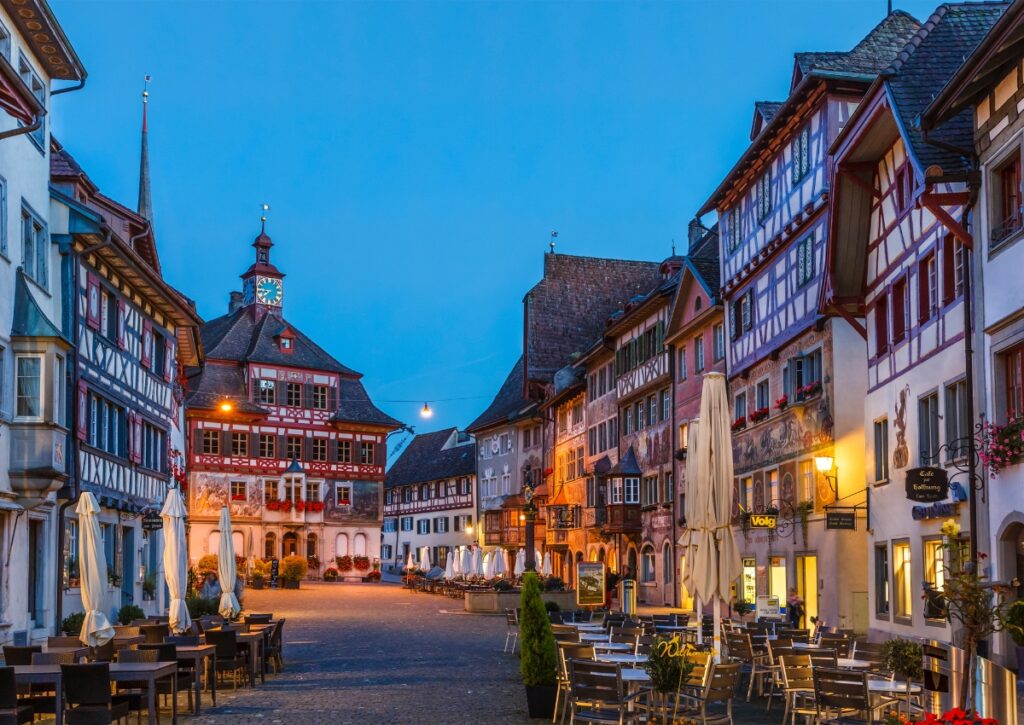
Every building on the main square—Rathausplatz—has hand-painted murals on the facade. Not the kind of murals that were added later for tourism purposes. The kind that have been there for 500 years and have been meticulously maintained because the Swiss take their architectural heritage seriously, almost aggressively seriously.
What Makes It Genuinely Different
Stein am Rhein feels smaller and more “real” than Appenzell because it’s less self-consciously charming. Yes, it’s a major tourist destination. Yes, there are gift shops. But the town still has actual functions—there’s a grocery store, there are schools, there are people living their lives. Tourism hasn’t completely colonized the place.
The town is built on a peninsula between the Rhine and the Bodensee (Lake Constance), which means water on two sides and a genuinely medieval defensive layout that still makes sense when you walk the streets.
The Castle (Which Is Better Than It Has Any Right to Be)
Hohenklingen Castle sits on the hilltop overlooking the town. It’s a 10-minute walk up from the main square (uphill, bring water), but the view of the town and the rivers from the top is legitimately outstanding. The castle itself is partially restored—you can walk around the grounds and through certain sections. Entry is CHF 6 (USD $7 / EUR €5), which is basically a donation.
What I appreciated was that the castle wasn’t overdeveloped. There was no gift shop on every corner. No interpretive panels explaining everything. You walk through old stone walls and your brain does the work of imagining what it would have been like.
The Rhine Situation
Stein am Rhein sits where the Rhine starts to get interesting again after a long section of being basically a highway between industrial cities. The river here is actually scenic. There’s a waterfront that’s been developed thoughtfully (no high-rises, no McDonald’s), and you can rent bikes and follow the river in either direction.
I rented a bike from a guy who seemed mildly annoyed that I didn’t speak German, but he checked that my tires were pumped and made sure my brakes worked, which told me he’d seen too many tourists tip over. Cost: CHF 18 for the day. I rode east along the Rhine toward Diessenhofen, a smaller town, and came back after about two hours. The ride is flat, the scenery is green, and it’s a completely different perspective on the region than the mountainous day trips.
Eating in Stein am Rhein
The restaurants are actually good, which is unusual for towns this small and picturesque. I had dinner at Restaurant Adler, which is right on the main square, and it wasn’t a trap tourist restaurant. It was a legitimate restaurant with local clientele. Mains ran CHF 25-38 (USD $27-42 / EUR €23-35). The food was actually interesting—not just “Swiss food tourist version” but what actual Swiss people eat.
Hotel Zum Nollaacker also has a restaurant that’s solid. Säntis Pizza if you just want casual food (CHF 12-18 for a pizza). The bakery on the main square—whose name I can’t remember because the Swiss store names are something like “Zum Alt Geräusch” which technically translates to “The Sound of Furniture”—has excellent bread and pastries.
Practical Information
How to get there: From Zurich, take a train toward St. Gallen, change at Frauenfeld, then continue to Stein am Rhein. Total time: about 90 minutes. Cost: CHF 28-45 round trip (USD $30-49 / EUR €26-41).
What to do:
- Walk around Rathausplatz and stare at buildings (free, worth 30 minutes)
- Visit Hohenklingen Castle grounds (CHF 6)
- Lunch or early dinner (CHF 25-40)
- Rent a bike and follow the Rhine (CHF 18)
- Visit the Kirchhofer Museum if you’re into local art (CHF 10)
Budget:
- Train: CHF 28-45 (USD $30-49 / EUR €26-41)
- Castle: CHF 6 (USD $7 / EUR €5)
- Bike rental: CHF 18 (USD $20 / EUR €16)
- Lunch/Dinner: CHF 30-40 (USD $33-44 / EUR €27-36)
- Daily budget: CHF 100-130 (USD $110-143 / EUR €91-118)
Why It Matters
Stein am Rhein proves that you don’t need mountains to have a genuinely interesting day trip from Zurich. Sometimes a river, good food, a small castle, and buildings painted 500 years ago are enough.
It’s also genuinely sustainable tourism because the infrastructure exists to support visitors without requiring new development. You’re using public transportation. You’re eating at local restaurants. You’re renting bikes instead of driving. You’re supporting the maintenance of historical buildings just by visiting them.
Booking Your Adventure: The Practical Stuff
Getting Around: The Swiss Transportation System
Here’s the thing about Swiss transportation: it works so well that you might get angry at transportation systems in other countries for being incompetent by comparison. Trains run on time. Buses coordinate with trains. Everything is scheduled down to the minute.
For booking: Use the SBB app or website (sbb.ch) to check connections and prices. Enter your start and end points, and it will show you every possible route with exact times and prices. You can buy tickets on the app or at any station.
For accommodations: Base yourself in Zurich and do these as day trips. Booking.com has everything from budget hostels to luxury hotels. Look for places near the Hauptbahnhof (main station) because your day trips leave from there. Use code WELCOME20 if available for a discount on your first booking.
For activity bookings: GetYourGuide often has bundled packages like “Jungfraujoch + meals + transport” that work out cheaper than booking everything separately. I booked my Rigi day through them and got a meal voucher included.
What to Actually Bring
- Comfortable shoes: This cannot be overstated. You will walk more than you plan to.
- Layers: The weather changes. Mountain weather changes faster.
- Sunscreen: You will underestimate the Alpine sun.
- Cash and cards: Cash is useful in small towns; cards work everywhere else. Bring both.
- Phone with offline maps: Swiss cell data is expensive. Download map areas before you leave.
Money Matters: Do This Before You Go
Don’t exchange money at bad rates through your bank. Instead:
- Open a Revolut account (or Wise, they do the same thing). Both are apps that give you actual exchange rates with minimal fees. Load them before you leave home.
- Use these cards for all Swiss transactions. You’ll save 2-3% compared to a regular bank card.
- Bring some cash (CHF 100-150) for small purchases in villages where cards aren’t as common.
- Budget properly: Switzerland is expensive, but day trips are cheaper than you’d expect if you eat where locals eat and use public transportation.
Insurance: The Thing You Don’t Think About Until You Need It
VisitorsCoverage offers travel insurance specifically for Switzerland and the Alps. If you’re planning to do any hiking or activities beyond “walking around towns,” grab this. It’s about CHF 25-40 per day (USD $27-44 / EUR €23-36) and is worth every penny if you twist an ankle on a mountain trail.
Getting Airport Transportation
When you arrive at Zurich Airport and leave from it, don’t bother with a rental car for these day trips. Rental car costs would offset any transportation savings.
Instead, use Welcome Pickups for airport-to-city transfers (about CHF 60-80 / USD $66-88 / EUR €55-73 for a shared shuttle, CHF 120-150 / USD $131-165 / EUR €109-137 for private). Book ahead through their website. They’re professional, they show up on time, and they’re cheaper than a taxi.
The Anti-Tourist Tips That Actually Matter
How to Avoid Looking Like You’re Lost (Even Though You Are)
- Don’t pull your phone out to check maps on the street. Pull your phone out in cafes. The Swiss have this suspicion that lost tourists are somehow their responsibility, and they will help you, but they’d prefer you ask rather than them watching you wander.
- Learn to say “Grüezi” (HOO-wet-see), which is “hello” in Swiss German. You don’t need fluency, but basic politeness changes how people interact with you dramatically.
- Go to places where locals go. Don’t eat at restaurants with picture menus. Don’t go to gift shops. Find the bakery that’s crowded at 7 AM. That’s where real food is.
- Ask for recommendations. Hotel staff, cafe baristas, people you meet—they will give you genuinely good tips if you ask. They’ll also politely steer you away from tourist traps.
Sustainable Travel Practices That Actually Make Sense
- Use trains instead of rental cars. This isn’t virtue signaling; trains are cheaper, faster, and you don’t have to drive on Swiss roads, which are efficient but slightly aggressive.
- Buy local products. The embroidery in Appenzell, the cheese in Stein am Rhein, the bread everywhere—buy from small producers. You’re supporting actual livelihoods.
- Eat at restaurants where local people eat. This automatically supports local businesses and ensures you’re eating food that actually represents the place.
- Stay at locally-owned guesthouses instead of international chains. Use Booking.com to filter for “Guesthouse” and “Local charm”—these places recirculate your money into the community rather than to some corporation’s headquarters.
- Skip the touristy attractions that are obviously destroying things. The glaciers are melting. The trails are eroding from overuse. If something feels unsustainably crowded, skip it and go somewhere quieter. The views are still there.
The Reality of What You’ll Spend
All-in for a day trip from Zurich (including train, lunch, and attractions):
- Budget-conscious: CHF 50-80 (USD $55-88 / EUR €45-73)
- Comfortable: CHF 100-150 (USD $110-165 / EUR €91-137)
- Not thinking about money: CHF 200+ (USD $220+ / EUR €182+)
The Stuff Nobody Talks About
Weather Happens
I did Rigi on a clear day and Jungfraujoch in partial clouds, and Appenzell in light rain. Only one of these was how I’d planned it. Alpine weather changes in minutes. Your phone’s weather app is confident but wrong. I saw sunshine, then fog, then rain, then sun again—all on the same hour-long hike.
What I learned: don’t plan these day trips on “the perfect weather day” because you’ll never go. Go when you’re available and embrace the weather. Rain in the mountains is actually kind of dramatic and beautiful if you have the right jacket.
Walking Shoes Matter More Than You’d Think
I wore my “stylish but basically just shoes” on day one. By day two, my feet were violently angry at me. On day three, I broke down and bought actual hiking boots at a sports shop. Cost: CHF 150. Worth: infinity. The Swiss sell proper hiking boots everywhere because they understand that comfortable feet are the foundation of enjoying mountains.
Loneliness Is Different in Mountains
I did most of these day trips solo. There’s a specific type of loneliness that comes with being alone in a beautiful place where everyone else is coupled or in groups. It’s not sad exactly, but it’s a particular flavor of “I wish someone I cared about could see this right now.” This is worth knowing before you go, not because it’s a reason not to go, but because it changes the experience. Bring a journal. Take photos. Sit somewhere quiet for 10 minutes. Talk to other solo travelers.
The Swiss Are Actually Very Kind
This surprised me repeatedly. Swiss people have a reputation for being distant, but in the small towns, if you’re clearly lost or struggling, they will help. They’ll just maybe do it in a slightly reserved manner. But they’ll do it.
Before You Leave Zurich: A Checklist
- [ ] Download the SBB app and practice planning a journey
- [ ] Get Revolut or Wise set up and load it with money
- [ ] Book accommodations in Zurich through Booking.com (near the Hauptbahnhof)
- [ ] Get travel insurance through VisitorsCoverage
- [ ] Arrange airport transfer through Welcome Pickups
- [ ] Check train schedules for your preferred day trip
- [ ] Make restaurant reservations if going to popular spots
- [ ] Buy proper hiking shoes if your current shoes are skeptical about mountains
- [ ] Download offline maps of destinations you’re visiting
- [ ] Learn to pronounce “Jungfraujoch” (YOONG-frow-yock) to avoid embarrassment
The Part Where I Didn’t Want to Leave
The thing about doing day trips from Zurich is that they’re designed to get you back to the city by evening. But there’s this moment—usually around 4:00 PM—where you’re sitting somewhere beautiful, the light is hitting the landscape in a specific way, and you realize that you have to go back.
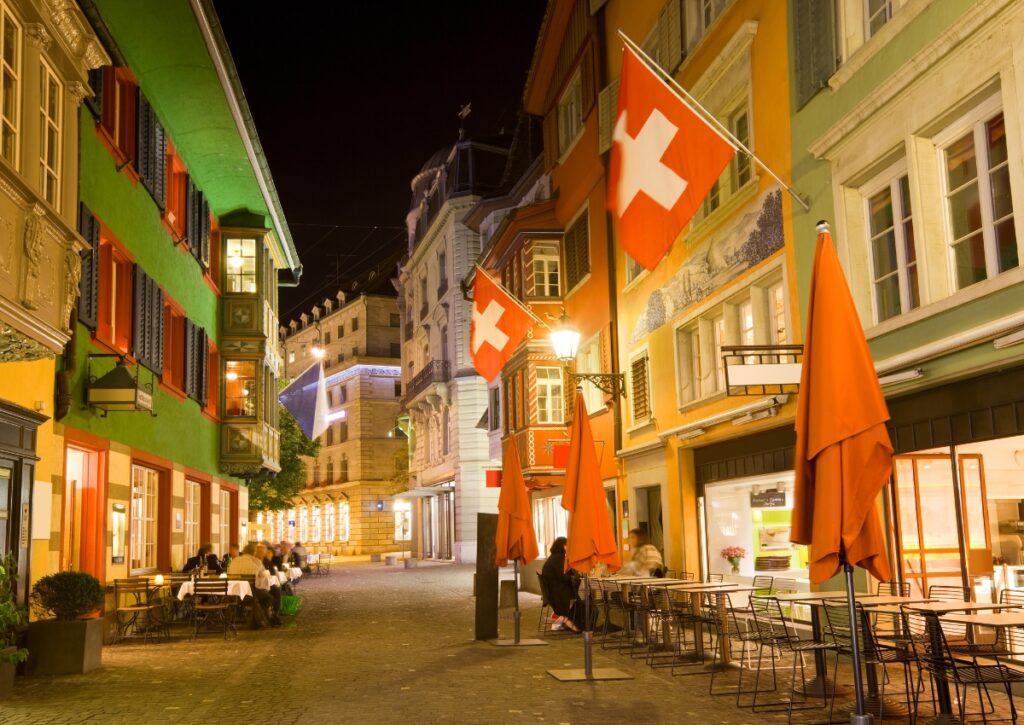
You board the train heading back to Zurich. The mountains or the rivers, or the small towns disappear behind you. You’re back at Zurich Hauptbahnhof by 7:00 PM, and the city suddenly feels efficient and modern and exactly the opposite of where you just were.
This is actually the magic of these day trips. You don’t have to choose between the Alps and urban energy. You get both. You get to wake up in a city, spend the day in places where time moves differently, and come back to the convenience of civilization for dinner.
These five-day trips—Rigi’s impossible climb, Appenzell’s devotion to linen, Jungfraujoch’s expensive views, Rapperswil’s quiet charm, and Stein am Rhein’s painted buildings—they’re not the most famous things in Switzerland. They’re better than that. They’re the things that make you understand why Switzerland has the reputation it does.
What Happens Next: Your Action Plan
This is where I tell you what to do next, and I’m going to be direct about it.
Subscribe and Follow for More (Yes, I’m Doing This)
Here’s the thing: I write these posts because I genuinely want you to have better trips. Not better in an expensive way, better in a “you actually enjoyed yourself and learned something” way. The way to stay updated on more posts like this is to:
Subscribe to A Tiny Traveler: Drop your email in the subscription box and get every new post directly. No spam, just real travel writing when I publish it. I currently write about Southeast Asia, Europe, and the occasionally questionable decisions I make in the name of good content.
Follow me on social media:
- Follow me on Pinterest (A Tiny Traveler): My Pinterest is your ultimate travel vision board! It’s where I share stunning photography, quick visual guides, and, most importantly, links to all my in-depth blog posts.
- Follow me on Instagram (a.tinytraveler): For daily doses of wanderlust, stunning travel photography, behind-the-scenes glimpses of my trips, and quick tips that will inspire your next getaway. See the world through my eyes!
- Like my Facebook Page (A Tiny Traveler): Join our vibrant community of fellow travel lovers! This is a great place to ask questions, share your own travel experiences, and connect with other readers and me.
Here’s What Else Might Help
For booking everything efficiently:
- GetYourGuide for activities, museum entries, and transport packages (often cheaper bundled)
- Booking.com for accommodations (and yes, use it even for day trips if you want to research restaurants and see what’s actually there)
- GetRentacar if you change your mind and want a car for a day (though I don’t recommend it for these trips)
For traveling smart:
- Revolut or Wise for actual exchange rates and no fees
- CheapOair for international flights into Zurich if you’re not already there
- Yesim for European SIM cards that actually work (better than local SIM cards because they follow you across borders)
Final Thoughts: What These Day Trips Actually Teach You
I’ve been traveling for a long time. I’ve been to 60+ countries. I’ve seen mountains that make the Alps look small. I’ve eaten in Michelin-starred restaurants. I’ve stayed in $20 per night hostels and $500 per night hotels.
But there’s something about Swiss day trips that’s quietly perfect. It’s the combination of accessibility and scale and the fact that everything genuinely works. You plan to be somewhere at 2:47 PM, and you’re there at 2:47 PM. The mountains are genuinely enormous. The food is genuinely good. The people are genuinely trying to help.
These five-day trips from Zurich aren’t bucket-list experiences in the way that climbing Everest or seeing the Northern Lights are. They’re the kind of trips that you can do this year, that won’t bankrupt you, that genuinely change how you see a part of the world.
Rigi teaches you that mountains don’t have to be obscure to be worth visiting. Appenzell teaches you that tradition isn’t a museum display, it’s something people actively maintain. Jungfraujoch teaches you that sometimes expensive is expensive for a reason. Rapperswil teaches you that lakes and castles are underrated. Stein am Rhein teaches you that painted buildings and painted houses have lasted 500 years for a reason.
Go to these places. Not because some blogger said they were worth seeing, but because they genuinely are. Eat the local food. Talk to local people. Get lost. Get un-lost. Bring proper shoes. Bring a journal. Bring an open mind.
And then come back here and tell me about it. Because the best part of travel isn’t the mountains or the food or the photos—it’s the stories. The ones you can’t quite explain to people who weren’t there, but you try anyway.
I’ll be here, writing about places worth going and things worth doing, waiting to hear where your travels take you next.
Safe travels, friend.
Want more stories like this? Subscribe to A Tiny Traveler and never miss an adventure. Follow me on Instagram, Pinterest, and YouTube for daily inspiration, detailed guides, and the occasional disaster that makes for good storytelling. See you on the road.
Frank


