

The capitals are behaving themselves on the map. Copenhagen, Stockholm, Oslo: sensible station names, manageable connections, plenty of coffee. Then your eye drifts west. There is Flåm, tucked at the end of a fjord, and Bergen, with its wooden waterfront and mountains behind it. Suddenly the railway journey looks rather more interesting than the tidy city break you started planning.
That is the version I want to help you build: a 10-day Scandinavia train itinerary connecting three capitals, the Flåm Railway, and Bergen, before returning to Copenhagen. There will be museum mornings and long stretches beside a window. There will also be several early starts. The fjords have many qualities; proximity to everything else is not one of them.
While working through this route, the return journey is the part I refuse to shrink into a cheerful arrow. Bergen to Copenhagen needs real time. I give it two days, with an overnight in Oslo, then continue through Gothenburg. That keeps the loop on rails without pretending you can have a leisurely breakfast in Bergen and casually materialize in Denmark.
This trip suits first-time visitors, couples, solo travelers, and people who enjoy train journeys themselves. Ten days is achievable, but active. You get two nights each in Copenhagen, Stockholm, and Bergen, one in Flåm, and two separate nights in Oslo. I’ll explain the costs, connections, worthwhile stops, and where an extra day would genuinely improve your holiday.
The Ten-Day Route, Including the Journey Back
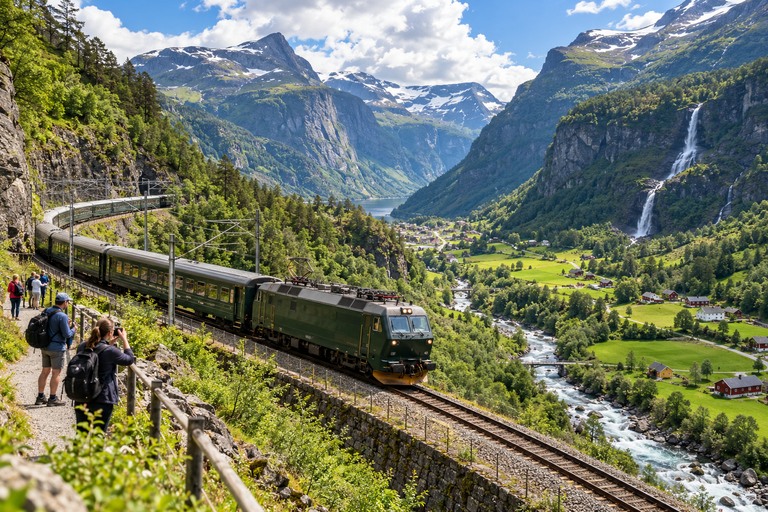
Copenhagen → Stockholm → Oslo → Myrdal → Flåm → Myrdal → Bergen → Oslo → Gothenburg → Copenhagen.
Myrdal and Gothenburg are connection points, not additional hotel stays. The main itinerary uses trains between overnight destinations; a boat-and-bus alternative on Day 7 is clearly explained below.
- Days 1–2: Explore Copenhagen; sleep there both nights.
- Day 3: Train to Stockholm; evening in Gamla Stan.
- Day 4: Stockholm museums, waterfront, and neighborhoods; second night there.
- Day 5: Train to Oslo; waterfront evening and overnight.
- Day 6: Train through Myrdal to Flåm; overnight beside the fjord.
- Day 7: Travel from Flåm to Bergen, by rail or the fjord alternative.
- Day 8: Full day in Bergen; second night there.
- Day 9: Bergen Railway to Oslo; overnight near the station.
- Day 10: Train through Gothenburg to Copenhagen; the loop finishes there.
The route requires nine nights before reaching Copenhagen on Day 10. I recommend a tenth hotel night there and an onward flight on Day 11. That buffer is outside the ten-day rail itinerary. Avoid attaching an inflexible flight to a long international train journey.
Allow roughly 5½–7 hours Copenhagen–Stockholm, 5–6 hours Stockholm–Oslo, 6–7½ hours Oslo–Flåm, 3½–5 hours Flåm–Bergen, 6½–8 hours Bergen–Oslo, and 8–10 hours Oslo–Copenhagen. These are planning windows including typical connections, not guaranteed schedules. Engineering works can change them.
My Tip: If you have 12 days, add one night in Oslo on the outward journey and one in Flåm. You gain a proper capital sightseeing day and a fjord day without moving hotels.
Book the Railway, Then the Beds
The operators and connections that matter
Use SJ for Copenhagen–Stockholm and Stockholm–Oslo. Some departures from Copenhagen require a change in Malmö. Search the entire journey and read the connection details before paying.
Use Vy for Oslo–Myrdal–Flåm, Flåm–Myrdal–Bergen, and Bergen–Oslo. Flåm is on a branch line, so there is no direct train from Flåm to Bergen. You climb back to Myrdal to rejoin the main railway.
For the return from Oslo, check Vy toward Gothenburg, then Öresundståg toward Copenhagen. DSB and Entur are also useful planning tools. Services and through-ticket options depend on your travel date.
Book required seat reservations, including on SJ high-speed trains, and inspect the conditions for every other service. With separate tickets, allow comfortable connections and check missed-connection protection. I would avoid choosing the shortest possible transfer merely to arrive twenty minutes earlier.
Does a rail pass make sense now?
With six travel days, a Eurail or Interrail pass deserves a proper comparison. Add up point-to-point fares, then compare the suitable pass, reservation charges, and services outside its coverage. Check your eligibility through Eurail or Interrail.
Do not assume the Flåm Railway is fully included. Check its current passholder discount and booking procedure separately. Fjord cruises, buses, and city transport may also require additional tickets.
My planning reserve is €350–€650 per person for the complete all-rail loop, including both Flåm Railway rides. That is an estimate for advance bookings, not a quote or ceiling. Busy dates and flexible fares can cost considerably more.
First check the railway connections, then Flåm accommodation, then the remaining hotels. The small fjord village is less forgiving of last-minute room hunting than a capital. Keep cancellation terms aligned while assembling the trip.
On Trip.com, compare flights into and out of Copenhagen, including bags and change conditions. If you find rail tickets there, compare the final fare and support arrangements with the operating railway.
Compare Copenhagen flights and travel options on Trip.com
Day 1: Copenhagen, With the Brakes Released
Get into town without making it a project
From Copenhagen Airport, the train suits hotels near København H and Vesterbro; the M2 metro suits areas around Kongens Nytorv and Nørreport. The ride to central destinations is around 15 minutes, plus waiting and walking.
Use Rejseplanen for the actual door-to-door route and fare. Allow roughly DKK 40–50 in your arrival budget for a standard public transport journey, then pay the current displayed price. Ticket products and published fare pages can change.
If you arrive exhausted, have substantial luggage, or need a prearranged vehicle, compare a Welcome Pickups transfer. Enter your flight, passengers, bags, and destination; check child seats or accessibility requirements directly. The value is door-to-door convenience, so compare the full quote with public transport before booking.
Let the waterfront do the introductions
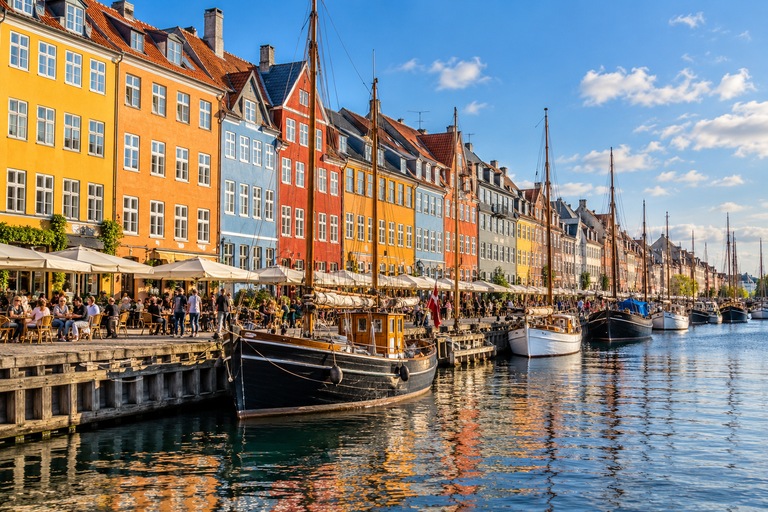
After dropping your bag, walk toward Nyhavn. The painted facades earn their photographs, but look beyond them: ropes pulled tight around mooring posts, chipped wood on older boats, glasses clinking against café tables.
For lunch, try smørrebrød, the Danish open-faced sandwich built on dense rye bread. A topping of pickled herring brings vinegar and salt; roast beef with horseradish gives you a sharper kick. Eat a heavily dressed version with cutlery unless you enjoy wearing lunch.
One optional splurge, then dinner
A canal tour can help you understand the city’s relationship with water, especially when you are too tired for more walking. Compare boarding points, duration, weather protection, and cancellation terms on GetYourGuide.
Compare Copenhagen canal tours on GetYourGuide
Eat near your hotel, check tomorrow’s opening hours, and sleep. Estimated spending excluding accommodation: DKK 350–650, with a tour or drinks potentially pushing you higher.
Day 2: Copenhagen Beyond the Postcard
A castle, a garden, and a sensible lunch
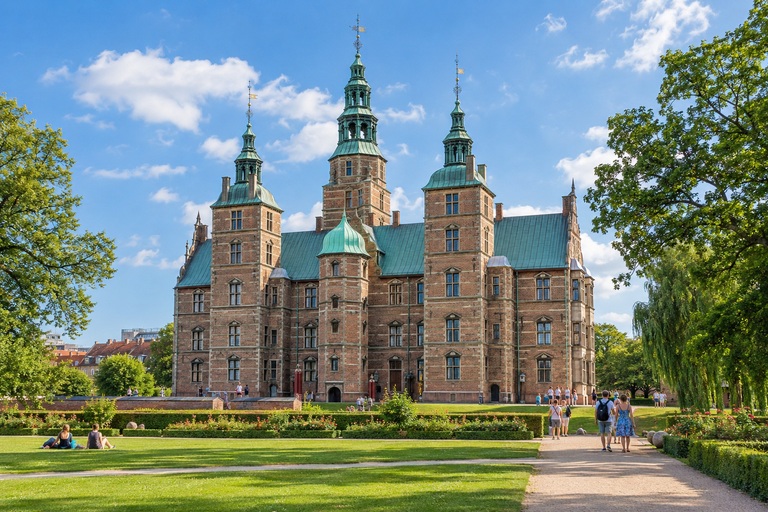
Make Rosenborg Castle your main morning attraction if royal history interests you. Its rooms and collections give the day some substance before you surrender to another bakery. Check tickets and visiting arrangements through the Royal Danish Collection.
Allow about 90 minutes to two hours, then spend time in the King’s Garden. If castles leave you cold, keep the garden and swap the interior visit for a museum you actually want to see. Interest beats obligation.
Walk to Torvehallerne for lunch. The covered market makes food browsing dangerously easy: bread with a crust that scatters across your plate, smoked fish, cheeses, and pastries arranged with suspicious precision.
Pick your afternoon personality
For neighborhood wandering, head toward Nørrebro. Browse independent shops, stop for coffee, and let the city become less ceremonial. This is a good afternoon for noticing how people live rather than collecting another entrance ticket.
Alternatively, visit Tivoli Gardens when its seasonal calendar matches your dates. Check the official Tivoli website before planning around it. Admission and rides can be separate purchases, and opening periods vary.
My Tip: Stay out of bicycle lanes, including when taking photographs. A lane is transport infrastructure, not an unusually convenient place to stand with your phone.
Before bed, buy tomorrow’s train snacks and confirm your departure. Estimated spending excluding accommodation: DKK 450–800, depending on attractions, dinner, and drinks.
Day 3: Cross the Water, Then Let Sweden Unroll
Make the train your daytime activity
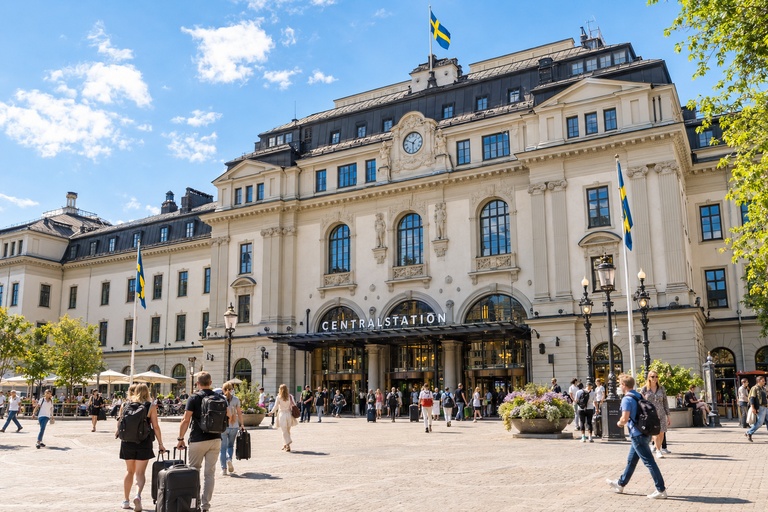
Aim for a morning departure toward Stockholm, allowing most of the day for the journey. Reach København H about 30 minutes before departure so you can find the platform without sprinting beneath a backpack.
The crossing toward Malmö includes the Øresund tunnel-and-bridge connection. Have your camera ready, but remember that railway windows reflect bright clothing. A dark layer near the glass helps; so does briefly putting the camera away.
Beyond the crossing, Sweden arrives in stretches of farmland, woodland, and occasional water. This is where the itinerary earns its title. Read a little. Look out. Fail to read because you are looking out.
Keep your passport or accepted travel document accessible, along with tickets. Save documents offline, charge your phone, and check your booking’s baggage rules. You need to lift and store what you bring without blocking aisles or doors.
Stockholm after the suitcase drop
From Stockholm Central, reach your hotel and leave the evening uncomplicated. Walk into Gamla Stan, where narrow streets open onto squares, and painted buildings seem to lean into the conversation.
For dinner, Swedish meatballs offer more than a familiar furniture-store reference: creamy sauce, potato, sharp lingonberry, and pickled cucumber make a persuasive combination. Vegetarian travelers will also find plenty of alternatives; check the actual menu rather than assuming a traditional restaurant has them.
Estimated local spending excluding hotel and intercity rail: SEK 450–750. A supermarket train lunch helps keep the lower end plausible.
Day 4: Stockholm’s Best Ship Had a Terrible First Day
Give the Vasa Museum proper time
The Vasa Museum on Djurgården is my key museum choice for this itinerary. The warship Vasa sank in 1628 and was raised in 1961. What remains is an enormous wooden argument for checking your engineering before inviting an audience.
Allow two to three hours if the subject catches you. Look from different levels; details that disappear from below become clearer when you change height. The dim light encourages you to stop trying to photograph everything and actually look.
Check Vasa Museum tickets and opening hours. Budget approximately SEK 200–250 for adult admission, confirming the rate for your date and eligibility for reductions.
Djurgården, then a proper fika
Take a fika break: coffee and something baked, consumed as an actual pause. A cardamom bun brings a warm, almost citrusy spice beneath its sugar; a cinnamon bun leans sweeter and more familiar.
For transport, SL operates the metro, buses, trams, and certain ferries. Its listed adult single ticket is SEK 43, valid for 75 minutes. Check current products through SL. Do not assume every sightseeing boat or archipelago service is included.
Finish above the water
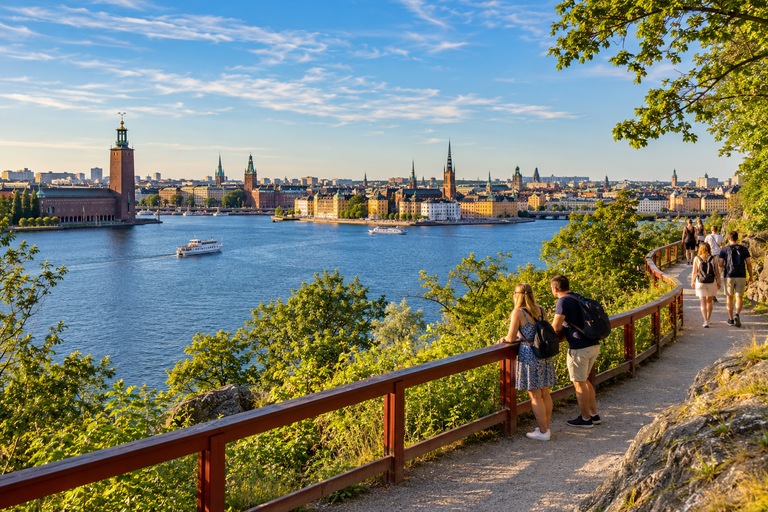
Head to Södermalm, then Monteliusvägen if the weather and your mobility permit. The elevated path gives you water, rooftops, and church spires without an admission desk. Uneven surfaces and winter ice deserve respect.
Estimated spending excluding accommodation: SEK 650–1,000, including the museum, ordinary meals, coffee, and local transport; guided activities may add more.
Day 5: Stockholm to Oslo, With an Evening Left Over
Another train, fewer decisions
Take a morning Stockholm–Oslo service when the timetable permits. Allow around 5–6 hours, checking the actual duration and whether any portion uses a replacement bus.
Review tomorrow’s connections at Myrdal, download the tickets, and check the mountain forecast. You will be traveling from the city to high ground before descending to Flåm; keep warm layers accessible.
On arrival at Oslo S, walk or take local transport to your hotel. Staying nearby simplifies tomorrow’s early departure and your return visit on Day 9.
Walk onto the city’s architecture
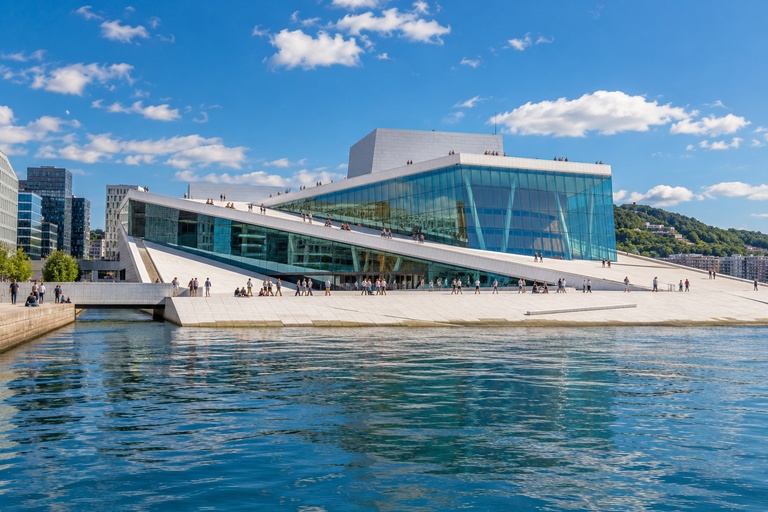
Explore Bjørvika, where the waterfront puts contemporary buildings close together. The Oslo Opera House is the obvious first stop: its sloping exterior invites a walk when conditions and access allow.
Follow closures and avoid icy sections. Good architecture does not improve your traction. In poor weather, enjoy the building from accessible ground-level areas instead.
For dinner, try fish soup if it appears on a menu that appeals to you: warm broth, dill, soft fish, perhaps a little cream. Alternatively, choose a food hall where everyone can order separately. Norwegian restaurant prices reward looking before sitting.
Estimated local spending excluding accommodation and intercity rail: NOK 450–800. Keep the evening modest and save tomorrow’s energy.
Day 6: Oslo to Flåm, When the Window Takes Over
Up to Myrdal, down to the water
Take a morning train from Oslo S toward Myrdal, then change for Flåmsbana, the Flåm Railway. Allow approximately 6–7½ hours overall, depending on the connection. Buy an itinerary that actually stops at Myrdal, with enough transfer time for your mobility and luggage.
At Myrdal, prepare for a smaller mountain station rather than a large shopping concourse. Bring food and water from Oslo, and follow platform information. Conditions can be colder than the forecast you saw for the city.
The Flåm Railway takes roughly one hour to descend about 20 kilometers, from Myrdal, around 867 meters above sea level, to the fjord. The train threads through tunnels and a steep valley; the scale changes constantly, from rock close beside the carriage to slopes opening beyond it.
Check the official Flåm Railway information for arrangements and book combined rail journeys through Vy. Do not accidentally buy a same-day return ticket when your plan is to stay overnight.
Give Flåm an evening
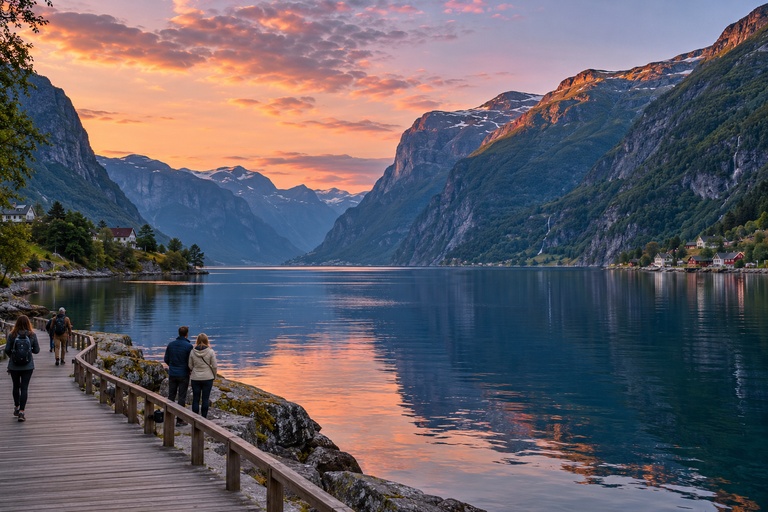
After checking in, walk beside Aurlandsfjord. You do not need to sprint toward another activity. Look at the height of the valley walls, the boats moving across the water, and how quickly a cloud changes the light.
Flåm is small and popular, not an undiscovered village waiting for your arrival. Staying overnight gives you a different pace from a brief daytime stop, although visitor numbers vary with the season and cruise schedule.
Reserve dinner if your hotel recommends it, especially when options are limited. Buy snacks for tomorrow and ask about breakfast timing. A bowl of fish soup, warm bread, and a seat near the window make a reasonable evening ambition.
Estimated spending excluding accommodation and rail: NOK 500–850. Optional excursions cost extra. Protect this evening from an overfilled schedule; tomorrow already includes another move.
Day 7: Flåm to Bergen, With Two Honest Options
The all-rail version
For the simplest continuation, take Flåm → Myrdal → Bergen. Allow about 3½–5 hours, depending on the connection. This retraces the branch line, then takes you west along the Bergen Railway.
The fjord version: boat, bus, then train
If the fjord cruise is your priority, replace that transfer with Flåm → Gudvangen by boat → Voss by bus → Bergen by train. This is a mixed-transport variation, not an entirely rail-based day.
The cruise travels through Aurlandsfjord and Nærøyfjord, with the latter part of the UNESCO-listed West Norwegian Fjords. Allow approximately two hours aboard, then additional time for disembarking, the bus, train, and connections. Reserve most of the day for the complete journey.
Use Norway’s best for cruise details and its Gudvangen–Voss bus information, then Vy for Voss–Bergen. Match the actual departures before buying individual tickets. A bus timetable matters more than a promotional photograph.
Carry your luggage through the route and verify baggage arrangements with each operator. If comparing a package on GetYourGuide, check whether it ends in Bergen, whether all transport is included, and whether it is guided or self-guided.
Compare Flåm fjord cruises and onward transport packages
Do not buy both complete alternatives. For planning, allow roughly NOK 1,000–1,700 for the boat, bus, and onward train, checking current quotes. Recalculate your rail budget because this replaces the second Flåm Railway ride and the rail route through Myrdal.
An arrival-evening cruise on Day 6 is another possibility, but only if the season’s departures and your train arrival leave a generous buffer. Otherwise, add a second Flåm night rather than gambling on a tight connection.
In Bergen, check in and keep dinner nearby. Estimated spending excluding accommodation and intercity transport: NOK 450–800.
Day 8: Bergen, Where the Weather Has Opinions
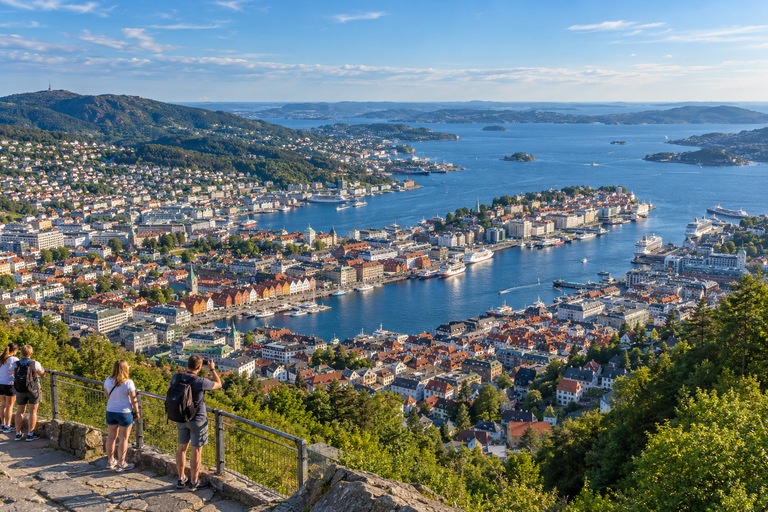
Start behind the wooden waterfront
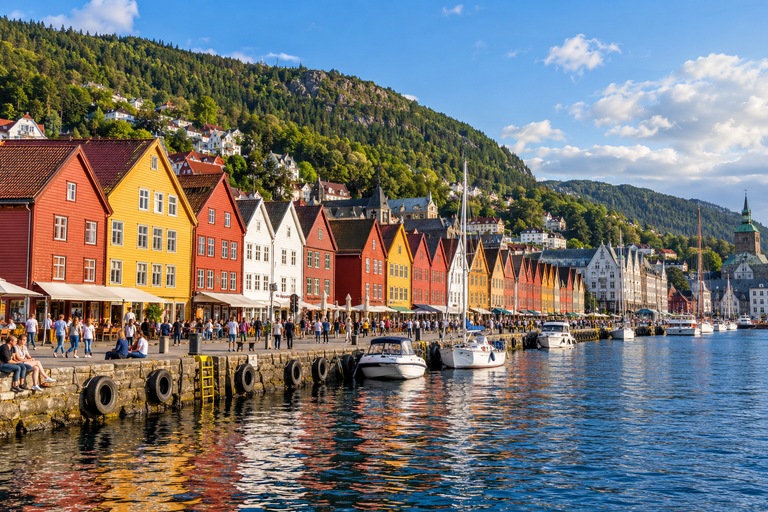
Begin at Bryggen, the historic wharf on UNESCO’s World Heritage List. The colored facades are the familiar photograph; the passageways behind them deserve your attention too. Step into the narrow lanes and notice timber, uneven lines, and the spaces between buildings.
For historical context, read UNESCO’s Bryggen overview or visit Bryggens Museum, checking its current opening hours. The waterfront makes more sense when you understand its role in trade rather than treating it as a row of attractive shopfronts.
Take the view when it is available
The Fløibanen funicular climbs to Mount Fløyen from near the center. Check the cloud before buying your ticket purely for the panorama. Paying to enter a cloud is a legitimate experience, but perhaps not the one you intended.
The operator currently lists adult return fares of NOK 145 in the winter pricing period and NOK 200–220 in summer, depending on purchase channel. Verify your date through Fløyen’s official ticket page.
At the top, choose a short, suitable path or simply enjoy the viewpoint. Do not turn a city stroll into an unplanned mountain hike. Rain, slippery ground, and limited daylight change what is sensible. Comfortable shoes and a waterproof layer earn their suitcase space here.
Lunch, then follow your interests
Walk through the Fish Market, but check prices before ordering. A market location does not automatically mean a bargain. Try fish soup or a seafood dish that suits your budget; ask what is local and seasonal rather than assuming everything is.
For something sweet, look for a skillingsbolle, Bergen’s cinnamon bun. The pleasure is uncomplicated: soft bread, cinnamon, sugar caught on your fingers. Coffee helps. Most things do, in the rain.
Spend the afternoon in Nordnes, or choose KODE for art if the weather turns. Check Visit Bergen for current attractions and Skyss for local transport. You do not need to cross the city repeatedly to fill one day.
Estimated spending excluding accommodation: NOK 650–1,100, including ordinary meals and selected activities. A restaurant splurge or additional tour increases that.
Day 9: Bergen to Oslo, the Long View Home
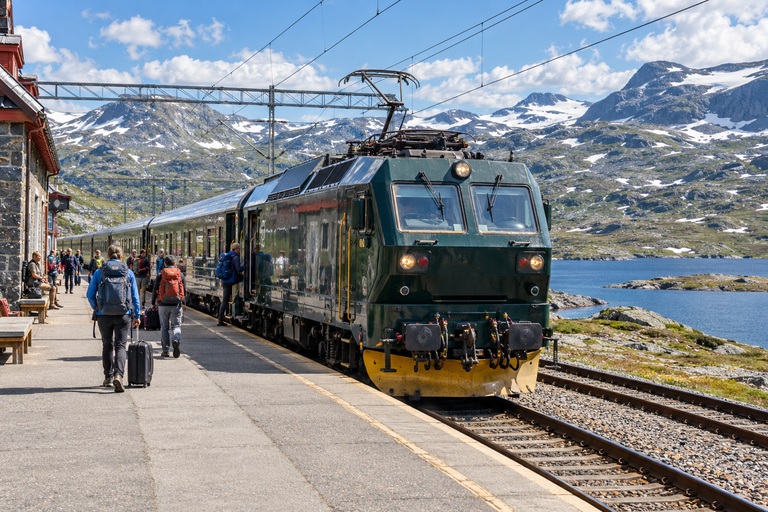
Take a daytime Bergen–Oslo train, allowing around 6½–8 hours. Check the exact service on Vy; engineering works can alter the journey. This is a travel day with scenery, not a full sightseeing day that happens to contain a train.
Sleep near Oslo S. An evening walk or simple dinner is enough. Avoid stacking an inflexible activity onto arrival. Check tomorrow’s international connections before bed, including changes at Gothenburg or any additional station shown on your ticket.
Estimated spending excluding accommodation and rail: NOK 400–700. Your overnight stop buys a break between two long journeys and a more manageable return.
Day 10: Oslo to Copenhagen, Closing the Loop
Travel from Oslo S toward Göteborg Central, then continue toward København H. Gothenburg and Göteborg are the same city; railway booking pages may use either name.
Allow approximately 8–10 hours overall, including connections, and use the actual date-specific timetable. The usual route runs down Sweden’s west coast and through Malmö. Some itineraries require additional changes; do not assume your booking matches a generic description.
You finish in Copenhagen that afternoon or evening if your chosen timetable runs as planned. I would stay overnight and fly onward the following day. A Day 11 departure is the recommended buffer, not a hidden tenth-day flight connection.
Budget for meals during transit and dinner in Copenhagen, plus the optional final hotel night. If you must finish the entire holiday within ten calendar days, consider a clearly labeled Bergen–Copenhagen flight instead of the two-day rail return, after checking suitable services. That changes the transport plan.
Where to Sleep Without Commuting Through Your Holiday
In Copenhagen, look near København H, Vesterbro, or a convenient metro stop. In Stockholm, Norrmalm is practical for the station, while Södermalm offers a different neighborhood feel with more transfer planning. In Oslo, Sentrum and Bjørvika simplify arrival and departure.
In Flåm, check the walking distance from the station and pier, and the availability of breakfast and dinner. In Bergen, the station, central waterfront, and Byparken area are practical starting points. Map the actual walk before booking.
My accommodation filters are embarrassingly unromantic: recent cleanliness reviews, manageable noise levels, luggage storage, breakfast cost, and actual walking distance to transport. A hotel described as “near the center” may have a philosophical understanding of “near.”
On Booking.com, map the property against your station and read recent comments about room size, stairs, elevators, and late arrivals. Check the cancellation terms of the exact rate, because different offers for one room can have different rules.
Compare stays along the complete Scandinavia rail route on Booking.com
The Budget Conversation Nobody Wants to Have at Checkout
These are planning estimates per person, not live quotes. Daily totals below cover lodging, meals, local transport, and modest sightseeing. They exclude international flights, intercity trains, insurance, shopping, and major splurges. Midrange figures assume two adults sharing a room; a solo private room usually costs more per person.
Copenhagen daily budget
- Budget traveler: approximately DKK 700–1,000 with a hostel bed and inexpensive meals.
- Midrange traveler: approximately DKK 1,100–1,700 sharing a private room.
- Coffee: allow DKK 35–55; bakery item: DKK 25–45.
- Casual main course: approximately DKK 150–250; supermarket lunch: DKK 50–90.
Stockholm daily budget
- Budget traveler: approximately SEK 850–1,250 with hostel accommodation.
- Midrange traveler: approximately SEK 1,300–2,000 sharing a private room.
- Coffee: allow SEK 40–60; bun: SEK 35–55.
- Casual main course: approximately SEK 170–280; supermarket lunch: SEK 70–120.
Oslo and Bergen daily budget
- Budget traveler: approximately NOK 950–1,400 with a hostel bed.
- Midrange traveler: approximately NOK 1,500–2,300 sharing a private room.
- Coffee: allow NOK 35–65; bakery item: NOK 35–60.
- Budget restaurant meal: approximately NOK 190–350; supermarket lunch: NOK 80–140.
Flåm and the complete trip
For Flåm, allow roughly NOK 1,700–2,800 per person per day, sharing a private room with meals, before rail or cruises. Limited room supply can push prices higher. A hostel or cabin may cost less, but check bedding, cleaning charges, bathrooms, and availability instead of assuming a cheap bed exists.
For ten days and nine nights, my working estimate is €1,300–€1,900 per person on a careful budget, or €2,000–€3,200 sharing midrange rooms, including the all-rail loop. These are rounded planning allowances, not live quotes. They exclude international flights, insurance, the optional fjord variation, and the recommended final Copenhagen overnight.
Recalculate with actual room prices and train fares, then add 10–15% contingency. Single occupancy, summer demand, late booking, restaurant meals, and premium activities can exceed these ranges. A budget that survives only if nothing changes is less a budget than a dare.
Three Currencies, One Phone, and Fewer Nasty Surprises
Pay attention to the letters after the number
Denmark uses DKK, Sweden uses SEK, and Norway uses NOK. All three may show prices as “kr,” which is wonderfully unhelpful when you are mentally comparing lunch bills.
Cards are widely accepted. Carry a backup payment method separately and choose the local currency when a terminal offers conversion into your home currency. That leaves conversion to your card provider rather than the merchant’s service.
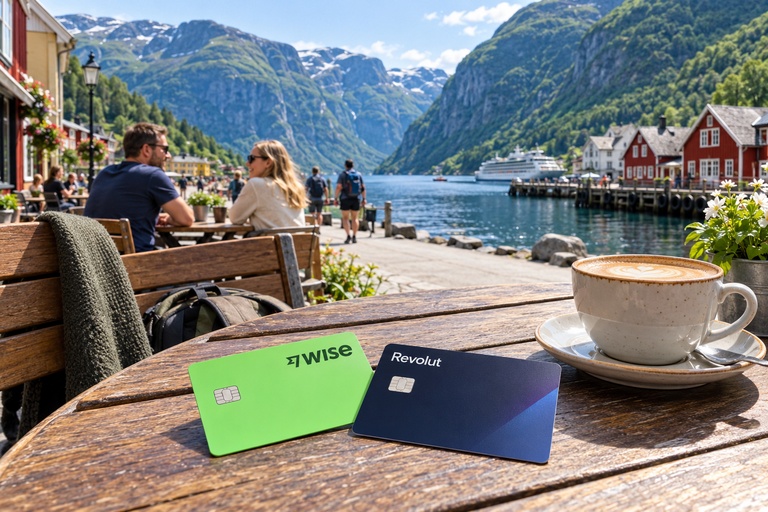
Compare Revolut and Wise before departure if your existing card has expensive foreign spending terms. Check account availability, conversion charges, ATM limits, delivery costs, and plan conditions for your country. Neither is automatically free for every transaction.
→ Check Revolut’s travel spending options
→ Compare Wise’s card and currency conversion fees
Keep your tickets available when the signal disappears
Check your existing mobile plan first. If you need data, compare a regional eSIM on Trip.com, explicitly confirming coverage in Denmark, Sweden, and Norway. A product labeled “Europe” still needs its country list checked.
Verify your phone is unlocked and supports eSIM, then check activation timing, validity, data allowance, hotspot rules, and whether calls are included. Install according to the provider’s instructions, using reliable Wi-Fi, and keep offline maps and tickets as backup.
Insure the trip you are actually taking
On VisitorsCoverage, compare policies available for your residence and destinations. Look at emergency medical cover, evacuation, cancellation, delays, baggage limits, and exclusions rather than choosing solely by the lowest premium.
Check preexisting-condition provisions and any time-sensitive purchase requirements. Read how the policy handles rail disruption and separately booked connections; reimbursement depends on the contract and circumstances, not the reassuring size of a website headline.
Small Decisions That Keep Ten Days Enjoyable
Choose your season, then pack for the actual forecast
For this cities-and-fjords route, I would start by comparing late May, June, and early September. Summer offers long evenings but can bring higher accommodation prices. Winter needs more timetable and daylight planning, particularly around Flåm. The railway trip and optional excursions have different operating patterns; verify every connection for your season.
Pack comfortable water-resistant shoes, a rain shell, layers, a compact bag, a power bank, and a refillable bottle. Add gloves and warm insulation in colder months. Check plug compatibility and your devices’ voltage requirements before packing adapters.
Bring luggage you can manage yourself. If you need step-free routes or boarding assistance, arrange them with the operators ahead of travel. Historic streets and viewpoints can involve cobbles, slopes, or stairs even when the wider transport network is accessible.
Paperwork and ordinary street sense
Check your nationality’s entry requirements through the official EU travel information. Denmark, Sweden, and Norway are in the Schengen area, but that does not remove document requirements or the possibility of border checks.
For many non-European visitors, the 90-days-in-180 rule applies across the area collectively, not separately in each country. Verify your own status, passport validity, visa needs, and any travel authorization requirements before booking.
Keep valuables secure in stations and crowded areas. Confirm ticket activation before boarding local transport. English is widely used in visitor settings, but a patient greeting and a little courtesy still do useful work.
Travel lighter on the places you came to enjoy
- Use trains between capitals and walk or take public transport within them.
- Refill from drinking-water taps where safe and permitted; you rarely need a procession of plastic bottles.
- Keep the two-night stays in Copenhagen, Stockholm, and Bergen, and add time in Flåm if you can.
- Choose local businesses and seasonal food, and try some plant-based meals.
- Use marked paths, obey island restrictions, and carry litter back.
- Ask before photographing people closely, and keep doorways, cycle lanes, and residential entrances clear.
If you extend into countryside poorly served by public transport, compare GetRentacar for your exact pickup location and dates. Check availability, mileage, deposit, insurance excess, cross-border permission, and return fees before paying. This ten-day rail loop needs no rental car.
When the Railway Has Other Ideas
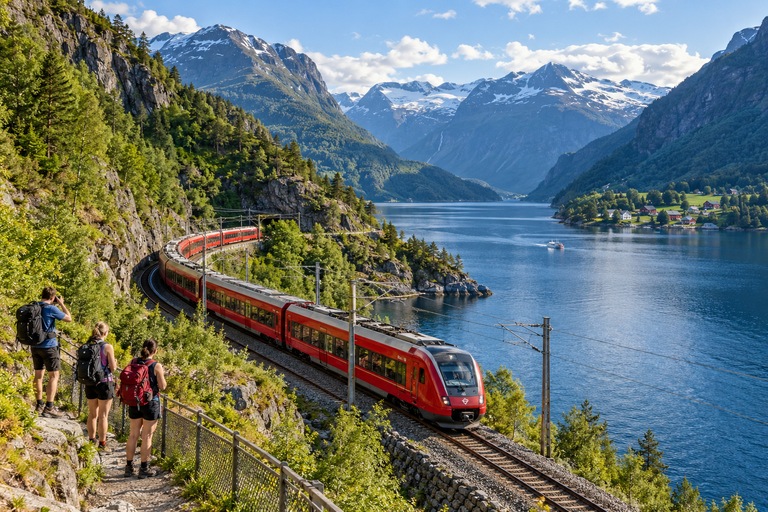
If a train is delayed or canceled, check the operator’s app and station screens, then contact the railway or ticket seller. Keep tickets, receipts, and disruption notices. Ask about rerouting and assistance before purchasing expensive alternatives. Protection depends on the booking arrangement and applicable rules.
For a gentler trip, extend to 12 days or finish in Bergen and arrange your onward journey separately. Ten days covers the full loop, but it does not give every destination equal time. Oslo gets two short visits; Flåm gets one night. That is the compromise behind the headline.
The Part That Stays After the Train Stops
The best reason to choose this 10-day Scandinavia itinerary by train is the change of scale. You begin with streets, menus, museums, and the familiar business of finding a hotel. Then the railway climbs, the valley deepens, and Flåm puts your carefully arranged plans beside something much larger.
That does not make logistics less important. Quite the opposite. Book the connections, secure the Flåm room, and give the journey home its two days. Once those pieces fit, you can spend less time worrying about the next step and more time looking through the glass.
I would choose one paid experience I truly wanted, keep the rest selective, and resist filling every arrival evening. The Vasa Museum, Flåm Railway, and Bryggen already give this trip distinct chapters. You do not need another twelve ticket confirmations to prove you traveled properly.
Use the booking links throughout this guide to compare accommodation, transport, insurance, and activities, reading the conditions before paying. Start with your dates and route, then match purchases to the holiday you actually want. If an extra night makes the journey better, that is money worth considering before another expensive excursion.
Subscribe to A Tiny Traveler for practical itineraries, honest budgets, and food stops worth your time. Follow A Tiny Traveler on Pinterest, and save this guide to your Scandinavia travel board so the full route is there when you start booking. I have plenty more journeys to share, including the small decisions that make them easier.
Your best memory might arrive between the planned stops.
When you reach Copenhagen again, take a seat before opening the next booking app. Somewhere behind you, the mountain railway is still making its slow descent toward the water.
Frank


