
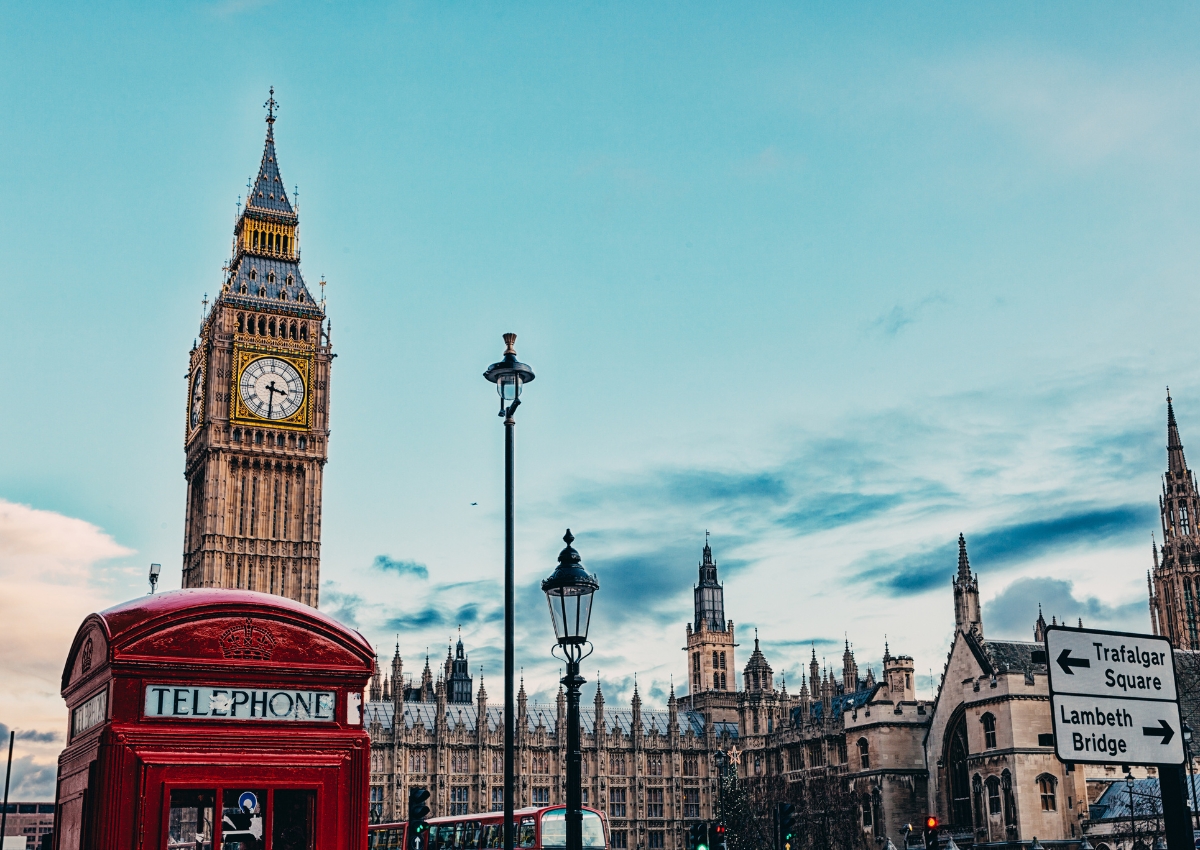
Look, I’ll be honest with you. The first time someone suggested I leave London for the day, I thought they were mad. Leave London? The city with more museums than I have socks, where you can eat Malaysian laksa at midnight and argue about football with a cabbie who sounds like he’s auditioning for a Guy Ritchie film? But here’s what nobody tells you about London: as incredible as it is, the city can sometimes feel like it’s trying too hard. Too loud. Too expensive. Too much. And that’s when I discovered that some of the most memorable experiences I’ve had in England happened when I got on a train and went somewhere else for eight hours.
These day trips aren’t just “things to do when you’re bored of London”—they’re the parts of Britain that Londoners actually brag about. Ancient universities where you can walk the same paths as Darwin and Tolkien. Coastal towns where the fish and chips actually taste like the sea. Roman baths, where you can still see the fingerprints of the builders pressed into the mortar two thousand years ago. And yes, there’s a place where the rocks look like they were stacked by giants who’d had a few too many pints. Each of these trips taught me something different about England, and more importantly, gave me stories that didn’t involve complaining about the Tube.
The beauty of day-tripping from London is that it’s shockingly easy. Britain’s rail network, for all the griping you’ll hear about it, can have you in a completely different world in under two hours. You can wake up in your hotel in King’s Cross, spend the day wandering medieval streets or climbing dramatic cliffs, and be back in time for dinner in Shoreditch. And the costs? Far more reasonable than you’d think. A return train ticket will typically run you £20-60 depending on how far you book in advance (seriously, book ahead—it’s the difference between £25 and £120 on some routes). Pack a lunch from a Tesco Express (£5-7 for a proper sandwich, crisps, and fruit), bring a refillable water bottle, and you’re looking at a day out for £30-80 total, depending on entrance fees. Compare that to London, where you can easily blow £100 just trying to have a “casual” day out.
Now, I’m assuming you’ve got your accommodation sorted, but if not, I’ve consistently had good luck with Booking.com—their cancellation policies saved me when my plans changed three times during one particularly chaotic week, and their filters actually work when you need to find something near a specific station. For these day trips, staying anywhere near a major London terminus (King’s Cross, Paddington, Victoria, Waterloo) will make your life infinitely easier. Right, let’s get into the trips that convinced me London is better when you occasionally leave it.
1. Bath: Where Romans Had Better Taste Than Most Modern Developers
Distance from London: 1.5 hours by train from Paddington
Estimated Cost: £40-60 return train + £25 Roman Baths entry + meals
I stepped off the train in Bath on a grey Tuesday morning, and the first thing I noticed was how quiet it was. Not library quiet—just… calm. After days of London’s constant hum and the faint anxiety that someone is always about to bump into you, Bath felt like someone had turned the volume down on Britain. Then I turned a corner and saw the honey-colored Georgian buildings, and I understood why Jane Austen set two novels here. The place looks like someone made architecture out of shortbread.
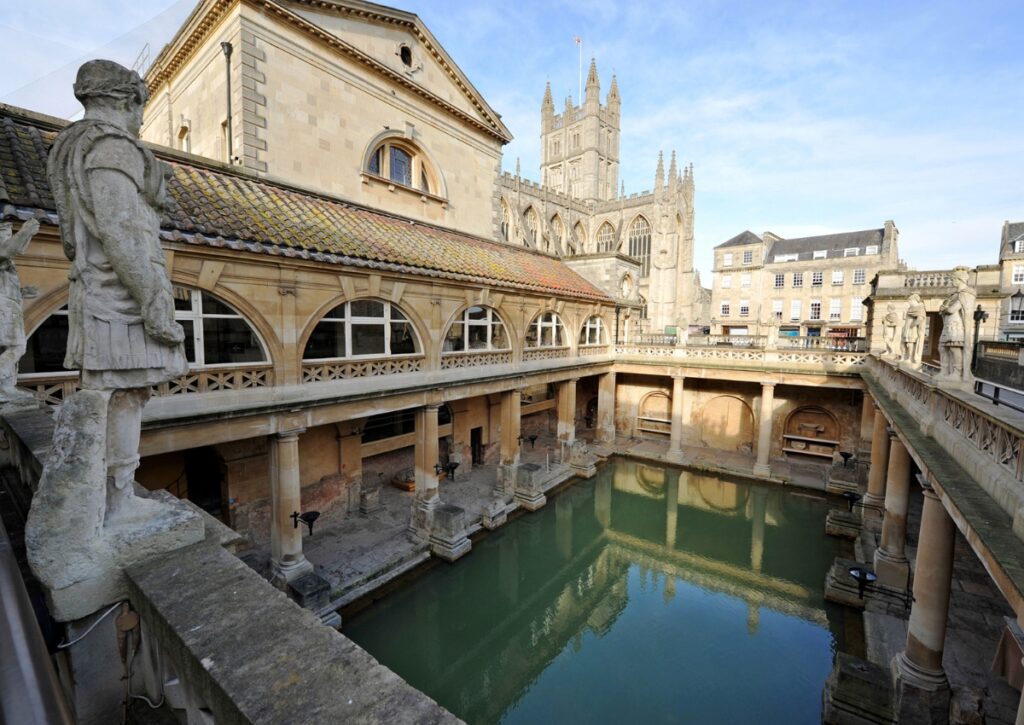
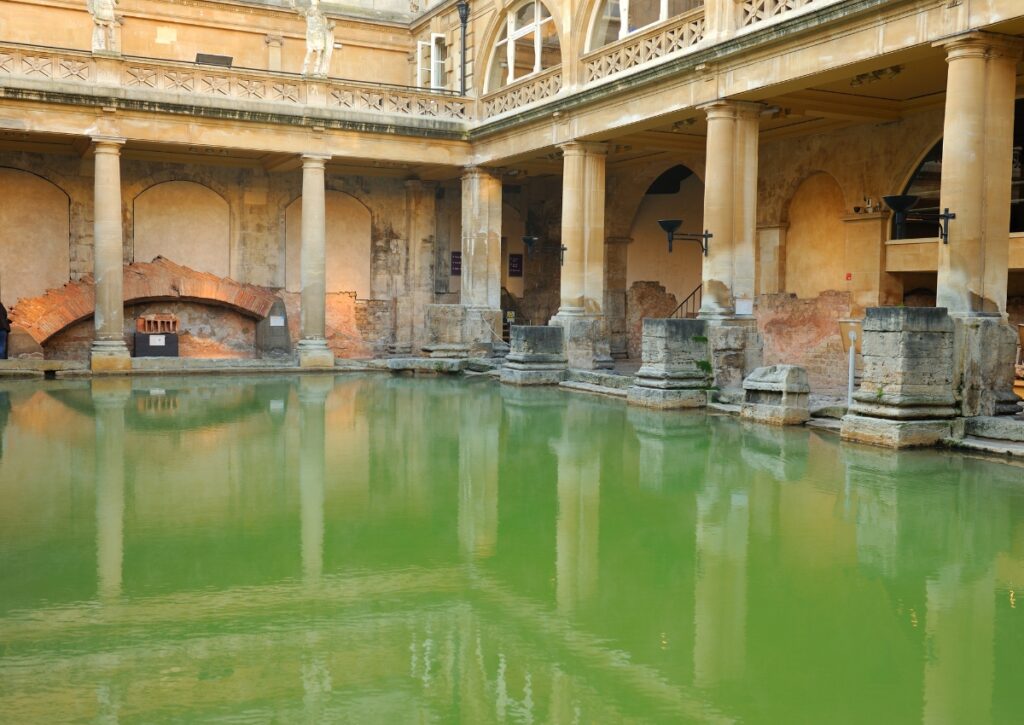
But I’m getting ahead of myself. Bath isn’t famous because it’s pretty—though it absolutely is. It’s famous because the Romans showed up here in 60 AD, found hot springs bubbling out of the ground, and thought, “Right, let’s build an absolute masterpiece.” The Roman Baths are the most complete Roman site in Britain, and walking through them is genuinely surreal. You’re looking at lead pipes that still carry water, floor tiles laid by hands that have been dust for two millennia, and a pool of steaming green water that’s been continuously heated by the earth for longer than England has been England. The museum does an excellent job with the audio guide (included in your ticket), which lets you hear “Romans” gossiping about local scandals while you walk where they walked.
Here’s something they don’t advertise enough: the temperature in the baths is around 46°C (115°F), which means the entire complex is warm and humid. In winter, it’s heaven. In summer, it’s like walking into someone’s mouth. Plan accordingly. Also, you can’t swim in the Roman Baths themselves anymore—the water isn’t treated, and archaeologists get twitchy about preservation—but if you’re desperate to bathe Roman-style, the modern Thermae Bath Spa lets you swim in naturally heated water on a rooftop pool with views across the city. It’s £39 for two hours, which is expensive, but how often do you get to swim in hot springs in England?
After you’ve had your fill of ancient plumbing (and honestly, the engineering is more impressive than most of what we build now), head up to The Royal Crescent. This is a sweeping curve of 30 terraced houses built in the 1770s, and it’s one of those views that makes you understand why Georgians thought they were so clever. The architecture is elegant without being fussy—imagine if someone designed buildings the way a violinist plays a slow movement. You can visit Number 1 Royal Crescent (£12.50 entry) to see how the wealthy lived in Jane Austen’s time. Fair warning: the toilet situation was grim, even for rich people. Makes you appreciate modern plumbing.
For lunch, skip the tourist traps around the baths and walk ten minutes to The Chequers, a pub that’s been feeding people since 1776 and still does a proper steak and ale pie. The gravy is dark and thick with actual flavor, not just brown water, and the pastry doesn’t disintegrate the moment you touch it. About £14 for a main, and you won’t need dinner. If you’re vegetarian, Acorn Restaurant does elegant plant-based food that doesn’t taste like punishment—the tempura cauliflower with miso glaze actually made me reconsider my relationship with vegetables.
In the afternoon, if you have energy left, climb up to Bath Abbey (£7.50 suggested donation). The fan-vaulted ceiling looks like frozen lace, and there’s something deeply satisfying about standing in a building that’s been a place of worship since 757 AD. Continuity like that puts your own problems in perspective. If heights don’t scare you, the tower tour takes you up 212 steps with increasingly narrow spiral staircases until you emerge at the top with views across the entire city and the surrounding hills. Your legs will hate you, but your camera will be thrilled.
One thing that surprised me about Bath: it’s hilly. Properly hilly. The kind of hills that make you question your life choices after a large lunch. But that’s also part of its charm. You’ll round a corner, climbing some residential street and suddenly have a postcard view of Georgian crescents stepping down toward the river. Wear comfortable shoes. Those fashionable boots you brought? They will betray you.
For getting around Bath efficiently, I’ve found GetRentacar useful when I wanted to extend the day trip to nearby villages—their rates for a single day (around £30-45) beat the larger companies, and you can pick up right in Bath. But honestly, the city center is walkable if you’ve got reasonable fitness and decent footwear.
Before you leave, do yourself a favor and grab a Sally Lunn’s bun from the tearoom of the same name. It’s a type of sweet bread that’s been made in Bath since the 1680s, and yes, it’s basically brioche, but there’s something about the combination of butter melting into warm bread after a day of walking that feels like what comfort food was invented for. Split one if you’re being sensible. I ate a whole one. No regrets.
Sustainable tip: Bath is compact and walkable—you genuinely don’t need any transport once you’re in the city center. Fill your water bottle from taps (the water quality is excellent), and consider visiting mid-week to avoid the worst crowds, which helps reduce pressure on the historic sites.
2. Oxford: Where Every Third Person Is Probably Smarter Than You
Distance from London: 1 hour by train or coach
Estimated Cost: £15-40 return (coach is cheaper) + £15-20 for college entries + food
Oxford made me feel simultaneously inspired and inadequate. Within ten minutes of arriving, I’d walked past buildings where Christopher Wren drew his first plans, where C.S. Lewis imagined Narnia, where Tolkien muttered about his invented languages, and where some current student was probably solving mathematical problems I couldn’t even understand. The weight of genius in this city is almost comical. But here’s the thing about Oxford: it doesn’t take itself too seriously. For every grand stone college, there’s a pub where students have been carving their initials into tables since 1650. It’s intellectual, yes, but also wonderfully lived-in.
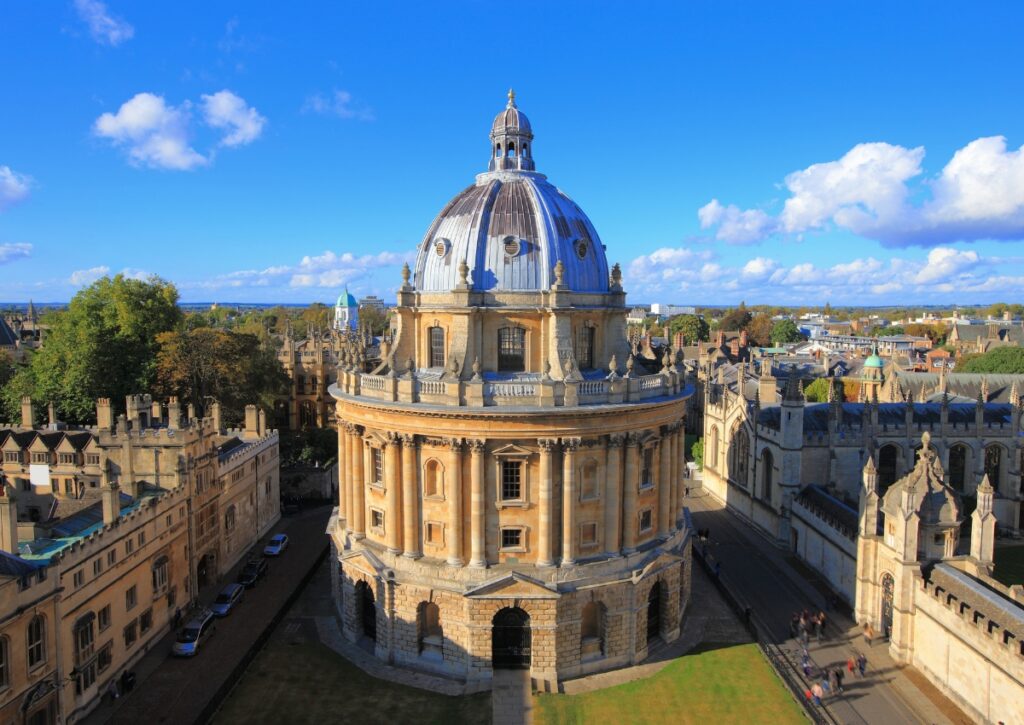
Start with Christ Church College (£17 entry), and yes, it’s the one from Harry Potter—the staircase where Hogwarts students first enter the Great Hall is here, and the actual dining hall provided direct inspiration for the films. But the Potter connection undersells the place. This college has produced 13 British prime ministers, which says something about British politics, I’m not sure what. The architecture is absurdly grand: Tom Tower by Christopher Wren, a cathedral that serves as the college chapel (the only college chapel in the world that’s also a cathedral), and a meadow where you can walk along the river and watch cows graze within sight of centuries-old spires.
The thing nobody warns you about visiting Oxford colleges: they have extremely specific opening hours that change based on academic terms, exams, and apparently the phase of the moon. Check before you go. I once showed up at Magdalen College (£9 entry, pronounced “Maudlin” because English pronunciation is a practical joke) during exam period and couldn’t get in. When I did finally visit, it was worth it. The cloisters look like someone built a medieval monastery and forgot to let it decay, and the deer park—yes, they have deer just wandering around—makes you feel like you’ve stumbled into a fantasy novel.
For the best overall experience without the crowds, hit Merton College (£4 entry). The library here is the oldest continuously functioning university library in the world, dating to 1373. The reading room has the kind of silence that feels physical, and the wooden desks are worn smooth by six centuries of students probably panicking about essays. The chapel has some of the finest medieval stained glass I’ve seen, and the gardens are peaceful enough that you might actually hear yourself think. It’s less famous than Christ Church, which means it’s also less crowded. Sometimes being second-best is actually better.
Between colleges, get lost in the Covered Market—it’s been here since 1774 and still feels properly local rather than tourist-ified. Brown’s Café does a breakfast that will sort you out until dinner (full English with properly crispy bacon and eggs that aren’t cooked to death, about £10), and Georgina’s Café has cakes that could convert you to a new religion. The market also has a fantastic cheese shop where the vendor let me taste six different cheddars before I bought anything, which is either exceptional customer service or concern for my nutritional state.
For lunch, The Turf Tavern is a 13th-century pub hidden down a narrow alley (they give directions from nearby colleges because addresses don’t help). The route to find it involves walking past part of the old city wall, which makes the whole thing feel like a quest. The food is decent pub standard—nothing revolutionary, but a solid ploughman’s lunch with sharp cheddar and pickle that has some actual flavor. About £12-15 for food. But you’re here for the atmosphere: low ceilings, uneven floors, walls covered in old photographs, and the knowledge that Bill Clinton supposedly smoked (but didn’t inhale) here during his student days.
Don’t skip the Bodleian Library. You can’t enter the reading rooms without being a researcher, but the guided tours (£9-15 depending on which tour) take you into parts of a library that’s been collecting books since 1602. Duke Humfrey’s Library, one of the oldest reading rooms, appeared in Harry Potter films but is magnificent for reasons that have nothing to do with movies. The ceiling is painted with the arms of the university, the shelves are original Tudor oak, and the smell is that particular combination of old paper and furniture polish that libraries used to have before they became “media centers.” If you’re booking a tour, do it online in advance—they sell out, especially in summer. GetYourGuide has good options for combination tours that include the library and several colleges, usually around £60, which saves you queueing multiple times.
One afternoon, I climbed St. Mary’s University Church tower (£6) for the view across the city. It’s 127 steps up a tight spiral staircase, and at several points, I questioned whether the view would be worth potentially dying of claustrophobia. It was. From the top, you see why they call Oxford “the city of dreaming spires”—dozens of towers and spires poke up through the city like stone forests. You also see how small the historic center actually is, surrounded by very normal British residential areas. It’s a good reminder that Oxford is a real city with real people, not just a theme park of academia.
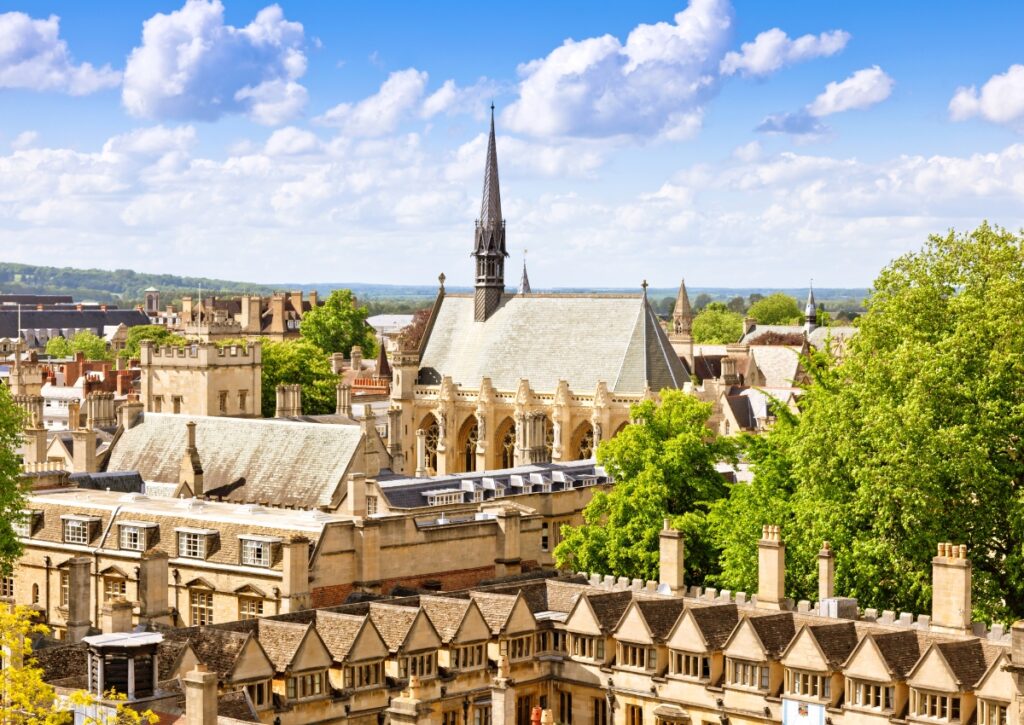
If you’re into literary history, the Eagle and Child pub is where the Inklings—Tolkien, C.S. Lewis, and their writer mates—met every Tuesday morning in the 1930s and 40s to drink beer and read their work-in-progress to each other. Imagine sitting in a pub and listening to Tolkien read chapters of The Lord of the Rings before anyone knew what it was. The pub now has its corner marked with a plaque, and while the literary lightning has moved on, it’s still a proper pub with good beer. I had a pint of local ale and tried to feel inspired. Mostly, I just felt slightly drunk.
Sustainable tip: Oxford is extremely walkable—the historic center is compact and mostly pedestrianized anyway. Rent a bike from one of the many cycle hire places (£10-15/day) to feel like an actual student and cover more ground. The city’s flat, which makes cycling absurdly easy.
3. Stonehenge and Salisbury: Ancient Mysteries and Gothic Perfection
Distance from London: 1.5-2 hours
Estimated Cost: £50-80 for a tour, or £35-50 for train to Salisbury + £10 bus to Stonehenge + £24 Stonehenge entry
Right, let’s address the elephant in the room: Stonehenge can be disappointing. I’m not trying to ruin it for you, but I’ve met too many travelers who show up expecting transcendence and instead get a distant view of stones behind a rope barrier while coach groups mill around the gift shop. The stones are impressive, yes—massive sarsen blocks that weigh 25 tons each, transported from quarries 20 miles away using technology we still don’t fully understand, arranged in ways that suggest sophisticated astronomical knowledge. All of that is true. But you view them from about 10 meters away, you can’t touch them, and the site feels stage-managed in a way that ancient monuments probably shouldn’t.
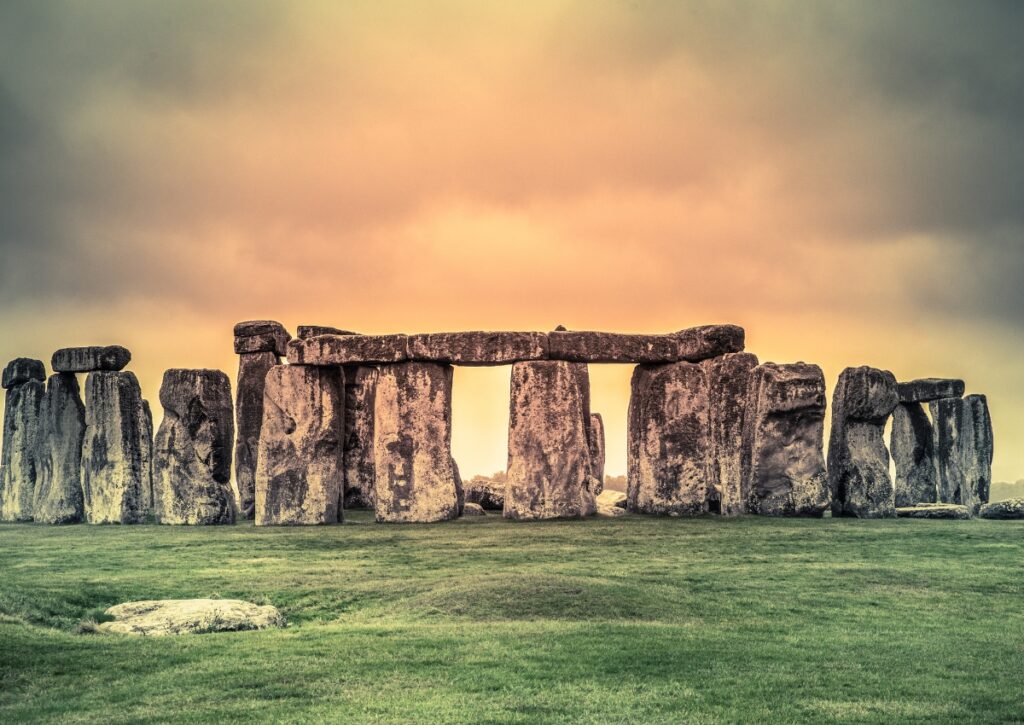
That said, I still think Stonehenge is worth seeing. Sometimes the overhyped things are overhyped for a reason. Go early (the first entry slot is 9:30 am and is always the least crowded), and approach with the right expectations. You’re seeing one of the most recognizable archaeological sites on Earth, built around 2500 BC by people who didn’t have written language, metal tools, or wheels. The scale alone is impressive—standing near a 25-ton stone that was somehow lifted into place 4,500 years ago makes your own logistical problems feel trivial. The landscape around the stones is also part of the experience: wide Wiltshire plains, huge sky, and the sense that you’re standing somewhere that’s been significant to humans for longer than we’ve had cities.
The practical stuff: book your ticket in advance through the English Heritage website (£24 for adults). Tickets are timed entry, so you won’t be able to just show up. If you’re driving, consider parking at Salisbury and taking the Stonehenge Tour Bus (£16 return), which also gives you hop-on-hop-off access to Old Sarum, the ruins of the original Salisbury settlement. If you’re using public transport from London, get the train to Salisbury (around £35-50 return if booked ahead) and then the dedicated Stonehenge bus. The whole setup is surprisingly efficient once you figure out the schedule.
For tours that handle all the logistics, GetYourGuide offers several combinations—usually Stonehenge plus Bath or Windsor, ranging from £85-120 depending on what’s included. The guides vary wildly in quality (I’ve had brilliant ones who knew obscure facts about Neolithic pottery, and I’ve had one who mostly talked about his divorce), but the convenience of having transport sorted is worth something, especially if you’re short on time.
Now, here’s my actual tip: combine Stonehenge with Salisbury, and honestly, you might enjoy Salisbury more. Salisbury Cathedral is one of those buildings that makes you understand why medieval people believed in God—not because of theology, but because of how else do you explain humans creating something this beautiful? The spire is the tallest in Britain (123 meters), and the entire cathedral was built in just 38 years in the 13th century, which gives it an unusual architectural consistency. Most medieval cathedrals took centuries and ended up as style mashups. Salisbury is all Early English Gothic: impossibly tall columns that look too thin to hold up the roof, huge windows that flood the interior with light, and fan vaulting that makes geometry look divine.
Entry is £10 suggested donation, and for once, “suggested” actually means suggested—they won’t stop you if you genuinely can’t afford it, though obviously pay if you can because maintaining medieval buildings is expensive. The highlight is the Chapter House, an octagonal room with one central column supporting the entire roof. The walls are covered with the best-preserved frieze of Old Testament scenes in England, carved around 1260. But the real treasure is in a case in the corner: one of the four surviving original copies of the Magna Carta from 1215. The actual document that began the concept of the rule of law in English-speaking countries is just sitting there behind glass while you eat your sandwich nearby.
You can climb the cathedral tower (£17.50 for the tower tour), which involves 332 steps and several moments where you’re climbing through the actual medieval structure—past the clock mechanism from 1386 (the oldest working clock in the world), through the roof space where you can see the wooden beams supporting all that stone, and finally emerging at the base of the spire with views across Wiltshire. The guide explained how the spire weighs 6,500 tons and has been slowly sinking and tilting since it was built, which added a certain thrill to standing underneath it.
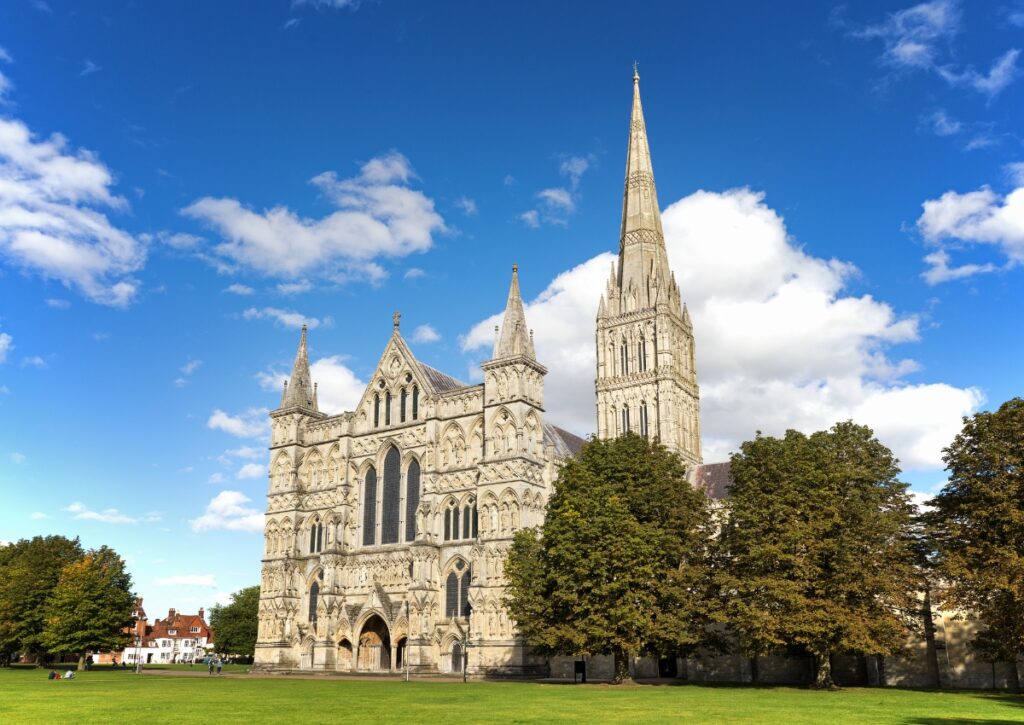
The town itself is lovely in that effortlessly English way—medieval streets, half-timbered buildings, and more pubs than seems necessary for a city of 40,000 people. Have lunch at The Haunch of Venison, a pub from 1320 with leaning walls, exposed beams, and a mummified hand of a card cheat supposedly found in the building. The food is gastropub standard (good ingredients cooked competently, about £15-18 for mains), but the building is the real attraction. The bar leans at an alarming angle, and after two pints, you won’t be able to tell if it’s the building or you.
If you have time before your train back, walk along the River Avon through the Water Meadows. The view back toward the cathedral spire across the meadows is one of those scenes that’s been painted so many times it’s become a cliché, but clichés exist for a reason. Constable painted this exact view in 1831, and it looks essentially the same now. That kind of continuity is rare enough to be valuable.
Sustainable tip: If you’re renting a car for this trip, consider an electric vehicle through GetRentacar—the drive is straightforward on a motorway, and Salisbury has charging points. Better yet, take the train and bus, which produce a fraction of the carbon emissions of driving.
4. Cambridge: The Other Ancient University, But With Better Punting
Distance from London: 50 minutes by train from King’s Cross
Estimated Cost: £15-35 return train + £10-15 college entries + £20-30 punting
Let me be clear about something: Cambridge absolutely has a rivalry with Oxford, and Cambridge people will tell you they’re better. Having been to both, I can confirm they’re both spectacularly beautiful, absurdly old, and full of people who are definitely smarter than me. Cambridge wins on one specific front: the river. The River Cam flows right through the college backs, which means you can literally float past medieval architecture while pretending you know how to punt. This alone makes Cambridge worth the trip.
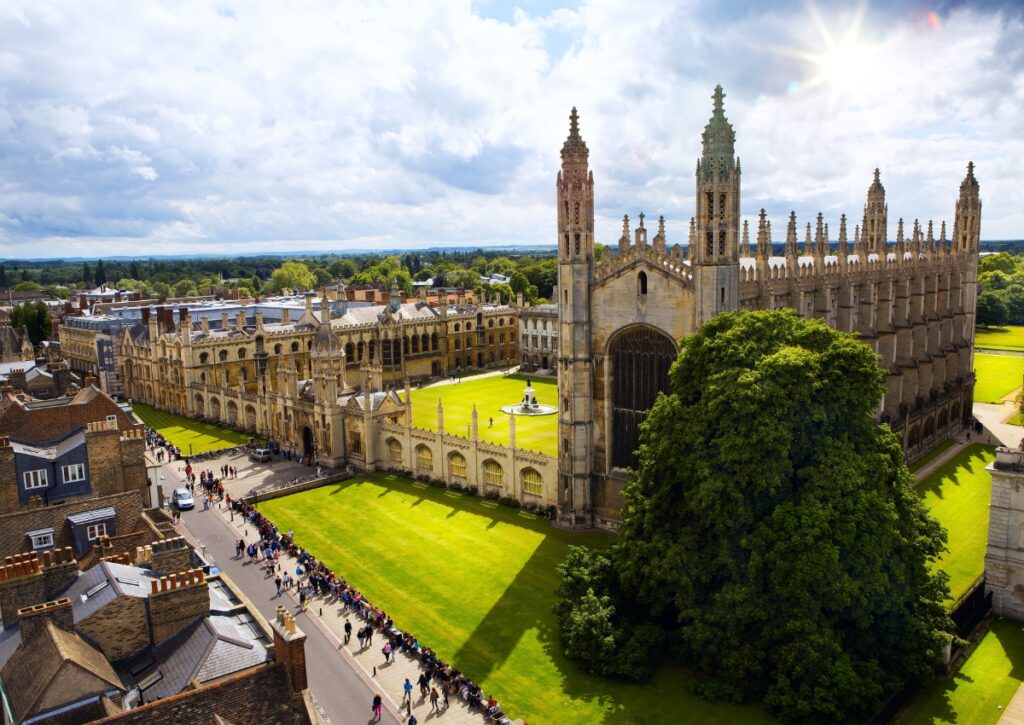
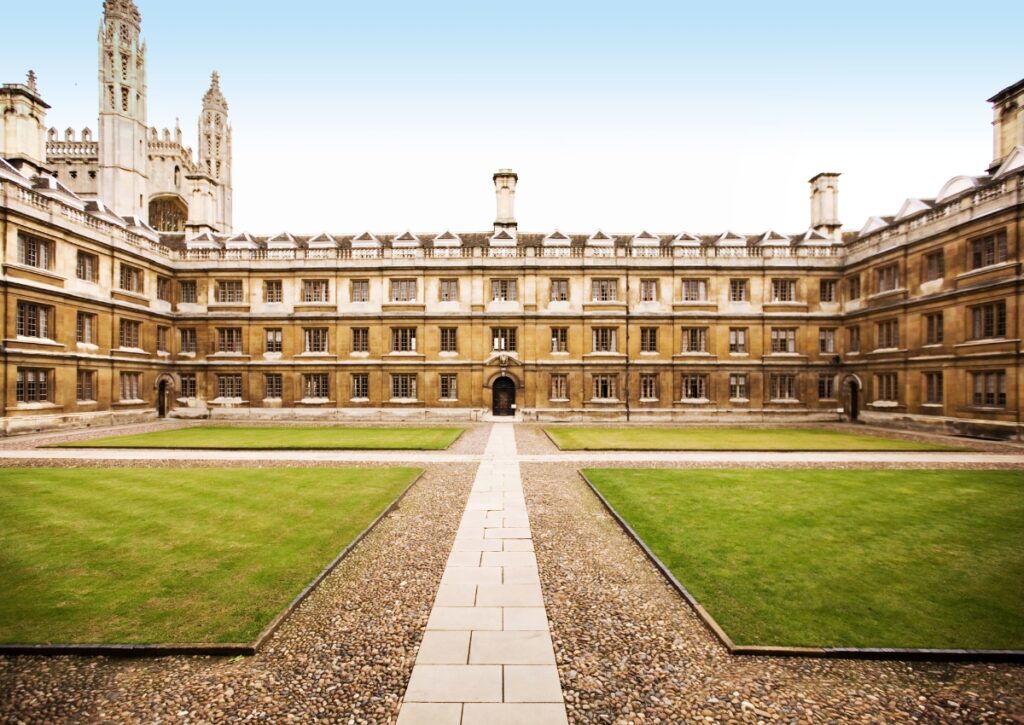
Start at King’s College Chapel (£10 entry), because there’s no point in being subtle. This is one of the greatest examples of late Gothic architecture in the world, and the moment you walk inside, you’ll understand why everyone makes a fuss. The fan-vaulted ceiling looks like stone lace, somehow staying up despite appearing to defy gravity. The stained glass windows are original Tudor glass from 1515-1517, which means they survived Henry VIII, the English Civil War, and World War II bombing raids. The entire interior glows with colored light, and if you’re lucky enough to hear the chapel choir sing (check their schedule online), you’ll experience one of those rare moments where culture and beauty align perfectly and you remember why humans do things besides eat and sleep.
But King’s is just the beginning. Trinity College (£5 entry) is where Newton did his thing with the apple, though honestly, the story is probably exaggerated. What’s not exaggerated is the Wren Library, designed by Christopher Wren in 1695 and containing first editions and original manuscripts that would make a book collector weep. The library is only open for limited hours (usually 12-2 pm weekdays during term time), so check before you go. Inside are Newton’s personal copy of his Principia Mathematica with his own notes, original manuscripts by Milton, and A.A. Milne’s handwritten Winnie-the-Pooh manuscripts with actual Christopher Robin’s toys (yes, the real stuffed animals that inspired the characters, now in New York, but the manuscripts are here).
Here’s what I love about Cambridge versus Oxford: it feels slightly less formal. Maybe it’s the river, or maybe it’s just that the colleges seem less interested in intimidating visitors. St. John’s College (£12 entry) has the Bridge of Sighs—a covered bridge over the Cam that’s supposedly where students sigh before exams, though really it’s just named after the Venetian bridge and the sighing thing was added later by tour guides. But walk through St. John’s cloisters and courts, and you’re moving through spaces that have been in continuous use since 1511. The buildings are layered: Tudor, Jacobean, Victorian, all somehow working together. It’s like an architectural mixtape.
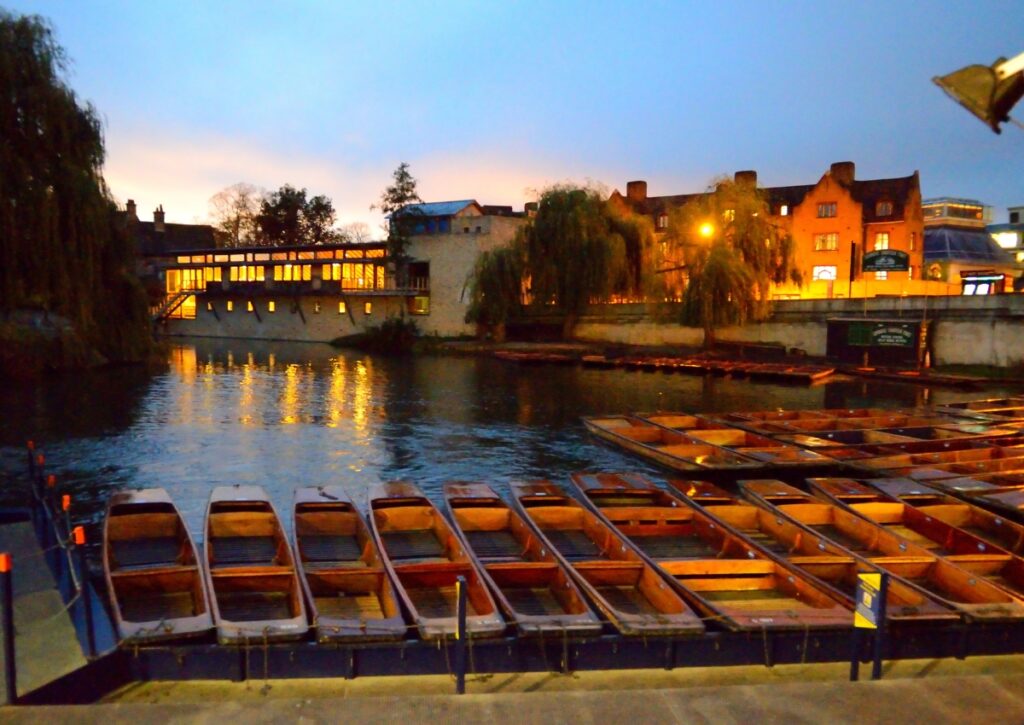
Now, the punting. Punting on the River Cam is basically Cambridge’s signature activity, and while it looks elegant, it’s actually a test of coordination, upper body strength, and your ability to not look like an idiot in public. You stand at the back of a long, flat-bottomed boat and push it along with a pole, which sounds simple until the pole gets stuck in the mud and you have to decide whether to let go or be pulled into the river. I chose to let go. The pole floated away. A passing punter retrieved it while laughing at me. Character building.
You can hire a punt yourself (£25-35 per hour per boat, which fits 4-6 people), or hire a student to punt for you (£20-25 per person for a 45-minute tour). The student punters are mostly good—they’ve been doing this for years, they know the stories about each college, and they’ve developed the deadpan wit necessary for dealing with tourists who make the same jokes they’ve heard 400 times. Our punter was reading English Literature and had Opinions about whether the Romantics were overrated. This is the kind of thing that happens in Cambridge.
The route goes along The Backs, which is what Cambridge calls the area behind the colleges along the river. You’ll glide past the Bridge of Sighs, under the Mathematical Bridge (built without bolts or nails, held together by geometry, though students did once disassemble it and couldn’t get it back together), and along lawns that have been maintained since medieval times. In spring, the banks are covered with daffodils and crocuses. In autumn, the leaves turn the river gold and orange. In winter, it’s grey and drizzly, and you’ll question your choices, but at least there won’t be crowds.
For food, Fitzbillies is a Cambridge institution, famous for its Chelsea buns—massive sticky cinnamon rolls with enough sugar to fuel a full day of walking. £3.50 for a bun that could serve as a meal. The café also does proper lunches (about £10-15), but honestly, you’re here for the buns. Elsewhere, the Eagle pub is where Watson and Crick announced they’d discovered the structure of DNA in 1953. They just walked in from the Cavendish Laboratory across the street and told everyone in the pub they’d found “the secret of life.” The pub now has its usual table marked, and the ceiling of the RAF bar is covered with graffiti burned into it by British and American airmen during WWII using cigarette lighters and candles. The ghosts of history are thick here, and the fish and chips are decent (£14).
If you want a break from history, the Fitzwilliam Museum has free entry and is absolutely world-class. The Egyptian antiquities rival the British Museum’s collection in quality if not quantity, and the European paintings include works by Titian, Monet, Picasso, and a room full of Pre-Raphaelites that made me reconsider my opinion of Victorian art. The building itself is a neoclassical palace from 1848, all marble columns and sweeping staircases. That it’s free is borderline miraculous.
One last thing: climb Great St. Mary’s Church tower (£5) for the best view over Cambridge. It’s 123 steps, the stairs are narrow and spiral, and you emerge onto a platform where you can see every college, every spire, and the flat Cambridgeshire landscape stretching out beyond. The view explains why Cambridge feels different from Oxford—it’s not built into hills but sits on a plain by a river, which gives it an open, almost horizontal feel compared to Oxford’s vertical density.
Sustainable tip: Cambridge is obsessively bike-friendly—the city is flat, distances are short, and there are bike lanes everywhere. Rent a bike (£12-15/day from various places near the station) and cycle between colleges like the students do. Just watch for pedestrians on narrow streets—they’re usually tourists staring upward at buildings and not paying attention to where they’re walking.
5. Brighton: The Seaside Town That Refuses to Grow Up
Distance from London: 1 hour by train from Victoria or London Bridge
Estimated Cost: £20-35 return train + food and entertainment
Brighton is where Londoners go when they need to remember that Britain has a coast and that life doesn’t have to be quite so serious all the time. It’s a seaside city with a pier that lights up like a carnival, a beach made entirely of stones that will ruin your feet, more vintage shops than any town needs, and an arts scene that’s been thriving since the 1960s, when everyone decided London was too expensive and moved here instead. It’s also the LGBTQ+ capital of Britain, which gives it a welcoming, colorful vibe that makes most British towns look grey by comparison.
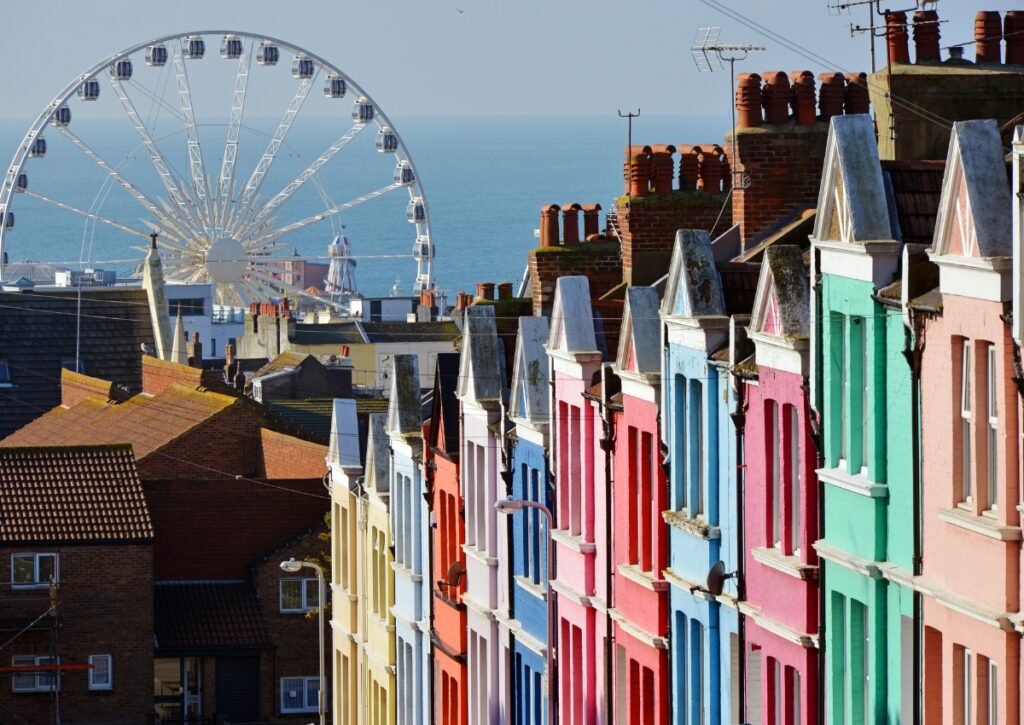
The train ride from London is absurdly easy—every 15 minutes or so, under an hour journey time, and you arrive right in the city center. This is the kind of day trip where you can be spontaneous, which is rare when planning around Britain’s train system. On a random Saturday, I woke up in London, decided I wanted to see the sea, and was eating fish and chips on Brighton beach by 11:30 am. That kind of accessibility is dangerous if you’re supposed to be saving money.
Start with the Royal Pavilion (£17 entry), because nowhere else will you see a building this weird. In the 1780s, the Prince Regent (later George IV) decided he wanted a seaside pleasure palace, and rather than building something sensible and Georgian, he went with “Indian exterior, Chinese interior, structural chaos.” The outside looks like an Indian palace designed by someone who’d never been to India but had seen paintings and was also possibly hallucinating. The inside is even more unhinged: dragons everywhere, hand-painted wallpaper, a banqueting room with a chandelier held by a silver dragon that weighs a ton, and a music room that looks like the inside of a jeweled egg. It’s gloriously excessive. The Victorians hated it, called it tasteless and vulgar. They were right, but in the best way.
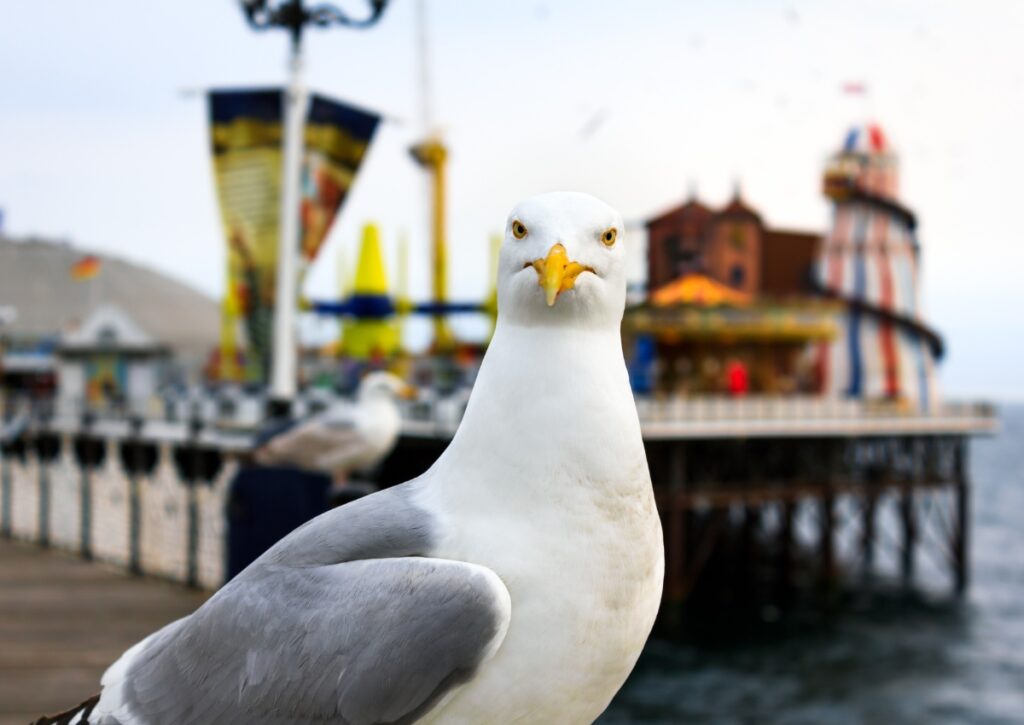
After you’ve recovered from the visual assault of the Pavilion, walk to Brighton Pier. Yes, it’s touristy. Yes, the arcade games will eat your money faster than a London parking meter. But there’s something wonderful about a Victorian pier that’s still functioning as a pier and not a museum or luxury apartments. The pier opened in 1899 and still has the slightly tacky, slightly dangerous energy that British seaside entertainment is known for. There’s a rollercoaster that looks like it’s held together with rust and optimism, arcade games that absolutely cheat but are fun anyway, and doughnut stands that sell freshly made doughnuts sprinkled with sugar that gets everywhere and makes your fingers sticky. I rode the rollercoaster once. Immediately regretted it. Went back for doughnuts. No regrets.
Now, the beach. Let’s be clear: Brighton Beach is not a sandy tropical paradise. It’s a pebble beach, which means the “sand” is actually millions of smooth stones that shift under your feet and make sitting uncomfortable. But something about the clatter of waves pulling stones back makes the whole experience distinctly British. On any given day, you’ll see people in deck chairs despite it being 15°C and cloudy, swimmers braving the English Channel’s frigid water while wearing full wetsuits, and groups of friends drinking Pimm’s from plastic cups at 2 pm on a Tuesday. The beach isn’t beautiful in the conventional sense, but it’s alive in a way that tropical beaches—peaceful and perfect—sometimes aren’t.
For lunch, skip the seafront restaurants (overpriced, mediocre quality) and head into The Lanes, Brighton’s old town. This is a maze of narrow alleyways with independent shops, jewelers, vintage clothing stores, and cafés that actually care about their food. Riddle & Finns does seafood that justifies its prices—oysters brought in that morning, dressed crab that’s all meat and no filler, grilled mackerel with samphire that tastes exactly like the sea should taste. Mains are £18-28, which is expensive, but you’re eating fish that was swimming yesterday. If that’s too pricey, Mange Tout does French-style crepes and galettes (£8-12) that are genuinely good, not just “good for a crepe place in a tourist town.”
Brighton’s real magic is in its weird, slightly alternative character. North Laine—note: Laine, not Lane, the locals get snippy about this—is the neighborhood where vintage clothing shops sell leather jackets from the 80s, record stores have vinyl you’ve never heard of, and cafés serve flat whites with oat milk before London discovered oat milk was a thing. It’s the kind of place where a shop selling crystals and tarot cards sits next to a vegan bakery next to a comic book store, and somehow it all works. I spent an hour in Snoopers Paradise, a multi-floor antiques warehouse that’s basically organized chaos—Art Deco furniture, vintage typewriters, old advertising signs, and enough random objects that you’ll either find something perfect or leave completely overwhelmed.
If you’re into street art, Brighton’s walls are covered with it. The city has a permissive attitude toward graffiti and murals, which means you’ll turn down an alley and find a three-story portrait of David Bowie or a surrealist landscape covering an entire building side. The quality varies wildly—some of it is genuinely striking, some of it is tags from bored teenagers—but the overall effect is that Brighton feels lived-in and constantly changing.
Before you leave, walk along the seafront toward Hove (Brighton’s quieter, more residential neighbor). The sun setting over the West Pier—a Victorian pier that’s now a romantic ruin after fires and storms destroyed it—is one of those views that photographs beautifully and looks even better in person. The skeletal ironwork silhouetted against the sky, the sea grey and restless, and the smell of salt and seaweed—this is Britain at its most cinematic.
For transport, Welcome Pickups offers transfer services if you’re arriving late or with a group (usually £60-90 from London), which can make sense if you’re splitting costs and want door-to-door service. But honestly, the train is so frequent and easy that you’ll probably just use that.
Sustainable tip: Brighton is working hard to be eco-friendly. Use the local buses (£2.50 single, £5.50 day pass), which run frequently and cover the whole city. Bring reusable cups and water bottles—many cafés give discounts for reusables, and the beach cleanup volunteers will silently judge you for littering.
6. The Cotswolds: Where England Looks Like a Jigsaw Puzzle Box
Distance from London: 2-2.5 hours by car or train to Moreton-in-Marsh, then bus/car
Estimated Cost: £30-50 train + local transport, OR £45-70 car rental for the day
Right, let me tell you about the Cotswolds. This is an Area of Outstanding Natural Beauty covering nearly 800 square miles of rolling hills, honey-colored stone villages, sheep that look like they’re posing for postcards, and dry stone walls that have been standing since the medieval wool trade made this area rich. It’s relentlessly, almost aggressively beautiful. The kind of beautiful that makes you suspicious. But spend a day here, and you’ll understand why every third British person has “retire to the Cotswolds” on their life goals list.
The challenge with the Cotswolds is that it’s a region, not a single destination, and the best parts are tiny villages connected by narrow roads that Google Maps barely acknowledges. You can do this by public transport—get a train to Moreton-in-Marsh or Charlbury and then use local buses—but you’ll spend a lot of time waiting for buses that run twice a day if you’re lucky. For this trip more than any other, I’d recommend renting a car. GetRentacar has good rates (£40-60/day), and having your own wheels means you can actually see multiple villages without needing a complex spreadsheet to plan connections.
Start in Bourton-on-the-Water, which is nicknamed “the Venice of the Cotswolds” by people who have clearly never been to Venice. It’s a village with a shallow river running through the center, crossed by low stone bridges, lined with willow trees, and surrounded by shops selling fudge and cream tea. Yes, it’s touristy. Yes, every third building is a tea room. But it’s also genuinely pretty in that effortless way that English villages sometimes manage. Kids wade in the river, ducks paddle about looking for handouts, and elderly couples sit on benches eating ice cream despite it being October. I stopped at The Mousetrap Inn, a pub from the 1700s, for a ploughman’s lunch (£11)—thick-cut bread, sharp local cheddar, homemade chutney, and a pint of local ale. Sometimes British food doesn’t need to be complicated to be good.
From Bourton, drive to Stow-on-the-Wold, the highest town in the Cotswolds at 800 feet. The market square is surrounded by antique shops, wool shops (the Cotswolds still trades on its wool heritage even though the actual trade ended centuries ago), and houses built from the local limestone that glows golden in sunlight and turns grey when it rains. The stone is the defining feature of the Cotswolds—it’s all Jurassic limestone that’s soft enough to carve but hardens when exposed to air, which is why every building looks like it grew out of the ground rather than being constructed. On the square’s corner is St. Edward’s Church, where Tolkien was inspired by the old yew trees in the churchyard when writing about the ancient trees in The Lord of the Rings. Apparently, everything in England inspired Tolkien. The man couldn’t go anywhere without finding material.
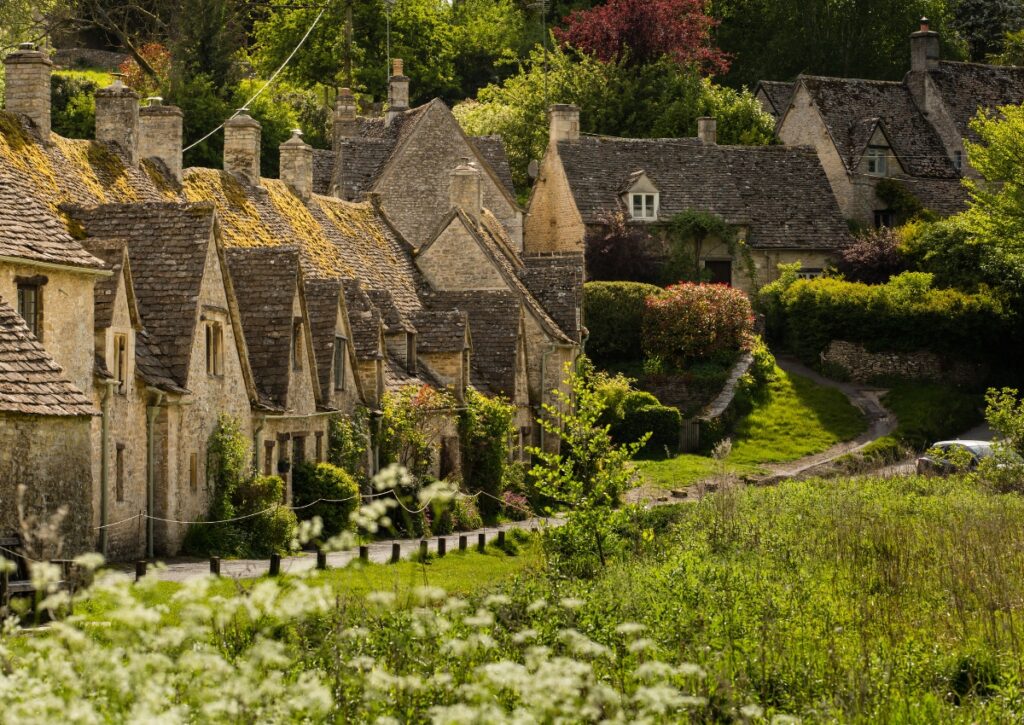
Next, Bibury, which William Morris called “the most beautiful village in England.” Morris was prone to hyperbole, but he wasn’t entirely wrong. The highlight is Arlington Row, a line of weavers’ cottages from the 1380s that look exactly like you imagine medieval cottages should look: stone walls, steep roofs, tiny windows, and walls that bulge and lean in ways that suggest foundations have been settling for 600 years. They’re still inhabited, which must be equal parts charming and annoying—I imagine the plumbing situation is creative. The River Coln runs past them, clear enough to see trout hovering in the current, and the whole scene is so picture-perfect that it’s been used on British passports, millions of postcards, and countless “Visit Britain” advertisements.
You can’t go inside Arlington Row (they’re private homes, and the residents probably get tired of tourists taking photos), but you can walk along Rack Isle, a water meadow where cloth was hung to dry in medieval times. Now it’s just grass and wildflowers, but standing there with the ancient cottages behind you and the river ahead, you get a sense of continuity—this view is essentially unchanged for centuries. That’s increasingly rare in Britain.
For lunch, stop in The Swan Hotel in Bibury (mains £14-20). It’s a coaching inn from the 1600s with low beams, stone fireplaces, and a menu that balances traditional British food with modern technique. The steak and ale pie had meat that fell apart when you looked at it, and the pastry had actual layers. This is what pub food should be, but usually isn’t.
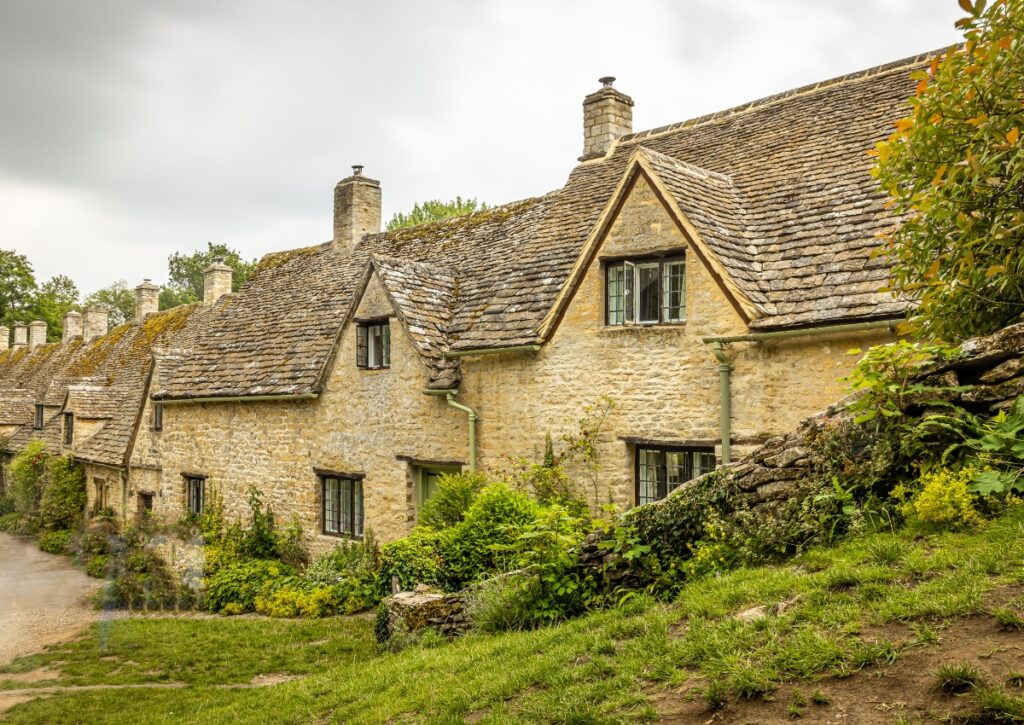
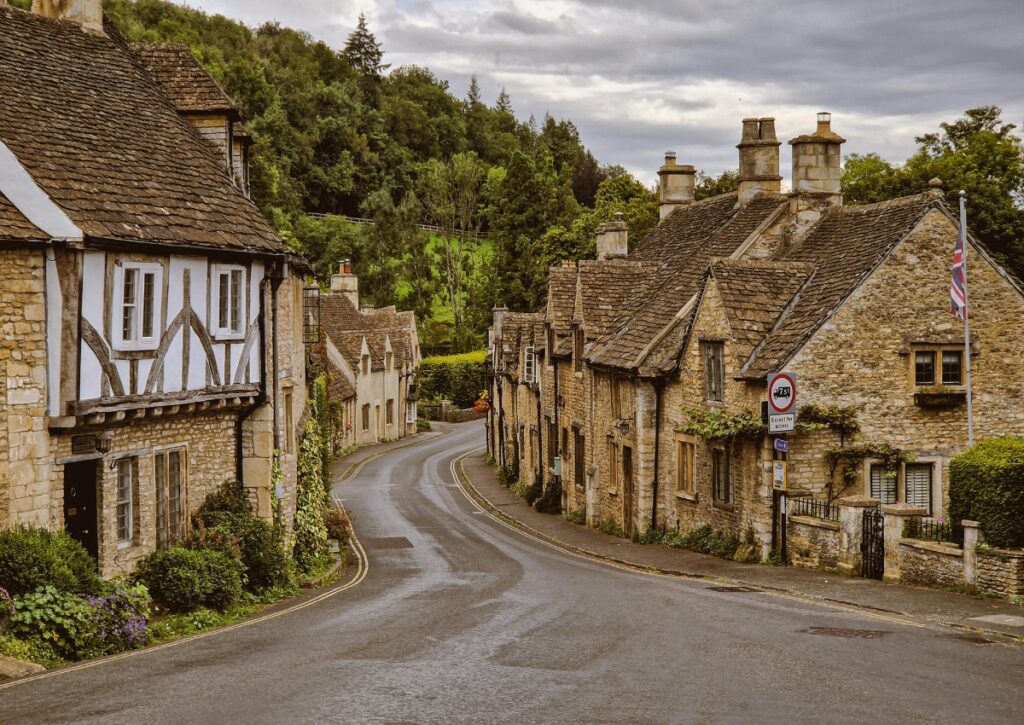
If you have time—and stamina—add Castle Combe to the route. It’s often called the prettiest village in England, which is a bold claim in a region where every village is competing for that title. The main street slopes down toward a stone bridge over a stream, lined with medieval cottages that have sagging rooflines and walls painted in soft pastels. There’s no modern development visible anywhere—no phone lines, no satellite dishes, no chain stores. It’s like someone built a film set for “Generic Historical England,” except it’s all real. The whole thing feels slightly unreal, like it shouldn’t exist in the same country as London. Parts of Stardust and War Horse were filmed here, which tells you how cinematically perfect it is.
Two warnings about the Cotswolds: First, the roads are narrow. Like, “two cars meeting means someone has to reverse 200 meters to a passing place” is narrow. Hedges grow right up to the tarmac, hills hide blind corners, and tractors appear suddenly on roads that barely fit a normal car. Drive slowly. Be patient. Embrace the rural pace. Second, the popularity of the Cotswolds means summer weekends can be hellish—coach tours, traffic jams in villages with one main street, and restaurants fully booked. Go mid-week if possible, or visit in spring or autumn when the crowds thin but the landscape is still beautiful.
Sustainable tip: Stick to the marked footpaths and respect the “right to roam” culture—the Cotswolds has thousands of miles of public paths through fields and woods, but don’t cross private farmland or disturb livestock. Pack all your rubbish out, and if you’re buying food, local farm shops often have better produce than supermarkets and support the local economy directly.
7. Canterbury: Murder, Pilgrims, and Really Old Churches
Distance from London: 1 hour by high-speed train from St. Pancras
Estimated Cost: £20-40 return train + £14 Cathedral entry + food
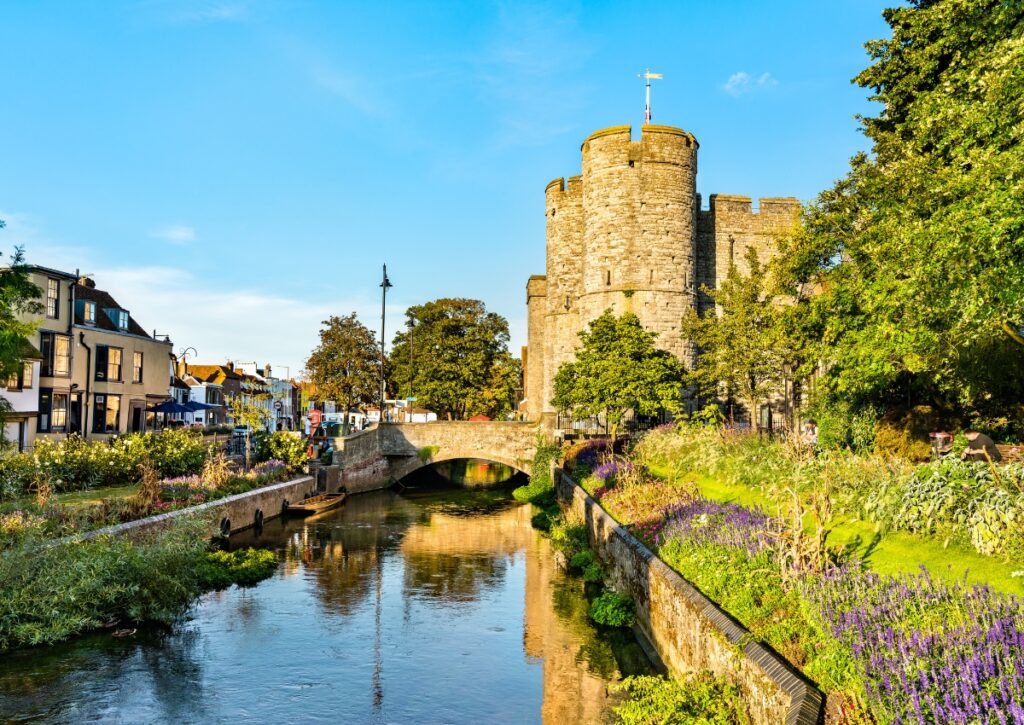
Canterbury is one of those places that manages to be both deeply historical and surprisingly alive. Yes, it’s where Thomas Becket was murdered in 1170, which made it one of the most important pilgrimage sites in medieval Europe and inspired Chaucer to write The Canterbury Tales. But it’s also a university city with students drinking in pubs built before the printing press was invented, while eating kebabs from shops that share walls with buildings from the 1300s. This combination—ancient and modern, sacred and ordinary—is what makes Canterbury work.
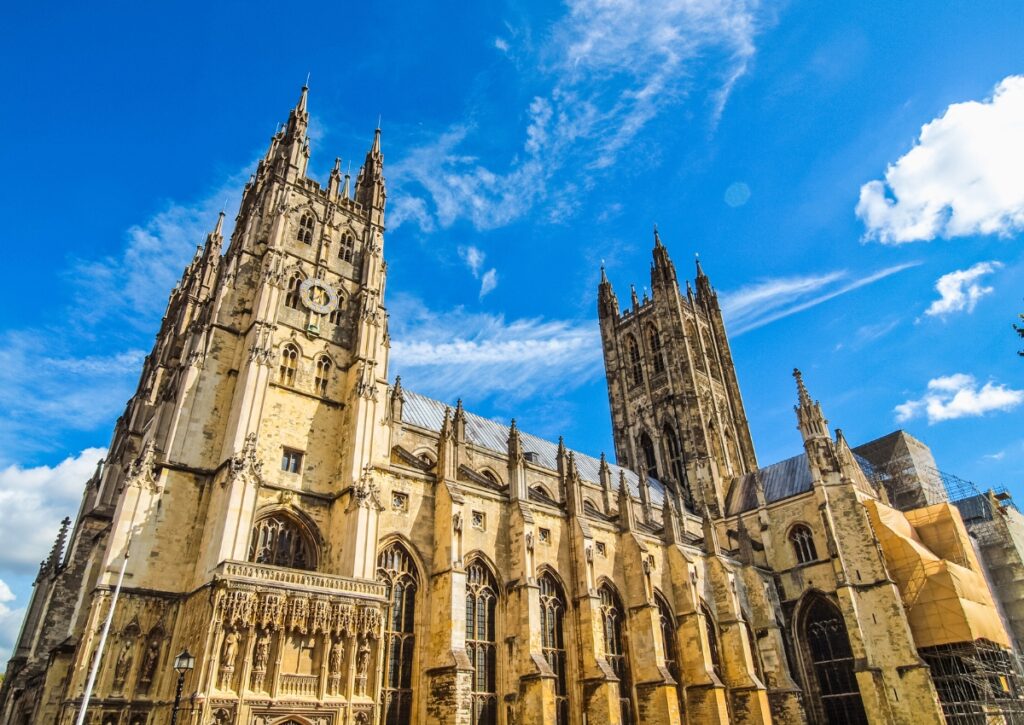
Canterbury Cathedral (£14 entry) is what you came for, and it doesn’t disappoint. This has been the center of English Christianity since 597 AD, which is before England was properly England. The current building is “only” from 1070 onwards, with bits added and rebuilt over the centuries. Walking inside is like walking into the history of English architecture—you can see Norman arches, Gothic pointed windows, and Perpendicular fan vaulting, all in one building. It’s a mess stylistically, but an intentional, beautiful mess.
The site where Thomas Becket was murdered is marked in the northwest transept. Four knights, allegedly acting on Henry II’s frustrated wish (“Will no one rid me of this turbulent priest?”), hacked him to death while he was at evening prayers. The spot has been a shrine ever since, though Henry VIII destroyed the original elaborate shrine during the Reformation and had Becket’s bones scattered. Medieval pilgrims would come here hoping for miracles, spending weeks walking the route from London. We take a one-hour train. Progress is weird.
The highlight, for me, was the crypt—the oldest surviving part of the cathedral, built around 1100. It’s cool and dim, with chunky Norman columns carved with animals, plants, and faces. Some of the carvings are surprisingly crude—one looks like a dog having an existential crisis. But there’s something moving about standing in a space that’s been used for worship for nearly a thousand years. The stone floors are worn smooth by centuries of feet, and the acoustics make even whispers carry. If you’re not into religious history, it might not resonate, but if you have any sense of historical continuity, it’s powerful.
After the cathedral, walk the city walls—medieval fortifications that you can walk along for about a mile, with views over the old city and the river. The walls date from Roman times (Canterbury was a significant Roman settlement) and were rebuilt and reinforced through the medieval period. Some sections are closed or crumbling, but enough remains walkable that you get a sense of what a walled medieval city felt like. Small, defensible, and very muddy—though they’ve dealt with the mud situation since then.
The River Stour runs through Canterbury, and you can take a punt tour (£16-20 for 40 minutes) similar to Cambridge but with more ducks and medieval buildings. The guides are usually history students from the university who’ve memorized facts and jokes in equal measure. It’s a pleasant way to see the backside of the city—old warehouses, medieval bridges, willows trailing in the water—without walking. Though honestly, Canterbury is small enough that walking everywhere is easy.
For lunch, The Old Brewery Tavern does good food in a building that’s been a pub since the 1400s (mains £12-16). The menu is standard British pub—burgers, pies, fish and chips—executed well. The courtyard is nice when it’s not raining, which in Britain means about six days a year. Alternatively, Tiny Tim’s Tearoom is exactly what it sounds like: a small, slightly cramped tearoom doing proper afternoon tea (£16) with homemade scones, clotted cream, jam, and finger sandwiches that are actually good. The scones were still warm, which is rarer than it should be.
Canterbury also has some excellent independent shops if you’re into that sort of thing. Burgate Books is an antiquarian bookshop that smells like old paper and dust in the best way, with books ranging from £5 paperbacks to first editions that cost more than my monthly rent. The Canterbury Christchurch Hall hosts a regular artisan market with local food, crafts, and the kind of people who make their own soap and are very enthusiastic about explaining the process.
One thing that surprised me about Canterbury: it’s busy. Not only is London busy, but busier than you’d expect for a city of 55,000 people. The cathedral draws huge numbers of tourists year-round, and the university adds 20,000 students who keep the bars and restaurants packed. This means decent public transport, good food options, and a level of energy that makes the city feel alive rather than like a museum. But it also means you’re not going to have the cathedral to yourself—embrace the crowds or visit early/late in the day.
If you have extra time, the Canterbury Tales attraction (£11.95) is touristy but surprisingly well done. It’s a recreation of medieval pilgrimage, with mannequins, recorded storytelling, and sets depicting Chaucer’s tales. It sounds cheesy—and it is—, but it’s also engaging and gives you context for why Canterbury was so important. Plus, the medieval smells they’ve recreated (unwashed pilgrims, horse manure, cooking fires) are disturbingly accurate.
Sustainable tip: Canterbury is compact and walkable—you genuinely don’t need any transport once you’re in the city. The entire historic center is maybe a 20-minute walk end-to-end. If you’re staying longer and want to explore the surrounding area, rent e-bikes (£25-35/day) to visit nearby villages and the countryside without adding to car traffic.
8. Windsor: Castles, Swans, and the Literal Queen
Distance from London: 30-50 minutes by train from Waterloo or Paddington
Estimated Cost: £10-20 return train + £28.50 castle entry + food
Windsor Castle is not just a tourist attraction—it’s a working royal residence where the monarch actually stays on weekends. This means that, unlike most historic palaces, which are essentially museum pieces, Windsor feels occupied. The guards are real soldiers, not actors. The security is serious. And occasionally you’ll be told certain rooms are closed because a member of the royal family is using them, which is both annoying and kind of thrilling. You mean actual royalty is here? Walking around like regular people? (Well, regular extremely wealthy people with armed guards and palaces.)
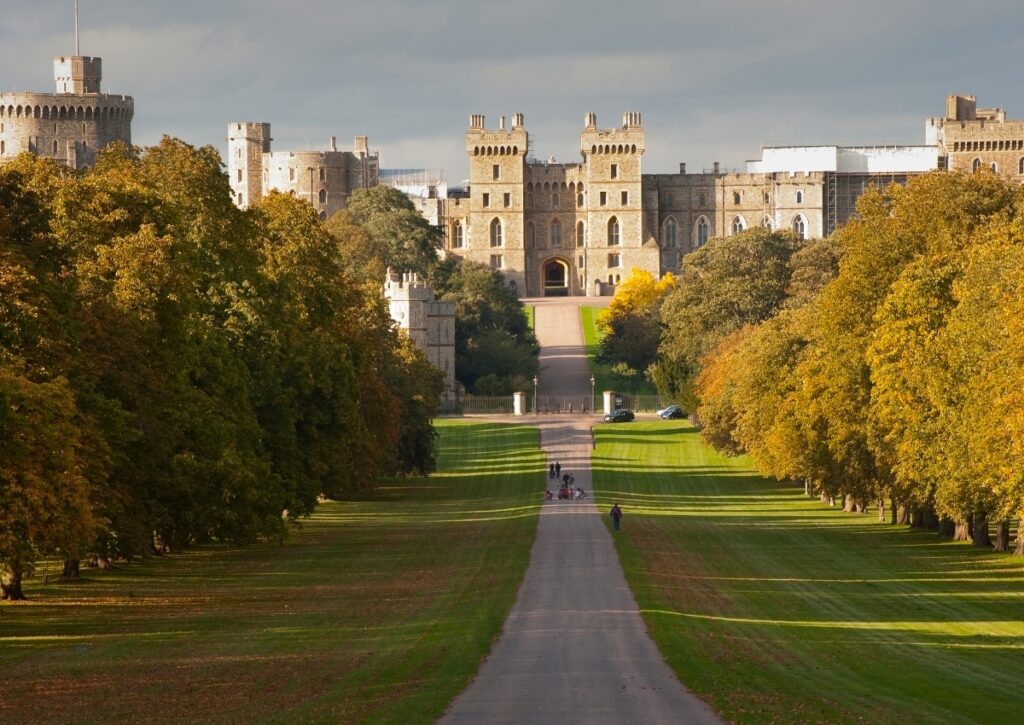
The castle (£28.50 entry, book online to skip queues) is the largest occupied castle in the world, built by William the Conqueror in 1070 and added to by nearly every monarch since. This means the architecture is a chaos of styles—medieval towers next to Georgian state apartments next to Victorian additions—but somehow it works. The State Apartments are ridiculously opulent: gilded ceilings, paintings by Rembrandt and Rubens, furniture that costs more than a house, and enough velvet and gold leaf to bankrupt a small country. It’s both impressive and slightly absurd. How much wealth can you accumulate in 1,000 years of monarchy? This much, apparently.
The St. George’s Chapel within the castle grounds is where Prince Harry married Meghan Markle, and before that, where Harry’s grandfather, Prince Philip’s funeral was held. It’s a late Gothic masterpiece from the 1500s, with fan vaulting so delicate it looks like frozen lace, intricate wood carvings, and tombs of ten monarchs, including Henry VIII and Charles I. The chapel is still used for regular services, which means you might be asked to keep quiet or avoid certain areas during worship. This is one of those places where history isn’t past—it’s actively continuing.
One thing they don’t advertise enough: the Changing of the Guard at Windsor is often easier to see than at Buckingham Palace, with better views and smaller crowds. It happens at 11 am on select days (usually Tuesday, Thursday, and Saturday, but check the schedule because it changes). The ceremony involves soldiers in red coats and bearskin hats marching with brass bands, and yes, it’s theatrical, but it’s also a genuine military tradition that’s been happening for centuries. I watched a guardsman stand perfectly still for 20 minutes while tourists took photos inches from his face. That kind of discipline is impressive, even if the whole thing feels slightly like performance art.
After the castle, walk down to the Thames and along the Long Walk, a tree-lined avenue stretching 2.65 miles from the castle to a giant statue of George III. The view back toward the castle is perfect—the fortress on its hill, the town spreading below, the river winding past. On weekends, you’ll see families having picnics, people walking dogs, and occasionally polo matches on Smith’s Lawn, where William and Harry used to play. The Long Walk is also where royal processions happen during state occasions, which gives the whole thing a ceremonial weight even when it’s just dog walkers and joggers.
For lunch, The Duchess of Cambridge (mains £14-18) is a gastropub that does British classics with actual care—the beef Wellington had pastry that shattered when you cut it, and the meat was cooked to a perfect medium-rare. The name is timely tourism marketing (it was renamed after Kate became the Duchess), but the food stands on its own. If you want something cheaper, The Crooked House is a 17th-century tea room with uneven floors, low beams, and excellent cream tea (£8.50). The building leans dramatically, which you notice more after your second pot of tea.
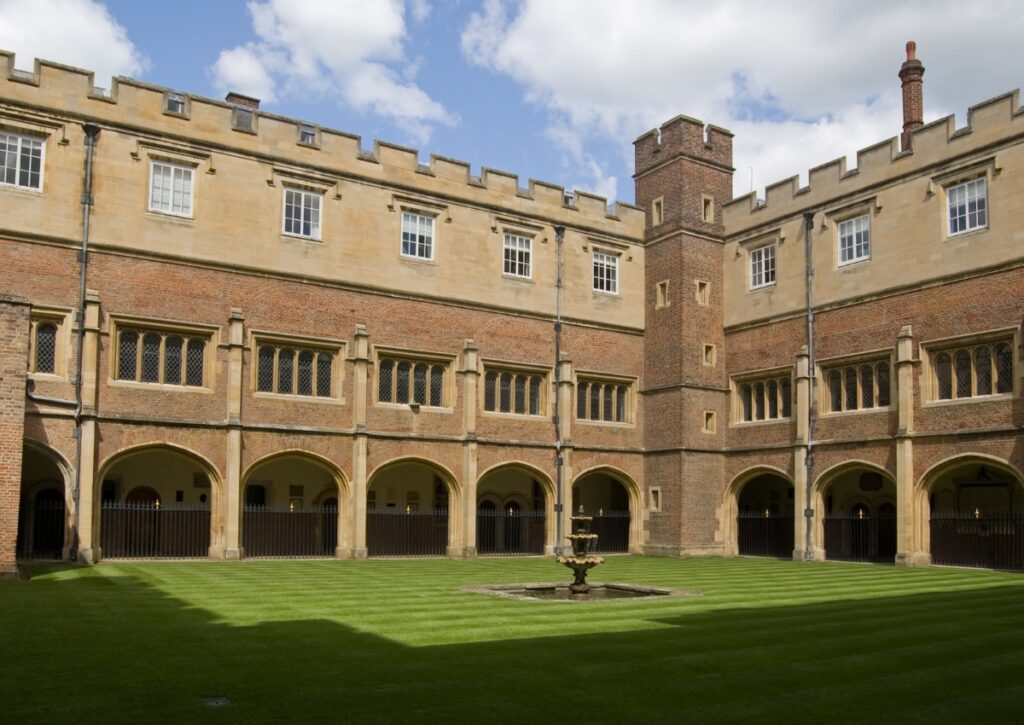
Eton College is right across the river from Windsor—literally a bridge walk away. This is one of Britain’s most famous (and expensive) private schools, and while you can’t tour it like a museum, you can walk around the grounds and buildings. The architecture is impressive if you’re into Gothic revival, and it’s surreal to see teenage boys walking around in morning coats and white ties like they’re attending a wedding at 9 am. The school has produced 20 British prime ministers, and the entire place radiates privilege in a way that’s both impressive and slightly uncomfortable.
One afternoon, I took a boat trip on the Thames from Windsor to Runnymede (£12 return, about 40 minutes each way). Runnymede is where King John sealed the Magna Carta in 1215 after barons got tired of his tyrannical nonsense. There’s a meadow, a memorial, and an overwhelming sense that you’re standing where the concept of constitutional law began. It’s one of those places where history feels tangible—not because there’s much to see (it’s mostly grass), but because of what happened here. The boat trip itself is relaxing, with views of riverside mansions, swans that approach the boat looking for food, and the occasional rower going past.
The town of Windsor itself is pleasant but touristy—lots of gift shops selling royal memorabilia, tea rooms with Union Jack bunting, and restaurants aimed at day-trippers rather than locals. But it’s a small town, so within five minutes of walking away from the castle, you’re in residential streets that feel normal and British rather than like a theme park.
Sustainable tip: Windsor is so close to London that driving makes no sense—take the train, which runs frequently and gets you right to the town center. Within Windsor, walk everywhere. It’s a small town, and the castle to Eton to the river walk is all manageable on foot.
9. The White Cliffs of Dover: Dramatic Coastline and Borderline Dangerous Walks
Distance from London: 1-1.5 hours by train from St. Pancras or Victoria
Estimated Cost: £25-50 return train + free cliff access + food
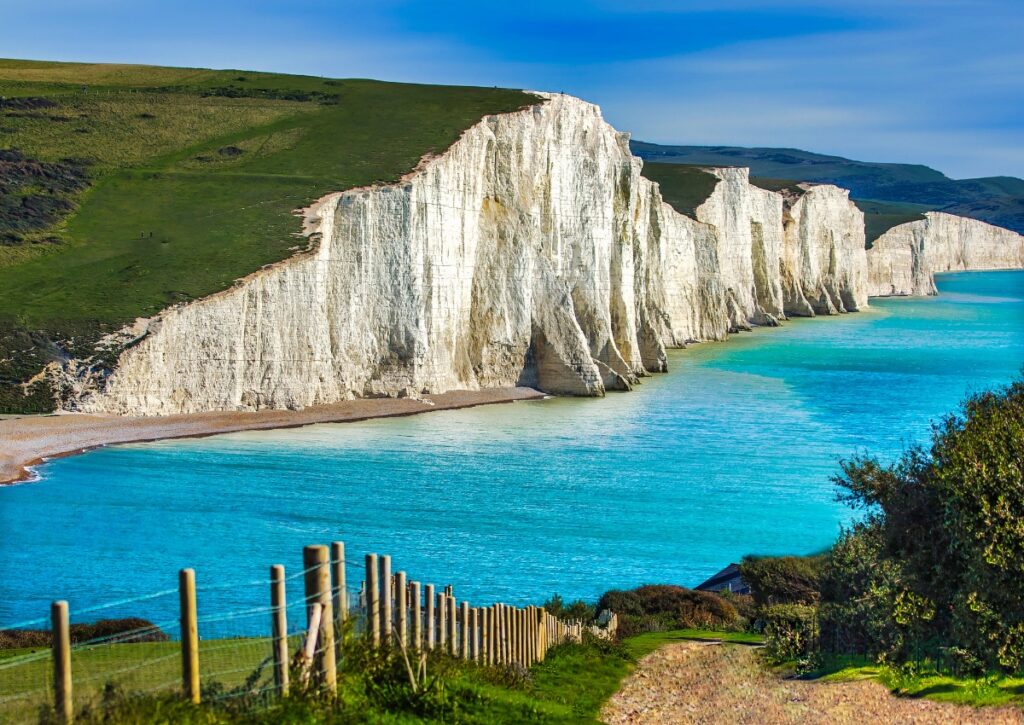
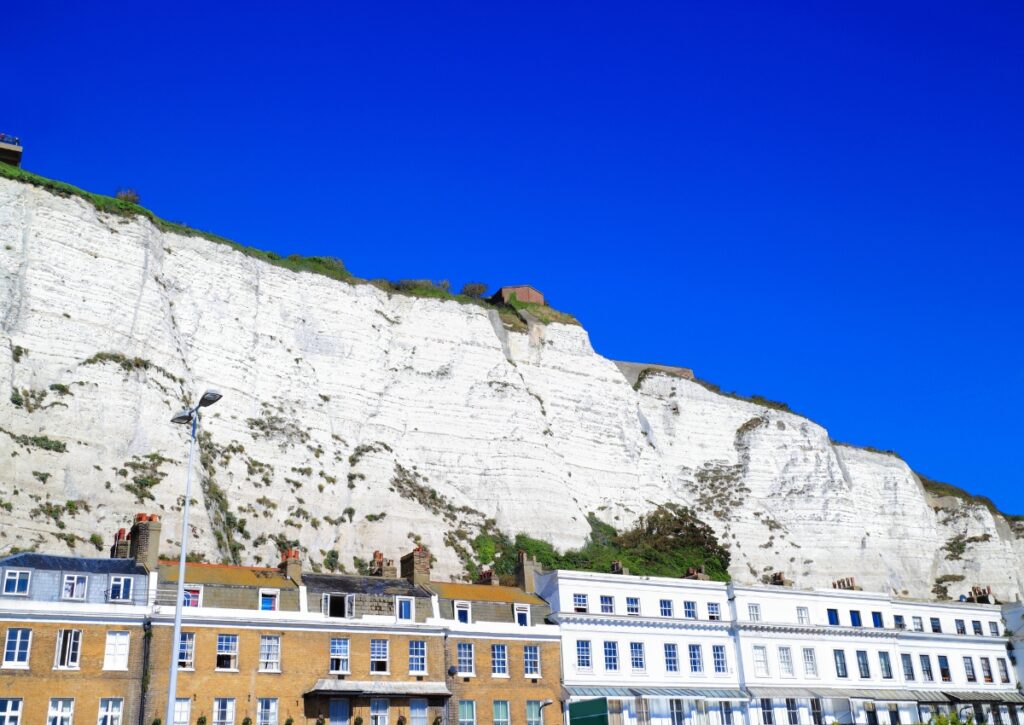
The White Cliffs of Dover are one of those iconic British images—chalk cliffs rising 350 feet above the English Channel, visible from France on clear days, a symbol of Britain itself during WWII when this was the front line between occupied Europe and Britain. The cliffs are genuinely dramatic, and if you catch them in the right light—late afternoon when the sun hits the chalk and makes it glow—they’re spectacular. But here’s what the postcards don’t show: getting the best views requires walking along cliff tops with no barriers, on paths that sometimes crumble into the sea, in wind that can literally knock you over. It’s beautiful and slightly terrifying in equal measure.
Take the train to Dover Priory station, then either walk (about 2 miles, mostly uphill) or catch a bus (£4-5) to the White Cliffs Visitor Centre. The National Trust manages this section, and entry to the land is free, though parking costs £6 if you’re driving. From the visitor centre, you can do several walks:
The cliff-top walk toward South Foreland Lighthouse is the classic route—about 2 miles each way along the cliff edge. The path is well-maintained near the visitor centre, but gets rougher the farther you go. The views are incredible: chalk cliffs dropping straight to the sea, waves breaking white against the rocks below, and on clear days, you can see the French coast about 21 miles away. Ships pass constantly—Dover is one of the busiest shipping lanes in the world—and you’ll see everything from container ships to ferries to the occasional yacht.
The wind is no joke. I went on a day that seemed calm in Dover town, and on the cliffs, it was strong enough that leaning forward felt necessary just to stand upright. Keep away from the edge—the chalk erodes constantly, and sections do occasionally collapse. The National Trust posts warning signs, but it’s your responsibility to be sensible. This isn’t a manicured park; it’s an active geological feature that’s been crumbling into the sea for thousands of years.
If you have energy, walk down to St. Margaret’s Bay, a small beach tucked at the base of the cliffs. The walk down is steep (which means the walk back up is brutal), but the bay is lovely—white pebbles, clear water, and the dramatic cliff walls rising on either side. There’s a tiny village with a pub, The Coastguard, right on the beach. I had fish and chips (£13) while watching waves break about 10 meters away. The fish was fresh, the batter was crispy, and the chips were thick-cut and properly salted. Sometimes, simple is best.
Dover Castle (£21.50 entry) is worth adding if you have time and interest in military history. This has been a fortified site since the Iron Age, and the current castle dates from the 1180s. The medieval keep is impressive—massive walls, narrow spiral staircases, and rooms recreated to show how medieval royalty lived (which was cold, dark, and surprisingly colorful—they loved bright paint on everything). But the highlight is the Secret Wartime Tunnels. These were dug into the cliffs during the Napoleonic Wars and then expanded massively in WWII. The operation to evacuate British troops from Dunkirk in 1940 was coordinated from here, and the tunnels have been preserved to show how they functioned—communications rooms, hospital wards, operations centers. It’s genuinely atmospheric: narrow tunnels lit by single bulbs, original equipment still in place, and recordings playing period-appropriate radio broadcasts. You’re standing in the space where some of WWII’s most critical decisions were made.
For lunch in Dover proper, La Scala does proper Italian food—pasta made fresh, sauces that taste like actual tomatoes rather than ketchup, and pizza with a crust that’s charred and chewy. Mains are £12-18. Alternatively, The Allotment is a vegan café that’s surprisingly good even if you’re not vegan (I’m not)—the mushroom and lentil pie had enough flavor that I didn’t miss meat, which is rare.
One thing to know about Dover: it’s a working port town, not a tourist resort. There are ferry terminals, lorries queuing for customs, and industrial areas. The town itself is slightly rough around the edges—years of economic decline after industries left haven’t been kind. But that also means it feels real rather than polished for visitors. The castle and cliffs are spectacular, but Dover itself is just getting on with being a border town, which I found oddly refreshing after places that exist primarily for tourists.
Timing matters for this trip. Go on a clear day if possible—the views are the point, and fog or heavy rain makes the cliffs dangerous and invisible. Check the weather forecast before you leave London. Also, the cliff paths can be muddy after rain (chalk + water = slippery mess), so wear proper shoes with grip. Your fashionable trainers will betray you.
Sustainable tip: The National Trust manages these cliffs to balance access with conservation. Stick to marked paths to avoid damaging the habitat (the cliffs support rare plants and nesting seabirds), and if you’re picnicking, take all rubbish with you—the winds will carry litter across the entire site.
10. Stratford-upon-Avon: Shakespeare’s Hometown and Every English Teacher’s Dream
Distance from London: 2-2.5 hours by train from Marylebone
Estimated Cost: £25-60 return train + £20-25 Shakespeare’s Birthplace + food
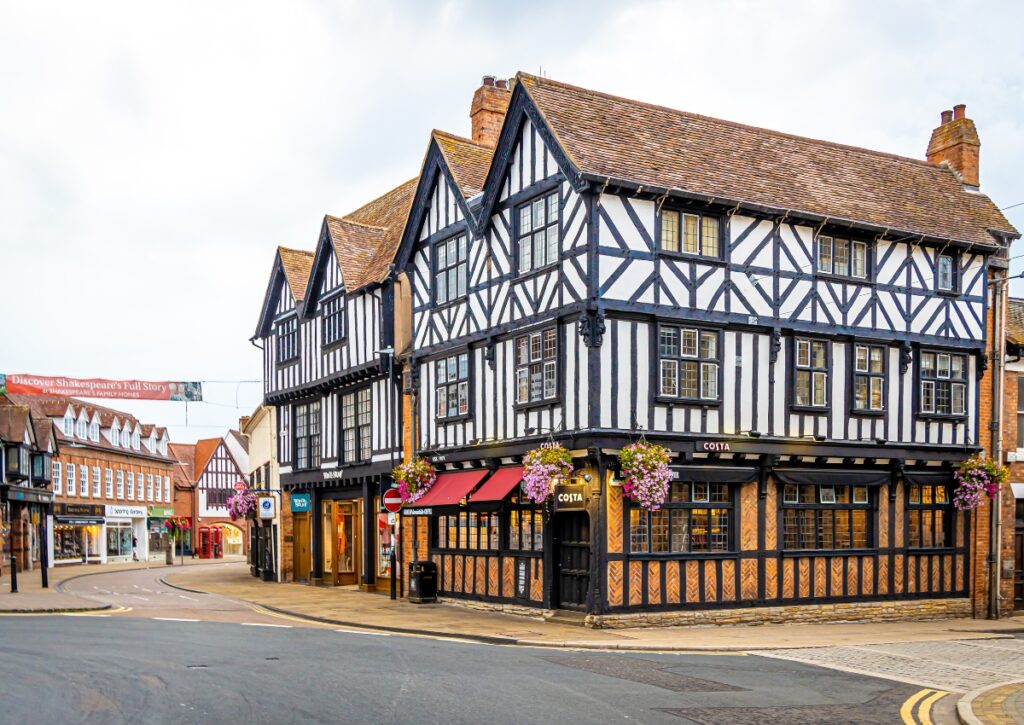
Stratford-upon-Avon has been dining out on Shakespeare for 400 years, and honestly, fair enough. The man is Britain’s most famous writer, and the fact that his hometown has preserved his birthplace, childhood home, wife’s cottage, and several other properties means you can actually walk through the spaces where he grew up. Yes, it’s commercialized—every third shop sells Shakespeare-themed souvenirs ranging from tasteful to absurd. But underneath the tourism, there’s a genuinely charming market town with Tudor buildings, a river, and the best theater company in Britain outside London.
Start with Shakespeare’s Birthplace (£20.25 for a single property ticket, or £32 for all five Shakespeare properties, which is better value if you’re staying the day). This is the half-timbered house on Henley Street where Shakespeare was born in 1564 and lived until he was a young adult. The building has been so heavily restored that calling it “original” requires generous interpretation—most of what you see is 16th-century materials and techniques recreated in the 19th and 20th centuries. But walking through the rooms where Shakespeare’s family lived, seeing the glove-making workshop where his father worked, and standing in the room where Shakespeare was supposedly born does create a connection, however contrived.
The best part is the garden behind the house—planted with flowers and herbs mentioned in Shakespeare’s plays. Rosemary, thyme, pansies, roses, and about 70 other species, all labeled with quotes from the plays. It’s both educational and lovely, and on a sunny day, sitting in a Tudor garden reading Romeo and Juliet quotes off plant labels is a perfectly acceptable way to spend time.
From there, walk to Anne Hathaway’s Cottage (about 1.5 miles, or take the shuttle bus included with your ticket). This is where Shakespeare’s wife grew up, and it’s the most picturesque of all the Shakespeare properties—a thatched cottage with a wildflower garden, apple trees, and the kind of appearance that makes you understand why every third tourist takes 50 photos. The cottage is much more intact than the Birthplace, with original furniture, beds where people actually slept, and fireplaces where meals were cooked for centuries. The guides are enthusiastic and know absurd amounts about Tudor domestic life. I learned more about Elizabethan toilet situations than I ever wanted to know.
Next, Holy Trinity Church (£3 suggested donation), where Shakespeare is buried. His grave is in the chancel, marked with a stone slab and a famous epitaph supposedly written by Shakespeare himself: “Good friend, for Jesus’ sake forbear, / To dig the dust enclosed here. / Blessed be the man that spares these stones, / And cursed be he that moves my bones.” The threat apparently worked—his grave has never been disturbed, though people keep requesting permission to open it and prove various theories about who Shakespeare “really” was. The church is beautiful, independent of Shakespeare—perpendicular Gothic, lovely stained glass, and a peaceful location right on the River Avon.
Now, the Royal Shakespeare Company (RSC) is why theater people make pilgrimages here. The Royal Shakespeare Theatre and Swan Theatre host year-round performances of Shakespeare and contemporary plays, and the quality is exceptional. If you’re staying overnight, get tickets (£15-65 depending on the production and seat). I saw Hamlet in the Swan Theatre—an intimate space modeled on Elizabethan playhouses—and it was one of those performances where you forget you’re watching acting and just get lost in the story. The actors are RSC company members, which means they’re either already famous or about to be. Book ahead through the RSC website; popular shows sell out weeks in advance.
If you’re not staying for a performance, at least do the RSC Theatre Tour (£10, 1 hour). You’ll go backstage, see the costume workshops, learn how the stage works (it’s surprisingly complex—elevators, trap doors, revolving sections), and hear stories about productions and actors. Our guide had worked there for 20 years and had endless anecdotes about famous actors forgetting lines, props breaking mid-performance, and the superstitions that theater people cling to.
For lunch, The Opposition (mains £10-15) is a bistro-style café across from the theaters, popular with theater staff and locals, which is usually a good sign. The menu changes but focuses on seasonal British food done simply. I had a ham hock salad that was all crispy meat, sharp greens, and a mustard dressing that woke up my taste buds. The Dirty Duck is the pub where RSC actors drink after performances—the walls are covered with signed photos of every famous actor who’s worked at the RSC, and the atmosphere is theatrical in the best sense. The food is standard pub fare (£12-16), but you’re there for the ambiance and the chance to eavesdrop on actors dissecting their performance.
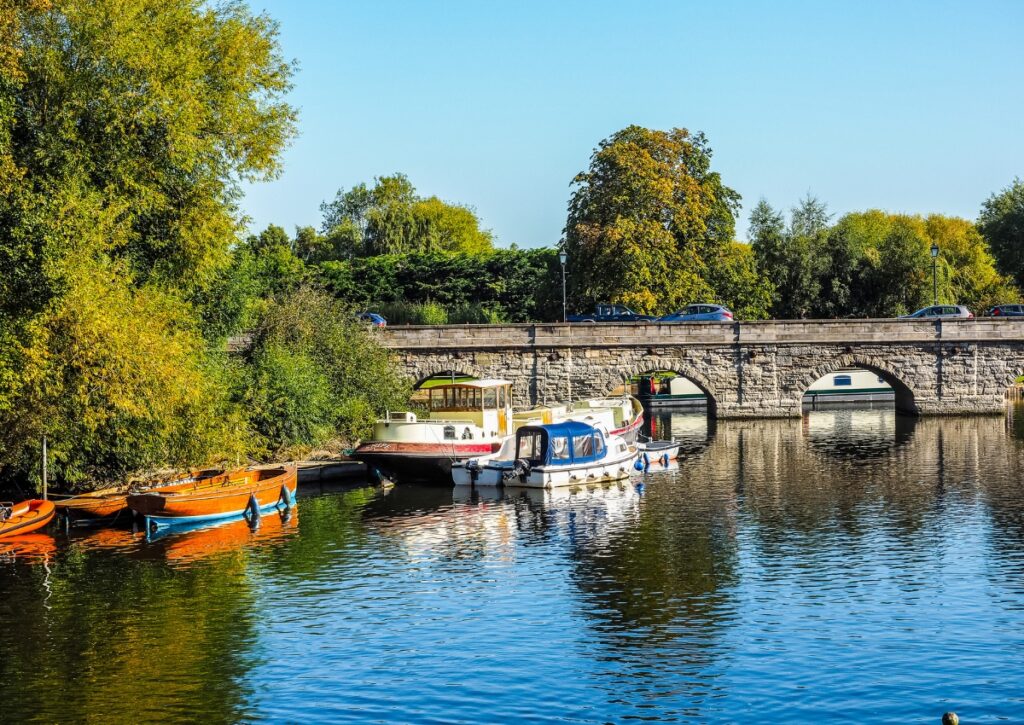
Walk along the River Avon—there’s a path that follows the water through parkland, past swans and narrowboats, with views back toward the theater and Holy Trinity Church. On weekends, you’ll see families feeding ducks, people rowing, and occasionally a Shakespeare-themed boat tour (£7-10) narrating the connection between various buildings and the Bard. It’s touristy but harmless, and if you’re not feeling up to walking everywhere, it’s a pleasant way to see the town from a different angle.
One final tip: Stratford gets absolutely packed during summer holidays and weekends. If you want to avoid the worst crowds, come mid-week or off-season (November-March). The town is actually lovely in winter—fewer tourists, Christmas markets in December, and the theater is still running performances. The Shakespeare properties are open year-round, and some would argue they’re better appreciated when you’re not queueing for 20 minutes to see each room.
Before you head back to London, grab a cream tea at Hathaway Tea Rooms (£8.50)—scones with clotted cream and jam, served with proper loose-leaf tea in an actual pot. It’s exactly what you imagine when you think “English tea room,” and sometimes living up to the cliché is entirely acceptable.
Sustainable tip: Stratford is walkable and compact—the Shakespeare properties are spread out, but shuttle buses connect them and are included with your ticket. If you’re cycling, Stratford Bike Hire (£15/day) offers bikes that let you explore the surrounding countryside, including paths along the River Avon and through villages that haven’t changed much since Shakespeare’s time.
Practical Stuff You Need to Know Before You Go
Let’s talk logistics, because romantic as it is to be spontaneous, Britain’s transport system rewards planning ahead. And I mean really rewards it—booking train tickets in advance can be the difference between £15 and £120 for the exact same journey.
Getting Around: Trains, Coaches, and Rental Cars
Trains are usually the fastest option for day trips from London. Book through Trainline or directly through rail operators’ websites (GWR, LNER, Southeastern, etc.). The further ahead you book, the cheaper it gets. “Advance” tickets can be 70% cheaper than “Anytime” tickets, but they lock you into specific trains. If flexibility matters, “Off-Peak” or “Anytime” tickets let you take any train that day but cost significantly more.
Most day trips leave from major London terminals:
- Paddington: Bath, Oxford, Cotswolds
- St. Pancras: Canterbury, Dover (high-speed)
- King’s Cross: Cambridge
- Victoria: Brighton, Dover (slower trains)
- Waterloo: Windsor
- Marylebone: Stratford-upon-Avon
Get to the station at least 15 minutes before your train—London terminals are big, and finding the right platform can take time. Also, British trains are… temperamental. Delays happen. Cancellations happen. Strikes occasionally happen. Check National Rail’s website the morning of your trip for any issues.
National Express and Megabus coaches are cheaper than trains but slower and less comfortable. For destinations like Oxford or Bath, a coach might cost £10-15 return versus £30+ for a train. You’re trading time for money—coaches take 2-3 hours for journeys that trains do in 1 hour. Good option if you’re on a tight budget or not in a hurry.
Renting a car makes sense for the Cotswolds (where public transport is sparse) and gives you flexibility elsewhere. Through GetRentacar, you can find competitive rates (£35-60/day including insurance). Remember: Britain drives on the left, roads are narrower than you expect, and village centers have streets built for horses, not cars. If you’re not confident with a manual transmission, specify automatic when booking—most UK rental cars are manual by default. Also, petrol (gas) is expensive—currently around £1.50-1.70 per liter, which translates to roughly £6-7 per gallon or $8-9 for Americans.
For insurance, I always recommend VisitorsCoverage for comprehensive travel insurance, especially if you’re renting cars or doing activities with any level of risk (like walking along cliff edges in Dover). Their plans cover medical emergencies, trip cancellations, and rental car excess, which can save you significant money if something goes wrong. Plans start around $40-60 for a week, depending on coverage level.
Money Matters: Cards, Cash, and Currency Exchange
Britain is increasingly cashless, but some small businesses, market stalls, and rural pubs still prefer cash. Most places accept cards, and contactless payment is ubiquitous. For the best exchange rates and lowest fees, I use Revolut and Wise (formerly TransferWise). Both offer debit cards with real-time exchange rates and minimal fees on international transactions. You can top up the account through the app, convert currency at actual market rates, and use the card anywhere.
Traditional banks often charge 2-3% foreign transaction fees plus poor exchange rates, which adds up fast. Airport currency exchange counters are even worse—avoid them unless you’re desperate. If you need cash, withdraw from ATMs using Revolut or Wise cards, which charge minimal fees (usually around 2% after a free monthly allowance).
Staying Connected: SIM Cards and Data
Free WiFi is common in cafés, restaurants, and attractions, but having mobile data makes logistics infinitely easier—looking up train times, navigating with Google Maps, and booking last-minute tickets. Yesim offers eSIMs (digital SIM cards) that you can buy and activate through an app, no physical SIM card needed. Plans start around £5-10 for several GB of data, valid for a week or a month. If your phone is eSIM-compatible (most recent iPhones and many Android phones), this is the easiest solution. Otherwise, buy a physical SIM card from EE, Vodafone, or Three at any convenience store or phone shop—roughly £10-20 for a prepaid package with data, calls, and texts.
Budget Breakdown: What a Day Trip Actually Costs
Let’s be realistic about money:
Budget Day Trip (Bath, Brighton, Cambridge):
- Train ticket (booked ahead): £20-30
- Breakfast/coffee in London: £5-8
- Packed lunch from Tesco/Pret: £5-7
- Museum/attraction entry: £0-15 (many free or low-cost options)
- Snack/cream tea: £5-8
- Dinner back in London: £10-15
- Total: £45-80
Mid-Range Day Trip (Oxford, Canterbury, Stratford):
- Train ticket: £30-50
- Breakfast: £8-12
- Pub lunch: £12-18
- Main attraction entry: £15-25
- Coffee/snack: £6-10
- Dinner in London: £15-20
- Total: £80-135
Splurge Day Trip (Cotswolds with car rental, Bath with spa):
- Car rental: £45-70
- Fuel: £20-30
- Breakfast: £12-15
- Nice lunch: £20-30
- Attraction entries: £20-40
- Afternoon tea: £15-25
- Dinner: £20-30
- Total: £150-240
These are realistic estimates. You can do cheaper (picnic lunches, free attractions, advance train bookings), and you can definitely spend more (fancy restaurants, multiple paid attractions, last-minute travel). Plan according to your budget, and remember that London accommodation and dinner add to the total daily cost.
What to Pack for Day Trips
- Comfortable walking shoes: You’ll walk more than you expect. Blisters ruin trips.
- Layers: British weather is unpredictable. Warm morning, cold afternoon, sudden rain shower—all possible.
- Waterproof jacket: Not a maybe. A definite. Rain happens.
- Reusable water bottle: Fill it from taps (UK tap water is excellent), save money, reduce plastic.
- Phone charger/power bank: You’ll use your phone more than expected for navigation, tickets, and photos.
- Small backpack: Carrying stuff in your hands gets old fast.
- Sunscreen: Yes, even in Britain. Cloudy doesn’t mean no UV.
- Snacks: Train station food is expensive and mediocre. Bring granola bars or fruit.
Sustainable Travel Tips That Actually Matter
Look, I’m not going to preach about carbon footprints while recommending day trips that require travel. But small choices add up:
- Take trains over cars when possible: Trains in the UK produce about 1/6th the CO2 emissions per passenger compared to cars.
- Walk and use public transport in destinations: Most of these places are walkable, and local buses are cheap and frequent.
- Bring reusable containers: Water bottles, coffee cups, shopping bags. Many cafés offer discounts for bringing your own cup.
- Support local businesses: Eat at independent restaurants, buy from local shops, and use local guides. Your money goes directly into the community.
- Respect natural sites: Stick to paths, don’t litter, don’t disturb wildlife. The National Trust and English Heritage work hard to maintain these places—don’t make their job harder.
- Visit off-peak: Spreading tourism throughout the year and week reduces pressure on sites and local infrastructure. Mid-week visits in shoulder seasons help everyone.
These aren’t revolutionary, but they work. Small actions by millions of travelers make a difference.
The Part Where I Admit London Isn’t Enough
Here’s what these day trips taught me: London is extraordinary, but it’s not England. The city gives you intensity, diversity, history, and culture compressed into a few square miles. But England—the actual country—is out there in market towns and seaside resorts, ancient universities and dramatic coastlines, villages where people have lived in the same stone houses for centuries, and pubs where the furniture is older than your country.
I’m not saying you should skip London. Absolutely visit London—it’s one of the world’s great cities. But if you’re spending a week or two in England and you don’t leave London once, you’re missing something essential. The rhythm of a place like Bath or Brighton or the Cotswolds is different: slower, quieter, more connected to landscape and history in ways that cities, by their nature, can’t be. You see Britain’s layers—Roman, medieval, Georgian, Victorian, modern—existing simultaneously, each generation leaving its mark without erasing what came before.
And practically speaking, day trips solve one of London’s biggest problems: cost. A day out of the city lets you eat cheaper, breathe deeper, and return to London feeling like you’ve actually had a break rather than just moved from one crowded neighborhood to another. Plus, you’ll have stories that aren’t just “I saw Big Ben” or “I went to the British Museum” (though both are great). You’ll have stood on chalk cliffs watching the English Channel, walked through courtyards where Darwin studied, eaten fish and chips on a pebble beach, or floated past medieval colleges on a river older than the buildings.
These trips aren’t exhaustive—there are dozens of other places within day-trip range of London. York and its magnificent Minster. Leeds Castle in Kent, which is absurdly picturesque and not in Leeds at all. Hampton Court Palace for Tudor history and maze-getting-lost experiences. Rye and Lewes in East Sussex for medieval charm without the crowds. Blenheim Palace in Oxfordshire, if you want to see where Churchill was born. The list goes on.
But the ones I’ve covered here are the ones I’d recommend to friends, the ones I’d do again, the ones that offer something—architecture, landscape, history, food, atmosphere—that justifies the time and money. They’re accessible, they’re different from each other, and they’re all worth it.
So here’s my advice: pick two or three from this list based on what interests you. Book train tickets in advance. Pack a small bag with layers and snacks. Check the weather, but go anyway—some of my best travel stories involve getting soaked in rain or being blown around by coastal winds. Leave your accommodation early (British trains get crowded, and destinations are better before the crowds arrive). Walk more than you think you should. Talk to locals—British people are generally friendly once you get past the initial reserve. Eat at pubs. Don’t rush. Take photos, but also put your phone away sometimes, and just look at things with your actual eyes.
And when you get back to London—probably tired, possibly damp, definitely glad to be back in a city where you can get excellent Thai food at 10 pm—you’ll have a different sense of where you are. London isn’t isolated; it’s connected to a whole country of places that are older, quieter, stranger, and sometimes more beautiful than the city itself. The day trips aren’t escapes from London. They’re the context for understanding it.
Ready for Your Next Adventure?
If this post has convinced you that Britain is more than just London (and I hope it has), then don’t let the planning overwhelm you. These day trips are genuinely easy once you know how the system works, and the experiences you’ll have—standing in Roman baths that are still warm after 2,000 years, walking along medieval college walls, watching chalk cliffs crumble into the sea—are the kind of travel memories that last.
Subscribe to A Tiny Traveler for more detailed guides, insider tips, and the kind of travel advice that comes from actually doing the trips rather than just researching them. I cover destinations across Europe and beyond, with a focus on making travel accessible, affordable, and genuinely enjoyable rather than just checking boxes on a list. No generic advice, no hidden sponsored nonsense—just actual experiences and honest recommendations.
Follow me on social media for daily stories, behind-the-scenes travel content, and way too many photos of food:
- Like my Facebook Page (A Tiny Traveler): Join our vibrant community of fellow travel lovers! This is a great place to ask questions, share your own travel experiences, and connect with other readers and me.
- Follow me on Pinterest (A Tiny Traveler): My Pinterest is your ultimate travel vision board! It’s where I share stunning photography, quick visual guides, and, most importantly, links to all my in-depth blog posts.
- Follow me on Instagram (a.tinytraveler): For daily doses of wanderlust, stunning travel photography, behind-the-scenes glimpses of my trips, and quick tips that will inspire your next getaway. See the world through my eyes!
Got questions about these day trips? Planning your own UK adventure and need advice? Email me at contact@atinytraveler.com or message me on social media. I actually read and respond to messages (revolutionary, I know), and I’m always happy to help fellow travelers figure out logistics or recommend places based on your specific interests.
Now go book a train ticket, pack a bag, and get out of London for a day. Trust me on this one. The countryside is waiting, and it’s better than you think.
Frank


