

The departure board at Zurich HB is a dangerous piece of equipment for anyone with poor holiday boundaries. Lakes. Mountains. Medieval streets. You arrive intending to choose one pleasant excursion, and suddenly your brain is scheduling three cantons before dinner. Mine certainly wants to. Then I look at the connections, remember that lunch is a legitimate activity, and start crossing things out.
That is the trick with the best day trips from Zurich: choosing what deserves your time, rather than collecting places like supermarket loyalty points. Switzerland makes traveling remarkably convenient, but a convenient train network cannot stretch an afternoon. Nor can it make a mountain visible through a cloud the color of wet cement.
I have narrowed this guide to five trips with different personalities: Lucerne and Mount Rigi, Rhine Falls and Stein am Rhein, Bern, Mount Titlis, and Interlaken and Lauterbrunnen. Some suit slow mornings and modest spending. Others require an early alarm, a bigger budget, and a cooperative forecast. I will tell you which is which before you buy anything.
This is for independent travelers, couples, solo explorers, and families using Zurich as a base. Expect practical routes, realistic spending estimates, food worth making time for, and honest advice about when an organized tour helps. My priority is simple: you should come home remembering the place, not just the sensation of running toward a closing train door.
Choose Your Day Before You Choose Your Ticket
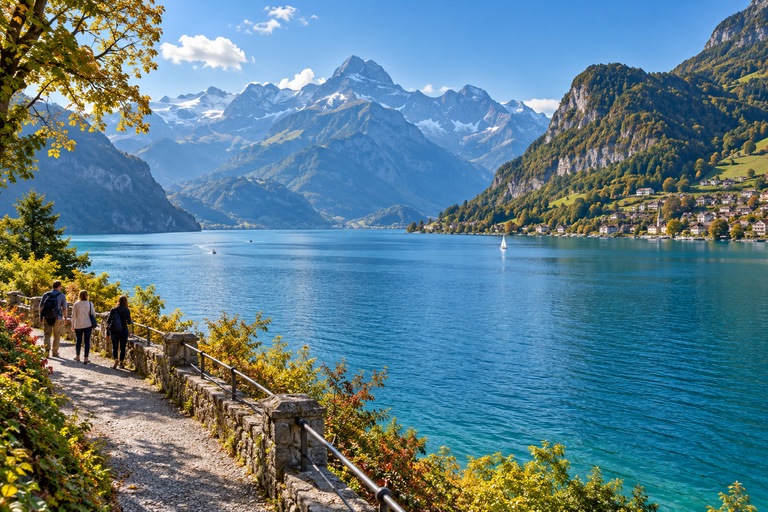
For a first visit, I would choose Lucerne and Mount Rigi on a clear day, or Bern when mountain visibility is poor. Pick Rhine Falls for a shorter journey, Titlis for high mountain scenery, and Lauterbrunnen when its valley is worth a longer travel day to you.
| Day trip | Approximate travel from Zurich HB | Best for | Sensible time commitment |
|---|---|---|---|
| Lucerne and Mount Rigi | 45–60 minutes to Lucerne, then mountain connections | Lakes, old streets, accessible mountain transport | 9–11 hours with mountain |
| Rhine Falls and Stein am Rhein | 50–70 minutes to falls area, then onward connections | Waterfalls, families, painted townhouses | 7–9 hours combined |
| Bern | About 1 hour on faster direct trains | History, cafés, flexible sightseeing | 6–8 hours |
| Mount Titlis via Engelberg | About 1¾–2¼ hours to Engelberg, then ascent | Glacier scenery and cable cars | 9–11 hours |
| Interlaken and Lauterbrunnen | About 2½–3 hours to Lauterbrunnen on faster connections | Valley walks and waterfalls | 11–13 hours |
My Tip: These are starting points, not promised departures. Search your actual date in the SBB journey planner. Include your hotel walk and connection buffers when deciding what feels manageable.
1. Lucerne and Mount Rigi: The Day With a Little of Everything
Why I Would Start Here
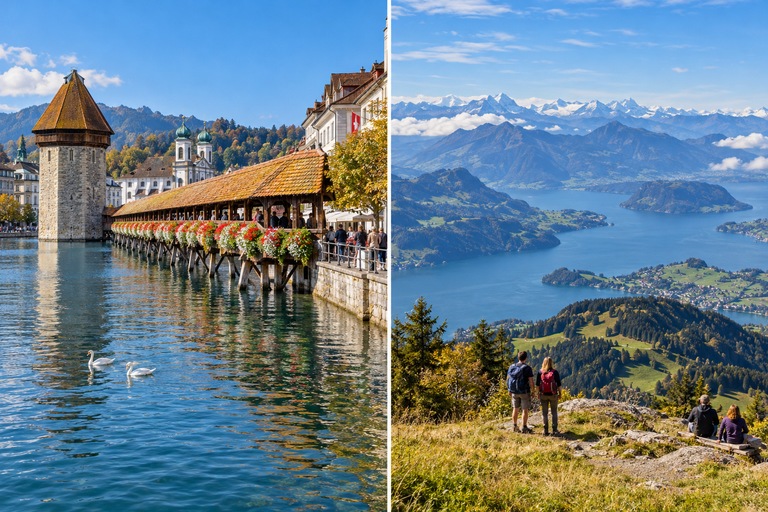
Lucerne gives you an excellent introduction to Switzerland without demanding specialist equipment, heroic stamina, or an interest in expensive wristwatches. There is water beside the station, a wooden bridge across the Reuss, and mountain transport close enough to turn a city visit into a proper excursion.
The appeal is the contrast. Under the roof of Chapel Bridge, timber frames narrow your view. By the lake, everything opens. Up on Mount Rigi, the shoreline becomes a series of curves, with villages reduced to little clusters beside the water.
Best for: First visits, couples, photographers, and travelers who want scenery without committing to a demanding hike. Lucerne alone is also an excellent choice when you need a gentler day.
How to Get There Without Making It Complicated
Take a train from Zurich HB to Luzern, the station name used in timetables. Faster services take roughly 45–60 minutes. From the station, the lakefront and Chapel Bridge are an easy walk.
For a combined day, I would build around this route: Zurich → Lucerne → Vitznau → Rigi Kulm → Arth-Goldau → Zurich. Travel across Lake Lucerne to Vitznau, then take the cogwheel railway uphill. Returning through Arth-Goldau avoids retracing every mile.
Check the boat and mountain railway schedules together. The crossing is part of the outing, not a quick shuttle you can squeeze between other plans. Use the Lake Lucerne navigation website and Rigi planning information.
If the timetable feels cramped, reverse the route and prioritize the mountain while visibility is good. You can appreciate Lucerne later without negotiating with the weather.
What I Would Actually Do
Begin with Chapel Bridge, also called Kapellbrücke. Look up at the triangular paintings instead of treating the bridge solely as a photo backdrop. Much of it was damaged in the 1993 fire and subsequently rebuilt; the official bridge history adds context to what you see.
Give the Old Town an unhurried hour. Painted façades, fountain squares, and streets that turn away from the river reward wandering without a checklist. Then collect lunch before boarding your boat.
At Rigi Kulm, choose a short walk that matches conditions. You do not need to complete an ambitious trail to justify coming up. A bench, a sandwich, and a clear horizon can do more for your afternoon than an extra five miles completed out of guilt.
A sensible outline: Arrive in Lucerne around breakfast time, explore briefly, take a late morning boat and mountain connection, then leave the mountain with a comfortable margin before the final services.
Food, Costs, and the Clouds Clause
For lunch, I like the logic of a bakery picnic: fresh crusty bread, firm cheese, an apple, and something flaky that sheds half its contents into your lap. Budget CHF 12–20. A restaurant meal generally needs CHF 25–40, more with drinks.
The published adult Rigi Railways day pass is CHF 84, or CHF 42 with an eligible half fare entitlement. Swiss Travel Pass holders travel free on the listed Rigi Railways network. Boats and travel from Zurich require their own coverage or tickets; check the official fare and inclusion list.
Allow roughly CHF 85–210 per adult for the combined day with simple meals, depending heavily on ticket coverage. Lucerne without the mountain can cost considerably less.
My Tip: Check the summit webcam before committing to uncovered mountain fares. If the forecast collapses, spend longer in Lucerne. You are allowed to change your mind; the mountain will not take it personally.
Prefer someone else to coordinate the connections? Compare GetYourGuide options, checking whether the boat, cogwheel train, transport from Zurich, and guided portions are included.
Check Lucerne and Mount Rigi Tours
2. Rhine Falls and Stein am Rhein: Loud Water, Quiet Streets
Why These Two Belong Together
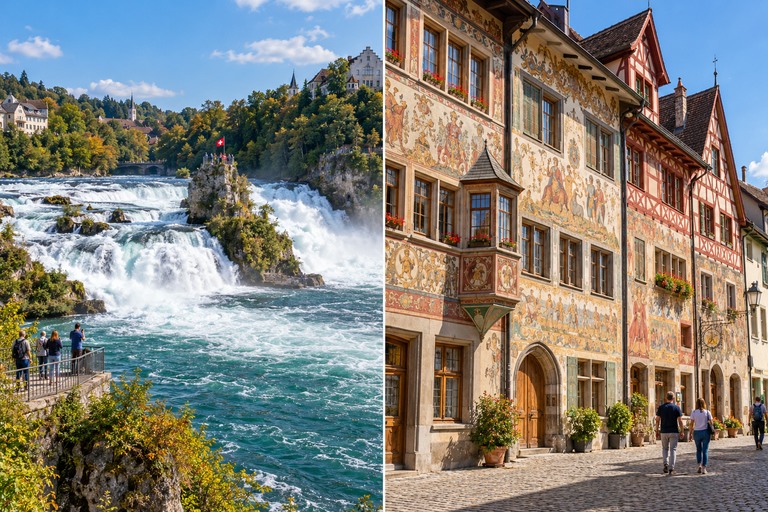
Rhine Falls, or Rheinfall, supplies the noise. Stein am Rhein supplies the civilized recovery period. Together, they make one of the most varied day trips from Zurich by train, without the altitude or long approach of an Alpine excursion.
At the falls, water hits rock with a continuous, muscular roar. Spray hangs near the viewing areas; on busy days, everyone attempts the same photograph while pretending everyone else is the problem.
Later, Stein am Rhein changes the pace completely. Painted façades crowd around the old center, and the Rhine moves past with far less theatrical behavior.
Best for: Families, first visits, travelers avoiding high altitude, and anyone who likes nature followed by a proper sit down.
Get the Station Right First
For the southern side, search Schloss Laufen am Rheinfall in SBB. For the northern approach, search Neuhausen Rheinfall. Routes and changes vary, so compare both against your starting time and mobility needs.
Allow approximately 50–70 minutes from Zurich HB, plus walking to your chosen viewpoint. Schaffhausen is nearby, but its main station is not the falls themselves. That distinction matters when your itinerary has allotted eleven optimistic minutes for everything.
After the falls, continue toward Stein am Rhein, commonly via Schaffhausen. Allow roughly another hour including connections, depending on your departure point. From Stein am Rhein station, walk across the river to the historic center. The regional arrival guide explains the approaches.
My Plan for the Day
Spend your morning at Rhine Falls. Start with the viewing platforms around Schloss Laufen, then decide whether a boat trip adds something you want. Some routes get you closer to the water; others include the central rock and additional climbing.
Boat rides are separate purchases, with seasonal schedules and weather-dependent operations. Choose the actual route rather than assuming every boat ticket buys the same experience. The official Rhine Falls website links to current visitor information and operators.
Allow 1½–2½ hours at the falls, longer if you want several viewpoints. Then head for Stein am Rhein and make lunch the dividing line between the two halves of your day.
Spend the afternoon around Rathausplatz, looking at the painted buildings rather than rushing between named attractions. The pleasure is in noticing details: a figure above a window, a date on a wall, shutters that look freshly scrubbed.
Walk beside the river afterward. You can add Hohenklingen Castle if you have energy, suitable conditions, and time, but the uphill walk is optional. I would skip it before sacrificing the relaxed part of the afternoon.
The Price of Getting Slightly Damp
The current Schloss Laufen admission is CHF 5 for adults and CHF 3 for children aged 6–15, covering the listed castle visitor attractions and viewing access. Confirm details through Schloss Laufen visitor information.
Other approaches offer views without that admission charge, but that does not make every platform or boat free. Check the access route before choosing your station.
Budget approximately CHF 60–115 per adult for trains, straightforward food, and the paid platforms. Boat trips, extra attractions, or a leisurely restaurant lunch increase that total. These are estimates; regional fares and advance tickets change the calculation.
For lunch, consider rösti: grated potatoes fried until the edges turn crisp and brown, often topped with cheese or an egg. Check whether meat is included if you want a vegetarian version. Allow CHF 22–35 for a simple restaurant main.
My Tip: Pack a light waterproof layer and a lens cloth. Also check step-free access in advance: lifts on one approach do not mean every platform, stairway, or boat is accessible.
If transfers sound tiring, compare GetYourGuide excursions combining the falls and Stein am Rhein. Read the time allowed in each place and whether the boat is included or optional.
Compare Rhine Falls and Stein am Rhein Trips
3. Bern: For People Who Want to Stop Checking the Weather
A City That Rewards Looking Around
Bern is my strongest choice when a mountain forecast turns unreliable. You still get a satisfying change of scene, but your day does not depend on a summit emerging from fog.
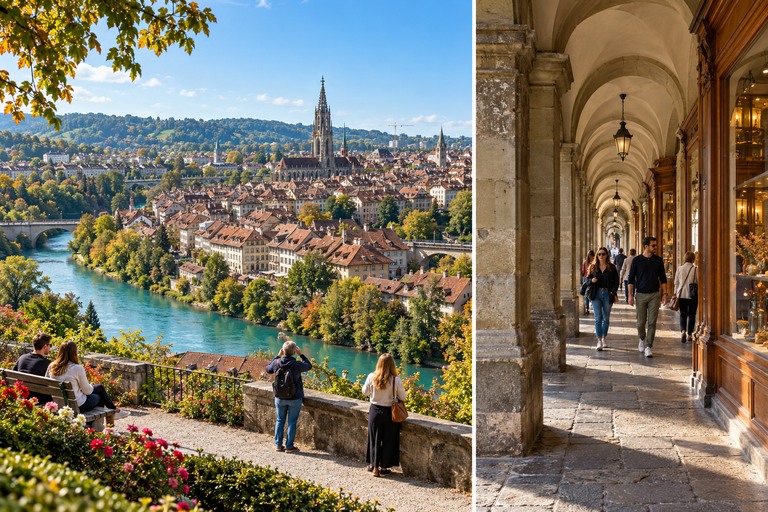
The UNESCO-listed Old City curves within a bend of the Aare, with sandstone buildings, fountains, and long covered arcades. Those arcades are particularly useful when rain arrives halfway through your coffee plans.
There is history here without the obligation to spend the entire day reading plaques. You can look at a clock mechanism, wander past cellar entrances, climb toward a city view, and still have time to argue with yourself about a second pastry.
Best for: History lovers, solo travelers, mixed weather days, and anyone who prefers a city walk to mountain transport.
The Easy Journey Is Part of the Appeal
Faster direct trains connect Zurich HB and Bern in about one hour. The center is walkable from the station, so there is little setup time before your day begins.
I would plan six to eight hours door to door, depending on your hotel and whether you add a museum. This is a trip where you can leave after breakfast without feeling that you have already ruined everything.
Follow the Streets, Then Find the View
Walk toward Zytglogge, the medieval clock tower. Arrive a few minutes before the hour for the small moving figures. Keep expectations appropriately sized: it is a historic mechanism, not a fireworks display sponsored by a telecommunications company.
Continue along Kramgasse, then explore the area around Bern Minster and its terrace. The city is especially rewarding when you look above storefront level, where signs, stonework, and windows give the streets their rhythm.
The Old City has held UNESCO World Heritage status since 1983. After a major fire in 1405, stone construction helped shape the streetscape you see today. The official old city guide makes useful reading before your walk.
If conditions are dry, head toward Rosengarten for the view over rooftops and the river bend. The uphill approach takes effort; consider local transport if steep walking is uncomfortable. You do not have to earn your lunch through suffering.
On a wet afternoon, choose one museum, such as the Bern Historical Museum, and check its current opening days before traveling. One good indoor visit is better than racing through three collections because an itinerary told you to.
Lunch, Spending, and Small Decisions
I would make Bern the day for a seated lunch. Order rösti, seasonal soup, or a simple daily special, then let your feet recover under the table. A crisp potato edge dragged through melted cheese is a persuasive argument for slowing down.
Budget CHF 25–40 for lunch with a modest drink, or CHF 12–20 for a bakery or supermarket meal. Allow another CHF 5–7 if a café stop matters to you. It matters to me.
A practical day trip budget is CHF 70–140 per adult, including transport and ordinary meals but excluding shopping. Walking the Old City costs nothing; museums and tower tours add separate charges. A good advance rail deal makes a noticeable difference.
My Tip: Wear shoes you already trust. Cobblestones are very good at identifying the exact location of a new blister.
Interested in the stories behind the buildings? Compare small group walking tours through GetYourGuide, checking the meeting point: a tour starting in Bern usually does not include travel from Zurich.
4. Mount Titlis: Big Mountain Scenery, With Some Fine Print
Choose This for the Mountain Itself
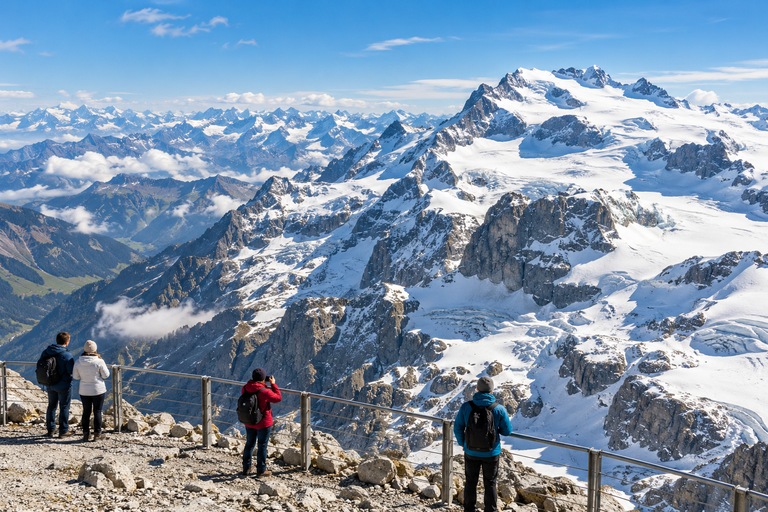
Mount Titlis is the high-altitude option on this list. Above Engelberg, visitor facilities reach approximately 3,020 meters, where rock, ice, and snow replace the softer lake scenery around Lucerne.
I would choose it when seeing that environment is a priority, rather than adding it because a brochure says a holiday needs a glacier. It is a substantial purchase. You should actually want what you are buying.
Best for: Travelers excited by cable cars, snow and ice scenery, and a mountain outing with established visitor facilities. It is less suitable for a tight budget or a forecast offering very limited visibility.
Getting From Zurich to Titlis
Take the train from Zurich HB to Lucerne, then connect to Engelberg. Allow roughly 1¾–2¼ hours to the village, depending on your connection, plus the walk or local transfer to the cableway station.
The mountain ascent takes around 30 minutes under normal operating conditions, with extra time for queues and transfers. Plan your return around the cableway timetable, not just the last train to Zurich.
Important 2026 update: The Titlis Rotair is scheduled for maintenance from August 17 through December 11, 2026. The operator lists Titlis Connect as the alternative between Stand and the summit during that period. That is a change of cableway, not a blanket closure of the mountain. Check official Titlis operating information for your date.
Make Room for the Actual Experience
Head uphill early enough to avoid building your entire day around the final descent. At the top, choose from the currently open viewing areas and attractions. The Cliff Walk, glacier cave, and Ice Flyer can be affected by weather, maintenance, and operating conditions.
Do not assume every advertised experience is running or included in your ticket. Check the live facilities list before purchase. New attractions and ticket packages can change what a particular fare covers.
If conditions allow, leave time for Trübsee on the descent. It gives the day a different scale: lake, paths, and a chance to sit outside the main summit rush. Follow open paths and seasonal guidance rather than treating a summer photograph as proof of current access.
My Tip: Bring layers, grippy closed shoes, sunglasses, and sun protection. Conditions at the visitor station can differ sharply from Engelberg. Stay in designated visitor areas; a glacier is not an improvised walking route.
What the Day Costs
Published standard adult return transport from Engelberg to Titlis is CHF 102; the Ice Flyer is listed separately at CHF 12. Check Titlis prices for discounts, package changes, and your exact travel date.
With travel from Zurich, food, and mountain transport, budget roughly CHF 170–260 per adult without mountain discounts. A qualifying pass can change the total. Do not confuse coverage of the railway to Engelberg with coverage of the cableway above it.
For convenience, compare GetYourGuide trips from Zurich. Look for clear inclusions, actual mountain time, cancellation terms, and what happens if conditions prevent the advertised excursion.
Compare Mount Titlis Day Trips From Zurich
5. Interlaken and Lauterbrunnen: Worth the Early Alarm?
Yes, If the Valley Is What You Came For
Lauterbrunnen is the longest outing here, and I would rather tell you that upfront than hide the journey beneath enthusiastic adjectives. Expect roughly five to six hours of return train travel, before local wandering and station walks.
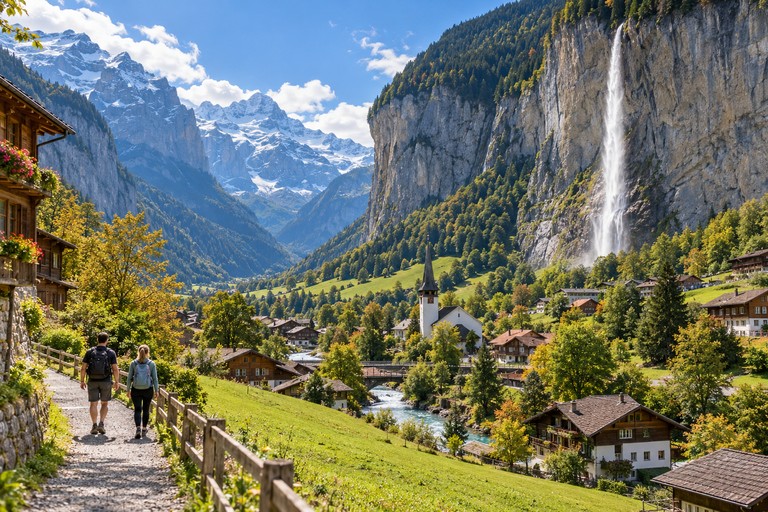
What you get is a valley with steep rock walls, fields, village buildings, and waterfalls that change with season and weather. Staubbach Falls drops around 300 meters, a thin ribbon that can drift into spray against the cliff.
Best for: Travelers who specifically want Lauterbrunnen, can leave early, and are happy making one valley the main event. If your time in Zurich is very short, I would choose a shorter trip.
Take the Faster Route Out
Search Zurich HB → Lauterbrunnen in SBB, usually connecting through Bern and/or Spiez, then Interlaken Ost on faster itineraries. Allow approximately 2½–3 hours each way, depending on the service.
The route through Lucerne can be appealing when the train journey itself is your priority, but it generally takes longer to reach the valley. For a single day, I would prioritize time on the ground.
Interlaken Ost and Interlaken West are different stations. Follow your itinerary carefully, including coach destination displays where applicable. Read the signs before settling into a seat and opening breakfast.
My Deliberately Uncrowded Itinerary
Leave Zurich early and continue straight to Lauterbrunnen. Walk through the village toward Staubbach Falls, then along the valley on an open, suitable path. Let the cliffs remain the main attraction.
The air near falling water can feel cool even when the village street is warm. Bring a layer you can reach without unpacking everything. Your camera battery and rain jacket should not be beneath your lunch.
If open, consider Trümmelbach Falls, where water cuts through channels inside the mountain. These are different from an outdoor roadside waterfall: expect tunnels, stairs, wet surfaces, and considerable noise. Check the official Trümmelbach website before going; opening is seasonal and weather dependent, and very young children are restricted.
Choose a picnic or an unhurried lunch in the valley. Then, if your return schedule allows, give Interlaken a short walk rather than a second full itinerary. Höhematte is a straightforward place to pause before continuing home.
My Tip: Do not add Jungfraujoch, Grindelwald, two lakes, and a sunset viewpoint to this plan. Each extra connection removes time from the place you traveled so far to see.
Budget Honestly, and Consider Sleeping Over
Allow approximately CHF 90–180 per adult for the valley day with trains and modest food, depending on advance fares. Waterfall admission and local transport can add costs; premium mountain excursions are outside this estimate.
An overnight stay can make more sense if you want walking time, mountain transport, and flexibility for weather. Compare Booking.com properties in Lauterbrunnen or Interlaken, checking station distance, breakfast, cancellation conditions, and the total price rather than the headline nightly rate.
Compare Lauterbrunnen and Interlaken Stays
Prefer a guided excursion? Search GetYourGuide, but read carefully: a trip mentioning Interlaken does not automatically visit Lauterbrunnen, and free time can be shorter than the photographs suggest.
Find Tours That Include Lauterbrunnen
Swiss Transport Without the Ticket Headache
Compare Three Options Before Buying
Ordinary point-to-point tickets offer route-based travel under their stated validity conditions. Supersaver tickets are generally tied to chosen connections. Saver Day Passes cover travel within the published validity network on your selected day.
The SBB Saver Day Pass currently starts at CHF 52 without a Half Fare Travelcard, or CHF 29 with one, in second class. Those are limited starting prices, not guaranteed fares. Buy in advance and read the official conditions and coverage map.
For several travel days, compare a Swiss Travel Pass or Swiss Half Fare Card against the actual journeys you intend to take. Include mountain supplements. A pass earns its keep through your itinerary, not through how reassuring its name sounds.
My Tip: Make sure the booking screen knows whether you have a valid discount entitlement. A half fare shown online is not automatically available to every visitor.
When Tours or a Car Make Sense
Choose a tour when coordinated transport, guidance, or fewer decisions justify the premium. Compare inclusions against independent costs, especially for mountain days.
I would normally use trains for these five outings. If you need a car for a wider rural itinerary, compare GetRentacar offers for your dates. Check the deposit, insurance excess, mileage, pickup arrangements, parking, and any cross-border permissions before paying.
What You Will Actually Spend in a Day
These estimates are per adult in Swiss francs, or CHF. Day trip figures above exclude accommodation, flights, insurance, and shopping. Here are practical allowances for ordinary essentials, rather than promises that every café charges the same price.
| Essential | Planning allowance |
|---|---|
| Bakery breakfast | CHF 8–15 |
| Coffee | CHF 5–7 |
| Supermarket picnic lunch | CHF 12–20 |
| Casual restaurant main | CHF 25–40 |
| Simple restaurant dinner | CHF 30–50 |
| Supermarket bottled water | CHF 1–3 |
| Hostel dorm bed | CHF 50–90 nightly |
| Basic private double room | CHF 150–240 per room |
| Comfortable midrange double | CHF 220–350 per room |
For a full day including accommodation, allow roughly CHF 140–210 on a careful budget, CHF 220–330 for comfortable travel sharing a room, or CHF 350 and upward for more expensive hotels and excursions. Major mountain tickets can push you beyond these ranges.
My Tip: Carry a refillable bottle and use drinking water sources where permitted. Keep a modest amount of cash for small purchases, but avoid exchanging your entire holiday budget on arrival.
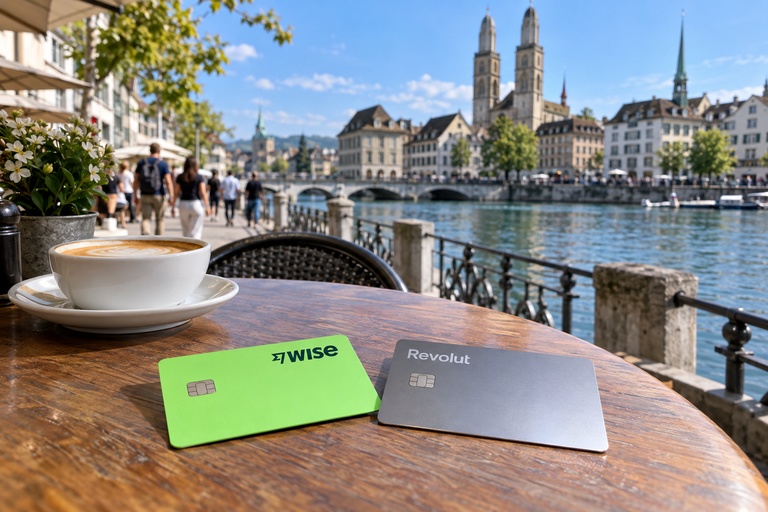
Compare Wise and Revolut with your existing bank card before traveling. Review conversion charges, withdrawal allowances, account eligibility, and plan-specific fees. Neither should be treated as universally free. When offered card currency conversion, compare carefully; paying in CHF usually avoids the merchant choosing your exchange rate.
Check Wise for Swiss Franc Spending →
Compare Revolut Plans and Travel Fees →
Leave the Place Better Than Your Picnic Spot
Practical sustainable travel starts with ordinary decisions. Use public transport, carry your bottle, and buy lunch from local bakeries or shops when possible. Spending locally matters more than buying another souvenir manufactured somewhere else.
Stay on marked paths, respect farm gates, and avoid entering meadows for photographs. Grass can be a working crop, not an invitation. Take every scrap of picnic waste with you, including fruit peels.
In small places such as Lauterbrunnen and Stein am Rhein, keep voices down near homes and never block doorways for a photograph. Visit earlier or linger beyond the busiest hours when your transport permits. Ask before photographing people at close range.
My Tip: Choose fewer stops and spend longer in them. It usually makes the day calmer, helps local businesses beyond the nearest souvenir counter, and reduces unnecessary backtracking.
Questions Worth Asking Before the Alarm Goes Off
Which Day Trip Is Best in Winter?
Bern and Lucerne are flexible choices because their appeal does not require high mountain access. Titlis can suit a winter mountain day when facilities and weather allow. Check operating schedules, daylight, and path conditions; summer walking plans do not automatically transfer to winter.
Can I Do These Trips With Children or Limited Mobility?
Often, with adaptations. Choose Lucerne alone or a shorter Bern itinerary for easier pacing. Verify station assistance, lifts, toilets, gradients, and attraction access directly. A cable car or train reaching a destination does not guarantee that every viewpoint or path is step-free.
What Should I Pack?
Bring comfortable shoes, layers, a waterproof jacket, water, snacks, a power bank, and downloaded tickets. Add sunglasses and sun protection for mountain days. Save your return options before leaving. I also like one empty pocket for wrappers: tiny preparation, surprisingly useful.
The Part Where You Leave Space in the Day
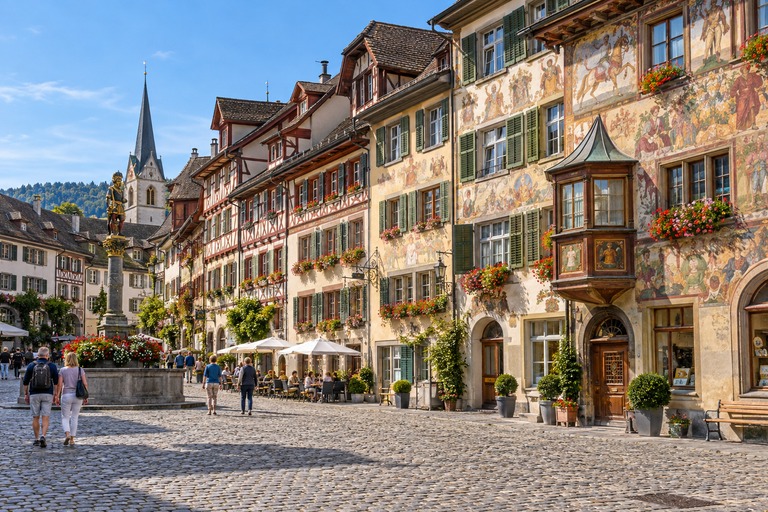
The best Zurich day trip is the one that matches your energy, weather, and actual interests. You do not need to prove that you saw enough of Switzerland by returning with exhausted feet and seventeen nearly identical photographs taken through train windows.
I would start with one clear choice. Book a practical Zurich base, compare transport, and leave your most weather-sensitive day flexible where ticket conditions permit. Choose Lucerne and Rigi for variety, Rhine Falls and Stein am Rhein for contrast, Bern for slow exploration, Titlis for high mountain scenery, or Lauterbrunnen for a valley worth the long journey.
Use the booking links above when they help you find the right fit. Read the inclusions, compare the total cost, and spend on the experience you care about most. Saving on lunch to afford a mountain ticket makes sense. Buying every upgrade because you are already there rarely does.
Subscribe to A Tiny Traveler for more honest itineraries, practical budgets, and trips that leave room for lunch. Follow A Tiny Traveler on Pinterest, and save this guide to your Switzerland travel planning board so the routes and reminders are there when you need them.
Then put the phone away for a while. There is a bench beside the water, something good inside a paper bakery bag, and hopefully no reason at all to start running toward a station.
Frank


