
Let me be honest with you right from the start: I almost didn’t come back to Koh Phangan.
Three years ago, I arrived on this island expecting to find myself. Instead, I found myself at 4 AM on a beach covered in glow-in-the-dark paint, beer buckets in hand, surrounded by thousands of people I’d never met, dancing to EDM blasting from speakers the size of small cars. My first thought? “I’m getting too old for this.” My second thought? “Actually, let’s do this again tomorrow night.” Welcome to the Full Moon Party, folks—the island’s most famous attraction and the absolute opposite of a peaceful tropical getaway.
But here’s the thing about Koh Phangan that most travel blogs won’t tell you: it’s so much more than one monthly party. Yeah, the island has gained a reputation as the backpacker party destination of Southeast Asia, and that reputation is earned. But if you’re willing to venture beyond Haad Rin Beach and actually explore, you’ll find something that most visitors miss entirely. I’m talking about hidden waterfalls cascading through thick jungle, secluded beaches where the only sound is the gentle lapping of waves, ancient temples perched on hilltops, and food that’ll make you forget every other meal you’ve ever eaten. I’m also talking about a genuine local community, serious adventure opportunities, and spaces designed for wellness seekers, digital nomads, and solo travelers who want something real.
This isn’t a destination for everyone. If you’re looking for a resort experience where you’re coddled and protected from the “real” world, you might feel uncomfortable. The roads are rough. The infrastructure isn’t always perfect. Things move on island time. But if you’re someone who thrives in a little chaos, loves discovering places off the main tourist trail, and isn’t afraid to get your hands dirty (or sandy, as it were), Koh Phangan will absolutely captivate you. I know because it did to me—despite my reservations.
The Real Deal on Getting to Koh Phangan: Your Transportation Options Explained
Let’s talk about the journey first. I’ve done this trek multiple times now, and I can tell you there’s no “perfect” way—only the way that works for you.
From Bangkok: The Journey That Will Test Your Patience (and Your Sleep)
If you’re flying into Bangkok, welcome to the first real decision of your trip. You’ve got options, and they’re all kind of chaotic in their own way.
The Cheapest Option: The Overnight Bus + Ferry Combo
This is what I took on my first trip, and honestly? It’s the most authentic experience. You’ll take an overnight bus from Khao San Road (that famous backpacker street that somehow still exists despite being the opposite of cool) and merge into the night with about 200 other travelers. The bus bounces along for roughly 10-12 hours until it reaches the pier in Donsak, where you’ll stumble out looking like something the cat dragged in. Then comes the ferry—anywhere from 2.5 to 3 hours of salty sea air and strong coffee.
Companies like Boonsiri Ferry and Lomprayah run this route regularly. Cost? Around ฿850-1,000 ($24-30 USD). It sounds brutal, but you’re basically trading a night’s hotel stay for transportation and an adventure. Pro tip: Book with Welcome Pickups for a seamless transfer experience—they’ll handle all the logistics, and you can actually sleep instead of worrying about missing connections.
The Fast Option: Fly to Surat Thani, Then Ferry
If you’ve got a bit more cash and your time is more valuable than your sanity, fly from Bangkok to Surat Thani (about 1 hour 15 minutes). From there, it’s a minivan ride to the pier (1.5-2 hours) and then another 2-2.5 hour ferry to Thong Sala Pier on Koh Phangan. Total door-to-door? About 6-7 hours. It costs more, but you’ll arrive fresh and ready to explore instead of delirious.
The Premium Option: Direct Flight to Koh Samui, Then Ferry
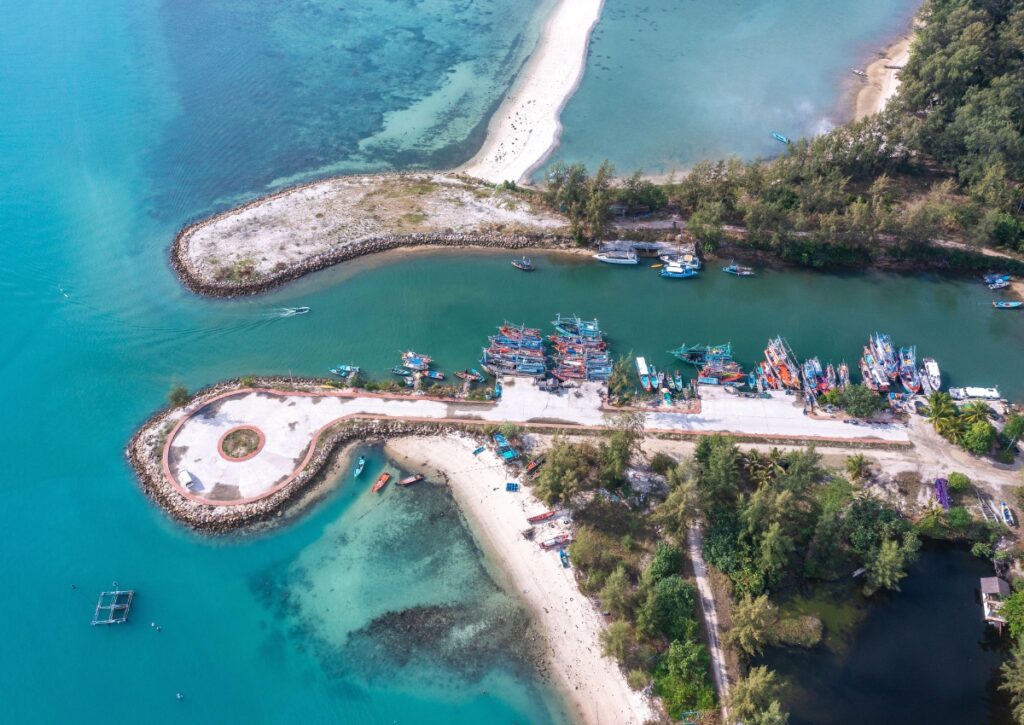
Some travelers skip the intermediate steps and fly directly to Koh Samui, then take a 30-45 minute ferry to Koh Phangan. It’s pricier, but you’ll feel like a human being when you arrive.
I recommend using CheapOair to score deals on flights—they often have better rates than the big-name airlines, and the customer service is surprisingly good if something goes wrong. For the ferry booking, GetYourGuide offers combination packages that remove the guesswork.
Where to Stay: Finding Your Island Vibe (Because They’re All Different)
Here’s what took me way too long to understand: Koh Phangan isn’t one place. It’s basically seven different islands mashed together, and each area has its own personality. Choosing where to stay determines your entire experience.
Haad Rin: The Party Capital (If You’re Into That)
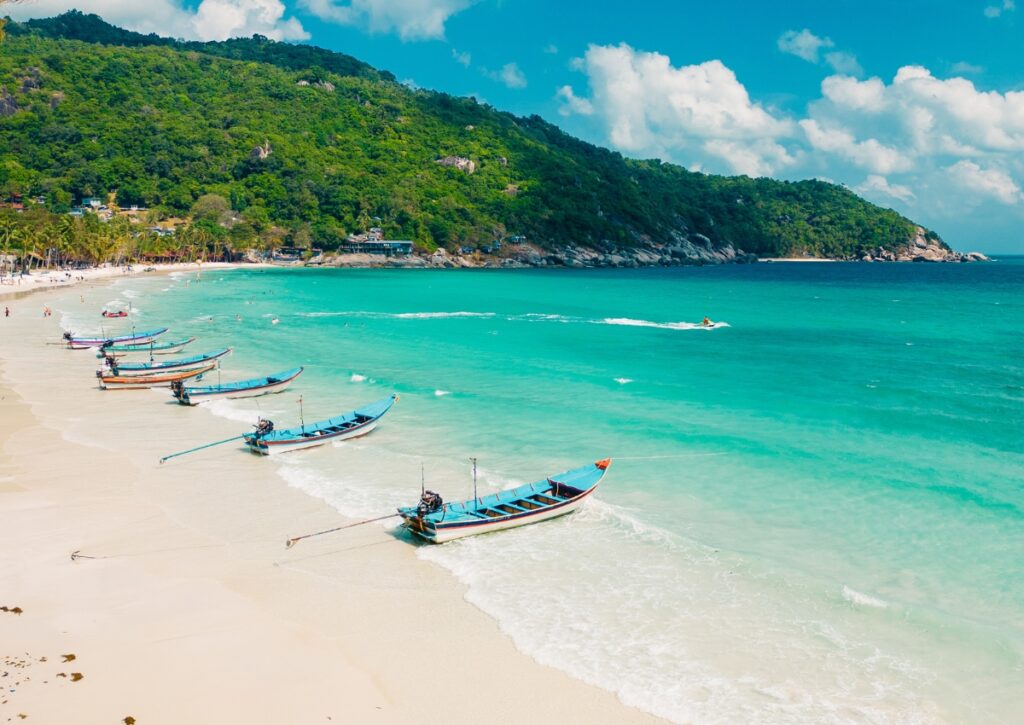
Haad Rin is ground zero for the Full Moon Party. The beach itself splits into two sections: Haad Rin Nok (sunrise beach) on the east side, where the party happens, and Haad Rin Nai (sunset beach) on the west side, which is noticeably calmer. The sand here is coarse with bits of coral, so watch where you step barefoot. The water can get choppy, especially on windy days.
If you’re coming specifically for the party, book accommodation months in advance—I’m not kidding. During Full Moon week, beds here are nearly impossible to find. Hostels range from ฿600-1,200 for dorm beds during the party ($17-34 USD), dropping to ฿300-500 during quiet times ($8-14 USD). Private rooms skyrocket to ฿1,500-3,000 during party week ($42-85 USD) but hover around ฿800-1,500 otherwise ($23-42 USD).
I recommend checking Booking.com for late deals and better rate guarantees. They’re always transparent about cancellation policies, which matters when plans inevitably change.
The vibe here isn’t peaceful—it’s raw, loud, and absolutely electric. The beach bars don’t close; they just transition from afternoon chill to all-night rave. If you want a quiet sunset dinner, go somewhere else. If you want to dance until your legs forget how to work and meet people from 80 different countries whose names you won’t remember, this is it.
Bottle Beach (Haad Khuat): The Hidden Gem That’s Not Really Hidden Anymore
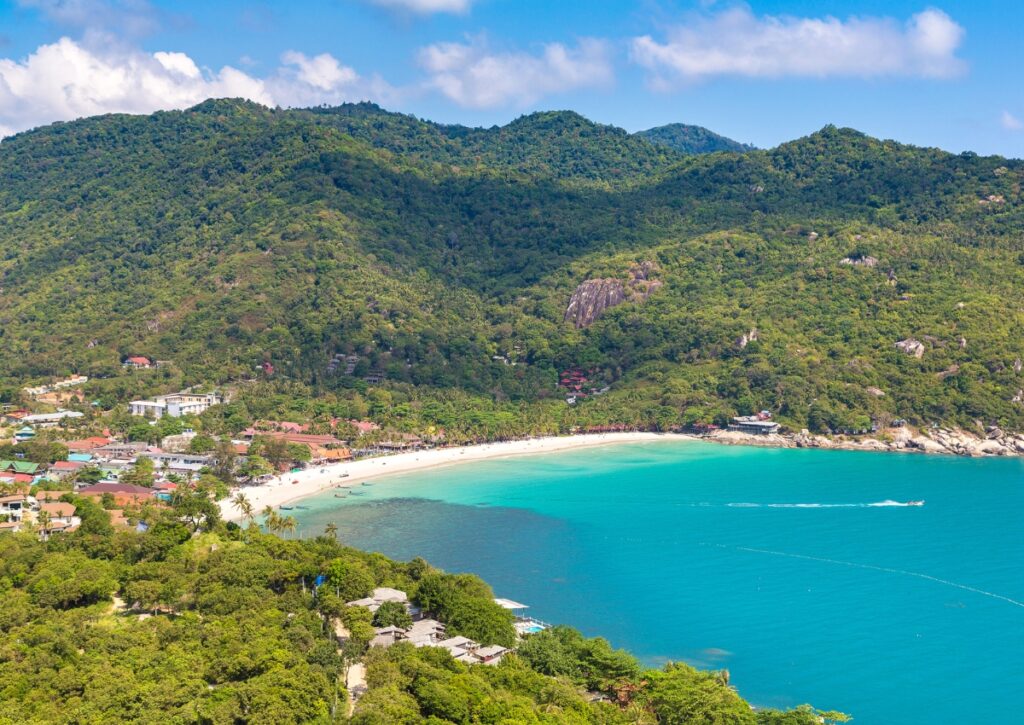
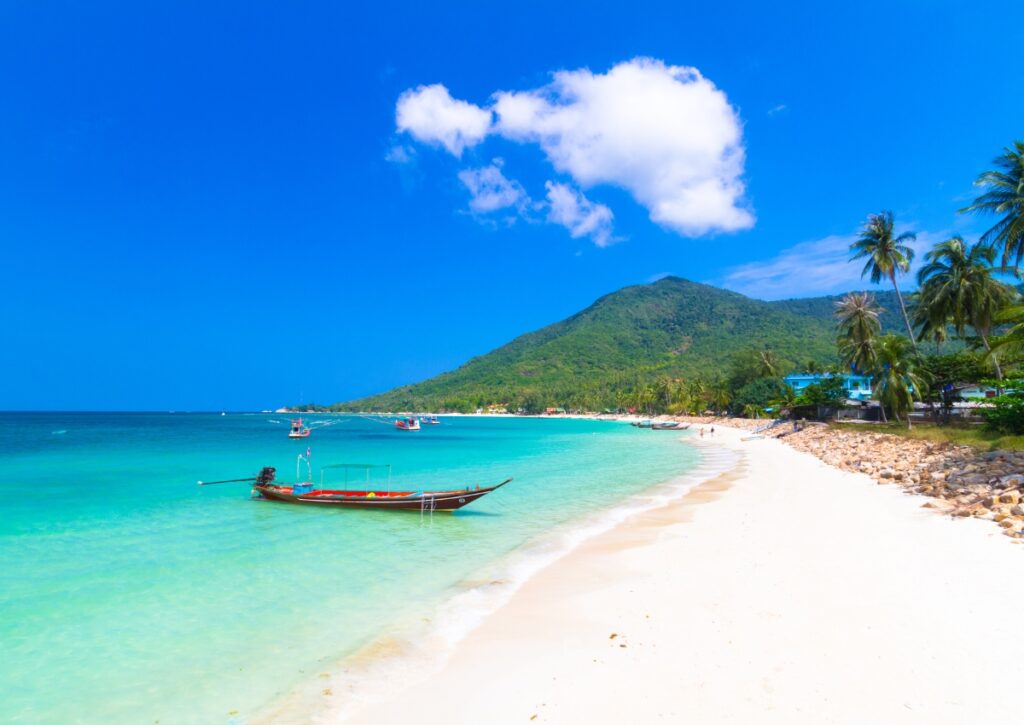
Bottle Beach is where I realized that Koh Phangan has more to offer than moonlit madness. It’s genuinely difficult to reach by land—the road is basically a jungle trail that’ll have you questioning your scooter rental decision—so most people arrive by longtail boat.
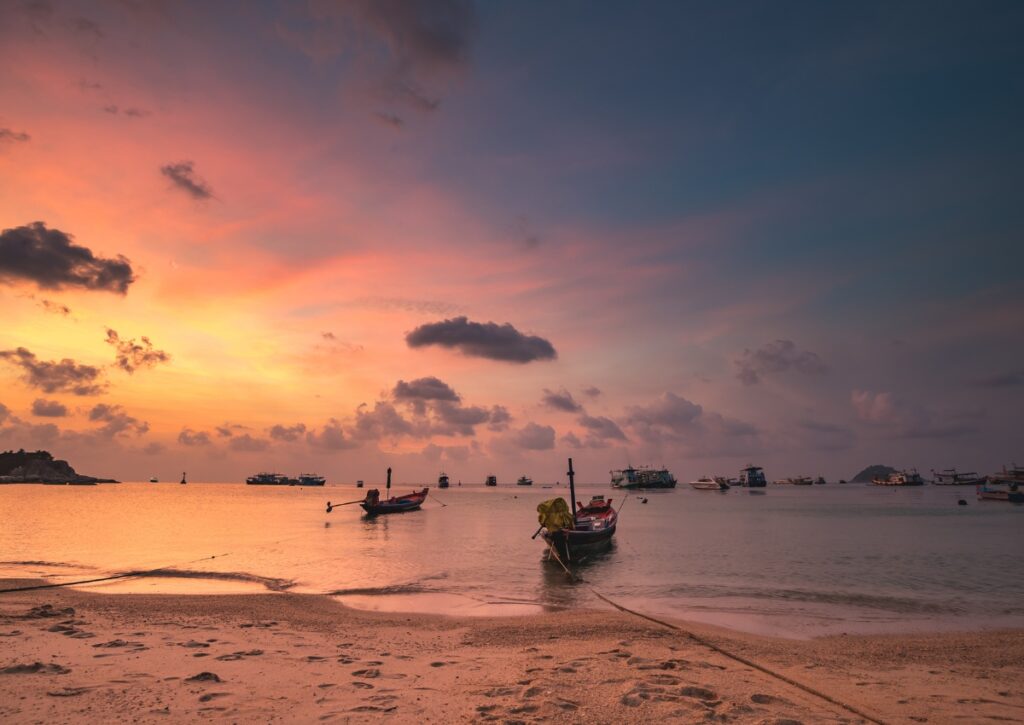
The beach itself? Pure perfection. Fine, soft sand that doesn’t destroy your feet. Water that’s actually suitable for swimming at decent depths. Only a handful of bungalow accommodations, so it never gets crowded. A couple of beach bars where you can watch the sunset with your feet in the sand and a cold drink in your hand, surrounded by people who actually chose peace over chaos.
Accommodation here is more limited but affordable: ฿400-1,000 per night ($11-28 USD) for basic bungalows. The real cost is getting there—longtail boats run about ฿1,500-2,000 ($42-56 USD) for a round-trip from Thong Sala.
The viewpoint above Bottle Beach deserves its own paragraph. Hike up (it takes about 20-30 minutes, and yes, you’ll sweat), and you’ll get what might be the most Instagram-worthy vista on the entire island. I watched the sunset from up there solo once and actually cried—something I almost never admit, but there you have it.
Secret Beach (Haad Son): When a Secret Beach Isn’t a Secret
Don’t let the name fool you. Secret Beach is about as secret as a full moon in a dark sky. Everyone knows about it. That said, it’s still absolutely worth visiting, especially for snorkeling.
The beach is small, surrounded by coconut palms and limestone cliffs, with calm, shallow water perfect for families or nervous swimmers. There’s a resort on the beach with a decent restaurant, so you can grab food without trekking back to town.
Accommodation is basic but charming: ฿600-1,200 per night ($17-34 USD) for bungalows. It’s only about 15 minutes by scooter from Haad Yao, so it’s perfect if you want to be close to amenities but not right in the chaos.
Thong Sala: The Practical Choice
Thong Sala is the main town, and where the ferry pier is located. It’s chaotic, touristy, and absolutely practical. You’ve got supermarkets, ATMs, travel agencies, restaurants serving everything from pad Thai to spaghetti to pad see ew, and a genuine local vibe mixed with tourist infrastructure.
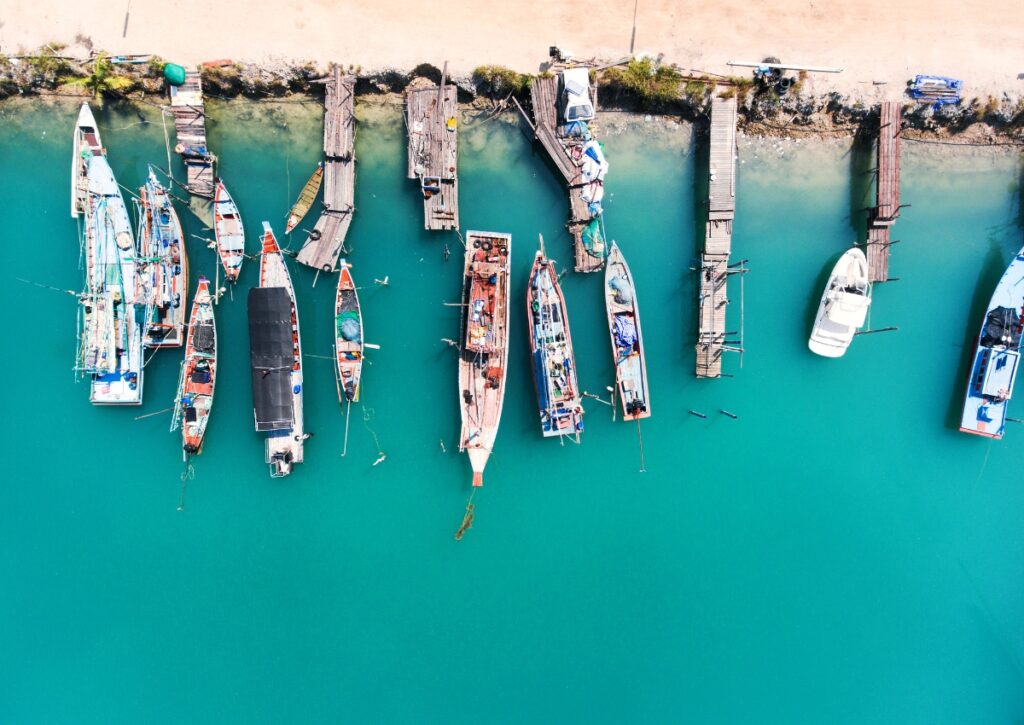
Accommodation ranges from ฿400-2,000 per night ($11-56 USD) depending on whether you want a fan room or air conditioning. It’s not romantic, but it’s efficient. Digital nomads love this area because there’s decent WiFi, plenty of coworking spaces, and restaurants where you can work all day without anyone bothering you.
The Pantip Night Market here is genuinely excellent—row after row of food stalls, smoothie vendors, and local artisans. Show up around 7 PM when things get busy, grab a plastic stool, order something fried, and watch the chaos unfold.
Thong Nai Pan: Family-Friendly and Chill
On the north coast, Thong Nai Pan is a double bay—Thong Nai Pan Yai and Thong Nai Pan Noi—separated by a small rocky outcrop. This area has the most relaxed vibe on the island. Families with kids, retirees, and people who just want to snorkel and read books. The beaches are nice, the water is usually calm, and you can actually have a conversation without screaming.
Accommodation: ฿800-2,500 per night ($23-71 USD) for mid-range bungalows. It’s pricier than other areas, but the peace of mind is worth it.
Chaloklum: The Fisherman’s Village That Knows How to Party (Differently)
Chaloklum is a working fishing village that’s surprisingly sophisticated about its nightlife. It has a Night Market on Sundays and Wednesdays that’s less touristy than the one in Thong Sala, which means better prices and more authentic food. The beaches are okay—nothing special by Koh Phangan standards—but the community has a genuine, welcoming feel.
Accommodation: ฿500-1,500 per night ($14-42 USD).
The Daily Budget Breakdown: Here’s Exactly What You’ll Spend
Let me give you real numbers, not inflated estimates.
The Budget Backpacker (Roughly ฿800-1,500 per day / $23-42 USD)
- Accommodation: ฿300-600/night ($8-17) – shared dorm or basic fan bungalow
- Food: ฿300-400/day ($8-11) – street food, local markets, noodle shops
- Scooter rental: ฿150-200/day ($4-6)
- Drinks: ฿150-300/day ($4-8) – Chang beer, basic cocktails
- Activities: ฿200-300/day ($6-8) – some free beaches, occasional paid tour
- Miscellaneous: ฿100-200 ($3-6)
The Mid-Range Traveler (Roughly ฿2,000-3,500 per day / $57-100 USD)
- Accommodation: ฿1,200-2,000/night ($34-57) – nice bungalow or 3-star hotel
- Food: ฿600-900/day ($17-26) – mix of restaurants and markets
- Scooter rental or taxis: ฿300-500/day ($8-14)
- Drinks & nightlife: ฿400-800/day ($11-23) – beach clubs, bars
- Activities: ฿1,000-1,500/day ($28-42) – tours, water sports, massages
- Miscellaneous: ฿200-300 ($6-8)
The Luxury Traveler (฿5,000+ per day / $142+ USD)
- Accommodation: ฿3,000-10,000+/night ($85-285+) – resort or villa
- Food: ฿1,000-2,000/day ($28-57) – fine dining
- Private transport: ฿1,000-3,000/day ($28-85) – private taxi or car
- Activities: ฿3,000-5,000/day ($85-142) – private tours, spa
- Drinks & dining: ฿2,000-3,000/day ($57-85)
The real talk: Most visitors spend somewhere between the budget and mid-range. You can absolutely party hard and spend ฿3,000+ per day on cocktails during Full Moon week, but that’s a choice, not a requirement.
For booking accommodation across all budget levels, I swear by Booking.com. Their app is genuinely useful, the cancellation policies are fair, and you can often find last-minute deals if you’re flexible. I’ve snagged ฿200-300 discounts by booking same-day during quiet periods.
The Full Moon Party: What Actually Happens When 10,000 People Show Up
Let me demystify this because everyone has questions, and the internet’s full of conflicting info.
The Full Moon Party happens on the night of the full moon, obviously, at Haad Rin Beach. In 2025, dates include January 13, February 13, March 13, April 12 (Songkran chaos!), and every month through December, with the biggest party being December 31st New Year’s Eve. Check the official calendar because dates sometimes shift for Buddhist holidays.
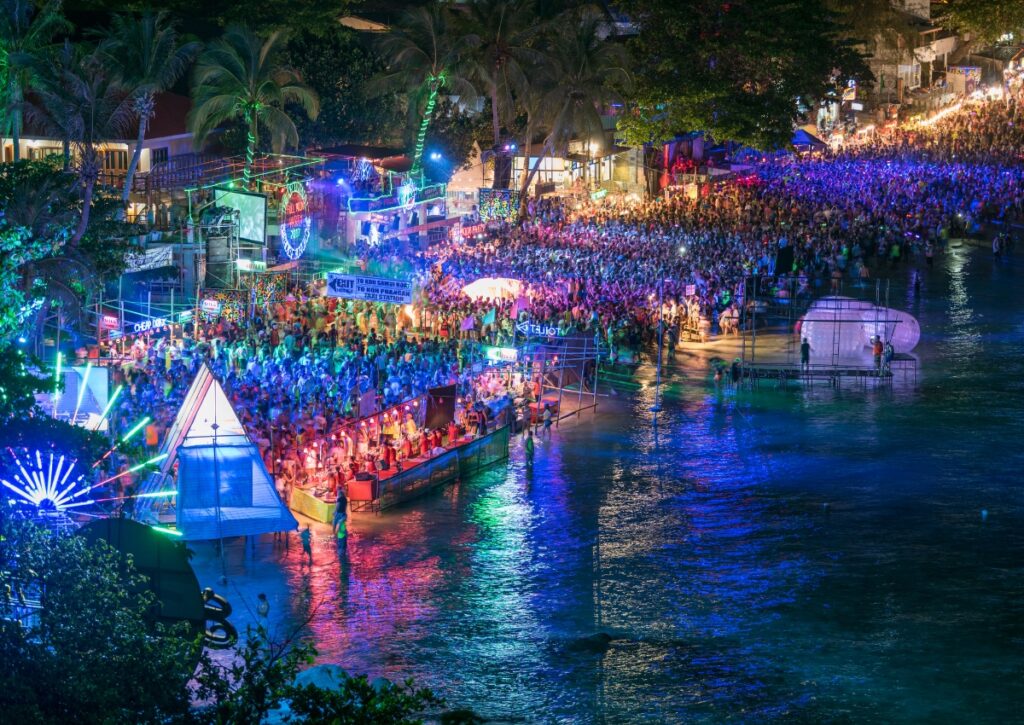
Here’s what actually happens: Thousands of people converge on the beach. DJs set up on multiple stages. The beach gets covered in glow-in-the-dark paint that you’ll be washing off for days. There’s fire spinning, buckets of cocktails (which are aggressively overpriced at ฿100-200 for watered-down rum and Red Bull), and an energy that’s genuinely hard to describe to someone who hasn’t experienced it.
The reality vs. the hype:
It’s sweaty. It’s loud. You might get pickpocketed if you’re not careful. The beach becomes a bit of a port-a-potty situation by 3 AM. You’ll lose your friends. Someone will vomit near you. You’ll probably dance anyway. The sunrise—if you make it that long—is actually magical.
Pro tips for surviving it:
- Go during months with fewer tourists: September-October or May-June. The weather isn’t perfect, but it’s less crowded and cheaper.
- Stay hydrated. Seriously. The combination of dancing, heat, and alcohol is genuinely dangerous.
- Wear reef-safe sunscreen and reapply obsessively.
- Bring minimal valuables. Many locals recommend going with just cash (small bills) and your room key.
- Wear shoes. The beach gets littered with broken glass and who-knows-what.
- Consider pre-booking a private taxi home so you’re not paying surge prices at 6 AM.
- Go with a friend or group. Getting separated and trying to find people is nearly impossible.
- Expect the party to run from roughly 6 PM to 6 AM, though people start wandering off around 4 AM.
The entry fee is technically ฿200 ($6), but it’s not always enforced. What IS enforced is the fact that you’ll spend way more than that on drinks.
There’s also a Half Moon Party on the half-moon dates, usually hosted in a different jungle location with a more chill vibe. Same energy, fewer people, more people actually still awake at sunrise.
The Beaches: Because That’s Really Why You’re Here
I’ve spent enough time on these beaches to know which ones are worth your time and which ones are just sandy.
Haad Rin: The Famous One
Yes, it’s famous. Yes, it’s popular. Yes, the sand has coral bits that hurt your feet. But during the day, when the beach is just people swimming and sunbathing, it’s genuinely lovely. There’s a rock formation on the south end that’s perfect for snorkeling.
The lighthouse at the southern tip is basically a quiet sanctuary overlooking the chaos. Perfect for sunrise.
Mae Haad: The Snorkeling Star
If snorkeling is your thing, this is your beach. Healthy coral reefs start just a few meters offshore. You’ll see actual tropical fish, not just tourists taking photos.
Rent snorkel gear on the beach (฿150-200 for the day / $4-6), or bring your own reef-safe stuff. Go early in the morning when the water is calmest.
Bottle Beach: The Effort Pays Off
Yes, it’s annoying to get to. Yes, your scooter will hate you. Yes, it’s absolutely worth it. The beach is small, genuinely gorgeous, and usually peaceful. The snorkeling around the rocks is excellent.
Secret Beach (Haad Son): The Instagram Spot
Exactly what it sounds like. Beautiful for photos, excellent for snorkeling, small enough that you won’t feel lost, and large enough that you can find a quiet spot.
Haad Yao: The Long One
One of the longest beaches on the island—hence the name, which means “long beach” in Thai. Great for swimming, especially during high tide. Decent atmosphere with restaurants and beach bars, but nothing extreme.
Chaloklum: The Local’s Choice
A working fishing village where locals actually swim. Less polished than tourist beaches, but that’s kind of the point. The sunset here is legitimately stunning.
Haad Salad: The North Coast Gem
On the north coast, less developed, genuinely quiet. Excellent snorkeling. Few crowds. Perfect if you actually want to avoid other tourists.
Zen Beach (Haad Khom): The Chill Vibe
A small beach on the south coast with a more relaxed atmosphere than Haad Rin, but still social. Good for people who want to party but not at the Full Moon Party level.
Things to Do Beyond the Beach (Because You’ll Want More)
Hiking to Viewpoints: The Bottle Beach Viewpoint Is Insane
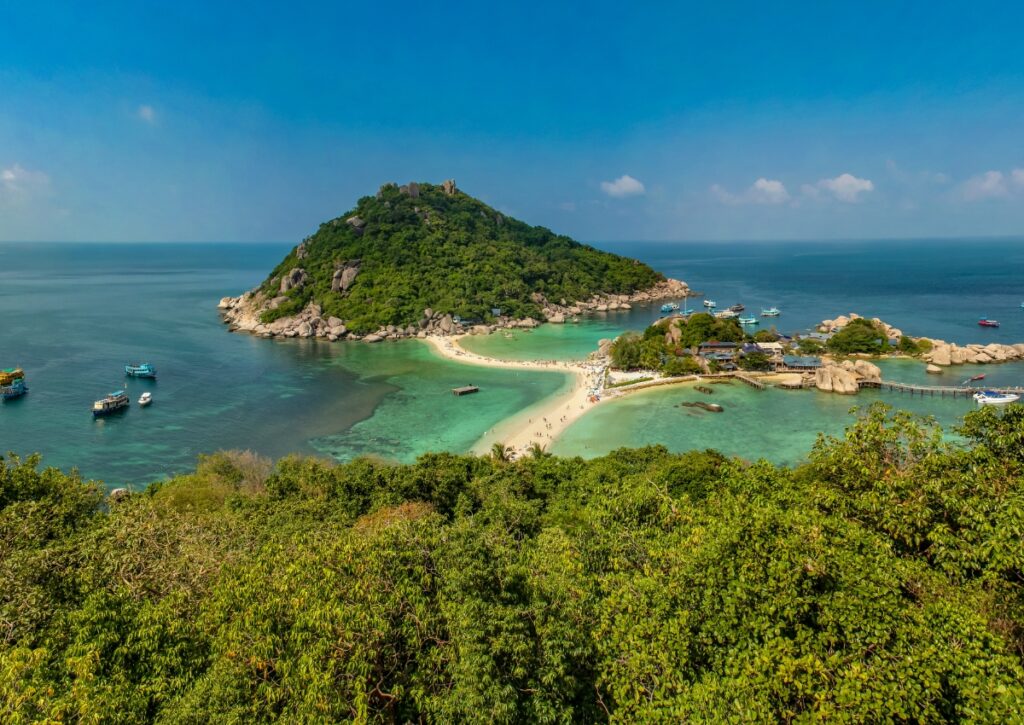
I’ve hiked viewpoints across Southeast Asia. The Bottle Beach Viewpoint is legitimately one of the best. The hike takes about 20-30 minutes, crosses through the jungle, and ends at a clifftop vista overlooking the bay. Phone service is spotty, so you can’t get distracted by Instagram. Just you, the view, and the understanding that you’re somewhere genuinely special.
Other excellent hikes:
- Khao Ra: The island’s highest point. Takes 2-3 hours round-trip. Clear views across to Koh Tao and the mainland on good days.
- Haad Yuan Viewpoint: A relatively easy hike with gorgeous panoramic views.
- Dom Sila Trail: More challenging, passes through dense jungle to a breathtaking lookout.
Waterfalls: Jungle Trekking in Thailand’s Humidity
Phaeng Waterfall is the big one. It’s actually impressive, with water genuinely plunging from height. There’s a trail system, so you can hike between different falls. The pool at the bottom is cold and absolutely perfect after a hot trek.
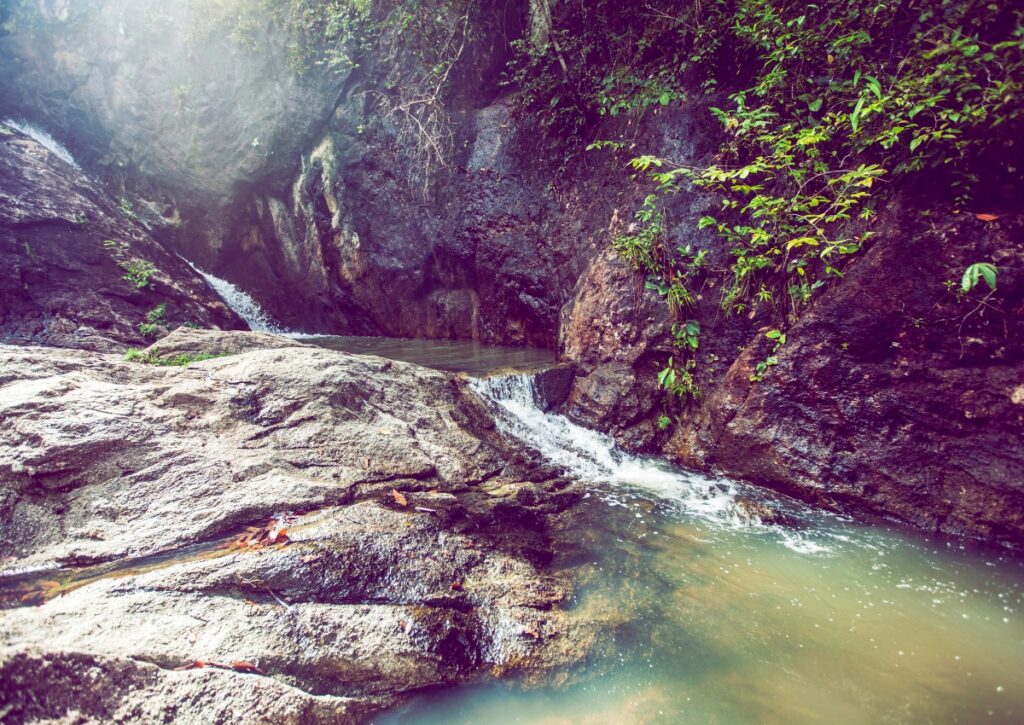
Paradise Waterfall is easier to reach and good for a quick stop.
Than Sadet Waterfall is historic—Thai royalty has visited—and surrounded by lush jungle.
Go in the rainy season (May-November) when water flow is highest. Bring plenty of water, sunscreen, and sturdy shoes because the trails are genuinely slippery.
Temples: Because Spirituality Deserves Its Own Section
Wat Phu Khao Noi is the oldest temple on the island, with excellent views and a genuine peaceful atmosphere. The monks are welcoming to respectful visitors. Dress appropriately (shoulders and knees covered).
Than Sadet National Park combines temples, jungle, and royal history in one spot.
Kuan Yin Chinese Temple: Colorful, interesting architecture, unusual for Koh Phangan.
Ang Thong Marine Park: A Day Trip That’ll Ruin You for Normal Days
This is legitimately one of Southeast Asia’s best day trips. A protected archipelago of 42 islands with limestone cliffs, white sand beaches, and an emerald lagoon that looks photoshopped.
Tours depart in the morning, take about 2-3 hours by speedboat, and include snorkeling, kayaking, hiking to a viewpoint, and lunch. Cost: around ฿1,500-2,500 ($42-71 USD) depending on the company.
GetYourGuide has excellent options with good reviews. I’ve taken three different tours here, and they’ve all been worth the money.
The Emerald Lake on Koh Mae Koh is absolutely surreal.
Cooking Classes: Eat Thailand, Make Thailand
Several places offer Thai cooking classes where you shop at local markets, learn proper technique, and cook multiple dishes. Cost: around ฿1,500-2,000 ($42-57 USD).
Thai Farm Cooking School is popular and uses organic ingredients from their own farm, which actually matters if you care about sustainable tourism.
Muay Thai: Get Punched in the Face by Professionals
Several gyms offer drop-in classes. Cost: around ฿300-500 per class ($8-14 USD). You’ll get a workout, learn genuine technique, and understand why Muay Thai is called “the art of eight limbs.”
Kayaking: Because Sometimes Scooters Get Boring
Rent kayaks on most beaches for ฿100-150 per hour ($3-4). Explore mangrove forests, paddle to small islands, pretend you’re in a nature documentary.
Yoga & Wellness: Because Your Soul Probably Needs Recalibration
Koh Phangan has become a wellness hub. Yoga studios offer classes, retreat centers offer week-long programs, and spa places offer massages that cost less than a decent dinner.
A massage at a proper spa: ฿300-500 ($8-14 USD) for a full hour. It’s genuinely therapeutic.
Koh Tao Day Trip: Diving Central
Koh Tao is basically the diving capital of Thailand. It’s 45 minutes by boat from Koh Phangan.
PADI Open Water certification courses cost around ฿11,000-13,000 ($314-371 USD), including accommodation. Fun dives are ฿2,500-3,500 ($71-100 USD) per day.
If you’re thinking about getting certified, this is an excellent place to do it. The dive shops have solid reputations, the instructors are experienced, and you’ll actually remember the experience instead of just having a card to prove you did it.
Where to Eat: From Pad Thai to Attempts at “Fine Dining”
Street Food & Markets: The Real Stars
The Pantip Night Market in Thong Sala is where locals actually eat. You’ll find food stalls, smoothie vendors, dessert places, and general chaos. Show up around 7 PM, grab a stool, order something fried, and blend in.
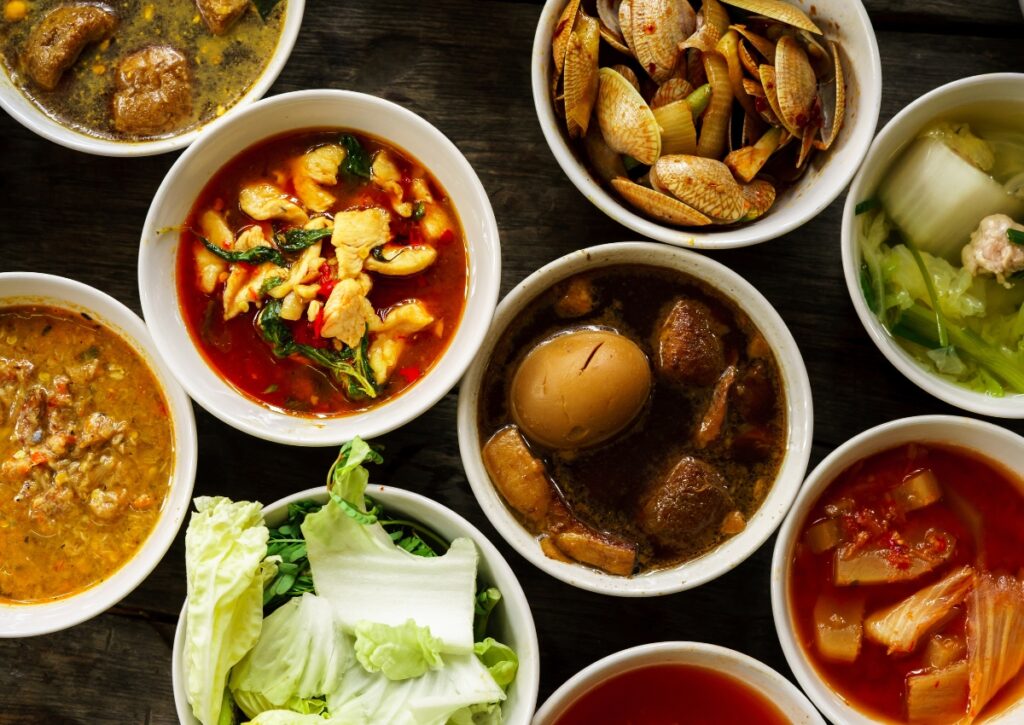
The Saturday Walking Street Market is similar but larger. No vehicle traffic, just pedestrians and food vendors.
The Chaloklum Night Market (Sundays and Wednesdays) feels more local and less touristy.
Budget: ฿50-150 per meal ($1.50-4.50 USD).
Restaurants Worth Your Attention
LEO Thai Food: A family-run spot where the owners actually care. The massaman curry is legitimately excellent. Prices: ฿100-200 per dish ($3-6 USD).
At Chiang Mai: Specializes in Northern Thai cuisine. Their khao soi (the yellow curry with crispy noodles) is as good as it gets outside Chiang Mai. Prices: ฿100-200 per dish.
Pum Pui Restaurant: Upscale Thai, excellent presentation, genuinely friendly staff. Prices: ฿200-400 per dish ($6-11 USD).
Kika’s Place: Italian-Mediterranean fusion in Sri Thanu. Better Italian than you might expect on a Thai island. Prices: ฿300-600 per main ($8-17 USD).
Siri’s Island Cafe: Excellent coffee, good brunch options, strong WiFi. Prices: ฿100-300 ($3-8 USD).
L’Alcove: French-Thai fusion on Hin Kong Beach. Upscale but not ridiculous. Prices: ฿400-700 per main ($11-20 USD).
Coffee Culture
Hundred Islands Coffee Bar and Alfa Coffee Roaster are both excellent. They take coffee seriously, which matters if you’re a digital nomad who needs decent caffeine. Prices: ฿100-150 per coffee ($3-4 USD).
Nightlife: More Than Just the Full Moon Party
The Party Scene
Haad Rin has beach bars where the music never stops. Each bar has a slightly different vibe—some play reggae, some play techno, some play weird remixes of 2000s pop music. You can bar hop all night.
Infinity Beach Club in Baan Tai is more upscale with an actual DJ, good cocktails, and an infinity pool. Less backpacker chaos, more sophisticated vibe.
Jungle Experience and the Half Moon Party happen in jungle locations with more of a rave atmosphere. Tickets around ฿200-300 ($6-8 USD).
Less Chaotic Options
Pirates Bar in Sri Thanu is a pirate-themed bar over the water with live music and a genuinely welcoming atmosphere. No bucket cocktails, just good drinks and good vibes.
Jam Bar on Hin Kong Beach has live music where local musicians jam. Food is decent, prices are reasonable, and it’s actually possible to have a conversation.
Reggae Sunset Bar does exactly what the name suggests—reggae music and sunsets. Beach bar vibes without the chaos.
The Chill Afternoon Vibe
Most beaches have beach clubs that serve food and drinks. Show up mid-afternoon, claim a beach bed, order something cold, and watch the sunset. Costs vary, but expect to spend ฿400-1,000 ($11-28 USD) on food and drinks for a few hours.
Sustainable Tourism: Actually Leaving the Place Better Than You Found It
Here’s something most travel blogs ignore: your choices actually matter. Koh Phangan is a real place where real people live, and the tourism industry affects their lives.
What You Should Actually Do
1. Carry a reusable water bottle. Plastic bottles are everywhere, destroying the island. Fill up at the reverse-osmosis water stations scattered around (costs about ฿1 per fill). Seriously, this one thing matters.
2. Use reef-safe sunscreen. Regular sunscreen contains chemicals that literally bleach and kill coral reefs. Reef-safe options are available everywhere now. Use them.
3. Take local tours. Support tour operators who actually employ locals and contribute to the community. Ask questions about their practices. Good companies will be transparent.
4. Eat at local restaurants. Skip the Western chains. Go where locals eat. Your money supports actual families.
5. Respect marine life. Don’t touch coral. Don’t feed fish (disrupts their natural behavior). Don’t stand on reefs. Just… leave it alone.
6. Participate in beach cleanups. Local organizations regularly organize cleanups. Join one. It takes a few hours and genuinely makes a difference.
7. Avoid plastic bags. Bring a reusable bag for shopping. Most places will use it instead of giving you plastic.
8. Skip the elephant camps, tiger temples, and other animal attractions. The animals are typically not well-treated. Full stop.
9. Support ethical businesses. Ask accommodations about their waste management, energy sources, and water conservation. Vote with your money.
10. Learn basic Thai phrases. Sawadee krap (hello), thank you (khop khun krap), sorry (koht tod krap). It costs nothing and genuinely improves interactions.
Koh Mak, nearby, is actually rated the world’s second-most sustainable tourism destination, so if you want to see what responsible island tourism looks like, it’s a day trip away.
Money, Visas, and Practical Stuff Nobody Wants to Talk About, But You Need to Know
Visa Information
Most Western nationalities get a visa exemption for 30-60 days when entering Thailand. Your passport needs at least 6 months’ validity. You might be asked for proof of onward travel or funds. Have your hotel booking ready just in case.
If you’re staying longer, look into a Thai Elite visa or a Non-Immigrant visa. Visa regulations change, so check the official Thai embassy website for your nationality before you leave.
Money Stuff
The Thai Baht is generally stable. ATMs are everywhere and charge about ฿150 ($4.50 USD) per withdrawal. Exchange rates are best at ATMs, decent at banks, and terrible at airport exchanges. Skip airport exchanges.
Use Wise or Revolut for international transfers if you’re staying a while. Both have excellent rates and minimal fees. I’ve saved hundreds using these apps instead of traditional banking.
Cash is still king for most small transactions. Large amounts, hotels, and tours can use cards.
Insurance
Get travel insurance. Seriously. VisitorsCoverage costs about $15 USD per week and covers medical emergencies. Hospital visits without insurance are expensive and potentially dangerous if you can’t pay.
SIM Cards & Internet
Grab a local SIM card at the airport or any convenience store. Dtac, AIS, and True Move are the major carriers. ฿300-500 gets you solid data for a week. 4G coverage is excellent on the island.
Yesim is an eSIM option if your phone supports it. Set it up before you leave and activate on arrival.
Getting Around
Scooter rental: ฿150-300 per day ($4-8 USD). Bring your passport and an international license (get one before you leave—they’re about $20 USD). Be cautious; Thai roads can be chaotic. Helmets aren’t always comfortably worn, but wear yours anyway.
Songthaew taxis: ฿100-300 per trip ($3-8 USD) depending on distance. Negotiate the price before getting in. They’re cheap and convenient.
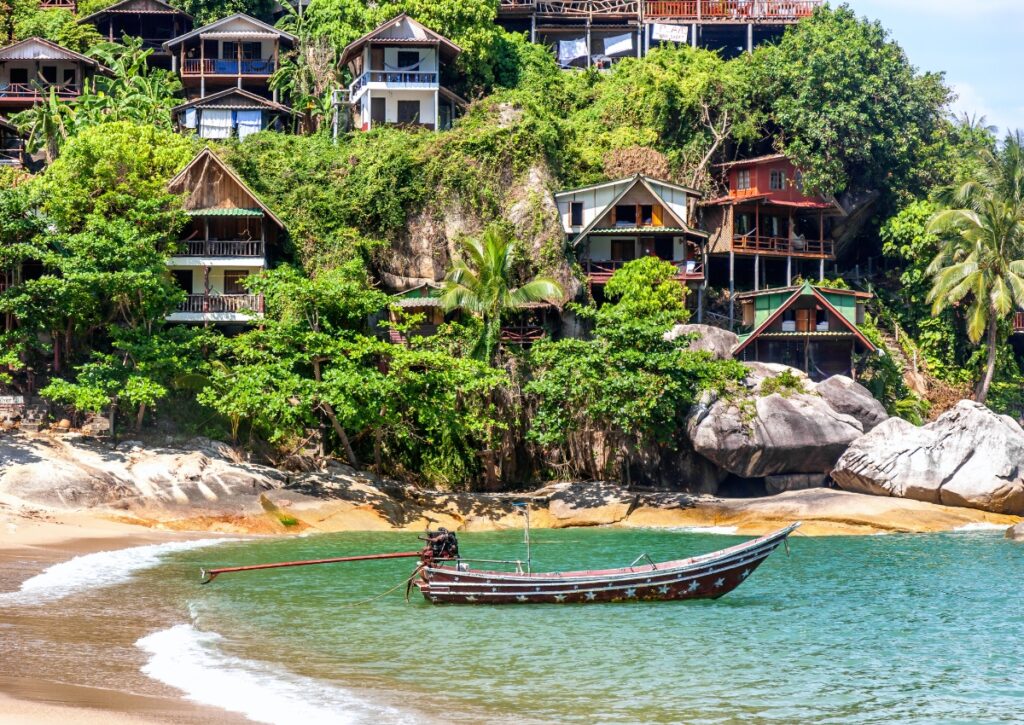
Longtail boats: For reaching isolated beaches, ฿1,500-2,000 round-trip ($42-57 USD) from Thong Sala.
Things to Book in Advance
During Full Moon Party weeks and high season (December-April), book accommodation and major tours in advance. Use Booking.com and GetYourGuide for reliability.
During the low season (May-November), you can show up without planning and find decent places. Prices drop 30-50%. It rains sometimes, but hotels are empty.
Practical Tips That Actually Matter
Learn basic Thai. People genuinely appreciate the effort. Hello (Sawadee krap), thank you (Khop khun krap), and sorry (Koht tod krap), go a long way.
Respect the king. Thailand has serious laws against insulting the monarchy. Don’t make jokes. Don’t use his image disrespectfully. This isn’t casual—it’s genuinely important to locals.
Remove your shoes in temples. Also in homes, some small shops, and certain restaurants. This is basic respect.
Expect hot weather. Bring sunscreen, hydration tablets, and realistic expectations about how much you can do before heat exhaustion hits.
Download offline maps. Google Maps works mostly, but offline maps are safer when you’re exploring roads with questionable coverage.
Keep copies of important documents. Your passport, visas, and insurance information—store digital copies somewhere secure.
Don’t carry everything with you. Leave valuables at your accommodation. Bring just your room key, minimal cash, and a phone when you go out.
The Seasons: When to Come
Best time: December to April (dry season, cool temperatures, perfect beach weather)
Good time: May to November (cheaper, fewer tourists, occasional rain)
Worst time: October to November (heavy rain, some services close)
Festival time: Songkran (Thai New Year) in April is chaotic but fun. Full Moon Parties happen every month—plan accordingly.
For booking, use CheapOair for flights, Booking.com for accommodation, and GetYourGuide for tours and activities.
The Honest Truth
Koh Phangan isn’t for everyone. It’s chaotic, sometimes dirty, occasionally frustrating, and definitely not a luxury resort experience. The roads are rough. Some people are scammers. The beaches have sand fleas sometimes. The power goes out occasionally.
But if you can embrace the chaos, if you can find joy in discomfort, if you can actually connect with a place instead of just collecting passport stamps, it’s absolutely worth the trip.
I came here three years ago thinking I’d stay three weeks. I ended up staying three months. I’ve been back five times since.
The island has a way of getting under your skin.
Ready to Book Your Trip? Here’s Your Action Plan
Step 1: Sort Your Flights
Use CheapOair to find the best flight deals from your city to Bangkok or directly to Surat Thani. They’re competitive, and customer service is genuinely helpful when things go wrong.
Step 2: Arrange Your Transfer
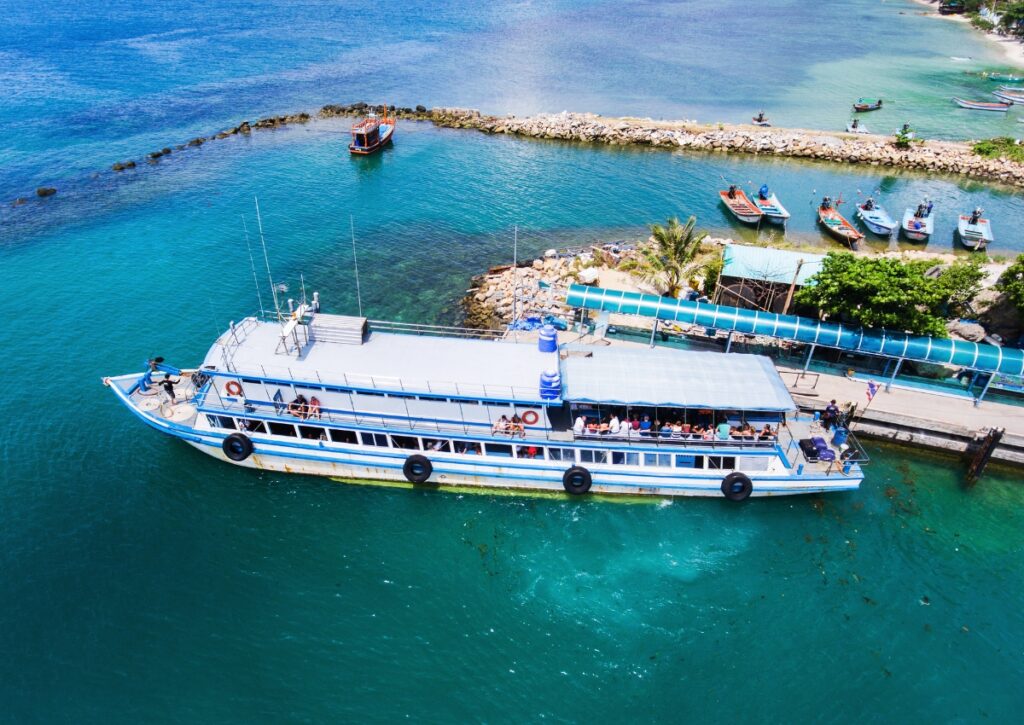
For the Bangkok-Koh Phangan route, Welcome Pickups coordinates everything smoothly—it removes stress and ensures you’re not scammed by unofficial taxis.
Step 3: Book Your Accommodation
Use Booking.com to find your perfect fit. Read recent reviews carefully. Book accommodations with flexible cancellation policies because plans change.
Step 4: Arrange Your Insurance
Get travel insurance through VisitorsCoverage. This isn’t optional.
Step 5: Get Your Digital Travel Tools
Set up a Revolut or Wise account for money transfers. Get a Yesim eSIM for data coverage. You’ll thank yourself.
Step 6: Book Your Activities
Use GetYourGuide for major activities like the Ang Thong Marine Park day trip, cooking classes, and other tours. Their cancellation policies are fair, and prices are competitive.
Step 7: Rent Your Vehicle
Arrange a scooter or car rental through your accommodation or directly at rental shops on the island. Get an international driver’s license before you leave.
Step 8: Make a Packing List
Bring reef-safe sunscreen, reusable water bottle, quick-dry clothes, sturdy shoes for hiking, and realistic expectations about accommodations.
Step 9: Download Offline Maps
Get offline maps of Koh Phangan before you go. Have a backup navigation method.
Step 10: Come With an Open Mind
This place will surprise you. Let it.
This Is Where You Come In
I write these posts because I genuinely want you to have an amazing experience. That means real information, honest reviews, and practical tips—not the sanitized marketing nonsense most travel blogs serve up.
If you’re coming to Koh Phangan, read this before you arrive. Save this article. Reference it when you’re confused. Share it with friends who are planning trips.
But more importantly, follow me on social media for real-time travel updates, honest reviews, and the kind of travel photography that actually looks like real life instead of a filter factory. I post regularly on Instagram, share detailed updates on TikTok, and send exclusive tips to email subscribers.
- Follow me on Pinterest (A Tiny Traveler): My Pinterest is your ultimate travel vision board! It’s where I share stunning photography, quick visual guides, and, most importantly, links to all my in-depth blog posts.
- Follow me on Instagram (a.tinytraveler): For daily doses of wanderlust, stunning travel photography, behind-the-scenes glimpses of my trips, and quick tips that will inspire your next getaway. See the world through my eyes!
- Like my Facebook Page (A Tiny Traveler): Join our vibrant community of fellow travel lovers! This is a great place to ask questions, share your own travel experiences, and connect with other readers and me.
Subscribe to my newsletter for upcoming blog posts about other destinations, packing tips, budget travel hacks, and honest reviews that’ll help you make better travel decisions. I promise never to spam—just real content from someone who actually travels instead of just talking about it.
Share this post with anyone planning a Koh Phangan trip. A genuine review from a real traveler is worth more than any advertisement.
The travel industry wants you to believe that tourism is just about luxury resorts and Instagram photos. I’m here to tell you it’s about connection, discovery, and genuine experience.
Koh Phangan taught me that lesson, and I’m passing it along to you.
Come for the Full Moon Party. Stay for everything else.
I can’t wait to hear about your trip—tag me on social media and show me what this island means to you.
Safe travels, and I’ll see you on the beach.
Follow my blog for more detailed travel guides, budget tips, and honest reviews of destinations across Southeast Asia and beyond. Your next adventure starts here.
Frank


