
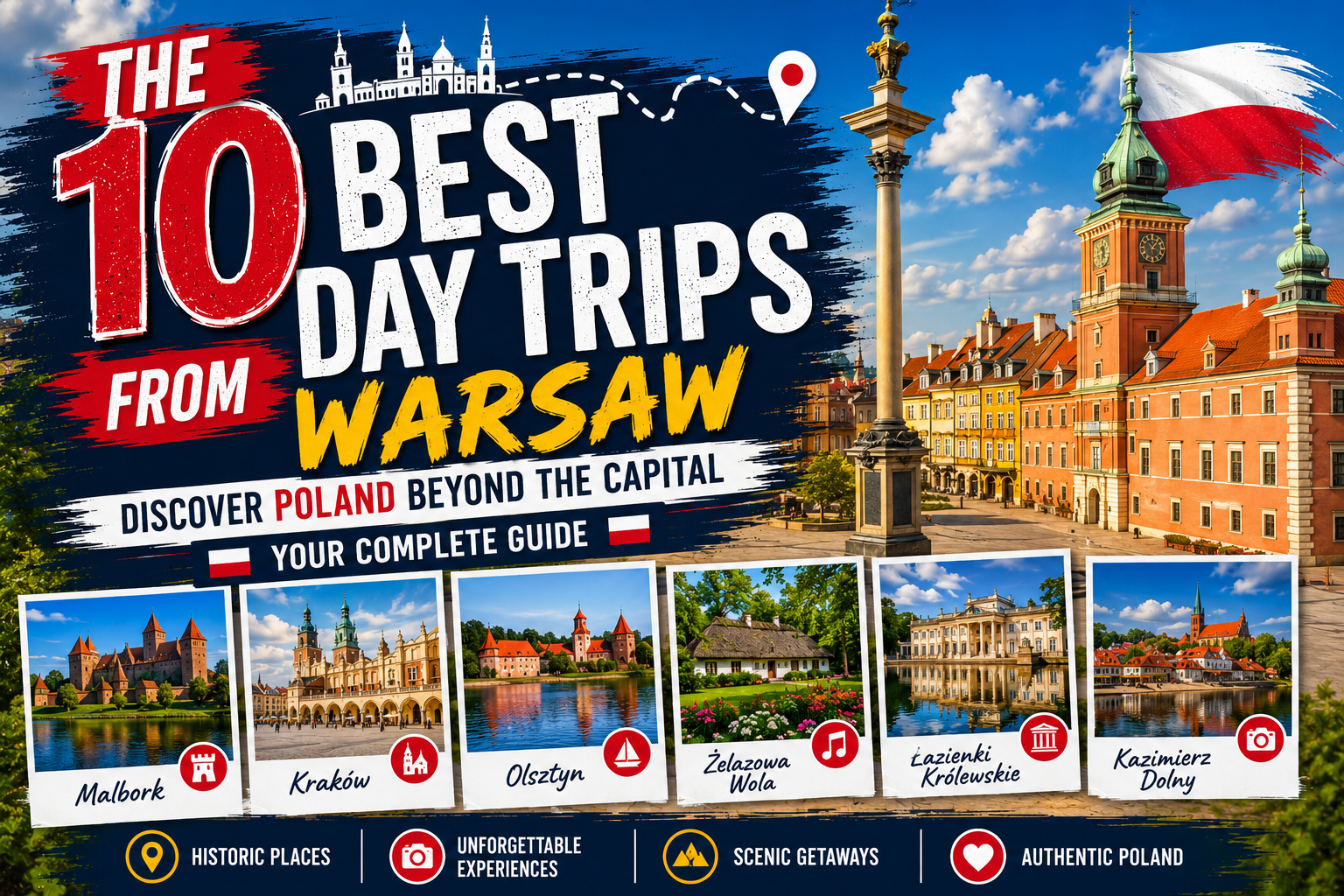
Warsaw might be where you’ll land, but Poland’s true character lives just a train ride away. When you step off a comfortable regional train and breathe in the fresh air of rural Poland, visit centuries-old castles surrounded by rolling hills, or explore a city that rebuilt itself from ashes, you’ll understand why Poles call their country “home.” I’ve spent years traveling through Poland as a battery technology consultant, visiting conference centers and research institutions, and I’ve come to realize that the real magic happens when you venture beyond the capital. These ten-day trips represent the authentic Poland—the one locals know, the one travel guides often miss, and the one that will genuinely transform how you understand this remarkable country.
Why Day Trips from Warsaw Matter More Than You Think
You might be wondering: “Can I really get to know Poland in a single day?” The answer is absolutely yes, and here’s why it matters. Warsaw itself is extraordinary—rebuilt from complete destruction during World War II into a thriving modern capital—but it’s just one chapter of Poland’s story. The surrounding regions hold medieval castles, Renaissance architecture, UNESCO World Heritage sites, and landscapes that have inspired Polish culture for centuries. By taking strategic day trips, you’re not just checking boxes on a travel list; you’re connecting the dots that make Polish history, culture, and natural beauty make sense. Plus, the train system is so efficient and affordable that day tripping becomes not just possible but genuinely practical and budget-friendly.
Understanding the Practical Side: Budgets, Transport, and What to Pack
Let me be completely transparent about the financial side of day tripping from Warsaw, because affordability is one of Poland’s greatest gifts to travelers. A typical day trip budget breaks down roughly like this: a regional train ticket will cost you between 40-85 PLN (approximately $10-20 or €9-18), entrance fees to attractions range from free to 80 PLN (about $20 or €18), and food for the entire day can be incredibly cheap—you can eat a substantial traditional Polish meal at a “milk bar” (bar mleczny) for just 15-25 PLN (roughly $4-6 or €3-5). A mid-range restaurant meal runs 40-80 PLN ($10-20 or €9-18), and a coffee costs 10-15 PLN ($2.50-4 or €2.30-3.50). Most travelers find they can enjoy a full-day trip—including breakfast, lunch, dinner, entrance fees, and train fare—for €30-60 ($33-66 or 50-100 PLN), which is genuinely remarkable for European travel.
Booking Your Day Trips the Smart Way
I recommend using GetYourGuide for organized tours if you want the hassle removed, particularly for more complex itineraries involving multiple sites or historical significance. When you’re ready to book transport independently, use GetRentacar.com if you prefer driving flexibility, though I honestly think trains are superior for day tripping from Warsaw—they’re faster, more affordable, and let you relax rather than navigate unfamiliar roads. For accommodation, if you decide to stay overnight anywhere, Booking.com offers excellent filter options and price transparency. If you’ll be taking multiple train journeys, consider getting a Revolut or Wise card before your trip to avoid foreign exchange markups—you’ll save real money compared to traditional credit cards. For travel insurance, VisitorsCoverage provides excellent coverage for medical emergencies and trip disruptions. When you’re arranging your international flights to Warsaw, CheapOair consistently has competitive fares to Poland. If you’re traveling internationally to reach Poland and need a local SIM card, Yesim offers excellent prepaid eSIM plans so you’ll have seamless connectivity throughout your day trips.
1. Krakow: The Heart of Medieval Poland and the Gateway to Tragedy
Distance from Warsaw: 300 kilometers | Travel Time: 2.5-3 hours by express train | Best Time to Visit: Year-round, though spring and autumn are spectacular
When the train pulls into Kraków Główny (Kraków Central Station), you step into one of Europe’s most beautifully preserved medieval cities—and one that survived World War II largely intact while Warsaw was demolished. This is the day trip that changes how Americans and Northern Europeans understand Central Europe’s complexity.
Start your day early with the 5:30 AM express train from Warsaw Central Station, arriving around 8:30 AM. This gives you a full day to explore before catching an evening train back. The train journey itself is remarkable—you’ll watch the Polish landscape transform from urban sprawl to agricultural fields to the foothills approaching Krakow. Use this travel time to mentally prepare for what you’re about to witness.
The Old Town and Main Market Square
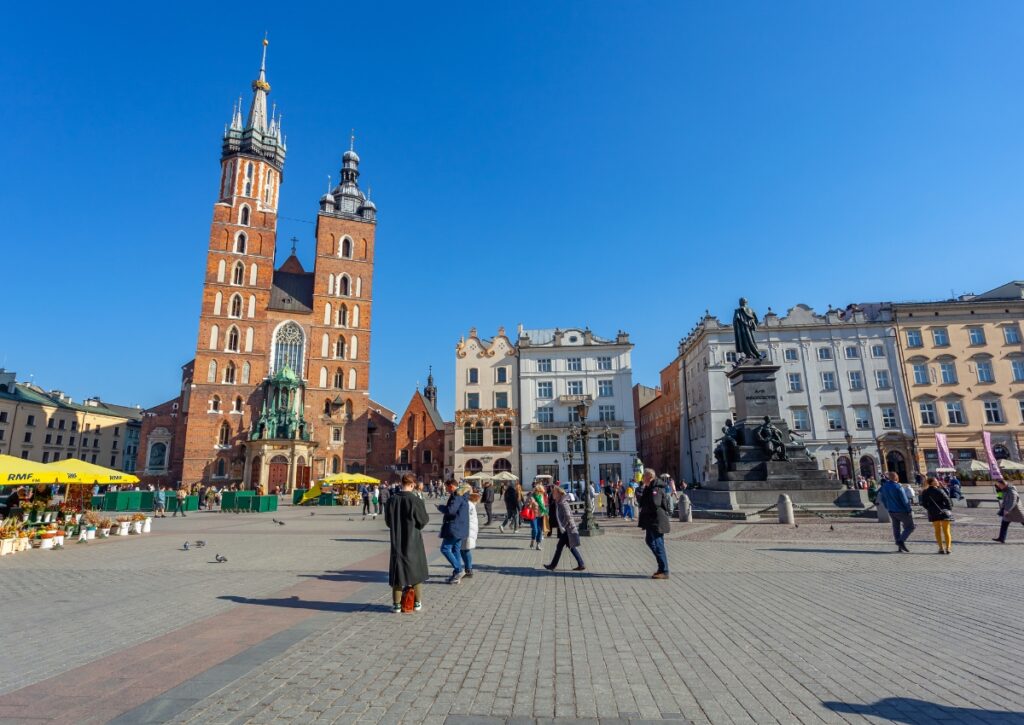
Your first stop is the Rynek Główny (Main Market Square), widely considered one of Europe’s most magnificent town squares. At 200 by 200 meters, it’s enormous and overwhelming. The square is surrounded by colorful Renaissance and Baroque townhouses, each one telling a story of merchant wealth from centuries past. In the center stands the imposing Cloth Hall (Sukiennice), a Gothic-Renaissance structure that has functioned as a marketplace since the medieval period. Today, it houses traditional Polish crafts, jewelry, and souvenirs on the ground floor, while the upper level contains the National Museum’s excellent Gallery of 19th Century Polish Art.
Wander the narrow cobblestone streets radiating from the square—each one reveals hidden courtyards, tiny restaurants, and shops selling everything from traditional Polish vodka to hand-embroidered textiles. The Church of St. Mary (Kościół Mariacki) dominates one corner of the square, recognizable by its two towers of different heights (legend says the shorter tower builder was executed). Every hour, a trumpeter (hejnał player) performs from the tower—a tradition that dates back to the medieval period.
Wawel Castle: Poland’s Royal Heart
Ascending Wawel Hill leads to the Wawel Royal Castle, the ceremonial and political heart of Poland for centuries. The castle complex includes the Renaissance palace, the Wawel Cathedral, where Polish kings were crowned, and stunning defensive walls. Inside the palace, you’ll see royal apartments, armories, and treasure collections. The cathedral’s crypt holds the remains of Poland’s greatest historical figures, from medieval kings to national heroes like Tadeusz Kosciuszko.
The views from Wawel over the Vistula River valley are extraordinary. On clear days, you can see the landscape stretching toward the Tatra Mountains. This is one of those views that stays with you—the physical embodiment of Poland’s geographical and historical importance.
Entrance Fee for Wawel: €8 for the Royal Apartments; Cathedral entry is often free
The Kazimierz District: Where Jewish Heritage Lives
South of the Old Town lies Kazimierz, historically Krakow’s Jewish Quarter. This district represents both the vibrancy of pre-Holocaust Polish-Jewish culture and the tragedy of its destruction. Narrow streets are lined with renovated Renaissance and Baroque buildings, some still bearing names of Jewish organizations, synagogues, and cultural institutions.
Several synagogues remain and function as museums: the Old Synagogue, the High Synagogue, and the Remuh Synagogue. Each tells a different aspect of Krakow’s Jewish history. The district has also become Krakow’s cultural hub—it’s filled with trendy restaurants, cafes, galleries, and nightlife venues. The contrast is intentional and moving; a new culture growing alongside preserved memory.
Budget Breakdown for Your Krakow Day Trip:
- Express train from Warsaw: 39-60 PLN ($10-15 / €9-14)
- Wawel Castle entrance: 80 PLN ($20 / €18)
- Kraków meal (milk bar lunch): 20-30 PLN ($5-7.50 / €4.50-7)
- Dinner at a casual restaurant: 50-70 PLN ($12-18 / €11-16)
- Coffee and snacks: 20-30 PLN ($5-7.50 / €4.50-7)
- Total: Approximately €35-55 (including transport and food)
Why This Day Trip Matters: Krakow survived the war largely unscathed while Warsaw was obliterated. Seeing medieval Poland preserved in Krakow, then returning to rebuilt Warsaw, crystallizes the tragedy and resilience of Polish history in a way no history book can explain.
2. Auschwitz-Birkenau: History’s Most Important Pilgrimage
Distance from Warsaw: 330 kilometers (via Krakow) | Travel Time: 5-6 hours total (train to Krakow, then shuttle to Auschwitz) | Best Time to Visit: Spring through autumn
I want to be honest: this is the most emotionally challenging day trip on this list, but it’s also arguably the most important. Auschwitz-Birkenau Memorial and Museum is where you must come to truly understand the Holocaust, World War II, and humanity’s capacity for both unimaginable evil and remarkable resilience.
The majority of visitors reach Auschwitz via Krakow, making it a feasible day trip from Warsaw. You’ll take the express train to Krakow (2.5-3 hours), then join an organized tour that includes transport to Auschwitz, about 65 kilometers away, a comprehensive 3.5-hour guided tour, and return transport.
What You’ll Experience
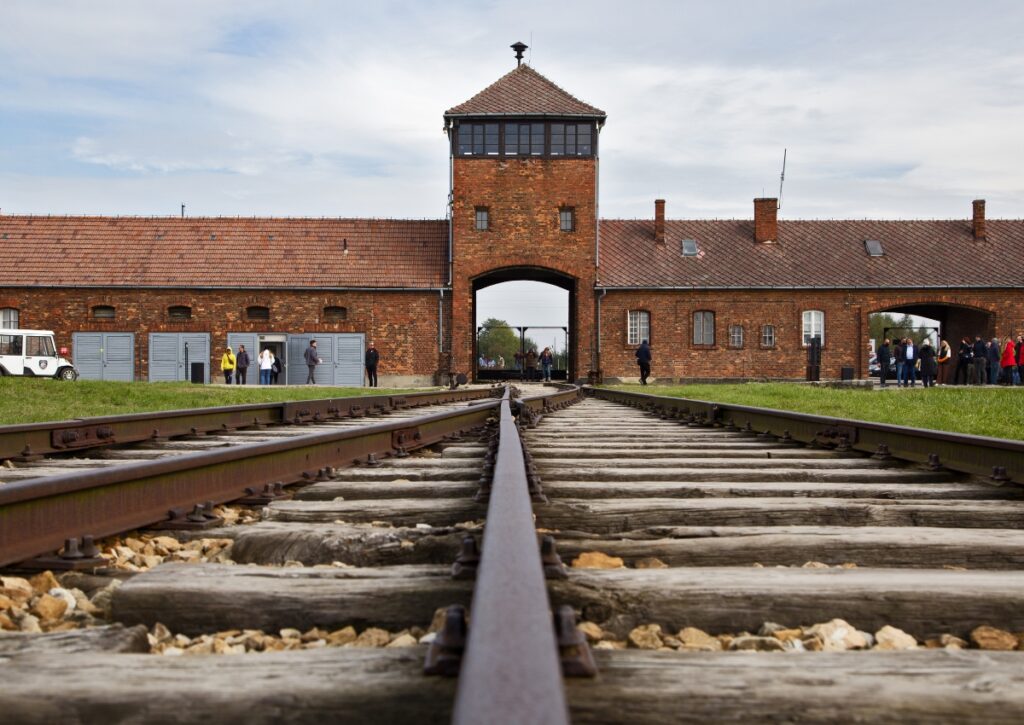
Auschwitz I is the main concentration camp, where you’ll see the infamous “Arbeit Macht Frei” gate, the barracks, and personal belongings of victims. Auschwitz II-Birkenau is the extermination camp with its vast grounds, gas chambers, and memorials. The guides are trained, often themselves descendants of survivors or camp liberators, and their personal connections make the history visceral.
The experience is overwhelming by design—it should be. You’ll understand why this site exists: to ensure the world never forgets, and to prevent such atrocities from happening again. Many visitors describe it as the most important day of their European travels.
Important Notes:
- Children under 14 are not recommended
- Wear comfortable walking shoes—you’ll walk several kilometers
- Bring water and appropriate clothing for the weather
- Photography is permitted, but respect the solemnity of the space
- Allow 4-5 hours for the complete experience
Budget for Auschwitz Day Trip:
- Train to Krakow: 50 PLN ($12 / €11)
- Organized tour (transport + guide + entrance): €140-180 ($155-200)
- Meals in Krakow: 60 PLN ($15 / €14)
- Total: Approximately €160-210
Practical Booking:
Book your Auschwitz tour through GetYourGuide or directly with Viator—both offer excellent small-group tours with English-speaking guides, hotel pickup from Warsaw, and guaranteed entry during peak season.
Why This Matters: Understanding the Holocaust through Auschwitz transforms not just your understanding of World War II, but your understanding of what humanity is capable of—both terrible and resilient.
3. Gdansk: Where the Baltic Meets Polish History
Distance from Warsaw: 338 kilometers | Travel Time: 2 hours 40 minutes by fast train | Best Time to Visit: May-September for coastal weather
Gdańsk is where Eastern European history gets complicated in the best possible way. This Baltic port city was alternately German Danzig and Polish Gdansk, destroyed in World War II, and then rebuilt. It was the birthplace of the Solidarity movement that brought down communism in 1989. It’s beautiful, culturally rich, and absolutely worth a day trip.
The Warszawa Centralna to Gdańsk Główny express train is one of Poland’s finest train journeys—modern, comfortable, and absolutely worth every złoty. You’ll arrive at Gdańsk Główny station around 12:30 PM if you catch the early morning train.
The Historic Old Town (Stare Miasto)
The Rynek Staromiejski (Old Town Square) and surrounding streets are a UNESCO World Heritage Site. The colorful merchant houses are quintessentially Baltic—narrow, tall, with steep roofs and decorated facades. These aren’t originals; they’re careful reconstructions built after 1945 from historical records and photographs. This makes them no less stunning, but it adds another layer of understanding—this is a city that rebuilt its identity.
The Neptune’s Fountain stands in the center of the square, symbolizing Gdansk’s status as a seafaring city. The fountain dates to 1633 and is one of Europe’s oldest public fountains. Photos of it with the colorful backdrop of merchant houses are iconic.
St. Mary’s Church (Mariacki) is one of the largest brick churches in Europe, with a tower you can climb for panoramic views of the city and the Motława River. The climb is 400+ steps, but the views justify every one.
The Motława River
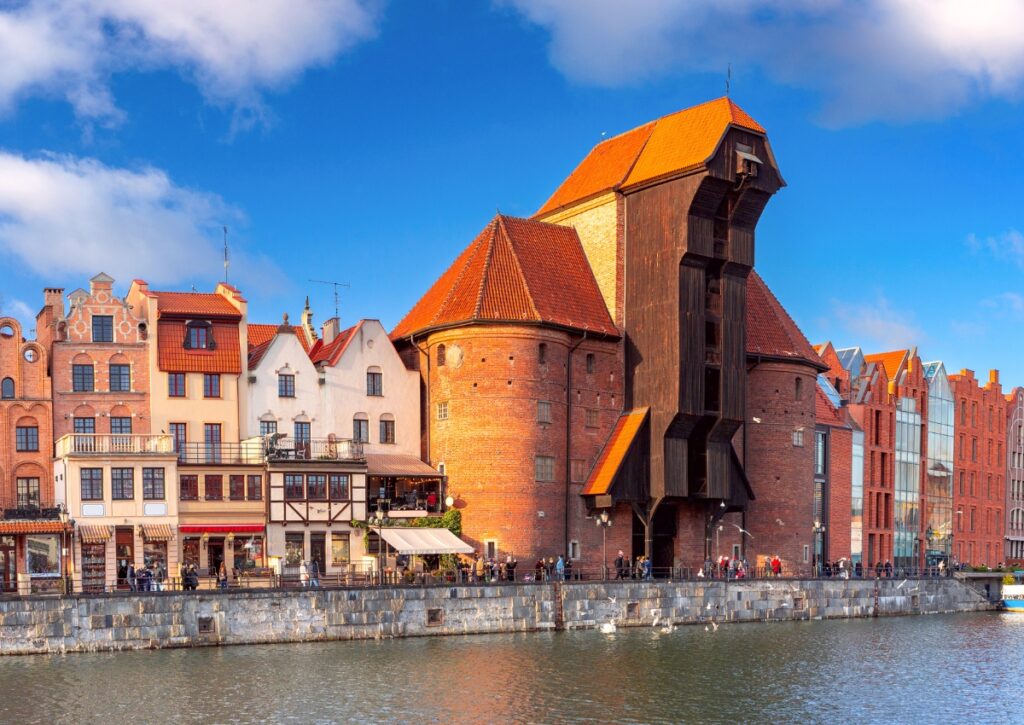
The Długie Pobrzeże (Long Shore) along the Motława River is where you’ll find the most atmospheric part of Gdansk. This is where medieval merchant boats once docked; now it’s lined with reconstructed guild halls, restaurants, and galleries. The reflection of the colorful facades in the water creates that perfect photograph everyone wants.
The Crane (Żuraw), a massive red-brick structure from 1444, once lifted cargo on and off ships. Today, it’s a symbol of Gdansk and one of the most photographed structures in Poland.
European Solidarity Centre
If you have time, the Europejskie Centrum Solidarności (European Solidarity Centre) documents the Solidarity movement that toppled Polish communism. It’s a remarkable museum that explains how ordinary Poles brought down the Soviet system through strikes, resistance, and refusal to cooperate with oppression.
Budget for Gdansk Day Trip:
- Train to Gdansk (express): 39-60 PLN ($10-15 / €9-14)
- St. Mary’s Church tower: 12 PLN ($3 / €2.50)
- Lunch by the Motława: 50-70 PLN ($12-18 / €11-16)
- European Solidarity Centre (if visiting): 24 PLN ($6 / €5.50)
- Total: Approximately €25-40 for basics, up to €50-60 if visiting museums
Booking Your Trip:
Take the first morning express train from Warsaw Central. Return on any evening train—GetYourGuide also offers organized Gdansk tours from Warsaw if you prefer everything coordinated, typically priced around $100-120 per person.
Why This Day Trip Matters: Gdansk shows you how Poland was shaped by its position between different empires, and how ordinary people can change history through peaceful resistance.
4. Kazimierz Dolny: Renaissance Charm and Vistula Valley Beauty
Distance from Warsaw: 120 kilometers | Travel Time: 1.5-2 hours by car or organized tour | Best Time to Visit: May-September when the weather is warmest
If Kraków is Poland’s grand medieval chapter, Kazimierz Dolny is Poland’s intimate Renaissance love letter. This small town on the Vistula River, about 90 minutes from Warsaw, is almost impossibly picturesque—the kind of place that explains why landscape painters and romantic poets adored Poland.
The Market Square (Rynek)
The town’s heart is the impossibly charming Rynek—a small square surrounded by Renaissance merchant houses with elaborate facades, each one decorated with different architectural details. Artists and photographers have been coming here for over a century because it’s genuinely one of Europe’s most beautiful town squares. In summer, cafes spill onto the square; in spring, flowers bloom everywhere.
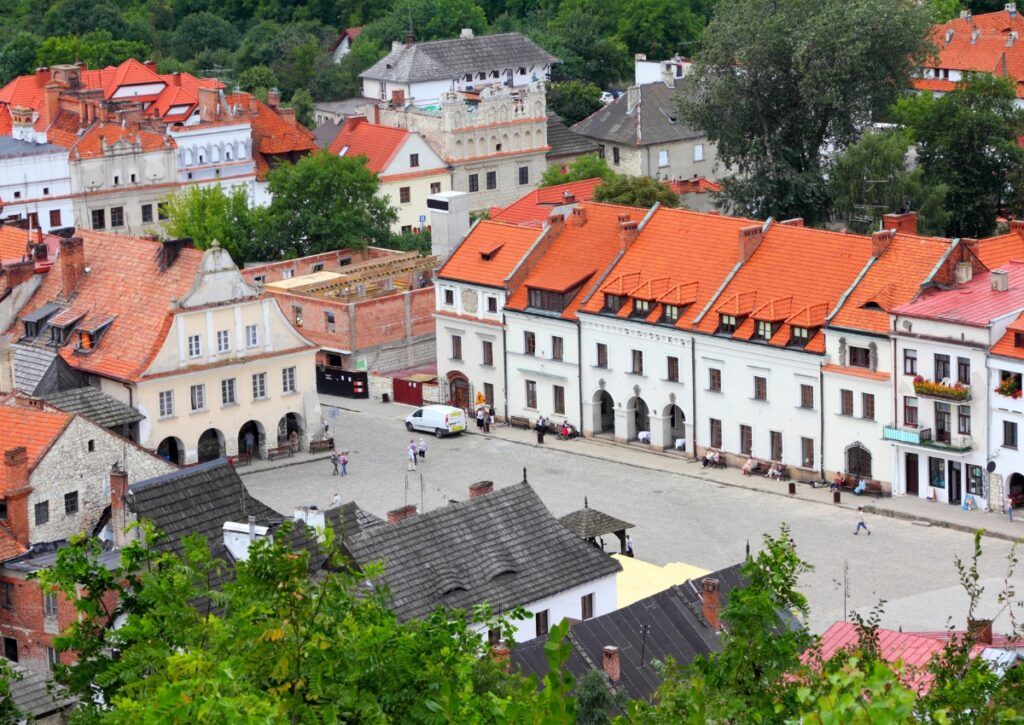
Kazimierz Dolny Castle Ruins
Above the town stand the ruins of a 14th-century castle, perched dramatically on a hill overlooking the Vistula Valley. The climb takes about 30 minutes through forest trails. From the top, you get sweeping views of the river valley, forests, and surrounding countryside—the landscape that inspired Polish Romantic painters.
The Loess Gorges (Wąwóz Rootów)
What makes Kazimierz Dolny truly special are the loess gorges—dramatic ravines carved through soft soil over millennia. These narrow, tall gorges are covered in trees and create an almost fairy-tale landscape. The most famous is Wąwóz Rootów (Root Pit), where ancient tree roots create intricate patterns on the gorge walls. Hiking through these ravines is genuinely magical.
How to Get There:
Most independent travelers book a GetYourGuide small-group tour from Warsaw (around $300-350 per person for 8-9 hours) that includes transportation, a professional guide, and entrance fees. For budget travelers, you can drive with GetRentacar.com or take a combination of public transportation, though this requires more planning.
Budget for Kazimierz Dolny Day Trip:
- Organized tour from Warsaw: €300-350 (includes all transport and guide)
- Independent travel (if DIY): Train to nearby town + taxi: 50-80 PLN ($12-20 / €11-18)
- Lunch at local restaurant: 40-60 PLN ($10-15 / €9-14)
- Castle entrance: Free or minimal fee
Why This Day Trip Matters: Kazimierz Dolny shows you the landscape that shaped Polish culture, art, and Romantic poetry; it’s a glimpse of the Poland that inspired national identity.
5. Toruń: The Gingerbread City and Copernicus’s Hometown
Distance from Warsaw: 200 kilometers | Travel Time: 2-2.5 hours by train | Best Time to Visit: Year-round, though autumn is particularly magical
Toruń is often called the “Gingerbread City” of Poland, and for good reason—this medieval town has been famous for its piernik (gingerbread) for nearly a thousand years. Beyond the gingerbread, Toruń is the birthplace of Nicolaus Copernicus, the astronomer who revolutionized human understanding of the universe.
The Old Town is a UNESCO World Heritage Site, and wandering its narrow streets feels like stepping into a time machine. Gothic brick buildings line the streets, and the river (the Vistula again—it flows through much of Poland) provides a scenic backdrop.
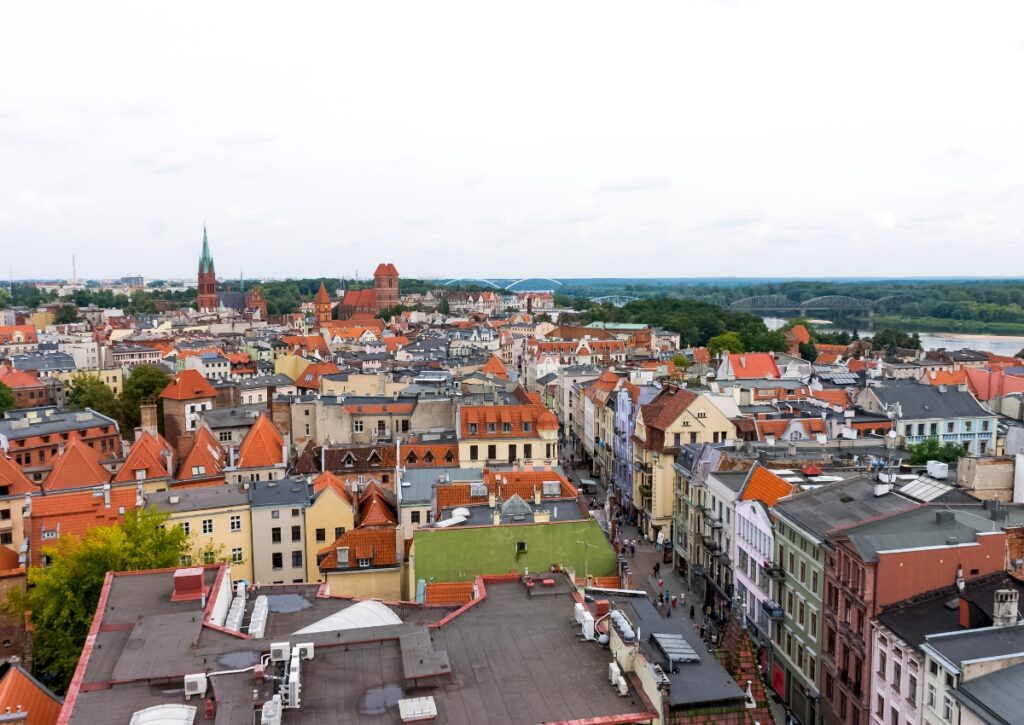
Main Market Square and Toruń Town Hall
The Rynek is dominated by the impressive Town Hall, a perfect example of Gothic-Renaissance architecture. The square itself is surrounded by carefully preserved medieval merchant houses, many now restaurants and cafes.
The Museum of Gingerbread (Muzeum Piernika)
This is genuinely one of the most fun museums in Poland—you’ll learn the history of Toruń gingerbread, see traditional gingerbread molds, and participate in hands-on workshops where you can make your own gingerbread. The smell alone is worth the visit. You can buy traditional Toruń gingerbread to take home, and it’s actually one of the best souvenirs from Poland—authentic, delicious, and available nowhere else quite like this.
Copernicus’s House
The museum in Copernicus’s birthplace documents the life of this revolutionary scientist who moved the Earth from the center of the universe and changed human understanding forever. His contributions extended beyond astronomy—he was also an economist, physician, and diplomat.
Toruń’s City Walls and Leaning Tower
The city walls are partially preserved, and the famous Leaning Tower of Toruń (Krzywa Wieża) is exactly what its name suggests—a medieval tower that tilts at a 5-degree angle. Whether it was built this way intentionally or settled over time remains a historical mystery, adding to its charm.
Budget for Toruń Day Trip:
- Train from Warsaw: 39-60 PLN ($10-15 / €9-14)
- Gingerbread Museum: 22 PLN ($5.50 / €5)
- Copernicus House: 18 PLN ($4.50 / €4)
- Lunch and gingerbread: 50-70 PLN ($12-18 / €11-16)
- Total: Approximately €30-50
Booking Options:
GetYourGuide offers organized tours from Warsaw that include transportation, a guide, entrance to the Gingerbread Museum, and even a gingerbread workshop, typically priced around €69-89.
Why This Day Trip Matters: Toruń represents the intellectual and commercial heritage of Poland—a place where science and tradition intertwine.
6. Malbork Castle: Europe’s Largest Brick Castle
Distance from Warsaw: 272 kilometers | Travel Time: 2 hours 18 minutes by direct train | Best Time to Visit: May-September when the castle is at its most impressive
Malbork Castle (Zamek w Malborku) is one of Europe’s most impressive medieval fortifications—the largest castle built entirely of brick and stone (no wooden supports). Built by the Teutonic Knights in the 13th century, it’s an extraordinary example of medieval military architecture and stands as a UNESCO World Heritage Site.
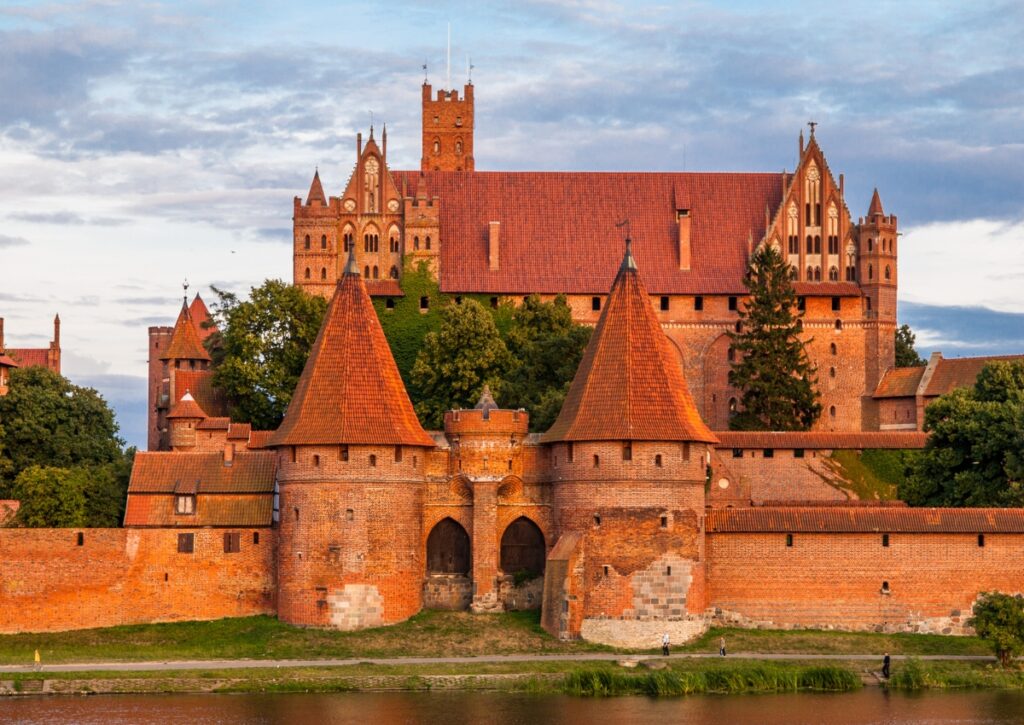
The Scale and Complexity
Malbork Castle is enormous—you need at least 2-3 hours to explore the main sections. The castle has multiple courtyards, towers, rooms, museums, and defensive structures. It’s not just one building; it’s an entire fortress city compressed into medieval brick.
The High Castle (Zamek Wysoki) is the oldest and most heavily fortified section, featuring the Grand Master’s Palace, the Summer Refectory, and the Marienburg Church. The defensive walls are still largely intact, giving you a visceral sense of medieval military strategy.
The Courtyard (Dziedziniec)
The main courtyard is where you can see the castle’s true scale. Multi-story brick walls surround you, pierced with arrow slits and defensive positions. The courtyard itself has seen nearly 800 years of history—from Teutonic Knight grand masters to Prussian occupation to Soviet control to contemporary Polish restoration efforts.
Museums Inside
The castle now houses the Museum of the Malbork Castle, with exhibits on the Teutonic Knights, medieval military equipment, amber (the “Baltic Gold” that made this region wealthy), and the castle’s complex history. The museum is well-organized and provides excellent context for understanding medieval Central European history.
The Nogat River Views
From the castle walls, you can see the Nogat River, which provided strategic water access and defense. The river views from the towers are beautiful and gave you a sense of why this location was chosen for such a significant fortress.
Budget for Malbork Castle Day Trip:
- Train to Malbork: 50-85 PLN ($12-20 / €11-18)
- Castle entrance (Historical Route): 80 PLN ($20 / €18)
- Guided tour (optional but recommended): 50-70 PLN ($12-18 / €11-16)
- Lunch: 40-60 PLN ($10-15 / €9-14)
- Total: Approximately €40-70
Booking:
Take the direct train from Warsaw Wschodnia to Malbork. The castle is walkable from the train station (about 15 minutes). No advance booking is required for the castle itself, though you might book a GetYourGuide tour that includes guided admission and potentially transport from Warsaw.
Why This Day Trip Matters: Malbork represents the medieval military-religious complex that shaped Central European politics and architecture for centuries.
7. Treblinka: Confronting Holocaust History
Distance from Warsaw: 88 kilometers | Travel Time: 1 hour by train + 15-minute taxi | Best Time to Visit: Spring-autumn (closed January 1, Easter, December 25)
Treblinka is Poland’s second major Holocaust site and, in some ways, even more disturbing than Auschwitz because of what the landscape has become. Where once there was an extermination camp, there’s now a memorial set in an open, quiet forest. The absence is overwhelming.
Unlike Auschwitz, which has been largely preserved, Treblinka was intentionally destroyed by the Nazis in 1943 to hide evidence of their crimes. What remains is a memorial landscape with 17,000 stones representing the 17,000 victims and pointing toward where the gas chambers stood. The memorial was designed to represent the absence—the void where buildings once were.
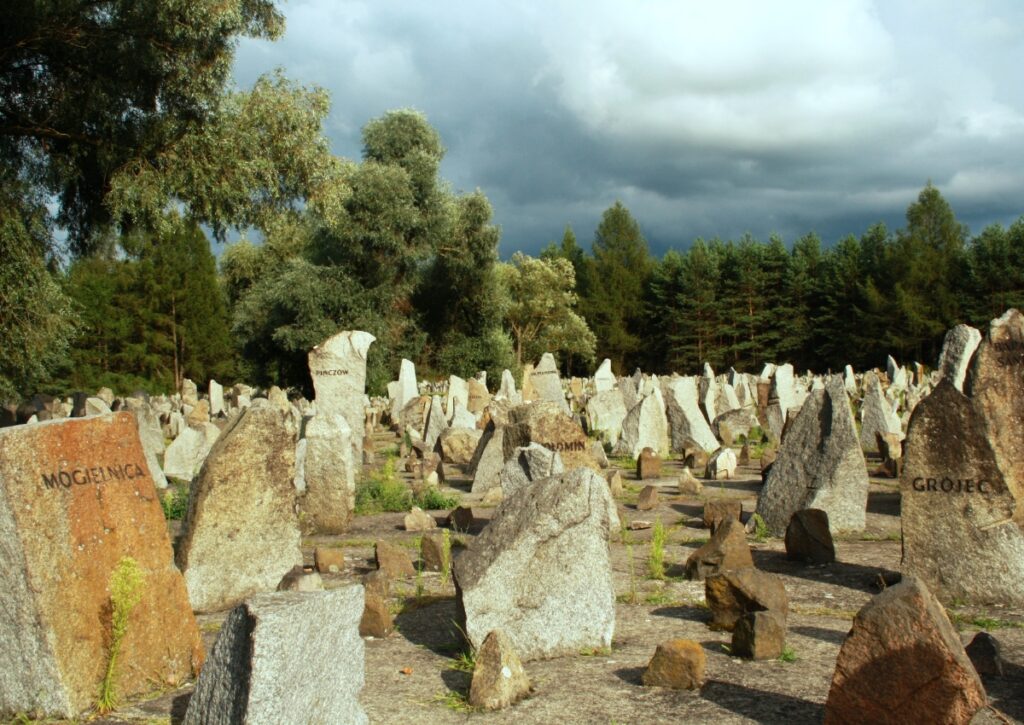
The Experience
Visiting requires emotional preparation. The site is peaceful, almost too peaceful, which makes the history even more harrowing. A museum explains what happened here, and there’s a short interpretive path through the memorial area.
Most people visit via organized tours from Warsaw, which include transportation, a guide, and historical context. Solo visits are possible but logistically complex—you’d take the train to Malkinia station, then hire a taxi to the museum.
Budget for Treblinka Day Trip:
- Organized tour from Warsaw: €200-250 (includes transport, guide, entrance)
- Independent travel: Train 40-80 PLN ($10-20 / €9-18), taxi 50-100 PLN ($12-25 / €11-22)
- Museum entrance: Free (but donation suggested)
Booking:
Book through Viator or GetYourGuide—both offer half-day tours from Warsaw starting around $221 per person, which is reasonable considering the complexity of getting there independently.
Why This Day Trip Matters: Treblinka represents a different aspect of Holocaust history than Auschwitz. It’s a site of almost pure extermination, with minimal industrial infrastructure preserved. The memorial landscape forces contemplation about absence and memory.
8. Wieliczka Salt Mine: Underground Wonder UNESCO World Heritage Site
Distance from Warsaw: 280 kilometers (via Krakow) | Travel Time: 3-4 hours total | Best Time to Visit: Year-round (constant 14°C underground temperature)
The Wieliczka Salt Mine (Kopalnia Soli Wieliczka) is one of the world’s oldest operating salt mines, active since the 13th century, and now one of the most visited museums in Poland. It’s utterly unlike any day trip on this list—you’ll descend 327 meters underground to explore chambers carved entirely from salt.
The Underground Landscape
The tourist route is 3.5 kilometers long with about 800 stairs (both up and down), visiting 20 chambers across three levels. You walk on salt-covered floors, past salt sculptures, through salt tunnels, and around an underground salt lake. The scale is stunning—some chambers are massive, looking more like Gothic cathedrals than mines.
The air itself is special—the salt-rich atmosphere is purported to have health benefits for respiratory conditions. For centuries, people visited for treatment, and there’s even a salt therapy sanatorium in one of the deepest chambers.
St. Kinga’s Chapel
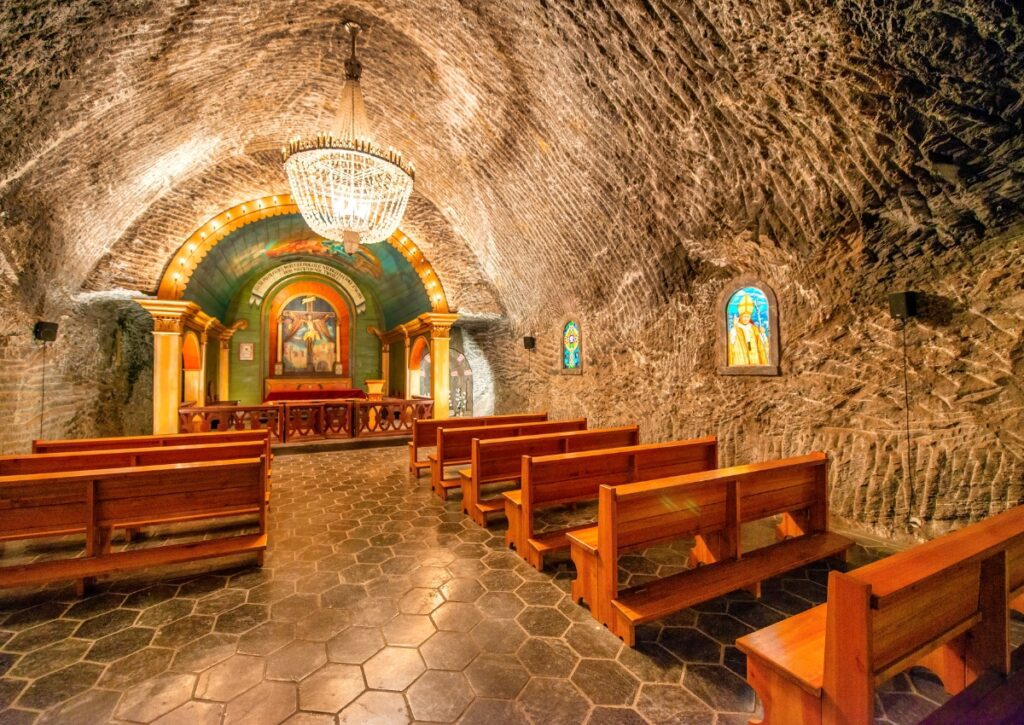
The most spectacular chamber is St. Kinga’s Chapel, a functioning Catholic chapel with a salt crystal chandelier, salt reliefs, and walls carved from salt. Actual masses are held here, and couples get married here—exchanging vows surrounded by walls of salt created over centuries of mining.
The Underground Lake
Deep underground is a salt lake, and visitors can actually walk along its shore. The water is so saturated with salt that objects float like in the Dead Sea. The play of light on the underground water is genuinely magical.
Temperature and What to Bring
It’s always 14-16°C (57-61°F) underground, so bring a light jacket. The ground is salt, which can be slippery, so wear shoes with a good grip (flip-flops are a bad idea). The walk is not technically difficult but requires reasonable fitness since there are continuous stairs.
Budget for Wieliczka Salt Mine Day Trip:
- Train to Krakow: 50 PLN ($12 / €11)
- Mine entrance with guided tour: 60-70 PLN ($15-18 / €14-16)
- Lunch in Wieliczka town: 40-60 PLN ($10-15 / €9-14)
- Total: Approximately €30-50 (very reasonable for such an extraordinary experience)
Booking:
You can buy tickets on-site or pre-book online through GetYourGuide. English-language tours operate regularly. The mine is about 15 kilometers south of Krakow—take a local train or hire GetRentacar.com if you want flexibility.
Practical Sustainable Tourism Note: The Wieliczka Salt Mine is an excellent example of sustainable tourism. The mine naturally produces salt; visitors viewing it don’t deplete resources. The mining technique used has been preserved for centuries and involves no heavy machinery. Supporting the mine’s preservation through admission fees directly funds conservation of this 800-year-old site.
Why This Day Trip Matters: Wieliczka is a human marvel—people created these chambers and artworks using nothing but hand tools and determination over eight centuries. It’s humbling and inspiring.
9. Lublin and Majdanek: Poland’s Eastern Complexity
Distance from Warsaw: 170 kilometers | Travel Time: 2.5-3 hours by train or organized tour | Best Time to Visit: May-September
Lublin is Poland’s second-largest city in the eastern region and represents Poland’s complex Eastern European positioning. It’s historically been disputed territory between different empires, from the Polish-Lithuanian Commonwealth to Soviet occupation. The city retains an authentic Eastern European character that you won’t find in Warsaw or Krakow.
Lublin Old Town (Stare Miasto)
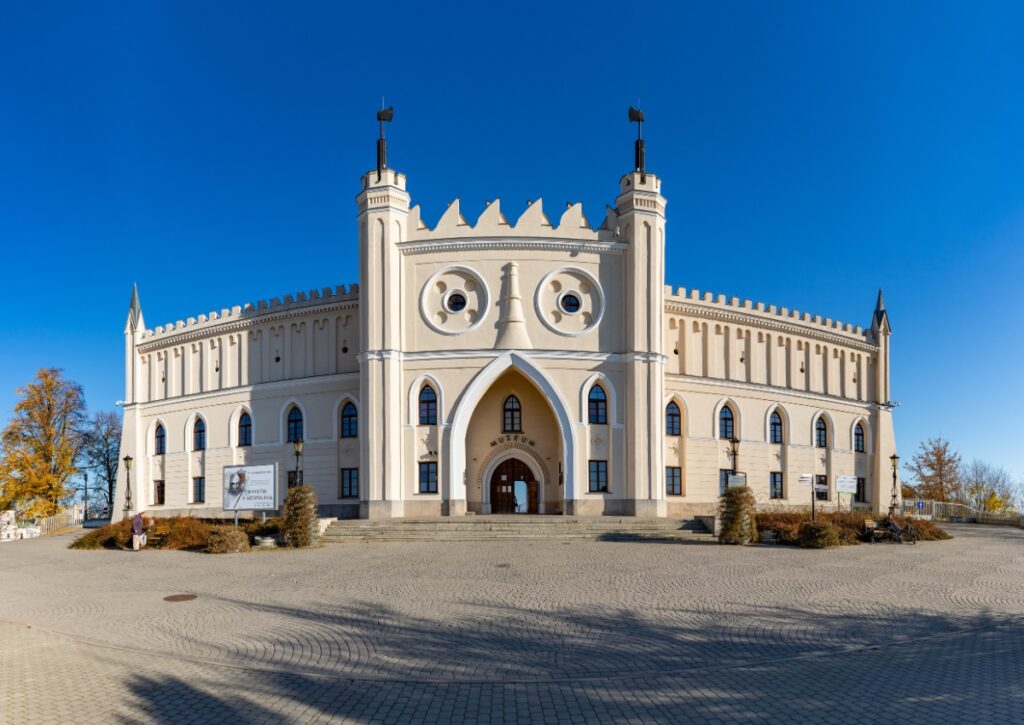
The historic district centers on Grodzka Street, lined with colorful Renaissance and Baroque buildings. The Castle Tower (Brama Grodzka) is the most recognizable landmark, and from it, you can see the Royal Castle perched on a hill above the old town.
The city has genuine, lived-in character—it’s not as polished as Krakow, but that’s exactly what makes it interesting. There are fewer tourists, more authentic local restaurants, and streets that feel like actual neighborhoods rather than heritage attractions.
Majdanek Concentration Camp
On the outskirts of Lublin lies Majdanek, one of Nazi Germany’s major concentration and extermination camps. Unlike Auschwitz, which is somewhat removed from urban areas, Majdanek is right on the edge of the city—a stark reminder that the Holocaust happened in cities where ordinary people went about their daily lives.
The site includes preserved barracks, gas chambers, a crematory, and a striking memorial. The museum is thorough but less crowded than Auschwitz, making it somewhat less overwhelming while still profoundly moving.
Budget for Lublin & Majdanek Day Trip:
- Organized tour from Warsaw: €300-400 (includes all transport, guide, meals, and entrance)
- Independent travel via train: 80-120 PLN ($20-30 / €18-27)
- Majdanek entrance: Free (with parking fee)
- Meals: 60-100 PLN ($15-25 / €14-23)
- Total for independent travel: €50-80
Booking:
GetYourGuide and Viator offer excellent full-day tours from Warsaw that bundle Lublin and Majdanek together, typically around €300-350. These tours include everything and eliminate logistical stress.
Why This Day Trip Matters: Lublin and Majdanek represent Poland’s Eastern character and its tragic World War II history in a region less traveled than Krakow and Auschwitz.
10. Kampinos National Park: Nature and Sustainability in Action
Distance from Warsaw: 20 kilometers northwest | Travel Time: 30-45 minutes by public transport | Best Time to Visit: May-September for hiking; autumn is spectacular with colors
Kampinos National Park (Kampinoski Park Narodowy) is Poland’s commitment to environmental preservation and sustainable tourism. Just outside Warsaw’s boundaries, the park covers 385 square kilometers of forests, dunes, marshes, and meadows—a complete ecosystem that survived 800 years of human settlement and two world wars largely intact.
Unlike the other day trips on this list, Kampinos is about nature, not history or architecture. It’s about Poland’s commitment to preserving its natural heritage for future generations.
The Landscape
The park has an unusual landscape—glacial dunes covered with pine forests mixed with marshes and open meadows. It’s not dramatic mountain scenery, but it has quiet, understated beauty. In spring, wildflowers transform the meadows. In autumn, the foliage is golden and stunning.
Activities
The park has an extensive trail network—over 200 kilometers of hiking trails. You can spend anywhere from 2-3 hours on a short nature walk to a full day hiking more extensive routes. The trails are well-marked and maintained. Popular routes include:
- Palmiry Trail: A 7-kilometer walk through forest and meadow, passing the Palmiry Memorial, which honors victims of Nazi massacres.
- Dune Trail: A shorter 4-kilometer route exploring the glacial dunes
- Marsh Walk: Wooden boardwalks over wetlands where you might spot native wildlife
Wildlife and Conservation
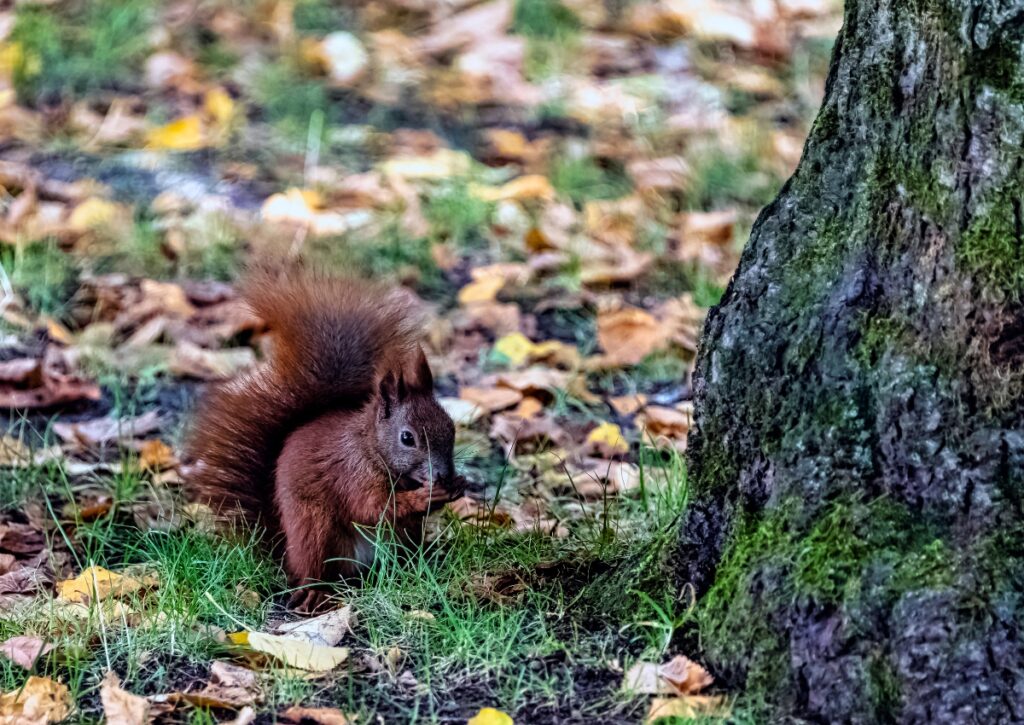
The park is home to 81 species of birds and numerous mammals, including deer, wild boar, and smaller creatures. It’s a sanctuary for species threatened elsewhere in Europe. The park is actively involved in reintroduction programs for native species—a genuine example of environmental restoration.
Sustainable Tourism at Kampinos
The park exemplifies sustainable tourism principles:
- Trails are carefully maintained to prevent erosion
- Entry is free—the park is funded through national conservation budgets
- Limited commercial development preserves the ecosystem
- Educational programs teach visitors about conservation
- The park employs local guides and naturalists, supporting community employment
This is where you see Poland’s commitment to environmental stewardship in practice. It’s not about extracting value from nature; it’s about preserving it.
Budget for Kampinos National Park Day Trip:
- Public transport from Warsaw: 8-12 PLN ($2-3 / €1.80-2.70)
- Park entrance: Free
- Picnic lunch: 30-50 PLN ($7.50-12 / €7-11)
- Optional guided nature walk: 50-100 PLN ($12-25 / €11-23)
- Total: Approximately €10-30 (incredibly affordable)
How to Get There:
Take the SKM commuter train from Warsaw Central (or any Warsaw station) toward Modlin Airport, getting off at stops like Modlin Airfield or Kampinos. The journey takes 30-45 minutes. Alternatively, hire GetRentacar.com if you want maximum flexibility for exploring different trail sections.
Practical Information:
- Bring water—there are a few facilities in the park
- Wear appropriate hiking shoes
- The weather can change quickly; bring a jacket
- Best visited in daylight hours
- Consider hiring a local guide through the Polish Ecotourism Association for more detailed nature education
Why This Day Trip Matters: Kampinos represents Poland’s environmental consciousness and sustainable tourism principles. It’s a counterpoint to historical day trips—instead of learning about Poland’s past, you’re experiencing Poland’s commitment to its natural future.
Planning Your Day Trips: Practical Tips and Sustainable Travel Considerations
Transportation Wisdom: Why Trains Are Superior
I cannot overstate how excellent Poland’s train system is for day tripping. PKP Intercity operates express trains connecting all these destinations, and the experience is genuinely pleasant:
- Comfortable seats with personal entertainment screens
- Wifi on many express trains
- Affordable pricing if booked in advance
- No parking hassles or navigation stress
- You can work, read, or sleep while traveling
For the most budget-friendly approach, buy individual tickets at railway stations, but for express trains (called “EIP” on the schedule), it’s worth booking online at intercity.pl for guaranteed seating and lowest prices.
Sustainable Day Tripping from Warsaw
Several of these day trips represent excellent sustainable tourism practices:
- Using public transportation dramatically reduces your carbon footprint compared to driving or flying
- Visiting less-famous destinations (Toruń, Lublin, Kampinos) distributes tourism impact and supports smaller communities
- Eating at local restaurants rather than international chains supports local economies
- Choosing guided tours through local operators ensures money reaches local communities
- Respecting historical sites through quiet, thoughtful visits preserves them for future generations
- Visiting during shoulder seasons (May, September, October) reduces peak-season overcrowding
When booking tours, prioritize operators based in Poland rather than international companies—the money stays local. GetYourGuide and Viator often work with local operators, which is good for economic sustainability.
Currency and Money-Saving Tips
Poland uses the Polish Zloty (PLN). As of late 2025, exchange rates hover around 1 EUR = 4.2-4.3 PLN or 1 USD = 3.8-4.0 PLN. To minimize exchange rate losses:
- Use Revolut or Wise cards if you have international accounts—these provide near-perfect exchange rates with minimal markups
- Avoid exchanging money at airports or tourist areas—use ATMs in city centers instead
- Yesim eSIM cards are invaluable—€10-20 gets you 5-10GB of data for the entire trip, ensuring you always have navigation and communication
Never, ever use airport currency exchanges—they’re the worst rates in Poland.
What to Pack for Day Trips
Poland’s weather can be unpredictable:
- Comfortable walking shoes (you’ll walk 10-15+ kilometers on most days)
- Light layers (temperatures vary significantly between seasons)
- Backpack (15-20 liters is ideal)
- Reusable water bottle (tap water is excellent in Poland)
- Sunscreen and hat (especially if visiting memorial sites where there’s limited shade)
- Basic first aid (blister treatment for your feet)
Booking Accommodations if You Extend Your Trip
Some day trips could easily become overnight trips. If you decide to stay in Krakow or Gdansk, Booking.com offers excellent filters and price transparency. Budget accommodations in Poland are exceptional—you can find clean, comfortable hostels for €15-25 per night and budget hotels for €30-50. More mid-range options (€60-100) offer three-star comfort.
Welcome Pickups offers excellent airport and station transfer services if you need reliable ground transportation.
The Comprehensive Daily Budget: What a Day Trip Really Costs
Let me break down realistic daily budgets for different travel styles:
Ultra-Budget Traveler (€25-35 per day)
- Milk bar breakfast: 5 PLN ($1.25)
- Train fare (average): 50 PLN ($12)
- Packed lunch from supermarket: 15 PLN ($3.75)
- Street food dinner: 15 PLN ($3.75)
- One free attraction or paid attraction: 20-30 PLN ($5-7.50)
- Total: €10-12 (this works for Kampinos, smaller towns)
Budget Traveler (€40-50 per day)
- Cafe breakfast: 12 PLN ($3)
- Train fare: 60 PLN ($15)
- Restaurant lunch: 35 PLN ($8.75)
- Snacks and coffee: 15 PLN ($3.75)
- One paid attraction: 40 PLN ($10)
- Total: €15-18
Mid-Range Traveler (€60-80 per day)
- Hotel breakfast: 20 PLN ($5)
- Train fare (express): 80 PLN ($20)
- Mid-range restaurant lunch: 50 PLN ($12.50)
- Mid-range dinner: 60 PLN ($15)
- Paid attractions (2): 80 PLN ($20)
- Total: €35-40
Comfortable Traveler (€100+ per day)
- Everything as above, plus guided tours, upgraded accommodations, fancier restaurants
Most independent travelers fall into the “budget” to “mid-range” categories, making day trips from Warsaw incredibly value-based travel experiences.
Conclusion: Why These Day Trips Transform Your Understanding of Poland
I’ve traveled through Poland multiple times—for business conferences, site visits, and increasingly for pure exploration—and these ten-day trips represent the soul of the country. They’re not just attractions to check off a list; they’re keys to understanding Polish identity, resilience, creativity, and commitment to preserving both heritage and nature.
Kraków and Auschwitz-Birkenau teach you about Poland’s capacity to survive and remember. Gdansk shows you how a destroyed city rebuilt itself with pride. Kazimierz Dolny and Toruń reveal the artistic and intellectual soul of Poland. Malbork Castle demonstrates medieval engineering brilliance. Lublin and Majdanek represent Poland’s Eastern European complexity. And Kampinos National Park shows Poland’s commitment to environmental stewardship and sustainable tourism.
Together, these day trips create a narrative: this is a country that has been conquered, divided, destroyed, and occupied—yet emerged with culture, humor, creativity, and determination intact. The Polish people you meet on trains, in restaurants, and in town squares possess a particular warmth and resilience that comes from living through history and choosing hope.
The beauty of these day trips is that you can customize your own itinerary based on your interests, time constraints, and budget. There’s no “right” way to do them—there’s only your way, based on what speaks to you about Polish history, culture, and natural beauty.
Follow A Tiny Traveler for More Authentic Explorations
- Follow me on Pinterest (A Tiny Traveler): My Pinterest is your ultimate travel vision board! It’s where I share stunning photography, quick visual guides, and, most importantly, links to all my in-depth blog posts.
- Follow me on Instagram (a.tinytraveler): For daily doses of wanderlust, stunning travel photography, behind-the-scenes glimpses of my trips, and quick tips that will inspire your next getaway. See the world through my eyes!
- Like my Facebook Page (A Tiny Traveler): Join our vibrant community of fellow travel lovers! This is a great place to ask questions, share your own travel experiences, and connect with other readers and me.
I’m committed to sharing the Poland that actually exists—not the sanitized version in guidebooks, but the real country with its complexity, humor, resilience, and extraordinary people. If you found this guide valuable and want more like it, subscribe to A Tiny Traveler and follow my social media channels where I share behind-the-scenes insights from my travels, practical tips for traveling authentically, and stories from locals I meet along the way.
Don’t just travel to Poland. Understand Poland. Experience Poland. Let these day trips transform how you see this remarkable country. I’ll see you on the trains, in the town squares, and on the forest trails.
Safe travels, and may your day trips from Warsaw reveal the Poland that only reveals itself to those willing to venture beyond the capital.
Pin This Guide – Share with Fellow Travelers – Save for Your Trip
Your adventure awaits. Poland is ready to show you who it truly is.
Frank


