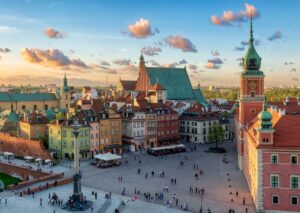
There’s a sound that defines Kraków. Every hour, on the hour, a lone trumpeter appears in the highest window of the tallest tower of the magnificent St. Mary’s Basilica. He plays a simple, five-note melody, the Hejnał Mariacki, broadcasting it to the four corners of the world. And then, abruptly, he stops, mid-note. He has done this every hour of every day for centuries, re-enacting the moment a 13th-century watchman was shot in the throat by a Tatar arrow while trying to warn the city of an attack. That sound—a beautiful, haunting, and eternally unfinished melody—is the perfect metaphor for Kraków itself. It’s a city of breathtaking beauty, steeped in stories, and carrying a history that is both triumphant and tragically cut short.
Unlike Warsaw or Gdańsk, which were Phoenixes reborn from the ashes of World War II, Kraków survived. By some miracle, its historic core was largely spared from the systematic destruction that leveled other Polish cities. What you see when you step into its main square, the Rynek Główny, one of the largest and most glorious medieval squares in Europe, is not a reconstruction. It is the real thing. The cobblestones under your feet have felt the tread of kings, of astronomers like Copernicus, of Pope John Paul II. This unbroken thread of history gives Kraków an atmosphere, a weight, a soul that is utterly captivating.
But this survival came at an unimaginable cost. While the city’s stones were spared, its soul was deeply wounded. The vibrant Jewish community of the Kazimierz district was decimated, and just an hour down the road lies a place that stands as the world’s most potent symbol of human depravity: the Auschwitz-Birkenau concentration and extermination camp. To visit Kraków is to hold these two staggering realities in your hands at once. It is to marvel at the sheer, life-affirming beauty of Wawel Castle at sunset, and to stand in silent, gut-wrenching remembrance on the grounds of Auschwitz the next day. It is a journey that will fill you with joy and break your heart, often in the same breath.
This, then, is not just a guide to a pretty city. This is a guide to an experience. As your friend Frank, from A Tiny Traveler, I’m going to walk you through it all. We will revel in the fairy-tale charm, we will feast on the hearty food, and we will explore the vibrant bohemian nightlife. But we will also confront the difficult history with the respect and reverence it demands. Because to truly understand Kraków, you must embrace both its brilliant light and its profound shadows. It is a journey that will challenge you, change you, and stay with you forever.
Before You Arrive in the City of Kings: Essential Kraków Logistics
Planning a trip to Kraków is wonderfully straightforward. It’s a city built for visitors, yet it retains an authentic, local soul. Let’s get the practicalities nailed down so you can immerse yourself in the magic.

When to Go: Finding Your Perfect Polish Season
Kraków is a year-round destination, but each season offers a unique flavor.
- Summer (June – August): Peak season. The weather is warm and generally sunny, perfect for long days of exploration and sitting at the countless outdoor cafes in the Main Square. The city is buzzing with festivals and a vibrant energy. It’s also the most crowded and expensive time to visit.
- Shoulder Seasons (April – May & September – October): The absolute sweet spot and my personal recommendation.
- Spring (April-May): The city thaws and bursts into bloom. The weather is crisp and pleasant, and the Planty Park that rings the Old Town is a gorgeous sea of green.
- Autumn (September-October): The “Polish Golden Autumn” (Polska Złota Jesień) is magical. The crowds thin, the air is crisp, and the ivy crawling up the walls of Wawel Castle turns a brilliant crimson. The light is perfect for photography.
- Winter (November – March): It gets cold, and snow is common, transforming the city into a true winter wonderland. The highlight is the Kraków Christmas Market on the Main Square, which is one of the most traditional and beautiful in Europe. It’s a perfect time for cozying up in atmospheric cellar bars and enjoying hearty Polish food.
Getting to Kraków: Your Gateway to Lesser Poland
- By Air: You will fly into Kraków John Paul II International Airport (KRK), located in the nearby village of Balice. It’s a modern, well-organized airport with excellent connections to cities all across Europe.
- Frank’s Go-To for Finding Flights: I always start my flight search on WayAway. It’s a powerful aggregator that scans hundreds of sources to find the best prices. Their WayAway Plus membership is a fantastic tool for frequent travelers, offering cashback on flights, hotels, and tours.
- Your Seamless Arrival in Kraków: From the airport, you have a few great options. The train is fast and direct to the main station. The public bus is the cheapest. But for the ultimate in convenience and peace of mind, especially after a long flight, I’m a massive advocate for Welcome Pickups. You can pre-book a private, English-speaking driver online for a fixed, competitive price. They’ll track your flight, be waiting for you at arrivals with a sign, and take you directly to your hotel’s doorstep. It completely removes the stress of navigating a new city upon arrival.
- By Train: Kraków is a major rail hub in Poland. The main train station, Kraków Główny, is conveniently connected to a large shopping mall (Galeria Krakowska) and is just a 10-minute walk from the Old Town’s main gate. There are fast, modern trains from Warsaw, Gdańsk, Wrocław, and international destinations like Prague and Vienna.
Getting Around Kraków: A Walker’s Paradise
- On Foot: The absolute best way to explore Kraków. The entire Old Town (Stare Miasto) is a pedestrian-friendly zone, and the Jewish Quarter (Kazimierz) is just a short, pleasant walk away. You will spend most of your time on your own two feet. Wear comfortable shoes!
- Trams & Buses: For longer distances (like to Schindler’s Factory or the Krakus Mound), Kraków has an excellent and efficient public transport network of trams and buses.
- Tickets: You can buy tickets from machines at most stops (they accept cards and coins) or on board some vehicles. Crucially, you must validate your ticket immediately upon boarding in the small electronic validators. Failure to do so can result in a hefty fine from plain-clothed inspectors.
- Ticket Types: You can buy timed tickets (20-minute, 60-minute, 90-minute) or period passes (24-hour, 48-hour, etc.).
Caption: The magnificent Main Market Square (Rynek Główny) of Kraków, one of the largest and most beautiful medieval squares in Europe. The Cloth Hall stands in the center, with St. Mary’s Basilica’s iconic towers rising behind it.
From Royal Views to Bohemian Vibes: Where to Stay in Kraków
Your choice of neighborhood will shape your Kraków experience.
The Old Town (Stare Miasto): The Historic Epicenter
This is the fairy-tale heart of Kraków, encircled by the green belt of Planty Park. You’re staying amidst the history, with the Main Square and Wawel Castle at your doorstep.
- The Vibe: Historic, grand, bustling, and incredibly convenient for sightseeing.
- Best for: First-time visitors, those on a short trip, and anyone who wants to be in the absolute center of the action.
Kazimierz (The Jewish Quarter): The Bohemian Soul
Located just south of the Old Town, Kazimierz is the historic Jewish district.
- The Vibe: A captivating mix of poignant history, bohemian art scenes, and the city’s best nightlife. It’s trendy, a bit gritty, and packed with character, synagogues, quirky cafes, and incredible restaurants and bars. This is my personal recommendation for the best place to stay.
- Best for: Travelers seeking atmosphere and character, foodies, and those who love vibrant nightlife.
Podgórze: Across the River, Historic & Up-and-Coming
Just across the river from Kazimierz, this is the area of the former Jewish Ghetto during the Nazi occupation.
- The Vibe: A quieter, more local, and rapidly gentrifying neighborhood. It holds immense historical significance and offers a more off-the-beaten-path feel while still being close to Kazimierz.
- Best for: History buffs, budget-conscious travelers, and those looking for a more authentic, residential experience.
Your Secret Weapon for Booking the Perfect Kraków Stay
- My Unbeatable Accommodation Finder: For finding that perfect apartment in Kazimierz or a hotel with a view of Wawel, I rely exclusively on Booking.com. Their selection in Kraków is immense, from budget hostels to boutique hotels. The map feature is an absolute lifesaver for understanding the layout of the city and ensuring you’re in your desired neighborhood. Combined with the millions of verified user reviews, it’s the most powerful tool for securing your ideal Kraków home base.
The Unmissable Kraków Bucket List: Walking Through a Fairy Tale
Prepare to be enchanted. The historic center of Kraków is a UNESCO World Heritage site for a reason.


The Main Market Square (Rynek Główny): The Heart of It All
This is the magnificent, sprawling heart of Kraków. You will cross it a dozen times a day.
- St. Mary’s Basilica (Kościół Mariacki): A Gothic masterpiece. Don’t just admire its iconic mismatched towers from the outside. You must go inside to see the breathtaking, world-famous wooden altarpiece carved by Veit Stoss. And be sure to be in the square on the hour to hear the Hejnał trumpet call.
- The Cloth Hall (Sukiennice): This grand Renaissance hall dominates the center of the square. It was once the center of international trade. Today, the ground floor is lined with stalls selling amber, lace, and other souvenirs.
- The Town Hall Tower: The only remaining part of the old Town Hall. You can climb to the top for a fantastic view of the square.
- Rynek Underground Museum: Beneath the square lies a fascinating, high-tech museum that takes you back in time to medieval Kraków, built around the original excavated market stalls and streets.
Wawel Royal Hill: The Heart of the Nation
Perched on a hill overlooking the Vistula River, Wawel is the most important historical and cultural site in Poland. It’s a symbol of Polish identity.
- Wawel Cathedral: The coronation and burial site of Polish monarchs for centuries. It’s a stunning and complex mix of architectural styles, with numerous chapels to explore. Climb the Sigismund Tower to see the massive Sigismund Bell.
- Wawel Royal Castle: Explore the opulent State Rooms, the Royal Private Apartments, and the Crown Treasury to get a sense of Poland’s royal history.
- The Wawel Dragon’s Den (Smocza Jama): According to legend, a fearsome dragon once lived in this cave beneath Wawel Hill. You can walk down through the cave and exit near the river, where you’ll find a statue of the dragon that breathes real fire every few minutes!
The Royal Route & Planty Park
- The Royal Route is the historic coronation path that runs from St. Florian’s Gate, down the bustling Ulica Floriańska, across the Main Square, and down Ulica Grodzka to Wawel Hill.
- Planty Park is the beautiful green belt that replaced the old medieval city walls. It’s a perfect place for a peaceful stroll, a coffee, and a break from sightseeing.
Caption: The legendary Wawel Royal Castle, standing proudly over the Vistula River. For centuries, this was the political and cultural heart of the Polish nation.
Kazimierz & Podgórze: A Tale of Tragedy, Rebirth, and Vibrant Life
Just a 15-minute walk from the Old Town lies Kazimierz, the historic Jewish Quarter. This neighborhood has a powerful, unique, and utterly captivating soul.
The Historic Heart of Kazimierz
Before WWII, Kazimierz was a thriving center of Jewish life and culture for over 500 years. Today, its historic sites stand as a poignant memorial.
- The Synagogues: Explore the beautiful and historic synagogues. The Old Synagogue is the oldest in Poland and now houses a museum. The Remuh Synagogue, still active, has a moving, ancient cemetery attached. The Tempel Synagogue is stunning with its Moorish-revival interior.
- Szeroka Street: The historic main street of the Jewish town, lined with restaurants and historical buildings.
The Modern Vibe: The Soul of Modern Kraków
After decades of neglect post-war, Kazimierz has undergone a remarkable renaissance.
- Plac Nowy: The gritty, beating heart of modern Kazimierz. The central round building (Okrąglak) is famous for its windows serving up Kraków’s legendary street food, zapiekanki. The square is surrounded by quirky, atmospheric bars.
- The Bar & Cafe Scene: Kazimierz is, without a doubt, the best place for nightlife in Kraków. You’ll find everything from candlelit, speakeasy-style cocktail bars to raucous “shot bars” and cozy, intellectual cafes.
- Street Art & Galleries: The neighborhood is a hub for artists and creatives. Keep an eye out for murals and small, independent art galleries.
Podgórze & Schindler’s Legacy
Cross the river from Kazimierz via the beautiful Father Bernatek’s Bridge (famous for its “balancing” sculptures) to the district of Podgórze.
- Ghetto Heroes Square (Plac Bohaterów Getta): This is the site of the former main square of the Nazi-created Jewish Ghetto. Today, it’s a powerful and haunting memorial, filled with large, empty bronze chairs symbolizing the tragedy of the ghetto’s inhabitants.
- The Eagle Pharmacy (Apteka pod Orłem): Located on the square, this was a pharmacy run by a non-Jewish Pole, Tadeusz Pankiewicz, who helped the ghetto’s residents. It’s now a small, poignant museum.
- Oskar Schindler’s Enamel Factory: Now a world-class museum, it tells the story not just of Oskar Schindler (made famous by the film Schindler’s List), but of the entire experience of Kraków under Nazi occupation from 1939-1945. It’s an immersive and powerful museum. Book your tickets online in advance!
The Essential Journeys: Auschwitz-Birkenau & Wieliczka Salt Mine
Two UNESCO World Heritage sites lie just outside Kraków. One is a place of profound sorrow and remembrance; the other is a place of unbelievable wonder. Visiting both is an essential part of the Kraków experience.
Auschwitz-Birkenau: A Journey of Remembrance and Respect
Let me be very clear: a visit to the Auschwitz-Birkenau Memorial and Museum is not “tourism.” It is not “fun.” It is a somber, harrowing, and emotionally draining experience. It is also one of the most important and necessary things you will ever do as a traveler. It is a solemn duty of remembrance.
- What it is: The largest of the Nazi concentration and extermination camps, where over 1.1 million men, women, and children lost their lives.
- How to Visit:
- Book in Advance: You must book your visit on the official memorial website (auschwitz.org) weeks or even months in advance, especially in summer.
- With a Guide is Essential: While you can book a timed entry slot to visit without a guide, I implore you to book a guided tour. The subject matter is too vast and too important to comprehend without the context, stories, and explanations of an expert educator. The guides are incredibly professional, knowledgeable, and respectful.
- Booking a Tour: The easiest and most common way to visit is on a guided tour from Kraków. These tours handle all the logistics: transport, tickets, and the official guide at the memorial. I highly recommend booking a reputable tour through GetYourGuide. You can read reviews and ensure you’re getting a high-quality, respectful experience.
- Preparing for Your Visit:
- Mental Preparation: Be prepared for a deeply emotional and challenging day.
- Dress Respectfully: This is a place of memorial. Dress modestly. No novelty t-shirts or revealing clothing.
- Be Prepared to Walk: The site is vast, especially Birkenau. Wear comfortable shoes.
- Behavior: Behave with the utmost respect and solemnity. No laughing, no loud conversations, no inappropriate selfies. This is a cemetery.
Wieliczka Salt Mine: Descending into an Underground World
In stark contrast to the somberness of Auschwitz, the Wieliczka Salt Mine is a place of pure wonder and fantasy.


- What it is: A colossal, ancient salt mine that was in operation for over 700 years. It’s a subterranean world of tunnels, chambers, and chapels, all carved out of solid rock salt.
- The Experience: You’ll descend deep underground (get ready for a lot of stairs at the beginning!) and walk through a labyrinth of passages.
- The Highlight: The Chapel of St. Kinga. This is the moment your jaw will hit the floor. It is a massive, cathedral-sized chamber deep underground where everything—the altars, the statues, the reliefs on the walls, even the chandeliers—is carved out of translucent rock salt. It is one of the most astonishing things I have ever seen.
- How to Visit: It’s an easy trip from Kraków by train, public bus, or, most conveniently, on a half-day guided tour (often combined with Auschwitz) booked through GetYourGuide.
Caption: The breathtaking Chapel of St. Kinga, deep inside the Wieliczka Salt Mine. Everything in this vast chamber, from the altars to the chandeliers, is carved from solid rock salt.
A Taste of Lesser Poland: The Ultimate Kraków Food & Drink Guide
Polish food is the ultimate comfort food. It’s hearty, flavorful, and incredibly affordable.
The Must-Try Dishes of Kraków
- Pierogi: The king of Polish food! Dumplings, boiled or fried, with fillings like ruskie (potato and cheese), z mięsem (meat), or sweet versions with fruit.
- Żurek: A classic sour rye soup, often served in a bread bowl with egg and sausage.
- Placki Ziemniaczane: Crispy, fried potato pancakes, often served with goulash or sour cream.
- Gołąbki: Cabbage rolls stuffed with meat and rice, served in a tomato sauce.
- The Street Food Stars:
- Obwarzanek Krakowski: The official street snack of Kraków. It’s a chewy, braided ring-shaped bread (like a cross between a bagel and a pretzel), often topped with salt, poppy seeds, or sesame seeds. You’ll see them for sale from blue street carts everywhere. They cost pennies and are delicious.
- Zapiekanka: The legendary Polish open-faced sandwich. It’s a halved baguette topped with mushrooms, cheese, and other toppings, toasted until crispy and drizzled with ketchup. The best place to get one is from the roundhouse at Plac Nowy in Kazimierz.
The Drinks: Vodka, Beer & More
- Wódka (Vodka): You’re in Poland! The variety is staggering. Try a tasting flight at a vodka bar like Wódka Cafe Bar to sample different flavors.
- Piwo (Beer): The Polish craft beer scene is fantastic. Look for “multi-tap” bars in Kazimierz.
- Miód Pitny (Mead): A traditional and delicious honey wine.
Where to Eat
- Bar Mleczny (Milk Bar): A must-do experience. These are communist-era, cafeteria-style diners serving traditional Polish food for incredibly low prices. Try Bar Mleczny Pod Temidą.
- Traditional Restaurants: Look for places serving kuchnia polska.
- The Food Trucks & Stalls of Kazimierz: The area around Plac Nowy and Judah Square is a hub for fantastic and creative street food.
Making Your Złoty Go Further: Budgets & Prices in Kraków
Kraków is one of the most affordable major cities in Europe, offering incredible value for money. The currency is the Polish Złoty (PLN). (Prices as of late 2025, approximately 4.3 PLN = 1 EUR / 4.7 PLN = 1 USD)


Daily Budget Breakdowns (Per Person, Excluding Accommodation)
- The Budget Backpacker: 100 – 150 PLN (€23 – €35 / $21 – $32 per day):
- Food: Eating at Milk Bars, grabbing zapiekanki and obwarzanki, and cooking at your hostel.
- Activities: Focusing on free activities and maybe one paid museum entry.
- Transport: Walking everywhere.
- The Mid-Range Traveler: 250 – 400 PLN (€58 – €93 / $53 – $85 per day):
- Food: A mix of Milk Bars for lunch and nice sit-down dinners in Kazimierz.
- Activities: Visiting Wawel Castle, St. Mary’s Basilica, and Schindler’s Factory.
- Transport: Walking and using the tram occasionally.
- The Luxury Traveler: 600+ PLN (€140+ / $127+ per day):
- Food: Fine dining, cocktail bars, multi-course meals.
- Activities: Private tours, concerts, high-end shopping.
Price of Essentials (Approximate)
- Hostel Bed in Kazimierz: 60 – 90 PLN
- Plate of Pierogi at a mid-range restaurant: 25 – 40 PLN
- Zapiekanka from Plac Nowy: 15 – 25 PLN
- Obwarzanek (street cart): 2.5 – 3 PLN
- Pint of Local Beer (piwo): 12 – 16 PLN
- Shot of Vodka: 8 – 12 PLN
- Tram Ticket (20-minute): 4 PLN
- Entrance to Wawel Cathedral: Free (some chapels/tombs require a ticket)
- Entrance to St. Mary’s Basilica: 15 PLN
Being a Mindful Guest: Sustainable & Responsible Tourism in Kraków
Kraków is a popular city, and overtourism, especially in the Old Town, is a real issue. Here’s how we can be better visitors.
- Explore Beyond the Old Town: The single best thing you can do is spend your time and money in other districts. Make Kazimierz your base for eating and drinking. Explore Podgórze. Take a tour of Nowa Huta. This spreads the economic benefits and reduces crowding.
- Travel in the Off-Season: Visiting in spring, autumn, or winter provides a more authentic experience and eases the strain on the city during the summer peak.
- Respect Sacred & Somber Sites: This is paramount. Behave with quiet dignity at Auschwitz-Birkenau. Dress modestly and be silent inside churches. These are not just tourist attractions.
- Support Local Businesses: Eat at Milk Bars and family-run Polish restaurants. Buy amber from reputable local artisans. Your money makes a real difference.
- Use Public Transport: The tram system is excellent and the most eco-friendly way to cover longer distances.
Final Word: The City of Memory and Magic
You will arrive in Kraków expecting a fairy tale, and you will find one in the golden light hitting the spires of Wawel Castle and in the vibrant, joyous chaos of a night out in Kazimierz. But you will leave with so much more than just beautiful memories. You will leave with a profound education in the resilience of the human spirit.
Kraków is a city that insists you remember. It asks you to confront the darkest chapters of our shared history, not to dwell in sorrow, but to learn, to honor the victims, and to carry the lessons forward. It is a city that shows you that even in the shadow of immense tragedy, life, art, music, and joy can bloom with fierce and beautiful defiance.
It is a city that is not just seen, but felt. It gets into your heart. It will make you laugh, it will make you cry, and it will make you think. And that, my friends, is the mark of a truly great journey.
Your Kraków Story Awaits! Let’s Keep the Journey Going…
And there we have it. My complete, unabridged, and deeply personal guide to the crown jewel of Poland. We’ve walked the Royal Route, delved into the vibrant soul of Kazimierz, and stood in somber reflection at a site that changed the world. I’ve poured every ounce of my passion, every practical tip, and every emotional echo from my visits into this guide. My greatest hope is that it has not only prepared you for your journey but has also conveyed the profound depth and beauty of this essential city.
But our journey together doesn’t have to end here. A Tiny Traveler is more than just a blog; it’s a living, breathing community of curious explorers who believe that travel, in all its joy and complexity, is the best way to understand our world and ourselves. And I would be absolutely honored for you to become a permanent member of our global crew.
Here is your official invitation to join our adventure:
- Become a Blog Insider: Subscribe to My Newsletter! This is your all-access pass to the very best of A Tiny Traveler. By subscribing, you’ll have my brand-new, ridiculously detailed travel guides delivered directly to your inbox the moment they’re published. You’ll also get exclusive travel hacks, personal stories from my wanderings, and hand-picked deals that I only share with my subscriber family. No spam, ever. Just pure, unadulterated travel inspiration. Find that subscription box, hit subscribe, and let’s make it official!
- Let’s Get Social & Share the Polish Spirit! If this guide has inspired you to explore the beautiful and poignant streets of Kraków, the best way you can say thank you is to share it! Pin it on Pinterest, send it to a fellow history buff or food lover, and let’s connect on my social channels. Let’s build a community of thoughtful, passionate travelers!
- Follow me on Instagram (a.tinytraveler): For daily doses of wanderlust, stunning travel photography, behind-the-scenes glimpses of my trips, and quick tips that will inspire your next getaway. See the world through my eyes!
- Like my Facebook Page (A Tiny Traveler): Join our vibrant community of fellow travel lovers! This is a great place to ask questions, share your own travel experiences, and connect with me and other readers.
- Follow me on Pinterest (A Tiny Traveler): My Pinterest is your ultimate travel vision board! It’s where I share stunning photography, quick visual guides, and, most importantly, links to all my in-depth blog posts.
Your support—your subscriptions, your shares, your comments—is the lifeblood of this blog. It’s what allows me to keep exploring and creating these massive, heartfelt guides to help you embark on your own unforgettable journeys.
So go to Kraków. See the beauty. Honor the history. And let the unbreakable spirit of this incredible city inspire you.
Safe and meaningful travels.
Frank