
I’ll never forget my first time in Tokyo. I was young, cocky, and armed with a paper map that looked like a microchip designed by a spider on acid. I needed to get from Shinjuku to Asakusa. Simple, right? An hour later, I found myself on an express train hurtling in the complete opposite direction, surrounded by impeccably dressed commuters, with the dawning, cold-sweat realization that I was profoundly and completely lost. My moment of panic was broken by a gentle tap on the shoulder. An elderly woman, sensing my tourist terror, pointed at my map, then at her own, and with a series of graceful gestures and a single, understood word—“Chigau” (Wrong)—she guided me off at the next station, walked me to the correct platform, and bowed as my train arrived.
In that moment, I didn’t just learn a valuable lesson in navigation; I learned what public transport is really about. It’s not just about getting from Point A to Point B. It’s the circulatory system of a city, the lifeblood that connects its diverse neighborhoods and people. It’s where you’ll see the city’s true character: the morning rush, the evening commute, the weekend joy. It’s a rolling, moving, living museum of daily life. To shy away from it, to stick to the sterile, air-conditioned bubble of a taxi, is to miss the city’s heartbeat entirely.
But I get it. It can be intimidating. Every city has its own quirky system, its own unwritten rules, its own ticketing labyrinth designed to confound the uninitiated. This is where I, Frank, your trusty guide from A Tiny Traveler, come in. Over decades of getting lost, making mistakes, and eventually, striding with the confidence of a local, I’ve cracked the code. I’ve developed a universal system, a philosophy for understanding and conquering any transit network on the planet.
This is not going to be a dry, boring list of tips. This is your ultimate boot camp. Your masterclass in becoming a Transit Ninja. We will cover everything from pre-trip digital reconnaissance to decoding different types of systems, from mastering the art of the ticket to understanding the silent etiquette that will make you look like a pro. By the time we’re done, you’ll be able to navigate the London Tube, a Japanese Shinkansen, a Lisbon tram, and a Bangkok water taxi with equal, fearless confidence. So, grab your sense of adventure. It’s time to unlock the city.
The Public Transport Superpower: Why It’s Worth Every Ounce of Effort
Before we dive into the “how,” let’s talk about the “why.” Why should you bother with the bus when a taxi is just an app away? Oh, my friend, for so many glorious reasons.
- It Saves You a Fortune: This is the big one. Taxis and ride-shares, especially from the airport, can absolutely decimate your daily budget. A week of using a city’s metro system might cost you the same as two taxi rides. This isn’t just a small saving; it’s a game-changing one that frees up money for amazing food, cool tours, or even a longer trip.
- It’s an Authentic, Immersive Experience: You want to see how locals live? Share their commute. You’ll see fashion, hear local gossip, discover what people are reading, and feel the rhythm of the city in a way you simply can’t from the back of a car.
- You’ll Discover Hidden Gems: My favorite way to explore a new neighborhood is to take a tram or bus to the end of the line and back. You’ll see parts of the city no guidebook mentions, spotting a cool-looking cafe or a bustling local market that you can mark on your map for later.
- It’s a Brain Workout & Confidence Booster: Successfully navigating a new city’s transit system is an incredibly empowering feeling. It proves you’re savvy, capable, and not just a passive tourist. Every successful journey is a small victory that builds your travel confidence.
- It’s the Ultimate Sustainable Choice: This is huge. Choosing public transport is one of the single best things you can do as a responsible traveler. You’re drastically reducing your carbon footprint, easing traffic congestion, and supporting the public infrastructure that makes the city work for its residents. It’s a win for you, a win for your wallet, and a massive win for the planet.
Phase 1: Pre-Trip Reconnaissance – Your Digital Toolkit & Pre-Flight Prep
The battle for transit mastery is won before you even leave home. A little digital prep work will make you feel like a seasoned pro the moment you land.
The App Arsenal: Loading Your Digital Weapons
Your smartphone is your single most powerful tool. Download and set up these apps before you go.
- The Global Champions:
- Google Maps: The undisputed king. It’s my default for a reason. It offers excellent transit directions, real-time updates, and walking routes in most major cities worldwide. Pro Tip: Download offline maps of the city you’re visiting. This is a lifesaver if you don’t have data the second you land.
- Citymapper: In cities where it operates (mostly major hubs in Europe, North America, and Asia), Citymapper is often even better than Google Maps. It offers more detailed multi-modal routing (like combining a bus and a scooter), real-time disruption alerts, and even tells you the best carriage to board for a quick exit. It is brilliant.
- The Local Legends: For certain countries, local apps are superior.
- Japan: Japan Transit Planner (Jorudan) or Navitime are essential for navigating the complex train network and are crucial if you have a Japan Rail Pass.
- Germany: DB Navigator is the official and excellent app for all train travel.
- Switzerland: The SBB Mobile app is a masterpiece of Swiss efficiency and a must-have.
- South Korea: Naver Maps or Kakao Maps are far superior to Google Maps for navigation and transit.
- The Ride-Sharing Backup: Always have the local ride-sharing app downloaded and set up with your payment details. This will vary by region.
- Global: Uber
- Europe & Africa: Bolt is often cheaper and more prevalent than Uber.
- Southeast Asia: Grab is the dominant player.
- South America: Cabify or DiDi are popular.
Pre-Flight Intel: Do Your Homework
Spend 30 minutes on the official website of the city’s main transport authority. Just search for “[City Name] public transport.” Look for names like TfL (Transport for London), BVG (Berlin), or MTA (New York).
- Check for a Tourist Pass: Does the city offer a multi-day tourist pass that includes unlimited travel and maybe even museum discounts? (e.g., the London Pass, the Paris Visite Pass). We’ll analyze if these are worth it later.
- Understand the Airport Connection: How do you get from the airport to the city center? Is there a dedicated express train (Heathrow Express), a metro line, or a specific airport bus? Knowing this in advance saves you from stress and being ripped off by airport taxi touts.
- Identify the Main Hubs: Look at a map. Where is the central train station? What are the major metro interchange stations? Knowing these names will help you orient yourself.
The Arrival Plan: Your First 60 Minutes
- The Stress-Free Antidote: Let’s be honest. Sometimes, after a 12-hour flight, the absolute last thing you want to do is navigate a foreign metro system with heavy luggage. This is where a pre-booked transfer is worth its weight in gold. For this, I exclusively use and recommend Welcome Pickups. You book online in advance for a fixed price. A professional, English-speaking driver meets you at arrivals, helps with your bags, and takes you directly to your hotel. It’s the perfect, seamless bridge between landing and starting your adventure, giving you a chance to rest and get your bearings before you tackle the transit system the next day.
- Staying Connected from Touchdown: Your digital toolkit is useless without data. Relying on spotty airport Wi-Fi to order a ride-share or look up a bus route is a recipe for frustration. This is why an eSIM has become my new travel essential. I use Yesim. You can buy a data plan for your destination country before you even leave home and activate it the second you land. No more hunting for a SIM card shop, no more fumbling with tiny plastic cards. You have data from the moment you switch off airplane mode. This is a non-negotiable for a modern transit ninja.
Phase 2: Decoding the System – A Global Guide to Getting Around
Alright, you’ve arrived, you’re connected, you’re ready to roll. Let’s break down the different types of transit you’ll encounter around the world.
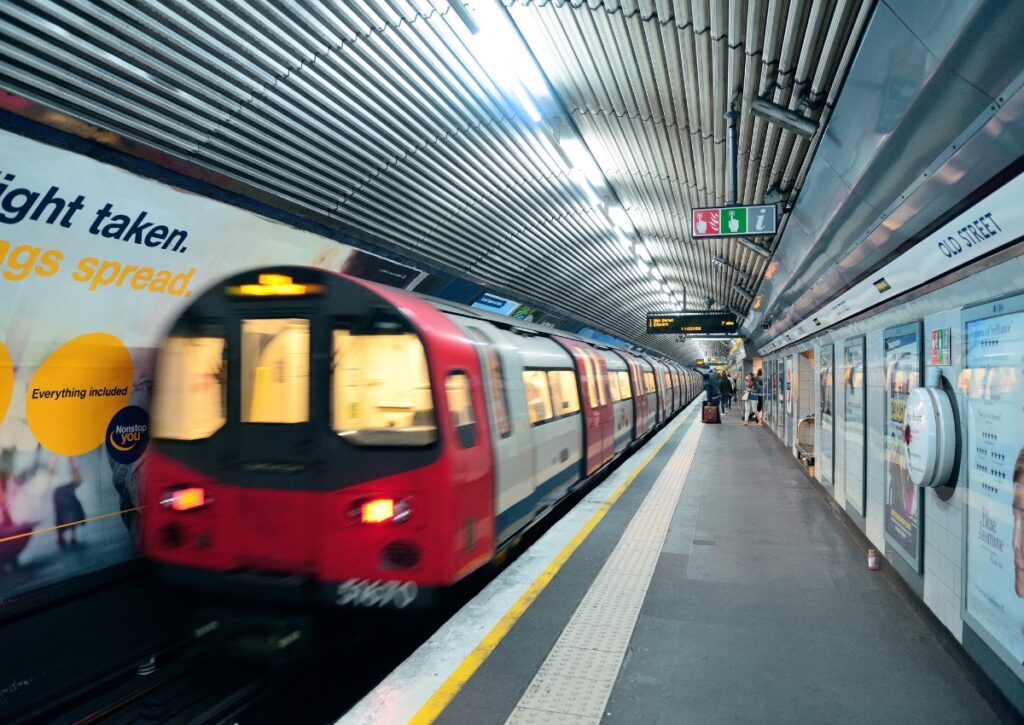
The Underground World: Metros, Subways & U-Bahns
These are the high-speed arteries of a city, perfect for covering long distances quickly without traffic.
- What they are: Underground (and sometimes overground) electric railway systems.
- Global Examples: The London Underground (The Tube), the Paris Métro, the New York City Subway, the Tokyo Metro, the Berlin U-Bahn, the Moscow Metro (which is also a living art museum).
- Pros:
- Fast: Avoids all surface traffic.
- High Frequency: Trains usually come every 2-10 minutes.
- Extensive Coverage: Often the most comprehensive network in a large city.
- Cons:
- You don’t see the city: It’s easy to lose your sense of direction underground.
- It can be hot and crowded, especially during rush hour.
- Complex Networks: Large systems like London’s can be intimidating at first.
- Ninja Tips:
- Mind the Gap! And other local warnings.
- Check the Direction: Don’t just look at the line color; look at the final destination of the train to ensure you’re going the right way (e.g., “Eastbound,” “Northbound,” or “Direction: Mairie de Montrouge”).
- Let People Off First: Stand to the side of the doors to let exiting passengers off before you try to board. This is a universal rule!
- Move Down the Carriage: Don’t clog up the area by the doors.
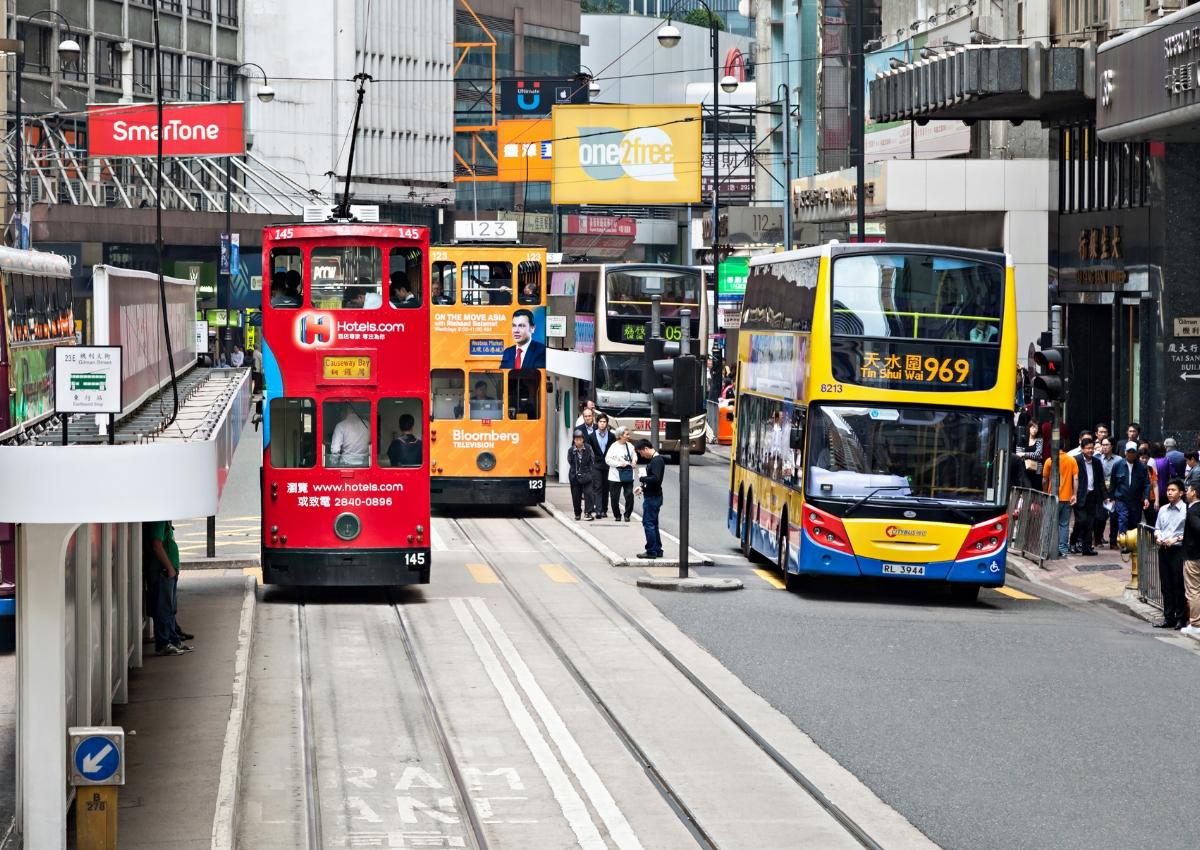
The Surface Skimmers: Trams, Trolleys & Streetcars
My personal favorite way to travel. You get the efficiency of a rail system with a front-row seat to the city.
- What they are: Electric rail vehicles that run on tracks embedded in the city streets.
- Global Examples: The historic yellow Tram 28 in Lisbon (an attraction in itself), the vast and efficient network in Melbourne, the charming trams of Prague, the sleek modern trams of Bordeaux.
- Pros:
- Great for Sightseeing: You see the city as you travel.
- Smooth Ride: Generally more comfortable than a bus.
- Environmentally Friendly.
- Cons:
- Subject to Traffic: They share the road, so they can get stuck behind cars.
- Less Flexible Routes: They can only go where the tracks are.
- Ninja Tips:
- Validate Your Ticket: In many European cities (like Prague or Budapest), you buy a ticket beforehand and must validate it in a small machine on board. Failure to do so results in a hefty fine.
- Signaling a Stop: Look for a button or cord to press when you want to get off at the next stop.
- Watch for Oncoming Trams: When getting off, always look both ways.
The Workhorses: Buses
The most ubiquitous form of public transport, reaching corners of the city that trains and trams can’t.
- What they are: The humble city bus.
- Global Examples: The iconic red double-deckers of London, the efficient bus network of Singapore, the chaotic but thrilling “chicken buses” of Central America.
- Pros:
- Most Extensive Network: They go almost everywhere.
- Cheap: Often the most affordable option.
- Great for short hops and seeing local neighborhoods.
- Cons:
- Slow: They are at the mercy of traffic.
- Can be confusing: Routes can be complex with many stops.
- Can be jerky and crowded.
- Ninja Tips:
- Boarding & Exiting: Pay attention to local customs. In London, you often board at the front and exit in the middle. In other places, it’s the opposite.
- Hailing the Bus: In many cities, you need to clearly signal for the bus to stop by raising your arm. It won’t stop automatically.
- Use your app: A good app like Google Maps or Citymapper is your best friend for bus travel, showing you exactly where the stop is and when the next bus is due.
Over the Water: Ferries & Water Taxis
In coastal cities and cities with rivers, ferries are often the most scenic and enjoyable way to travel.
- What they are: Boats providing scheduled public transport services.
- Global Examples: Hong Kong’s legendary Star Ferry, the extensive ferry network in Sydney, the Vaporetto water buses of Venice, and the Bosphorus ferries in Istanbul.
- Pros:
- Unbeatable Views: Offers a completely different perspective of the city skyline.
- Relaxing: Often a calm and pleasant way to travel.
- Direct Routes: Can be the fastest way to cross a large body of water.
- Cons:
- Weather Dependent: Services can be canceled in bad weather.
- Less Frequent: Usually run less often than trains or buses.
- Ninja Tips:
- Find the Right Pier: Large ferry terminals can have multiple piers for different routes. Check the signs carefully.
- Enjoy the Ride: Don’t just treat it as a commute. Go out on the deck, feel the breeze, and take in the view. It’s often a tour and a transport ticket rolled into one.

Phase 3: The Art of the Ticket – From Paper Stubs to Digital Wallets
This is often the most confusing part for travelers. Buying the right ticket can save you time, money, and a lot of stress.
Single vs. Day Pass vs. Tourist Card: The Great Debate
- Single-Trip Tickets:
- What they are: A one-way ticket for a single journey.
- When to use them: If you are only making one or two journeys in a day.
- The Math: If a single ticket costs €2 and a day pass costs €7, you need to make at least four journeys for the day pass to be worth it. Do a quick calculation of your plans for the day.
- Day Passes / 24-Hour Passes:
- What they are: A ticket offering unlimited travel for a full day or a 24-hour period.
- When to use them: If you plan on making three or more journeys in a day. Perfect for a heavy sightseeing day where you’ll be hopping on and off.
- Tourist Cards (e.g., The London Pass, I Amsterdam Card):
- What they are: A pass that combines unlimited public transport with free or discounted entry to dozens of museums and attractions.
- Are they worth it? This requires careful math. Make a list of all the attractions you realistically want to visit that are covered by the card. Add up their individual entrance fees. Compare that total cost (plus the cost of a separate transport pass) to the price of the tourist card. Often, unless you are a “power tourist” who plans to visit 3-4 paid attractions per day, they are not worth the money.
- Pro Tip: Sometimes a tour booked through a platform like GetYourGuide can be a better value. For example, a single guided tour of the Colosseum might be more enjoyable and cheaper than buying a city pass that includes it along with a dozen other things you won’t have time for.
The Magic of Tap-and-Go: Contactless & Smart Cards
This is the future (and present) of urban transit and the easiest way to travel.
- Contactless Credit/Debit Cards: In many cities (like London, Sydney, and New York), you can now simply tap your contactless bank card or phone (via Apple Pay/Google Pay) on the reader to pay. The system automatically calculates the cheapest fare for you and even “caps” the daily amount so you never pay more than a day pass.
- Your Secret Money-Saving Weapon: To use this feature without incurring hefty foreign transaction fees from your home bank, you absolutely need a travel-friendly card. I exclusively use Revolut or Wise. They allow you to pay in the local currency at the best possible exchange rate, meaning you can tap-and-go like a local without any surprise charges on your statement. It’s a game-changer.
- Local Smart Cards: These are reloadable plastic cards that you top up with credit.
- Examples: London’s Oyster Card, Tokyo’s Suica/Pasmo cards, Hong Kong’s Octopus Card.
- Why they’re great: They are incredibly convenient, often offer cheaper fares than single paper tickets, and in some cases (like in Japan and Hong Kong), you can even use them to pay for things at convenience stores and vending machines!
The Most Important Word in European Transit: VALIDATE!
I’m giving this its own section because it is that important. In many cities across Europe (especially Central and Eastern Europe, like Prague, Budapest, Vienna, and throughout Italy), the system operates on trust. There are often no barriers or gates. You buy a small paper ticket from a machine or kiosk. You then MUST stamp this ticket in a small validation machine (usually a yellow or orange box) located at the entrance to the platform or on board the tram/bus. This timestamps your ticket.
- The Consequence: If you are caught by a plain-clothed ticket inspector without a validated ticket, it is the same as having no ticket at all. The fines are hefty (often €50-€100 on the spot), and pleading ignorance as a tourist will not work. Always, always, always validate your ticket.
Reading the Unwritten Rules & Staying Safe: Your Guide to Transit Etiquette
How you behave on public transport is a quick way to either blend in or stick out like a sore thumb.
The Unspoken Rules of the Road
- Queuing: Observe how locals line up. In London and Tokyo, queuing is an art form. In other places, it might be more of a general scrum. When in doubt, be orderly.
- Give Up Your Seat: If you see someone who is elderly, pregnant, disabled, or with a small child, offer them your seat. This is a universal sign of decency.
- Noise Level: Keep your voice down. Don’t have loud phone conversations. Use headphones for your music, and make sure they aren’t so loud that everyone else can hear them.
- Backpacks Off! During rush hour, if you are wearing a backpack, take it off and hold it by your feet. This creates a surprising amount of extra space and stops you from accidentally hitting people with it.
- Food & Drink: This varies wildly. In Japan, it’s a major faux pas to eat or drink while walking or on a train. In Germany, it’s common to see people drinking a beer on the S-Bahn. The general rule is to avoid smelly, messy food. When in doubt, don’t.
- Personal Space: Be mindful of your space, but understand that in a crowded metro during rush hour, personal space is a luxury that ceases to exist.
Staying Safe as a Tourist
Public transport in most major cities is very safe. The biggest risk is petty crime like pickpocketing.
- Be Aware of Your Belongings: Keep your valuables in front of you. A zipped bag is better than an open tote. Don’t keep your wallet or phone in your back pocket.
- Avoid Empty Carriages: Especially late at night, choose a carriage that has other people in it.
- Know Your Stop: Pay attention to the announcements or the digital displays. Knowing when you need to get off helps you look more confident and less like a lost target.
- What if You Get Lost? Don’t panic! It happens to everyone (even me!). Just get off at the next stop, take a deep breath, look at the map on the platform, and figure out your route back. Most systems are designed to be user-friendly. Don’t be afraid to ask for help from a station attendant or a local.
- The Ultimate Safety Net: This is where having good travel insurance brings peace of mind. If your wallet is stolen with your cards and cash, you’re covered. If you have a medical issue, you’re covered. I always use VisitorsCoverage. It’s a marketplace that allows me to compare policies and find one that gives me the comprehensive coverage I need for any eventuality.
The Bottom Line: How Public Transport Impacts Your Budget
Let’s talk numbers. Using public transport isn’t just a little cheaper; it’s monumentally cheaper.
Example Daily Transit Costs (Mid-Range Tourist)
- London: A daily cap on the Tube using contactless is around £8.50. Two or three taxi/Uber rides could easily cost £40-£60.
- Berlin: A 24-hour AB zone ticket is €9.90. Two or three taxi/Bolt rides could cost €30-€50.
- Tokyo: A 24-hour subway ticket is ¥600. Two or three taxi rides could cost ¥5000-¥8000.
- Bangkok: A day pass for the BTS Skytrain is 150 THB. Two or three taxi rides (with traffic) could cost 400-600 THB.
The savings are staggering. Over a one-week trip, choosing public transport could easily save you $200-$400, which is enough for several fantastic meals, a major tour, or even another flight!
How Your Location Can Save You a Fortune
- When you’re booking your accommodation, don’t just look at the price per night. Look at where it is on a map. A cheaper hotel that is a 20-minute walk from the nearest metro station might end up costing you more in time and extra transport fares than a slightly more expensive hotel located right next to a major hub.
- Pro Tip: This is where I use Booking.com like a pro. After I search for a city, I immediately switch to the map view. I then cross-reference this with a public transport map of the city. I look for highly-rated hotels that are clustered within a 2-5 minute walk of a key metro or tram stop. This strategic booking can save you hours of travel time and a significant amount of money over your trip.
The Alternative: When to Rent a Car
Public transport is king within cities. But for exploring the countryside, remote national parks, or hopping between small towns, it can be slow or nonexistent. This is when you switch superpowers.
- When to Rent: For exploring Tuscany’s hill towns, driving the Ring Road in Iceland, or a road trip through America’s National Parks.
- Your Go-To for Four Wheels: When I need to rent a car, I use GetRentacar. It’s a marketplace that often has better deals from local suppliers than the big international chains, giving you more options and saving you money for the open road.
Final Word: The Journey is the Reward
Mastering public transportation is more than just a travel hack. It’s a philosophy. It’s a declaration that you want to experience a place as it truly is, not just as it’s presented in a glossy brochure. It’s about embracing the beautiful, unpredictable, and often hilarious reality of daily life.
You will get on the wrong bus. You will miss your stop. You will stand confused in front of a ticket machine with a line of impatient locals behind you. And it will be okay. Every mistake is a lesson, and every challenge overcome is a victory. The confidence you gain from successfully navigating a new city on its own terms is a souvenir that will last a lifetime. It’s a skill that will unlock not just your next destination, but every destination after that.
So, I urge you, on your next trip, take the plunge. Buy the MetroCard. Hop on that strange-looking tram. Ride the bus to the end of the line. You won’t just be traveling from A to B; you’ll be traveling deeper into the heart of the world.
Your Global Transit Pass Awaits! Let’s Keep the Adventure Rolling…
And there we have it – a veritable encyclopedia on becoming a world-class transit ninja. I’ve poured every hard-won lesson, every digital hack, and every ounce of my passion for authentic travel into this guide. My greatest hope is that it has demystified the process, armed you with confidence, and made you genuinely excited to tackle any public transport system the world throws at you.
But this isn’t the end of our journey. A Tiny Traveler is more than just a blog; it’s a living, breathing community of savvy, curious explorers who believe in the power of smart, sustainable, and soulful travel. And I would be absolutely honored for you to become a permanent member of our global crew.
Here is your official invitation to join our adventure:
- Become a Blog Insider: Subscribe to My Newsletter! This is your all-access pass to the very best of A Tiny Traveler. By subscribing, you’ll get my brand-new, ridiculously detailed travel guides and skill-based posts like this one delivered directly to your inbox the moment they’re published. You’ll also get exclusive travel hacks, personal stories from my wanderings, and hand-picked deals that I only share with my subscriber family. No spam, ever. Just pure, unadulterated travel inspiration. Find that subscription box, hit subscribe, and let’s make it official!
- Let’s Get Social & Share the Transit Love! If this guide has empowered you to ditch the taxi and embrace the metro, the best way you can say thank you is to share it! Pin it on Pinterest, send it to a friend who is nervous about navigating a new city, and let’s connect on my social channels. Let’s build a community of confident, world-savvy travelers!
- Follow me on Instagram (a.tinytraveler): For daily doses of wanderlust, stunning travel photography, behind-the-scenes glimpses of my trips, and quick tips that will inspire your next getaway. See the world through my eyes!
- Like my Facebook Page (A Tiny Traveler): Join our vibrant community of fellow travel lovers! This is a great place to ask questions, share your own travel experiences, and connect with me and other readers.
- Follow me on Pinterest (A Tiny Traveler): My Pinterest is your ultimate travel vision board! It’s where I share stunning photography, quick visual guides, and, most importantly, links to all my in-depth blog posts.
Your support—your subscriptions, your shares, your comments—is the lifeblood of this blog. It’s what allows me to keep exploring and creating these massive, heartfelt guides to help you embark on your own unforgettable journeys.
So go forth. Be bold. Ride the rails. And discover the world, one metro stop at a time.
Safe travels!
Frank


