Look, I’m going to level with you right from the start. Bangkok in a single day is like trying to summarize a Tolstoy novel in a tweet. It’s absurd, slightly masochistic, and yet—somehow—it’s exactly what thousands of travelers do every year, whether they’re on a quick layover, squeezing in a city break, or just wildly optimistic about their ability to function in 95-degree heat with 80% humidity.
I first attempted this feat on what I thought would be a “relaxed” stopover between Chiang Mai and the islands. Spoiler alert: there was nothing relaxed about it. By hour three, I’d already consumed enough street food to feed a small family, gotten lost in a temple complex where no one spoke English, and somehow ended up in a tuk-tuk negotiation that felt more like a hostage situation. And you know what? It was absolutely perfect.
Here’s the thing about Bangkok that no glossy travel magazine will tell you: the city doesn’t care about your itinerary. While you’re busy checking off must-see spots like some kind of cultural accountant, Bangkok is throwing curveballs—a sudden rainstorm that floods the street in minutes, a parade you didn’t know was happening, a food stall that smells so good you abandon all your carefully timed plans. The secret to doing Bangkok in one day isn’t about seeing everything. It’s about surrendering to the beautiful, sweaty, chaotic mess of it all.
Now, about the money situation. You can do Bangkok on a shoestring or blow through cash like a lottery winner—the city genuinely doesn’t judge. A backpacker budget of $30-50 USD per day will cover street food meals ($1-3 each), public transport ($0.50-1 per ride), and temple entrance fees ($3-7). Mid-range travelers should expect $80-150 daily for nicer meals ($8-20), air-conditioned rides, and maybe a rooftop bar that won’t make your bank account weep. Luxury seekers? Sky’s the limit, but $250+ will get you Michelin-starred street food, private tours, and hotel rooms where the shower has better water pressure than your apartment back home. I’ll break down specific costs as we go, but honestly, the biggest expense might be the extra suitcase you’ll need for all the stuff you’ll buy.
Welcome to the Organized Chaos
Let me paint you a picture of Bangkok’s geography, because understanding this city’s layout is like understanding that one friend who has three different personalities depending on the time of day.
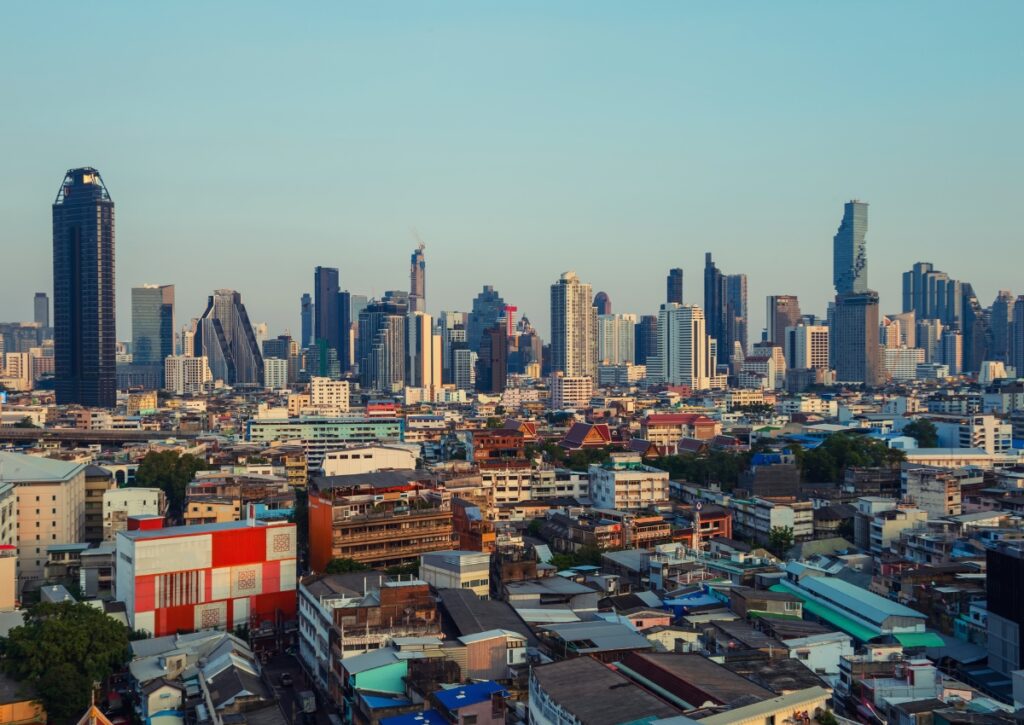
The city sprawls across both sides of the Chao Phraya River like an ambitious teenager who keeps adding to their plate at a buffet. On one side, you’ve got the old royal district—Rattanakosin—where temples glitter in the sun, and tourists move in slow, heat-dazed herds. Cross the river, and you’re in Thonburi, which somehow feels like a different city entirely. Then there’s the modern core around Sukhumvit and Silom, all glass towers and air conditioning, where expats sip overpriced lattes and pretend they’re in Singapore.
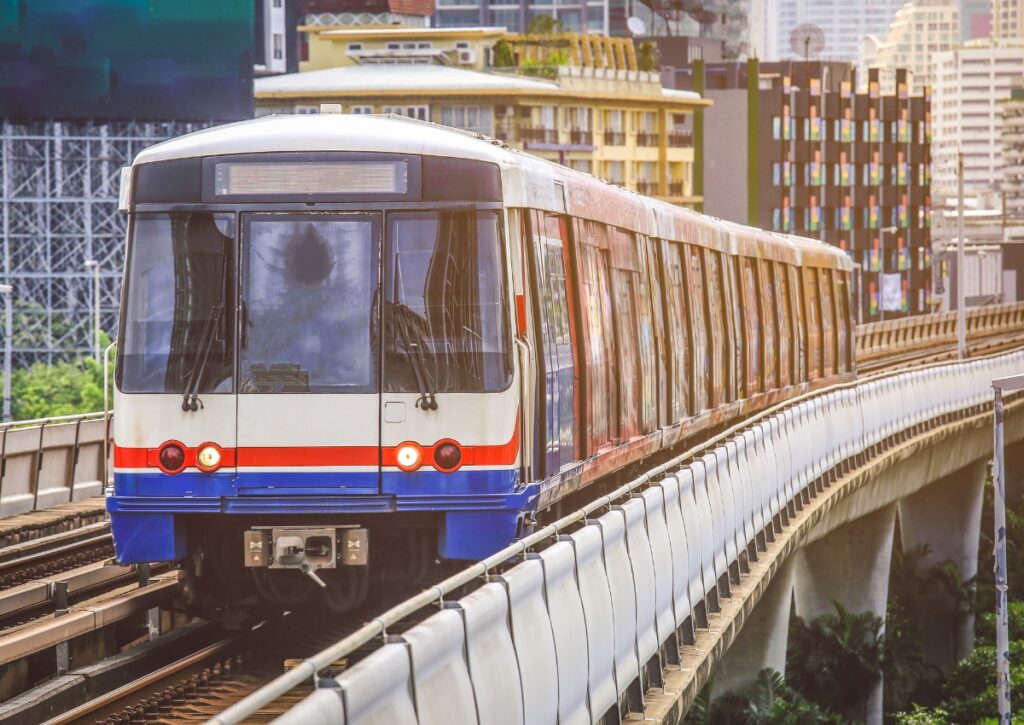
For your one-day mission, you’ll want to base yourself strategically. If you’ve got accommodation flexibility, anywhere near the BTS Skytrain or MRT subway lines is gold. The Saladaeng/Silom area gives you access to both old Bangkok and new. Ratchathewi, near the BTS, puts you close to shopping and transport hubs. But honestly? If you’re just passing through, grab any decent hotel near public transport and call it a win.
Speaking of which, let me save you from my mistakes. Book your accommodation through Booking.com because their map function actually shows you where the nearest train station is, which turns out to be pretty crucial when you’re melting into the pavement at 2 PM. I learned this the hard way after booking a “centrally located” guesthouse that was, technically, central to absolutely nothing useful.
And for the love of all that is holy, don’t rely solely on your domestic debit card. Get yourself a Revolut or Wise card before you arrive. The exchange rates are way better than those airport booths that are basically just legalized robbery, and you won’t get hit with those sneaky foreign transaction fees that make you question all your life choices.
The Night Before: Essential Prep (That I Definitely Didn’t Do)
Right, so you’re arriving the evening before your big Bangkok day. Here’s what smart travelers do—versus what I actually did.
Smart travelers: Download the Grab app (Southeast Asia’s Uber), get a local SIM card at the airport, maybe buy an MRT/BTS stored-value card, have a sensible dinner, hydrate, sleep early.
What I did: Landed at 10 PM, took a taxi with a driver who “forgot” how to use the meter, wandered around Khao San Road like a moth to a flame, ate mystery meat on a stick from four different vendors, drank a bucket of something that tasted like cough syrup mixed with Red Bull, woke up the next morning feeling like I’d been hit by a tuk-tuk.
Learn from my suffering. If you’re serious about maximizing your day, you need to start it in a functional state. That means managing your arrival properly.
Airport to City: Suvarnabhumi Airport (the main international one) is about 30 kilometers from the center. The Airport Rail Link is your friend—it’s 45 baht (about $1.30), takes 30 minutes to Phaya Thai station, and connects to the BTS Skytrain. Easy. Taxis can run 300-500 baht ($8-14) plus tolls plus the question of whether your driver will use the meter or try to negotiate a flat rate that’s mysteriously always higher.
If you want to skip the whole negotiation dance entirely, book a Welcome Pickups transfer. Yes, it costs more ($25-35), but someone will be holding a sign with your name, the car will be clean and air-conditioned, and you won’t have to explain to a driver who’s using a GPS from 2003 where your hotel actually is. On a one-day mission, preserving your sanity is worth the extra cash.
For your phone situation, grab a Thailand tourist SIM at the airport (300-500 baht for 7-15 days of data) or, better yet, get a Yesim eSIM before you even leave home. Download it, activate it on arrival, boom—you’ve got data without the airport kiosk queue. Trust me, you’ll need Google Maps constantly because Bangkok street signs seem to exist purely for decorative purposes.
Starting at the Grand Palace (Before the Hordes)
Alright, here’s where we get real about timing. The Grand Palace opens at 8:30 AM. You want to arrive at 8:15 AM. Not 9:00 AM. Not “eh, maybe 8:45 AM.” Because by 10:00 AM, this place transforms from cultural treasure to human cattle market, and you’ll spend more time trying not to step on strangers than actually appreciating the architecture.
I dragged myself out of bed at 6:30 AM (still slightly regretting those Khao San Road decisions), grabbed a coffee and coconut pancakes from a street vendor (40 baht total, roughly $1.10), and took the MRT to Sanam Chai station. This station is newer and actually designed for tourists—there are signs, information, and you exit basically at the palace entrance. Game changer compared to the old method of taking a ferry and then wandering around asking directions from people who don’t speak English.
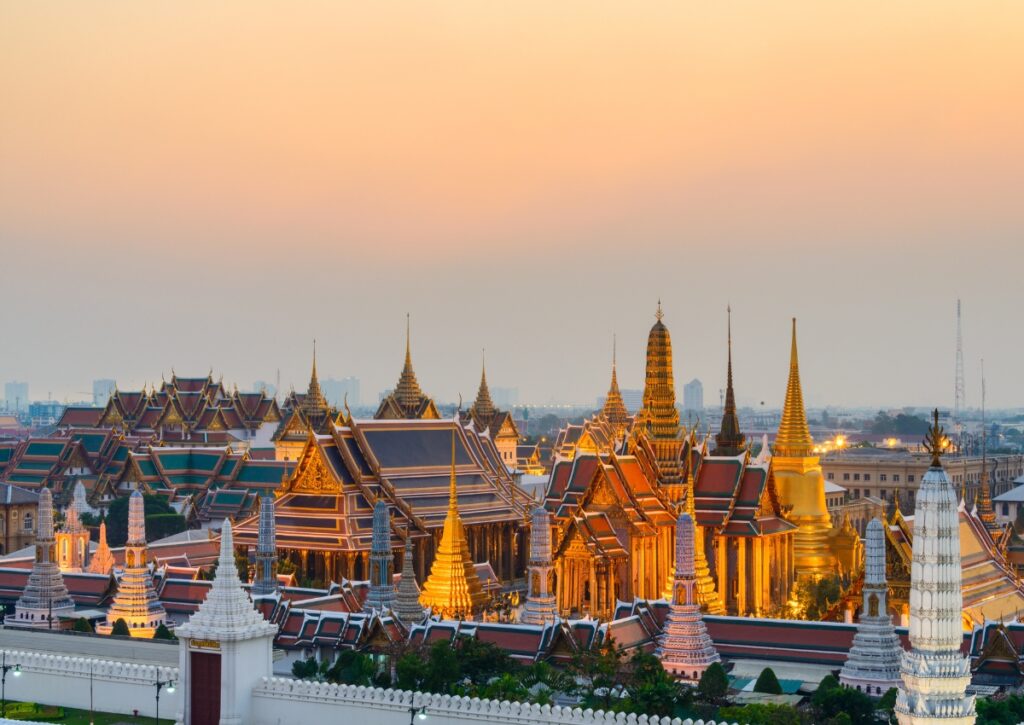
Entry fee: 500 baht (about $14). Yes, it’s steep by Thai standards. Yes, it’s still cheaper than most European cathedrals. And yes, you absolutely must wear clothes that cover your shoulders and knees. The dress code here is stricter than your grandmother’s Sunday dinner. They have rental clothes if you show up in shorts and a tank top, but they’re basically floral parachutes that scream “I didn’t read the guidebook.” Just wear light, loose pants and a breathable shirt. You’re welcome.
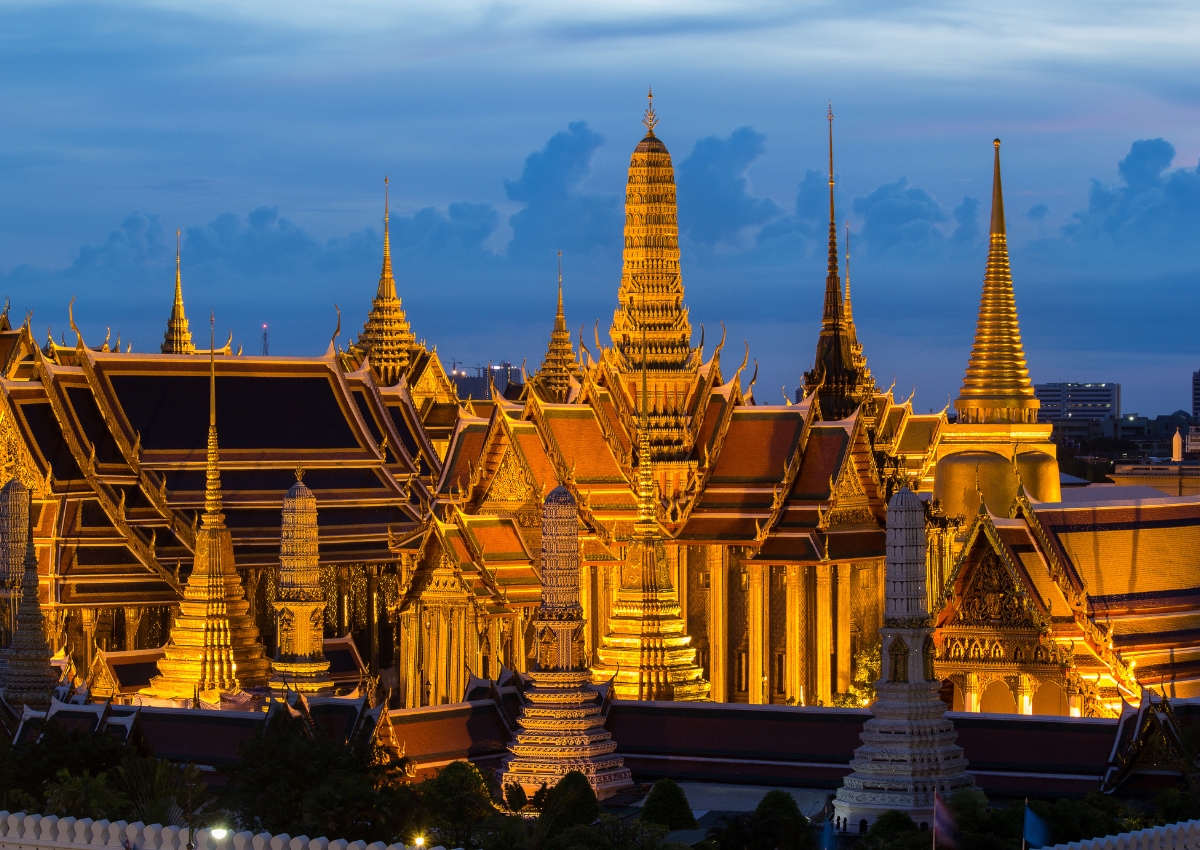
Now, the Grand Palace isn’t subtle. It’s not going for understated elegance. This is Thailand’s architectural equivalent of showing up to a party in a sequined suit riding an elephant. The main temple, Wat Phra Kaew (Temple of the Emerald Buddha), houses a small jade Buddha statue that’s apparently carved from a single piece of emerald (though it’s actually jade, because history is full of naming confusion). The statue itself is only about 66 centimeters tall, but it sits on a golden throne under a nine-tiered umbrella, and the king changes its robes three times a year according to the season.
What they don’t tell you in guidebooks: the palace grounds are enormous, filled with buildings you can’t enter, and there are about seventeen different kinds of demons and gods guarding various gates. I spent a good fifteen minutes trying to figure out if I was allowed to walk past a particularly fierce-looking guardian statue before noticing a group of tourists casually strolling by. No one stops you. Just be respectful—shoes off before entering temple buildings, no pointing your feet at Buddha images, and for god’s sake, don’t turn your back to Buddha for a selfie. I saw someone get sternly lectured by a guard for this, and it was deeply uncomfortable for everyone involved.
Give yourself 90 minutes to 2 hours here. That’s enough to see the main attractions without that glazed-over museum fatigue where everything starts to blend together.
Temple Hopping: Wat Pho and the Reclining Buddha
Right outside the Grand Palace (literally, you can walk), you’ll find Wat Pho. Entry is 200 baht (about $5.50), and this is where you’ll meet the Reclining Buddha—a 46-meter-long, 15-meter-high golden statue that’s basically impossible to photograph in one frame unless you’ve got a fisheye lens or the ability to levitate.
Here’s what struck me about this place: the Buddha’s feet. They’re decorated with 108 auspicious symbols inlaid with mother-of-pearl, and they’re surprisingly detailed for something that’s meant to represent Buddha entering Nirvana. You’ll see tourists trying to capture the whole statue, getting frustrated, eventually giving up, and just taking a photo of the feet. I respect that. Sometimes you’ve got to know when to adjust your expectations.
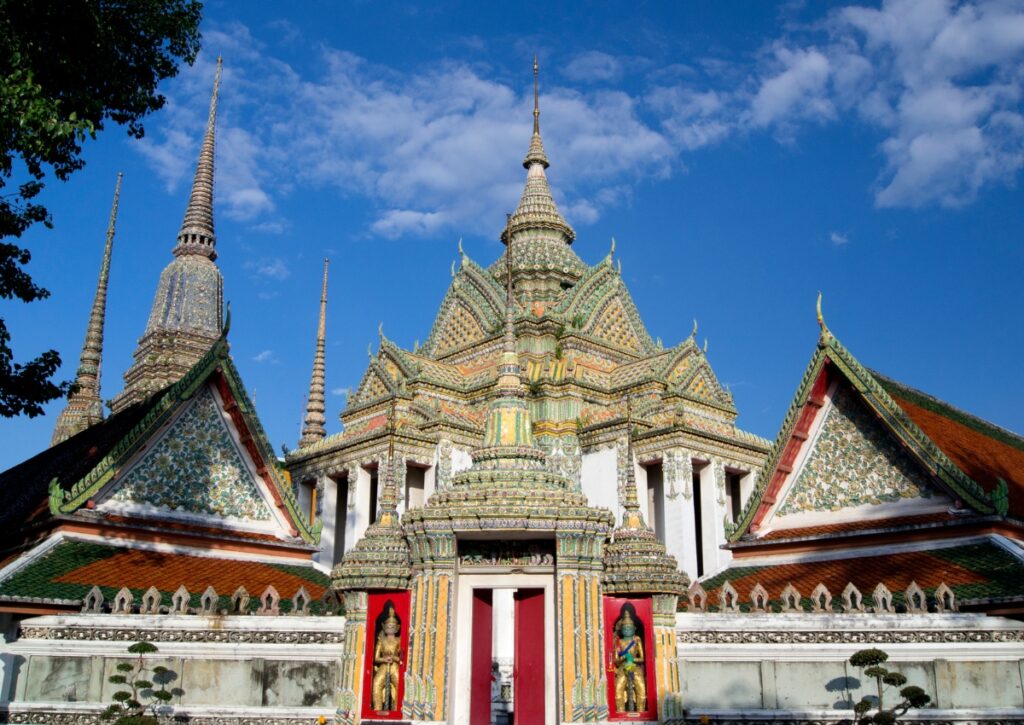
But here’s the real secret about Wat Pho—it’s not just a temple. It’s the birthplace of traditional Thai massage, and the temple complex has a massage school. For 260-420 baht ($7-12), you can get a legitimate Thai massage from students who’ve trained here. Is it the absolute best massage you’ll ever have? Maybe not. But after walking around temples in the heat, having someone work out the knots in your calves while you lie on a mat in an open-air pavilion surrounded by 400-year-old temple grounds? That’s pretty damn special.
I’ll be honest—I skipped the massage on my first visit because I was on a schedule. This was a mistake. When you’re trying to do Bangkok in a day, you think every minute counts. But taking 30 minutes to let someone fold you into a pretzel while the city buzzes beyond the temple walls? That’s not wasting time. That’s actually experiencing something beyond just checking boxes.
River Life: Crossing to Wat Arun
From Wat Pho, walk to the nearby pier—Tha Tien—and hop on a ferry to cross the river. The fare is 4 baht. Yes, four baht. About eleven cents. This might be the best value in all of travel.
The ferry itself is basically a wooden boat that looks like it was built during the Cold War and hasn’t been updated since. It’s packed with locals commuting to work, tourists clutching their cameras like life preservers, and the occasional monk in saffron robes. The crossing takes maybe three minutes, and on the other side is Wat Arun, the Temple of Dawn.
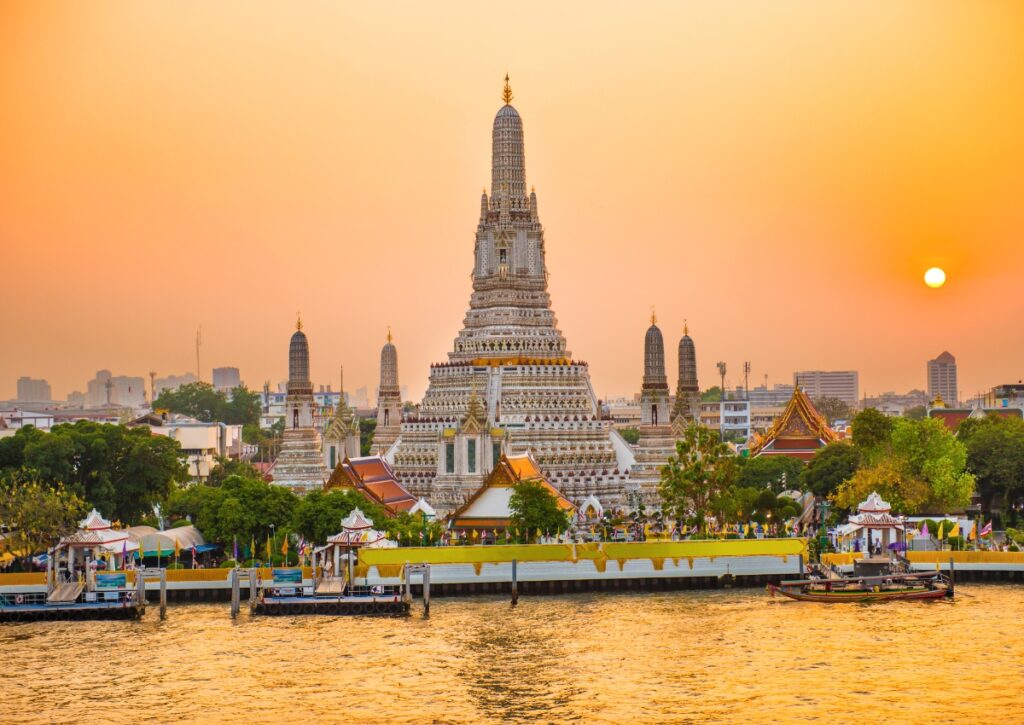
Entry here is 100 baht ($2.80). The temple’s central tower (prang) is covered in colorful porcelain and seashells, and it’s steep. I mean, genuinely, comically steep. The stairs up are at about a 70-degree angle, and there’s a rope handrail that you will absolutely need on the way down unless you want to descend on your butt like a toddler.
I made it about halfway up before experiencing that special kind of thigh burn that makes you question your life choices. There was a German tourist next to me, equally breathless, and we just sort of nodded at each other in mutual suffering. But the view from the top—looking back across the river at the Grand Palace, watching the long-tail boats carve white trails in the brown water—that’s worth the quad workout.
Pro tip: wear shoes with decent grip. I saw someone in flip-flops basically mountaineering up these steps, and it looked like a lawsuit waiting to happen.
Late Morning Strategy: Getting to Modern Bangkok
By now, it’s probably around 11:00 AM or noon. You’ve seen major temples, you’re hot, you’re slightly temple-ed out, and you need air conditioning like a desert nomad needs water.
Here’s where you make a choice. You can either:
Option A: Take a long-tail boat tour up the canals (the khlongs) through old Bangkok neighborhoods. This costs around 100-200 baht per person if you join a shared boat, or you can charter a private one for 1,000-1,500 baht (which sounds extravagant until you split it with three other people). The canals are fascinating—houses on stilts, markets on boats, monitor lizards swimming past like they own the place. It’s hot, you’ll get splashed with questionable water, but it’s authentic Bangkok.
Option B: Retreat to modern Bangkok. Take the ferry back, grab a taxi, or use the Grab app to head to Siam Paragon or MBK Center. Yes, they’re shopping malls. But they’re also air-conditioned sanctuaries with food courts where you can eat pad thai while your core body temperature returns to something resembling normal.
I chose Option B on my first attempt because by noon, I was approximately 60% sweat and needed to reset. No shame in this. Bangkok’s heat isn’t something you build up tolerance to—you just learn to manage it better.
Lunch: The Food Court Revelation
Here’s something nobody tells you about Thai mall food courts: they’re incredible. Not “pretty good for a food court,” incredible. Actually, genuinely, surprisingly excellent.
At the MBK Center, the food court is on the 6th floor. You buy a prepaid card, load it with cash, and then you’re free to wander between stalls serving everything from boat noodles to mango sticky rice to Japanese curry. Dishes run 50-120 baht ($1.40-3.30), and the quality is what you’d pay double for in a standalone restaurant.
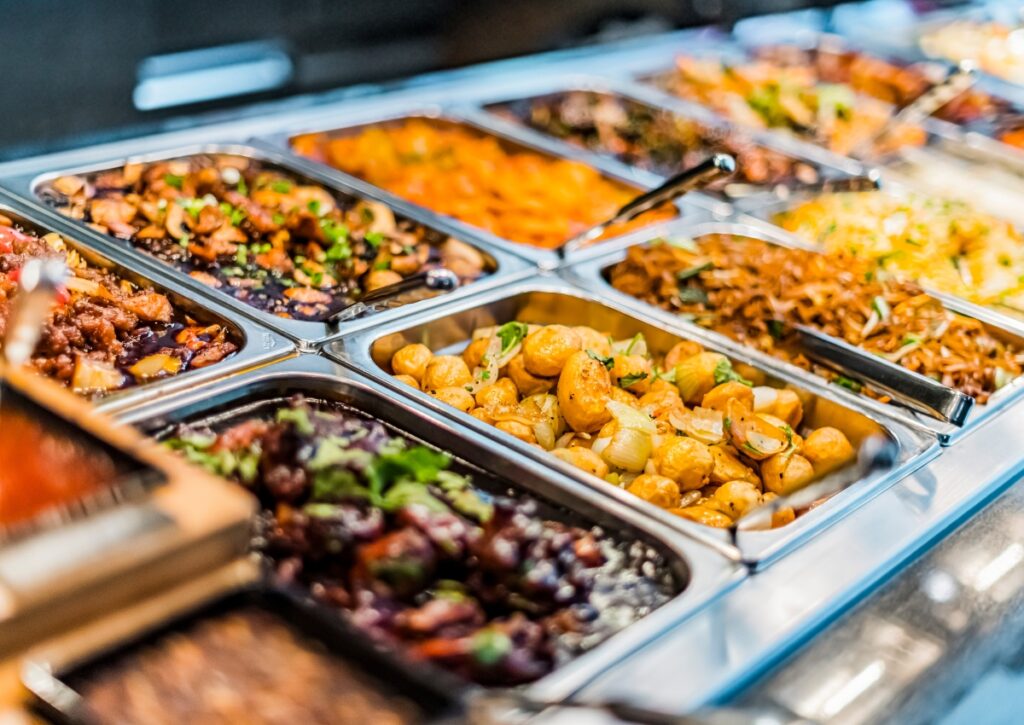
I got a plate of khao moo daeng (red pork over rice) with a crispy pork belly side, plus a Thai iced tea, for a total of 95 baht (about $2.65). The pork had that perfect combination of tender and caramelized, the rice had absorbed all the sweet-savory sauce, and I may have made sounds that were inappropriate for a public food court.
The beauty of the food court strategy is that it gives you options. Traveling solo and can’t decide what to eat? Try three different dishes. Traveling with someone who has different tastes? You can each get what you want. Plus, there are clean bathrooms, which, after a morning of temples where toilet paper is a suggestion rather than a guarantee, feels like luxury.
And look, I know some travel purists are going to say I’m missing the “authentic” experience by eating in a mall. To which I say: this food court is packed with Thai office workers on their lunch break. If it’s good enough for locals who could eat literally anywhere, it’s authentic enough for me.
Afternoon Decision Point: Markets or Museums
You’re fed, you’re cooled down, and you’ve got an afternoon to fill before the evening action starts. This is where your Bangkok experience can go in wildly different directions depending on your interests.
The Market Path: Chatuchak Weekend Market
If it’s Friday evening, Saturday, or Sunday, you need to hit Chatuchak Weekend Market. This place is bananas. Over 15,000 stalls spread across 35 acres, selling everything from vintage Levis to puppies to antique typewriters to that weird ceramic frog you never knew you needed but now can’t live without.
Getting there: take the BTS to Mo Chit station or the MRT to Chatuchak Park station. Entry is free, and you’ll immediately be swallowed into a maze of narrow alleys where you lose all sense of direction within five minutes.
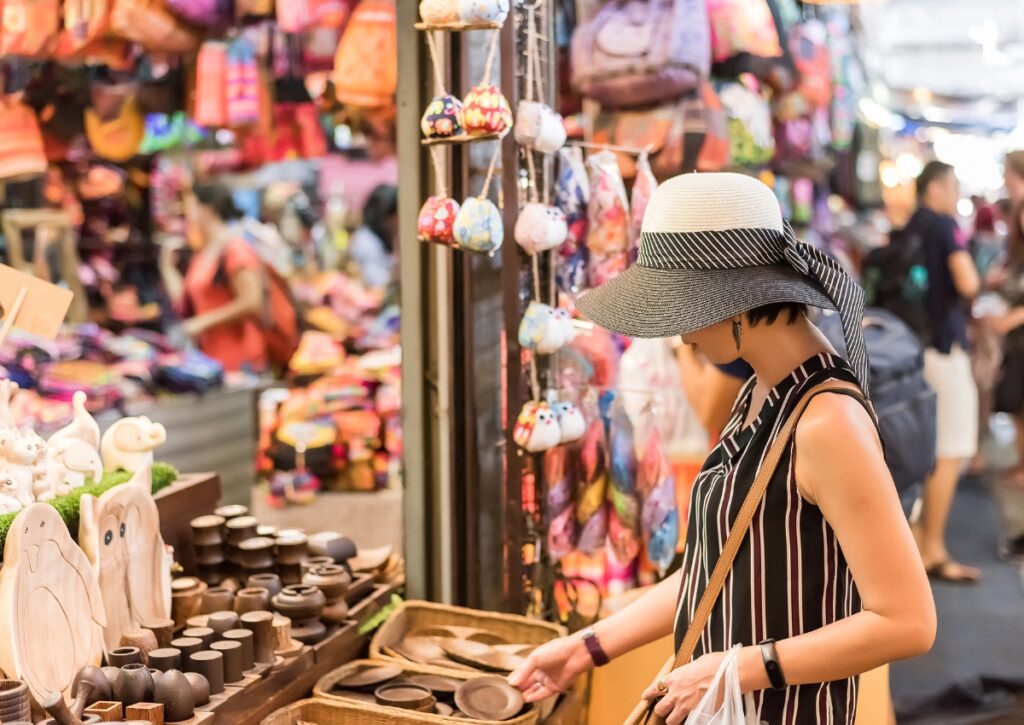
The market is divided into 27 sections, theoretically organized by product type. In reality, it’s chaos theory in retail form. You’ll be looking for ceramics and somehow end up in a section selling fighting fish. The heat is oppressive—imagine being inside someone’s mouth during a hot yoga session. There are fans everywhere, but they mostly just move hot air around.
But here’s why you do it anyway: the stuff here is good, the prices are reasonable, and the experience is uniquely Bangkok. I found a vintage Thai boxing poster for 300 baht ($8.40) that would’ve cost ten times that in a Brooklyn flea market. Saw hand-carved wooden bowls, silk scarves, essential oils, street art, plants, more plants, possibly too many plants.
Budget: Bring 1,000-3,000 baht ($28-84) if you want to actually buy stuff. Credit cards aren’t widely accepted. There are ATMs, but they’re always surrounded by sweaty tourists who just discovered they brought cash that ran out faster than expected.
Survival tips:
- Wear comfortable shoes (you’ll walk miles without realizing it)
- Bring a small backpack for purchases
- Download a market map on your phone (it won’t help much, but you’ll feel more prepared)
- Accept that you will get lost
- Duck into the air-conditioned sections (yes, some parts have AC) when you need a break
If you’re looking for experiences rather than just shopping, book a GetYourGuide walking tour of the market. The guides know which stalls have the best vintage clothing, where to find the authentic Thai snacks, and most importantly, where the clean bathrooms are. Worth every baht.
The Museum Path: Jim Thompson House
If markets aren’t your thing—or it’s a weekday—head to the Jim Thompson House Museum instead. This is the preserved home of an American silk merchant who mysteriously disappeared in Malaysia in 1967 and was never found. The house itself is actually six traditional Thai structures that he collected and reassembled on this property, filled with his collection of Southeast Asian art.
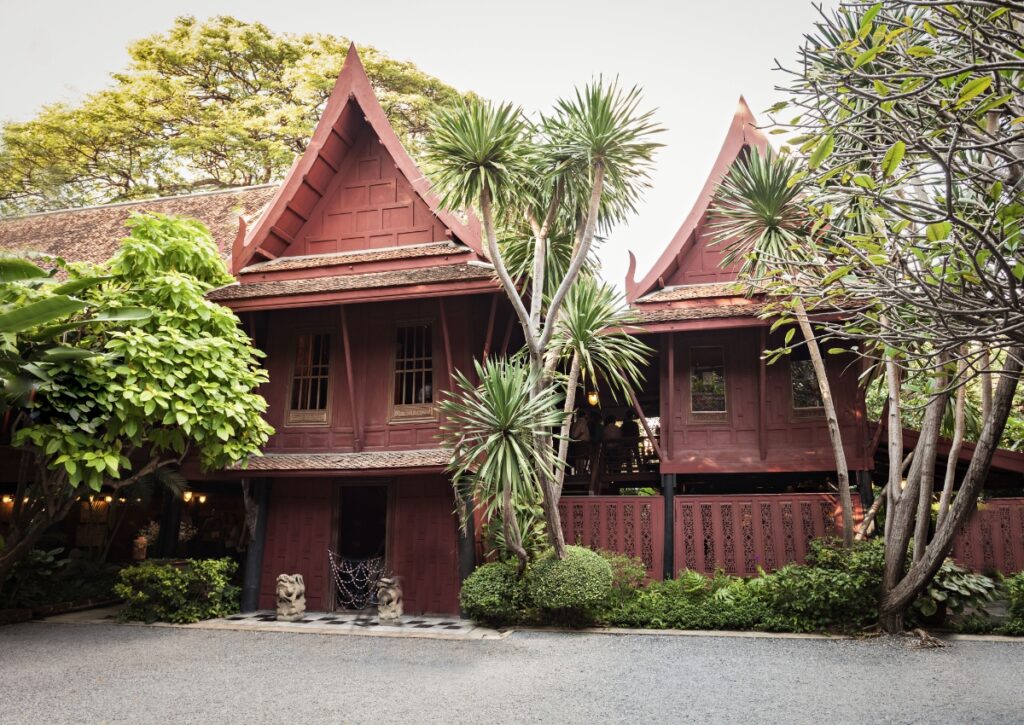
Entry is 200 baht ($5.60), and you must take the guided tour—you can’t wander freely. Tours run every 20-30 minutes in various languages. The guides are… enthusiastic. Very enthusiastic. They’ll tell you about every piece of furniture, every statue, every architectural detail, whether you asked or not.
But honestly? It’s fascinating. Jim Thompson had taste. The way he positioned the houses around a garden, the way light filters through the wooden walls, the specific pieces of art he chose—it all tells a story about someone who genuinely loved Thai culture at a time when most Western expats were just here for the cheap labor.
The gift shop is dangerous. I went in planning to browse, emerged with a silk tie (950 baht, $27) and some excuse about needing a “nice tie for special occasions” despite not having worn a tie in three years. No regrets.
Getting there: BTS to National Stadium station, then a 10-minute walk. It’s well signposted, tucked away in a surprisingly quiet neighborhood considering you’re still in central Bangkok.
Late Afternoon: Golden Hour at a Rooftop Bar
Right, so you’ve done culture, you’ve done shopping or museums, and now it’s around 5:00-6:00 PM. Golden hour in Bangkok is special. The light goes soft and orange, the heat finally breaks, and the city starts transitioning from day chaos to night chaos.
This is rooftop bar time.
I know what you’re thinking: “But rooftop bars are expensive!” Yes. And? You’re doing Bangkok in one day. You don’t get to claim budget concerns while simultaneously expecting to have a comprehensive Bangkok experience. Pick your splurges.
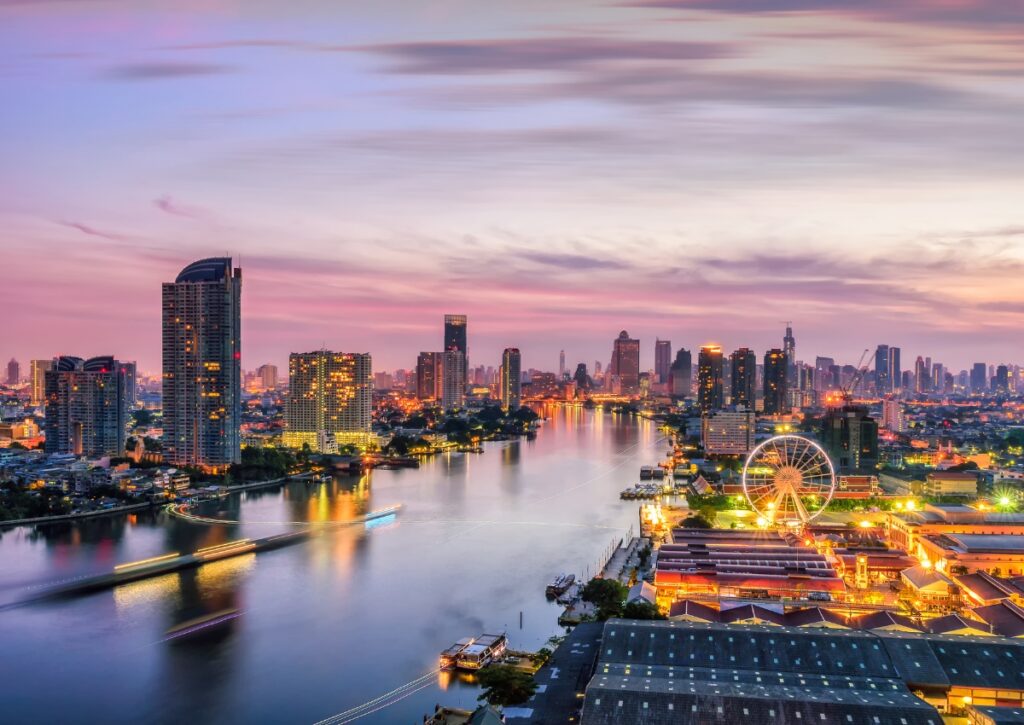
Sky Bar at the Lebua State Tower is probably the most famous—you’ve seen it in The Hangover Part II, on Instagram, in approximately forty thousand travel blogs. It’s on the 63rd floor, completely open-air, and has a dress code (closed-toe shoes for men, no shorts or sleeveless shirts). Cocktails run 500-650 baht ($14-18), which is roughly what you’d pay at any decent bar in a Western city, except here you’re standing 250 meters above Bangkok with a 360-degree view while the sun sets over the Chao Phraya River.
I went with a Thai whiskey sour—seemed appropriate—and stationed myself at the railing. To my left, a couple was clearly on a first date, both overdressed and nervous. To my right, a group of Australian guys who’d apparently been drinking since lunch. Below, the city was a sprawl of lights starting to flicker on, rivers of red taillights, the Chao Phraya snaking through it all like a dark ribbon.
Look, I’m not going to lie and say it’s some profound spiritual moment. But standing there, slightly buzzed, watching Bangkok transform from day to night—it’s pretty damn good.
Alternative rooftop bars if Sky Bar is too scene-y for you:
- Octave Rooftop Bar (Marriott Hotel Sukhumvit): More relaxed, better food menu, less famous, 350-500 baht drinks
- Above Eleven (Fraser Suites Sukhumvit): Peruvian-Japanese fusion, younger crowd, good music, 400-600 baht drinks
Pro tip: arrive around 5:30-6:00 PM. You’ll catch the sunset, but you’ll also get a seat before the evening rush. These places get packed by 7:00 PM.
Dinner: The Street Food Finale
Alright, you’ve been good all day. You’ve paid entrance fees, bought silk ties you don’t need, and dropped money on overpriced cocktails. Now it’s time for Bangkok to reward you.
Take the BTS to Ratchathewi station and walk to Soi Nana (also called Soi 11 off Phetchaburi Road). This isn’t a tourist street food market with inflated prices and mediocre food. This is where locals eat.
The scene: plastic stools and tables spilling onto the sidewalk, fluorescent lights, steam rising from multiple woks, the smell of garlic and chili and charcoal smoke. It’s about 8:00 PM, and the street is packed. Office workers still in their business casual, students, families, and the occasional lost tourist who stumbled off the main road.
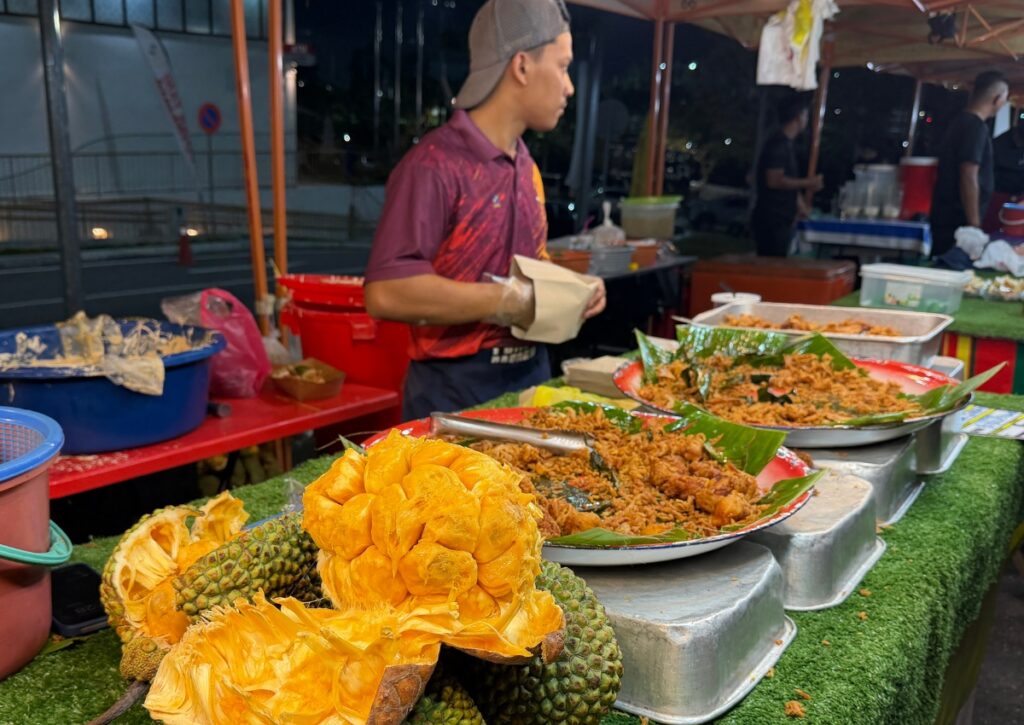
I grabbed a spot at a stall run by a woman who looked like she’d been cooking since Bangkok was still a swamp. The menu was entirely in Thai. I pointed at what the person next to me was eating—always a reliable strategy—and held up two fingers.
What arrived: pad krapow moo (holy basil pork) with a fried egg on top, rice, and enough chilies to make my eyes water. Next to it was som tam (green papaya salad) that was sweet, sour, salty, and spicy all at once. Total cost: 80 baht. About $2.25.
This is the thing about Thai street food that makes it difficult to eat anywhere else afterward—the balance. Everything has layers. The pork had garlic, fish sauce, soy sauce, oyster sauce, and the distinctive anise-like flavor of holy basil. The som tam had palm sugar sweetness cutting through lime acidity and the funky depth of fermented fish sauce, with peanuts adding crunch and dried shrimp adding umami.
I ate with my right hand (fork and spoon, Thai style—fork in the left to push food onto the spoon in the right), and I was absolutely destroyed by this meal. Not because it was fancy or Instagram-worthy or innovative. Because it was exactly, perfectly what it was supposed to be.
After dinner, walk the street. Try moo ping (grilled pork skewers, 10 baht each). Get mango sticky rice if it’s mango season—60-80 baht for a portion that could feed two people. Try khanom buang (crispy Thai crepes filled with coconut cream, 30 baht). Grab a bag of fresh-cut fruit—30-50 baht.
You’ll spend maybe 200-300 baht total ($5.60-8.40) and eat better than you would at most restaurants charging ten times that.
For insurance purposes—because let’s be real, street food adventures can occasionally go sideways—make sure you’ve sorted travel insurance before you even get on the plane. VisitorsCoverage offers plans specifically for Southeast Asia that cover medical emergencies, food poisoning, and that moment when you realize the “chicken” might not have been chicken. It’s boring to think about insurance, but it’s even more boring to spend your one day in Bangkok in a hospital because you tried to be a hero with street food and lost.
Evening Finale: Night Market or Nightlife
You’ve got maybe two hours left before you need to either crash at your hotel or head to the airport for a late flight. Final choice time.
Option A: Talad Rot Fai Ratchada (Train Night Market)
If you want more market action, head to Talad Rot Fai Ratchada. It’s open Thursday through Sunday, 5:00 PM to 1:00 AM. Take the MRT to Thailand Cultural Centre station, and you’ll see it.
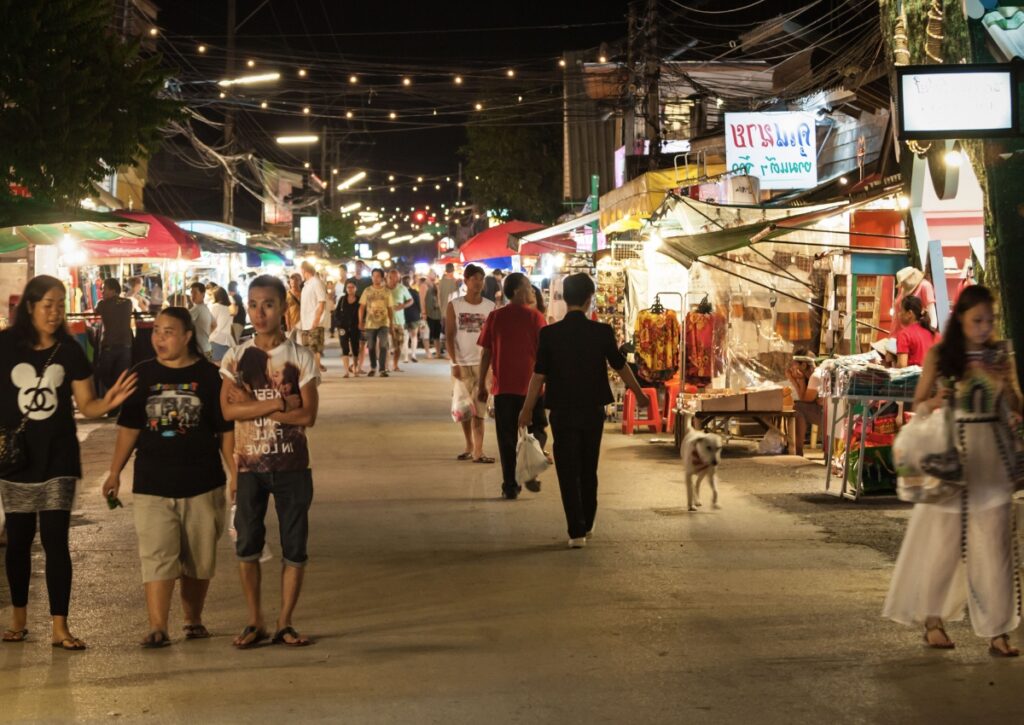
This market is younger and hipper than Chatuchak—more vintage clothing, more street art, more bars mixed in with the food stalls. The big attraction is the view from the parking garage of the Esplanade shopping mall next door. From the 4th or 5th floor, you can look down at the market’s colorful tent roofs all lit up against the night. It’s peak Instagram bait, and also genuinely pretty.
The food section here is solid. I found a stall doing tom yum noodle soup that had actual depth of flavor—not just chili heat, but lemongrass, galangal, lime leaf, that complex sour-spicy-fragrant thing that makes tom yum addictive. 60 baht ($1.70) for a bowl that I could barely finish.
Option B: Khao San Road (Embrace the Tourist Trap)
Look, Khao San Road is a cliché. It’s where backpackers go to drink buckets of whiskey-Red Bull, get regrettable tattoos, buy fake IDs, and pretend they’re having an authentic cultural experience.
But also? It’s kind of fun if you embrace it for what it is.
The street is a sensory overload—neon signs, thumping bass from competing bars, the smell of pad thai and cannabis and spilled beer, touts trying to sell you suits and scorpions on sticks, and who knows what else. It’s about as authentically Thai as a Taco Bell is authentically Mexican, but it’s an experience.
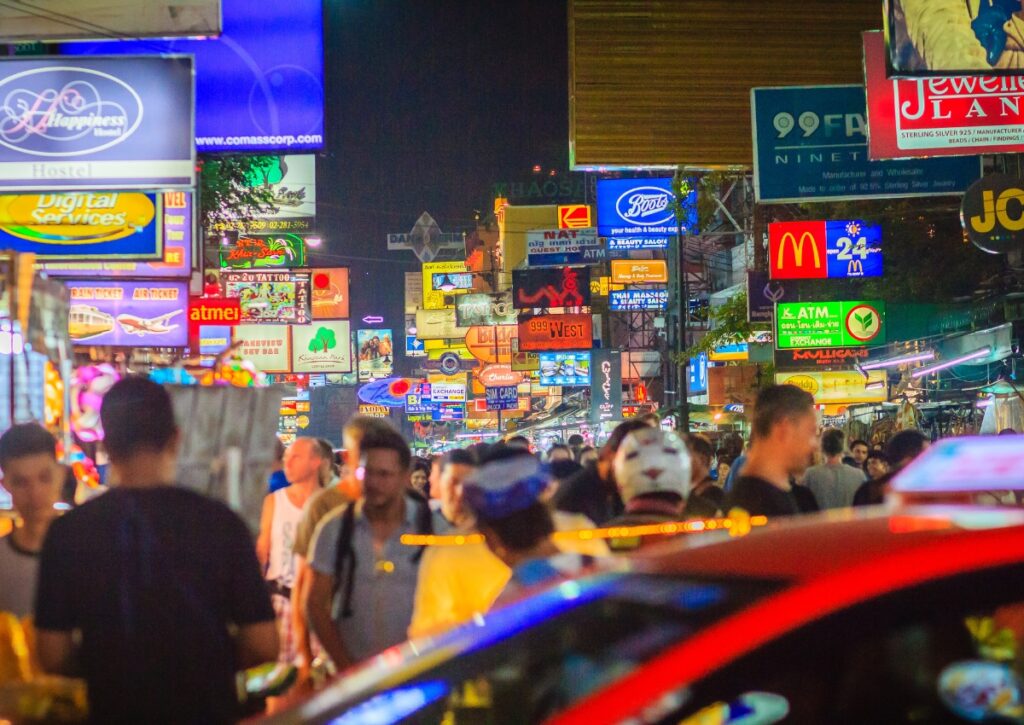
I ended up at a bar called Brick Bar, which is more popular with Thai students than foreign tourists—slightly off the main strip. Got a Leo beer (80 baht, $2.25), sat on the curb, and watched the parade of humanity go by. There was a group of British lads wearing matching “Bangkok Boyz” tank tops. A French couple was having what looked like a serious relationship conversation in the middle of chaos. A Thai vendor is trying to sell deep-fried insects to increasingly drunk tourists, having way too much fun with their reactions.
Is this the Bangkok that locals know? No. Is it a specific kind of Bangkok experience that thousands of people seek out? Absolutely.
Getting there: take the public boat to Phra Athit pier, or grab a taxi/Grab to the Khao San Road area. Be prepared for traffic to be absolutely terrible in the evenings.
The Logistics You Actually Need to Know
Let me hit you with some practical information that I wish someone had spelled out for me before my first Bangkok day.
Transportation breakdown:
The BTS Skytrain and MRT subway are your best friends. They’re clean, air-conditioned, and actually run on time. Single journey tickets are 16-59 baht, depending on distance. If you’re doing multiple trips, get a Rabbit Card (BTS stored value card) for 200 baht (includes 100 baht deposit plus 100 baht credit). You’ll save time by not buying individual tickets.
Taxis are metered. The starting fare is 35 baht, and most trips within central Bangkok are 60-150 baht. Always insist on the meter. If a driver refuses, get out and find another taxi. This happens a lot around tourist areas.
Grab (the app) is more reliable than random taxis. You know the price upfront, no meter disputes, and you can track the route. Prices are similar to metered taxis.
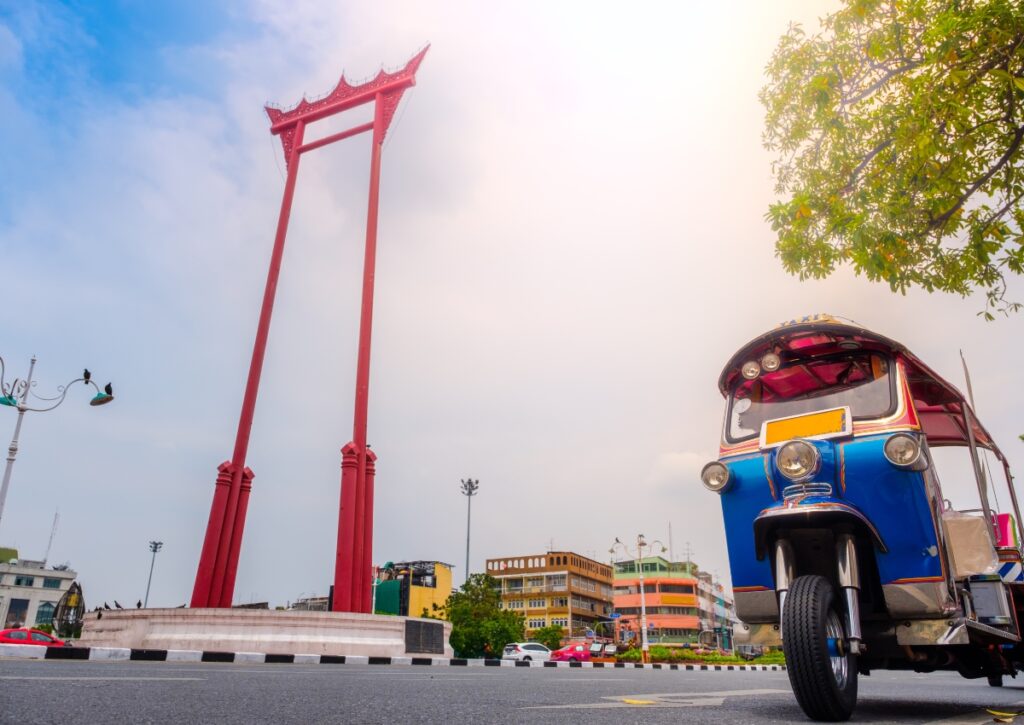
Tuk-tuks are for novelty, not value. They’ll quote you 200 baht for a trip that should cost 60 baht in a taxi. But they’re fun, open-air, and you’ll have photos for Instagram. Pick your priority.
The Chao Phraya Express Boat runs up and down the river with different colored flags indicating which stops they make. The tourist boat is 60 baht for an all-day pass. Regular boats are 10-32 baht per ride. Boats are great for avoiding traffic, terrible for air conditioning.
Money matters:
ATMs charge a 220 baht fee per withdrawal on foreign cards. Some banks reimburse this; most don’t. Withdraw larger amounts to minimize fees, or better yet, use Revolut or Wise, which have better exchange rates and lower fees.
Credit cards work at malls, hotels, and nice restaurants. Basically, nowhere else. Have cash.
Temple etiquette:
Shoulders and knees covered. Shoes off before entering buildings. Don’t point your feet at Buddha images or monks. Don’t touch people’s heads. If you’re a woman, don’t touch monks or their belongings—hand things to a male to pass to the monk.
Heat management:
Drink water constantly. Not “when you feel thirsty”—by then you’re already dehydrated. Carry a water bottle, refill at malls and restaurants. 7-Eleven sells 1.5-liter bottles for 15 baht ($0.42).
Pace yourself. Take breaks in the air conditioning. The heat isn’t something you push through—it will win.
Safety notes:
Bangkok is generally very safe. Violent crime against tourists is rare. Scams, however, are an art form.
The “temple is closed” scam: A friendly person tells you the Grand Palace/major temple is closed for a ceremony, offers to take you to other temples, and ends at a gem shop where you’re pressured to buy overpriced stones. The temple is not closed. Walk away.
The “tuk-tuk tour” scam: A driver offers you a city tour for 20 baht, claims he’s subsidized by the government. You end up at tailors and gem shops that pay him commission. If it sounds too good to be true, it absolutely is.
Bag snatching from motorbikes: Rare, but it happens. Wear backpacks on your front in crowded areas, and keep bags away from the street side when walking on sidewalks.
Sustainable Travel: Not Being That Tourist
Right, let me talk about something that most one-day itineraries skip: how to do this without being a complete asshole to the city and its people.
Temple respect: This should be obvious, but I’ve seen enough tourists treating temples like playgrounds that apparently it needs saying. These are active religious sites. Dress appropriately, follow the rules, don’t climb on things, and don’t pose disrespectfully with Buddha images for photos. That Instagram shot isn’t worth disrespecting someone’s faith.
Elephant tourism: If you’re tempted by ads for elephant rides or shows, don’t. The training methods are cruel, and the working conditions are terrible. If you want to see elephants ethically, go to an actual sanctuary where elephants are rescued and retired—but you won’t find that in a one-day Bangkok itinerary. Skip it entirely.
Plastic reduction: Bring a reusable water bottle. Yeah, buying bottled water is cheap and convenient, but Bangkok generates approximately 16,000 tons of plastic waste per day. Be part of the solution. Many malls and hotels have water refill stations.
Street food vendors: Don’t over-negotiate. If someone’s selling pad thai for 50 baht, that’s $1.40. Don’t try to bargain them down to 40 baht to save $0.28. That money means more to them than to you.
Support local businesses: Those big chain restaurants and international coffee shops? They’ll be fine without your money. The family-run noodle shop, the independent silk vendor, the small guesthouse—that’s where your spending makes a real difference.
Tipping: Thailand isn’t a tipping culture like the US, but leaving small tips is appreciated. Round up taxi fares. Leave 20-40 baht at local restaurants if the service was good. For expensive restaurants and tours, 10% is generous.
Learn basic Thai phrases:
- Sawasdee krap/ka (hello—”krap” if you’re male, “ka” if you’re female)
- Khop khun krap/ka (thank you)
- Mai pet (not spicy—you’ll need this)
- Aroi! (delicious!)
- Tao rai? (how much?)
Thais really appreciate it when foreigners make any effort at all to speak the language. Even butchered Thai is better than just assuming everyone speaks English.
Alternative Routes: If You’ve Got Different Interests
Not everyone wants the same Bangkok experience. Here are some variations on the one-day theme if your interests lean in different directions.
The Art and Design Route
Skip the Grand Palace, start at the Bangkok Art and Culture Centre (BACC) near the National Stadium BTS. It’s free, shows contemporary Thai and international art, and gives you a sense of Bangkok’s modern creative scene.
Then hit Warehouse 30 in Charoenkrung—a creative complex in restored warehouses with galleries, design shops, and cafes. Follow with lunch at Err Urban Rustic Thai.
Afternoon: Bangrak neighborhood walking tour—old Bangkok, street art, heritage buildings, local coffee shops. End at Jam Factory by the river for sunset, dinner, and shopping for locally designed goods.
The Foodie Route
Breakfast at Or Tor Kor Market—locals claim it’s better than the tourist-famous Chatuchak, and they’re not wrong.
Morning cooking class (book through GetYourGuide)—learn to actually make the dishes you’ve been eating.
Lunch at Jay Fai, the Michelin-starred street food stall. Yes, you’ll wait in line. Yes, crab omelets cost 1000 baht. Yes, it’s worth it.
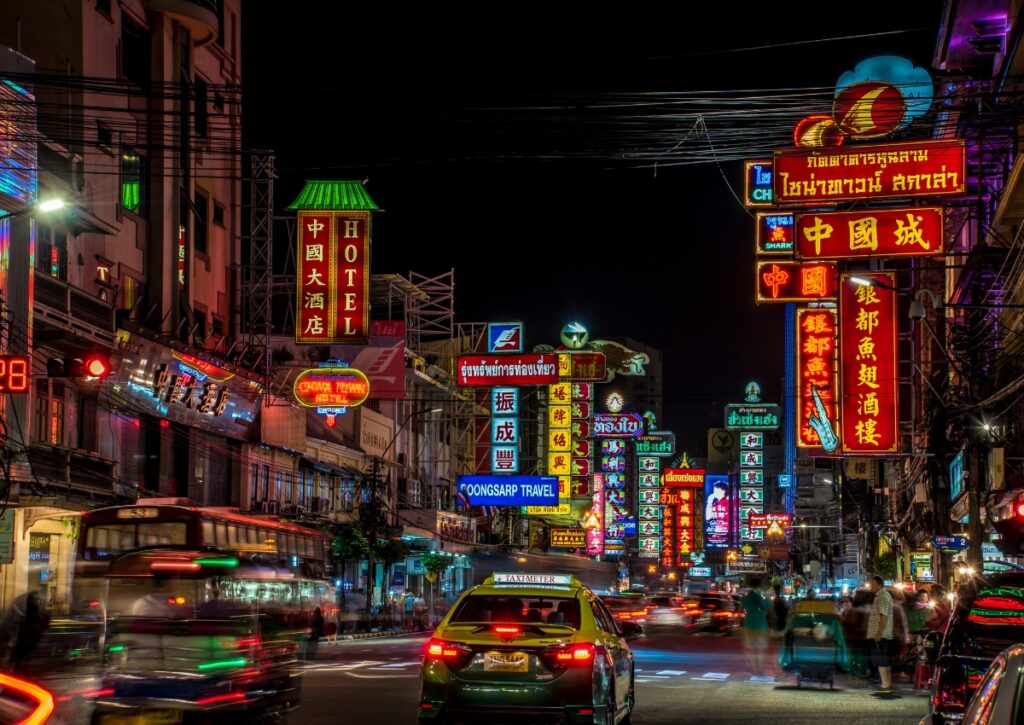
Afternoon: Chinatown food walk—sample everything from roasted duck to mango sticky rice to dim sum to fresh fruit.
Evening: Sukhumvit Soi 38 night food market, or if you want something fancier, Gaggan Anand (but you’d need to book this weeks in advance).
The Wellness Route
Start with dawn yoga at Lumpini Park—free classes happen most mornings, and locals are welcoming to drop-ins.
Follow with a proper Thai massage at Wat Pho (the temple school, mentioned earlier) or Health Land Spa if you want something more upscale.
Lunch at one of the many vegetarian restaurants around Sala Daeng or vegan spots in Ari.
Afternoon: Traditional Thai medicine consultation at a local clinic, or visit the Museum of Siam, which has exhibits on Thai wellness traditions.
Evening: Meditation session at Wat Mahathat—they offer English instruction for visitors.
This is a very different kind of exhausting from the temple-hopping route, but some people come to Bangkok specifically for this.
The Part Where I Didn’t Want to Leave
It’s past 10:00 PM now, and I’m sitting on a curb near Khao San Road—not on Khao San itself, but one of the quieter side streets where you can actually hear yourself think. I’ve been in Bangkok for about fourteen hours. My feet hurt. My clothes are damp with sweat despite multiple outfit changes. I’ve eaten approximately my body weight in street food, gotten lost three times, had two different taxi drivers try to scam me, been blessed by a monk, climbed stairs that probably violate several safety codes, and spent money on things I definitely don’t need.
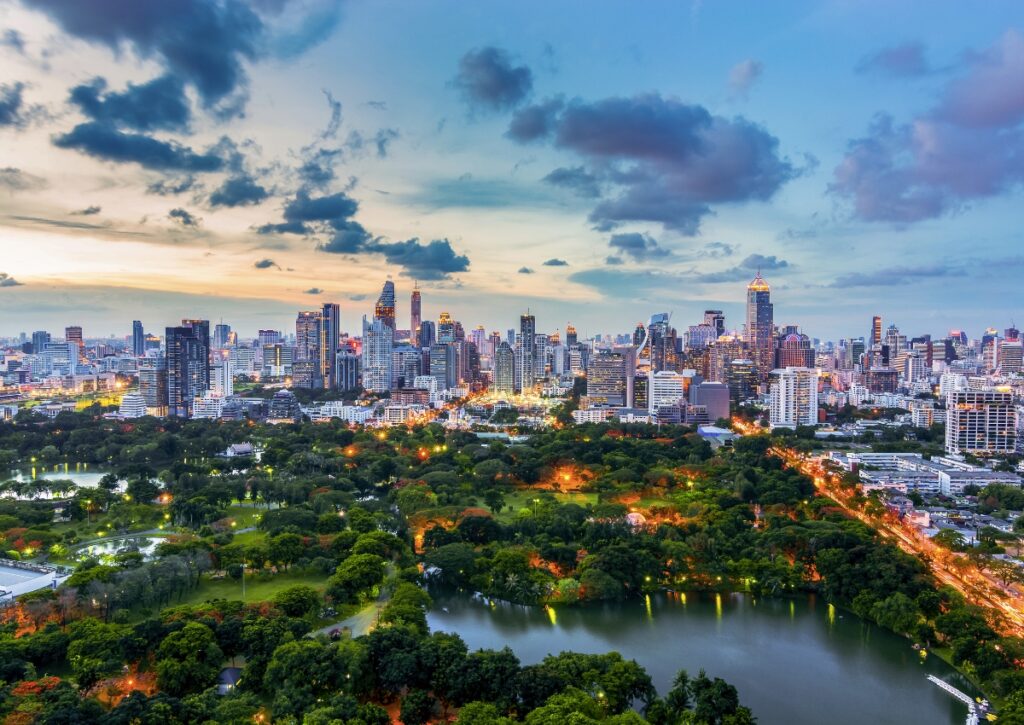
And I’m already planning when I can come back.
Because here’s what I didn’t expect about Bangkok: the city doesn’t try to be likeable in that carefully curated way that tourist destinations often do. It’s loud and messy and sometimes frustrating and occasionally borders on overwhelming. It doesn’t apologize for being hot or crowded or chaotic. It just is, with an intensity that either resonates with you or doesn’t.
For me, it resonated maybe because I grew up in a city myself and have a tolerance for urban chaos. Maybe because I’ve reached that point in travel where perfectly organized itineraries feel sterile. Or maybe because there’s something about a place that feeds you incredible food for pocket change while simultaneously housing some of the world’s most extraordinary art and architecture that just works on a fundamental level.
One day in Bangkok isn’t enough. It’s barely a scratch on the surface. You’ll miss entire neighborhoods, dozens of temples, countless food stalls that someone on Reddit claims are life-changing. You’ll have to make hard choices about what to skip. You’ll end the day with a list of things to do next time that’s longer than what you actually did.
But that’s not really a failure, is it? That’s just Bangkok telling you to come back.
Your Move: Planning Your Own 24 Hours
Right, so you’ve read 7000+ words about how I stumbled through Bangkok. Now it’s your turn, and you get to learn from my mistakes.
If you’re serious about making this happen:
Book your accommodation through Booking.com, filtering for properties within 500 meters of a BTS or MRT station. Don’t trust “central location” in the description—check the actual map. If you’re arriving at night and don’t want to deal with airport taxis, use Welcome Pickups for that transfer. Sort out your Yesim eSIM or plan to buy a SIM at the airport. Load up Revolut or Wise with some cash to avoid terrible exchange rates and ATM fees.
Make a realistic plan, but hold it loosely. You’re not going to see everything. Pick your priorities—temples, markets, food, or art—and build around that. Use GetYourGuide to book anything that needs advance reservations (cooking classes, special tours, that table at Jay Fai if you’re ambitious).
Budget honestly. A backpacker can do Bangkok for $30-50, but won’t be hitting rooftop bars or taking many taxis. Mid-range travelers should expect $80-150 for a comfortable day without constant budget stress. If you want to splash out, $250+ will get you the luxury version without flying to the moon.
Get travel insurance through VisitorsCoverage or similar—seriously, just do it. Street food is amazing until it isn’t, and you don’t want to be sorting out Thai hospital bills without coverage.
And look, when you’re there, when you’re hot and tired and maybe regretting the third plate of street food, remember: this is the experience. Not just the temples or the views or the perfect Instagram photo. The whole messy, sweaty, overwhelming, incredible thing.
One More Thing
Since you’ve made it this far, you clearly don’t hate my writing style, or you’re at least committed to reading about Bangkok. Either way, I’d love to keep you updated on more travel chaos and practical advice that actually helps.
Subscribe to A Tiny Traveler for more itineraries, destination guides, travel fails, and the occasional rant about airport coffee prices. I promise to keep it real, skip the travel brochure language, and tell you when something actually isn’t worth your time or money.
Follow me on social media:
Like my Facebook Page (A Tiny Traveler): Join our vibrant community of fellow travel lovers! This is a great place to ask questions, share your own travel experiences, and connect with other readers and me.
Follow me on Pinterest (A Tiny Traveler): My Pinterest is your ultimate travel vision board! It’s where I share stunning photography, quick visual guides, and, most importantly, links to all my in-depth blog posts.
Follow me on Instagram (a.tinytraveler): For daily doses of wanderlust, stunning travel photography, behind-the-scenes glimpses of my trips, and quick tips that will inspire your next getaway. See the world through my eyes!
Got questions about Bangkok specifically? Hit me up on social media. I’m always happy to help fellow travelers avoid my mistakes or point you toward that perfect noodle stall that I couldn’t fit into this already-too-long article.
Now get out there. Bangkok is waiting, and it doesn’t care if you’re ready or not.
Safe travels, smart choices, and may your street food choices always be wise.
Frank