

I Bought a Train Ticket and Accidentally Fell in Love With a Country
Let me tell you something about the Czech Republic that nobody puts in the brochures: it will absolutely ruin you for other trips. Not in a dramatic way. Not in a way where you come home crying into your pillow. More in the way of getting back to your regular life, sit at your desk three weeks later, and suddenly find yourself staring out the window thinking, wait, why am I not still on that train?
That’s exactly what happened to me. I showed up to Praha hlavní nádraží — that’s Prague Main Station, and yes, I did practice saying it in the mirror the night before, and no, I still didn’t get it right — with a stuffed backpack, a rail pass, and what I generously called “a loose plan.” The plan was to take trains. Eat things. See stuff. Don’t rush. Simple. Glorious. Occasionally chaotic. And honestly? One of the best trips I’ve ever taken, full stop.
Here’s the thing most people do wrong with the Czech Republic. They fly into Prague, spend three days in the Old Town taking essentially the same photo of the Astronomical Clock that 47 million other people have taken, drink some excellent beer, and fly home. Then they say they’ve “done” the Czech Republic. I did this. I am not proud of it. It haunted me like an embarrassing text I couldn’t unsend. Because the Czech Republic is not a city-break destination. It’s a whole country — and when you move through it at train speed, window-seat pace, stopping at stations whose names look like someone fell asleep on a keyboard, you realize it’s one of the most layered, fascinating, genuinely weird (in the best sense) places on the continent.
So I went back. Seven days. Four cities. One rail pass. More svíčková than any single person should consume. A minor cobblestone incident in Český Krumlov that I’ll tell you about in full detail because I have no dignity left anyway. And enough train journeys to give me very strong opinions about window seats. This is that story — and it’s your complete guide to doing the Czech Republic properly, slowly, and by train.
First Things First: What Even Is the Czech Republic?
A Beginner’s Briefing (I Promise It’s Short)
Czechia — officially the Czech Republic, though Czechia has been the official short name since 2016, a fact that still makes people on the internet argue — is a landlocked country wedged right into the heart of Central Europe. Germany to the west. Poland to the north. Slovakia to the east. Austria to the south. No sea. No massive mountains. What it does have is an almost comedically high concentration of medieval castles, cobblestone streets, Gothic cathedrals, and beer — more beer per capita consumed than anywhere else on earth, a fact that the Czechs are both aware of and entirely comfortable with.
The country splits into two main regions: Bohemia in the west (where Prague lives) and Moravia in the east (where the wine is excellent and people are, by widely accepted reputation, a bit warmer and more relaxed). We’re going through both. Buckle up.
Your Money Situation: Good News, Actually
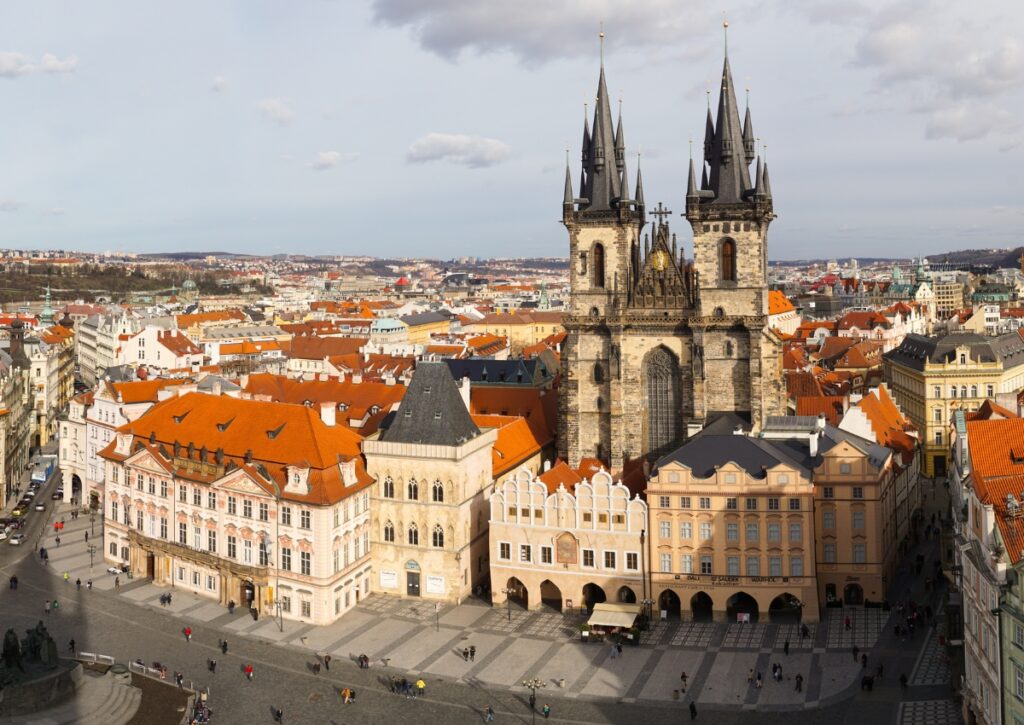
Here is a genuinely cheerful travel fact: the Czech Republic is in the EU but uses its own currency, the Czech Koruna (CZK), which means your euros and dollars go notably further here than in, say, Paris or Amsterdam. At current rates, roughly 25 CZK = 1 EUR and 23 CZK = 1 USD.
What does that mean in real life?
| What You’re Buying | Cost (CZK) | Cost (approx. USD) |
|---|---|---|
| A 0.5L beer in a pub | 40–60 CZK | ~$2–2.50 |
| Espresso | 50–80 CZK | ~$2–3.50 |
| Prague metro/tram ticket | 30 CZK | ~$1.30 |
| Lunch at a local jídelna (canteen) | 120–180 CZK | ~$5–8 |
| Dinner at a decent restaurant | 300–600 CZK | ~$13–26 |
| Train (Prague to Brno, 2.5 hrs) | 200–350 CZK | ~$9–15 |
| Hostel dorm bed per night | 400–600 CZK | ~$17–26 |
| 3-star hotel room per night | 1,500–2,500 CZK | ~$65–110 |
Daily budget breakdown:
- 🎒 Budget backpacker (hostels, local pubs, public transport): 800–1,200 CZK/day (~$35–50)
- 🏨 Mid-range traveler (3-star hotels, proper restaurants, the occasional tour): 1,500–2,500 CZK/day (~$65–110)
- 🥂 Comfort seeker (boutique hotels, nice dinners, private guides): 3,000–5,000+ CZK/day (~$130–220+)
Now. A crucial pro tip before we go any further: do not exchange cash at airport kiosks. I’m serious. Those exchange booths at arrivals are essentially a theater for parting you from your money at an alarming rate. Instead, get yourself a Revolut card and a Wise card before you leave home. Both give you near-interbank exchange rates, which means you’re paying close to what the actual rate is rather than some rate a bored kiosk employee invented. I used Revolut for every single transaction on this trip — tram tickets, restaurant bills, castle entry fees — and saved a meaningful amount versus using my regular bank card. Set them both up online before you go. It takes ten minutes, and future-you will send present-you a warm thank-you note.
Your New Best Friend: Czech Trains
Why the Train Is Genuinely the Best Way to Do This
Look, I’ll be real with you: I’ve done road trips through the Czech Republic. They’re fine. But the trains are better for this particular trip, for a very specific reason — the distances between the cities on this itinerary are short enough that trains are just as fast as driving, but while you’re on a train, you can stare out the window at rolling Bohemian countryside with a coffee in hand rather than white-knuckling a right-hand bend in a rental car. The scenery wins. Every time.
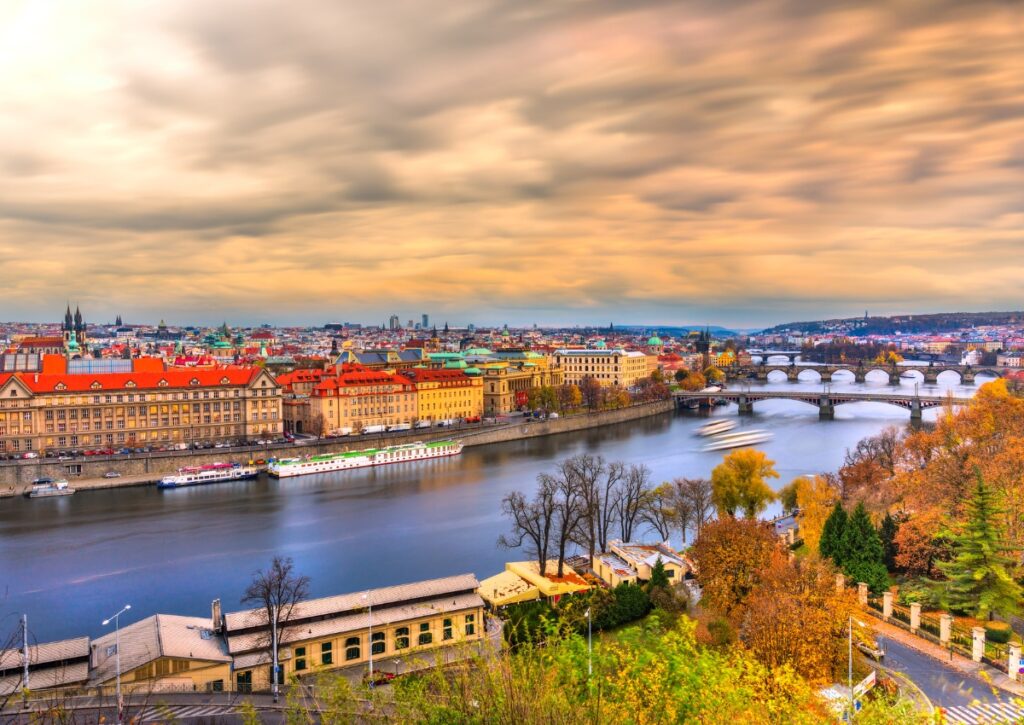
The national operator is České dráhy (ČD), but the private operators — bright yellow RegioJet and sleek blue Leo Express — run the major routes and are often cheaper, more comfortable, and more fun. RegioJet has a hostess service that brings coffee to your seat on long-distance trains. A hostess who brings coffee to your train seat. For 200 CZK. I need you to understand how much I appreciate this.
Book all your train tickets through Trip.com — it aggregates multiple operators, lets you compare times and prices side by side, and is a far less confusing experience than the ČD website, which functions like it was designed by someone who had been briefly told what a website was but never actually seen one. Book 2–3 weeks ahead for the best fares, especially on the Prague–Brno and Olomouc–Prague routes.
And while you’re on Trip.com — grab a Czech eSIM. Trip.com’s eSIM store lets you activate mobile data before you even leave home, so you step off the plane in Prague with full connectivity, no SIM-card hunting, no roaming bill from your home carrier that makes you briefly question your life choices. Do it. It’s extremely worth it.
Rail Pass or Point-to-Point Tickets?
For this one-week, four-city itinerary: buy point-to-point tickets. The routes are short, and the fares are inexpensive, especially when booked ahead. A rail pass doesn’t give you meaningful savings here and adds a layer of reservation faff you don’t need.
Days 1–2: Prague — The City That Contains Multitudes and Also Approximately 3,000 Souvenir Magnets
Arriving and Getting Oriented
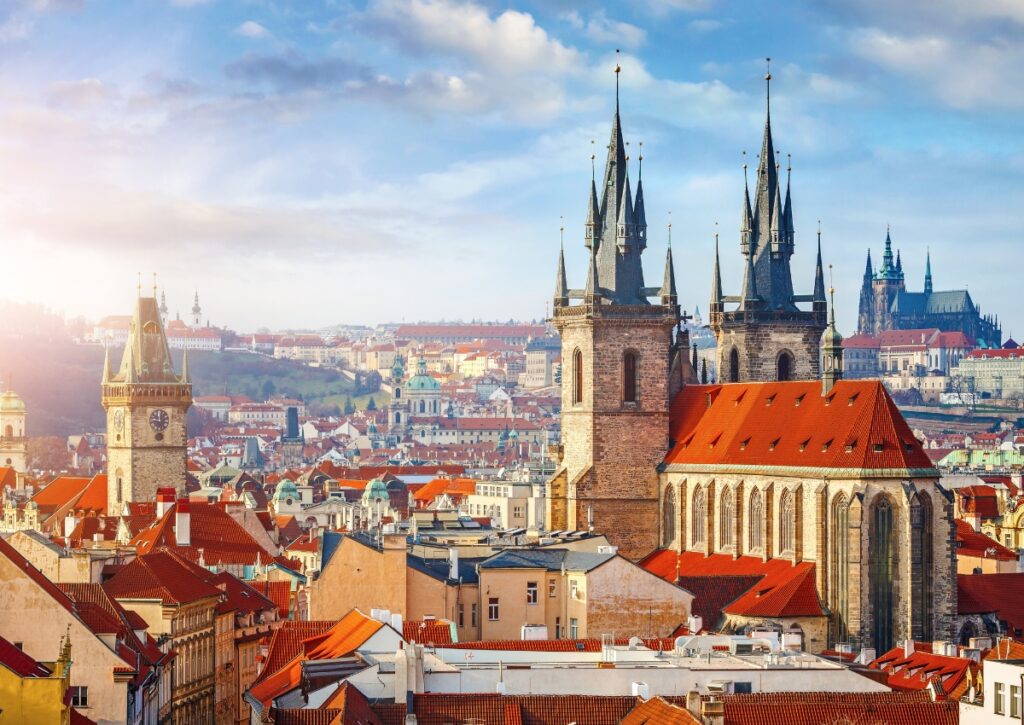
Praha hlavní nádraží is a lovely station, and I genuinely mean that — it has an Art Nouveau upper hall with painted ceilings that most arriving passengers walk straight past because they’re staring at the arrivals board. Don’t do that. Look up. Prague starts rewarding you immediately if you pay attention.
Get yourself the Lítačka app (covers all Prague public transport) and buy a 24-hour pass for 120 CZK (~$5). The tram network in Prague is excellent — old-school, slightly rattly, runs everywhere — and you’ll use it constantly. Line 22 is the one you’ll probably ride most; it connects the main station to Malá Strana and passes Prague Castle on its way.
Where to stay:
Don’t automatically book in the Old Town. Yes, it’s central. It’s also expensive, loud at night, and full of people who’ve had eight beers walking past your window at 2 AM. Instead, consider:
- Žižkov — 15 minutes by tram from Old Town, significantly cheaper, excellent pubs, and home to David Černý’s baby-covered television tower (more on that in a moment)
- Vinohrady — slightly posher, beautiful Art Nouveau apartment buildings, great coffee shops and wine bars, still very walkable to the center
Accommodation options in Prague:
- Budget: Hostel dorms from ~500 CZK/night
- Mid-range: Boutique hotels in Vinohrady or Malá Strana from 2,000–3,500 CZK/night
- Splash out: Four Seasons Prague with Vltava River views from 8,000+ CZK/night
Book through Booking.com — always filter for free cancellation, because train schedules sometimes have opinions of their own, and your plans may shift accordingly.
If you’re flying in, skip the airport bus stress and book a private transfer with Welcome Pickups. Fixed price, English-speaking driver, meets you at arrivals holding a sign with your name on it, like you’re a celebrity who happens to be arriving at a medium-sized European airport. It costs around 30–35 EUR, but it’s worth it if you land late, have heavy bags, or just want to start your trip without deciphering public transport.
What to Actually Do in Prague (Two Days, Spent Well)
Honest confession: I used to think I knew Prague because I’d done the tourist circuit. Old Town Square. Charles Bridge. Beer. Done. I was wrong, and I am delighted to report it.
The secret to Prague is timing. The Old Town is genuinely, historically magnificent — and between 9 AM and 9 PM, it’s so full of tourists that you’re essentially experiencing it through a crowd. The fix is embarrassingly simple: wake up early. Both mornings, I was out at 6:30 AM. The cobblestones of Staré Město were damp, almost empty. A single tram rattled past somewhere distant. Charles Bridge had maybe fifteen people on it. A man was fishing below in the Vltava. Prague, it turns out, is most itself very early in the morning, and it is absolutely worth setting an alarm for.
The things you genuinely should not miss:
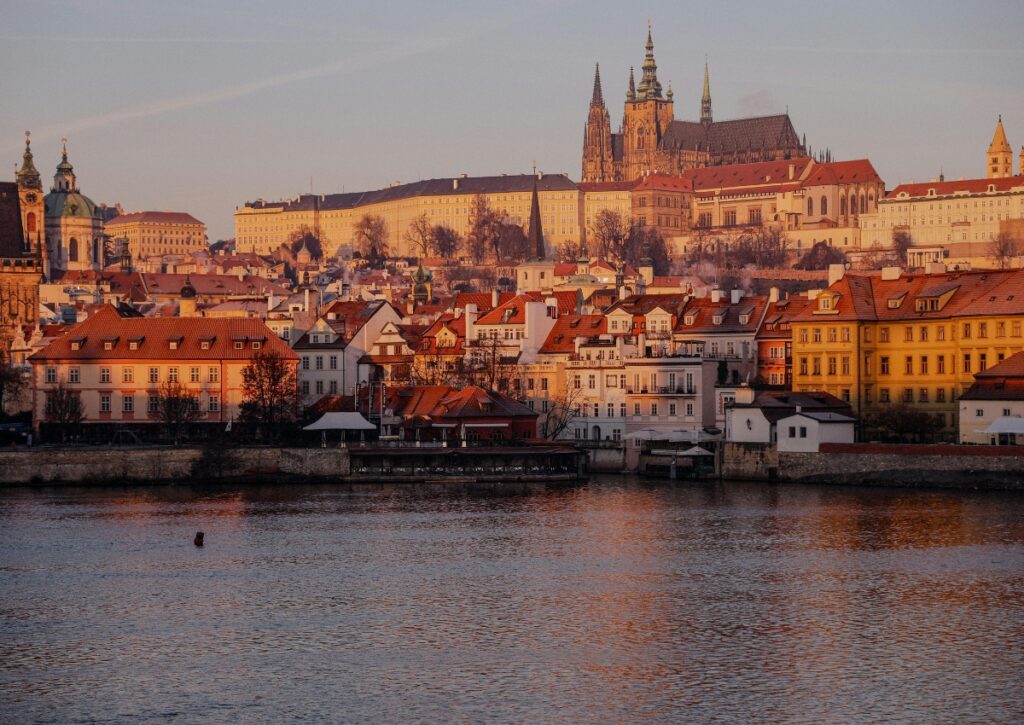
- Prague Castle (Pražský hrad): The largest ancient castle complex in the world by total area. Go early — the queue for St. Vitus Cathedral gets gnarly by 10 AM. The view of Prague from the castle walls is the view that explains why people chose to build a city here in the first place.
- Charles Bridge (Karlův most): Thirty Baroque statues, a 14th-century foundation, and a tendency to look almost cinematically beautiful in evening light. Walk it twice: once at dawn for the atmosphere, once at sunset for the light.
- Josefov (the Jewish Quarter): Six synagogues and the Old Jewish Cemetery, where centuries of burials layered on top of each other because the community had no additional land to expand into. It is somber and important and unlike anywhere else in the city.
- The Žižkov Television Tower: An enormous communist-era concrete tower in the Žižkov neighborhood, notable for having ten giant metallic baby sculptures crawling up its sides. They were added by local artist David Černý, who has a long track record of placing deeply strange things in prominent public locations and watching Czechs cheerfully accept them. The babies have no facial features, just camera lenses for faces. It is simultaneously unsettling, funny, and somehow endearing. Go look at it.
- Lokál pub: The best place in Prague to drink Pilsner Urquell. Lokál tanks it fresh from Plzeň, maintains it impeccably, and serves it in a long, loud, wood-tabled room that feels like what a proper Czech pub should feel like. Order the svíčková — beef sirloin in cream sauce with bread dumplings and cranberries. It sounds odd. It is extraordinary. The gravy has a specific depth, a sweet-savory-earthy thing going on, and the dumplings are soft and slightly sour and perfect for soaking everything up.
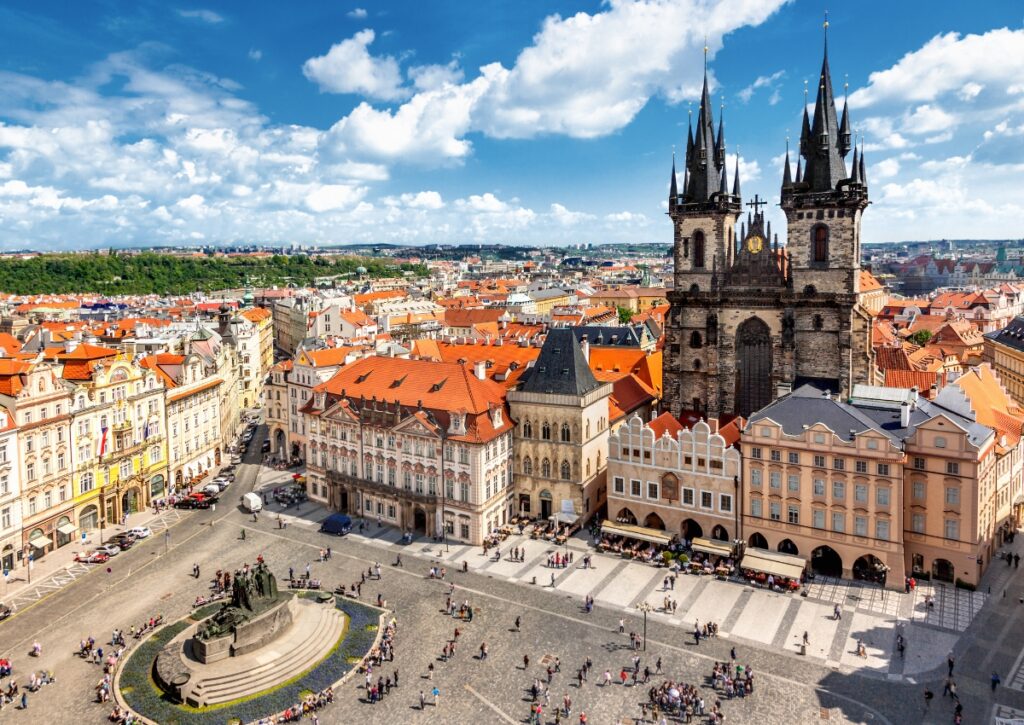
The thing I’d quietly suggest skipping: The actual Astronomical Clock show on the hour. It lasts 45 seconds, involves some small figures moving in a circle, and you will watch it surrounded by a hundred phones held in the air. The clock itself is spectacular — go look at it up close, read about its three dials and what they track. The hourly performance, though, is a bit like waiting half an hour for a magic trick and getting a handkerchief pulled from a sleeve. You’ve been warned.
Book your Prague experiences through GetYourGuide — in particular, their skip-the-line Prague Castle tours and their Jewish Quarter walking experiences are genuinely worth the premium. The historical context you get from a good guide transforms what might otherwise be a “nice old building” into something that actually means something.
Day 3: The Train to Český Krumlov — aka The Day I Ruined My Dignity With a Pastry
Getting There (It’s a Journey, But a Good One)
Český Krumlov doesn’t have a direct train from Prague, which, rather than being a problem, is actually just an excuse for a charming two-stage journey. Take RegioJet or ČD from Praha hlavní nádraží to České Budějovice — about 2.5 hours, roughly 200–280 CZK. Then hop on the regional train to Český Krumlov — 45 minutes, around 60 CZK.
The regional train is the kind where the seats are slightly worn, the windows open with a latch, and you share your compartment with an elderly man who has strong and apparently urgent opinions about something, a student from Brno who falls asleep before the train has even left the platform and begins snoring with impressive commitment, and possibly a large shopping bag that belongs to nobody. I mean all of this with complete affection. It is enormously charming.
Český Krumlov: The Town That Knows It’s Beautiful and Has Fully Accepted This Fact
Right. Let me try to describe Český Krumlov without resorting to the travel brochure adjectives I promised to avoid.
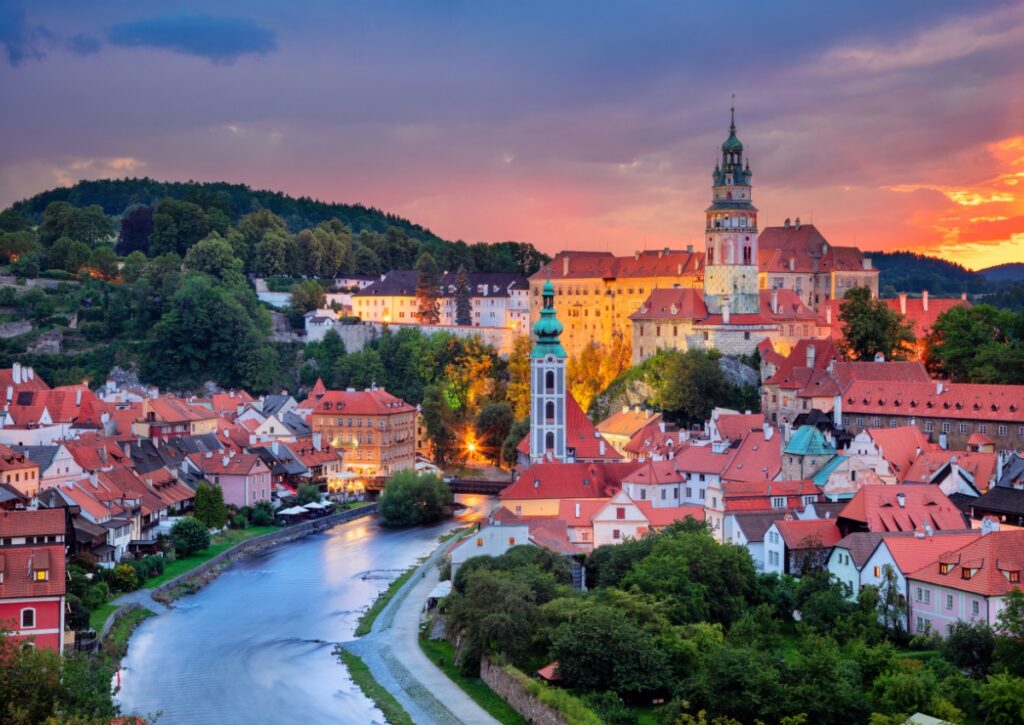
The Vltava River makes a dramatic horseshoe loop. Inside that loop sits the medieval old town. Above it all — on a rocky promontory, looking frankly smug — sits Český Krumlov Castle. The whole thing is compact, walkable, and so densely layered with history that you can’t turn a corner without bumping into something that’s been standing since the 1300s. Your brain will take a few minutes to compute it as a real place and not a very convincing film set.
It also gets busy. Very busy in high season (June–August). Here’s the move: the day-trippers clear out around 5 PM, and what’s left is a town that exhales and becomes something quieter and genuinely magical. Stay overnight. You’ll thank yourself.
What to do:
- Český Krumlov Castle: The tower view is one of the best in the country — red rooftops, river bends, forested hills in every direction. The Baroque theater inside is one of the most completely preserved in the world; book a tour for it specifically.
- Rafting the Vltava River: Multiple outfitters right in town will rent you an inflatable raft or canoe for a float through the river bend. About 300–400 CZK, takes roughly an hour, and involves drifting past castle walls and weeping willows while feeling extremely pleased with your life choices. Wear clothes you don’t mind getting wet.
- Egon Schiele Art Centrum: The expressionist painter Egon Schiele — known for his raw, intense, occasionally scandalous work — spent some of his life here. The museum is in a converted brewery and is worth an hour even if you’re not usually a museum person. Also a good place to shelter if it rains.
Now. The trdelník incident.
Trdelník is a spiral pastry cooked over a charcoal spit, rolled in cinnamon sugar, and sometimes filled with ice cream or a swirl of Nutella. It is sold at little kiosks throughout Czech tourist areas. It is — I want to be clear about this — genuinely delicious. The outside is slightly crispy, the inside still warm and doughy, and the cinnamon sugar catches in a specific way that makes you immediately want another one. (It’s technically Slovak in origin, not Czech. Nobody in Český Krumlov wants to hear this while you’re holding one, though, so keep it to yourself.)
I was walking out of a trdelník kiosk near the castle gate, pastry in one hand, phone in the other like a full tourist cliché, when my boot caught the edge of an uneven cobblestone — and I lurched forward in a stumble that I can only describe as deeply expressive. Arms windmilling. A small sound came out of my mouth. A woman nearby took a step back. A small child, maybe five years old, stared at me and then laughed with the kind of uninhibited delight that only children can produce.
The trdelník survived. It didn’t even lose a crumb.
My dignity did not survive.
I ate the pastry and kept walking because what else do you do.
Where to eat in Český Krumlov:
- Krčma v Šatlavské ulici: A restaurant in an actual 14th-century prison (the cells are still visible). Order the goulash served in a hollowed bread bowl. It costs about 200–250 CZK and tastes like something a weary medieval mercenary would have considered a good day.
- Nonna Gina: I know — Italian food in a medieval Czech town sounds like a category error. But the thin-crust pizza, the Vltava view, and the terrace seating make this a genuinely excellent dinner option. Sometimes you just need a pizza and a view and nobody should apologize for it.
Day 4: Brno — The City That Is Absolutely Done Apologizing for Not Being Prague
The Train From Český Krumlov
Head back to České Budějovice first (the same 45-minute regional line, same cast of characters), then pick up a connection heading east toward Brno. Total journey time is 3–3.5 hours with the change. Grab a window seat on the right side heading east if you can — the South Bohemian landscape shifts here, flatter and more agricultural, in a way that feels genuinely different from the wooded hills of the previous day.
Book the connection in advance through Trip.com and double-check the timing — regional trains run less frequently than long-distance ones, and missing a connection in České Budějovice means sitting in the station for an hour and a half staring at the departures board, which I can tell you from personal experience is less fun than it sounds.
Brno: Second City, First in My Heart
Brno is the second-largest city in the Czech Republic, the capital of Moravia, and it carries this “second city” label with the particular energy of someone who’s been told all their life they’re not quite the main character and has decided that’s actually fine, actually great, and isn’t your loss really.
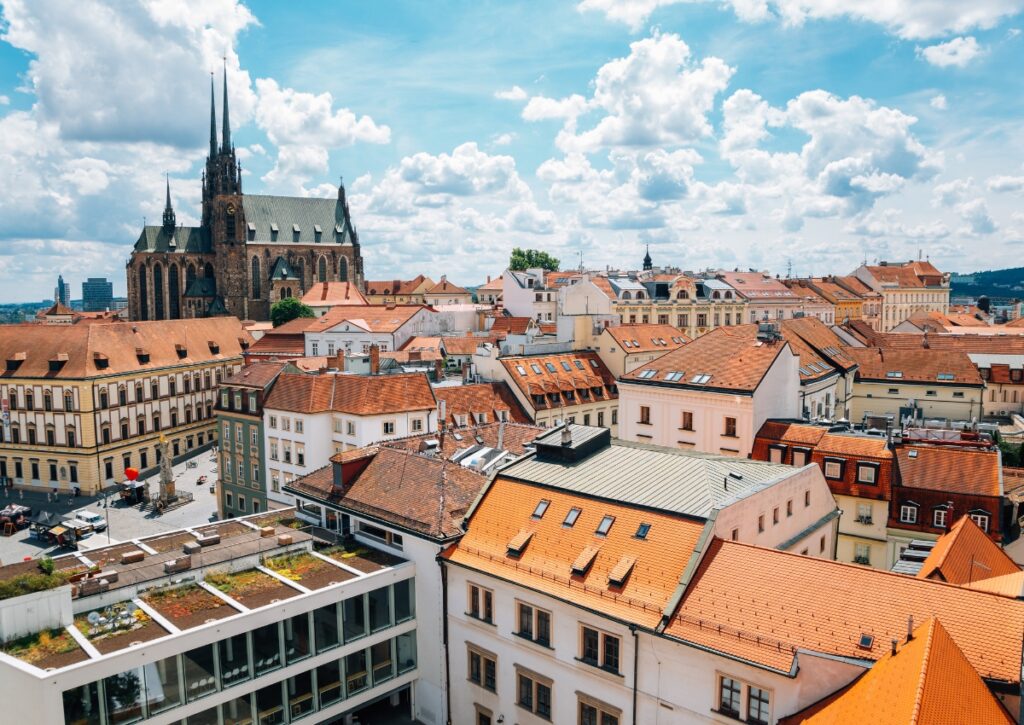
The result is a city that doesn’t try to be Prague and is therefore significantly more interesting than many places that do. It has 400,000 people, a large university, an excellent bar and food scene, a working-class warmth to its neighborhoods, medieval underground tunnels, a famous ossuary, a functionalist architectural masterpiece, and a dry, self-deprecating sense of humor about itself that I found immediately endearing.
What to do in Brno:
- Špilberk Castle: On a hill above the city center. Once the most feared prison in the Habsburg Empire — the dank dungeons held some of history’s least cheerful guest lists. Now a city museum. The walk up is worth it just for the panoramic views, and the museum does a thoughtful job of the history. Also worth noting: Brno’s Cathedral of Saints Peter and Paul rings its bells at 11 AM instead of noon — a tradition dating to a Thirty Years’ War siege in 1645. The story goes that the city tricked the besieging Swedish army by ringing the noon bell an hour early, causing the commander to retreat. Whether that’s entirely true is debated; the tradition continues regardless.
- The Ossuary at the Church of St. James: The second-largest ossuary in Europe after the Paris Catacombs. Around 50,000 human skeletons are arranged in the underground chambers. The audio guide is excellent — it contextualizes what you’re seeing in a way that’s historically thoughtful rather than just ghoulish. You emerge back into the sunlight feeling strangely contemplative and immediately wanting coffee.
- Villa Tugendhat: A UNESCO World Heritage Site and one of the most significant works of Modernist architecture anywhere. Designed by Ludwig Mies van der Rohe, completed in 1930. The onyx walls. The curved Macassar ebony partition. The floor-to-ceiling glass looks over the city. It is the kind of space that makes you stand still and understand, probably for the first time in your life, what people mean when they call a building powerful. Book timed tickets in advance online — they sell out.
- Zelný trh (Vegetable Market): The central market square of Brno — and I want to be very clear that this is a working market, not a tourist-facing display of artisanal produce in paper bags. Every morning, there’s a man selling peppers at a volume suggesting he finds silence personally offensive. There’s the slick wet smell of cut flowers and stone after rain, and the particular energy of a place where people are actually buying their actual groceries. Stand in it. Buy something. It costs almost nothing and feels like the real city.
Where to eat and drink in Brno:
- Bistro Franz: Moravian-influenced modern Czech cooking in a setting that’s unpretentious and excellent. The roast pork with zelí (braised sauerkraut) and potato dumplings is the kind of meal that makes canceling evening plans feel reasonable and correct.
- Super Panda Circus: A cocktail bar so stylish it feels like someone designed it inside a very good dream. Creative drinks, great music, no attitude. Perfect for the evening after a day of castles and ossuaries.
- Moravian wine: Moravia produces about 95% of all Czech wine, and almost none of it is exported. You can only drink it here, which is either a tragedy for the rest of the world or a very good reason to stay longer. The Welschriesling is crisp and apple-edged; the Blaufränkisch (locally called Frankovka) is earthy and peppery and excellent with pork. Order freely.
Where to stay in Brno:
- Budget: From ~450 CZK/night
- Mid-range: Barceló Brno Palace or Hotel Grandezza — 2,000–3,500 CZK/night
Day 5: Telč — The Town That Forgot to Check the Calendar and Stayed in the Renaissance
A Day Trip That Will Quietly Become a Highlight
From Brno, take a train (changing at Okříšky) to Telč — about 2 hours total, under 200 CZK return. This is not a route that appears on many people’s Czech Republic itineraries. This is precisely why you should do it.
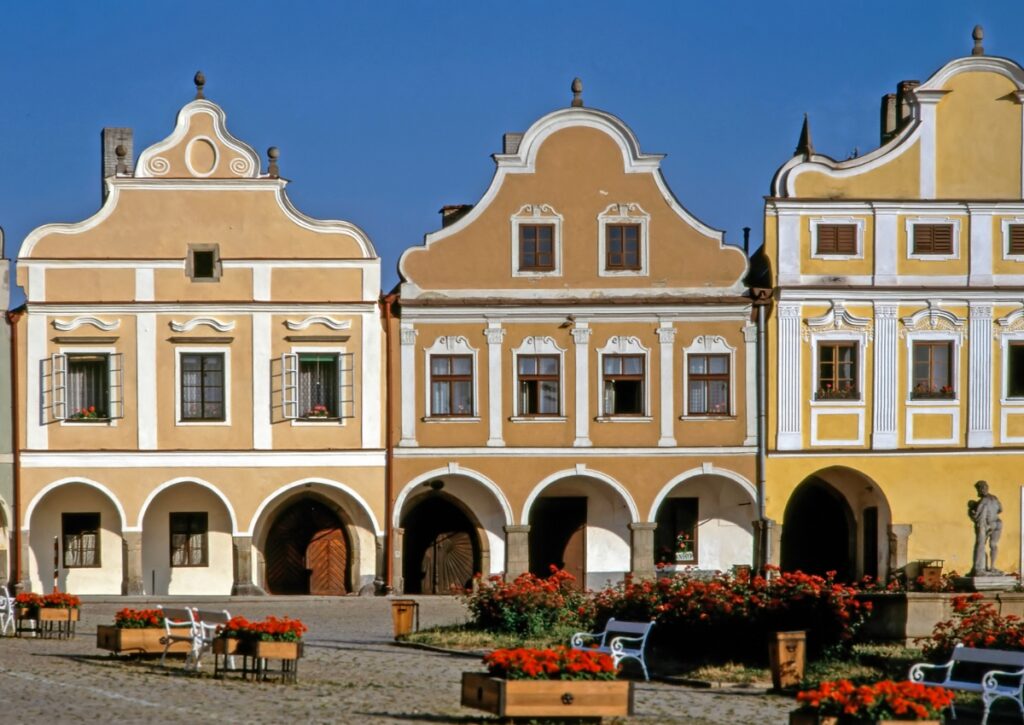
Telč is a small Moravian town with a central square — Náměstí Zachariáše z Hradce — that is lined with Renaissance and Baroque façades in shades of cream, butter yellow, peach, and powder blue. It’s a UNESCO World Heritage Site. And unlike Český Krumlov, which has become quite polished with tourism over the years, Telč still functions as a real, small town that simply happens to have one of the most visually arresting main squares in all of Central Europe sitting in the middle of it. There are a few cafés, a castle at one end, fish ponds beyond the walls, and a quiet that settles over the place like something physical.
What to do in Telč:
- Walk the full perimeter of the square slowly. Sit at a café table. Order coffee. Sit there longer than you think you need to. Look at the façades. Read about them. Look again.
- Visit Telč Château — the painted ceilings of the Golden Hall are some of the finest preserved Renaissance interiors in Central Europe.
- Walk the fish pond paths outside the old town walls. There is a heron that may or may not be there — I found one, standing absolutely motionless in the reeds like a very tall, grey statue. We looked at each other for a few seconds. Neither of us had anything to add. It was a very good moment.
You can return to Brno for the evening, or — even better — stay overnight in a small Telč pension (from ~700 CZK/night) and have the square almost entirely to yourself after the day visitors leave. The difference between Telč at 3 PM and Telč at 8 PM is significant and worth experiencing.
Day 6: Olomouc — The Best City in the Czech Republic That Nobody Is Talking About Enough
The Easy Train From Brno
Brno to Olomouc is the smoothest leg of the whole itinerary. About 1 hour 20 minutes direct, trains run roughly every hour, and fares are around 150–200 CZK. RegioJet runs double-deckers on this route. Take the upper deck. The South Moravian countryside in this stretch is all rolling fields and church spires and the occasional village that looks like it hasn’t updated its aesthetic since 1820.
Put the phone down. Look out the window. I’m going to keep saying this, and I’m not going to apologize for it.
Olomouc: Six Baroque Fountains, One Extraordinary Column, and a Cheese That Could Probably Strip Paint
Olomouc (pronounced somewhere in the vicinity of OH-lo-moats, and don’t worry if you get it slightly wrong — locals find the attempt charming rather than irritating) was for centuries the capital of Moravia and is today a university city of about 100,000 people with an Old Town that comprehensively outpunches its weight class.
Here’s the stat that sets the tone: Olomouc has six Baroque fountains in its city center. Six. Each one depicts a different mythological figure. The Caesar Fountain is the largest bronze Caesar on horseback, with water arcing dramatically around him. There’s also Hercules, Jupiter, Neptune, Mercury, and Arion. Walking between them is a free, self-guided tour of the city that takes about an hour and covers most of the major sights along the way. It is the best city walk in Moravia, and it costs absolutely nothing.
What to do in Olomouc:
- Holy Trinity Column (Sloup Nejsvětější Trojice): A UNESCO World Heritage Site right in the Upper Square. It’s a towering gilded Baroque pillar that took 38 years to build and looks like the 18th century was challenged to out-Baroque itself and accepted enthusiastically. It is enormous, detailed to an almost hallucinatory degree, and genuinely impressive in a way that makes you stand there with your neck craned back for longer than you expected.
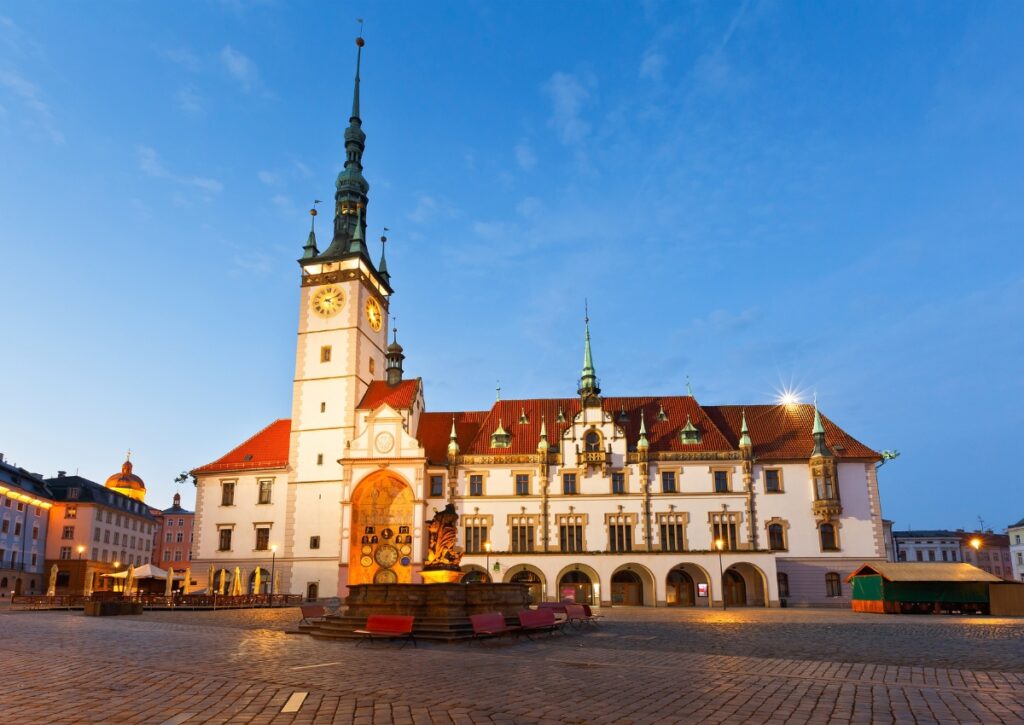
- Olomouc Astronomical Clock: Here’s a piece of Czech history that doesn’t get told often enough. Olomouc had its own Astronomical Clock on the Town Hall — a medieval one, considered one of the finest in Europe. In 1945, retreating German forces damaged it badly. Rather than restore the medieval version, the post-war communist authorities redesigned it in the socialist realist style, replacing saints and apostles with workers, farmers, and athletes. The result is both historically fascinating and slightly surreal — a communist astronomical clock with mosaic-tiled laborers cheerfully marking the hours. You should see it.
- St. Wenceslas Cathedral (Katedrála sv. Václava): One of the finest Gothic cathedrals in Moravia. The interior is particularly striking when afternoon light comes through the stained glass and falls across the stone floors in patches of amber and blue.
- Upper Square (Horní náměstí): Just sit at Café Caesar with a glass of Moravian white wine and watch Olomouc happen around you. Students cycling past with the particular focused urgency of people who may or may not be late for a lecture. An older man is reading a newspaper. A small dog with enormous ambition is investigating the base of Caesar’s horse. This is the Czech Republic at its most quietly lived-in and lovely.
The Cheese Situation (Important):
Olomoucké tvarůžky is a soft, fermented Czech cheese. It is a regional specialty. It smells — and I want to be precise here — like someone stored gym socks in a warm dairy for an extended period. The flavour is sharp, intensely funky, and genuinely compelling in a way that makes you go back for a second bite while also slightly questioning yourself. Try it. At least once. Whether you enjoy it is entirely between you and your own taste receptors, but you can’t leave Olomouc without at least having the conversation with it.
Where to eat in Olomouc:
- Moritz Restaurant: In a beautifully converted 19th-century industrial building — the original brewing kettles are kept as décor. The Olomouc beef goulash is the thing to order. It arrives in a deep bowl, dark and rich, with bread on the side, and it tastes exactly what you want after a day of walking between fountains.
- Café 87: For breakfast or a lazy mid-morning coffee. Great pastries, locals reading newspapers at corner tables, the particular morning light that only small Central European cafés seem to get right. This is the kind of place that makes you start mentally drafting plans to move to Olomouc.
Where to stay in Olomouc:
- Budget/social: Poet’s Corner Hostel (genuinely excellent, run by people who care, from ~500 CZK)
- Hotel: Hotel Trinity or Hotel Arigone — from ~1,800 CZK/night
Day 7: The Train Back to Prague — The Return You’ll Take Your Time On
The Route (and Why It’s a Pleasure)
Olomouc to Prague is one of the great train journeys in this country. About 2 hours 15 minutes direct on RegioJet or Leo Express, for around 200–350 CZK. The RegioJet service on this route is excellent — comfortable yellow double-decker carriages, a bistro car, a hostess who brings coffee to your seat with a cheerfulness that suggests she’s either genuinely happy in her work or has perfected the performance of it to an extraordinary degree. Either way: coffee. Seat. Moving train. Czech countryside. This is fine.
I took the 10:30 AM train, which got me into Prague just before 1 PM — enough time for a last lunch somewhere in Vinohrady, a slow walk along the Vltava, and one final beer somewhere that wasn’t trying to sell me a shot glass shaped like the Astronomical Clock.
How to Spend Your Last Afternoon Without Wasting It in Tourist Purgatory
Resist the Old Town. Instead:
- Take the Funicular Railway up to Petřín Hill — a green hilltop park above Malá Strana with a small tower (Petřínská rozhledna) that is essentially a scaled-down Eiffel Tower built in 1891 and has been doing quiet, reliable, excellent work ever since. The view from the top is the full Prague panorama.
- Walk through Malá Strana (Lesser Town) at the base of Prague Castle — the neighborhood of baroque palaces, quiet cobblestone lanes, and garden walls over which you can sometimes see ancient trees. I walked through it on my last afternoon and a tortoiseshell cat was sitting in an upstairs window watching the street with the specific contempt that only cats achieve. We understood each other.
- Final beer at U Medvídků, one of Prague’s oldest pubs (operating since 1466, which means it has survived more history than most countries). They serve Budvar — brewed in České Budějovice, the original Budweiser, the one that predates the American version by centuries and is significantly more interesting. Order a half-liter. Sit with it. Let the week settle around you.
The Practical Stuff You Actually Need to Know
Travel Insurance — Do Not Skip This
I know. Nobody wants to think about travel insurance. It sounds like homework. But medical care in the Czech Republic, while good, is not free for non-EU visitors, and an unexpected hospital visit can generate costs that make your entire trip budget look like pocket change. I use VisitorsCoverage — it’s a comparison platform for travel insurance plans, takes about five minutes to get a quote, and typically costs $30–60 for a week depending on your age and coverage level. Just do it before you leave home. Future-you, sitting in a Brno hospital with a twisted ankle, will be profoundly grateful.
Money Tips
- ATMs: Widely available everywhere. Use ATMs affiliated with major Czech banks (Česká spořitelna, Komerční banka). When the ATM offers to convert your withdrawal into your home currency, always decline — always pay in CZK. The ATM’s conversion rate is a polite robbery.
- Revolut: Set it up at home, load it up, use it everywhere. Zero foreign transaction fees on purchases.
- Wise: Equally good — especially useful for holding CZK in your account before you travel, or for sending money internationally.
- Cash: Still useful in smaller towns, local markets, and some family-run restaurants. Don’t go entirely cashless.
Renting a Car (For When Trains Can’t Get You There)
Trains cover this itinerary beautifully. But if you want a day in Southern Moravia’s wine country (Pálava Hills, Mikulov) or the Šumava forest region, a car for one day opens up a lot. I used GetRentacar for a one-day hire out of Brno and found the booking process transparent and simple — no surprise fees at pickup, which is more than I can say for some other platforms I’ve used. Compare options there before booking elsewhere.
Getting Your Flights
Most travelers fly into Prague — it’s well-connected to European hubs and has reasonable transatlantic options. For the best fares, use CheapOair, which aggregates prices across multiple carriers and often surfaces deals that airline websites don’t prominently feature. Book early for summer travel.
Sustainable Travel in the Czech Republic: A Few Genuinely Useful Things to Consider
The Czech Republic’s most popular spots — particularly Prague’s Old Town and Český Krumlov — deal with real overtourism pressures. Here’s how to be a good visitor:
- Stay longer, move less. Spending two nights somewhere instead of one changes your relationship to the place. You stop skimming and start actually being somewhere.
- Eat at local hospody and jídelny (traditional pubs and canteens). Your money goes directly into local hands. Also, the food is frequently better and dramatically cheaper than tourist-facing restaurants.
- You’re already on trains. Rail produces significantly fewer carbon emissions than short-haul flying. You’re doing this right — keep doing this right.
- Buy consumable souvenirs. Moravian wine, Becherovka herbal liqueur, Olomoucké tvarůžky (brave choice), and local honey. Things that will be eaten or drunk, not plastic things with the Prague skyline printed on them.
- Visit in shoulder season. April–May and September–October are the sweet spots — decent weather, far fewer crowds, meaningfully lower prices. Český Krumlov in October, with turning leaves on the castle grounds, hits differently than Český Krumlov in August with a tour group at every corner.
- Support local accommodation. Family-run pensions recirculate tourism revenue into the local community far more effectively than international hotel chains.
- Respect the quieter pace. Smaller Czech towns operate on a rhythm that isn’t loud or performative. Match the pace. You’ll enjoy it more.
Your One-Week Czech Republic by Train Itinerary at a Glance
| Day | Where | Key Things | Sleep |
|---|---|---|---|
| Day 1 | Prague | Arrive, Žižkov wander, Lokál pub | Prague hostel or hotel |
| Day 2 | Prague | 6 AM Charles Bridge, Prague Castle, Josefov | Prague — same |
| Day 3 | Český Krumlov | Castle, Vltava raft, trdelník incident | Český Krumlov pension |
| Day 4 | Brno | Špilberk, Ossuary, Villa Tugendhat, Moravian wine | Brno hostel or hotel |
| Day 5 | Telč (day trip) | Renaissance square, château, heron | Telč pension or back to Brno |
| Day 6 | Olomouc | Six fountains, Holy Trinity Column, cheese reckoning | Olomouc hostel or hotel |
| Day 7 | Prague (return) | Petřín Hill, Malá Strana, farewell beer | Depart or final Prague night |
What to Pack (Honest Edition)
Bring these:
- Comfortable walking shoes with real ankle support — the cobblestones are everywhere and they are relentless
- A light waterproof layer — Czech weather does what it wants
- A reusable water bottle — tap water is safe and good throughout the country
- A power bank for long train rides
- A small day bag separate from your main luggage (leave the big bag at the hotel)
- A few key phrases: Dobrý den (Good day), Prosím (Please), Děkuji (Thank you), and most importantly, Pivo, prosím (Beer, please). These four phrases will earn you warm smiles in every single place you use them.
Leave these at home:
- More than one “going out” outfit — Czechs dress practically outside of Prague center and nobody is judging your wardrobe
- Excessive toiletries — Czech lékárny (pharmacies) are excellent and carry everything
- Any anxiety about not speaking Czech — patience and a genuine attempt at Dobrý den goes an enormous distance
Before You Go: Your Quick Czech Republic Checklist
✅ Book flights → CheapOair
✅ Sort accommodation → Booking.com (free cancellation where possible)
✅ Book trains ahead → Trip.com
✅ Get Czech eSIM → Trip.com eSIM (before you leave home)
✅ Book airport transfer → Welcome Pickups
✅ Sort travel insurance → VisitorsCoverage
✅ Set up Revolut → revolut.com
✅ Set up Wise → wise.com
✅ Book tours + experiences → GetYourGuide
✅ Compare car hire (if needed) → GetRentacar
The Part Where I Didn’t Want to Leave
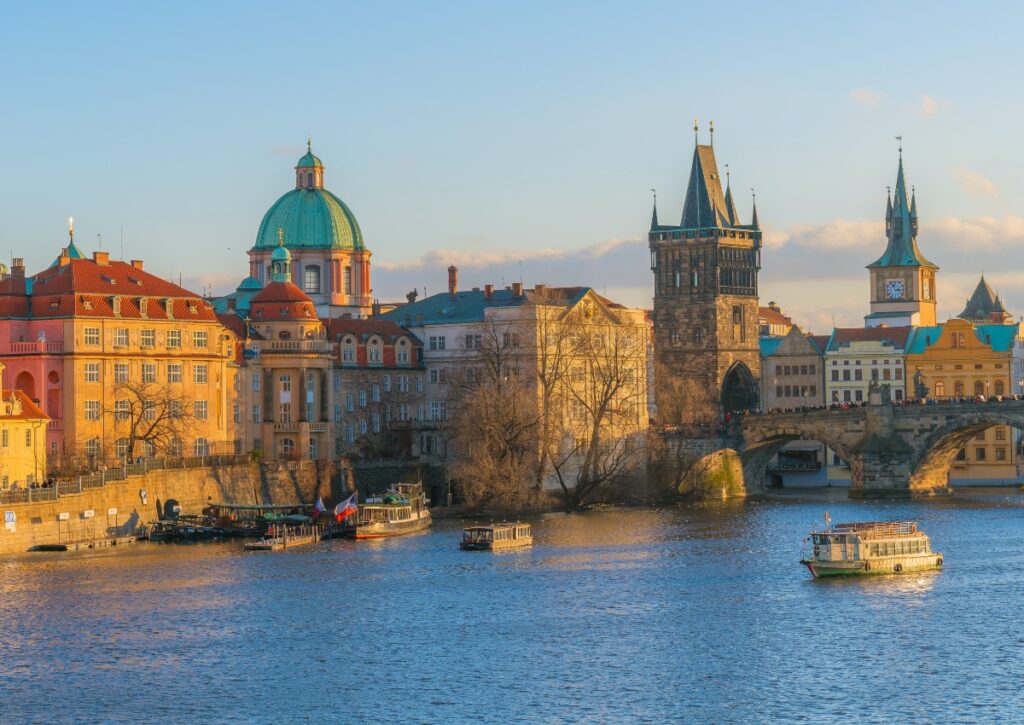
My train back to the airport was at 2:14 PM. I know this because I checked my phone seven times in the forty-five minutes between 1 PM and my taxi. I was sitting outside a café in Malá Strana with the dregs of a coffee and a notebook in which I had written, in total, six sentences and three partial thoughts — all of which trailed off because I kept putting the pen down to look up at something.
A woman was hanging laundry from a third-floor window on a narrow street so old the stones had worn smooth and shiny in the middle. The tram along the embankment made a sound like a question no one needed to answer. Somewhere beyond the castle, a bell was ringing for no apparent reason — not on the hour, not for anything scheduled — just because it felt like something should mark the moment.
That’s Prague on a slow afternoon in the tail end of a week spent moving through a country at the right speed. It doesn’t shout at you. It doesn’t perform. It just continues being exactly what it has been, in this particular spot in Central Europe, for longer than most countries have existed — and it trusts you to notice.
I missed my train by four minutes. This is technically not the Czech Republic’s fault.
I am going back.
Stay in the Loop — Because There’s So Much More Coming
Alright, friend — if you read all the way here, you’ve officially graduated from “curious about the Czech Republic” to “dangerously likely to book a ticket.” Welcome to the club. It’s a great club. The beer is excellent.
A Tiny Traveler exists because I genuinely believe that slow travel — trains, local pubs, towns whose names require a second attempt, mornings on empty cobblestone streets — is one of the most restorative things a human being can still do in a world moving at approximately the wrong speed.
And there is so much more on the way. Southern Moravia by bicycle. The sandstone formations of Bohemian Switzerland. A week in Slovakia by train. Northern Bohemia and its borderland strangeness. The wine routes of Znojmo and Mikulov. All of it is coming, and all of it will be written the same way: honestly, with full prices, with the parts that went sideways included, and with zero sentences about places being “nestled” or “vibrant.”
👉 Subscribe to the A Tiny Traveler newsletter using the form below — every new post delivered directly to your inbox, plus subscriber-only tips and deals I’ve personally vetted and actually use.
Follow me on social media for daily stories, behind-the-scenes travel content, and way too many photos of food:
- Follow me on Instagram (a.tinytraveler): For daily doses of wanderlust, stunning travel photography, behind-the-scenes glimpses of my trips, and quick tips that will inspire your next getaway. See the world through my eyes!
- Like my Facebook Page (A Tiny Traveler): Join our vibrant community of fellow travel lovers! This is a great place to ask questions, share your own travel experiences, and connect with other readers and me.
- Follow me on Pinterest (A Tiny Traveler): My Pinterest is your ultimate travel vision board! It’s where I share stunning photography, quick visual guides, and, most importantly, links to all my in-depth blog posts.
The Czech Republic is waiting. The trains run on time, mostly. The trdelník is worth the risk. The cobblestones will definitely try to humble you.
Go.
Frank


