

There is a moment on the road into Shangri-La, Yunnan, when China stops looking like the version of China you thought you knew. Apartment blocks thin out. The road climbs. Pine forest takes over. Prayer flags appear on ridgelines, yaks become legitimate traffic hazards, and the sky seems to have moved several floors closer. Then you arrive at roughly 3,280 metres above sea level, carry your bag up a flight of stairs, and discover that your lungs have opinions.
My own welcome to Shangri-La was not cinematic. I reached Dukezong Ancient Town feeling very pleased with myself, walked too quickly up a cobbled lane toward Guishan Park, caught my boot on an uneven stone and performed the sort of graceless half-stumble usually reserved for people leaving pubs at closing time. A local woman sitting outside a shop watched the whole thing, handed me a small cup of hot tea, and laughed before I did. Fair enough. Five minutes later, the giant golden prayer wheel above town caught the late light and every rooftop below turned the colour of toasted honey. Suddenly I understood why people keep adding days here.
Shangri-La is not really the mythical Himalayan paradise from James Hilton’s Lost Horizon, despite the wonderfully ambitious branding. The city was formerly known as Zhongdian and was officially renamed Shangri-La County in 2001; it later became Shangri-La City. What you actually get is more interesting than the marketing story: a high-altitude city in Diqing Tibetan Autonomous Prefecture, where Tibetan Buddhist monasteries, wooden old-town houses, wetlands, alpine forests, Chinese tourism infrastructure and modern cafés all coexist within a surprisingly small area.
This guide is for travelers who want to do more than arrive, take a prayer-wheel photo and flee back to Lijiang. I’ll walk you through how to get to Shangri-La, the best time to visit, altitude sickness, where to stay, realistic 2026 travel costs, food, transport, Songzanlin Monastery, Pudacuo National Park, Napa Lake, day trips, a practical itinerary, solo travel, sustainable tourism and the mistakes that can quietly ruin an otherwise excellent trip.
First Things First: Shangri-La Is High. Very High.

Before hotels, monasteries and yak hotpot, we need to talk about oxygen.
Shangri-La sits around 3,280 metres above sea level. That is high enough that an unacclimatized traveler can experience altitude illness. The CDC considers travelers sleeping from about 2,450 metres upward potentially at risk, so Shangri-La is well inside the altitude-sickness zone. Being fit does not magically protect you.
On your first day, keep things boring on purpose. Walk slowly. Drink water. Eat normally. Avoid an ambitious hike, excessive alcohol, and the heroic idea of sprinting up monastery stairs because a tour group is blocking your photo.
Common mild symptoms can include headache, tiredness, poor sleep, nausea or feeling unusually short of breath. If symptoms become severe, worsen rather than improve, or include confusion, serious breathlessness at rest or loss of coordination, treat that as a medical problem and seek help rather than trying to “push through.” If you have heart, lung, or other relevant medical conditions, or you are pregnant, discuss high-altitude travel with a medical professional before the trip.
Rule: make your first afternoon in Shangri-La a slow old-town day. The mountains are patient.
Best Time to Visit Shangri-La Without Freezing or Drowning
The most comfortable periods are generally late spring to early summer and early autumn, but every season has a different personality.
May to June: Green Valleys and Wildflowers
This is one of my favourite windows. Grasslands wake up, hills become greener, and daytime temperatures are much easier for walking. Bring rain protection because weather changes quickly at altitude.
July to August: Greenest, Wettest, Busiest
Summer brings rain, greener landscapes, and domestic holiday crowds. It can be beautiful, but I would not build a tight itinerary around perfect weather. Clouds move fast. Rain can arrive sideways. Pack a shell jacket and a sense of humour.
September to October: Clearer Skies and Crisp Air
For photography and comfortable daytime exploring, September and October are hard to beat. Nights cool down quickly, so a sunny afternoon can trick you into dressing like it is summer right before dinner reminds you that it absolutely is not.
November to March: Cold, Dry and Quieter
Winter means fewer travelers, hard blue skies, frozen mornings, and serious temperature drops after dark. If you like quiet streets and can handle cold weather, this can be rewarding. Check road and attraction conditions before day trips.
Important timing tip: avoid major Chinese public holidays if you value quiet. Golden Week periods can transform a peaceful old-town lane into a slowly moving human river.
How to Get to Shangri-La in 2026
The Train from Lijiang: My First Choice
The railway changed the practical reality of visiting Shangri-La. The Lijiang–Shangri-La railway has operated since late 2023, and official China Railway 12306 currently lists Lijiang and Shangri-La as bookable stations. Current schedules vary by date, so check the exact departure when you travel rather than trusting an old blog screenshot.
Typical journey time is roughly 1 hour 20 minutes, with third-party 2026 listings showing tickets commonly around the low hundreds of RMB depending on class.
The train is comfortable, scenic and vastly preferable to spending half a day negotiating mountain roads if you are already in Lijiang.
Booking tip: for international travelers, Trip.com is often easier than wrestling with a new local app on day one, although 12306 is the official railway platform.
Flying into Diqing Shangri-La Airport
Diqing Shangri-La Airport (DIG) sits close to the city and is useful if your wider China route makes a flight practical. It is a relatively small domestic airport rather than an international hub; current route databases show domestic services, with Kunming among the most frequent connections.
The airport is only several kilometres from central Shangri-La. Recent 2026 travel listings place Dukezong Ancient Town roughly a 15-minute taxi ride away, though exact time and price depend on traffic and pickup conditions.
For Welcome Pickups, check live destination coverage before booking. I could not verify dedicated Shangri-La Airport coverage at the time of writing, so I would not pre-sell that transfer as if it definitely exists. For this city, a hotel-arranged pickup or local taxi may be the simpler move.
Bus or Private Car from Lijiang
Road travel is still useful if you want to stop at Tiger Leaping Gorge or Haba Snow Mountain en route. A private driver costs more but turns a transfer day into a sightseeing day.
GetYourGuide currently lists private Lijiang–Shangri-La routes and multi-day Yunnan tours, including options stopping around Tiger Leaping Gorge, Haba Snow Mountain, Napa Lake and Dukezong.
For self-drive bookings through GetRentacar, check availability and foreign-license requirements before paying. China’s driving rules for foreign visitors are not the place for cheerful improvisation, and I would choose a driver unless you have already sorted the correct Chinese temporary driving permit.
Where to Stay in Shangri-La

Your accommodation decision is mostly a choice between atmosphere and convenience.
Dukezong Ancient Town: Best for First-Time Visitors
For a first trip, I would stay in or just outside Dukezong Ancient Town.
You can walk to cafés, restaurants, Guishan Park, the giant prayer wheel and evening streets without needing a taxi. The trade-off is that some lanes are cobbled, some guesthouses involve stairs, and rolling a suitcase over old stone at altitude feels suspiciously like CrossFit.
Look for a room with heating, good recent reviews, luggage assistance and, ideally, an oxygen concentrator or oxygen availability if you are worried about altitude. Do not assume every picturesque wooden guesthouse is warm in winter.
Newer City Areas: Better for Larger Hotels
If you prefer lifts, modern bathrooms, road access and larger hotel facilities, stay outside the oldest lanes. This is sensible for families, travelers with heavy luggage, or anyone who has looked at a stone staircase and decided they have already achieved enough personal growth.
What Should You Pay?
Prices swing enormously by date and holiday period. In 2026 listings, simple rooms can appear from roughly CNY 150–300, comfortable boutique stays often fall around CNY 300–700, and upscale hotels can move well above CNY 800–1,500 per night.
Treat those as planning ranges, not promises. Search your actual dates.
What Does Shangri-La Cost? A Realistic 2026 Daily Budget
You can visit Shangri-La cheaply, but attraction tickets and private day trips can move the total quickly.
For a budget traveler, I would plan roughly CNY 300–500 per day, excluding long-distance arrival transport. That covers a basic guesthouse or hostel room, local meals, occasional taxis and an average share of attraction costs.
For a comfortable mid-range trip, budget around CNY 650–1,100 per day. That gives you a nicer room, café stops, taxis, paid attractions and more flexibility.
For higher-end travel, CNY 1,500+ per day is easy once you add boutique hotels, private drivers, guides and better restaurants.
Useful planning prices:
- Simple noodles or local meal: around CNY 15–35
- Casual restaurant meal: around CNY 40–80
- Coffee: around CNY 20–40
- Local taxi ride in town: often inexpensive; allow roughly CNY 10–30 depending on distance and conditions
- Budget room: roughly CNY 150–300
- Mid-range room: roughly CNY 300–700
- Songzanlin Monastery: current sources show pricing that varies by ticket package; recent listings range from roughly CNY 55 admission plus transport to packages around CNY 90, so check the live ticket before going.
- Pudacuo National Park: current 2026 listings show different combinations of admission, shuttle and optional extras, with some packages around CNY 138 and higher commercial bundles costing more. Verify what your ticket includes.
Money-saving tip: do not book every transfer privately. Use the train, walk Dukezong, take local taxis for short hops and spend your money on one excellent guided day rather than three mediocre “VIP” packages.
Dukezong Ancient Town: Start Here, Slowly

Dukezong Ancient Town is where I would begin.
Yes, parts have been heavily restored after the devastating 2014 fire. Yes, souvenir shops exist. Yes, someone will eventually try to sell you a shawl. None of that makes the town worthless.
Go early and walk without a destination. The stone lanes are best before shops fully wake up. You will hear metal shutters rattling, kettles coming to the boil, delivery scooters humming over cobbles and the occasional dog announcing that it has serious concerns about your presence.
By late afternoon, climb toward Guishan Park.
Guishan Park and the Giant Prayer Wheel
The huge golden prayer wheel above Dukezong is impossible to miss. It takes several people pushing together to move it, which is part of the point. Join respectfully, follow local behavior, and move clockwise.
The view over tiled rooftops is particularly good near sunset. But remember the altitude. The stairs are short on a map and mysteriously Himalayan in your chest.
Best tip: go once in daylight and again after dark. The old town changes personality when lanterns come on, and the day-trippers disappear.
Songzanlin Monastery: The Place I Would Not Skip
If you visit only one paid cultural site, make it Ganden Sumtseling Monastery, commonly called Songzanlin Monastery.
It is the largest Tibetan Buddhist monastery in Yunnan, built on a hillside north of central Shangri-La. From across the lake, the complex rises in layers — white walls, dark windows, red bands, gold roofs. Up close, it becomes less postcard and more texture: incense smoke, polished wooden steps, butter lamps, murmured prayers and the soft slap of shoes on old floors.
Go early. Current 2026 sources generally show opening from morning through late afternoon or early evening, but hours and ticket structures can vary, so verify them for your date.
Give yourself two to three hours.
Do not treat the monastery like a costume set. Remove hats where requested. Observe photography rules, especially inside prayer halls. Do not shove a phone into a monk’s face. Walk clockwise around religious objects when that is the local practice.
And pace the stairs. I watched one very determined visitor charge upward as if the last person to the top would be deported. Halfway up, he stopped with both hands on his knees and stared at the ground with the philosophical intensity of a man reconsidering every choice since breakfast.
A guided visit can be worthwhile here because Tibetan Buddhist imagery and monastery layout are easy to look at and difficult to understand without context.
Napa Lake: Sometimes a Lake, Sometimes a Grassland
Napa Lake, or Napahai, is one of those places that makes travel writing inconvenient because it refuses to remain visually consistent.
Depending on rainfall and season, you may see broad water, wetland, grassy meadow or some combination of the three. Horses and yaks graze around the basin. Birds use the wetland seasonally. Roads loop around the area, and various viewpoints and horse-riding stops compete for visitors.
I would not rush into the first roadside horse experience offered to you.
If you ride, ask about price, duration and route before getting on the horse. More importantly, look at the animal. If it appears exhausted, injured or poorly treated, walk away. Sustainable travel begins with being willing to disappoint a salesperson.
A private driver makes the lake loop easier, especially if you want photo stops away from the busiest roadside areas.
Best time: late afternoon can be excellent when the light softens across the grassland, but weather dictates everything.
Pudacuo National Park: Pine Forest, Cold Lakes and a Lot of Walking

Pudacuo National Park, also spelled Potatso, lies outside Shangri-La and deserves most of a day.
The park protects high-altitude lakes, forest and meadow ecosystems within the wider Three Parallel Rivers region. Visitor movement is managed through designated routes and shuttle transport in order to concentrate tourism pressure. Shudu Lake is one of the best-known sections. The local government continues to position Pudacuo as a core eco-tourism and outdoor destination in Diqing.
Do not underestimate the altitude here. Parts of the visitor experience rise well above central Shangri-La, and you may feel the difference while walking.
Bring water, sun protection, a rain shell, and warm layers even if town feels mild. Mountain weather does not care what your weather app promised at breakfast.
Current ticket platforms show park admission and transport bundles changing by product, while recent schedules commonly have daytime opening and afternoon last-entry rules. Check the exact ticket and operating hours one day before you go.
Day Trips Worth Adding
Tiger Leaping Gorge
If you are traveling between Lijiang and Shangri-La, build Tiger Leaping Gorge into the transfer rather than backtracking.
The gorge is one of southwest China’s classic mountain landscapes, with the Jinsha River compressed between steep walls beneath the Jade Dragon Snow Mountain and Haba Snow Mountain massifs.
Serious hikers can spend longer on the upper trail, while travelers short on time can visit viewpoints by road. Conditions matter, particularly during wet weather.
Balagezong Scenic Area
Balagezong is farther from town and works best as a full-day trip. Expect dramatic canyon scenery, mountain roads, and a more packaged scenic-area experience.
If you only have three days, I would choose Pudacuo first. With four or five days, Balagezong becomes more reasonable.
Meili Snow Mountain and Deqin
Meili Snow Mountain is not a casual half-day outing. The classic viewing area around Feilai Temple near Deqin is several hours from Shangri-La, so stay overnight if you want a realistic chance of seeing sunrise conditions.
This is where itinerary greed becomes dangerous. Do not leave Shangri-La before dawn, spend half the day in a vehicle, snap a cloudy mountain and return at night just to say you “did Meili.”
Travel slower.
The 4-Day Shangri-La Itinerary I Would Actually Use

Day 1: Arrive and Let Your Lungs Negotiate
Check in near Dukezong Ancient Town. Eat something warm. Walk gently through the old town.
Visit Guishan Park in the late afternoon, turn the prayer wheel if you feel up to the climb, then have dinner nearby.
No serious hike. No drinking contest. No “I feel fine, altitude doesn’t affect me” speech.
Day 2: Songzanlin, Napa Lake and a Long Dinner
Go to Songzanlin Monastery early. Spend two or three hours there rather than racing through.
After lunch, loop around Napa Lake with a taxi or driver. Stop where the landscape looks interesting rather than where someone has installed the largest souvenir sign.
Return to Dukezong for dinner.
Day 3: Pudacuo National Park
Give Pudacuo most of the day. Wear proper shoes, carry layers, and do not schedule a hard evening afterward.
Back in town, find a quiet restaurant, order more food than dignity recommends, and sleep well.
Day 4: Choose Your Own Adventure
If you want nature, take a day trip toward Balagezong or another hiking area with a reputable guide.
If you are leaving for Lijiang, travel via Tiger Leaping Gorge.
If altitude hits you harder than expected, stay in town, drink tea, visit cafés and buy local handicrafts. A rest day is still travel. Nobody is keeping score.
What to Eat in Shangri-La
Food here gets heavier for a reason. Cold nights and altitude are persuasive arguments for carbohydrates.

Yak Hotpot
Yak hotpot is the obvious one. A good version arrives with thin or chunky pieces of yak, mushrooms, greens and a broth that gradually becomes richer as everything cooks together.
The meat is leaner than fatty beef and can be slightly chewy. That is not a defect. It is yak.
Tibetan-Style Bread and Barley
Look for barley-based breads, roasted grains and other highland staples. They are excellent alongside tea or soup.
Butter Tea
Yak butter tea can surprise first-timers because it is salty and fatty rather than sweet. The smell lands first: dairy, salt, warmth. Then the texture. I like it in cold weather. On a hot afternoon, I suddenly understand why iced coffee became a global empire.
Yak Yogurt
Local yak yogurt is thick, tart, and often served with sugar or toppings. Try it plain first.
Mushrooms
Yunnan is famous for mushrooms, and seasonal fungi appear in local dishes. Eat wild mushrooms only from reputable restaurants where they have been correctly identified and properly cooked. This is not an area in which I recommend “following your intuition.”
Food budget: CNY 80–180 per person per day is comfortable for local meals, more if you add cocktails, Western cafés or upscale hotel restaurants.
Getting Around Shangri-La
Inside Dukezong, walk.
For Songzanlin Monastery, Napa Lake, the railway station, airport and outer-city hotels, taxis or app-based rides are practical. Local bus and minibus services exist, but routes can be less intuitive for short-stay foreign visitors.
Hotel staff can be extremely useful for calling a car or writing your destination in Chinese.
For a full day outside town, hiring a driver can be good value if two to four people split the cost. Confirm the total price, route, waiting time, parking and whether attraction tickets are included before leaving.
Tiny but useful tip: screenshot the Chinese name and address of your hotel. “The cute wooden place near the prayer flags” is not sufficient navigation data.
Money in China: Set It Up Before You Arrive
China is highly mobile-payment oriented.
Foreign visitors can link eligible international cards, including Visa and Mastercard, to Alipay and WeChat Pay, according to China’s official guidance for overseas visitors. Cash and bank cards remain possible in various settings, but QR payment is often the path of least resistance.
Install and verify at least one payment app before travel. I would set up both if possible.
Carry some RMB cash as backup, especially in smaller places or when technology decides it has developed a personal dislike for you.
Revolut and Wise
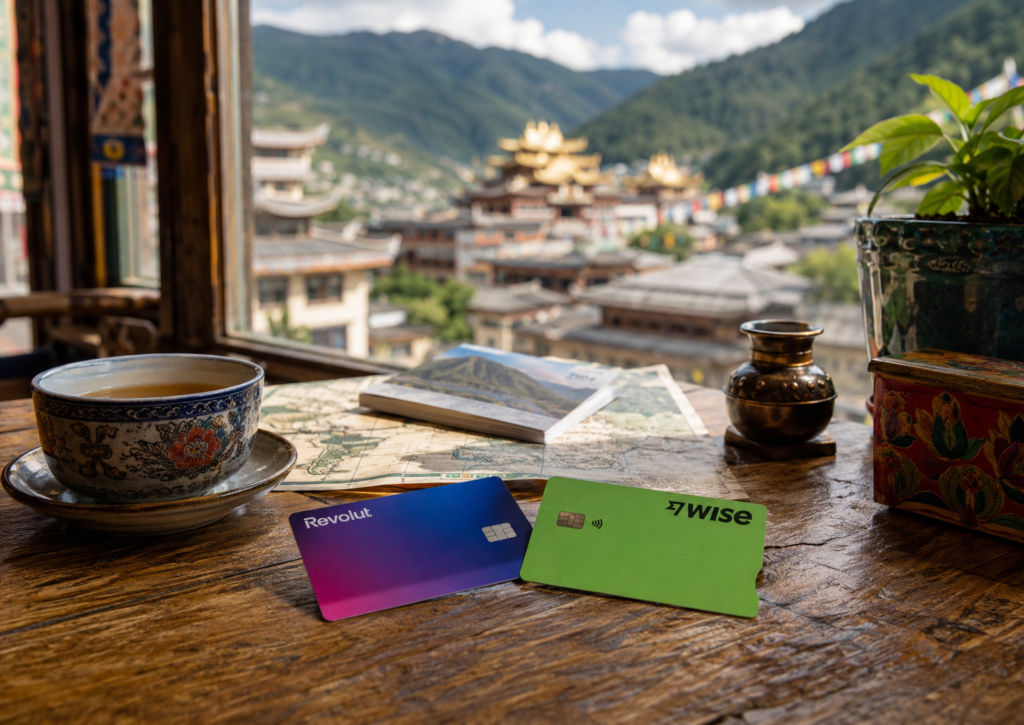
I use travel-money cards as backup layers rather than as the only payment plan.
A Revolut or Wise card can be useful for foreign-currency spending and ATM withdrawals, subject to your plan, card network, local ATM and account terms. But remember: the practical issue in China is often not your exchange rate; it is whether the merchant wants a QR payment.
Check current fees and card conditions before publishing affiliate claims, because financial-product terms change.
Internet, eSIMs and the Great “Why Won’t This App Load?” Moment
Do not leave connectivity until the airport Wi-Fi screen is asking for a verification code you cannot receive.
A China-compatible eSIM is one of the easiest pre-trip purchases. Trip.com currently lists mainland China eSIM options for travelers, including data packages marketed for common international apps. Product routing and access can differ, so read the latest package description rather than assuming every eSIM behaves identically.
Download offline Chinese language translation, hotel addresses, train details and maps before arrival.
Your phone becomes payment card, translator, train ticket folder, map, taxi tool and emergency backup. Treat battery percentage with the seriousness it deserves.
Visa and Entry: Check Your Passport, Not Someone Else’s TikTok
China’s entry rules changed substantially in recent years.
As of 2026, China’s official visa service lists 30-day visa-free entry for eligible ordinary-passport holders from a substantial group of countries through December 31, 2026, while other nationalities still need a visa unless they qualify under another policy. Your passport, trip purpose, and length of stay determine what applies.
Check the official Chinese visa service shortly before booking and again before departure.
Do not base an international border crossing on a creator saying “I think Europeans are visa-free now.” Europe is not a passport.
Travel Insurance: Boring Until It Suddenly Isn’t
Shangri-La adds altitude, mountain roads, hiking and weather variability to the usual travel risks.
A policy worth having should make sense for your actual activities and destinations. If you plan hiking at altitude, read the exclusions and altitude limits carefully. Some policies distinguish ordinary sightseeing from trekking, climbing or adventure sports.
VisitorsCoverage lets travelers compare international travel medical and trip-insurance products.
Do not buy insurance because a blogger says “this one is best.” Compare medical limits, evacuation, trip interruption, pre-existing-condition wording, altitude exclusions, and the claims process yourself.
Sustainable Travel Without the Self-Congratulatory Bamboo Toothbrush Lecture

Sustainable tourism in Shangri-La is mostly about behavior, not accessories.
Stay longer. Taking the train and spending four nights in one place usually creates less frantic transport than hopping between three distant attractions in two days.
Use official trails and boardwalks in Pudacuo National Park. Do not step into a fragile meadow just because the photograph looks better three metres beyond the barrier.
Refill water where safe and practical, carry a reusable bottle, and avoid buying a new pile of disposable “outdoor gear” for a two-hour walk.
Choose locally owned restaurants and guesthouses when they genuinely suit your needs. Buy crafts because you value the work, not because you want a cheap “ethnic” souvenir.
At Napa Lake, choose animal experiences carefully. Do not reward poor welfare practices.
At monasteries, sustainability also means cultural respect. Dress sensibly. Follow photography rules. Do not treat religious ceremonies as free performance art.
And perhaps most important: do fewer things, better. The lowest-impact viewpoint is often the one you reached on foot and stayed at for an hour rather than the six places you hired a car to tick off before lunch.
What to Pack for Shangri-La
Pack for temperature swings, sun and sudden weather.
Bring layers, not one enormous coat unless you are visiting in winter. A breathable base layer, fleece or warm mid-layer and windproof/rainproof outer shell works across more situations.
Bring comfortable shoes with grip for old-town stones, monastery steps and park paths.
Bring high-SPF sunscreen, sunglasses and lip balm. UV exposure is stronger at altitude.
Bring a small daypack, reusable water bottle, power bank and tissues.
Keep medication in original packaging where practical and carry enough for your trip. If you are concerned about altitude illness, discuss prevention and treatment with a qualified clinician before travel rather than buying random pills after arrival.
Packing tip: put one warm layer in your hand luggage. A checked bag delay at sea level is annoying. At 3,280 metres after sunset, it becomes a character-building exercise.
Mistakes I Would Avoid in Shangri-La
Arriving from low altitude and immediately hiking hard is the obvious one. Acclimatize.
Staying only one night is another. You will spend half your visit arriving and the other half packing.
Assuming every attraction is beside the old town leads to wasted time. Pudacuo, Balagezong and other outdoor sites require transport.
Booking the cheapest guesthouse without checking heating can turn a charming timber room into a refrigerated photography set.
Ignoring Chinese holidays can mean sold-out trains and inflated room prices.
Treating Tibetan culture as décor is worse than merely rude. Songzanlin is a functioning religious site, not a themed attraction.
Overplanning day trips is the sneaky mistake. At altitude, everything takes longer. Weather changes. Roads twist. You get tired.
And finally: do not judge Shangri-La only by Dukezong’s souvenir streets. The city makes more sense once you have seen the monastery at morning light, the wetland outside town and the forest around Pudacuo.
A Practical Pre-Trip Booking Order
If I were planning the trip tonight, I would do things in this order:
- Check Chinese entry requirements for my passport.
- Choose dates, avoiding major public holidays if possible.
- Book accommodation near Dukezong with strong heating and recent reviews.
- Book the Lijiang–Shangri-La train or domestic flight once the route is fixed.
- Buy a China-compatible eSIM before departure.
- Set up Alipay and WeChat Pay, plus a backup card and some cash.
- Arrange travel insurance that covers my itinerary and hiking plans.
- Pre-book one guided day if I want deeper context at Songzanlin or an easy Pudacuo day.
- Leave at least half a day unscheduled. You will use it.
The Part Where Shangri-La Stops Being a Checklist
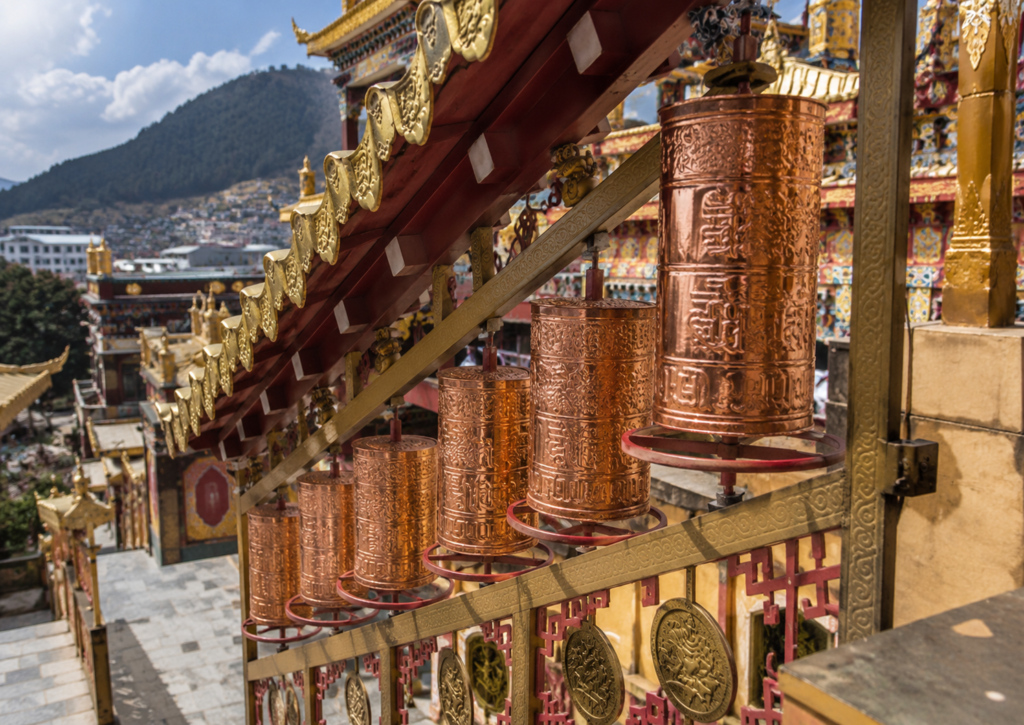
The problem with a name like Shangri-La is that reality has almost no chance.
You arrive carrying a fictional paradise invented in a novel, decades of tourism advertising and probably a few heavily edited social-media clips. Then reality shows up wearing muddy boots.
There are tour buses. There are souvenir shops. The old town has been reconstructed in places. Weather closes in. A taxi driver may not understand you. Your hotel room may be colder than expected. The first bowl of butter tea might taste like somebody salted your breakfast.
Good.
Because underneath the branding, the real place starts to appear.
It appears at Songzanlin Monastery when a door opens, and a line of monks crosses a courtyard while visitors instinctively lower their voices. It appears around Napa Lake when the road curves away from the photo stops, and you see horses grazing in wet grass beneath a long grey sky. It appears in Pudacuo when rain taps on your jacket, pine needles smell sharper, and the lake surface goes dark under a passing cloud.
And it appears in Dukezong after dinner.
The shops begin closing. Footsteps sound louder on stone. Smoke and cooking smells hang between wooden buildings. Above the roofs, the giant prayer wheel still catches whatever light is left.
That is the version of Shangri-La I would travel for.
Not paradise. Not perfection.
A real highland city with sacred places, tourist machinery, awkward stairs, very good soup, thin air and enough rough edges to remain interesting.
If you are planning a wider Yunnan itinerary, do not squeeze Shangri-La into a single night between Lijiang and somewhere else. Stay long enough to have a bad-weather afternoon. Stay long enough to revisit a street. Stay long enough that the altitude stops being the first thing you notice when you walk uphill.
Then go farther if you have time — toward Tiger Leaping Gorge, Deqin, Meili Snow Mountain, or simply another cup of tea.
If this guide helped you plan your trip, subscribe to A Tiny Traveler so I can send you the next practical travel guides, route ideas, budget breakdowns, and things-I-wish-I-knew-before-I-arrived stories.
And follow A Tiny Traveler on Pinterest for upcoming China travel guides, Yunnan itineraries, solo travel tips, visual route ideas and destination planning posts you can save for later.
Because the best trips rarely begin with a perfect plan.
They begin with one place you cannot stop thinking about — and, occasionally, with tripping over a cobblestone while a stranger laughs and hands you tea.
Frank


