

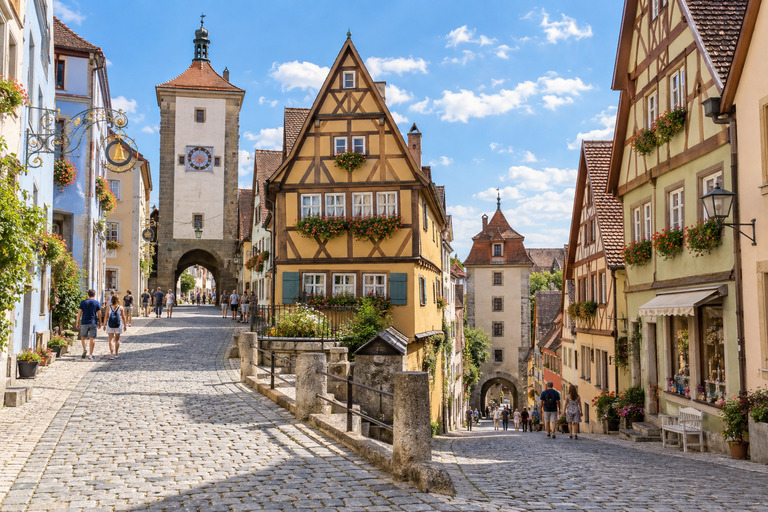
The yellow house at Plönlein has a demanding job. It must look charming through rain, tour groups, delivery traffic, and several hundred people deciding that the middle of the street is an excellent place to stop. I admire its patience. Yours will last longer if you arrive with something better than a list of photo spots.
Rothenburg ob der Tauber rewards a different approach: walk the famous streets, certainly, but make room for the wooden wall passages, the carved faces inside St. James’ Church, and the steep descent toward the Tauber Valley. This is a town where your best purchase might be an extra night, simply because it buys you the hours between the departing coaches and tomorrow’s arrivals.
My starting point is practical. You can see the highlights in one day, but one or two nights give you a much less hurried visit. I would build the trip around an evening walk, a proper meal, and enough unscheduled time to follow a lane without immediately asking what it contributes to the itinerary.
This Rothenburg ob der Tauber travel guide is for independent travelers, couples, curious families, and solo visitors who want history with their holiday rather than a military campaign against the clock. I’ll help you choose transport, find the right hotel location, understand daily costs, eat beyond the obvious souvenir pastry, and decide what deserves your time. Comfortable shoes first. Medieval paving has never cared about your outfit.
Rothenburg at a Glance: The Decisions That Matter
- Where: Franconia, in northern Bavaria, Germany, above the Tauber River.
- Best trip length: One full day for highlights; two nights for a relaxed visit.
- Best fit: Historic streets, art, walking, traditional inns, and Christmas atmosphere.
- Getting around: Primarily on foot; a car helps with a broader countryside itinerary.
- My preferred timing: A weekday in late spring or early fall, outside major events.
- Daily spending: Roughly €90–€130 budget, €140–€210 comfortable, or €250–€400+ indulgent, per person sharing accommodation.
First, Make Sure You Book the Right Rothenburg
The full name matters. Rothenburg ob der Tauber is the walled town on the Romantic Road that you are looking for. Other places with similar names exist, and booking systems do not award sympathy points for choosing the wrong one.
Use the complete destination when searching accommodation and trains. The rail stop may appear with abbreviations such as Rothenburg ob der Tauber or Rothenburg o.d.T. Check the map before paying.
The history behind those carefully maintained walls
Rothenburg received a major imperial privilege in 1274, an important stage in its development as a largely self-governing imperial city. That prosperity helps explain the ambitious buildings around the center. The official town history provides useful background before you arrive.
Also, “medieval town” does not mean everything survived untouched. Wartime destruction and reconstruction are part of the story. Ask a guide to show you the differences rather than treating every timber as an uninterrupted message from the fourteenth century.
I find that a more interesting way to look at the place. You are seeing what people built, what they lost, and what later generations decided was worth rebuilding.
When to Visit: Choose Your Crowd and Your Coat
Spring and fall: my first choices for walking
I would look first at May, June, September, or early October, then check the event calendar before booking. These months can suit longer walks without building the entire day around winter darkness or peak summer heat.
That is a preference, not a weather guarantee. Pack layers and a rain shell. A gray morning can turn into a pleasant afternoon; it can also remain a gray morning with greater commitment.
My Tip: Compare several weekdays before selecting your hotel dates. A quieter calendar can matter more than the supposedly perfect month.
Summer: use the edges of the day
During July and August, I would put photography and exposed walking early, indoor sights around midday, and another wander after dinner. Check whether your exact hotel room has air-conditioning. An attractive historic facade is not a cooling system.
Carry water, take breaks, and avoid treating every tower as compulsory. You can admire a roof without personally climbing above it.
Christmas: wonderful atmosphere, serious planning
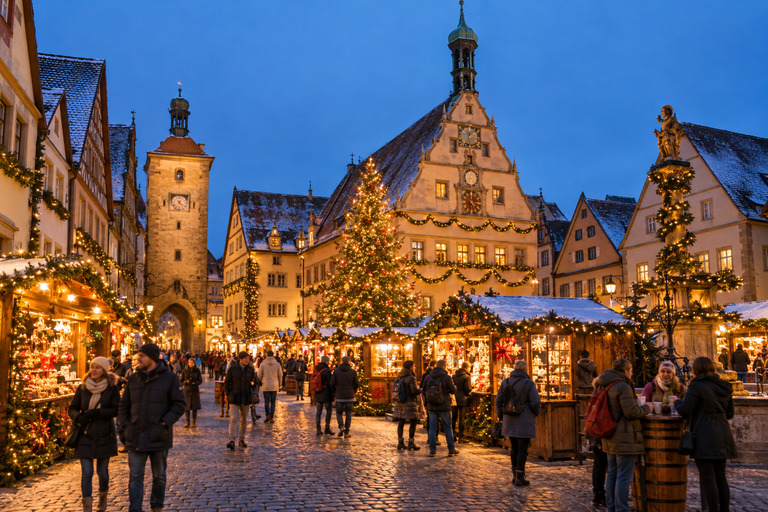
The Reiterlesmarkt, Rothenburg’s Christmas market, brings stalls into the old town. Think hot cups warming cold fingers, spice in the air, and the practical discovery that gloves make operating a phone surprisingly complicated.
The official Christmas market page currently lists November 20–December 23, 2026, with a Remembrance Sunday closure. Some supporting text still carries older dates, so confirm your specific visiting day directly before making nonrefundable arrangements.
Book accommodation early if the market is your main reason for traveling. Keep a refundable option while finalizing transport. Snow is a possibility, never an inclusion.
My Tip: A weekday overnight stay gives you more flexibility than arriving for a few crowded Saturday hours.
Getting to Rothenburg Without Turning It into a Railway Exam
By train: expect a regional connection
The usual approach is through Würzburg or Ansbach, changing at Steinach bei Rothenburg ob der Tauber for the branch line. The official arrival guide explains the basic route.
Check the full Steinach station name. Steinach in Baden is somewhere else entirely. This is the sort of tiny detail that can turn a tidy itinerary into an accidental tour of the country.
For broad planning, allow around 1.5–2 hours from Nuremberg, and roughly 3–4 hours from Munich or Frankfurt, depending on the service. These are allowances, not fixed timetables. Search your date using Deutsche Bahn, including engineering work and replacement buses.
From the station, allow roughly 10–20 minutes on foot to reach the eastern old town and central streets, depending on your destination and luggage. Confirm the route to your hotel; “near the center” covers a surprising amount of suitcase rattling.
Which ticket should you buy?
For regional travel within Bavaria, compare ordinary fares with the Bayern-Ticket. The current second-class price starts at €34 for one person. Weekday validity generally begins at 9 a.m., and it covers eligible regional transport, not ordinary ICE journeys. Check group pricing and your entire route before buying.
The Deutschland-Ticket currently costs €63 per month and covers eligible local and regional services. It is a subscription, with cancellation conditions, rather than a simple tourist day pass. Do the arithmetic before signing up for a short visit.
My Tip: Plan around a comfortable connection, especially with children or heavy luggage. The cheapest itinerary loses appeal when every platform change feels like a qualifying heat.
Flights, airport arrivals, and transfers
Nuremberg Airport is a practical regional gateway. Its U2 subway connects directly with Nuremberg’s main station in about 12 minutes, before your onward rail journey. Check the airport’s transport instructions.
Frankfurt Airport and Munich Airport may offer more convenient flights for your origin, but compare the complete journey, including airport transfers, connections, and arrival time.
Trip.com can help you compare flight schedules and bookable transport options. I would prioritize a sensible arrival time over a small fare saving that leaves you stranded after the final useful connection.
Compare Flights and Travel Options on Trip.com
For a late landing, substantial luggage, or a group, check Welcome Pickups for a transfer from your arrival airport. It advertises service in Nuremberg, but a city airport transfer does not automatically include a long-distance ride to Rothenburg. Enter your exact hotel address and confirm route availability, luggage capacity, waiting terms, and the complete fare.
Driving: useful outside town, unnecessary inside it
A rental car makes more sense for several Romantic Road stops than for walking around Rothenburg itself. The A7 provides access via exit 108; use signed parking outside the walls and continue on foot.
The municipal parking page currently lists €1.30 per hour and an €8 day ticket for cars in its large public lots. Follow the signs for your chosen lot; hotel parking has separate charges and conditions.
Compare GetRentacar offers at your arrival airport or another convenient pickup point. Before committing, check the actual supplier, deposit, deductible, mileage allowance, transmission, fuel policy, and cross-border permission if your itinerary leaves Germany. Confirm local availability rather than assuming collection inside the old town.
Where to Stay: Buy Yourself the Evening
Inside the walls: easiest for atmosphere
For a first visit, I would prioritize the Altstadt, or old town. Being able to return after dinner without consulting a timetable changes the rhythm of the trip.
Around Marktplatz, you gain convenience but should ask about street noise. Along Herrngasse, you are well placed for central sights and the Burggarten. Side streets can offer quieter rooms, although bells, deliveries, and neighboring guests remain part of real life.
My Tip: Request a quiet room explicitly. “Historic” tells you about the building; it tells you remarkably little about soundproofing.
Two hotels worth investigating
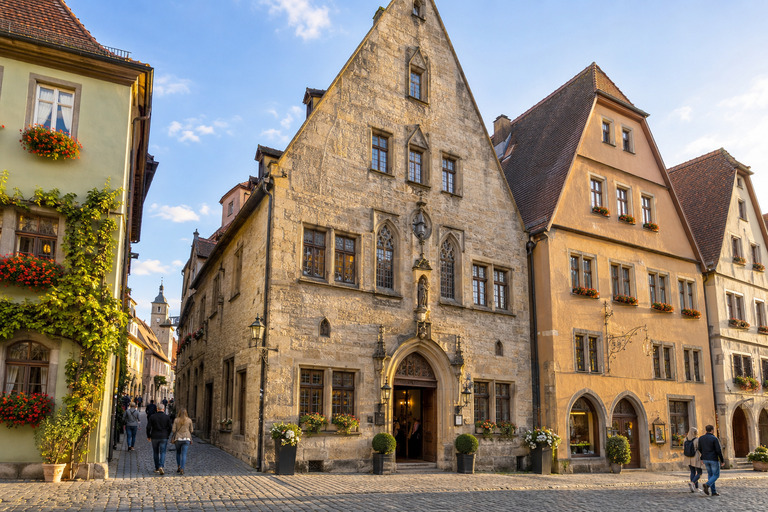
Hotel Gotisches Haus is a small historic property on Herrngasse, with individually designed rooms. It belongs on your shortlist if the building itself is part of the appeal. Inspect the room category, bathroom arrangement, and access details on the hotel website.
Burg-Hotel, by the old walls, offers rooms facing the Tauber Valley or monastery garden. Its setting makes it worth comparing for a quieter stay, but verify the view attached to your chosen category. Start with its official room information.
These are researched suggestions, not claims that I have personally slept in every room. Compare recent reviews that discuss the things you actually care about: mattress comfort, stairs, summer temperatures, and breakfast.
Outside the walls: often the practical choice
Accommodation near the gates or station can simplify parking and luggage. Check the walking route, not just the straight-line distance. A room a little farther away may still be easier than carrying bags up several narrow staircases.
As working estimates, expect around €90–€140 for a simple double, €140–€220 for a comfortable central double, and €230–€350+ for upgraded rooms or busy dates. Single travelers often pay more per person because room costs are not halved.
Use Booking.com to compare the map, recent reviews, cancellation rules, breakfast, and final total. Shortlist two or three properties, then compare equivalent rooms with the hotels’ own offers.
Find Your Rothenburg Stay on Booking.com
Best Things to Do in Rothenburg: Start with the Walls
Walk the Tower Trail, without making it an endurance event
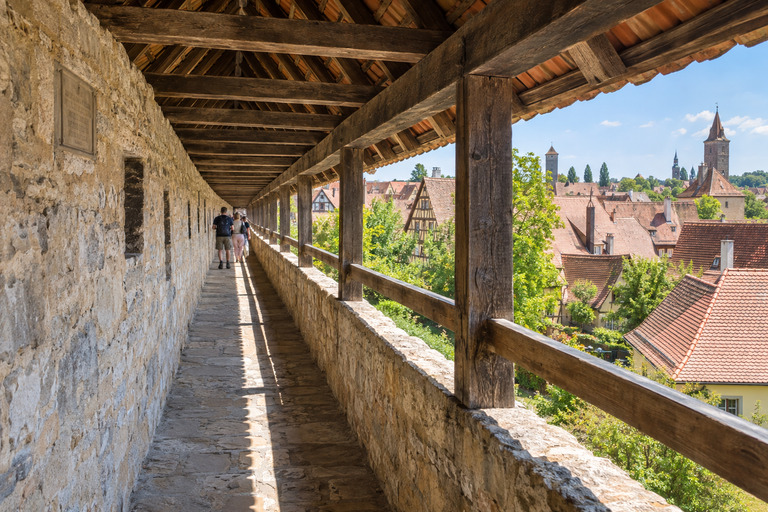
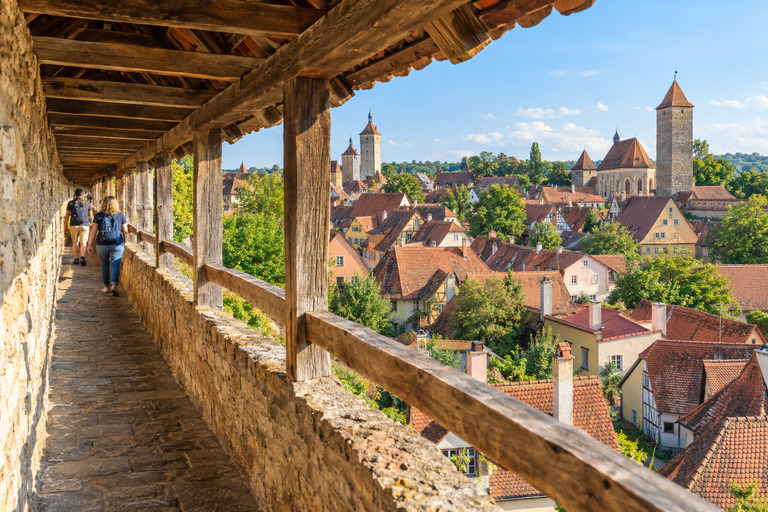
The Rothenburg Tower Trail, or Turmweg, runs roughly 4 kilometers around the old town. The tourism office suggests around 2.5 hours for the route with its historical information. Check the official wall and tower guide.
Do not confuse the complete trail with one continuous elevated walkway. The experience includes different sections, access points, and ground-level walking. Choose a manageable stretch if time, mobility, or enthusiasm is limited.
Above the street, the interest shifts from shop windows to roof tiles, wooden beams, and the backs of buildings. Give yourself permission to stop studying the map.
My Tip: Wear shoes with grip, watch low beams, and give people space on narrow sections. Elevated passages and stairs will not suit every visitor; ask about accessible ground-level alternatives.
Photograph Plönlein, then keep walking
At Plönlein, the yellow half-timbered house sits between two descending streets, framed by Siebersturm and Kobolzeller Tor. The appeal is the whole arrangement, not just one building. The official Plönlein guide explains the setting.
Go early if photography matters. Stand somewhere safe, accept that other people also booked a holiday, and continue into the surrounding streets after getting your picture.
My Tip: Take one wide photograph and one detail. A door, sign, or window often makes a more personal souvenir than your eighteenth attempt to remove strangers from the frame.
Use Marktplatz to get your bearings
Marktplatz is your central reference point, with the Rathaus, or town hall, anchoring the square. From here, orient yourself toward Herrngasse, St. James’ Church, and the streets leading south.
If open and suitable for you, the Town Hall Tower offers a roofscape after 220 steps. Consult the official climbable towers page for access information.
Skip the climb without guilt if steep stairs or confined spaces are uncomfortable. A holiday is a poor occasion to discover that your relationship with heights needs professional mediation.
Give St. James’ Church your attention
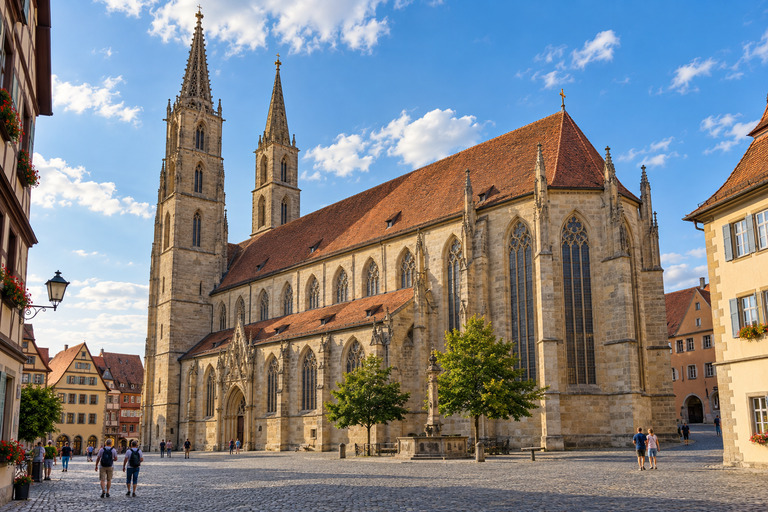
Inside St. James’ Church, also called St. Jakobskirche, look for Tilman Riemenschneider’s Holy Blood Altar. The carving rewards close looking: hands, faces, folds of clothing, and the way wood can suggest a private conversation.
Do not stop at the first major altar and assume you have finished. The church also contains Friedrich Herlin’s Twelve Apostles Altar. Use the official church guide to understand where the principal works are located.
Allow 30–45 minutes if art interests you. Check sightseeing hours and admission before visiting, respect services, and follow photography rules.
Visit the Medieval Crime Museum for context, not cheap thrills
The Medieval Crime Museum examines legal history, punishment, and social control. Its objects can be disturbing; this is more useful when approached as a history museum than as an entertainment cabinet of unpleasant equipment.
I would allow 60–90 minutes, longer if you read closely. Adult admission currently costs €10.50, according to the museum’s ticket page. Confirm seasonal access on its opening-hours page.
For children, decide according to sensitivity and interest rather than assuming every museum suits every age.
Find the quieter view in the Burggarten
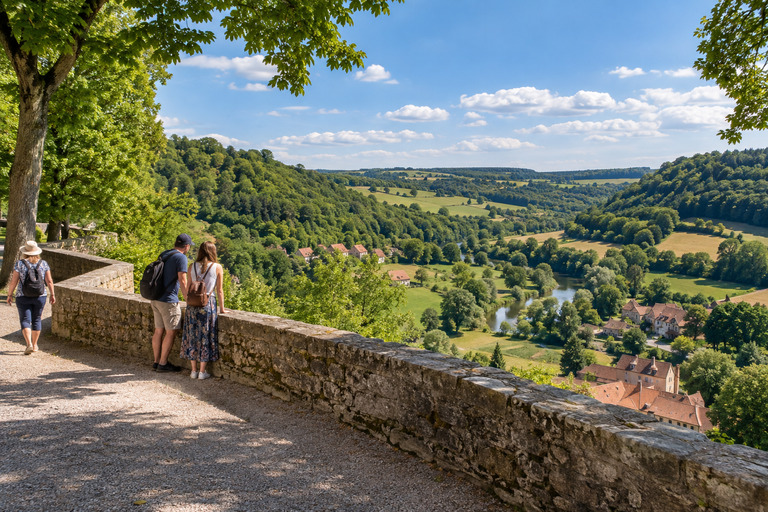
The Burggarten, or castle garden, offers views toward the Tauber Valley and across the town’s roofline. Despite the name, you are visiting a garden on a former castle site, not touring a furnished palace. See the official garden guide.
This is where I would deliberately stop achieving things. Find a bench. Have some water. Let the itinerary sit quietly in your pocket for ten minutes.
Walk down to the Tauber Valley
If you have time and suitable weather, descend toward the Doppelbrücke, the double bridge, for a different perspective on Rothenburg above the river. The official Tauber Valley guide outlines walking and cycling possibilities.
Budget 60–90 minutes or more for a modest outing, depending on your route and pace. The important detail is the return climb. Downhill confidence can be dangerously persuasive.
My Tip: Save an offline map, carry water, and check your return route before descending. After rain, choose your path according to footing rather than whichever dotted line looks most adventurous.
Choose one extra museum that suits you
The RothenburgMuseum adds local context, including art, objects, and material connected with the town’s Jewish history. Its official website lists current exhibitions and visiting information.
For deeper context, read the tourism office’s Jewish history guide. Historic towns contain stories of exclusion and persecution as well as attractive architecture; both deserve attention.
The German Christmas Museum, above Käthe Wohlfahrt’s shop on Herrngasse, explores Christmas customs and decorations. The shop and museum are separate experiences; use the official museum overview before planning your visit.
After Dinner, Follow the Night Watchman
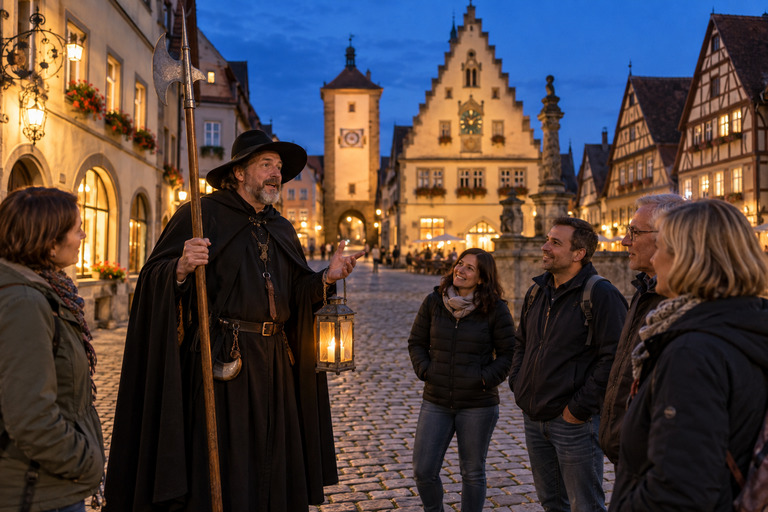
The Night Watchman Tour is an appealing way to put stories back into streets you have already photographed. Bring a warm layer and choose an early dinner if you want to join an evening departure.
Check the exact operator and date. Public tourism-office tours and individually advertised watchman tours are not interchangeable bookings. The official public-tour page includes seasonal information, but some date text is mixed across years.
Hans Georg Baumgartner, the well-known watchman, states on his own website that his final tour will be October 31, 2026. Do not assume an older recommendation guarantees that particular guide.
For other walking tours or a private group, compare GetYourGuide listings by language, duration, meeting point, group size, and inclusions. A paid private tour can make sense for a family or focused interest; a public walk may suit you better for an uncomplicated evening.
Find a Rothenburg Walking Tour on GetYourGuide
My Tip: Read the itinerary before the reviews. An excellent guide cannot make a tour about the wrong subject become your ideal afternoon.
What to Eat: Start Savory, Negotiate with the Pastry Later
Order something Franconian
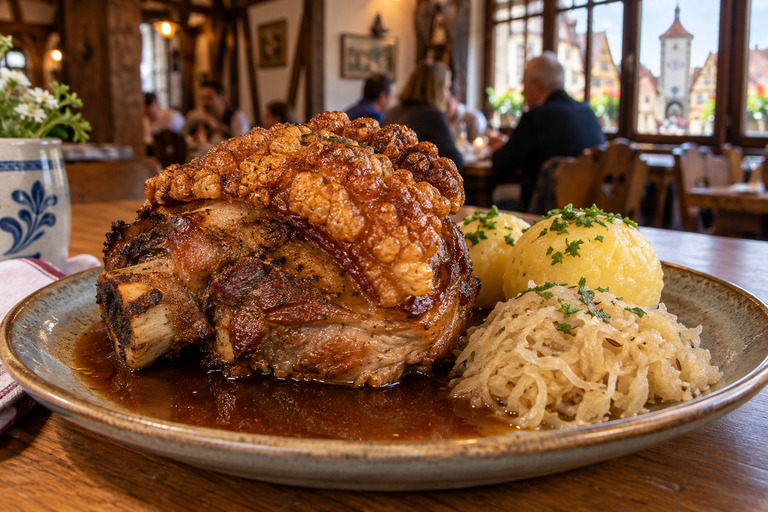
Look for Schäufele, roast pork shoulder with crisp skin, often accompanied by dumplings and gravy. The pleasure is in the contrast: crackling that breaks under your teeth, soft meat beneath, and a dumpling ready to absorb what remains. The Nuremberg tourism guide to Schäufele explains the regional dish.
Franconian bratwurst, seasonal dishes, and local wine also deserve consideration. Ask which dishes are regional and available that day rather than assuming the longest menu is the best one.
For restaurant research, start with Gasthof Butz, Restaurant Alter Keller, and Glocke, then check current menus, opening days, and dietary options through the official restaurant directory.
I would reserve one dinner where possible, particularly for a weekend or market visit. Alter Keller does not currently accept reservations, according to its own website; check before visiting. You want to spend the evening eating, not inspecting a sequence of fully occupied tables.
Schneeballen: crunchy, crumbly, and not a doughnut
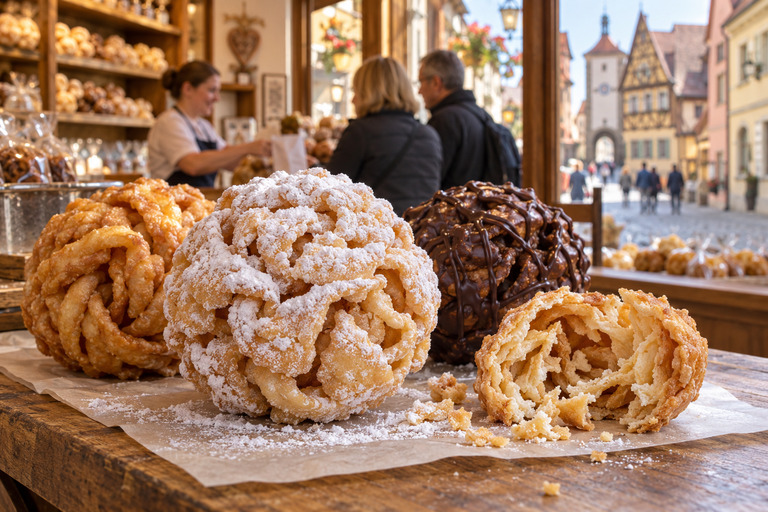
Schneeballen are balls of pastry strips, traditionally finished with powdered sugar. Expect a dry, crisp pastry rather than a soft, cream-filled cake. That expectation matters more than choosing the most photogenic coating.
Diller lists its plain original online at €2.50, with coated varieties costing more; in-store prices may differ. Check its pastry selection.
My Tip: Buy one to share before committing to a gift-sized collection. Eat it with coffee and a napkin. Several napkins, if you take the assignment seriously.
Vegetarians, vegans, and sensible lunch plans
Check menus before arriving if you have dietary restrictions. Ask about stock, sauces, cooking fat, and toppings; a potato dish is not automatically vegetarian, and a vegetable dish is not automatically vegan.
A bakery breakfast or takeaway lunch can balance a more generous dinner budget. Buy what you will eat, use proper bins, and avoid turning church steps or residential doorways into your dining room.
My Tip: Confirm kitchen hours, not just restaurant opening hours. A room with the lights on is not necessarily a room still producing supper.
What Rothenburg Costs: A Budget You Can Actually Use
These estimates assume one person sharing a double room, a normal sightseeing day, and most movement on foot. They exclude flights, intercity transport, rental cars, shopping, and insurance.
| Travel style | Room share | Food and drinks | Sights and incidentals | Daily total |
|---|---|---|---|---|
| Budget | €45–€65 | €30–€40 | €15–€25 | €90–€130 |
| Comfortable | €70–€110 | €45–€65 | €25–€35 | €140–€210 |
| Indulgent | €125–€200+ | €85–€140+ | €40–€60+ | €250–€400+ |
Solo travelers should price an actual single-occupancy room, not simply use half a double-room rate. Christmas dates, festivals, and premium rooms can exceed these ranges substantially.
Essential purchases and realistic allowances
- Coffee: Allow €3–€5.
- Bakery breakfast with a drink: Around €7–€12.
- Simple lunch: Around €10–€18.
- Traditional restaurant main: Around €18–€30.
- Dinner with a drink: Around €25–€40.
- Beer or house wine: Allow roughly €4–€7, depending on size.
- Supermarket water: Roughly €0.50–€1.50, sometimes plus a refundable bottle deposit.
- Public toilet contingency: Keep €0.50–€1 available; individual facilities vary.
These are working allowances, not a surveyed menu-price list. Check what breakfast includes before paying for it twice, and add a 10–15% buffer for unexpected expenses.
For a three-day, two-night visit, calculate two room nights plus three days of meals and activities. Multiplying an overnight daily budget by three would count a bed you never used.
A One-Day Rothenburg Itinerary That Leaves Room for Lunch
Morning: the famous streets and one serious stop
Arrive as early as your route comfortably allows. Start around Marktplatz, continue toward Plönlein, and photograph the streets before settling into the day.
Choose St. James’ Church or the Medieval Crime Museum according to your interests and opening times. Do not squeeze both into a tiny window just to increase the number of completed attractions.
Afternoon: lunch, walls, and the garden
After lunch, walk a section of the Tower Trail, then head toward Herrngasse and the Burggarten. Add coffee or the Christmas Museum if that genuinely appeals to you.
My Tip: Leave the valley walk for another visit if your return train is already dictating the afternoon. Hills become less interesting when you are calculating missed connections.
Evening: stay only as late as your transport allows
Have dinner or join a watchman tour if the confirmed schedule works. Otherwise, take an earlier return and enjoy the day you actually have.
For a Munich day trip, compare an organized excursion with independent transport. GetYourGuide can make the logistics simpler, but inspect actual free time in Rothenburg, other stops, and total coach time before booking.
Compare Rothenburg Day Trips on GetYourGuide
Two Nights: The Version I Would Choose
Arrive on the first afternoon, check in, and do a light orientation walk. Keep that evening for dinner and a confirmed tour, or simply another circuit of the central streets.
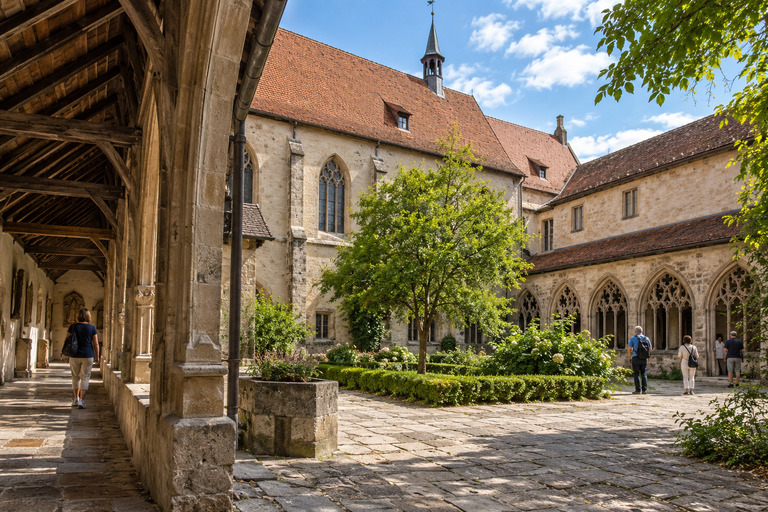
Use the next morning for the walls and your main indoor sight. After lunch, descend into the Tauber Valley if conditions suit you, or choose the RothenburgMuseum. Return for a rest before dinner. Yes, a rest. You are allowed one without producing a medical certificate.
On departure morning, revisit your favorite street, buy a small edible souvenir, and leave without needing to race through anything.
The extra night buys flexibility more than additional attractions. You can swap activities around rain, revisit a view in different light, and have a disappointing coffee without it consuming a quarter of the trip.
Practical Details That Save Disproportionate Amounts of Trouble
Cash, cards, Revolut, and Wise
Carry some euros, including small denominations, alongside a backup card. Ask about payment before ordering if you are relying entirely on contactless.
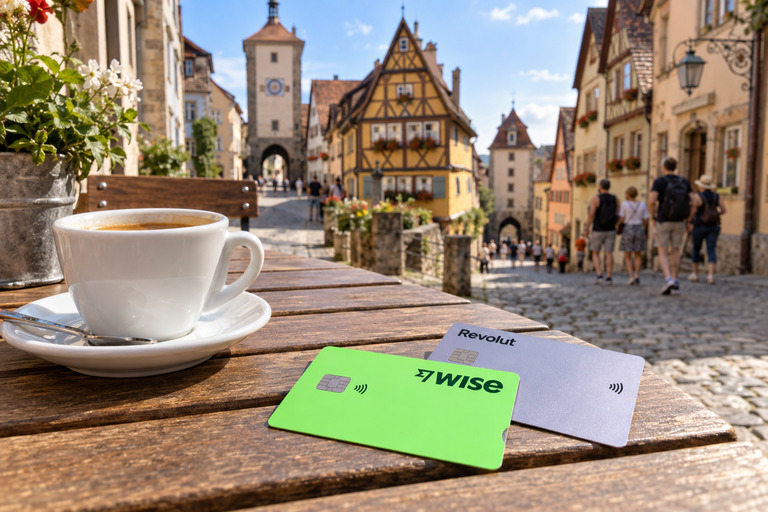
Revolut and Wise are worth comparing with your existing card for foreign spending. Check your country-specific eligibility, conversion charges, ATM allowances, and any plan or weekend fees. Their Revolut fee information and Wise pricing page are starting points; select your own country’s terms.
My Tip: Choose euros at the payment terminal, and review ATM conversion offers carefully. Also check whether a rental supplier requires a credit card; a travel debit card may not satisfy its deposit policy.
Compare Revolut for Your Travel Spending
Check Wise Card Availability and Fees
Mobile data without airport-counter arithmetic
Before buying an eSIM, check whether your existing mobile plan already covers Germany. If it does not, compare Trip.com eSIM packages by coverage, data allowance, validity, hotspot support, and activation trigger.
Your phone must support eSIM and be compatible with the selected service. Some packages provide data only. Follow the individual product’s installation instructions and avoid accidentally using your home SIM for chargeable data. See Trip.com’s eSIM guide.
Insurance, documents, and a small preparation checklist
Compare VisitorsCoverage policies using your residence, destination, trip length, and actual needs. Check medical limits, deductibles, exclusions, cancellation reasons, and any existing cover before buying. Travel medical insurance and trip cancellation insurance are not identical products, as its coverage explainer outlines.
Compare Travel Insurance with VisitorsCoverage
Check passport and visa requirements through the German Federal Foreign Office. Pack comfortable shoes, rain protection, layers, a power bank, and the correct plug adapter. Check appliance voltage compatibility separately.
Save your hotel address, booking confirmations, and return route offline. For regional bus information, use the VGN journey planner rather than assuming an old timetable remains valid.
Accessibility and traveling with children
Ask hotels specific questions about step-free entry, elevators, bathroom access, and room location. Cobblestones, narrow stairs, and steep valley paths make generic “central location” descriptions insufficient.
With children, alternate a focused attraction with food and open-air time. Agree on a meeting place, supervise wall passages, and let a short successful museum visit count as a success.
Leave the Town Better Than a Crumpled Receipt
Sustainable tourism in Rothenburg starts with ordinary choices you can maintain throughout the trip:
- Arrive by train when practical, then walk between sights.
- Stay longer and make fewer transfers, rather than racing through several towns daily.
- Support local businesses by eating locally and asking where souvenirs are made.
- Carry a refillable bottle and refill where drinking water is available.
- Return deposit bottles through the appropriate collection system.
- Respect residential streets: Keep voices down, avoid blocking doors, and ask before photographing people closely.
- Stay on marked paths in the valley and leave gardens, orchards, and private courtyards alone.
My Tip: Spend thoughtfully rather than buying more. One object you understand and will keep is better than a bag of purchases selected because the bus leaves in nine minutes.
Questions You Might Ask Before Clicking Book
Is Rothenburg worth visiting if I dislike tourist crowds?
Yes, if you adjust your timing and expectations. This is a well-known destination, so I would not promise deserted streets. Stay overnight, explore away from the main photo stops, and avoid making a busy weekend afternoon your entire visit. If crowds seriously affect your enjoyment, compare ordinary weekdays outside the Christmas season.
Can I visit Rothenburg without renting a car?
Yes. The railway brings you within walking distance of the old town, and the central sights are close enough to combine on foot. A car is mainly useful when your wider itinerary includes places with awkward public transport. For a short town stay, I would usually rather spend the rental budget on accommodation or dinner.
What should I do if it rains all day?
Choose the Medieval Crime Museum, RothenburgMuseum, or German Christmas Museum, depending on your interests, and build in a long lunch. St. James’ Church is another option when open for sightseeing. Save steep outdoor paths for better footing. The covered wall sections still have exposed approaches, so they are not a completely dry itinerary.
How do I avoid overspending on a short visit?
Choose your priorities before making bookings. If the main draw is wandering, you do not need several paid tours. If architecture matters most, a central room may deserve more of your budget than a rental car. Compare final totals, including breakfast, parking, and cancellation conditions. Keep souvenir spending separate so that a handful of ornaments does not mysteriously become “transport.”
What should I book first?
Start with accommodation for fixed dates, especially around events. Then coordinate arrival and departure transport, reserve any essential guided experience, and arrange one dinner if you have a particular restaurant in mind. Keep the remaining hours loose. A useful itinerary provides direction; it should not require you to apologize to your watch every time you stop for coffee.
The Part Worth Staying For
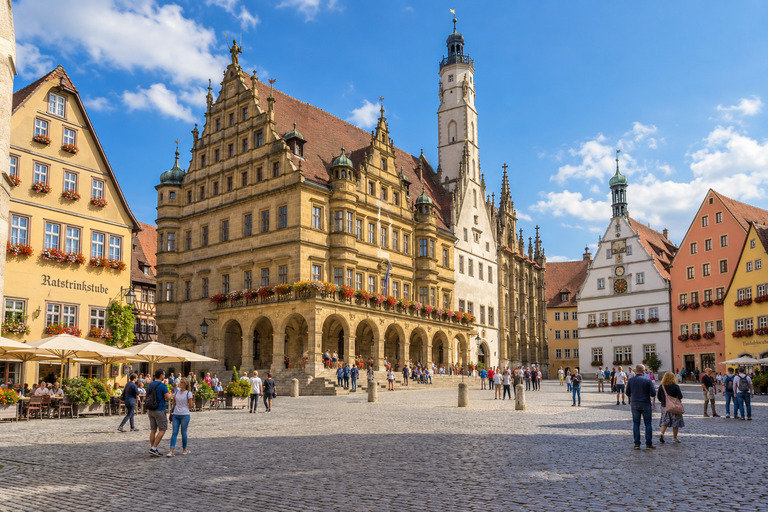
I would not try to “finish” Rothenburg ob der Tauber. I would choose a manageable handful of experiences and give them enough attention to become something more than evidence of attendance.
Walk above the streets. Look closely at a carved hand in St. James’ Church. Find out why a building was reconstructed. Order a regional meal, learn what is on the plate, and leave enough time afterward to take the longer route back.
If your schedule allows only a day, make it a good day: arrange transport first, select your main attraction, and protect time for lunch. If you can stay overnight, choose a room that suits your real needs and enjoy the freedom of having nowhere else to be that evening.
Ready to plan your visit? Start with your dates and accommodation, then book transport and the one experience you most want. Use the hotel, tour, and travel links above when they help you compare suitable options. Leave a little space between reservations. That space is where the trip becomes yours.
Subscribe to A Tiny Traveler for practical destination guides, honest planning advice, and itineraries that remember you are a person who occasionally needs to sit down. Follow A Tiny Traveler on Pinterest, save this guide to your Germany travel board, and keep the next collection of useful routes, food stops, and small discoveries within reach.
Then put the phone away for the walk back. The windows are beginning to glow, your shoes have collected a respectable amount of dust, and somewhere ahead there is still a table with room for you.
Frank


