

Discover Switzerland’s best nature destinations, from alpine lakes to wild valleys, with hiking tips, daily budgets, transport advice, and places to stay.
My ideal Switzerland itinerary starts with a small act of rebellion: leaving something out. One fewer cable car. One fewer hotel change. One fewer ambitious arrow across a map that already resembles a plate of spaghetti. Give me a lakeside path, bread with a crust that fights back, and enough time to sit down before someone announces the next departure.
That is the problem with planning a nature trip here. There is always another mountain. Another blue lake. Another train climbing somewhere your legs would prefer to discuss tomorrow. You can spend a small fortune collecting famous views and somehow return home remembering the ticket machines more clearly than the landscape.
I would rather help you build a trip with room to notice things: waterfall spray cooling your forearms, larch needles under your boots, the sharp smell of cheese escaping a picnic wrapper. The best places to visit in Switzerland for nature lovers include headline acts, certainly, but also valleys where the main activity is walking until your thoughts stop elbowing each other.
This guide is for independent travelers, couples, solo explorers, and ordinary walkers who want mountains without pretending they are mountaineers. I have chosen ten places with different personalities, explained how to reach them, and separated gentle outings from demanding hikes. You will also find realistic planning budgets, seasonal tradeoffs, accommodation advice, and practical ways to travel responsibly. Your knees and your bank account deserve a seat at this meeting.
Choose Your Switzerland Before Booking Someone Else’s
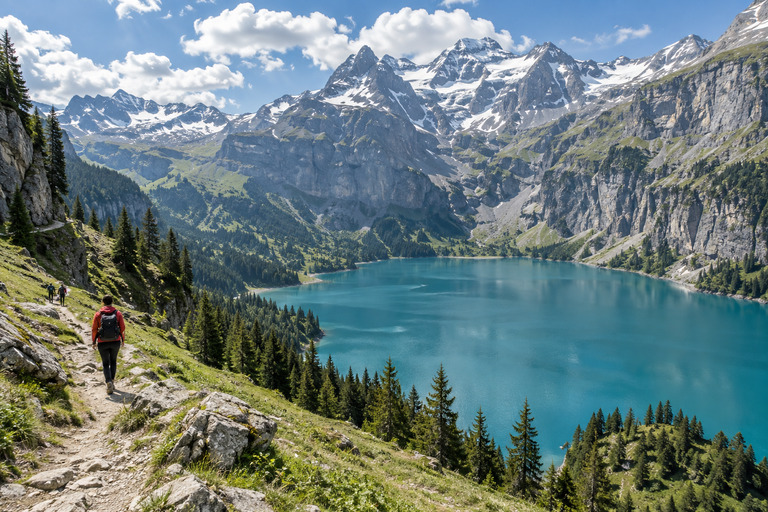
My advice: choose two or three regions, then explore them properly. These ten destinations form a shortlist, not a compulsory scavenger hunt.
| Destination | Best for | Suggested time | Useful base |
|---|---|---|---|
| Lauterbrunnen Valley | Waterfalls and gentle walks | 2–3 days | Lauterbrunnen |
| Oeschinensee | Alpine lake scenery | 1–2 days | Kandersteg |
| Zermatt | Matterhorn views | 2–3 days | Zermatt |
| Aletsch Arena | Glacier viewpoints | 2 days | Bettmeralp |
| Swiss National Park | Wildlife and conservation | 2–3 days | Zernez |
| Engadin Valley | Larches, lakes, and forests | 3 days | Pontresina |
| Alpstein | Limestone peaks and hiking | 2 days | Appenzell |
| Lake Lucerne and Mount Rigi | Accessible mountain outings | 2 days | Lucerne |
| Creux du Van | Cliffs and a demanding walk | 1 day | Neuchâtel |
| Verzasca Valley | River landscapes and villages | 2 days | Locarno |
These are my suggested stays, allowing some breathing room. Add travel days between distant regions instead of quietly stealing them from your hiking time.
1. Lauterbrunnen Valley: Let the Waterfalls Do the Talking
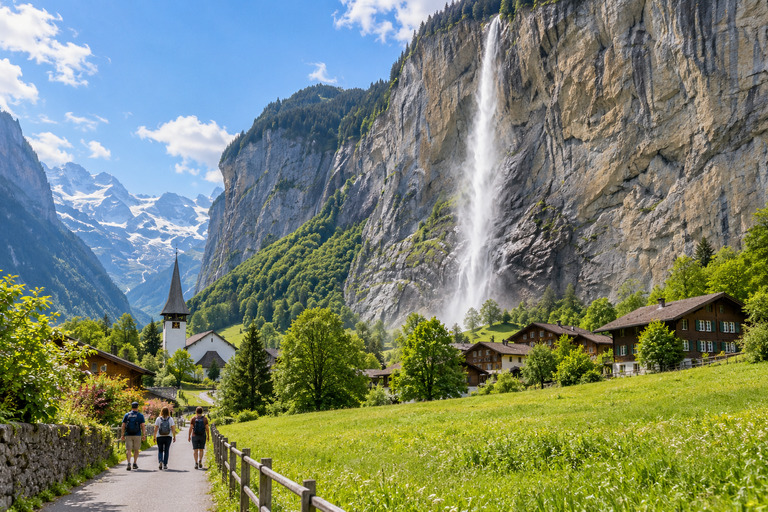
In Lauterbrunnen Valley, the cliffs appear to have mislaid their sense of proportion. Water drops from high rock walls, breaks into spray, and changes character with the wind. Staubbach Falls is the obvious introduction, but the valley becomes more rewarding when you stop treating the village’s best-known photograph as the finish line.
Switzerland Tourism describes the valley as home to 72 waterfalls. Their flow varies, so come for the landscape rather than a promise that every waterfall will be performing at full volume. The official Lauterbrunnen destination guide also explains connections to Wengen and Mürren.
Walk the Valley Before Buying the Summit
The Lauterbrunnen–Stechelberg valley walk is a sensible starting point. The official route is approximately 8 kilometers, with 161 meters of ascent and around two hours of walking. Allow longer for photographs, benches, and the perfectly reasonable business of watching water fall. Check the official walking route and use the bus for your return.
For something louder, Trümmelbach Falls channels water through the mountain itself. Expect wet surfaces, stairs, and a roar that makes conversation unnecessary. Children under four and dogs are not admitted, and seasonal access applies; consult the visitor information before buying into the idea.
Make the Base Work for You
Stay in Lauterbrunnen for valley access or Wengen and Mürren for mountain village atmosphere. Those two villages are car-free; Lauterbrunnen itself is not. Interlaken can offer more accommodation choices, with additional commuting.
My Tip: prioritize a convenient location over a balcony you will barely use. A kitchen and nearby transport can be more valuable than decorative antlers.
Compare Booking.com listings by station distance, cancellation terms, breakfast, and total price. An apparently cheaper room becomes less attractive after repeated transfers.
Find your Lauterbrunnen Valley stay on Booking.com
2. Oeschinensee: The Lake That Deserves More Than a Photograph
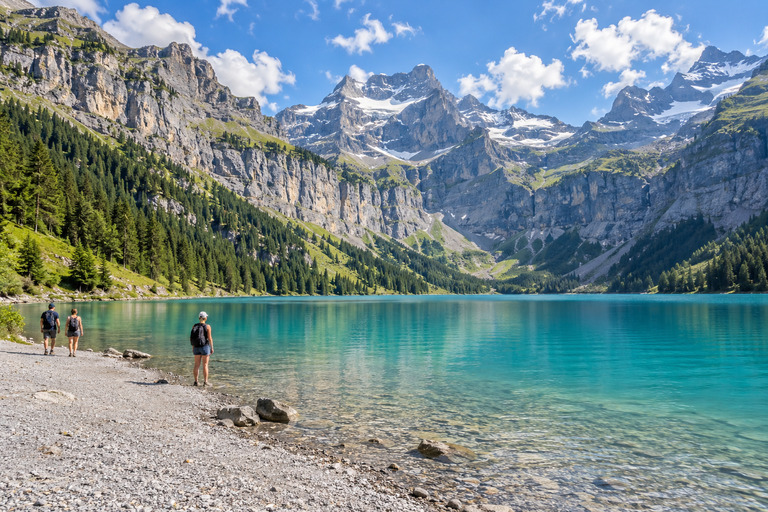
Oeschinensee, above Kandersteg, is my pick when you want one alpine lake to anchor the trip. Pale rock walls rise above water whose color shifts with cloud, light, and suspended sediment. Beside the shore, the scene feels less polished than photographs suggest: gravel underfoot, cold air sliding down from higher ground, and jackets coming back out of backpacks.
Choose the Shore or the Mountain Trail
Take the gondola from Kandersteg, then follow the walking route toward the lake. This is the simpler outing, though the walk still requires time and appropriate footwear. The gondola does not deposit you directly beside the water.
Higher panoramic trails are a different proposition. They can involve narrow sections, exposure, and uneven ground. Do not assume that a popular photograph proves its viewpoint is easy to reach. Read the official outdoor guidelines and match the actual route to your experience.
My Tip: decide your route before arriving, but let current conditions have the final vote. A lakeside lunch is not a failed mountain expedition.
Reserve the Ride, Respect the Closures
For June 20–September 20, 2026, an uphill gondola time-slot reservation is mandatory, including for visitors whose transport ticket comes from another seller. Outside that period, advance booking remains advisable on busy days. Check the official summer booking requirements, fares and timetable, and live operating status.
Rockfall restrictions and closed paths are nonnegotiable. A barrier is not an invitation to demonstrate initiative.
Allow half a day for a relaxed lake visit, or a full day for a suitable longer hike. Stay in Kandersteg if you want an earlier start without a long morning train journey. Budget separately for the gondola, food, and any optional activities.
3. Zermatt: The Matterhorn Has Terrible Appointment Etiquette
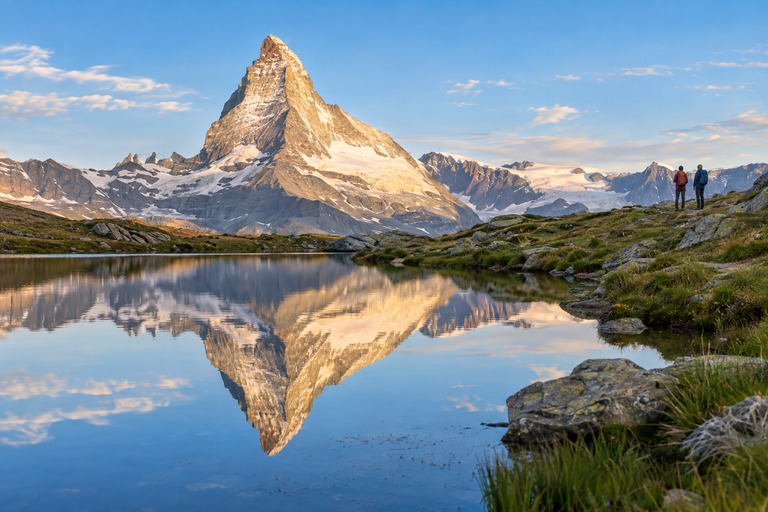
The Matterhorn does not care when your train arrives. It may appear crisply against the sky, reveal one theatrical shoulder, or remain behind cloud while you consume increasingly expensive coffee. That is why I recommend two or three nights in Zermatt, rather than one tightly scheduled attempt at the photograph.
Pick One Main Mountain Outing
The Gornergrat railway is a strong choice for travelers who want high mountain scenery without a full uphill hike. Check the Gornergrat operator’s website for current tickets, weather, and operating information. A railway ride to altitude still calls for warm layers and a sensible pace.
The Five Lakes Route suits walkers wanting a longer day. Importantly, the current official listing gives 11.3 kilometers, 265 meters of ascent, 542 meters of descent, and approximately three and a half hours, with moderate T2 difficulty. Older articles may describe a shorter alignment. Use the current Zermatt route description, then add breaks and transport time.
My Tip: a reflection is a weather event, not a ticket inclusion. Wind can wrinkle a lake faster than you can locate your camera.
Spend Where It Changes the Day
Zermatt is car-free for ordinary private vehicles; drivers normally finish that part of their journey in Täsch. For current arrival arrangements, consult Zermatt Tourism.
Choose accommodation that makes the relevant railway or lift convenient. Compare the cost of staying farther away against daily travel and the freedom to react to a clear morning.
If guided sightseeing or organized logistics would help, compare GetYourGuide options carefully. Check the departure town, actual mountain access included, cancellation policy, and walking demands. A sightseeing tour is not automatically a guided mountain hike.
Compare Zermatt experiences on GetYourGuide
4. Aletsch Arena: A Glacier Changes Your Sense of Scale
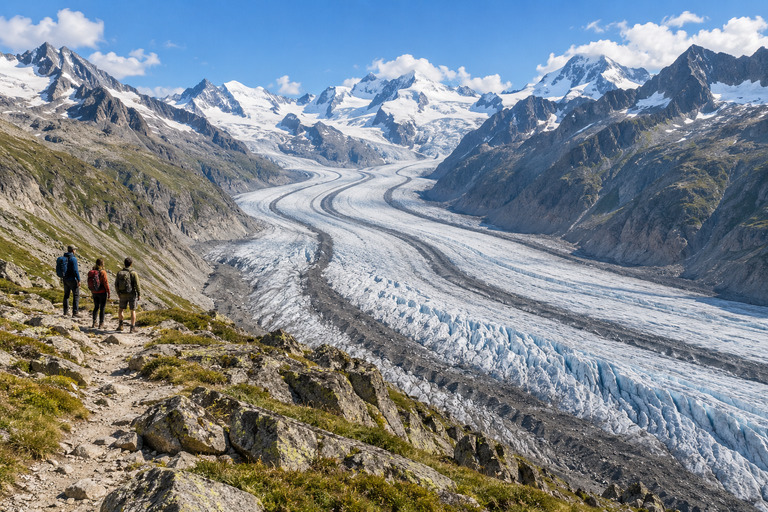
At the Great Aletsch Glacier, the landscape refuses to fit comfortably inside a photograph. Ice bends through the mountains, striped with debris, while the surrounding slopes reveal how much space a glacier occupies and leaves behind. It is a place to put the phone down for a minute. Possibly several.
See the Ice Without Walking Onto It
The Aletsch Arena lists four principal glacier viewpoints: Hohfluh, Moosfluh, Bettmerhorn, and Eggishorn. Their perspectives differ, so choose based on operating lifts, weather, your base, and the amount of walking you want. Start with the official glacier viewpoint guide.
You do not need to step onto the glacier to appreciate it. If an actual glacier excursion interests you, book a qualified mountain guide and confirm equipment, fitness expectations, and insurance. Ice travel involves hazards that a good pair of hiking boots cannot solve.
The wider walking network ranges from manageable paths to serious alpine terrain. The live summer status report identifies closures and route difficulty. Do not mistake a line connecting two viewpoints for an easy ridge stroll.
Stay Above the Commuting
Bettmeralp or Riederalp can suit travelers who want to remain in the mountain landscape overnight. A valley base such as Fiesch may simplify onward travel. Compare luggage arrangements and lift hours before choosing accommodation.
I would spend two nights here if glacier scenery is a priority, giving the weather another opportunity to cooperate. For a day trip, keep the plan modest: one viewpoint, one suitable walk, one unrushed meal.
My Tip: buy the experience your forecast supports. Several expensive lifts in low cloud can produce a surprisingly intimate tour of white nothing.
5. Swiss National Park: Bring Binoculars, Leave the Performance Behind
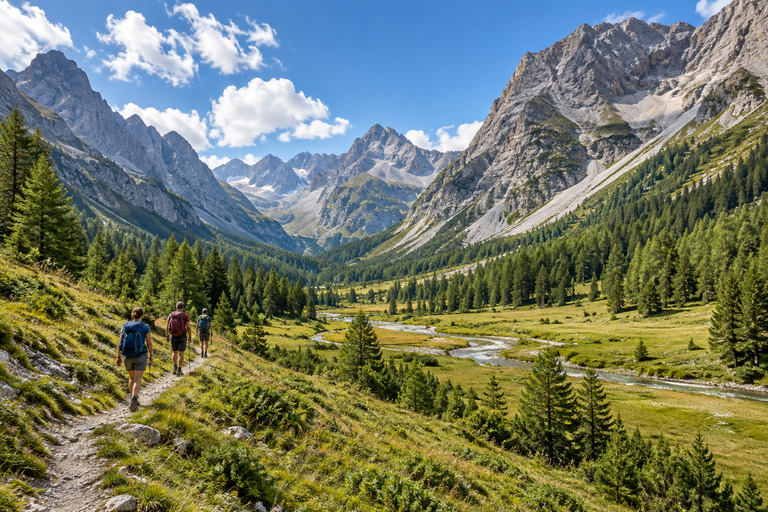
The Swiss National Park, in southeastern Switzerland, makes conservation the main event. Founded in 1914, it protects roughly 170 square kilometers and offers around 100 kilometers of marked hiking trails. Its history and strict reserve status are explained in the official park introduction.
This is my choice for travelers who want to watch wildlife and understand a landscape instead of racing between attractions. An animal sighting is never guaranteed. That uncertainty is part of being outdoors, irritating though it may be to the itinerary department.
Start in Zernez, Then Choose Carefully
Base yourself in Zernez and begin at the National Park Centre. Staff can help match a walk to current conditions and your interests. The official visitor guide is a useful starting point for transport, interpretation, and planning.
Routes differ considerably in elevation and effort. Check the trail conditions rather than selecting a hike solely because somebody posted an ibex beside it. Many outings require several hours, food, water, and reliable return transport.
My Tip: binoculars offer better wildlife encounters than moving closer. If your photograph requires an animal to change its behavior, back away.
The Rules Are the Point
Stay on marked trails and use designated rest areas. Dogs are prohibited, including on a leash. Swimming, fires, and camping are prohibited. Daytime visiting rules also apply. Read the park protection regulations before arriving, especially when traveling with children or pets.
The protected landscape itself is free to enter; transport, accommodation, exhibitions, and guided activities have separate costs. Guided park walks can be money well spent if you want help interpreting tracks, habitats, and distant wildlife. Find current options through the park’s guided excursions.
Allow two or three days, with one less demanding outing between longer walks. Quiet observation takes time. Conveniently, it also improves lunch.
6. Engadin Valley: For People Who Prefer Trees to Queues
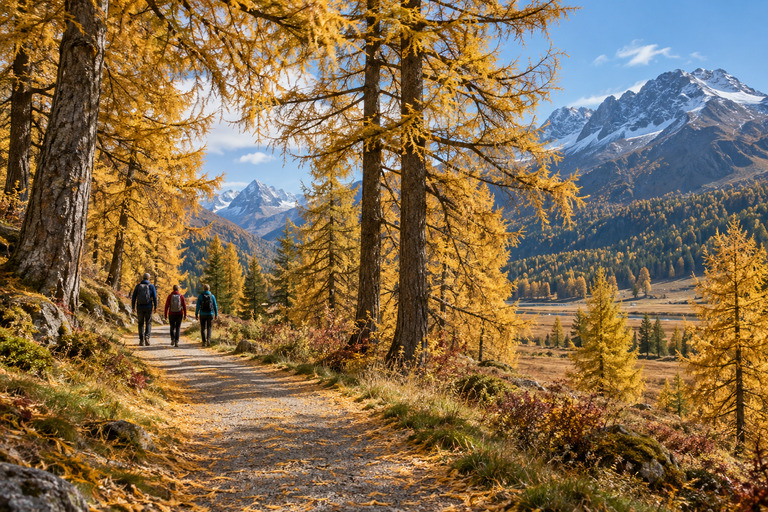
The Engadin Valley offers a different rhythm: lakes, forest paths, open valleys, and villages connected by public transport. St. Moritz gets plenty of attention, but I would also consider Pontresina, Samedan, or Sils when choosing a nature-focused base.
This region is particularly appealing when autumn turns the larches yellow. The exact timing varies with elevation and weather; do not build an entire trip around one supposedly perfect date.
Give Val Roseg a Whole Day
From Pontresina, Val Roseg leads through woodland toward a wider mountain valley. The official Val Roseg walking description helps you understand the route before setting out.
For a relaxed day, choose a turnaround point that suits your energy instead of assuming you must reach the farthest named destination. The return journey still exists, even when lunch has made everyone optimistic.
My Tip: an out-and-back walk is useful freedom. You can stop when the day feels complete, rather than negotiate with the final third of a loop.
Read the Glacier’s Retreat
The Morteratsch Glacier Route combines an approachable valley outing with information about glacial change. It starts near Morteratsch railway station; consult the official trail description for the current endpoint and conditions.
The main interpretation trail and the rougher onward mountain route are different outings. Do not assume a family-friendly description applies all the way to the ice.
For a gentler alternative, plan lakeside time around Sils. Wind can make exposed shores feel much colder than the village forecast suggests. Pack a layer you can actually reach without unpacking your entire life.
Stay three nights if possible. Ask your accommodation about guest transport benefits, which depend on the property, season, and offer; verify before buying separate tickets.
7. Alpstein and Seealpsee: Small on the Map, Serious Underfoot
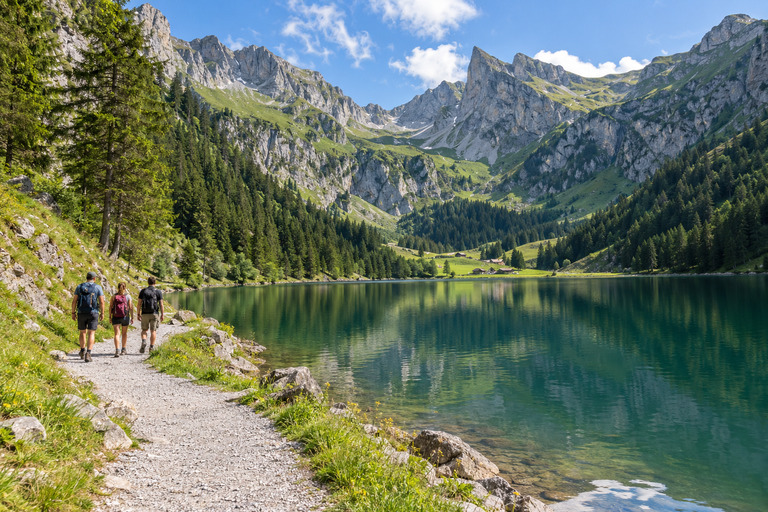
The Alpstein, in the Appenzell region, compresses limestone peaks, steep grass slopes, mountain inns, and lakes into a relatively compact area. That compactness can fool you. Closely spaced names on a map do not imply gentle walking between them.
Earn Your Lunch at Seealpsee
Seealpsee is an excellent introduction, reached on foot from Wasserauen. Expect sustained uphill walking, even on the less technical approach. The regional tourism office describes a loop through Hüttentobel and alpine pastures, returning by a steep service road; study the official Seealpsee route and select an appropriate version.
At the lake, the pleasures are straightforward: water, folded rock, a bench if you are lucky, and something substantial to eat. I would leave space in the budget for a mountain meal here. Warm potatoes and assertive cheese have a stronger negotiating position after an uphill walk.
Resist the Famous Detour
Äscher is the cliffside inn you may recognize from photographs. Its popularity does not make every connecting trail suitable for every visitor. Check the Appenzell tourism website for current routes, weather guidance, and access information before linking it with Seealpsee.
My Tip: never add a mountain detour because it looks close from your lunch table. Check elevation, exposure, trail classification, and remaining daylight first.
Stay in Appenzell for restaurants and transport connections, or nearer Wasserauen for an early trail start. Allow two days, keeping one flexible if the limestone is wet or visibility poor. For a guided outing, look for someone qualified for the specific terrain, not merely an entertaining host.
8. Lake Lucerne and Mount Rigi: Mountain Views Without an Endurance Audition
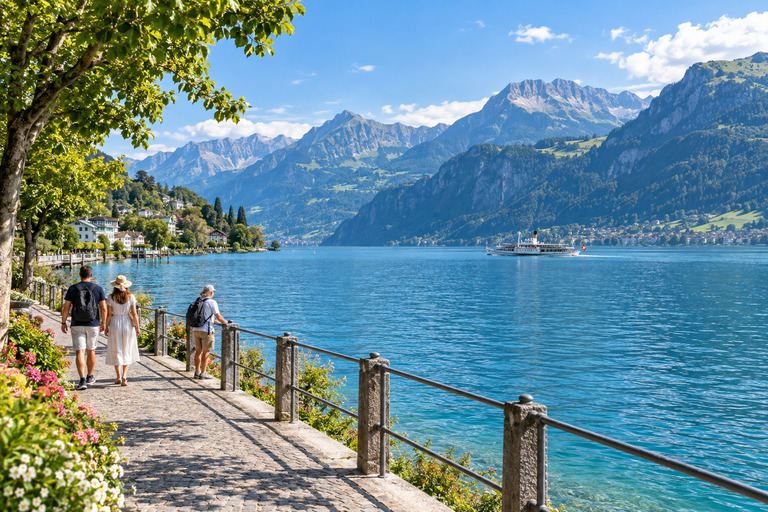
Lake Lucerne and Mount Rigi are my strongest pairing for travelers who want variety without constantly changing hotels. You can combine a lake journey, mountain railway, manageable walking, and a proper dinner in Lucerne. A day with several textures, rather than several destinations.
Let the Transport Become Part of the Outing
Build your route around Lucerne, Vitznau, Weggis, or Arth-Goldau, depending on current connections. Check the Mount Rigi website and the Lake Lucerne boat operator before committing to a particular circuit.
At altitude, choose a maintained path suited to the weather and your mobility. A shorter walk with time on a bench can be a better nature experience than a longer route spent staring at your feet.
My Tip: accessibility is route-specific. Ask about gradients, steps, station access, and surfaces if you use a wheelchair, travel with a stroller, or need an easier outing. A railway-accessible summit does not make every neighboring trail accessible.
Check What Your Pass Already Covers
Rigi Mountain Railways currently lists free travel for holders of a valid Swiss Travel Pass on its covered network. Its regular adult day ticket is listed at CHF 84. Check current operator information and coverage for the precise services you plan to use. Do not buy duplicate tickets.
I would allow two days in Lucerne, using the clearer one for the mountain and keeping the other for the lake and city. You also gain more restaurant choices than a tiny mountain base provides.
Compare Trip.com hotel and flight options when organizing your arrival. Check baggage allowances, room conditions, taxes, and the actual property location before choosing the lowest displayed total.
Compare Switzerland flights and hotels on Trip.com
9. Creux du Van: Switzerland Has Excellent Cliffs Beyond the Alps
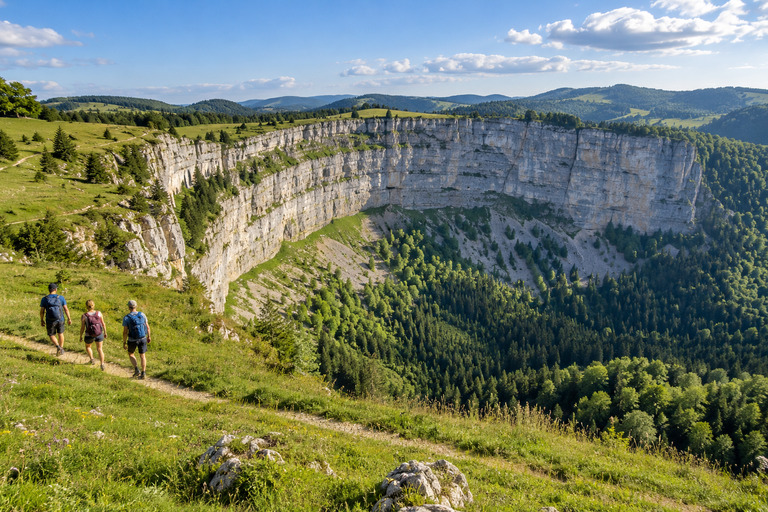
Creux du Van, in the Jura Mountains, is a vast limestone amphitheater with a curved wall and an exposed rim. It supplies the sort of geological drama people often assume requires a long journey into the high Alps.
I like its place in this list because it broadens the idea of Switzerland nature travel. There is more here than snowy pyramids and blue lakes. Sometimes the earth simply takes an enormous bite out of itself.
Treat the Climb as a Proper Hike
Noiraigue is the useful rail-accessible starting point for the classic uphill approach. The Sentier des 14 Contours climbs through a sequence of switchbacks. Use the regional tourism route for distance, ascent, and current details of your chosen loop.
Allow most of a day, including breaks and transport. This is not a casual lakeside promenade with a cliff attached. Carry water and food instead of assuming refreshments will appear exactly when your enthusiasm disappears.
Give the Edge Some Space
Stay well back from unfenced drops, especially with children, in wind, or when the ground is slippery. Never step backward while composing a photograph. No wide-angle lens needs that much commitment.
You may encounter wildlife, but sightings are a bonus rather than a booking condition. Keep your distance and leave grazing animals undisturbed. The regional conservation guidance should determine where you walk, rest, and photograph.
Base yourself in Neuchâtel if you want a lakeside town and public transport options, or consider accommodation closer to Noiraigue for an earlier start. For a shorter approach, verify legal access and the actual walking requirements locally; driving nearer does not remove cliff hazards.
My Tip: choose a dry, clear day and keep a lower-level alternative ready. Fog can erase both the view and your ability to judge the terrain ahead.
10. Verzasca Valley: Beautiful Water Requires Respect
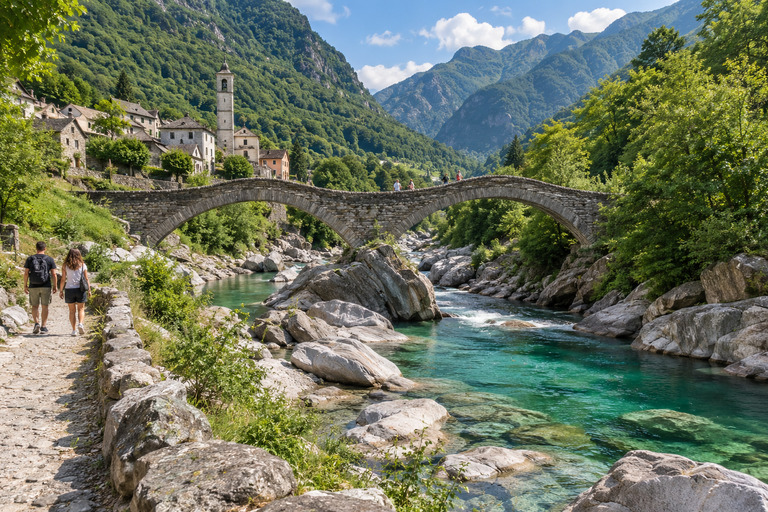
In Ticino’s Verzasca Valley, the palette changes. Green water threads between pale rock, stone villages sit beside the valley road, and the sound of the river follows you between viewpoints. Around Lavertezzo, the Ponte dei Salti provides the familiar double-arched bridge scene.
The broader valley deserves attention too. Start with the official Ticino valley guide, then choose a manageable section rather than trying to photograph every bend.
Look Beyond the Bridge
Base yourself in Locarno for transport and accommodation choice, or stay within the valley if you prefer quieter evenings and have checked dining options. Use the SBB journey planner to confirm current bus connections and your return departure.
My Tip: organize the return before the outward trip. A rural bus timetable is more useful saved on your phone than vaguely remembered over coffee.
Allow a full day for an introduction, or two days to walk selected paths and spend time in different villages. Choose a weekday outside peak holiday periods when possible, and keep residential access clear.
Clear Does Not Mean Safe
The Verzasca River has cold water, slippery rocks, currents, and dangerous swirls. Follow local signs and the published river safety guidance. Do not treat it as a swimming pool or jump from the bridge. You can enjoy the valley completely without entering the water.
For wider rural exploring, compare GetRentacar offers only after checking local availability and whether a car actually improves your route. Review the deposit, insurance excess, mileage, pickup arrangements, and cancellation terms. Parking and fuel belong in the comparison too.
When to Go: Let Altitude Choose the Calendar
For most first-time summer nature trips, I would target July through September. That is a planning preference, not a guarantee of open high trails. Snow, storms, and maintenance still determine access.
May and June can work well for lower valleys, waterfalls, and lakeside walks, while higher routes may remain snow-covered. Late September and October can bring autumn color, colder mornings, shorter days, and reduced lift services. In the Engadin, foliage timing varies each year.
Winter requires a different itinerary. Summer hiking descriptions do not become winter routes because you own a warm coat. Use designated winter walking paths and current operator guidance.
My Tip: book flexible accommodation where practical, then choose expensive mountain excursions closer to the day. Check the MeteoSwiss forecast and warnings alongside local webcams and trail reports. A sunny city forecast tells you remarkably little about an exposed ridge.
What Switzerland Actually Costs
The following are my planning allowances in Swiss francs, per person, rather than live quotes. Season, booking lead time, location, and comfort level can move costs considerably. International travel, insurance, shopping, and major special excursions are excluded.
Daily Budgets Without Creative Accounting
| Travel style | Daily allowance | What I would plan around |
|---|---|---|
| Careful budget | CHF 120–180 | Dorm or economical shared room, groceries, limited paid excursions |
| Comfortable midrange | CHF 220–350 | Shared private room, restaurant meal, transport, selected attractions |
| Higher comfort | CHF 400–650+ | Better hotels, more dining, costly excursions or private transport |
These assume transport costs are averaged across the trip. A quiet valley day and a long railway transfer day will look different. Solo travelers paying for private rooms should allow more than someone splitting a double.
Prices for the Things You Actually Buy
Use these rough spending estimates, then check local menus and current fares:
- Hostel bed: CHF 45–85 per night.
- Midrange double room: CHF 180–320 per room, before any separate local taxes.
- Coffee: CHF 4.50–6.50.
- Bakery breakfast: CHF 8–15.
- Supermarket picnic: CHF 12–20.
- Casual restaurant main: CHF 25–40.
- Restaurant dinner: CHF 40–70 with a drink, depending on your order.
- Mountain transport: allow CHF 40–120 or more for a paid outing; premium routes can exceed this.
I would use Coop, Migros, and local bakeries for some meals, then spend deliberately on others. Bread, fruit, cheese, and a reusable bottle make a perfectly respectable lunch. Ask your accommodation about safe drinking-water refill points; never assume every fountain or stream is potable.
My Tip: check guest-card benefits before purchasing transport. Some destinations provide local travel or attraction discounts through participating stays, as explained in Switzerland Tourism’s savings guide.
Getting Around Without Donating Your Budget to Logistics
Trains First, Passes After the Math
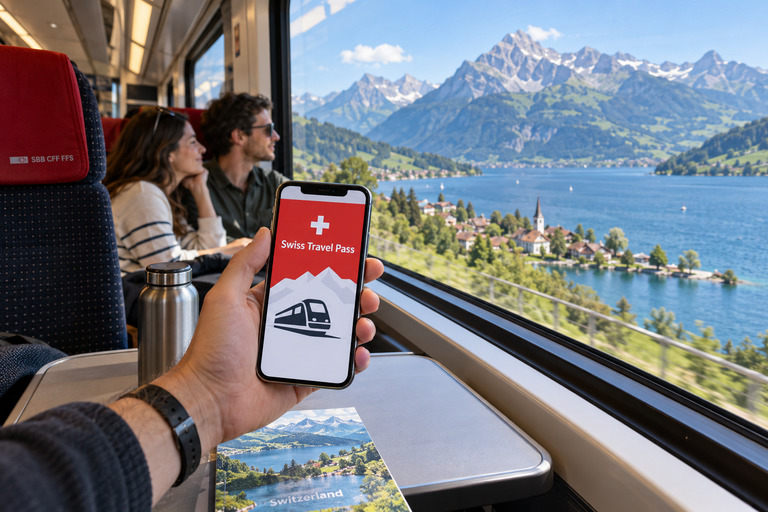
For most routes in this guide, I would start with public transport. Use SBB to compare the complete journey, including buses and transfers, rather than just the fastest train segment.
The Swiss Travel Pass covers extensive public transport and provides selected mountain benefits, but not every cable car or summit journey is included. Check the official coverage and prices against your actual itinerary.
A Saver Day Pass currently starts at CHF 52 without a Half Fare Travelcard, or CHF 29 with one, subject to availability. Coverage and refund restrictions apply; consult SBB’s offer details. Compare point-to-point fares and the Swiss Half Fare Card too. A pass is a tool, not a moral achievement.
Make Arrival Easier When It Matters
Airport trains are often convenient. If you arrive late, have heavy luggage, or need direct transport, check Welcome Pickups for a quote to your exact destination. Its Zurich airport transfer information explains the booking service. Confirm luggage capacity, child seats if needed, and meeting arrangements.
Money, Mobile Data, and the Boring Things That Rescue a Day
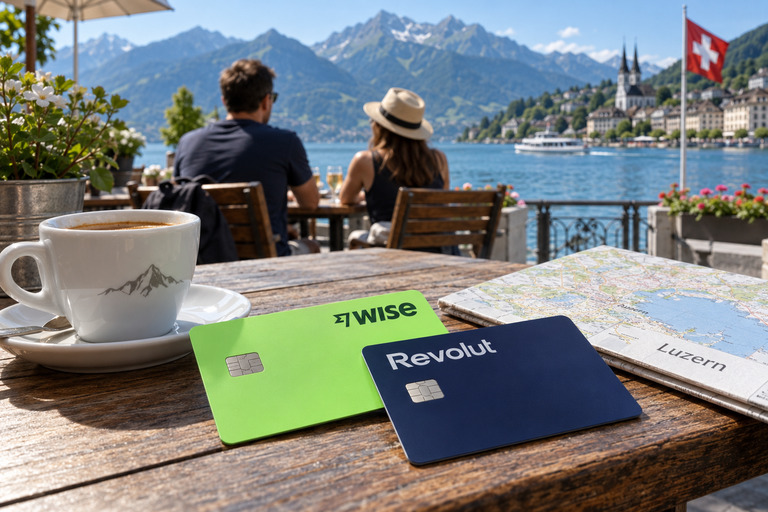
Compare Wise and Revolut with your existing card before traveling. Wise publishes currency-conversion and withdrawal charges in its pricing information; Revolut notes that exchange fees and conditions can apply on its travel card page. Check the terms for your country and plan. Neither service is universally fee-free.
My Tip: choose payment in CHF and decline the terminal’s home-currency conversion. Carry a backup card and some cash for smaller purchases.
Check Wise for your Switzerland spending →
Explore Revolut’s travel features and fees →
For connectivity, confirm whether your existing mobile plan includes Switzerland. Do not assume a package labeled “Europe” does. Compare a Trip.com eSIM by coverage, data allowance, validity, activation rules, and hotspot support. Its Switzerland eSIM guide provides a starting point, but the individual product terms control what you receive.
Check that your phone is unlocked and eSIM-compatible. Download maps and tickets before entering the mountains. A data plan cannot manufacture reception behind a ridge.
Pack for the Trail You Booked, Not the Photograph You Saved
Bring grippy footwear, waterproof outerwear, warm layers, sun protection, water, food, offline navigation, a charged phone, and a small first-aid kit. Add trekking poles if descents trouble your knees.
Yellow hiking signs, white-red-white mountain markings, and white-blue-white alpine markings indicate different demands. Read the SwitzerlandMobility trail classifications. Distance alone cannot tell you whether a trail suits your ability.
Check conditions before departure, tell someone your route, and keep enough time for the last return service. Turn back when weather, footing, or energy deteriorates. Consult MeteoSwiss thunderstorm advice before exposed outings. For mountain rescue in Switzerland, save 1414, the Rega emergency number.
Compare policies through VisitorsCoverage, then read the actual wording for your activities, altitude, emergency treatment, evacuation, and exclusions. Its adventure sports explanation outlines why additional coverage may matter. Do not assume ordinary travel insurance covers glacier walking or technical mountain activities.
Leave the Landscape With Less Work to Do
Sustainable tourism in Switzerland starts with ordinary decisions repeated consistently:
- Stay longer in fewer bases. Reduce transfers and spend more locally.
- Use trains and buses where practical. Compare complete routes before renting.
- Respect closures and marked paths. Shortcuts damage vegetation and create erosion.
- Carry out every scrap. Fruit peels and tissues are litter too.
- Give wildlife space. Never feed animals or chase a photograph.
- Choose local food and refill safely. Reduce packaging without compromising drinking-water safety.
- Follow local camping, fire, and drone restrictions. Permission varies by place; protected areas require particular care.
My Tip: go early to busy attractions, but respect wildlife protection hours. Early is not universally appropriate, especially inside the Swiss National Park.
The Part Where I Leave Something for Next Time
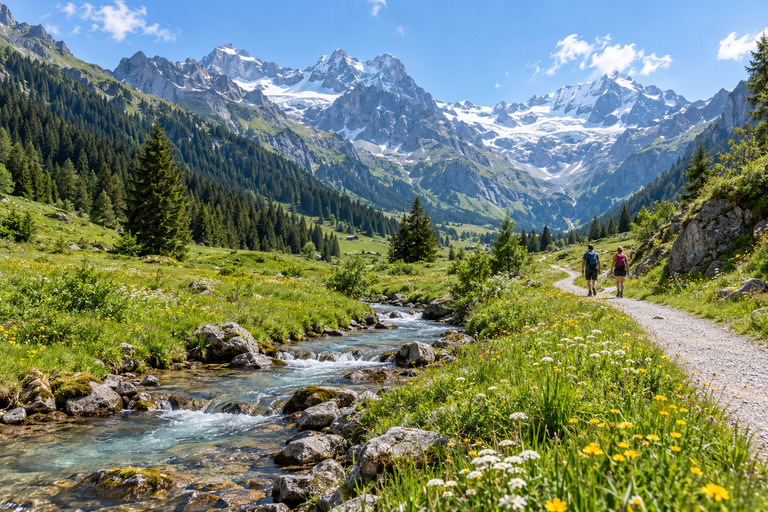
I would not try to visit all ten places on a short holiday. Lauterbrunnen, Oeschinensee, and Zermatt can already give you waterfalls, alpine water, and high mountain scenery. Engadin, the Swiss National Park, and Alpstein make a different trip, built around forests, wildlife, and walking. Lucerne, Creux du Van, and Ticino deserve space rather than leftover hours.
Choose the landscape you most want to spend time in. Then choose a base, check the transport, and leave a day flexible. The best Switzerland itinerary is one you can enjoy at your own pace. You do not need to earn every view through exhaustion, and you do not need a paid attraction every morning.
Subscribe to A Tiny Traveler for more practical travel guides, honest budget advice, and itineraries with enough room to breathe. Follow A Tiny Traveler on Pinterest to save this Switzerland guide and find upcoming ideas for your next escape. If this helped, share it with the person who always adds three extra destinations to the group itinerary. We know who they are.
You will remember the hours you actually inhabited more clearly than the places you hurried through to reach elsewhere.
Leave one afternoon open. Buy something good from a bakery. Find a bench facing water, loosen your bootlaces, and let the next train leave without you.
Frank


