

Kyoto begins making demands before breakfast. There are temple gates to reach before the crowds, a train platform to find, and a suspiciously persuasive pastry behind glass. Somewhere between the hotel door and your first uphill street, the carefully arranged itinerary starts negotiating. Your feet would like a word. So would your stomach.
I have a rule for planning this city: never let the spreadsheet eat the trip. Looking at a map, I can justify almost any extra stop. Another garden? Practically next door. Another shrine? Educational. Then I count the transfers and realize I have designed a public transportation exam with occasional scenery. This guide is my argument for doing less, properly.
The best things to do in Kyoto mix the places you recognize with experiences you cannot reduce to a photograph: the dry brush of a bamboo whisk, the slippery softness of fresh tofu skin, a garden that rewards ten quiet minutes. Yes, you should see the famous gates. You should also have enough attention left to notice what happens between them.
I wrote this Kyoto travel guide for curious first-time visitors, independent travelers, couples, and food lovers who want their money spent thoughtfully. You will find ten worthwhile experiences, realistic budgets, neighborhood advice, transport links, and a workable itinerary. Give Kyoto four full days if you can. Three works with choices; one is an introduction with sore calves.
Before the First Temple: Your Kyoto Starting Point
My Tip: Choose one main area each morning and one flexible afternoon experience. Crossing the city repeatedly is how a promising vacation becomes a collection of bus interiors.
For a first visit, prioritize Fushimi Inari Taisha, Kiyomizu-dera, Arashiyama, and an evening around Gion. Add Nishiki Market for food, Nijō Castle for history, and time for tea. The remaining stops below give your itinerary room to breathe.
Prices are in Japanese yen. Food, lodging, and activity ranges are planning estimates, not guaranteed quotes. Check the linked official attraction pages for your dates; special openings, ticket categories, and seasonal events can change what you pay.
1. Walk Beyond the First Gates at Fushimi Inari Taisha
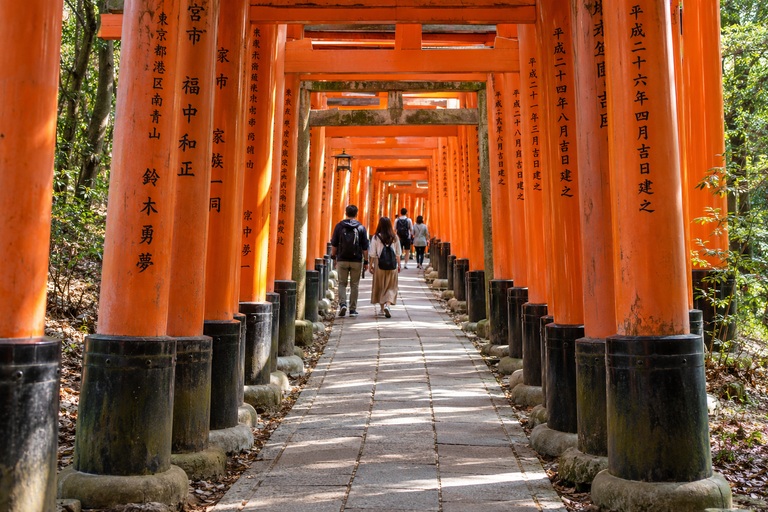
The first tunnel of vermilion gates at Fushimi Inari Taisha practically comes with its own camera traffic jam. People stop, pivot, wait, and discover that several hundred other people also wanted an empty photograph.
Keep going when conditions allow. The appeal is the repeating rhythm: orange pillars, dark lettering, stone steps, another bend. Higher paths can feel less compressed, although early arrival never guarantees solitude.
This is a working Shinto shrine, established in 711, with a sacred mountain behind it. The gates are offerings, not decorative props. Read a little of the shrine’s official history and visitor information before arriving; the walk gains meaning when you understand why people come here.
Make the climb fit your energy
Allow 60–90 minutes for the lower grounds and a partial walk, or roughly two to three hours for a longer mountain circuit with stops. Those are flexible allowances. Heat, steps, and photo pauses have opinions of their own.
JR Inari Station is the convenient rail stop from Kyoto Station; Keihan Fushimi-inari Station suits some departures from eastern downtown. Check your train stops instead of assuming every service does.
Budget: The shrine grounds are free. Bring water, shoes with grip, and a modest cash allowance for food afterward. Shops and staffed services have their own hours.
My Tip: Turn around when you want to. Reaching the summit is not an entrance requirement for enjoying Kyoto. In hot weather, a shorter walk can be the smarter choice.
Stay on marked routes, respect worshippers, and avoid blocking narrow passages. Choose daylight for unfamiliar mountain paths, especially if you are walking alone.
2. Start High at Kiyomizu-dera, Then Wander Higashiyama
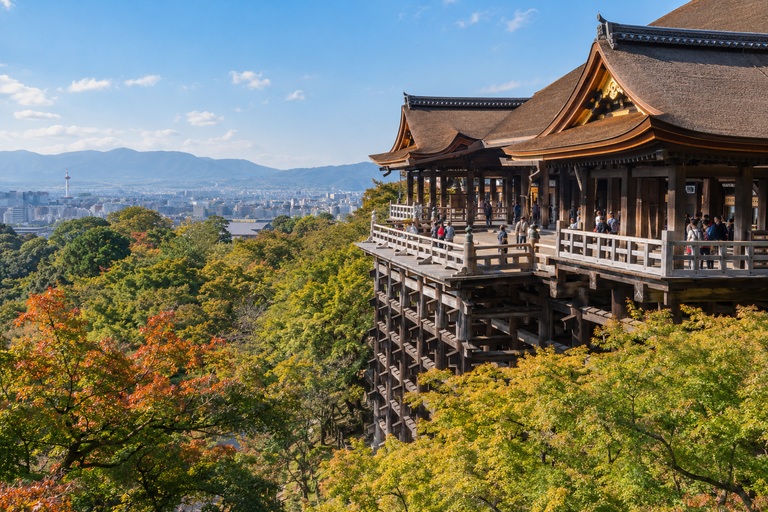
At Kiyomizu-dera, the wooden terrace reaches toward the hillside while the city spreads beyond the trees. The scale does the talking. Put your phone down long enough to let your eyes adjust from screen-sized travel to the actual thing.
The temple opens at 6 a.m., making this one of the most useful early starts in Kyoto. Closing times vary by season and special events, so check the official opening information.
Budget around ¥500 for ordinary adult admission, then verify the current ticket and any special viewing arrangements. Allow 60–90 minutes inside and another one to two hours for the surrounding streets.
Follow the slope instead of your shopping impulses
Continue through Sannenzaka and Ninenzaka, where tiled roofs, wooden storefronts, ceramics, and sweet shops compete politely for your attention. These lanes are popular for good reason. They are also functioning streets, with deliveries and neighbors trying to get somewhere.
Arrive early for a quieter walk, but expect many shops to open later. You cannot have both empty lanes and every cafe serving breakfast at sunrise. Choose your priority.
Look for yatsuhashi, a local sweet available in different forms, including soft folded versions with fillings. Cinnamon can arrive before sweetness; the soft kind has a yielding, slightly elastic bite. Buy a small portion before committing to a gift box the size of your laptop.
My Tip: Do the uphill temple visit first, then descend slowly. Wet stone can be slippery, and rented sandals are not compulsory equipment for appreciating architecture.
The approach involves slopes and steps. Travelers with mobility needs should confirm the appropriate route directly with the temple; a map pin does not explain gradients.
3. Give Arashiyama More Than a Bamboo Photograph
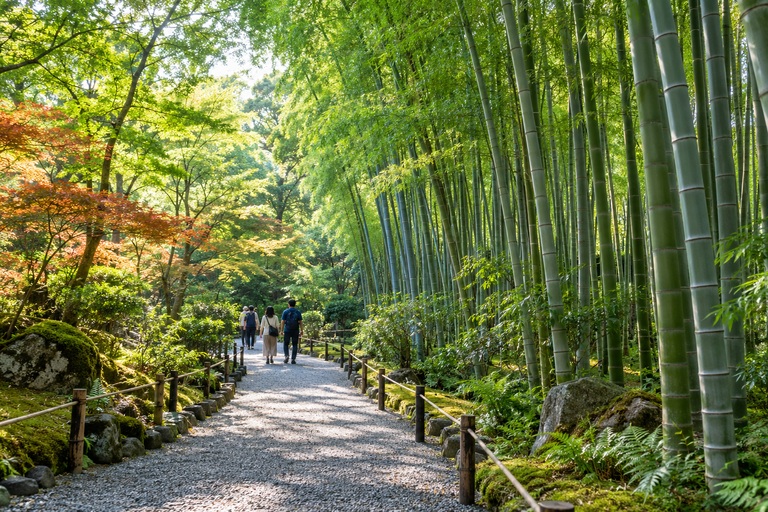
The Arashiyama Bamboo Grove is lovely to walk through, but it is a relatively short experience. Treating it as an entire half-day attraction sets up an awkward conversation between expectation and reality.
Look upward. The stalks narrow toward a roof of leaves, and wind can turn the canopy into a soft, restless hiss. At busy times, the soundtrack also includes directions shouted across a phone screen. Both can be true.
The main public bamboo path is free. Pair it with Tenryū-ji, where the garden gives the visit more shape and substance. The temple’s official admission page lists ¥500 for the garden, with additional charges for other areas.
Build a half-day with breathing room
Take the JR Sagano Line to Saga-Arashiyama Station if that suits your starting point. Other rail approaches include Hankyu Arashiyama Station and Randen Arashiyama Station. They are different stations; save the right one.
I would allow three to five hours for bamboo, the garden, lunch, and a walk near Togetsukyō Bridge. Add longer activities only by removing something else.
My Tip: Visit the grove early, then use the temple’s opening time to structure the rest of the morning. Buying breakfast beforehand can save you from making important cultural decisions while hungry.
Keep hands and bags away from fragile surfaces, never carve bamboo, and stay out of restricted paths. The photograph does not improve because you crossed a barrier.
If you want a guided walk, compare group sizes, start times, and walking distances on GetYourGuide. Choose a listing that explains its route rather than simply promising every famous sight.
Find an Arashiyama experience that fits your pace on GetYourGuide
4. Meet Gion With Your Camera Occasionally Lowered
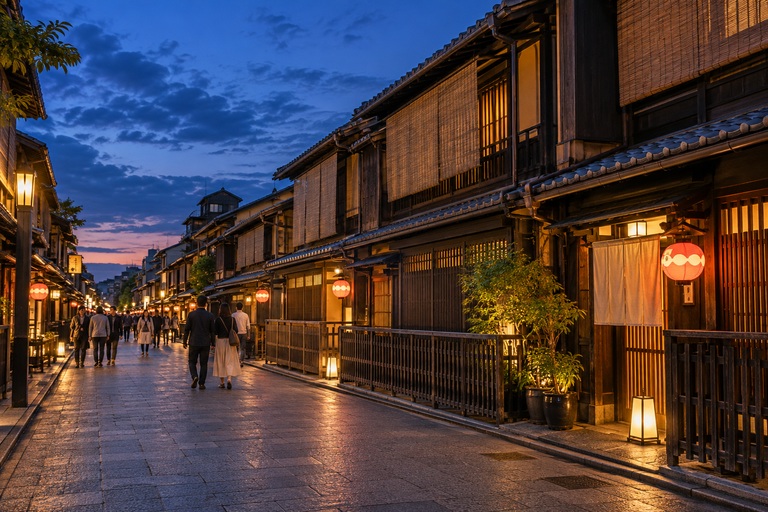
Gion deserves an evening walk, especially when daylight fades from the wooden facades and restaurant doorways begin to glow. The pleasure is in the small distances: a narrow frontage, a curtain moving, the sound of dishes behind a wall.
It is also a neighborhood where visitor behavior matters. Some private lanes restrict tourist access; public streets remain accessible. Follow posted signs. The Associated Press report on Gion’s access restrictions explains the distinction that sweeping “tourist ban” headlines often miss.
Geiko and maiko are working artists, not an invitation to pursue someone down the street. Do not block, touch, follow, or photograph people against their wishes. A kimono is not consent.
Choose culture over a lucky sighting
For a meaningful introduction, consider a small walking tour focused on history and etiquette, or a legitimate cultural performance with clearly stated participants and inclusions. An ordinary neighborhood tour does not guarantee a meeting with a geiko or maiko.
Read the product description closely. Who leads it? Where does it walk? Is photography discussed? Does the activity respect local access rules? A guide should help you understand the neighborhood.
Allow one to two hours for a relaxed walk, perhaps combining public streets around Hanamikoji with Yasaka Shrine and dinner nearby. Keep your voice low near residences, including during early morning photography outings.
Budget: Public street wandering is free. Paid experiences vary widely; compare the actual activity rather than assuming a higher price means privileged access.
Compare Kyoto cultural walks and performances on GetYourGuide
5. Eat Through Nishiki Market Without Walking While Eating
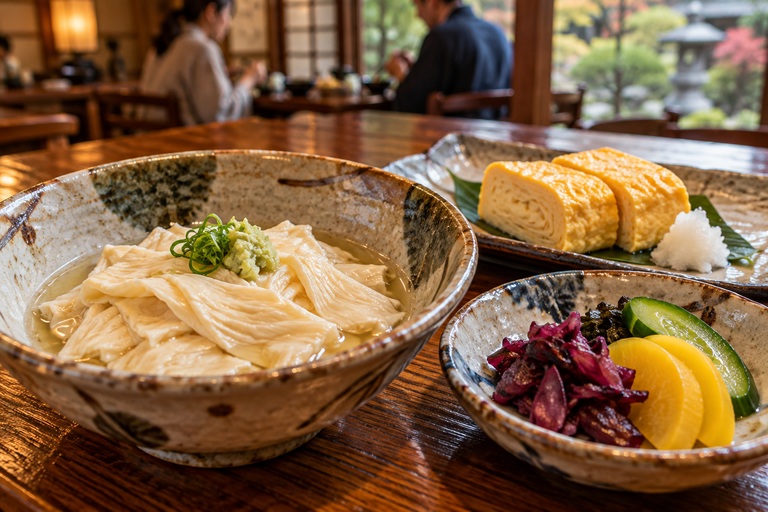
At Nishiki Market, I would start with a small appetite and considerable curiosity. Glossy pickles sit beside dried ingredients; skewers hiss; warm egg, soy, and toasted things interrupt any serious attempt at restraint.
The covered shopping street is about 390 meters long, with a history stretching back centuries. It rewards looking beyond the photogenic snack. The official market directory helps you find specialty shops and understand what they sell.
Eat inside the shop or in the area designated by the seller. The market explicitly asks visitors not to walk while eating. This is particularly sensible when your purchase is sharp, dripping, or hotter than your confidence suggested.
Order textures, not just photographs
Try dashimaki tamago, a tender rolled omelet flavored with broth, or yuba, the delicate skin that forms on heated soy milk. Add something pickled for a sharp, salty interruption. You do not need six expensive skewers to have lunch.
Budget ¥1,500–3,000 for a tasting session, depending on portions and choices. Entry is free. Individual shops keep different schedules, so late morning is generally more practical than arriving at dawn.
Allow 60–90 minutes, longer if you shop for kitchenware or stop for a meal. Compare prices before buying packaged gifts; tourist-friendly presentation sometimes has its own service charge, unofficially speaking.
My Tip: Ask before photographing staff or close-up displays. Buy something from the businesses whose space you occupy, and return waste to the seller when invited.
If you have allergies or dietary restrictions, carry a translated explanation. Fish stock can appear in dishes that look vegetarian. A food tour can help with interpretation, but confirm dietary accommodation before paying.
Explore Kyoto food tours and check dietary options on GetYourGuide
6. Let Nijō Castle Explain Who Held the Power
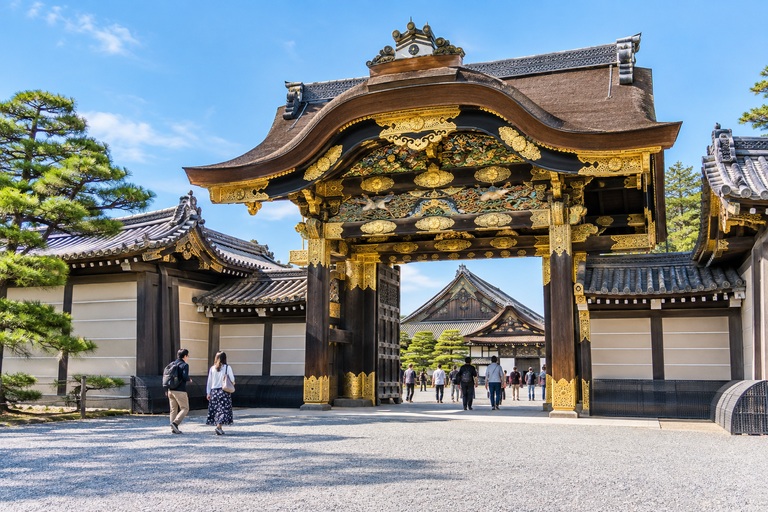
After several temples, Nijō Castle changes the subject. Here the conversation turns toward authority: ceremonial spaces, carefully arranged approaches, and rooms designed to make status visible.
I like this stop for travelers who enjoy knowing why a place looks the way it does. An interior becomes more interesting when you understand who could enter, where they sat, and what the arrangement communicated before anyone spoke.
Allow two to three hours. Nijōjō-mae Station on the Tōzai Subway Line makes the castle straightforward to reach.
Buy the ticket for the rooms you want
The official castle ticket page lists ¥800 for castle admission and ¥1,300 for admission including Ninomaru-goten Palace. Honmaru-goten Palace requires a separate ticket and advance reservation; castle admission is additionally required.
My Tip: Check palace closures before choosing your day. The grounds being open does not mean every palace is open. Use the official visitor calendar, especially around holidays and recurring closure days.
Wear shoes you can remove easily if required, and follow interior photography rules. Resist the urge to turn every room into content. Sometimes looking carefully is the whole activity.
An audio guide or knowledgeable human guide can earn its cost here. Compare the official options with broader city tours, checking whether admission and palace access are included.
Afterward, leave yourself a cafe break. Historical attention has a battery, and mine would deserve charging before another garden.
7. See Kinkaku-ji, Then Stop Demanding an Empty View
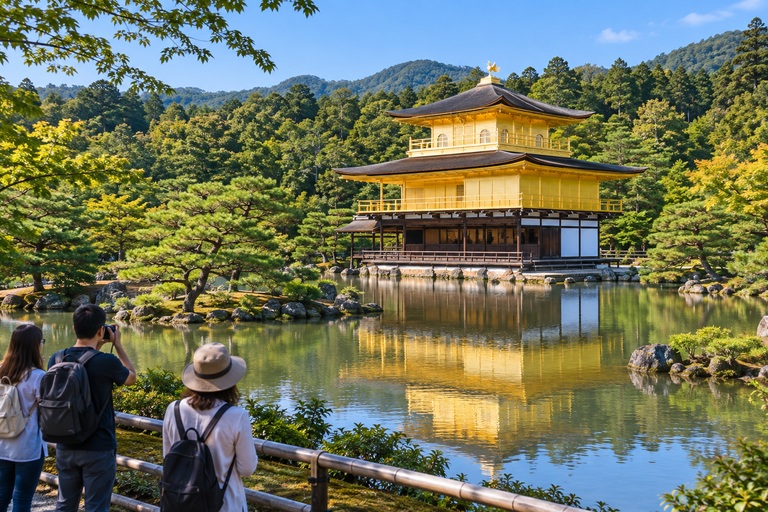
Kinkaku-ji, the Golden Pavilion, is one of those famous sights that remains worth seeing even after the internet has shown it to you several thousand times.
Gold above the pond, dark trees behind it, a reflection that depends on the weather: the composition is immediately readable. The challenge is giving yourself enough time to look rather than treating the first viewpoint as a competitive photography event.
The official temple information gives opening hours of 9 a.m.–5 p.m. Check the access page for current admission and transport details; budget around ¥500 for ordinary adult entry.
Keep this visit geographically sensible
Allow 45–75 minutes inside, plus travel. Kinkaku-ji sits northwest of central Kyoto, so it fits poorly between an eastern temple and a southern shrine unless collecting transfers is your hobby.
A subway journey followed by a shorter bus or taxi leg can be more manageable than a long bus ride across town. Compare routes from your actual accommodation.
My Tip: Arrive near opening, but expect company. The viewing route moves visitors through shared spaces. Take your photograph, then let somebody else have the railing.
Travelers using wheelchairs should consult the temple’s accessibility guidance, which identifies access as far as the pavilion viewpoint. Do not assume every later path offers the same conditions.
This is an exterior viewing experience. Set that expectation before you arrive, and the visit feels more satisfying.
8. Follow the Philosopher’s Path Toward Ginkaku-ji
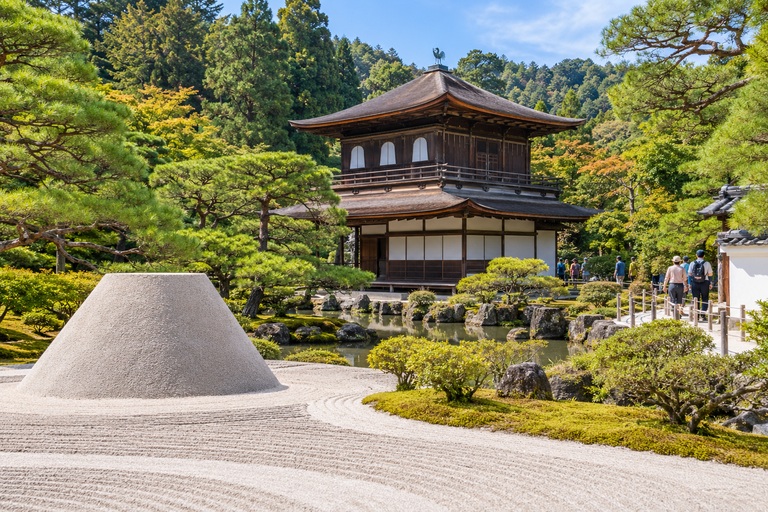
The Philosopher’s Path offers a different sort of sightseeing: a canal-side walk where the main job is to keep moving slowly enough to notice things.
In blossom season, the route draws plenty of visitors. Outside the peak flowering window, branches, water, stone edges, and neighborhood details still make a satisfying walk. A place does not stop existing when its famous season ends.
Pair the path with Ginkaku-ji, the Silver Pavilion, whose gardens invite close attention to texture and arrangement. Despite its familiar English name, do not arrive expecting a silver version of Kinkaku-ji.
Budget time for the garden
Use the official Ginkaku-ji visitor page for seasonal hours and current admission. Budget around ¥500 for ordinary adult entry; the public canal walk itself is free.
Allow two to three hours for a selected stretch of the path, the temple, and a drink. Extend that if you plan frequent stops. You are allowed to enjoy a canal without marching its entire length.
My Tip: Choose your walking direction around temple opening hours. Finishing at a closed gate is an unusually effective way to make a peaceful afternoon irritating.
The garden includes uneven surfaces and elevation changes. Ask about accessible routes if needed, and bring shoes that cope with rain. Save the location of your return transport before your phone battery begins its afternoon decline.
9. Find Brick, Moss, and a Slower Hour at Nanzen-ji
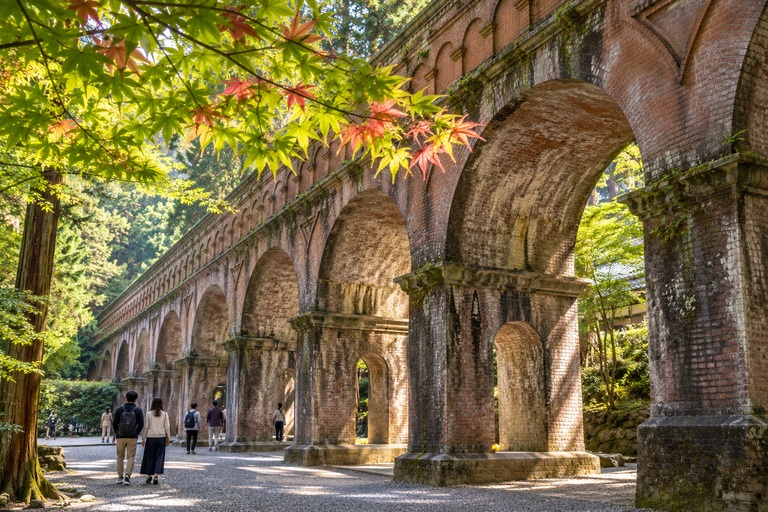
Nanzen-ji gives you temple architecture alongside the brick arches of the Suirokaku Aqueduct. The change in material is part of the pleasure: timber, masonry, gravel, leaves.
This is a good place to ease off after a morning of major sights. Walk the accessible public areas, look at the aqueduct from permitted viewpoints, and decide whether you want to enter a paid garden or building.
Allow one to two hours. General grounds can be explored without buying every available admission; individual buildings and subtemples have separate fees and hours. Set aside ¥600–1,500 if you intend to visit selected paid areas, then confirm the actual choices locally.
Let one garden be enough
You can spend an entire afternoon adding entrances because each one seems individually affordable. By the fourth garden, your eyes may still work while your ability to appreciate a carefully placed rock has left for lunch.
My Tip: Choose one paid area that interests you and stay longer. Ask what is open, what the route involves, and whether shoes must be removed.
Pair Nanzen-ji with the southern end of the Philosopher’s Path if walking conditions and energy allow. Otherwise, keep them on separate days. Nearby Keage Station is useful when returning by subway.
Respect barriers around the aqueduct and temple grounds. Old masonry is not climbing equipment, and moss does not need a footprint for scale.
10. Sit Down for Tea, Then Make Dinner an Event
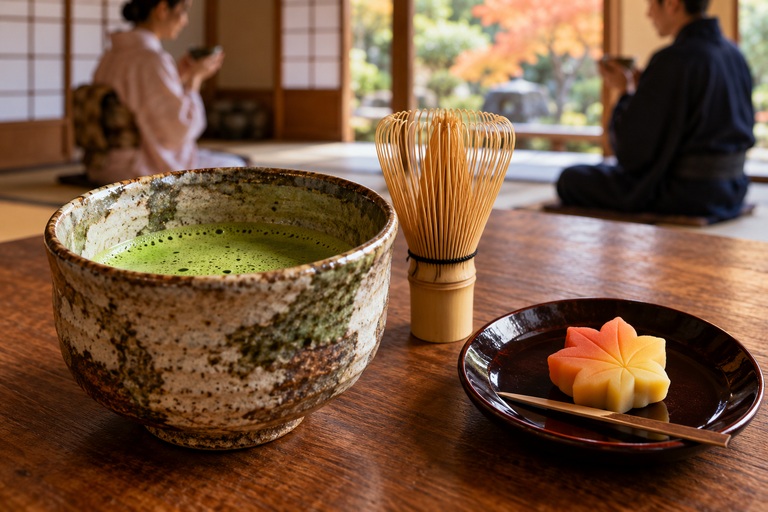
One of the most rewarding Kyoto experiences involves staying in the same place for a while. A thoughtful tea session turns your attention toward temperature, movement, utensils, and taste.
Matcha can be grassy, savory, gently bitter, and soft with foam. A sweet served alongside changes the next sip. That small contrast is more interesting than another dessert engineered primarily to survive social media.
Book the kind of tea experience you actually want
Some sessions explain ceremony and etiquette; others focus on whisking, tasting, or photographs. Read the distinction. Budget roughly ¥3,000–8,000 per person for an introductory experience, with private or specialist sessions potentially higher.
Ask about language, group size, duration, and seating. Chair seating is worth requesting if kneeling is uncomfortable. You do not need to suffer politely to prove an interest in tea.
Compare Kyoto tea experiences and reserve your preferred session on GetYourGuide
End with food that suits your appetite
For dinner, consider obanzai, the home-style dishes associated with Kyoto, or a carefully chosen kaiseki meal if your budget allows. The first can offer variety without a formal evening; the second deserves time, advance planning, and attention to the menu.
Budget ¥2,000–5,000 for a casual dinner, while formal tasting menus may start around ¥10,000–20,000 and climb considerably. Prices vary; check drinks, service charges, dietary flexibility, and cancellation rules.
My Tip: Book one meal you are excited about, then leave other dinners flexible. A reservation should give the day a pleasant anchor, not turn every snack into a scheduling offense. Check restaurant opening days before planning your evening.
Where to Stay in Kyoto Without Commuting to Your Vacation
Choose the neighborhood before the hotel photograph
Downtown around Shijō-Karasuma or Kawaramachi suits first-time visitors who want restaurants and convenient connections. Kyoto Station is practical for rail arrivals, departures, and regional trips. Higashiyama suits atmosphere and early eastern sightseeing, though slopes and station distances deserve checking.
I would prioritize a comfortable bed, convenient transport, and recent cleanliness reviews over decorative promises. In small rooms, check square footage and luggage space. For a ryokan, confirm bedding, bathroom arrangements, meals, and arrival deadlines.
Booking.com is useful for comparing neighborhoods, room types, and cancellation terms. Enter your real dates and guest count, then inspect the final total. A cheap headline rate can become less charming once you discover the bathroom is shared and breakfast is imaginary.
Compare Kyoto stays and check cancellation terms on Booking.com
Remember the accommodation tax
Under the revised 2026 Kyoto accommodation tax, nightly tax is charged per person, based on the qualifying accommodation price:
- Below ¥6,000: ¥200.
- ¥6,000 to below ¥20,000: ¥400.
- ¥20,000 to below ¥50,000: ¥1,000.
- ¥50,000 to below ¥100,000: ¥4,000.
- ¥100,000 or more: ¥10,000.
The qualifying amount excludes meals and consumption tax. Check the city’s official accommodation-tax guidance and ask your hotel whether collection happens separately.
What Kyoto Costs: Daily Budgets and Everyday Purchases
These estimates are per person per day, including lodging, meals, local transport, and modest sightseeing. They exclude flights, intercity travel, insurance, shopping, and major splurges. Add accommodation tax separately.
- Budget traveler: ¥9,000–14,000. Dorm accommodation, simple meals, rail and walking, limited paid attractions.
- Comfortable midrange: ¥17,000–28,000. Your share of a double room, varied meals, attractions, and occasional convenience spending.
- Higher comfort: ¥35,000–60,000+. Better hotels, refined meals, taxis, and more paid experiences.
Solo travelers taking private rooms should increase the lodging allowance. Blossom periods, autumn weekends, and major holidays can push rooms well beyond ordinary estimates.
For essentials, plan approximately ¥150–250 for bottled water, ¥180–350 for an onigiri, ¥400–700 for cafe coffee, ¥500–1,000 for a simple breakfast, and ¥900–1,800 for a casual noodle or rice lunch. Premium locations cost more.
My Tip: Set a snack budget. Five little purchases are surprisingly capable of impersonating a restaurant bill.
Getting to Kyoto, Then Getting Around Sensibly
Airport arrivals and intercity trains
From Kansai International Airport, compare the Haruka train with airport buses and prebooked transfers. JR West lists an eligible visitor Haruka one-way ticket to Kyoto at ¥2,200; eligibility and purchase conditions apply. Check the official Haruka ticket details.
Use Trip.com to compare available flights and rail bookings, checking baggage, ticket collection, amendments, and cancellation conditions before purchasing. For arrivals from Tokyo or elsewhere, compare individual rail tickets against any pass using your actual route.
Compare Japan flights and rail options on Trip.com
If luggage, children, or a late arrival make door-to-door travel appealing, check Welcome Pickups for your exact airport and hotel. Confirm route availability before relying on it, then compare the full quote, luggage allowance, child seats, waiting time, and cancellation terms.
Use rail as your starting point
An ICOCA or compatible transit card simplifies many journeys, but it does not make travel free or cover every ticket type. Use route planning to compare railway operators and walking distances.
The Kyoto Subway & Bus One-Day Pass costs ¥1,100 for adults. It covers specified services for one calendar day, not a rolling 24 hours, and does not cover all the railway lines useful for sightseeing.
My Tip: Add up your planned covered journeys before buying a pass. A walk-heavy day may cost less with individual fares. Carry luggage outside commuter peaks when possible.
Save driving for a trip that needs it
I would skip a rental car for this city itinerary. Parking and narrow streets can turn convenience into administration. For a separate rural extension, compare suitable vehicles through GetRentacar, including collection location, deposits, insurance excess, tolls, and parking.
Confirm accepted driving documents directly before booking. Requirements depend on your license and circumstances.
Money, Mobile Data, and the Practical Stuff Worth Doing at Home
Give your wallet a backup plan
Carry some cash for small businesses and admissions, plus a backup payment card stored separately. Compare Wise and Revolut against your existing card using the fees for your country and plan.
With Wise, check conversion costs and withdrawal allowances. With Revolut, inspect exchange limits and any applicable additional charges. Neither should be assumed universally free. When offered currency conversion by a terminal or ATM, review it carefully; paying in yen generally avoids the merchant’s conversion rate.
Check Wise’s yen spending options →
Review Revolut’s current plans and fees →
Connect before you need directions
Compare Japan eSIMs on Trip.com, checking device compatibility, network coverage, data allowance, hotspot permissions, and activation rules. A data-only plan may not include a local phone number. Install according to the product instructions while you have reliable internet.
Download offline maps and save your hotel address in Japanese. Carry a power bank. Your phone has an admirable work ethic until navigation, translation, and photography demand overtime.
Read insurance before the departure lounge
Use VisitorsCoverage to compare policies appropriate for your residence and a trip to Japan. Look at medical limits, exclusions, deductibles, cancellation protection, and any activities you plan. Benefits and eligibility vary by policy. Choose for the risks you need covered, not simply the cheapest headline price.
When to Visit Kyoto, and What to Pack
Spring and autumn are popular for blossoms and foliage, with corresponding pressure on rooms and major sights. Flowering and leaf color depend on the year. Book for a season you would enjoy even if the trees refuse your schedule.
Summer can feel hot and humid, so plan outdoor walking early, carry water, and leave midday room for indoor activities. Winter usually calls for layers, especially when moving between heated rooms and exposed temple grounds. Snow is a possibility, not an itinerary item you can reserve.
Check seasonal updates through the Kyoto City Official Guide. Pack comfortable walking shoes, a compact umbrella, socks suitable for shoe-removal areas, and a small day bag. A rain forecast is a reason to adjust the day, not automatically abandon it.
Can you enjoy Kyoto in the rain?
Yes. Move your tea session, market browsing, or available castle interiors into the wetter hours. Gardens can look particularly rich after rain, but slippery steps and wet shoes make long walks less appealing. Keep one flexible indoor option each day.
Is Kyoto manageable without speaking Japanese?
For many independent visitors, yes, with preparation. Save addresses, use translation tools patiently, and keep requests simple. Learn a greeting and a thank-you, then allow people time to respond. English availability varies between businesses.
What should you save before leaving the hotel?
Save your hotel address, return route, reservation confirmations, and essential contact details offline. The Japan Visitor Hotline provides visitor assistance information. For entry requirements and medication rules, consult official guidance relevant to your nationality and prescriptions before departure.
My Tip: Keep a little unscheduled time after every reservation. Finding an entrance, waiting for a table, or discovering you need a bathroom should not derail your entire afternoon. Travel has enough moving parts already.
Four Days in Kyoto Without Racing the Clock
Day one: Eastern streets and evening lights
Start with Kiyomizu-dera, descend through Higashiyama, and leave time for lunch. Add your tea experience if it is nearby, then explore public streets in Gion toward evening.
Day two: Gates, a market, and a proper dinner
Visit Fushimi Inari Taisha early. Return downtown for Nishiki Market, keeping the afternoon flexible. This is a sensible evening for your reserved dinner.
Day three: The western half-day
Spend the morning around Arashiyama and Tenryū-ji. Add Kinkaku-ji only if transport, weather, and energy cooperate. Otherwise, enjoy the river area and move the pavilion elsewhere.
Day four: Castle history and a canal walk
Visit Nijō Castle, then choose Ginkaku-ji and part of the Philosopher’s Path. Add Nanzen-ji only with enough daylight and comfortable walking conditions. Ten recommendations are options, not attendance requirements.
With three days, remove the final day or trade attractions according to your interests. With five, separate the castle from the eastern gardens and give yourself a genuinely open afternoon.
Leave Kyoto With Better Memories and Less Impact
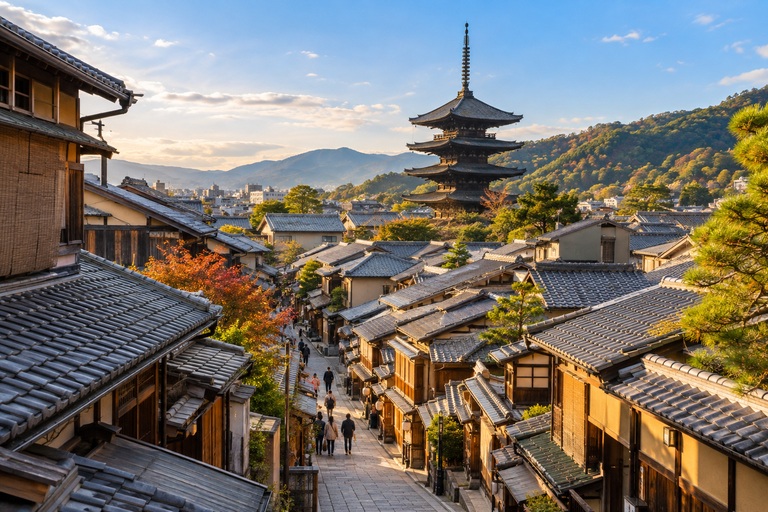
Travel by train where practical, walk within neighborhoods, and avoid carrying large luggage onto crowded local buses. Grouping nearby sights reduces both unnecessary journeys and daily frustration.
Support small businesses deliberately. Buy a useful ceramic bowl from a shop that can explain its maker, pay for local knowledge, and eat at places where your spending supports actual work rather than another disposable souvenir.
Carry a refillable bottle and a small waste bag. Refill where permitted, sort trash according to local instructions, and never use residential bins as tourist infrastructure.
Keep quiet near homes, respect photography signs, and stay on paths. Spreading visits across less crowded hours helps only if you remember people may be sleeping beside that picturesque lane.
My Tip: Ask before assuming. A polite question about shoes, photos, seating, or ingredients prevents more trouble than an elaborate speech about responsible travel.
The Part Worth Leaving Unscheduled
The 10 best things to do in Kyoto can fill a very good trip. They can also become ten tasks you perform while thinking about the eleventh. I would rather you leave with three places you paid attention to than a phone full of evidence that you hurried everywhere.
Give the major sights their place. Walk beneath the gates at Fushimi Inari, look across the hillside from Kiyomizu-dera, and stand by the pond at Kinkaku-ji. Then make room for the smaller decisions: another cup of tea, a shopkeeper explaining a bowl, a bench when your legs request one.
Before you close this guide, choose your travel dates, reserve accommodation with terms you understand, and book the one experience you would be disappointed to miss. Save the rest to a map. You now have enough structure to travel confidently without accounting for every minute.
Subscribe to A Tiny Traveler for more practical, opinionated travel guides, with useful budgets, food worth investigating, and itineraries designed for humans. Follow A Tiny Traveler on Pinterest and save this Kyoto guide to your Japan board so the planning details are there when you need them.
And when you finally sit down with that bowl of tea, let it stay warm in your hands for a moment. Somewhere outside, somebody is hurrying toward another gate. You can finish your drink.
Frank


