

The first thing I would put on your Alps itinerary is an empty afternoon. No summit reservation. No heroic march. Just enough time to arrive, buy something involving bread and cheese, and discover whether your accommodation is uphill. In the mountains, that last detail can turn a ten-minute walk into a negotiation with your suitcase.
Then comes the difficult part: choosing where to stop. The European Alps stretch across borders, languages, and wildly different definitions of an affordable lunch. You can watch clouds collect around the Matterhorn, eat beet-filled pasta below the Dolomites, or spend an afternoon beside Lake Bohinj with absolutely nothing to prove to your fitness tracker.
My shortlist of the 10 best Alps travel destinations is for independent travelers who want scenery, good food, and useful logistics without needing mountaineering credentials. Couples, solo travelers, and families will find different winners here. I favor places that work as actual vacation bases, with somewhere to eat when it rains and something worthwhile beyond one famous photograph.
I’ll walk you through the best places to visit in the Swiss Alps, French Alps, Italian Alps, Austrian Alps, Bavarian Alps, and Slovenian Alps. You’ll find realistic planning budgets, transport advice, photo ideas, and the tradeoffs that glossy postcards conveniently leave outside the frame. Start with the holiday you want. Let the mountain choose its own lighting.
Choose Your Alps Destination Before Choosing Your Hotel
For quick decisions, here is how I would match these places to your trip:
- Zermatt, Switzerland: The Matterhorn, mountain railways, and a generous budget.
- Jungfrau Region, Switzerland: Waterfalls, village hopping, and a first Swiss Alps vacation.
- Chamonix, France: Big mountain scenery and an outdoorsy town.
- Annecy, France: Lake swimming, cycling, and slower days.
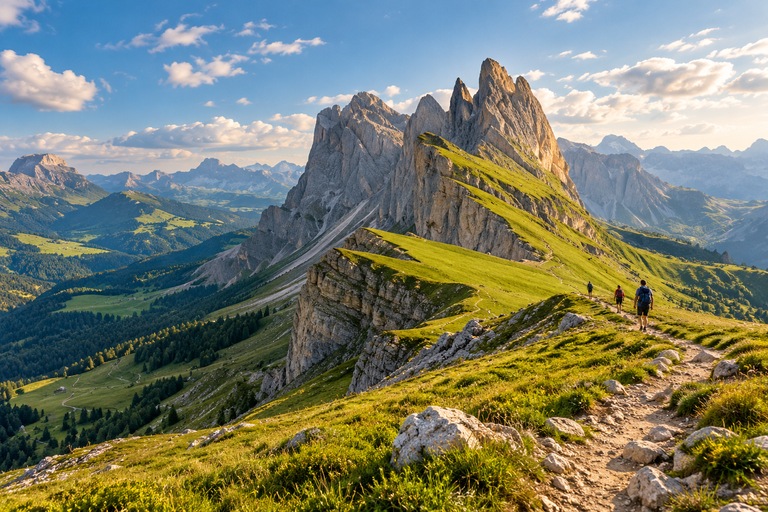
- Val Gardena, Italy: Meadow walks, dramatic ridges, and excellent food.
- Cortina d’Ampezzo, Italy: Rocky landscapes, photography, and mountain history.
- Innsbruck, Austria: City comforts with mountains immediately above them.
- Zell am See–Kaprun, Austria: Lakes, lifts, and varied family days.
- Garmisch-Partenkirchen, Germany: Mountain railways, gorges, and traditional town streets.
- Bohinj, Slovenia: Lake time, forest trails, and comparatively gentler costs.
My Tip: Choose two or three bases for a ten-day trip. Trying to visit all ten turns your vacation into a luggage relocation business.
1. Zermatt: The Matterhorn Has Excellent Stage Presence
Why I Would Put It on Your Route
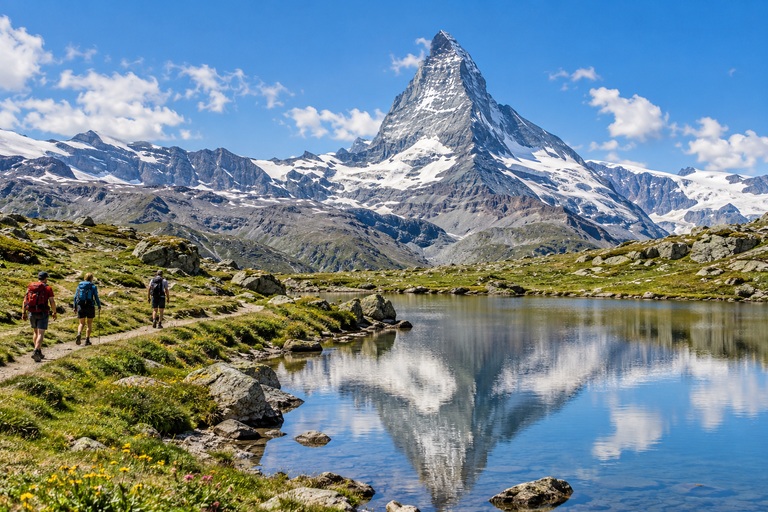
The Matterhorn has the unfair advantage of looking exactly like a mountain drawn by someone determined to win a mountain-drawing competition. Its crooked pyramid dominates the appeal of Zermatt, but the village also offers timber buildings, walking routes, and mountain railways that make high views accessible without a climbing expedition.
I would give Zermatt three nights. That leaves a spare day if clouds swallow the skyline. One expensive excursion on a clear morning beats two booked blindly because your spreadsheet demanded productivity.
Build Your Days Around the Forecast
Make the Gornergrat Railway your main contender for sweeping views of the Matterhorn and surrounding peaks. Check its official timetable before choosing dates; seasonal maintenance can interrupt service.
In suitable summer conditions, consider a shorter walk near Riffelberg or Riffelsee, choosing the route according to snow, footing, and your ability. Down in town, explore Hinterdorf, where dark wooden buildings offer a welcome change from outdoor clothing shops.
For dinner, raclette brings melted cheese, potatoes, and pickles together with admirable disregard for your plans to eat lightly.
Where to Stay and What to Spend
Stay near Zermatt station for easier luggage handling, or consider Winkelmatten for a quieter setting, checking slopes and local transport first. Private cars stop in Täsch; the official arrival guide explains onward transfers.
Allow CHF 150–210 daily on a careful budget, or CHF 240–360 at midrange, before major mountain tickets. A casual main might require CHF 25–40. This is a place where supermarket picnics deserve respect.
Compare Booking.com properties by walking distance, cancellation terms, and breakfast inclusion. Paying slightly more near your transport can beat saving money on a steep daily climb.
Compare Zermatt stays on Booking.com
2. The Jungfrau Region: Pick a Village, Not Just a Famous Ticket
The Best Base Depends on Your Evenings
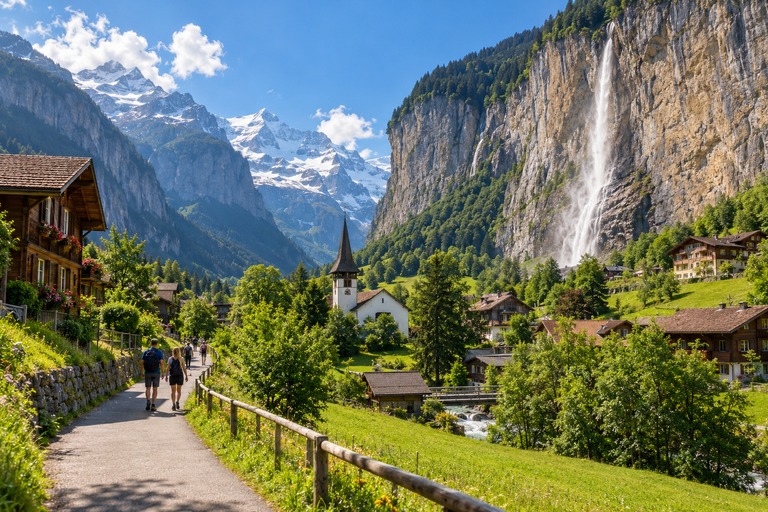
The Jungfrau Region combines valley waterfalls, mountain villages, and the great wall of the Eiger, Mönch, and Jungfrau. It is an excellent first Swiss Alps destination, provided you accept that beauty and bargain pricing rarely share an address here.
Choose Lauterbrunnen for valley walks and transport connections, Wengen for village atmosphere above the valley, or Grindelwald for extensive visitor services and access to mountain excursions. Interlaken suits travelers prioritizing wider rail connections rather than a mountain village setting.
What Is Actually Worth Your Time
I would spend four nights, combining a Lauterbrunnen valley day, a village excursion, and one bigger mountain outing. The remaining day belongs to the weather.
Jungfraujoch is the headline excursion, with a high-altitude railway journey and glacier scenery. It is also expensive enough to deserve a deliberate decision. Check official tickets and prices and reservation requirements for your dates. A travel pass does not automatically mean every segment is free.
Grindelwald First offers another mountain day, while Wengen rewards travelers who simply want to walk, find a terrace, and let lunch expand into the afternoon.
Costs, Food, and Booking Without Regret
Plan approximately CHF 130–190 daily on a careful budget, or CHF 220–330 at midrange, excluding premium mountain trips. A rösti meal may cost roughly CHF 22–35: potatoes fried until the edges crackle, often joined by cheese or an egg.
My Tip: Compare individual fares against passes using your actual itinerary. A pass bought for theoretical adventures can become an expensive souvenir.
Use GetYourGuide to compare guided excursions if you want someone else to manage connections. Read the starting point, included rail segments, and weather cancellation terms before booking.
Compare Jungfrau Region excursions on GetYourGuide
3. Chamonix: Big Mountains, Muddy Boots, Proper Appetite
Come for the Scale
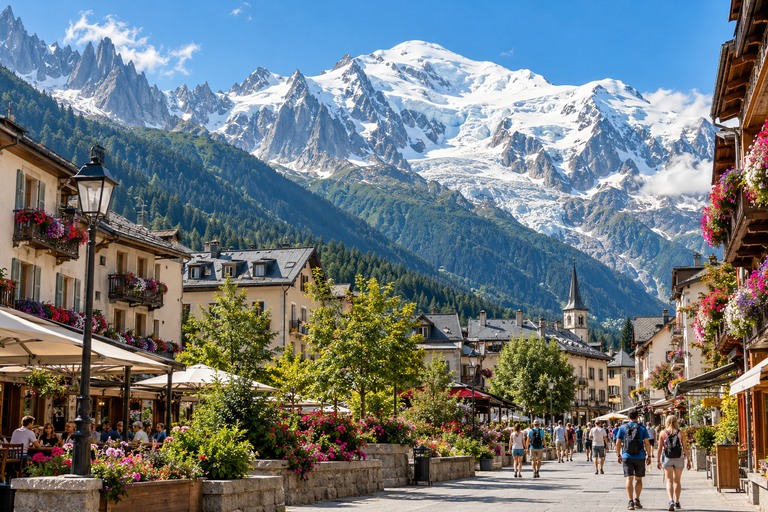
Chamonix sits beneath the Mont Blanc massif, where rock, ice, and altitude make the town feel like a busy backstage area for the mountains. Outdoor equipment is practically a second local language.
I like it as a choice for travelers who want dramatic scenery alongside restaurants, shops, and practical services. Stay three or four nights, particularly if you are planning a major lift excursion.
Choose One High Day and One Lower Day
The Aiguille du Midi is the obvious big-ticket experience. Its summit terrace reaches 3,842 meters, so treat this as a high-altitude outing, not an ordinary observation deck. Check the official visitor guidance for booking, age restrictions, and suitability.
Another option is the Montenvers railway and the Mer de Glace area. The glacier landscape also provides a sobering reason to learn about Alpine environmental change rather than treating ice as permanent scenery.
Balance these with lower valley walks or town time. Your trip does not become less legitimate because you spend an afternoon eating tartiflette: potatoes, onions, bacon, and Reblochon forming a warm, unapologetic alliance.
Arriving and Spending Sensibly
Geneva Airport is a practical gateway, with onward road transfers to the valley. Compare shared shuttles with private transfers rather than assuming one option always wins.
Budget €95–145 daily carefully, or €165–250 at midrange, before major lift tickets. Casual restaurant mains often need an allowance of €18–30.
For late arrivals or several travelers with luggage, check Welcome Pickups for availability on your exact route. Confirm the destination, flight monitoring, waiting allowance, child seats, and total fare before paying.
My Tip: Stay near the transport you will actually use. A cheaper room far along the valley needs a timetable check, especially for evenings.
4. Annecy: An Alpine Holiday With Permission to Sit Down
For Travelers Who Want Water Beside Their Mountains
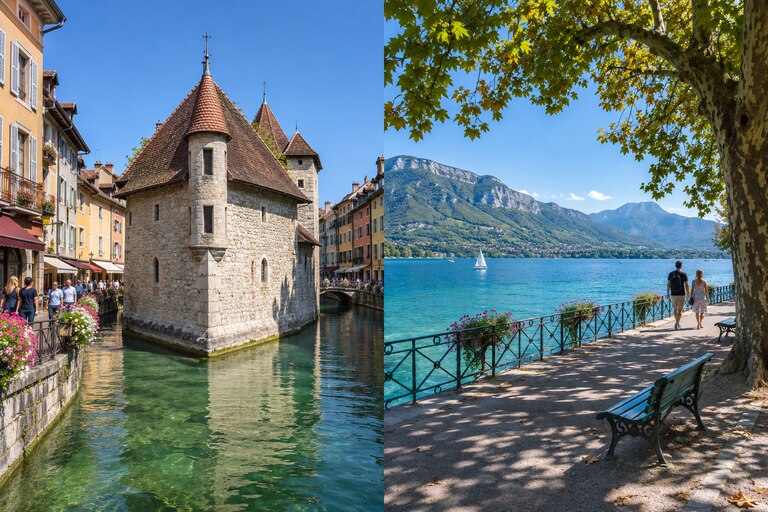
Annecy is my pick for a gentler French Alps vacation. You get mountain backdrops, a lake, and an old town where canals run between buildings and café tables compete for elbow room.
This is an Alpine lake base, not a substitute for the high mountains of Chamonix. That distinction is its selling point. Stay two or three nights, longer if swimming and cycling are the main event.
An Easy Day That Still Feels Full
Walk the old town early, before narrow lanes fill. The Palais de l’Île supplies the familiar canal photograph, while the lakefront gives you room to breathe afterward.
Rent a bike for part of Lake Annecy’s shoreline rather than automatically committing to the complete circuit. The full loop includes differing surfaces, gradients, and traffic conditions; it is not one continuous carefree promenade. Use the tourist office’s cycling information to match a route to your confidence.
In warm weather, choose an authorized swimming area and check local conditions. Then order something involving Savoyard cheese, or assemble a picnic with bread whose crust leaves evidence down your shirt.
The Tradeoff Nobody Puts on the Postcard
Annecy can be crowded and costly in summer. Old-town accommodation may also involve stairs, street noise, and awkward parking. Read recent reviews for these details, not just photographs of breakfast pastries.
Allow €90–135 daily carefully, or €155–235 at midrange. Budget roughly €15–25 for a simple restaurant main and €20–40 for standard bicycle rental, depending on duration and provider.
My Tip: Stay within walking distance of the lake or your arrival station. You gain more from an easy evening stroll than from a hotel feature you will barely use.
5. Val Gardena: The Dolomites, With Lunch Taken Seriously
A Strong First Choice for the Italian Alps
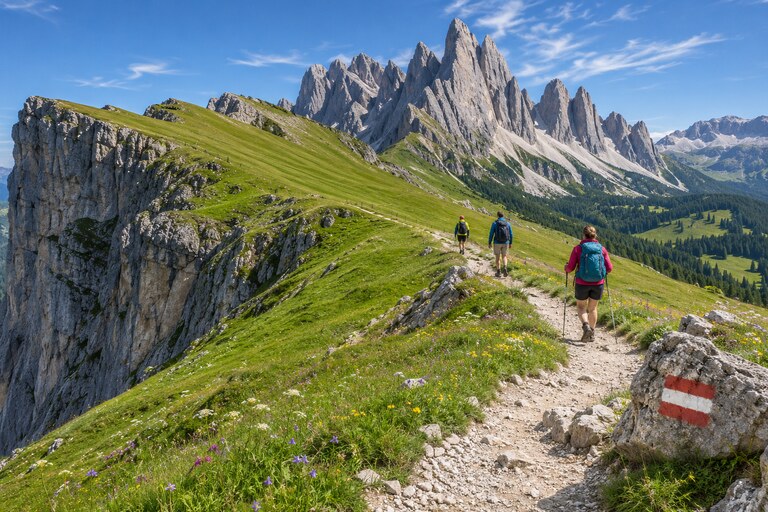
For a first Dolomites trip, I would seriously consider Val Gardena. The valley combines established visitor infrastructure with meadows, jagged limestone peaks, and food shaped by its Ladin, Italian, and South Tyrolean setting.
Choose Ortisei for a walkable center and convenient lift access, Santa Cristina for a smaller base, or Selva for a setting farther up the valley. Allow four nights rather than arriving solely to photograph one ridge.
Two Landscapes, Two Different Days
Seceda delivers sloping grass meeting abrupt rock. Alpe di Siusi, also called Seiser Alm, offers broad meadow landscapes and walking options that can suit a slower pace. Select specific routes by distance and ascent; a meadow does not magically make every trail easy.
Build a day around a mountain hut lunch. Canederli, bread dumplings served in broth or with butter, are a practical response to mountain appetites. Speck adds smoky, salty edges; apple strudel provides an entirely defensible reason to linger.
The Transport Detail Worth Checking First
You can reach the valley through Bolzano or Ponte Gardena, continuing by bus. The official mobility guide explains buses and guest benefits.
Participating accommodation may provide the Val Gardena Guest Pass, but bus benefits and lift passes are different products. Some services around Alpe di Siusi have exclusions. Verify the exact routes before assuming your accommodation includes everything.
Plan €100–155 daily carefully, or €175–270 at midrange, excluding major lift days. A hut lunch might need €18–30, more with drinks and dessert.
6. Cortina d’Ampezzo: Rock Towers and a Little Italian Swagger
For Photographers Who Also Like Dinner
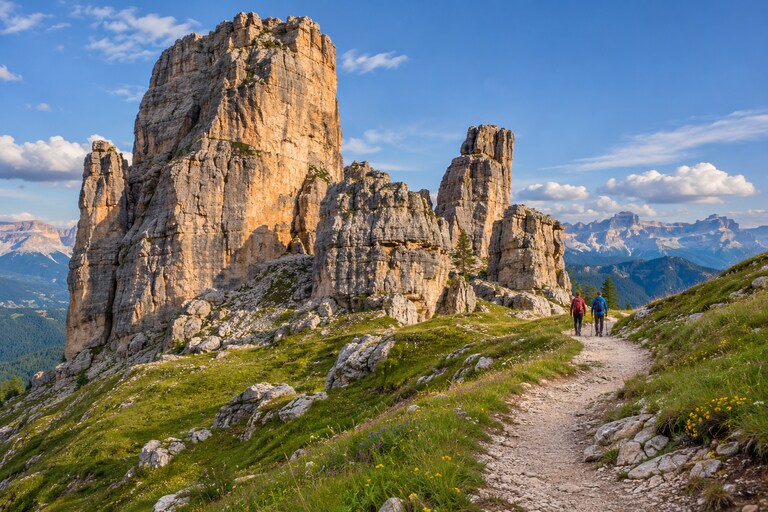
Cortina d’Ampezzo pairs the hard edges of the Dolomites with a town that takes its evening stroll seriously. This is a good base for rocky landscapes, mountain history, and travelers happy to pay for atmosphere.
It is not my first recommendation for a tight budget. Stay three or four nights and choose a manageable cluster of outings rather than chasing every famous lake and pass.
Give Cinque Torri a Proper Day
The rock towers of Cinque Torri make an excellent focus, with surrounding walking routes and World War I history. Conditions and route choice matter; military paths and mountain terrain should not be treated as an urban museum corridor.
The Tofana lifts offer another perspective when operating. Use the official seasonal lift information and follow through to current operator updates. A previous summer’s schedule is not a promise for your travel dates.
Back in town, look for casunziei, often filled with beet and finished with butter and poppy seeds. Sweet earthiness, toasted seeds, butter on the lips. A more useful reward than another rushed photo stop.
Getting There Without Buying a Parking Problem
Venice is a practical gateway, with coach connections worth investigating before renting. Local buses can support selected outings, but timetables may limit early starts and evening returns.
Budget €110–170 daily carefully, or €190–300 at midrange, before substantial excursions. Casual mains commonly warrant €18–32.
If you genuinely need a car, compare GetRentacar options against your route. Check the security deposit, excess, mileage, pickup location, winter equipment, and cross-border permission. The cheapest headline rate can acquire accessories remarkably quickly.
My Tip: Arrange a qualified guide for technical routes or a first via ferrata. A cable attached to a cliff does not make the cliff casual.
7. Innsbruck: Mountains Without Giving Up the City
The Best All-Rounder for Mixed Interests
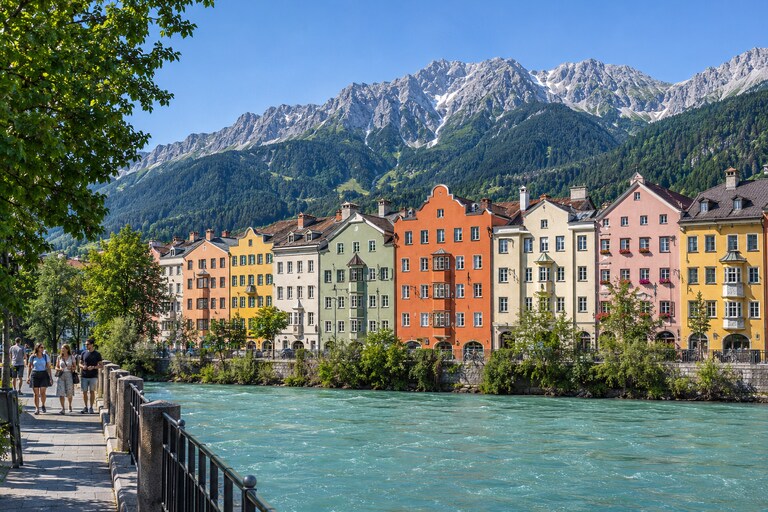
Innsbruck works particularly well when your group disagrees about what constitutes a holiday. One person wants altitude. Another wants museums. Someone else requires coffee before discussing either.
The city gives you those options without constant hotel changes. I would choose three nights for a first visit, with room to extend into surrounding valleys.
A Mountain Morning and an Old-Town Afternoon
The Nordkette transport system connects the city with high mountain viewpoints through a sequence of railway and cable-car stages. It is one of the clearest examples of why you do not need a rental car simply because mountains are involved.
Allow proper time for the ascent and return rather than cramming it between lunch reservations. Check weather and the official lift information.
Back below, walk the old town around the Golden Roof, then follow the Inn River. If rain arrives, museums and cafés give the day somewhere sensible to go.
Order Käsespätzle when you want soft egg noodles tangled with cheese and browned onions. The onions should supply a little crunch. The rest is comfort with no interest in subtlety.
Where the Value Is
Stay near the center or main station for easy arrival and onward rail travel. Allow €80–125 daily carefully, or €140–215 at midrange, excluding major mountain tickets. A casual main might cost €16–26.
The Welcome Card and paid Innsbruck Card are not interchangeable. Check the official card comparison, qualifying stays, and current inclusions before choosing.
My Tip: Add up only attractions you actually want. Buying a city card should reduce your costs, not assign you homework.
8. Zell am See–Kaprun: A Lake Day Is a Legitimate Plan
Variety Without Constant Repacking
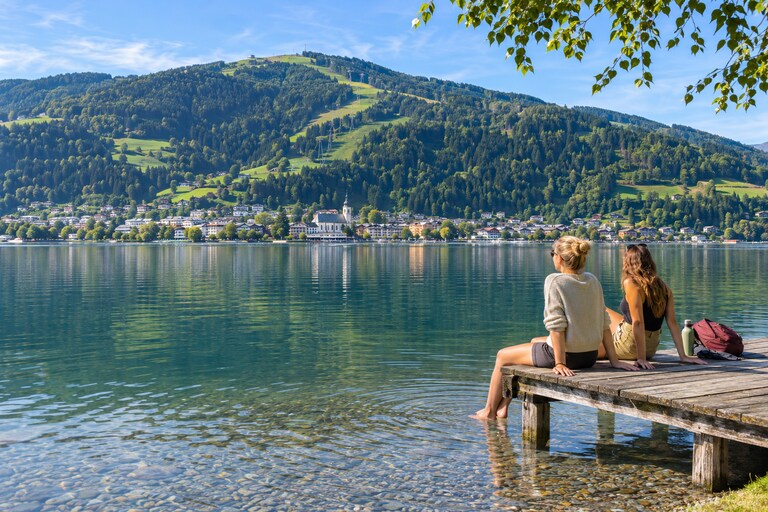
Zell am See–Kaprun is a strong choice for families and couples who want different kinds of days from one base. There is Lake Zell, mountain access, walking, and the option to slow down without feeling stranded.
Choose Zell am See for the lake and rail access, or Kaprun if its mountain connections and accommodation suit your plans better. Give the area three or four nights.
Alternate Altitude With Lakeside Time
Consider Schmittenhöhe for mountain views, keeping the excursion flexible around visibility. The Kitzsteinhorn offers another high-mountain experience, but operating status, weather, and ticket inclusions need checking.
Do not stack both into one rushed day just because a booking page makes them look neighboring. Include a lakefront walk, an authorized swimming area in suitable weather, or a relaxed boat outing when services operate.
For a meal that understands hungry walkers, try Kaspressknödel: pressed cheese dumplings with a browned surface, often served in broth or with salad.
Read the Accommodation Benefits Carefully
The Zell am See–Kaprun Summer Card comes through participating accommodations during its operating season. It is not automatically included with every room in the region. The official Summer Card page explains validity and conditions; individual attractions can have usage restrictions.
Budget €85–135 daily carefully, or €150–230 at midrange, before excursions not covered by your stay. Allow €16–28 for a casual restaurant main.
9. Garmisch-Partenkirchen: Germany’s Alps Have More Than One Big View
A Practical Bavarian Mountain Base
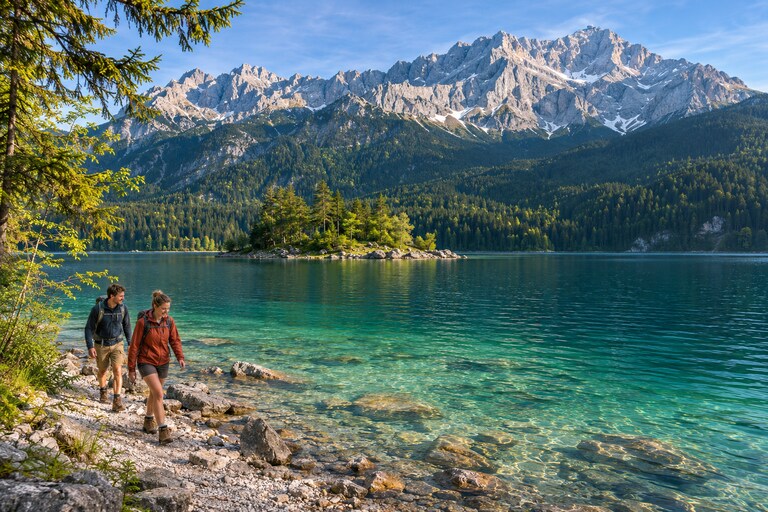
Garmisch-Partenkirchen offers rail access, traditional streets, and a useful mix of mountain and valley experiences. It suits first-time visitors to the Bavarian Alps who want variety without rebuilding their itinerary daily.
Stay three nights. The combined town is spread out, so check your hotel’s actual position relative to the station and bus stops.
Mountains Above, Water Below
The Zugspitze is the headline outing, with railway and cable-car options. Before spending, consult the official operating information and forecast. A summit ticket cannot negotiate with a cloud.
Lake Eibsee supplies another perspective, with wooded shores beneath the mountains. Arrive by public transport where practical, especially during busy periods when parking becomes its own competitive sport.
The Partnach Gorge is a different experience: rushing water, damp rock, and passages where a waterproof layer earns its suitcase space. Check official opening and ticket information because safety closures and access rules can change.
Finish with a walk through Partenkirchen’s Ludwigstraße, paying attention to painted façades instead of marching straight toward dinner.
Food, Costs, and a Useful Booking Test
Allow €85–130 daily carefully, or €145–225 at midrange, before major mountain tickets. A casual main may require €16–28. Roast pork, dumplings, and sharp mustard make a convincing argument for taking your next walk tomorrow.
My Tip: Compare an organized excursion with doing it independently by rail. On GetYourGuide, inspect whether mountain admission is included or charged separately; a low tour price can conceal the biggest expense.
Compare Bavarian Alps experiences on GetYourGuide
10. Bohinj: The Slovenian Alps at a More Human Pace
For Travelers Who Want Space in the Itinerary
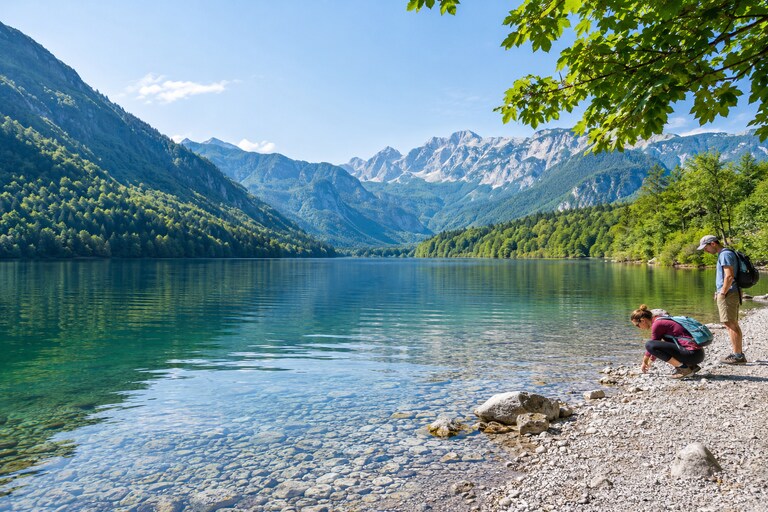
Bohinj is my choice for lake days, woodland walks, and a less resort-centered Alps vacation. It belongs to the Julian Alps, with Lake Bohinj providing the main anchor for your stay.
It is not undiscovered, and summer brings crowds. Still, I would choose three or four nights here for travelers who care more about being outside than browsing designer windows.
Keep Your First Day Simple
Start with the lakefront around Ribčev Laz or Ukanc, then choose a walk suited to conditions. Mostnica Gorge and Savica Waterfall are possible outings, but access, walking demands, and admissions should be checked individually.
The Vogel cable car gives access to elevated views without requiring a full mountain ascent on foot. Remember that reaching a lift station does not make the trails beyond it suitable for every visitor.
For food, look for Bohinj cheese, trout, or štruklji, rolled dumplings with sweet or savory fillings. A bowl of soup and good bread also has considerable merit after damp forest miles.
Spend Less, but Plan Your Transport
Stay near the lake for convenience, or consider Bohinjska Bistrica for rail access and potentially better-value accommodation. The station is not beside the lake; check onward transport.
Use the official mobility information and visitor guidelines for buses, parking, and responsible access.
Allow €65–105 daily carefully, or €115–180 at midrange, before larger activities. A casual main might cost €13–23. Peak summer lakefront rooms can push these estimates upward.
My Tip: Stay longer and use local buses where schedules work. You spend less time hunting parking and more time doing the thing you traveled here for.
What an Alps Trip Actually Costs
Read the Budget Before It Reads You
The destination figures above are planning estimates, not live quotes. They are per person, per day, covering accommodation, ordinary meals, and modest local transport. Careful budgets assume dorms or simple shared rooms, grocery meals, and restrained spending. Midrange budgets assume two adults sharing a comfortable double room.
They exclude international flights, travel between bases, major mountain tickets, car rental, insurance, and skiing. Solo private rooms, school holidays, and premium resort dates can cost substantially more. Keep a separate excursion fund rather than hoping cable cars will fit inside the lunch allowance.
Essentials Worth Putting in Your Spreadsheet
Use these broad allowances when comparing destinations:
- Coffee: roughly €2–5 in the euro-priced destinations, or CHF 4–7 in Switzerland.
- Bakery breakfast: approximately €6–12, or CHF 9–16.
- Supermarket picnic: around €8–15, or CHF 12–22.
- Casual restaurant main: typically €13–32, or CHF 22–40, depending on location.
- Short local transport journeys: allow around €3–8 or CHF 4–10, unless included through a verified guest benefit.
- Tourist taxes: reserve several euros or francs nightly; check the accommodation’s final price breakdown.
Premium mountain excursions can exceed €100 or CHF 100 per adult, with some trips substantially higher. Check the exact route, travel date, reductions, and reservation charges directly before booking.
My Tip: Spend on one experience you really want, then protect the rest of the budget with ordinary pleasures. A bakery lunch beside a lake does not need an apology.
When to Visit the Alps Without Betting Against the Seasons
For a walking-focused trip, I would usually start by examining late June through September, then check the elevation and specific routes. Snow can remain on high trails into summer, while autumn storms can shorten the season abruptly.
July and August bring long days and extensive summer operations, but also crowds and high accommodation prices. September can offer a useful balance, although shorter days and closing dates need attention.
May, early June, late October, and November require particularly careful planning. Valley walks may be pleasant while mountain lifts are closed and higher trails remain unsuitable. Shoulder season is not automatically the same holiday at a discount.
For skiing, research the individual resort and elevation rather than assuming every Alps destination delivers reliable snow throughout winter. Christmas, New Year, and school-holiday weeks can be expensive.
My Tip: Check accommodation, lifts, trails, and transport for the same dates before paying for anything nonrefundable. Four separate opening calendars can disagree with remarkable confidence.
Build a Route That Leaves Time to Be There
Three Itineraries I Would Actually Consider
- Seven nights in Switzerland: Split four nights in the Jungfrau Region and three in Zermatt. Use rail connections and keep your biggest mountain outings flexible.
- Seven nights in France: Spend four nights in Chamonix and three in Annecy, allowing time for the transfer rather than pretending it is instantaneous.
- Ten nights across Austria and Italy: Start with three nights in Innsbruck, continue to four in Val Gardena, and finish with three in Cortina. Verify seasonal bus connections or assess a carefully planned rental.
Bohinj works better as the center of a Slovenian Alps trip than as a hurried addition to western Switzerland. Geography is quite stubborn about this.
Book the Arrival You Can Comfortably Manage
Compare flights on Trip.com using your full journey cost: baggage, arrival time, airport transfer, and the final connection to your accommodation. A cheaper flight landing after the last practical bus can become an expensive bargain.
Compare flights and arrival options on Trip.com
For rail planning, use SBB, SNCF Connect, ÖBB, Deutsche Bahn, and Trenitalia. Check connection times and final departures rather than relying on a route screenshot from someone else’s summer.
The Small Preparations That Save Large Headaches
Money and Mobile Data
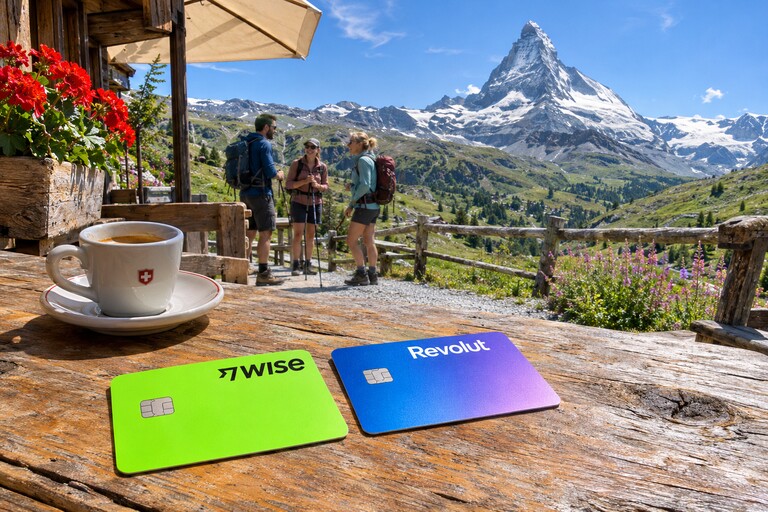
Switzerland uses Swiss francs; the other countries featured here use euros. Compare Wise and Revolut for your residency, account eligibility, currency-conversion charges, and ATM limits. Neither is automatically free for every transaction. Keep a backup payment method and some local cash.
For connectivity, compare an eSIM on Trip.com before departure. Confirm your phone is unlocked and compatible, then inspect the country list, activation timing, data allowance, and hotspot rules. Do not assume a Europe package includes Switzerland. Download offline maps too; mobile data cannot guarantee a signal behind a mountain.
Travel Lightly Enough That the Place Still Works
Stay several nights in one base. Fewer transfers reduce transport demands and give local businesses more than a brief lunchtime rush.
Use rail and village buses where practical. When renting is necessary, combine outings and leave the car parked for local days. Guest transport benefits are useful only when you actually use them.
Stay on marked paths, close gates, and give grazing animals space. Alpine meadows are habitats and working land, not decorative overflow parking for photographers.
Carry out your rubbish, including food scraps. Refill bottles where drinking water is confirmed safe. Use designated swimming access and follow protected-area rules; avoid feeding wildlife or launching drones without checking permissions.
Choose local businesses thoughtfully. A family-run guesthouse, regional cheese purchase, or guided walk can keep more of your spending connected to the place. Ask before photographing residents, and respect quiet hours. Other people live inside your vacation.
Questions Worth Asking Before You Pay
Can You Visit the Alps Without Hiking?
Absolutely. Annecy, Innsbruck, and Zell am See offer rewarding days built around lakes, streets, museums, and meals. Mountain railways and lifts can provide scenery without a long walk, although boarding arrangements, stairs, altitude, and station access still need checking. Ask operators about your specific mobility requirements before booking.
Is a Rental Car Essential?
No. Zermatt, the Jungfrau Region, and Innsbruck are particularly strong candidates for trips using public transport. A car becomes more useful for scattered accommodation or trailheads with limited buses. Compare the complete cost, including parking and unused rental days, against the journeys you genuinely need.
Which Destination Is Best on a Smaller Budget?
I would investigate Bohinj and Innsbruck first, then compare actual accommodation for your dates. Switzerland generally needs a larger allowance, but an expensive destination with affordable lodging can beat a supposedly cheaper place during a major holiday. Price the trip, not the reputation.
Should You Book Every Activity Ahead?
Book scarce accommodation and essential transport early enough for your dates. For weather-dependent excursions, balance availability against cancellation conditions. Flexible does not always mean refundable, and a ticket valid all day may still require a timed reservation. Read those details before payment; they are less entertaining than mountain photographs, but considerably more useful when plans change overnight.
Leave One Afternoon Unclaimed
If you are still torn, I would narrow the decision to three questions: What do you want your ordinary day to feel like? How much can you comfortably spend? How often do you want to move? The answers are more useful than another ranking of photogenic peaks.
Choose Zermatt for the Matterhorn, the Jungfrau Region for a varied first Swiss Alps trip, or Chamonix for mountain scale. Pick Annecy when a lake matters as much as a summit. Give Val Gardena and Cortina time if the Dolomites have been occupying your browser tabs. Let Innsbruck, Zell am See–Kaprun, Garmisch-Partenkirchen, or Bohinj win when their practical advantages match your life.
Then reserve a sensible base, compare your essential transport, and choose one experience worth paying for. Leave the remaining days some breathing room. You do not need to earn every dinner through elevation gain, and you do not need a photograph from every famous platform to have traveled well.
Subscribe to A Tiny Traveler for upcoming destination guides, honest budget breakdowns, and practical itineraries that leave room for lunch. If this guide helped you choose your corner of the mountains, save it now so you can return when bookings become real.
Follow A Tiny Traveler on Pinterest for more useful travel guides, route ideas, and places worth building a trip around. Save this Alps travel guide to your planning board, then send it to the person who keeps saying, “We should go somewhere with mountains.”
And keep that empty afternoon. Somewhere between the station, the bakery, and the long way back to your room, the holiday might finally stop feeling like a plan.
Frank


