

Planning a Mallorca trip? Discover the 10 best things to do in Mallorca, from Palma and the Serra de Tramuntana to coves, Sóller, Formentor, Drach Caves, budgets, transport tips and where to stay.
There is a moment on Mallorca when the island stops behaving like the holiday cliché you thought you booked. It might happen while a wooden train squeals through an orange grove near Sóller, while the road above Deià hangs over the sea at a frankly unreasonable angle, or when you turn a corner in Palma Old Town and find a Gothic cathedral occupying half the sky.
Mallorca, also written Majorca, is bigger, rougher and more interesting than the package-holiday version suggests. Yes, there are beaches. Very good ones. But there are also limestone mountains, olive terraces, medieval courtyards, cave systems, fishing ports and villages built from honey-coloured stone.
I am going to resist travel blogging’s stranger tradition of inventing a charming personal mishap to sound authentic. No fictional grandmother handed me an orange. Instead, I’ll walk you through the 10 best things to do in Mallorca, what each costs, when to go, what deserves extra time and how to avoid spending half your holiday looking for parking.
This guide is for first-time Mallorca visitors, couples, solo travellers, road-trippers and anyone wanting more than a hotel pool. Give the island five to seven days if you can. Three days introduces you. A week lets Mallorca make its argument properly.
Mallorca at a Glance: What You Need to Know Before You Go

Best time to visit Mallorca: For the best balance of warm weather, manageable crowds and open businesses, I prefer May, early June, late September and October. July and August deliver reliable beach weather but also higher hotel prices, packed coves and the seasonal sport known as circling a car park while becoming progressively less Mediterranean in temperament.
How long to stay: Five days is a sensible minimum for Palma, one mountain day, one beach day and a couple of island excursions. Seven days is better. If you want hiking, quiet villages, multiple beaches and slower dinners, 10 days will not feel excessive.
Where to base yourself: Choose Palma if restaurants, culture and public transport matter most; Sóller or Port de Sóller for the mountains and west coast; Alcúdia or Port de Pollença for the north; and Santanyí or Colònia de Sant Jordi for access to south-eastern coves and Es Trenc.
For a first trip, I would compare at least three areas on Booking.com rather than automatically booking the cheapest beach resort. A slightly higher room rate in Palma, Sóller or Alcúdia can save considerable driving time and make evenings much more enjoyable.
What Does a Mallorca Trip Cost?
Mallorca is not bargain-basement Spain, especially in summer. Still, you can control the damage.
A realistic daily Mallorca budget per person, excluding flights, looks roughly like this:
- Budget traveller: €70–€110 a day — hostel or simple room, supermarket breakfast, buses, inexpensive meals and mostly free beaches or walks.
- Mid-range traveller: €140–€230 a day — comfortable hotel shared by two, rental car or mixed transport, restaurant meals and one paid activity.
- Comfort-focused traveller: €280+ a day — boutique hotel, taxis or private transfers, boat trips, premium restaurants and very little discussion about whether dessert is necessary.
In Palma, a casual inexpensive restaurant meal averages around €16.50, a cappuccino about €2.79, and a 1.5-litre supermarket bottle of water can be around €0.60. Treat these as planning figures rather than promises; beach clubs and prime waterfront tables operate in a different financial universe. (Numbeo)
Remember the Balearic sustainable tourism tax, usually charged by your accommodation per person per night, with rates varying by accommodation category and season. Build a few extra euros per adult per night into your budget rather than acting personally betrayed at check-in. (Mallorca.com)
1. Start in Palma, Because Mallorca Has a Proper Capital

Palma deserves at least one full day. Start at La Seu, the Cathedral of Santa Maria of Palma. It rises beside Parc de la Mar, all buttresses, pale sandstone and Gothic ambition. The cathedral was built over several centuries, and the interior is known for its huge rose window, forest of columns and later interventions associated with Antoni Gaudí. From there, walk to the Royal Palace of La Almudaina, then drift through the lanes behind the cathedral. Look for Mallorcan patios, heavy wooden doors, shaded courtyards and fragments of the old Jewish quarter. Continue toward Plaça Major, Passeig del Born, La Lonja and, if hunger is beginning to influence your sightseeing decisions, Mercat de l’Olivar.
The official Balearic tourism site highlights the cathedral, Almudaina, Bellver Castle, La Lonja, the old Jewish quarter and Mercat de l’Olivar among Palma’s core sights, while the waterfront promenade stretches for about 5.5 kilometres. (illesbalears.travel)
What to Eat in Palma
Try pa amb oli, bread rubbed with tomato and olive oil, usually topped with cheese, cured meat or whatever makes the bartender happy that day. Order sobrasada, the island’s soft paprika-rich sausage. Find tumbet, a layered vegetable dish involving aubergine, potato, peppers and tomato. And at least once, get an ensaïmada.
Have it with coffee and accept the fact that powdered sugar will end up somewhere on your clothing.
My Tip
Visit Palma early in your trip, not on the final afternoon before your flight. You will enjoy it more without checking your phone every six minutes to see whether airport security has become a disaster.
A guided Palma Old Town walk or cathedral tour can be worth paying for if you enjoy history. This is one of those places where a good guide turns decorative stone into stories.
2. Drive the Serra de Tramuntana — Slowly
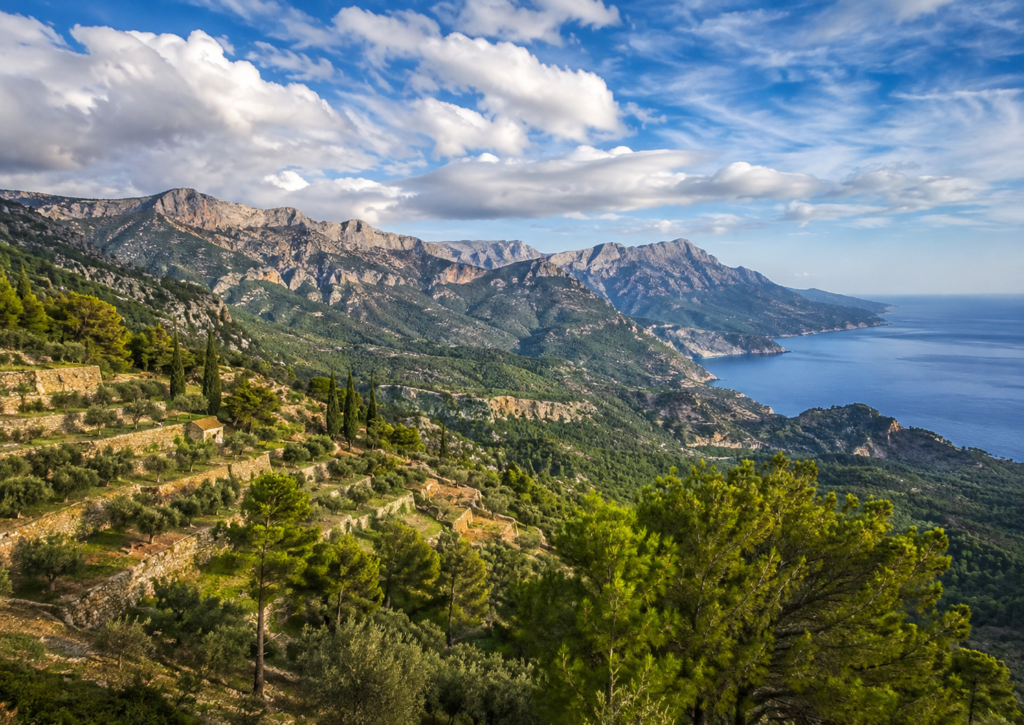
The road repeatedly folds back on itself, and every few kilometres there is another place where you will want to pull over.
The cultural landscape of the Serra de Tramuntana has been on the UNESCO World Heritage List since 2011, recognised for the long relationship between people, agriculture, dry-stone construction and water-management systems in this difficult terrain. (UNESCO World Heritage Centre)
If you have a rental car, one of the best Mallorca road-trip days runs roughly from Palma toward Valldemossa, Deià, Sóller and Port de Sóller. With more time, continue north toward Lluc, Pollença or Formentor.
Should You Rent a Car in Mallorca?
If your plan includes remote beaches, mountain villages and several parts of the island, yes, renting a car is usually the easiest option. If you are staying mainly in Palma and taking organised day trips, you can skip it.
Book early for summer, choose a car small enough for village streets, photograph every existing scratch before leaving the depot, and check the fuel and deposit conditions. The island is not the place to discover that your “free upgrade” is an SUV the width of a minor yacht.
Sustainable Tip: Do Not Turn Every Viewpoint Into a Parking Space
The Tramuntana is not an outdoor theme park. Use marked parking, stay on established paths, avoid blocking access roads, and keep your distance from private property. If you can reach a trail or village by bus, that is often the calmer option in peak season.
3. Pair Valldemossa and Deià, but Give Them Time to Breathe
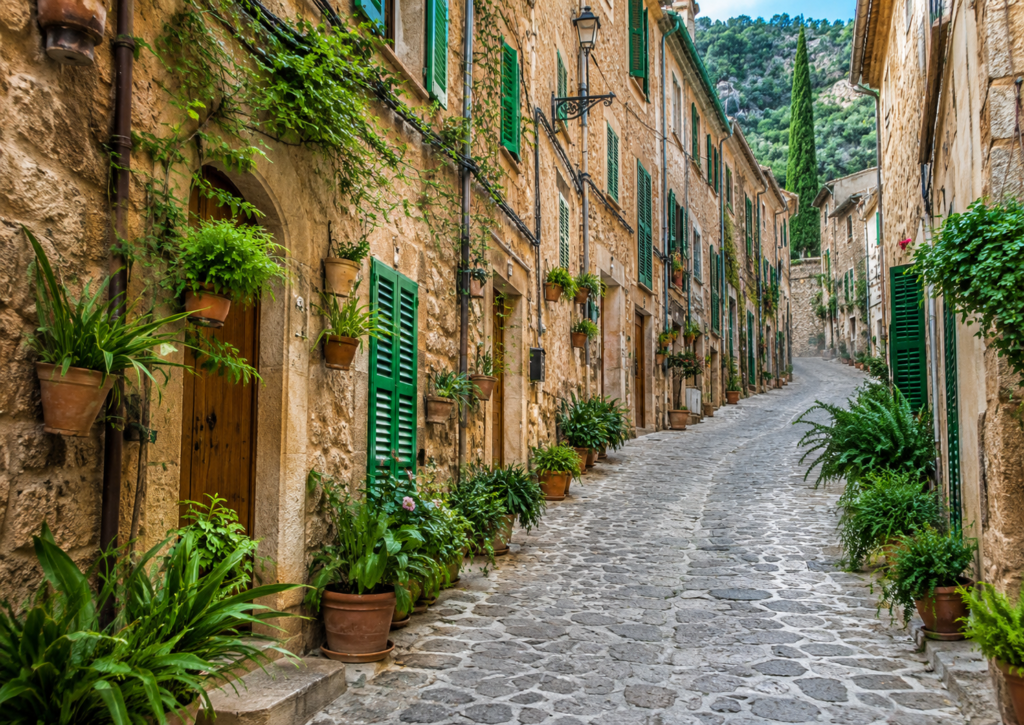
Valldemossa sits among forested slopes in the Tramuntana, its stone houses decorated with green shutters and potted plants. Its best-known historical association is with composer Frédéric Chopin and writer George Sand, who spent a winter at the former Carthusian monastery, the Real Cartuja de Valldemossa.
Walk beyond the busiest central lanes. The village is at its best when you hear cutlery from a kitchen, water running somewhere behind a wall and the soft scrape of chairs being rearranged before lunch.
Try coca de patata, Valldemossa’s soft potato bun. It looks humble. It is humble. That is the point. Tear it open while warm, have it with coffee or hot chocolate, and let the grand international pastry world wait outside.
Then continue to Deià, a smaller village draped over a hillside above the coast. Writers, musicians and artists have long been drawn here, including poet and novelist Robert Graves. The village can feel polished now, but walk away from the road and you still get narrow lanes, stone walls and sudden sea views between houses.
If you hike, the broader Valldemossa–Deià area offers serious walking possibilities, including routes with steep sections, holm-oak forest and cliffside views. Check trail conditions before setting off and do not treat a line on Google Maps as a legally accessible hiking path. Official tourism guidance describes the terrain between the two villages as steep in places, with old bridle paths, forest and coastal viewpoints. (illesbalears.travel)
My Tip
Do not schedule Valldemossa, Deià, Sóller, Formentor and three beaches on the same day. Mallorca looks compact on a map. Mountain roads do not care about your spreadsheet.
BOOK A TRAMUNTANA, VALLDEMOSSA OR DEIÀ DAY TOUR ON GETYOURGUIDE →
If you do not want to drive narrow mountain roads, an organised excursion is not “less adventurous.” Sometimes adventure is knowing when to let somebody else worry about the hairpins.
4. Ride the Vintage Train to Sóller
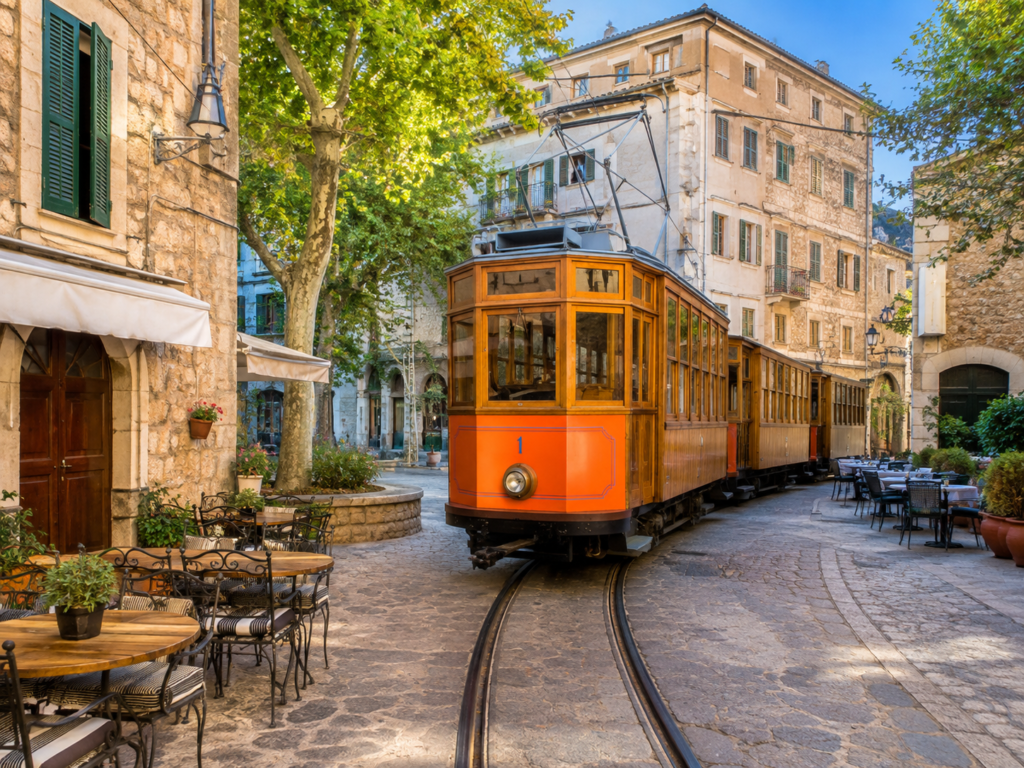
The wooden train leaves Palma, passes through the Mallorcan countryside, climbs toward the Serra de Tramuntana, enters tunnels and eventually drops into the Sóller Valley, famous for citrus orchards. From Sóller, a historic tram continues to Port de Sóller.
The train is not cheap. Current official fares list Palma–Sóller at €23 one way or €30 return, while the combined Palma–Port de Sóller–Palma train-and-tram ticket is €40. The tram between Sóller and Port de Sóller is listed at €10 each way. Check the timetable before travelling because services are not continuous like a metro. (trendesoller.com)
What to Do in Sóller
Spend time around Plaça de sa Constitució, where the tram rattles directly past café tables with all the confidence of a vehicle that has been doing this longer than anyone complaining about it.
Look at the modernist façade of Banco de Sóller and the church of Sant Bartomeu. Then wander the side streets, visit local shops and try orange-related products without feeling obliged to purchase an entire suitcase of marmalade.
Continue by tram to Port de Sóller, where the bay forms a broad horseshoe backed by hills. Have lunch, walk the waterfront or take a boat excursion along the west coast.
My Tip
If you only care about speed, take the bus. If you care about the experience, take the train. The old train is transportation as theatre, and that is precisely why you are paying more.
5. See Cap de Formentor Without Joining the Traffic Circus
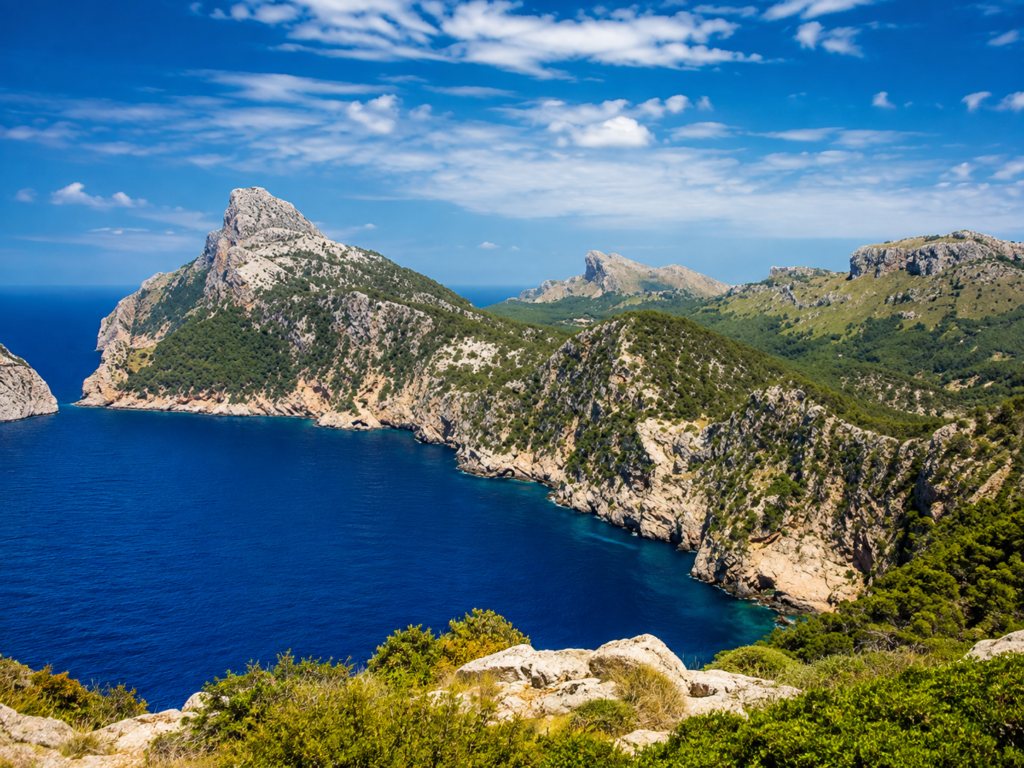
At Mallorca’s northern end, the Formentor Peninsula pushes into the Mediterranean in a sequence of cliffs, pine forest and exposed ridges.
The famous viewpoints are popular for good reason. Mirador Es Colomer gives you a dramatic look across the coastline, while the road toward Far de Formentor keeps producing cliff-and-sea combinations that seem designed specifically to ruin the storage space on your phone.
But there is an important practical catch.
For 2026, vehicle access restrictions apply on the Formentor road during the main season. The Consell de Mallorca announced restrictions beginning 15 May, with daily closure hours of 10:00 to 22:00 during the controlled period; access is generally by public transport, bicycle or on foot unless an exemption applies. The official dates have been adjusted during planning, so verify the current notice close to your travel date rather than relying on an old blog post. (Consell de Mallorca)
That restriction is not an inconvenience invented solely to irritate holidaymakers. The peninsula has finite road space, and without controls it can become one long argument between rental cars.
The Better Way to Do Formentor
Base yourself in Port de Pollença or Alcúdia, then use seasonal public transport or a boat trip. If you visit outside the restricted period and drive, go early and never stop illegally for a photo.
A boat also gives you the coastline from its best angle. From the water, the cliffs stop being scenery beside a road and start looking properly enormous.
Sustainable Tip
Use the bus or boat when access controls are active. Restrictions reduce congestion, roadside parking, and pressure on the landscape. You also get to look out the window instead of staring at the bumper ahead.
6. Swim at Mondragó and Walk to S’Amarador
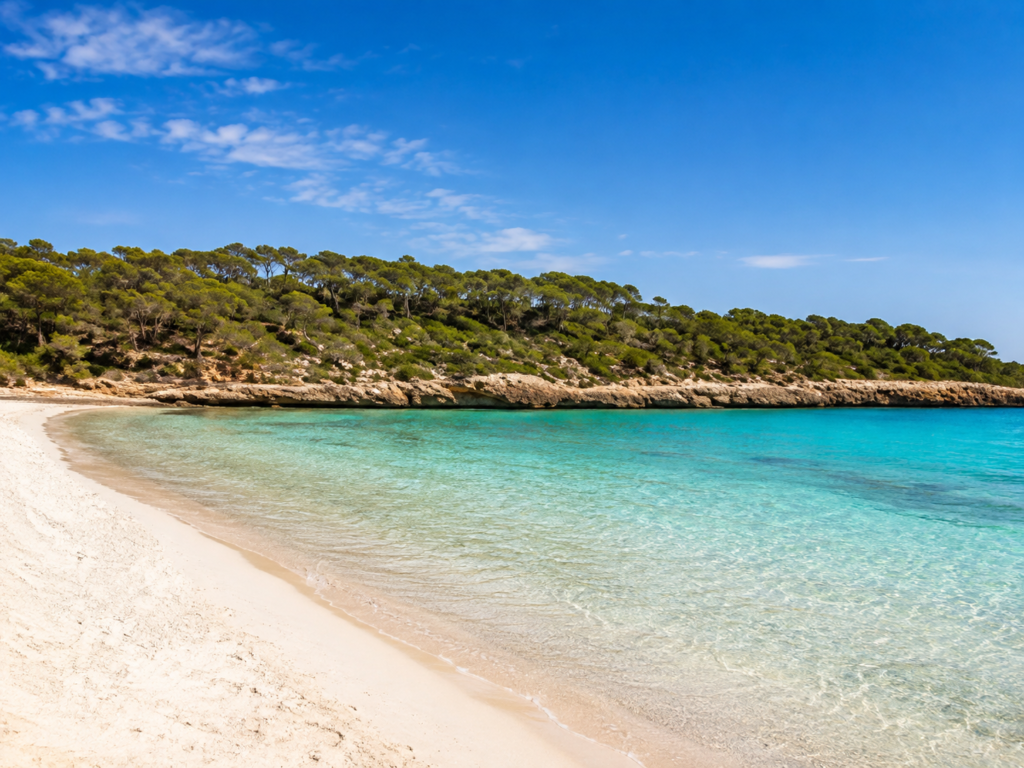
Mallorca has enough coves to trigger severe decision fatigue. My advice for a first trip is to stop chasing every “secret cala” posted on social media and choose one protected area where the beach and surrounding landscape both deserve your time.
Mondragó Natural Park, near Santanyí, is a strong choice.
The park covers more than 700 hectares and includes pine forest, coastal scrub, farmland, wetlands and several coves. Cala Mondragó, also known as Sa Font de n’Alis, sits close to S’Amarador, and marked walking routes let you combine swimming with a short coastal walk. The official tourism site notes that S’Amarador and Sa Font de n’Alis are linked by a path of roughly 400 metres. (illesbalears.travel)
Come early in summer. This is protected nature, not undiscovered nature.
The water is usually clear enough that you can see pale sand, rock and dark patches of seagrass beneath you. Bring a mask and snorkel if conditions are calm. You do not need a motorised activity every time you encounter seawater.
Sustainable Tip: Respect Posidonia
Those dark underwater patches may be Posidonia oceanica, Mediterranean seagrass vital to marine ecosystems and coastal protection. Do not rip it up, and if you are on a boat, never anchor on seagrass meadows. In protected areas such as Es Trenc, official guidance explicitly asks boaters to anchor on sandy bottoms instead. (Web GOIB)
7. Give Es Trenc More Than an Instagram Stop
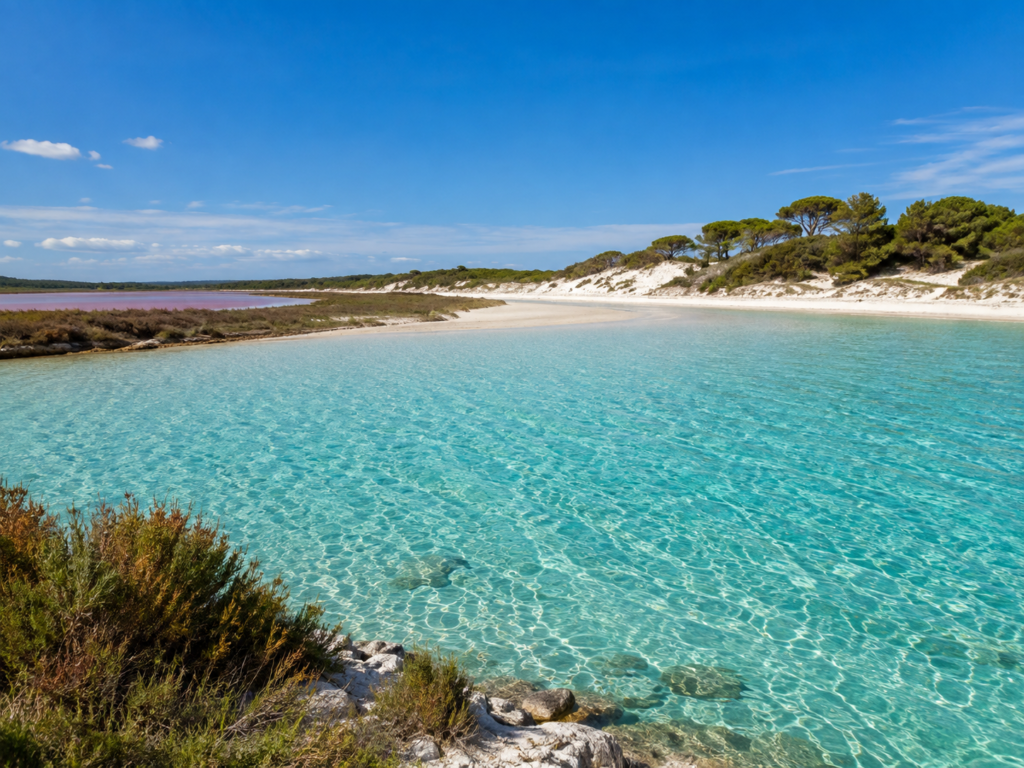
Es Trenc is the beach people often describe using Caribbean comparisons, which I find unfair to both Mallorca and the Caribbean.
It is very much a Mediterranean beach: long, pale sand; low dunes; saltwater wetlands behind it; shallow blue water; and, on windy days, a distinct smell of seaweed and salt rather than expensive coconut sunscreen.
The beach sits within the Es Trenc–Salobrar de Campos Maritime-Terrestrial Natural Park, a protected landscape that includes dunes, wetlands, agricultural areas and marine habitat. The broader beach is around four kilometres long, giving you room to walk beyond the busiest access points. (illesbalears.travel)
Bring water, sun protection and patience. Parking areas can fill in peak season, and facilities vary depending on which access point you use.
The mistake is arriving at noon in August, seeing crowds near the entrance, declaring the entire beach overrated and leaving after 12 minutes. Walk. The character changes as you move away from the main access.
What Not to Do at Es Trenc
Do not walk across protected dunes for a shortcut. Do not leave cigarette ends in the sand. Do not treat washed-up seagrass as “dirty beach material” that should be removed for aesthetics. Natural beaches look natural. That is part of the deal.
Official park guidance asks visitors to keep off dunes, remove their waste and respect seasonal rules protecting wildlife. (Web GOIB)
A sailing trip can be a good alternative if you want swimming stops without driving between crowded beach car parks.
8. Go Underground at the Caves of Drach
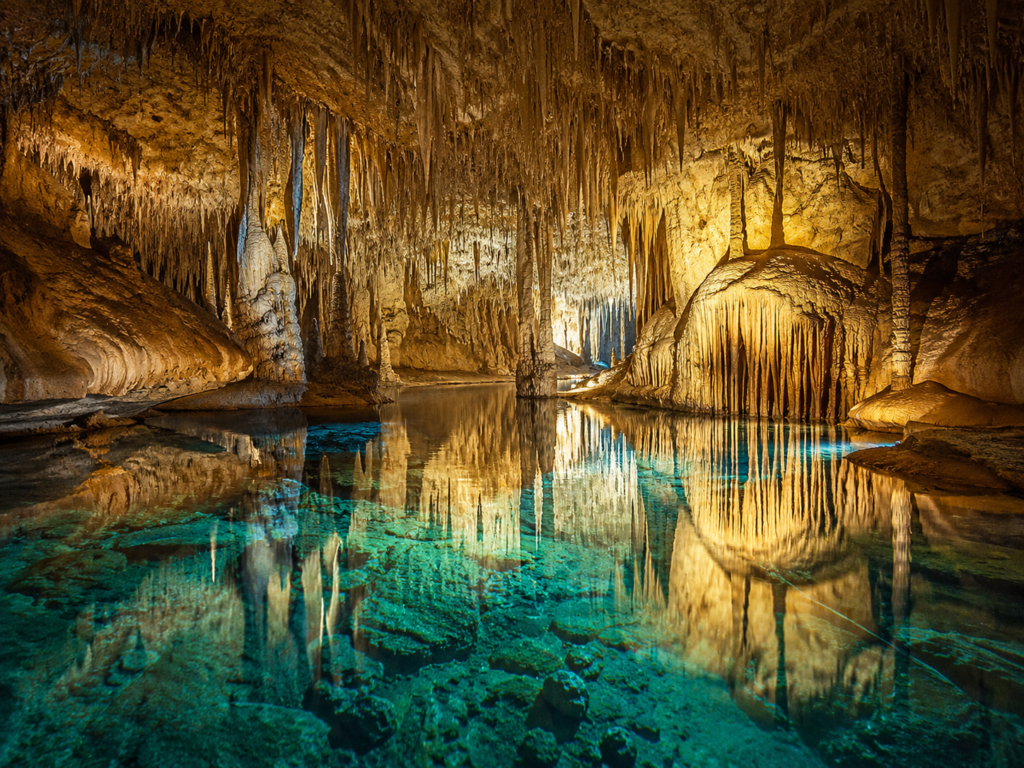
After several days of beaches and mountain roads, Cuevas del Drach, or the Caves of Drach, make for a very different Mallorca day.
Located near Porto Cristo on the east coast, the cave system extends for roughly 1,200 metres and reaches about 25 metres below ground. The route leads through chambers filled with stalactites and stalagmites before reaching Lake Martel, an underground lake where the visit includes a short live classical concert. (cuevasdeldrach.com)
Is it touristy? Absolutely. There are timed groups, organised movement and a famous boat component. This is not spelunking with a headlamp and a heroic disregard for insurance.
It is still worth doing.
The combination of cool air, mineral formations, darkness and music on the lake is wonderfully strange after the hard white light outside.
Current official online admission is €18.50 for adults and €11.50 for children aged 3–12, with ticket-office prices slightly higher. Visits last about one hour, and the caves remain roughly 17–21°C, making this an especially useful plan on very hot or rainy days. (cuevasdeldrach.com)
My Tip
Book the Caves of Drach online for a specific time slot. The official site recommends advance purchase to avoid ticket-office queues and availability problems. Arrive about 15 minutes early. (cuevasdeldrach.com)
BOOK CAVES OF DRACH TOURS & EAST MALLORCA DAY TRIPS ON GETYOURGUIDE
If you do not have a rental car, a tour that bundles transport can remove a mildly annoying logistics problem from your holiday.
9. Walk Alcúdia’s Walls, Then Escape to the North Coast
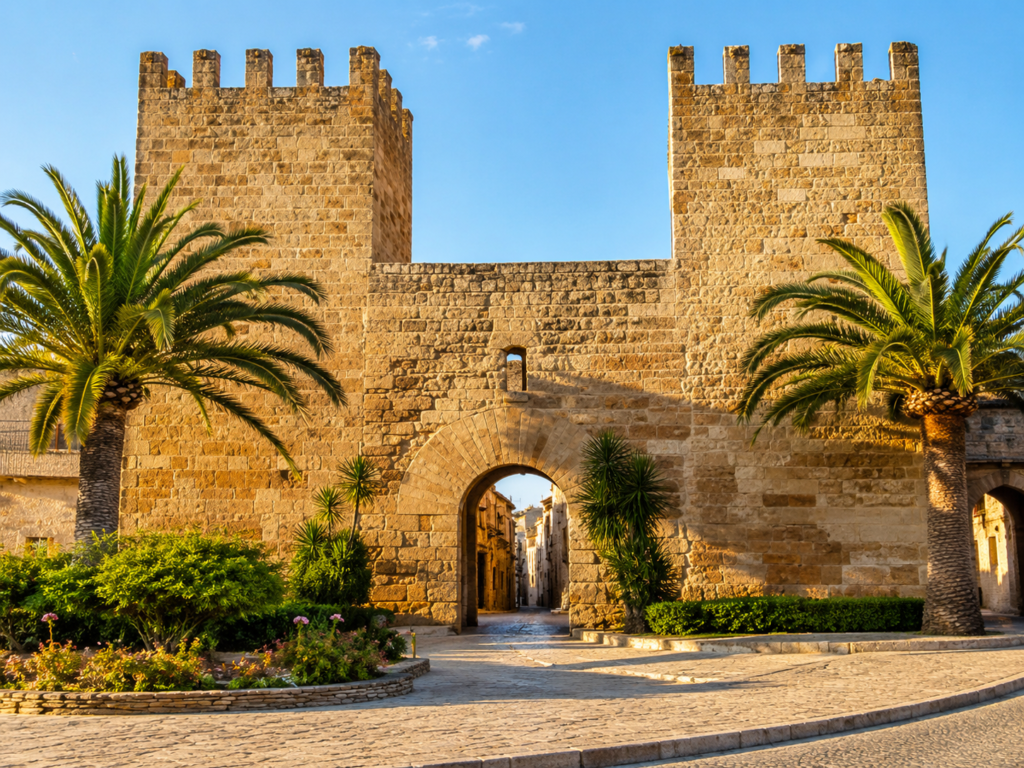
Alcúdia is one of the best places in Mallorca for travellers who want history in the morning and the sea in the afternoon without crossing the entire island.
The old town is enclosed by medieval walls, with stone lanes, small squares, cafés and historic buildings inside. Walk sections of the walls, then wander without trying to tick off every church and doorway.
Nearby are the Roman remains of Pollentia, while the coast opens into the broad Bay of Alcúdia. If you want an easy beach with plenty of space and shallow water, head toward Playa de Muro or Platja d’Alcúdia.
Nature lovers should consider S’Albufera de Mallorca Natural Park, a wetland area with walking routes and birdwatching hides. The official Balearic tourism site specifically highlights S’Albufera, signposted paths and birdwatching facilities among the attractions of the Alcúdia Bay area. (illesbalears.travel)
This combination is why northern Mallorca works so well for families and travellers staying a week or longer. You can have a medieval lane, a wildlife reserve, a long sandy beach and a good dinner without a three-hour cross-island expedition.
Where to Stay in Northern Mallorca
Choose Alcúdia Old Town for atmosphere and evenings on foot. Pick Port d’Alcúdia for easy beach access and more resort infrastructure. Choose Port de Pollença if you want a calmer waterfront base closer to Formentor.
10. Finish With Mallorca From the Water
You can spend a week driving beside Mallorca’s coastline and still miss the main point: islands look different from the sea.
Boat trips operate from several ports, including Palma, Port de Sóller, Port d’Alcúdia, Port de Pollença, Porto Cristo and Colònia de Sant Jordi. The experience varies enormously. Some are social catamaran trips with music and drinks. Others are small-group sailing days, traditional llaüt outings, coastal cruises or trips toward protected islands.
For scenery, the sea route from Port de Sóller toward Sa Calobra gives you an extraordinary view of the Tramuntana cliffs. Official tourism information specifically recommends seeing Mallorca by llaüt, sailing boat or excursion vessel and points to the Port de Sóller–Sa Calobra route as one of the classic coastal journeys. (illesbalears.travel)
For nature, consider a trip toward Cabrera Archipelago Maritime-Terrestrial National Park from Colònia de Sant Jordi. Access and landing conditions are regulated, which is exactly what you want in a protected island ecosystem.
Choose Your Boat Trip Carefully
Read the description instead of purchasing whatever listing has the bluest thumbnail.
Check:
- Maximum group size
- Actual cruising time
- Number and length of swimming stops
- Whether food and drinks are included
- Whether snorkelling gear is provided
- Cancellation rules for wind or rough seas
- Whether the operator follows anchoring and marine-protection rules
COMPARE MALLORCA BOAT TRIPS ON GETYOURGUIDE →
A good boat day can become one of the best memories of a Mallorca trip. A bad one can become six hours of loud music, warm sangria and wondering whether swimming back is legally considered abandoning the vessel.
How to Get to Mallorca
Most visitors arrive at Palma de Mallorca Airport (PMI), with extensive European connections, especially in warmer months. If your dates are flexible, compare different departure days and nearby airports rather than assuming Friday evening is your only option.
Ferries also connect Mallorca with mainland Spain and other Balearic islands, useful if you are combining Mallorca, Menorca or Ibiza.
Getting From Palma Airport to Your Hotel
For Palma, the EMT A1 airport bus is the simple budget choice. A cash single fare is generally €5. Contactless payment expanded across EMT in 2026, but discount implementation has varied, so check the displayed fare rather than assuming a particular reduction. (Mallorca Airport)
For late arrivals, families, heavy luggage or hotels outside Palma, I would consider a pre-booked transfer.
Getting Around Mallorca Without a Car
The interurban TIB network links many towns by bus, train and metro, and contactless bank cards work on TIB services with tap-in/tap-out payment. (CTM)
In 2026, free interurban travel applies to eligible users of the Intermodal Card or Single Card; ordinary bank-card and single-ticket fares remain payable. (CTM)
Public transport is useful for Palma, Sóller, Valldemossa, Alcúdia and Pollença. A car wins when you want remote coves, rural hotels and flexible mountain stops.
Where to Stay in Mallorca: Pick the Base That Matches Your Trip
Choose the base before the hotel. Palma suits food, culture, solo travel and car-free trips. Sóller or Port de Sóller suits the Tramuntana and west coast. Alcúdia or Port de Pollença works for northern beaches, families and Formentor. Santanyí is useful for south-eastern coves, while Colònia de Sant Jordi puts Es Trenc and Cabrera within easy reach.
Booking tip: Filter for air conditioning, parking, recent noise reviews, walking distance and cancellation policy. A “sea-view” room above a bar closing at 03:00 is mainly a sound-view room.
Mallorca Money Tips: Card, Cash, Revolut and Wise
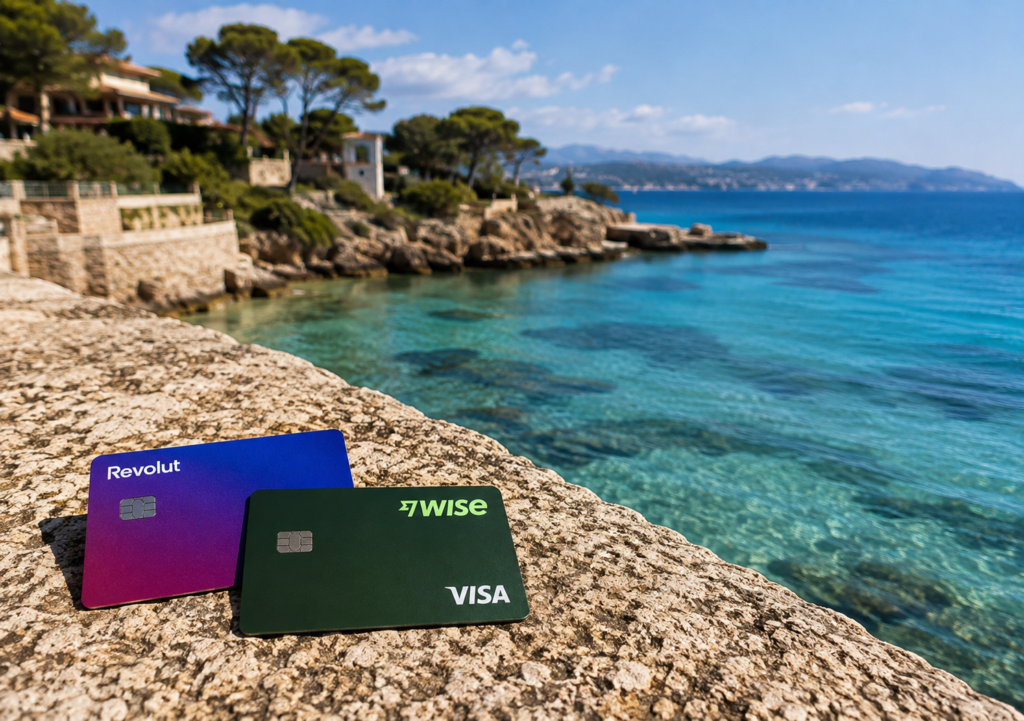
Cards are widely accepted, but carry some cash for small cafés, markets and parking. Revolut and Wise can be useful for travel spending; check your own plan’s exchange, weekend and ATM rules.
GET REVOLUT FOR YOUR MALLORCA TRIP →
OPEN A WISE ACCOUNT FOR TRAVEL SPENDING →
Important: If a terminal asks whether to charge you in euros or your home currency, choose euros and let your card provider handle conversion.
Staying Connected: Get an eSIM Before You Land
If your mobile plan lacks affordable EU roaming, install an eSIM before departure and switch mobile data after landing.
CHECK MALLORCA eSIM OPTIONS ON TRIP.COM →
Download offline maps too. Signal can weaken in parts of the Tramuntana, usually when you need the next turn most.
Travel Insurance for Mallorca: Boring Until It Is Not
Rental-car incidents, hiking injuries, cancellations and lost bags can become expensive quickly. If your normal health coverage is insufficient abroad, compare policies before departure.
Check medical limits, deductibles, activity exclusions, trip interruption and pre-existing-condition rules rather than buying purely for reassurance.
What to Pack for Mallorca
Bring comfortable walking shoes, high-SPF sunscreen, a hat, reusable bottle, light layer, small daypack, power bank and water shoes if you like rocky coves.
Packing tip: Do not hike the Tramuntana in flip-flops because the trail looked easy on Instagram. Limestone, dust and confidence are an unreliable combination.
Mallorca Sustainable Travel Tips That Actually Matter
Sustainable tourism should mean more than reusing a hotel towel. On Mallorca, a few choices genuinely help:
- Use public transport for popular mountain villages and Formentor when practical.
- Carry a refillable bottle and reduce single-use plastic.
- Stay on marked trails and never cut across protected dunes.
- Do not anchor on Posidonia seagrass if you rent or charter a boat.
- Choose locally owned restaurants, bakeries and shops so more of your spending stays on the island.
- Travel outside July and August if you can; shoulder-season travel spreads demand and is usually more pleasant.
- Respect water use, especially during hot, dry months.
- Take your rubbish with you from coves and trails.
- Do not geotag fragile micro-locations just to prove you found them.
Nobody travels perfectly. The useful goal is simply to leave fewer stupid little impacts behind you.
The Best Time to Visit Mallorca, Month by Month
April–May: Excellent for Palma, walking and cycling; May is particularly balanced.
June: Warm water, long evenings and rising prices.
July–August: Hot, crowded and expensive, but ideal for pure beach weather.
September: One of the best months; the sea is warm, and crowds begin easing.
October: Good for mixed sightseeing and active trips, with less predictable weather later.
November–March: Quiet and local-feeling, good for Palma and hiking, but many beach businesses reduce hours.
A Simple 5-Day Mallorca Itinerary
If you want to turn these ten activities into a realistic first trip, this is how I would structure it.
Day 1 – Palma: Explore La Seu, the old town, Almudaina, La Lonja and the market. Stay for dinner.
Day 2 – Tramuntana: Visit Valldemossa and Deià, then continue toward Sóller. Do not rush.
Day 3 – Beach day: Choose Mondragó and S’Amarador or Es Trenc. One good beach day is better than four frantic 45-minute beach inspections.
Day 4 – North Mallorca: Explore Alcúdia, then Port de Pollença and Formentor using the appropriate seasonal transport.
Day 5 – Choose your obsession: Ride the Sóller train, visit the Caves of Drach, or take a boat trip. You cannot do everything. Mallorca will survive your failure to complete it.
With seven days, add a dedicated Sóller/Port de Sóller day and one slower coastal or hiking day.
The Part Where Mallorca Refuses to Be Just a Beach Holiday
The funny thing about Mallorca is that the beaches are both why many people come and why some people underestimate the island.
Stay beside a resort pool all week, and you can leave thinking Mallorca is sunshine with an airport attached. But take the train into Sóller. Walk through Palma before the shops open. Stand among the dry-stone terraces of the Serra de Tramuntana. Eat a warm coca de patata in Valldemossa. Swim at S’Amarador and walk through pine shade with salt drying on your shoulders. The island becomes much harder to reduce to a postcard.
My strongest advice is simple: do less each day. Mallorca punishes greedy itineraries. Mountain roads are slow, parking takes time, and lunch can quietly become two hours. A beach deserves more than a photograph. A village deserves more than 25 minutes between coach departures.
If this guide helped, subscribe to A Tiny Traveler for practical destination guides, budgets, hotel ideas and first-timer mistakes worth avoiding. And follow A Tiny Traveler on Pinterest for saveable itineraries, packing ideas and upcoming travel guides.
When you come home, do not tell people Mallorca was “nice.” Tell them about the tram squeezing past lunch tables in Sóller, the cool cave air at Lake Martel, pine above Mondragó, the absurd bends of the Tramuntana road, or La Seu turning gold above Parc de la Mar.
Those are the pieces that remain after the tan disappears.
Frank


