

Discover the 10 best things to do in Malta, from Valletta and Mdina to Gozo, Comino, ancient temples, beaches, local food, costs, and practical tips.
Malta Has No Respect for a Simple Weekend
My first mistake in Valletta was assuming that a city occupying such a modest patch of rock would be easy on the legs. Ten minutes later, I was halfway down a staircase, staring across Grand Harbour, wondering how the street had become a cliff and why every church bell in Malta appeared to be arguing at once. A delivery van squeezed through an alley built for mules. Somewhere below, coffee hissed from a machine. The limestone threw the morning light straight back at me like an interrogation lamp.
That is Malta: compact on a map, preposterously layered in real life. Phoenician traders, Roman officials, Arab farmers, the Knights of St John, British sailors, fishermen, and divers have all left fingerprints here. You can enter a temple older than the pyramids before lunch, eat a ricotta-filled pastizz, swim above a shipwreck, and finish in a fortified city where the door knockers look wealthier than you.
This guide is for first-time independent travelers, including couples, solo travelers, and families. The experiences reveal different sides of the islands rather than padding the list with nearby viewpoints. You will get honest timing, realistic costs, transport advice, food worth ordering, and the occasions when paying for a tour saves trouble.
Give Malta at least four full days; six or seven is better if you want Gozo, Comino, and a beach afternoon. The distances look tiny. Traffic, boats, heat, and your inevitable second lunch say otherwise.
Malta in One Minute: What to Know Before You Book

Best time to visit: I favor late April to early June and late September to October. Days are warm, swimming is possible or nearly possible, and walking does not feel like a dispute with the sun. July and August bring heat, crowds, higher room rates, and busy boats. Winter is mild and excellent for museums and hiking, but wind or rough seas can cancel ferries and coastal tours.
How long to stay: Plan four days for the principal Malta attractions, five days to add Gozo, and six or seven days for Comino, beaches, diving, or slower meals. A three-night visit works, but you will make choices with the cold efficiency of an airport baggage handler.
Where to stay: Choose Valletta for history and ferries; Sliema for hotels and harbor transport; St Julian’s for nightlife; Mellieħa for beaches; or Gozo for quiet evenings. I would split a week between Valletta or Sliema and two nights on Gozo.
Language and money: Maltese and English are official languages. The currency is the euro. Cards are common, but carry cash for kiosks, bakeries, and boat tickets.
Electrical sockets: Malta uses British-style Type G plugs. Pack an adapter.
Safety: Use normal precautions and never treat limestone cliffs as selfie furniture. In summer, carry water and visit exposed archaeological sites early.
COMPARE MALTA HOTELS ON BOOKING.COM
What Does a Malta Trip Cost in 2026?
These are planning ranges per person per day, excluding flights. Accommodation assumes two people sharing except in the budget category. Summer costs more.
| Travel style | Realistic daily budget | What that normally covers |
|---|---|---|
| Careful budget | €60–€90 | Hostel or basic shared room, bakery meals, buses, free sights, one modest paid attraction |
| Comfortable mid-range | €120–€190 | Shared three-star or boutique room, restaurants, buses plus occasional ride-hailing, admissions or a tour |
| Comfort-first | €230+ | Good four-star room, private transfers or rental car, restaurant dinners, boat trips, guided experiences |
Useful prices include €0.60–€1.20 for a pastizz, €5–€9 for breakfast, €12–€20 for a casual main, €25–€40 for dinner with a drink, €1.50–€2.50 for coffee, €2.50–€4 for local beer, and €0.80–€1.50 for supermarket water. Waterfront restaurants charge more.
A bus single currently costs €2 in winter, €2.50 in summer, and €3 at night. The shareable 12 Single Day Journeys card costs €19; visitor cards start around €21. Recheck Malta Public Transport before traveling.
Pay in euros and decline dynamic currency conversion in your home currency. Wise and Revolut can help you hold euros and monitor spending, depending on your country and account plan.

OPEN A WISE TRAVEL MONEY ACCOUNT →
GET REVOLUT FOR YOUR MALTA TRIP →
1. Let Valletta Unfold One Balcony at a Time
Valletta is the obvious starting point among the best things to do in Malta, but do not reduce it to a brisk march down Republic Street. The city rewards zigzags. Walk the parallel streets, peer through open doorways, and notice how green, red, and blue wooden balconies lean over the pavement like neighbors exchanging gossip.
Begin at City Gate before 9:00 a.m., pass Parliament House, then reach the Upper Barrakka Gardens above Grand Harbour. The Saluting Battery traditionally fires at noon and 4:00 p.m.; check the schedule and arrive early.
The indispensable paid stop is St John’s Co-Cathedral. Its restrained exterior is a bluff. Inside, almost every surface is carved, gilded, painted, or occupied by elaborate marble tombs. The floor is not merely decorative; it is a field of memorials to knights. In the oratory, Caravaggio’s The Beheading of Saint John the Baptist has the weight of a crime scene rather than a polite church painting.
Adult admission is currently €15, with entry from Monday to Saturday, 9:00 a.m.–4:45 p.m., and last admission at 4:00 p.m. It closes on Sundays and public holidays. Go early, dress respectfully, and allow at least an hour. Paying and then sprinting past Caravaggio because lunch is booked would be cultural self-sabotage.
Afterward, wander down sailor-haunted Strait Street. Continue to Fort St Elmo for military history, or use the Barrakka Lift to reach the waterfront.
Tip: Wear shoes with grip. Valletta’s polished stone can become treacherous after rain, and the slopes are not impressed by fashionable sandals.
Allow: One full day. Budget: €15–€35, excluding meals.
BOOK A SMALL-GROUP VALLETTA WALKING TOUR ON GETYOURGUIDE
2. Cross Grand Harbour to the Three Cities

From Valletta, take the lift down and board the ferry to Cospicua. The short crossing is not merely transport; it rearranges the map in your head. Bastions rise from the water, church domes appear between cranes, and small boats bob beside infrastructure designed for warships.
The Three Cities are Cospicua, Senglea, and Vittoriosa, also called Bormla, Isla, and Birgu. Vittoriosa has residential lanes and a marina; Senglea offers harbor views; Cospicua wraps around old docks.
Walk from the Cospicua ferry landing to Vittoriosa Waterfront, then climb into lanes hung with laundry, painted saints, and brass dolphin knockers.
Enter Fort St Angelo, from which the knights defended the harbor during the Great Siege of 1565. It explains why these cities matter better than a paragraph of dates.
Continue to Senglea’s Gardjola Gardens, where an eye-and-ear watchtower faces Valletta like the work of a mildly paranoid poet.
Day ferry fares have recently been around €3 one way or €5 return for adults, with evening fares higher. Schedules change seasonally and wind can interfere, so verify with Valletta Ferry Services. Buses provide a useful backup.
Sustainable move: Use the ferry rather than a taxi around the harbor. It is faster at busy times, produces less road congestion, and gives you the better entrance.
Allow: Half to one full day. Budget: €5–€25.
3. Get Quietly Lost in Mdina, Then Eat in Rabat
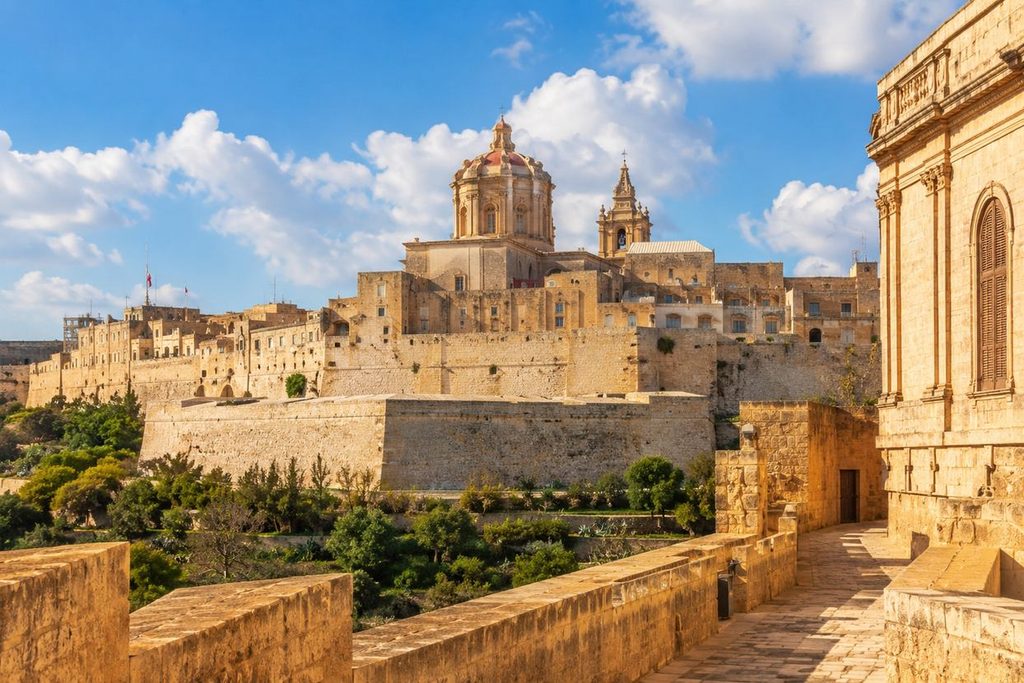
Mdina is called the Silent City, although that depends on tour groups and whether a horse has opinions. Arrive before 9:00 a.m. or stay into evening, when footsteps bounce between limestone walls and alleys hide whatever comes next.
Enter through Mdina Gate and resist immediately following the main lane. Turn aside. The side streets curve because this was a defensive city, not a shopping mall. Walk past St Paul’s Cathedral, look into small courtyards when doors are open, and reach Bastion Square for views across central Malta. On a clear day, the island’s villages appear stitched together by domes and fields.
Combine Mdina with neighboring Rabat, which feels lived in rather than preserved. Descend into the Roman-era St Paul’s Catacombs, then see aristocratic mosaics at Domvs Romana.
Then eat. A warm ricotta or pea pastizz shatters onto your shirt without regard for dignity. Try ftira filled with tomatoes, tuna, olives, or capers; save stuffat tal-fenek, rabbit stew, for dinner.
Stay after day visitors leave, when lamps warm the stone and restaurant tables spread into courtyards.
Tip: Visit the popular city viewpoints early, but save aimless wandering for late afternoon. The streets photograph better when the overhead sun stops flattening every surface.
Allow: Half to one full day. Budget: €10–€30, plus dinner.
RESERVE A MDINA AND RABAT HISTORY TOUR
4. Meet Malta’s Prehistoric Builders

Malta’s megalithic temples began taking shape more than five thousand years ago, before Egypt’s great pyramids. Standing beside the blocks is stranger than reading the dates.
Start at Ħaġar Qim and Mnajdra Archaeological Park. Protective canopies preserve the limestone. Curved chambers and porthole-like entrances show careful planning, while a 500-meter path connects the sea-facing sites.
The adult ticket is about €10. Allow two hours, arrive when doors open, and bring water; shade is scarce.
The deeper prize is the Ħal Saflieni Hypogeum in Paola, an underground prehistoric burial complex carved from living rock. Visitor numbers are strictly limited to protect its fragile environment. Standard adult tickets currently cost €35; last-minute tickets, when available, cost €50. Book weeks or months ahead, especially for summer. This is one Malta attraction where spontaneity is mostly another word for disappointment.
The Hypogeum visit operates on timed entry, and photography is generally restricted. That helps. Without phones raised everywhere, the chambers feel more serious: rounded walls, low passages, red ochre traces, and spaces cut to echo the forms of above-ground temples. If you are claustrophobic or have mobility limitations, read the access information before booking.
History lovers should price the Heritage Malta Multisite Pass, but it does not cover the Hypogeum.
Allow: Half a day for Ħaġar Qim and Mnajdra; schedule the Hypogeum separately. Budget: €10–€45.
5. Follow the South Coast from Blue Grotto to Dingli Cliffs
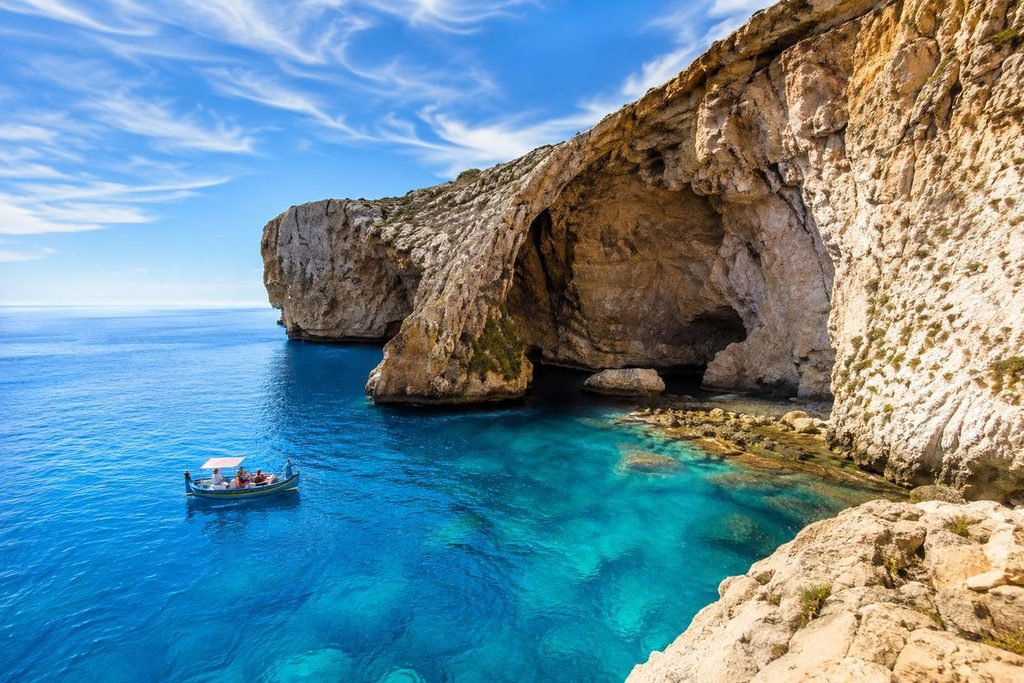
The southern coast is where Malta stops pretending to be urban. Fields reach toward pale cliffs, wind bends scrub close to the ground, and the sea works steadily at caves below. Combine Blue Grotto, Wied iż-Żurrieq, and Dingli Cliffs in one day if you have a car, driver, or well-planned tour.
The free Blue Grotto viewpoint overlooks a natural arch. Boats leave Wied iż-Żurrieq for the caves when the sea permits; check locally. Morning usually gives better cave light.
Do not confuse the Blue Grotto with the Blue Lagoon on Comino. Malta has blue things in several directions and sees no reason to simplify this for visitors.
After the boat ride, continue to Dingli Cliffs, Malta’s highest coastal area. This is not one fenced viewpoint with a gift shop. It is a long limestone edge with walking routes, chapels, radar equipment, farmland, and abrupt drops. The small Chapel of St Mary Magdalene makes a useful navigation point.
At sunset, keep well away from edges, especially in wind. Surfaces are uneven, and lighting is limited, so carry a torch after dusk.
Public transport is possible but slow. A guided tour is useful here. If driving, stay left, expect narrow roads, and arrive before parking fills.
Sustainable move: Stay on marked paths around cliff habitats. Malta’s garigue landscape looks tough, but repeated trampling damages slow-growing plants and accelerates erosion.
Allow: Half to one full day. Budget: €10–€60, depending on transport and boat trip.
6. Eat Your Way Through Marsaxlokk
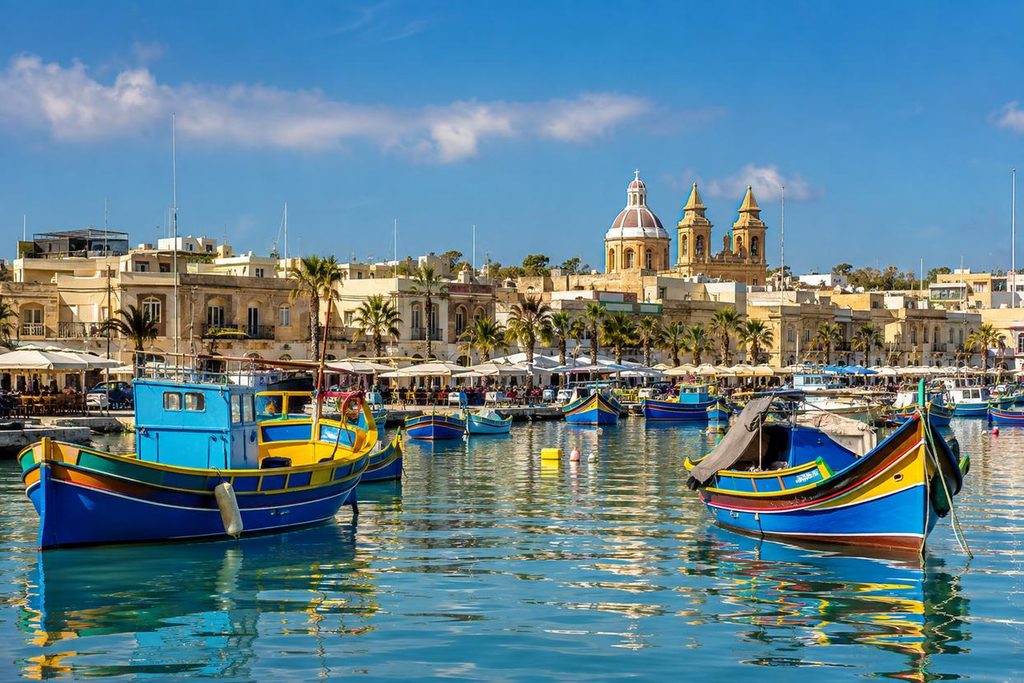
Marsaxlokk is a working fishing village that also knows exactly how photogenic its boats are. The harbor is filled with colorful luzzijiet, traditional boats often painted with watchful eyes on the bow. Behind them, restaurant terraces compete for your lunch money while fishermen sort gear with less theatrical intent.
The Sunday market mixes fish, produce, clothes, and souvenirs. Come before 9:00 a.m. for more fish-market character and fewer elbows.
Walk beyond the central restaurant strip, inspect the boats, then choose seafood where staff know the morning’s catch. In late summer and autumn, try lampuki, grilled or baked into buttery torta tal-lampuki.
Look for aljotta, garlicky fish soup with tomato and rice. Expect €18–€30 for a seafood main, more for whole fish. Confirm the total before ordering by weight; surprise invoices do not improve lunch.
Nearby St Peter’s Pool is a rocky swimming inlet with rough access and little shade. Do not copy strangers jumping from ledges; conditions change.
Buses reach Marsaxlokk, but connections to St Peter’s Pool are less convenient. A taxi, rental car, or boat transfer can save time. Carry every piece of rubbish out; bins and services are limited around rocky swimming spots.
Allow: Half a day, longer with swimming. Budget: €20–€50 with lunch.
7. Give Gozo More Than a Day-Trip Checklist

Gozo is not simply smaller Malta. Roads loosen, fields widen, and evenings quieten after day-trippers leave. One day offers a sample; two nights let it feel like a place.
From Valletta, Gozo Highspeed reaches Mġarr Harbour for about €7.50 each way. From Ċirkewwa, Gozo Channel carries passengers and vehicles; current round trips are €4.65 per passenger or €15.70 for a car and driver. Check procedures and wind warnings.
Start in Victoria, also called Rabat, and climb to the Cittadella. Its walls provide a near-circular view across terraced fields, domed villages, and distant sea. The lanes and bastions are free to explore; a combined ticket around €5 covers several small museums and the visitor center.
Then choose. Archaeology lovers should visit Ġgantija Temples; swimmers get red-sand Ramla Bay; coastal obsessives should pick Dwejra’s Inland Sea and Blue Hole. At Xwejni’s salt pans, respect barriers and working harvesters.
Try a Gozitan ftira topped with potato, tomato, fish, capers, and local cheese. It lands between bread and pizza.
Without a car, a guided tour prevents buses from choosing your itinerary. Drivers need patience on village streets. Do not block private garages; painted signs are not folk art.
Allow: One day minimum; two or three nights preferred. Budget: €35–€100 per day, excluding accommodation.
FIND A GOZO DAY TOUR ON GETYOURGUIDE
8. Swim at Comino Without Joining the Noon Stampede

The Blue Lagoon, between Comino and Cominotto, glows blue over pale sand. It is also extremely busy; arriving at noon in August seeking solitude is like trying meditation in a supermarket on Christmas Eve.
Visitor access now uses a free booking system. If you arrive by private or commercial boat and intend to step ashore in the Blue Lagoon area, reserve a time slot at the official Blue Lagoon Comino website. Current slots are 8:00 a.m.–1:00 p.m., 1:30–5:30 p.m., and 6:00–10:00 p.m. Your booking produces a QR code used to obtain a wristband. Rules can evolve, so confirm them before departure.
Choose the earliest slot or an evening return. The central strip is rocky and short on shade. Bring water, reef-safe sun protection, a hat, and swimming shoes. A cocktail pineapple is not a hydration strategy.
Walk toward Santa Marija Bay or Santa Marija Tower for breathing room. Summer heat and rough ground make distances feel longer; stay on marked routes.
Boats leave Ċirkewwa, Mellieħa, Sliema, Bugibba, and Gozo. Check recent reviews for crowding, shade, swimming access, and lengthy hotel pickups.
Sustainable move: Never leave cigarette ends, cups, fruit skins, or wet wipes. Avoid feeding fish, anchoring independently in protected habitat, or taking stones and shells. The booking system exists because popularity has consequences.
Allow: Half to one full day. Budget: €25–€60 for transport or a boat tour; the access booking itself is free.
COMPARE SMALL-BOAT COMINO AND BLUE LAGOON TOURS
9. Choose a Beach That Matches Your Patience

Malta’s coastline is mostly rock, which is excellent for clear water and dramatic swimming entries but awkward if your beach fantasy requires endless soft sand. The key is choosing the right bay for the day rather than heading automatically to whichever photograph dominates social media.
Golden Bay is sandy, serviced, and family-friendly. It gets crowded, and western winds produce waves or currents. Obey warning flags.
Next door, Għajn Tuffieħa, or Riviera Beach, requires a long staircase. The return climb punishes heavy lunches. Use established headland paths to limit erosion.
Shallow Mellieħa Bay suits children. Paradise Bay is smaller and near Ċirkewwa. On Gozo, Ramla Bay offers rust-colored sand.
For rocky swimming, consider Għar Lapsi, St Peter’s Pool, or established lidos around Sliema. Enter only where conditions are safe, use ladders when provided, and wear water shoes if sea urchins or sharp rock are possible. Check for jellyfish reports and currents locally.
My preferred beach rhythm is early swim, long lunch, then another dip after 4:00 p.m. You avoid the worst ultraviolet exposure and do not spend six hours slowly becoming the color of a pharmacy warning poster.
Tip: Pack a quick-dry towel and reusable bottle, but do not leave valuables unattended while swimming. A waterproof pouch is useful for a phone and room key.
Allow: Half a day. Budget: Free, plus transport, food, or chair rental.
10. Dive Below the Version of Malta Seen from Land

Clear visibility, reefs, caves, and wrecks make Malta a major diving destination. Beginners can try an introductory dive; certified divers should choose sites matching their training.
Popular areas include Cirkewwa, Għar Lapsi, Xatt l-Aħmar, Dwejra, and reefs around Comino. Wreck choices range from purpose-sunk vessels to historically significant aircraft and ships, but depth, currents, overhead environments, and boat access vary. A wreck appearing in an attractive photograph does not make it suitable for your certification level.
Choose a licensed dive center and answer health forms honestly. Ask about group size, equipment, insurance, transport, and inclusions. Stay within training limits and follow your operator’s required surface interval before flying.
If diving is not for you, snorkel from a supervised bay or join a responsible boat trip. Early morning usually means calmer water and fewer fins near your face. Do not touch marine life, chase octopuses, stand on reefs, or collect souvenirs from wrecks. Historic objects underwater are not complimentary minibar items.
A two-dive package commonly costs roughly €80–€130, depending on location, equipment, and boat use; introductory experiences may fall in a similar broad range. Confirm current rates directly. Travel insurance deserves attention because ordinary policies may exclude scuba diving, depth limits, or certain activities.
Allow: Half to one full day. Budget: €50–€150.
Where to Stay Without Regretting the Geography
Valletta is my first choice for culture, walkability, and ferries. Drawbacks include slopes, scarce parking, and high prices for small historic rooms.
Sliema offers broad accommodation choice, restaurants, swimming, and a direct Valletta ferry. Stay near the ferry if sightseeing matters.
St Julian’s suits nightlife, but Paceville can stay noisy until breakfast. Mellieħa works for beaches, families, Comino, and Gozo, not repeated Valletta visits.
For a week, split the trip: four or five nights on Malta and two nights on Gozo. Moving hotels costs time, but Gozo after dark justifies the suitcase wrestling.
Booking tip: Filter reviews by recent stays, then search for comments about street noise, air-conditioning, construction, water pressure, and hill access. A rooftop photograph tells you nothing about sleeping above a nightclub.
SEE CURRENT MALTA ROOM PRICES ON BOOKING.COM
Getting Around: Buses, Ferries, Cars, and Tactical Surrender
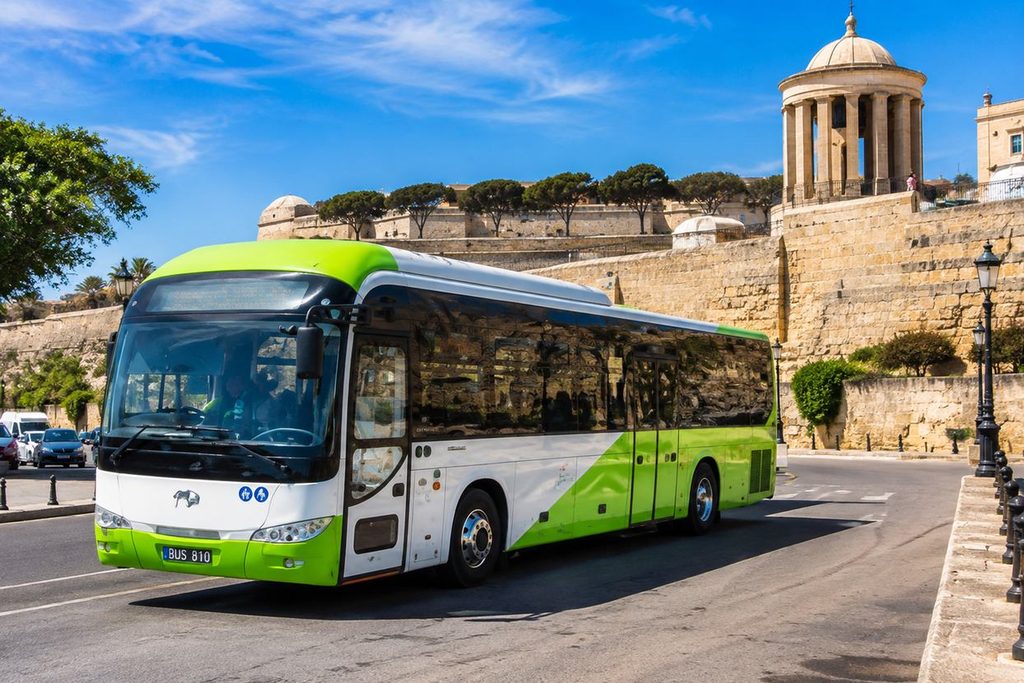
The Tallinja bus network is cheap and extensive. Download its app, but allow buffer time: traffic distorts schedules, buses fill, and direct-looking routes may tour several roundabouts.
Harbor ferries between Valletta, Sliema, and the Three Cities are useful and scenic. For Gozo, choose the fast passenger ferry from Valletta or the vehicle ferry from Ċirkewwa according to your itinerary.
A car helps for cliffs, rural Gozo, and early beaches, but not Valletta. Drive on the left. Reserve automatics early, photograph damage, check fuel rules, and understand the insurance excess.
Taxis fill transport gaps. For late arrivals, families, or heavy luggage, a prebooked airport transfer removes first-night negotiation.
A Malta Itinerary That Does Not Require Teleportation
For four days, spend day one in Valletta, day two in Mdina and Rabat, day three at Ħaġar Qim, Blue Grotto, and Dingli Cliffs, and day four on Gozo or at the Three Cities and Marsaxlokk. Choose based on whether you value coastline or harbor history more.
With five days, keep both Gozo and the Three Cities, pairing the latter with a slower Valletta evening. With seven days, add Comino, a beach or dive day, and one unscheduled half-day. That empty space matters. It becomes the swim you did not expect, the village feast advertised on a lamppost, or lunch that extends because another plate of bread arrives.
Book the Hypogeum first, then arrange the itinerary around its timed ticket. Next, secure any small-boat Comino trip and popular summer accommodation. Ordinary museum visits and bus journeys can remain flexible.
BROWSE MALTA ACTIVITIES AND SKIP-THE-LINE TICKETS
Six Malta Mistakes That Steal Good Holiday Hours
Do not change hotels every night. Malta looks miniature, but packing, traffic, ferry check-ins, and old-town staircases consume real time. Use one base on the main island, then add Gozo only if you can stay two nights.
Do not schedule Comino on your flight day. Boats depend on weather, road traffic can snarl, and a late return creates the least enjoyable kind of suspense. Keep your final day close to your accommodation or airport route.
Do not trust map distance alone. A three-kilometer journey may involve steep streets, a harbor, two buses, and twenty minutes spent watching your connection leave. Check the actual route and build in slack.
Do not arrive at churches beach-ready. Pack a light layer for shoulders and avoid very short clothing. Active places of worship are not costume-change booths, and respectful clothing saves an awkward refusal at the door.
Do not postpone sunscreen until lunchtime. Coastal wind disguises heat while pale stone reflects it. Apply before leaving, reapply after swimming, and carry more water than seems elegant. Malta has pharmacies; it also has no obligation to rescue your shoulders from optimism.
Do not reserve every meal. Book one restaurant you care about, particularly on weekends, but leave space for bakeries, village squares, and the café you notice because something garlicky is escaping through the doorway. An itinerary needs appetite, not just timestamps.
Keep one unscheduled hour each day; Malta is excellent at using it.
Practical Details That Save Bad Mornings
Buy a mobile data plan before landing or connect at the airport. You will use maps, ferry updates, bus tracking, bookings, and restaurant searches more than expected. An eSIM avoids hunting for a shop while carrying luggage, but confirm device compatibility and activation instructions before purchase.
CHECK MALTA eSIM DATA PLANS ON TRIP.COM
Tap water meets safety standards, though its desalinated taste divides visitors. A filter bottle improves flavor and reduces plastic.
Pack prescriptions, sun protection, and motion-sickness tablets. The emergency number is 112. Carry an EHIC or GHIC if eligible, but it does not replace travel insurance.
Churches remain active religious spaces. Cover shoulders, remove hats, lower voices, and avoid wandering through services for photographs. At village feasts, give processions room and spend money with local cafés, bakeries, band clubs, and craftspeople rather than treating the community as free stage scenery.
Sustainable Malta Without the Halo
Use buses and ferries, stay longer, carry reusable bottles and bags, and choose local restaurants and guides. Favor accommodation that proves its water and energy practices beyond a green leaf icon.
Water is scarce: shorten showers, reuse towels, and report leaks. Never cross protected dunes, garigue, salt pans, temple stones, private fields, or closed trails for a photograph.
On boats, choose operators that limit passenger numbers, manage rubbish, avoid wildlife harassment, and respect anchoring restrictions. Use reef-conscious sun protection and a rash vest, especially when snorkeling. Do not feed fish.
Visit popular places early or late. Stay on Gozo, eat beyond harbor fronts, and visit smaller museums to spread spending.
The Part Where Malta Follows You Home

Malta does not win you over with one perfect beach or one immaculate old city. It works by accumulation. The cannon echoing across Grand Harbour. The waxy paper around a hot pastizz. Salt drying on your skin after climbing a ladder from the sea. A church dome appearing above apartment blocks. A bus squeezing between limestone walls while everyone onboard behaves as if this is entirely reasonable.
The ten experiences in this guide can fill a week, but do not turn them into a compliance exercise. Pick the places that match your interests, reserve the genuinely limited tickets, then leave room for Malta’s digressions. If you love paintings and fortifications, give Valletta two days. If water is the point, trade a museum for a dive. If Gozo feels right, miss the return ferry on purpose and stay for dinner.
Before booking, compare accommodation locations carefully, calculate transfers as well as room rates, and protect the expensive parts of the trip. Secure the Hypogeum, summer boat trips, and popular hotels early. Download offline maps, arrange mobile data, and keep some euros for small purchases. Then stop optimizing. Holidays eventually need to begin.
If this guide helped you plan, subscribe to A Tiny Traveler for honest itineraries, realistic budgets, transport details, and travel stories that admit when the stairs are winning. Subscribers get the next practical guide without having to negotiate with a search engine first.
Then follow A Tiny Traveler on Pinterest and save this Malta guide to your Europe board. I share trip-planning ideas, route inspiration, seasonal advice, and new destination guides designed to be useful after the pretty photograph has done its job. Send this article to the friend who keeps saying, “Malta is small; we can see it in two days.” They need intervention.
On your final evening, take the harbor ferry once more. Valletta’s walls will turn the color of toast, boats will cut dark lines across the water, and bells will begin another loud, unresolved conversation. You may still have salt in your shoes. Leave it there for the flight home.
Frank


