

Plan a Normandy trip with this complete 2026 guide to Mont-Saint-Michel, D-Day beaches, Rouen, Bayeux, Étretat, food, hotels, transport, budgets, and practical tips.
The first thing Normandy gave me was not a postcard view. It was a sideways sheet of rain, a paper bag surrendering beneath a warm Camembert, and a station platform in Rouen where everyone except me appeared to know which carriage was going where. Ten minutes later, the clouds split open, cathedral stone turned the color of honey, and a café owner calmly handed me extra napkins for the cheese emergency. That is Normandy: weather with commitment, food with consequences, and beauty that rarely bothers to announce itself.
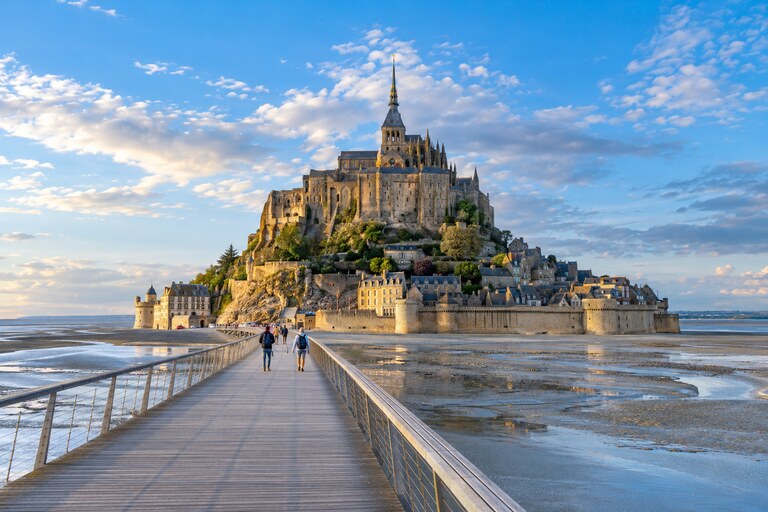
This corner of northern France has been painted by Monet, fought over by kings, crossed by armies, worked by fishermen, and photographed by nearly everyone who has ever owned a camera. Yet it never feels like one tidy destination. Rouen is all crooked timber and church bells. Étretat smells of salt and wet chalk. The D-Day beaches can silence an entire bus. Mont-Saint-Michel rises from the bay like medieval architecture having a very dramatic day.
The tricky part is geography. Search for a Normandy itinerary, and you may end up with twelve towns, five landing beaches, three types of cider, and no sensible explanation of how to connect them. I have made those mistakes for you. In this guide, I will show you where to stay, how long to spend, when a car is worth the expense, what sights cost, and which places deserve more than a rushed photo stop.
You will also find realistic daily budgets, current 2026 closures, food worth loosening a belt for, respectful advice for visiting war sites, sustainable travel ideas, and booking shortcuts that can save both money and marital diplomacy. Normandy rewards travelers who slow down. Give it five to seven days if you can. Bring a rain jacket regardless of what your weather app promises. It lies.
Normandy at a Glance: The Useful Bits Before the Cheese
Normandy is a region in northwestern France, divided into five departments: Calvados, Eure, Manche, Orne, and Seine-Maritime. For a first trip, you will mainly move between the Seine Valley, the Alabaster Coast, the Côte Fleurie, the D-Day landing beaches, and Mont-Saint-Michel Bay.
- Best trip length: Five to seven days for the classic route; three days for one focused area.
- Best bases: Rouen, Honfleur, Bayeux, and Mont-Saint-Michel or nearby Beauvoir.
- Nearest major airports: Paris Charles de Gaulle, Paris Orly, and smaller regional airports near Caen and Deauville.
- Currency: The euro (€). Cards are widely accepted, but coins help at markets, parking meters, and tiny bakeries.
- Language: French. Tourist businesses usually manage some English, though a cheerful bonjour improves almost every exchange.
- Driving side: Right.
- Emergency number: 112 throughout the European Union.
- Power: Type C and E plugs, 230V.
- Tourism information: Use the official Normandy Tourism trip-planning portal for regional maps, seasonal updates, and practical notices.
My Tip: Do not treat Normandy as a day trip from Paris unless you only want Rouen or Giverny. A day tour can work for the D-Day beaches or Mont-Saint-Michel, but combining both is not travel; it is competitive sitting.
When to Visit Normandy Without Arguing With the Sky
April to June: My Favorite Balance
Late spring brings long daylight, green fields, apple blossom, and fewer tour buses than midsummer. Temperatures often sit around 50–68°F (10–20°C), though the coast can feel much cooler in wind. May and June are excellent for walking cliffs, cycling, and visiting gardens.
The important exception is early June, when commemorations around D-Day anniversary dates increase demand in Bayeux, Caen, and the beach towns. The atmosphere is meaningful, but rooms and tours sell early.
July and August: Long Days, Short Patience
Summer gives you the warmest weather, late sunsets, fuller event calendars, and beach life in Deauville, Trouville-sur-Mer, and Cabourg. It also brings crowds, higher hotel rates, and queues at Mont-Saint-Michel. Coastal highs commonly reach 68–77°F (20–25°C), with hotter spells possible.
If you travel in summer, start major sights before 9:00 a.m., reserve dinner, and never assume air-conditioning. Historic inns were designed when “climate control” meant opening a window and hoping the pigeon outside was discreet.
September and October: Cider, Color, and Breathing Room
Early autumn is superb. Apple harvests begin, restaurants feel calmer, and roads become easier. September often retains mild weather; October is cooler and wetter but wonderfully atmospheric in medieval towns.
November to March: Moody, Cheap, and Partly Closed
Winter offers lower accommodation prices, empty lanes, strong waves, and museums without elbow warfare. Days are short, gardens close, some coastal businesses reduce hours, and rain becomes a recurring character. Pack waterproof shoes and verify every opening time.
My Tip: The best time to visit Normandy is late May, late June, or September. You get good daylight and manageable crowds without paying the full August tax on spontaneity.
How Many Days Do You Need in Normandy?
You can see one slice in a weekend. You cannot see the whole region well in a weekend, despite what a map and misplaced confidence may suggest.
- Three days: Choose eastern Normandy—Giverny, Rouen, Étretat, and Honfleur—or western Normandy—Bayeux, the D-Day beaches, and Mont-Saint-Michel.
- Five days: Travel from Rouen to the coast, then base yourself in Bayeux for the landing beaches. Finish at Mont-Saint-Michel.
- Seven days: Add Giverny, Caen, a slower beach day, and one night near the abbey.
- Ten days: Include the Cotentin Peninsula, Cherbourg, Barfleur, Granville, or rural Pays d’Auge.
Five days is the practical minimum for a first-time Normandy road trip. Seven feels human. With a week, you can sit over lunch, wait for changing light, and visit memorial sites without turning remembrance into a checklist.
For quick planning: base yourself in Rouen for eastern sights, Bayeux for wartime history, and Beauvoir for an easier Mont-Saint-Michel morning. Travel by train between major towns, then rent a car for rural days. Reserve summer hotels, tours, and restaurants early. Keep waterproof layers within reach and download offline maps. Most importantly, leave one unscheduled afternoon, because Normandy often improves when plans loosen.
Getting to Normandy From Paris, Britain, and Beyond
By Train From Paris
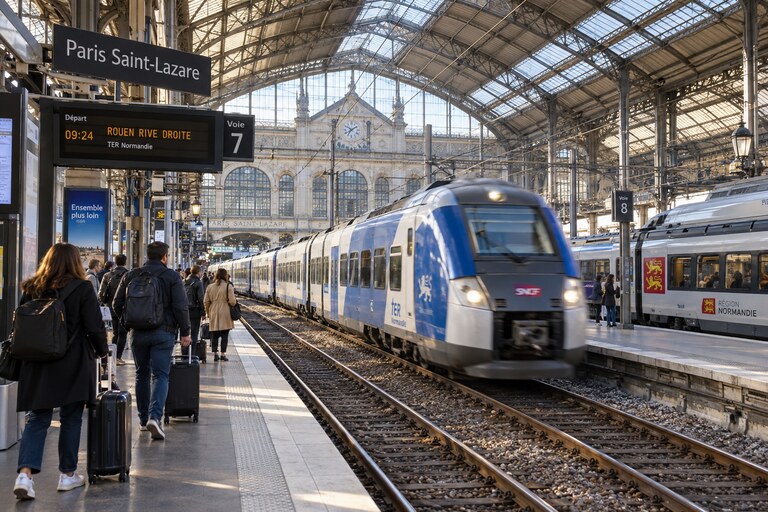
Trains leave Paris Saint-Lazare for Rouen, Le Havre, Deauville-Trouville, Caen, Bayeux, and Cherbourg. Direct Paris–Rouen journeys can take about 1 hour 20 minutes, with advance fares sometimes starting near €10. Paris–Caen generally takes around two hours, while Paris–Bayeux takes roughly 2 hours 15 minutes to 2 hours 40 minutes, depending on the service.
Search schedules and buy tickets through SNCF Connect. Regional connections are also coordinated through Nomad Normandy, which covers trains and coaches.
My Tip: Book longer intercity journeys early, but keep a little flexibility. French train platforms can appear shortly before departure, producing a sudden migration of passengers who all walk faster than you.
Use Trip.com to compare convenient train options and keep bookings together, especially if your trip includes flights or several hotels. Always compare the final price and change conditions with the official operator before paying.
By Car
From central Paris, driving to Rouen takes roughly two hours without heavy traffic; Bayeux takes about three hours; Mont-Saint-Michel takes closer to four. Tolls, fuel, parking, and escape-from-Paris nerves all belong in the budget.
A car becomes genuinely useful west of Caen, where memorial sites, villages, and cliff roads spread out. Choose the smallest vehicle that fits your luggage. Medieval streets did not anticipate rental SUVs or the confidence they inspire.
With GetRentacar, compare vehicle categories, pickup terms, mileage limits, deposits, and insurance. Photograph every panel and wheel at collection, and check whether your rate permits cross-border travel if you are continuing elsewhere.
From the Airports
Most international travelers arrive at Charles de Gaulle Airport or Orly Airport. Reaching Saint-Lazare Station with luggage can involve several transfers. A prearranged ride costs more but removes the ticket-machine puzzle after an overnight flight.
Welcome Pickups is particularly helpful for families, groups, late arrivals, or anyone carrying enough luggage to suggest a minor relocation.
By Ferry From Britain or Ireland
Ferries connect ports including Ouistreham, Cherbourg, Dieppe, and Le Havre with routes from the United Kingdom and Ireland. Schedules vary seasonally. Bringing your own car can make western Normandy wonderfully straightforward, but book summer sailings early and check vehicle documentation.
Getting Around Normandy: Car, Train, Bus, or Bicycle?
The Honest Answer About Renting a Car
You do not need a car for Giverny, Rouen, Caen, or central Bayeux. You will appreciate one for the D-Day beaches, Pays d’Auge, Étretat-to-Honfleur routing, and remote parts of the Cotentin Peninsula.
For a balanced trip, take the train from Paris to Rouen or Caen, explore locally, then rent a car for two or three days. This avoids parking in towns and reduces both cost and emissions.
Public Transport
The regional Nomad network links major towns. Bayeux has train service plus coach routes toward coastal communities, although frequencies can be thin on Sundays and holidays. A few D-Day sites are reachable by bus and bicycle, but seeing several in one day is difficult.
The official guide to visiting the D-Day beaches without a car explains connections from Caen, Bayeux, and Carentan. For a first visit, a guided minibus tour is often the best car-free solution because context matters as much as transport.
FIND A SMALL-GROUP NORMANDY TOUR ON GETYOURGUIDE
Look for GetYourGuide tours with small groups, clear pickup points, recent reviews, and enough time outside the vehicle. A nine-hour tour that lists fourteen stops may offer more windshield than history.
Cycling
Normandy has serious cycling routes, including La Vélomaritime/EuroVelo 4, which passes the landing beaches, and La Véloscénie, linking Paris with Mont-Saint-Michel. E-bikes make coastal wind and rolling farmland less theatrical. Wear reflective gear, carry water, and reserve bike-friendly lodging.
Where to Stay in Normandy: Pick Bases, Not Just Pretty Beds
Changing hotels nightly looks efficient on paper and feels like unpaid luggage work by day three. Choose two or three bases.
Rouen: Best for Architecture and Train Travelers
Stay in Rouen’s historic center if you want medieval lanes, restaurants, the cathedral, and easy rail access. Rooms near Gare de Rouen-Rive-Droite simplify arrivals but involve a walk downhill to the old town—and uphill when leaving, because luggage develops mass on inclines.
Honfleur: Best for Romance and Evening Atmosphere
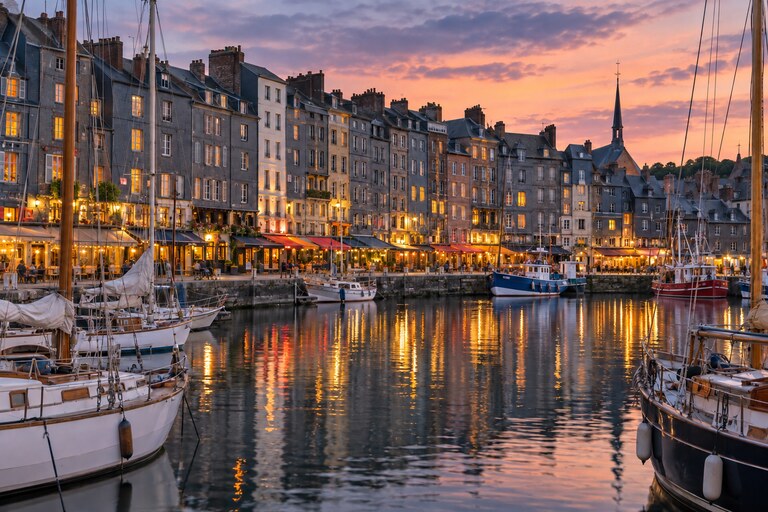
Honfleur is far better after day-trippers depart. Stay near Vieux Bassin for atmosphere or slightly outside the center for parking and quieter sleep. Old buildings may have steep stairs, small rooms, and no elevator; charm has a strong cardiovascular component.
Bayeux: Best Base for the D-Day Beaches
Bayeux is my favorite western base. It survived wartime destruction better than many neighboring towns, has a graceful cathedral, walkable streets, good restaurants, and numerous guided-tour pickups. Book well ahead around June 6.
Caen: Best for Transport, Museums, and Value
Caen is larger and less storybook-pretty, but extremely practical. It offers trains, buses, rental cars, the Mémorial de Caen, castle ruins, and better-value lodging. Stay near the center rather than the station if evening atmosphere matters.
Mont-Saint-Michel or Beauvoir: Best for Dawn and Dusk
Sleeping inside Mont-Saint-Michel gives you quiet lanes after tour groups leave, but rooms are compact, stairs are unavoidable, and prices are high. La Caserne and Beauvoir offer easier parking and shuttle access. One night is enough.
FIND THE BEST NORMANDY HOTEL ON BOOKING.COM
On Booking.com, filter for free cancellation, parking, air-conditioning, elevator access, and a review score that reflects recent stays. Reserve early for summer, weekends, and anniversary periods; then recheck rates before the cancellation deadline.
The Perfect Seven-Day Normandy Itinerary
Day 1: Giverny and Rouen
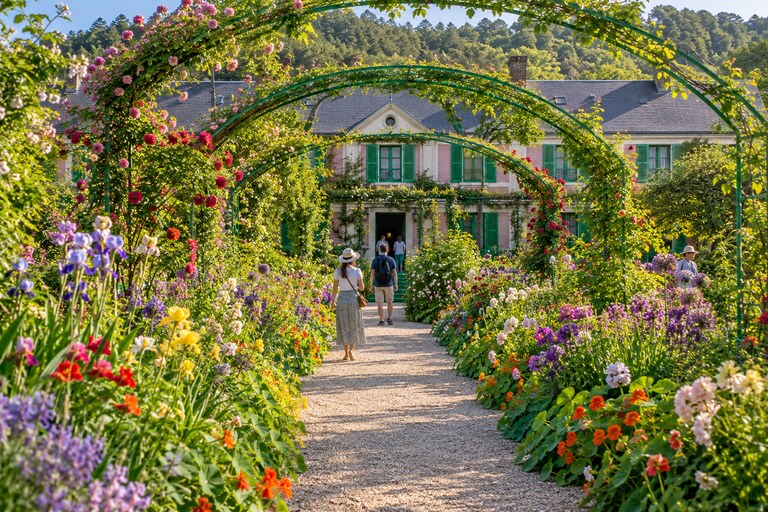
Leave Paris early for Giverny, where Claude Monet lived and gardened. Visit the house, the flower garden, and the water garden before tour groups thicken. The famous lily pond is smaller than many people expect; the colors, reflections, and deliberate framing explain why it occupied the painter for decades.
The Fondation Claude Monet operates seasonally, generally from spring through autumn, so confirm dates and book through the official Monet Foundation website. Continue to Rouen for dinner and two nights.
Day 2: Rouen Without Rushing
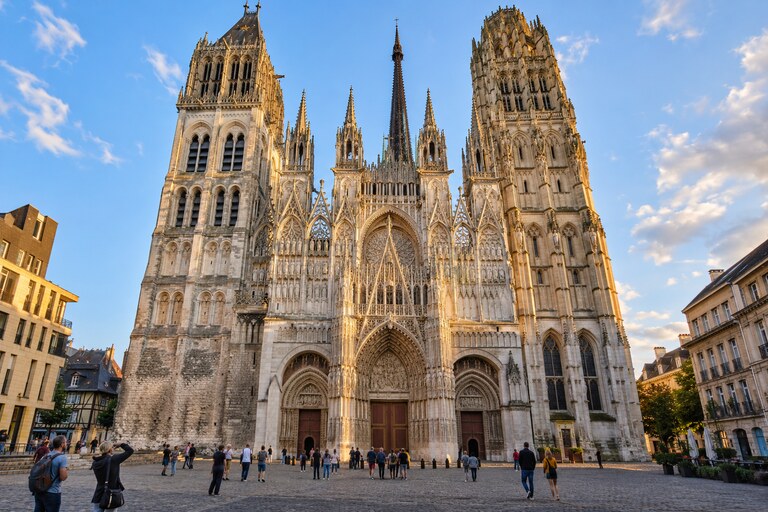
Start at Rouen Cathedral, whose facade shifts character whenever the light changes. Walk Rue du Gros-Horloge, inspect the astronomical clock, and continue to Place du Vieux-Marché, associated with Joan of Arc’s execution in 1431. The modern church there resembles an overturned boat and makes more sense from inside.
Visit the Historial Jeanne d’Arc or the Musée des Beaux-Arts, then wander the antiques quarter. Look upward: half-timbered houses lean toward one another like neighbors sharing scandal.
My Tip: Buy pastries from a neighborhood boulangerie and eat beside the Seine. Lunch does not require white linen to be memorable; sometimes butter flakes on your coat are enough.
Day 3: Étretat, Honfleur, and the Coastal Detour
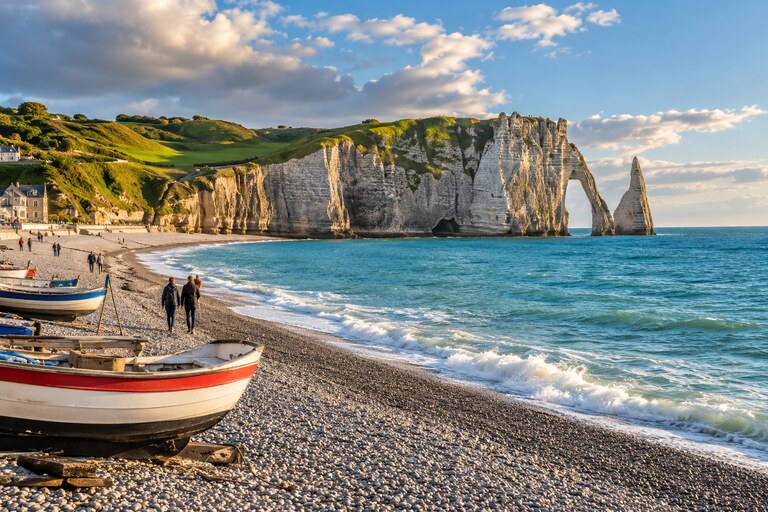
Drive to Étretat early. The pale arches and needle-like rock formations are best appreciated from the cliff paths, not from the crowded pebble beach alone. Trails can be muddy and exposed. Stay behind barriers: chalk cliffs collapse without consulting your itinerary.
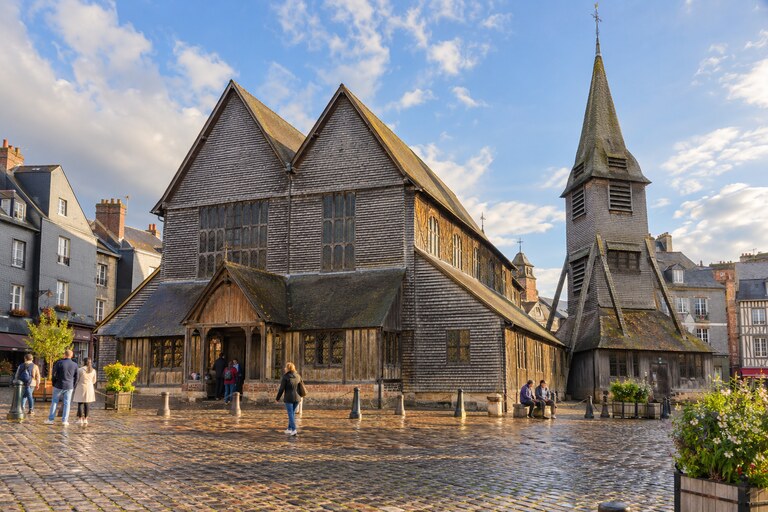
Continue across the Pont de Normandie to Honfleur. Walk the harbor, enter wooden Sainte-Catherine Church, and explore side streets beyond Vieux Bassin. Stay overnight. If energy remains, drink a small glass of Calvados slowly; it tastes of apples that have acquired legal representation.
Day 4: Caen and Bayeux
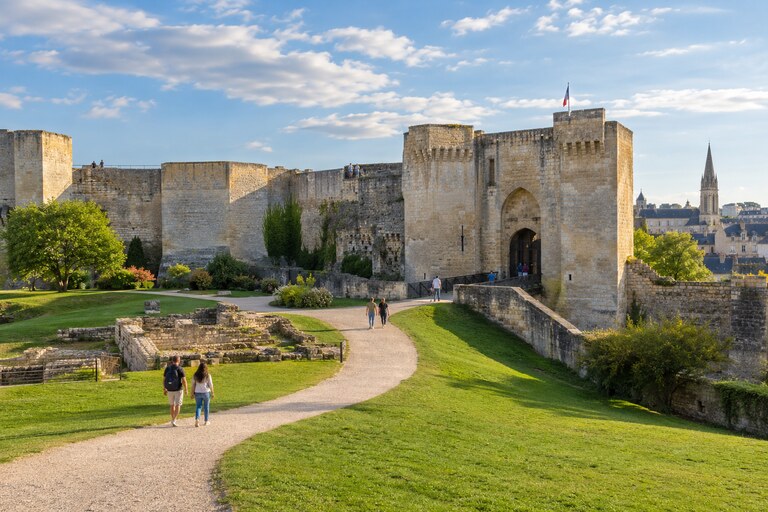
Drive to Caen. Choose between the sprawling Château de Caen, founded by William the Conqueror, and the Mémorial de Caen, which covers the Second World War, D-Day, and the Cold War. The memorial needs at least three hours; history fatigue is real, so do not bolt another major museum onto the afternoon.
Continue to Bayeux, check in for two nights, and walk around Notre-Dame Cathedral at dusk.
2026 closure alert: The Bayeux Tapestry Museum is closed for renovation until October 2027. The tapestry itself is inaccessible in Bayeux during the closure. Check Bayeux Museum’s official update rather than trusting outdated itineraries.
Day 5: The D-Day Landing Beaches
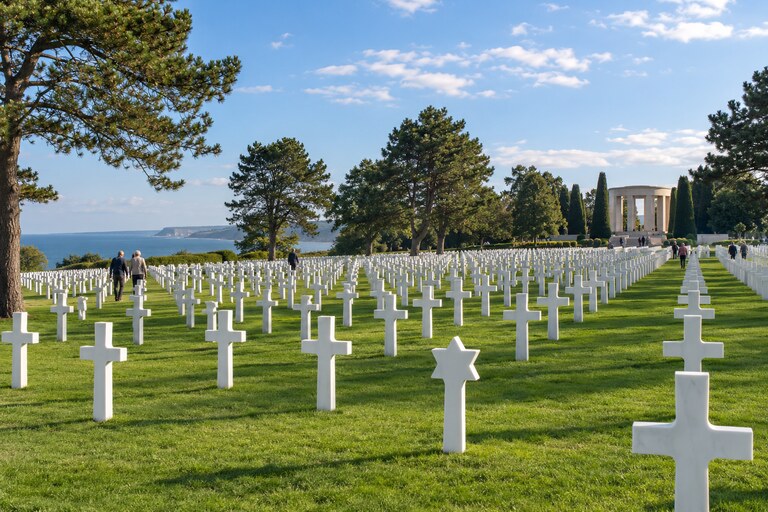
Take a guided tour or focus on a few connected sites. A strong first-time route includes Pointe du Hoc, Omaha Beach, the Normandy American Cemetery, and Arromanches-les-Bains. Add a museum according to your interests, not because a list says you must.
Stand still at the cemetery. Read names. Notice ages. At Omaha Beach, remember that people now walking dogs and collecting shells occupy ground where young men arrived under fire on June 6, 1944. The ordinary present does not erase the past; it makes the cost more legible.
Day 6: Bayeux to Mont-Saint-Michel
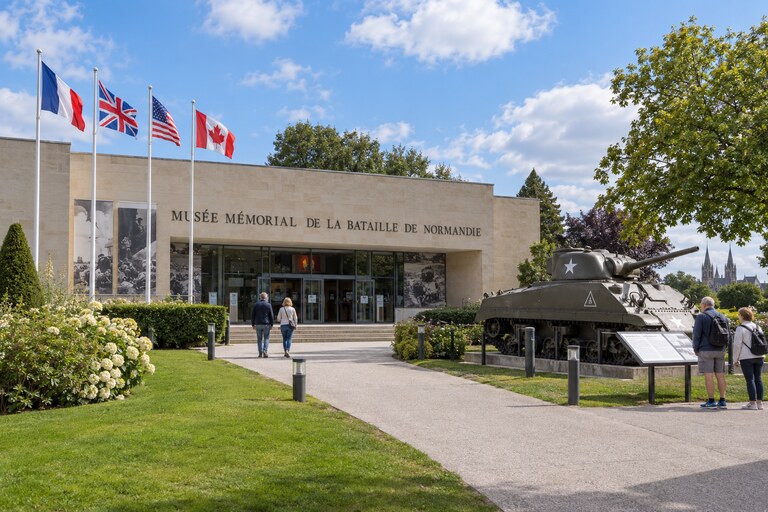
Spend the morning in Bayeux. Visit the cathedral, the Battle of Normandy Memorial Museum, or the Bayeux War Cemetery. Then drive roughly 1.5 hours to Mont-Saint-Michel.
Park on the mainland and take the free Le Passeur shuttle or walk the causeway. The walk takes around 35–45 minutes and provides the slow reveal the abbey deserves. Tour the ramparts late, stay nearby, and return after dinner when the lanes have emptied.
Day 7: The Abbey and Return
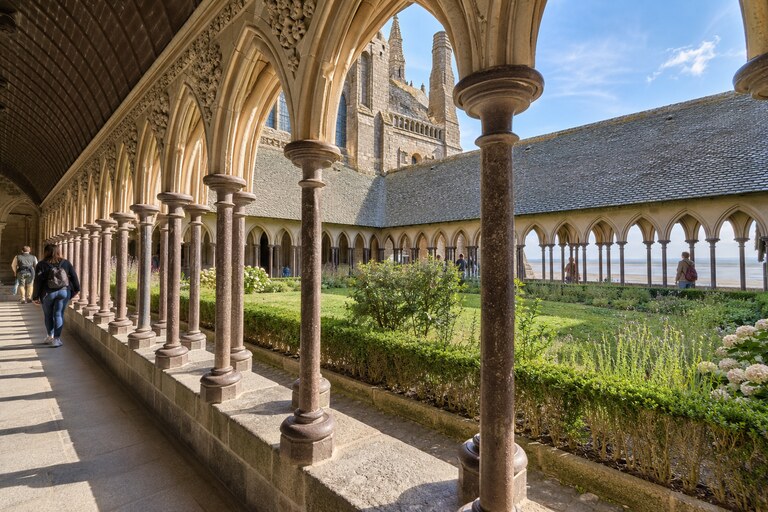
Enter the Abbey of Mont-Saint-Michel near opening time. Its stacked rooms, cloister, stone staircases, and views over tidal flats explain why the site became both pilgrimage destination and defensive prize. Standard adult admission was €16 in 2026, but prices and hours change; confirm through the official abbey website.
Return to Paris, or continue toward Saint-Malo and Brittany. Yes, Mont-Saint-Michel belongs to Normandy. Mentioning this near the regional border may start a conversation longer than your drive.
Visiting the D-Day Beaches With Context and Respect
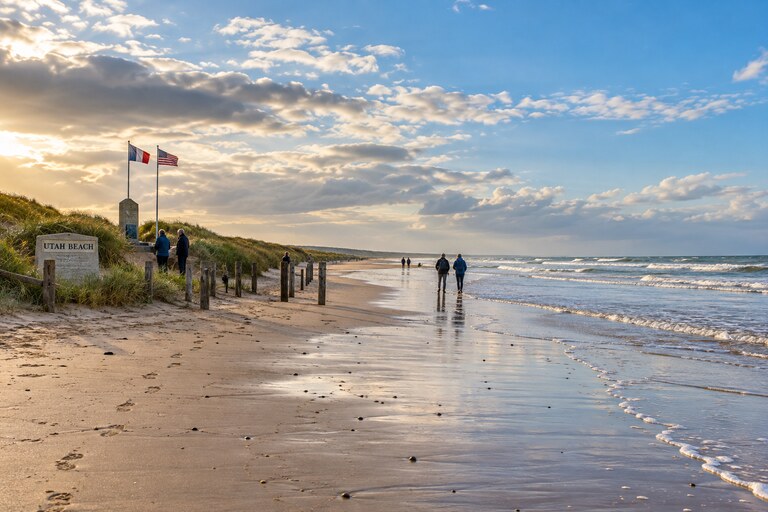
The five landing sectors were Utah, Omaha, Gold, Juno, and Sword. They stretch across a broad coast, and each tells a different part of the invasion. Do not reduce them to one beach and a souvenir shop.
The American Sector
At Utah Beach, visit the museum built near the landing area, then consider Sainte-Mère-Église, where paratrooper John Steele famously became caught on the church tower. Pointe du Hoc preserves bomb craters and fortifications attacked by U.S. Rangers. Paths can be uneven and weather-exposed.
Omaha Beach is long and geographically complex. The Normandy American Cemetery at Colleville-sur-Mer overlooks the coast and contains more than 9,000 graves. Entry is free, security screening may apply, and conduct should match the place.
The British and Canadian Sectors
At Gold Beach, the remains of the Mulberry harbor are visible from Arromanches-les-Bains, especially at low tide. Longues-sur-Mer Battery retains major gun emplacements. The British Normandy Memorial near Ver-sur-Mer records the names of more than 22,000 people under British command who died during the campaign.
At Juno Beach, the Juno Beach Centre explains Canada’s role and offers guided access to German bunkers. At Sword Beach, connect coastal sites with Pegasus Bridge and its museum inland.
How to Behave
- Keep voices low in cemeteries and memorials.
- Do not climb on bunkers, monuments, or restricted earthworks.
- Do not stage playful photos among graves.
- Leave artifacts where they are. Ammunition and military debris can remain dangerous.
- Give yourself emotional space. Two major museums in one day can numb rather than deepen understanding.
Use the official Normandy D-Day visitor guide to choose museums and memorials by sector.
BOOK A D-DAY BEACHES TOUR WITH AN EXPERT GUIDE
A knowledgeable guide can explain terrain, unit movements, civilian experiences, and the reasons events unfolded differently across short distances. For this part of Normandy, interpretation is not an optional extra; it is the difference between seeing and understanding.
Mont-Saint-Michel: How to Visit Without Losing Your Mind in a Queue
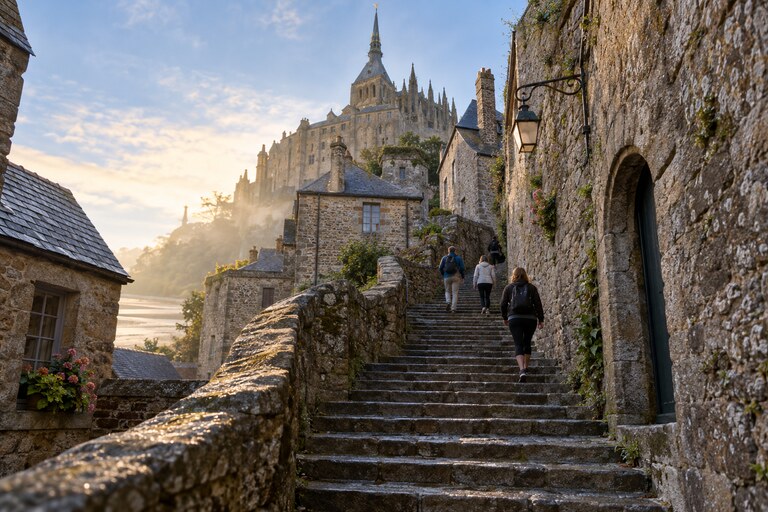
Mont-Saint-Michel is a medieval village and abbey on a tidal island. Entry to the village is free; the abbey requires a ticket. Parking is on the mainland. From there, walk, cycle, or take the free Le Passeur shuttle across the causeway.
Arrive before 9:00 a.m. or after 4:00 p.m. when possible. The narrow Grande Rue becomes congested around midday. Skip the central crush by climbing the ramparts and side stairways, though accessibility is limited throughout the island.
The bay has some of Europe’s fastest-moving tides. Never walk on tidal flats alone. Sand, water channels, fog, and incoming tides create real danger. Book a crossing with a certified guide and consult official tide information. The official Mont-Saint-Michel guide explains access, shuttles, cycling, and high-tide visits.
Food inside the walls is expensive. The famous omelet associated with La Mère Poulard is theatrical and historically interesting, but its price causes its own weather system. I prefer a simple crêpe, then a better dinner on the mainland.
What to Eat in Normandy: Butter Is Basically a Regional Dialect
Norman cooking is built around dairy, apples, seafood, and serious respect for appetite. Portions can be rich. Pace yourself.
Cheese
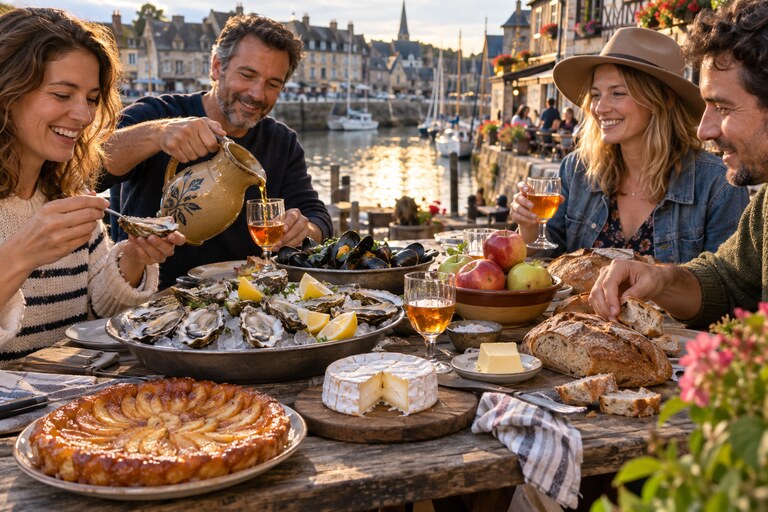
The famous four are Camembert de Normandie, Pont-l’Évêque, Livarot, and Neufchâtel. Proper Camembert de Normandie AOP is made with raw milk and has an earthy aroma that can occupy a rental car faster than passengers. Neufchâtel often comes heart-shaped, proving romance and mold can cooperate.
Seafood
Order oysters from Saint-Vaast-la-Hougue, mussels, scallops, sole, or a cold seafood platter. Fresh oysters should smell like clean seawater. Add lemon if you like, but try the first one plain: cold brine, mineral sweetness, then a faint cucumber finish.
Savory Classics
Try moules à la crème, tripes à la mode de Caen, agneau de pré-salé, or chicken cooked in the Vallée d’Auge style with cream, mushrooms, apples, and cider. Buckwheat galettes are more closely associated with neighboring Brittany, but they are common and useful for an affordable lunch.
Sweets and Drinks
Look for teurgoule, a cinnamon rice pudding baked slowly until its surface darkens; tarte normande with apples and cream; caramels d’Isigny; cider; Pommeau; and Calvados apple brandy.
The traditional trou normand is a small glass of Calvados served between courses to revive the appetite. Whether it creates space or simply changes your opinion of fullness remains scientifically unresolved.
My Tip: If driving, designate one person for tastings or buy bottles for later. France’s blood-alcohol limits are strict, enforcement is real, and apple brandy is not fruit juice despite persuasive ancestry.
Normandy Travel Costs: Realistic Daily Budgets for 2026
Prices vary by season, booking time, and location. Mont-Saint-Michel, Deauville, and beachfront towns cost more than Caen or inland villages. These are planning ranges per person, based on two people sharing a room where noted.
Backpacker or Careful Budget: €75–€115 Per Day
- Hostel bed or simple shared room: €30–€55
- Bakery breakfast: €5–€9
- Galette, sandwich, or market lunch: €9–€16
- Casual dinner: €16–€25
- Local transport and one paid sight: €15–€30
Hostels are less common outside larger towns, so solo travelers may spend more on lodging. Supermarkets, bakeries, picnic lunches, and trains booked in advance make the biggest difference.
Comfortable Midrange: €150–€240 Per Day
- Share of a good double room: €55–€100 per person
- Breakfast and coffee: €8–€15
- Lunch: €18–€28
- Dinner with a drink: €30–€55
- Car share, fuel, parking, tickets: €35–€60
Comfortable-Luxury: €280–€500+ Per Day
Boutique rooms, private transfers, tasting menus, and private tours quickly raise the total. In peak summer, a desirable hotel can exceed €300 per night before breakfast.
Typical Essential Prices
- Espresso: €2–€4
- Croissant: €1.30–€2.50
- Baguette: €1.20–€2
- Pint or large draft beer: €6–€9
- Glass of cider: €4–€7
- Casual museum: €7–€15
- Major museum or abbey: roughly €13–€21
- Rental car: approximately €45–€90 per day, before fuel and extras
- Public parking: commonly €8–€25 per day in major visitor areas
Price note: These figures were checked as planning estimates for 2026, not promises. Verify live totals before booking, especially around public holidays and D-Day commemorations.
Money, Cards, and Avoiding Tiny Expensive Surprises
Cards work almost everywhere, but carry €20–€40 in small cash for markets, church donations, and machines that have chosen hostility. When a payment terminal asks whether to charge you in dollars or euros, choose euros and decline dynamic currency conversion. Your own provider’s exchange rate is usually better.
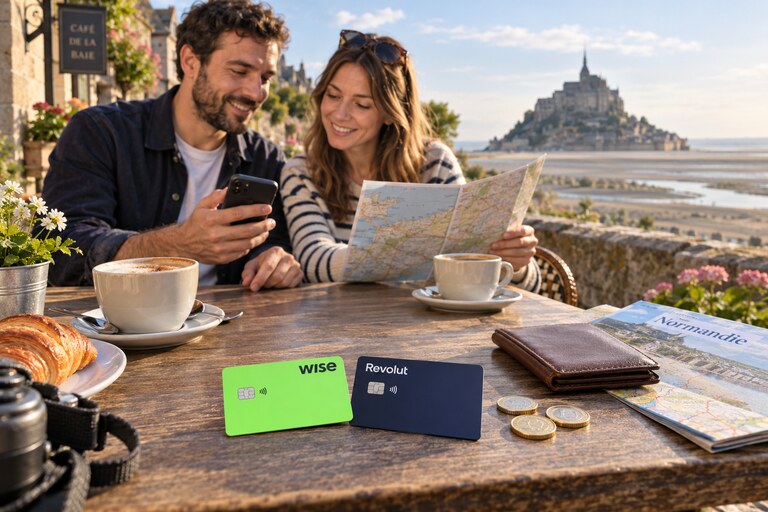
Revolut can help you manage travel spending, exchange currencies, and monitor purchases in the app. Review plan limits, weekend markups, and ATM allowances before departure.
Wise is useful for transparent currency conversion and holding euros before your trip. Check card availability and fees in your home country, and always keep a second card stored separately.
My Tip: Never rely on one card. A bank’s automated fraud system may interpret “three cheeses and a toll road in Calvados” as evidence of criminal sophistication.
Staying Connected: eSIMs, Wi-Fi, and Navigation
Hotel Wi-Fi is common, and mobile coverage is generally good in towns. Rural valleys, cliffs, and stretches of the coast can be patchier. Download offline maps for Normandy and save hotel addresses before driving.
An eSIM through Trip.com can provide data as soon as you land without hunting for a physical SIM. Check that your phone is unlocked and eSIM-compatible, compare data allowances, and install the profile while you still have reliable Wi-Fi.
Keep a paper or screenshot backup of bookings. Batteries die. Reception desks close. Rural France maintains a healthy skepticism toward your dependency on cloud storage.
Travel Insurance: The Boring Purchase You Want to Stay Boring
Normandy is not an extreme destination, but trips still meet flight delays, illness, rental-car incidents, slippery paths, and lost bags. Medical care in France is excellent, yet visitors may face upfront costs or exclusions depending on nationality and coverage.
CHECK TRAVEL INSURANCE WITH VISITORSCOVERAGE
With VisitorsCoverage, compare policies for emergency medical care, trip cancellation, interruption, baggage, and activities. Read exclusions, deductibles, claim requirements, and pre-existing-condition terms. The cheapest plan is only a bargain if it covers the problem you actually have.
Travel insurance is not a substitute for cliff barriers, tide tables, or sober driving. Paperwork cannot negotiate with gravity.
Safety, Tides, Driving, and Other Ways Not to Ruin the Trip
Normandy is generally safe, but ordinary precautions apply. Watch belongings at stations, crowded attractions, and market terraces. Do not leave luggage visible in parked cars, even briefly.
Driving brings narrow village roads, tractors, cyclists, roundabouts, speed cameras, and limited parking. French law requires appropriate safety equipment; rental companies should supply it, but verify. On autoroutes, keep your payment card accessible before the toll gate rather than performing archaeology beneath the passenger seat.
Cliff safety is serious at Étretat and elsewhere along the Alabaster Coast. Stay back from edges and away from cliff bases because rockfall can occur. Wet chalk and grass become slippery. The best photograph is not worth becoming local rescue-service paperwork.
At Mont-Saint-Michel Bay, only cross tidal flats with a qualified guide. Tides move quickly, channels shift, and areas contain soft sediment. Check official warnings during storms, heat waves, and exceptionally high tides.
Pharmacies display green crosses and can advise on minor problems. Dial 112 for emergencies.
Sustainable Normandy Travel That Actually Helps
Sustainable travel is not about achieving moral perfection on vacation. It is about reducing obvious harm and directing more money toward the places hosting you.
Use Trains for the Long Legs
Travel from Paris to Rouen, Caen, or Bayeux by train, then rent a car only for rural days. This reduces driving, tolls, and parking while keeping the itinerary flexible.
Stay Longer in Fewer Places
Two- or three-night bases reduce laundry, cleaning, transport, and your own suitcase resentment. They also let you eat at neighborhood businesses beyond the central visitor streets.
Travel by Bike or Foot
Use sections of La Vélomaritime or walk the causeway to Mont-Saint-Michel instead of taking the shuttle when mobility and weather allow. Rent e-bikes from local operators and follow marked routes.
Protect Fragile Coasts
Stay on marked cliff paths, never take pebbles from Étretat, avoid trampling dune vegetation, and carry trash out. Join guided bay walks rather than wandering across tidal habitats.
Spend Locally and Seasonally
Choose independent hotels, markets, bakeries, guides, cider producers, and restaurants using regional ingredients. Visit outside peak summer when possible. Ask before photographing vendors or private property.
Respect Memorial Landscapes
Sustainability includes culture and memory. Follow site rules, support museums through admission or donations, and avoid treating cemeteries as content backdrops.
Important: Do not confuse “less crowded” with permission to enter closed paths, private fields, or protected areas. Quiet places still have owners, wildlife, and limits.
The Part Where Normandy Follows You Home
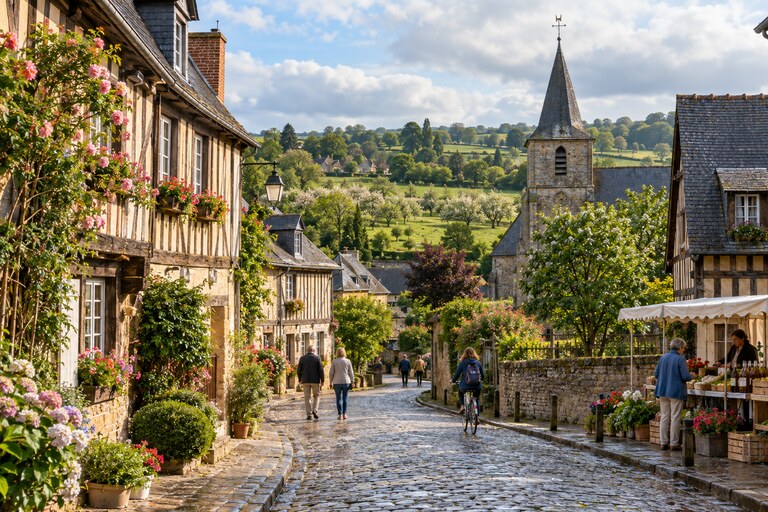
The places that stay with me are rarely the ones I photographed best. I remember the hollow knock of my shoes on Mont-Saint-Michel’s stone stairs before breakfast. I remember gulls shouting over Trouville’s fish market as a vendor packed oysters into a wooden crate. I remember rain moving across Omaha Beach, erasing footprints almost as soon as they appeared.
That last image is why Normandy needs time. Its pleasures and its history sit close together, sometimes uncomfortably. One hour you are tearing warm bread beside an apple orchard; the next you are reading the age of a soldier who never went home. The region does not ask you to choose between joy and remembrance. It asks you to pay attention to both.
Plan carefully, but leave gaps. Take the train where it works. Rent a small car where it does not. Spend money with local guides and family-run businesses. Walk away from cliff edges. Check the tide. Order the cheese even when your travel companion claims not to want any, because this statement has never survived the arrival of Camembert.
If this guide helped you untangle the beaches, abbeys, trains, tides, and cheese, subscribe to A Tiny Traveler. I share practical itineraries, honest costs, current closures, booking advice, and the small details that stop a good trip from becoming an expensive argument with a parking machine.
Then follow A Tiny Traveler on Pinterest for upcoming France travel guides, European road trips, packing tips, hotel ideas, and saveable itineraries. Pin this guide now; when you are standing in Normandy with rain on your jacket and warm pastry flakes on your fingers, you will be glad the plan is already in your pocket.
And when the tide begins sliding back across the bay and Mont-Saint-Michel turns dark against the evening sky, put the phone away for a minute. Some places deserve proof that you were present, not merely evidence that you visited.


