

The first time I understood Vienna, I was holding a coffee I had ordered incorrectly while a waiter judged me with the efficiency of a magistrate. I had requested “just a coffee,” rather like entering a library and asking for “one book.” He delivered a Melange beside a glass of water and left before I could damage the conversation further. Outside, tram bells clipped through the morning. Inside, a newspaper snapped open. The city had introduced itself: elegant, exact, and faintly amused by me.
That dry formality is part of the pleasure. Vienna has narrow imperial beds, paintings that generate their own weather, sausage stands under chandeliers’ spiritual influence, and transportation that makes other capitals look raccoon-organized. Beauty is the least interesting part. The better story lies between ceremony and ordinary life.
This Vienna travel guide covers the 10 best things to do in Vienna plus where to stay, realistic 2026 daily budgets, airport transportation, transit tickets, food, booking strategy, accessibility, sustainable choices, and a three-day Vienna itinerary. I will explain what deserves money, what works for free, and when a time slot saves an hour behind matching tour-group hats.
Give Vienna at least three days. Four leaves room for vineyards, another museum, or cake without a schedule. The city rewards attention, not speed. Notice a worn palace step, horses on wet stone, and how long locals keep one coffee. Nobody is impressed by your attraction count.
Vienna at a Glance, for People Who Already Have Too Many Tabs Open

- Country: Austria
- State: Vienna, both a city and one of Austria’s nine federal states
- Airport: Vienna International Airport (VIE), about 18 kilometers southeast of the center
- Ideal stay: Three to four full days
- Best general months: April to June and September to October
- Currency: Euro (€)
- Language: German; English is common in visitor-facing businesses
- Best ways around: U-Bahn, tram, bus, walking, and bicycle
- 2026 public-transit prices: €3.20 single, €9.70 for 24 hours, and digital seven-day tickets from €25.20
- Known for: Habsburg history, Gustav Klimt, classical music, coffeehouses, wine taverns, parks, and cakes with legal-diplomatic levels of backstory
- Tap water: Safe, cold, and largely supplied from Alpine spring sources
- Emergency number: 112 works across the European Union
Why Vienna Is Not Merely a Very Large Wedding Cake
For centuries, Vienna sat at the center of the Habsburg Empire, then Austria-Hungary. Power, musicians, architects, cooks, and anxious royal relatives accumulated here. Baroque churches now face experimental galleries, while ordinary trams pass buildings designed to express dominion over half a continent.
Nearly two million people live here. Students occupy the MuseumsQuartier, swimmers enter the Old Danube, families use palace gardens, and workers eat sausages from paper plates. Good Vienna sightseeing alternates grand rooms with democratic spaces: imperial silver, then a dachshund refusing to board a tram.
When to Visit Vienna Without Freezing, Frying, or Fighting December Crowds
April to June: Long Light and Cooperative Parks
Spring is my favorite compromise. Gardens and outdoor tables return. April can switch from sun to cold rain during one tram ride, so pack layers. May and June are warmer and popular; reserve attractions and refundable hotels early.
July and August: Heat, Events, and Strategic Retreats
Summer can exceed 86°F/30°C, and not every hotel has strong air-conditioning. Start outside early, use museums after lunch, and try the Old Danube later. The Vienna State Opera has no regular July or August performances, so check before planning midsummer music.
September and October: Wine, Clearer Air, Excellent Walking
Early fall brings softer temperatures, new cultural seasons, and vineyard afternoons. September remains busy. By late October, carry a warm layer and expect earlier darkness.
November to March: Markets, Museums, and Serious Coats
From mid-November, Christmas markets bring punch, almonds, high hotel prices, and dense crowds. January and February are colder but often cheaper. Snow is possible, not promised. Wear waterproof shoes; palace courtyards become architectural wind tunnels.
My Tip: Consult the official Vienna weather and seasonal guide, then check the ten-day forecast just before packing. Climate averages cannot see the rain cloud assigned specifically to your Schönbrunn morning.
How Many Days Do You Need in Vienna?
- Two nights: Historic center, one palace or museum, one coffeehouse, mild regret
- Three nights: The essential first-time sights and a coherent Vienna itinerary
- Four nights: Add vineyards, slower meals, another museum, or the Old Danube
- Five nights or more: Explore neighborhood markets and take a day trip without sacrificing Vienna itself
I recommend four nights and three full days for a first visit. Avoid pairing Schönbrunn Palace, the Hofburg, and two art museums on one day unless gilt frames are your natural habitat.
Austria Entry Rules, Insurance, Internet, and Money
Check Entry Rules Before Paying for Anything Nonrefundable
Austria belongs to the Schengen Area. Rules depend on nationality and trip purpose. Many visa-exempt visitors may stay 90 days in any 180-day period; others need a visa. Check Austria’s official entry guidance and your government’s advice.
The European Entry/Exit System operates in 2026. ETIAS was not accepting applications when checked on August 30, 2026, though launch was expected later in 2026. Verify the official ETIAS website and avoid unofficial processors.
Travel Insurance Covers More Than Dramatic Mountain Rescues
A missed connection, illness, or nonrefundable hotel can exceed the policy cost. Compare medical limits, cancellation terms, deductibles, and exclusions. Save the assistance number offline.
Install Your eSIM Before the Baggage Carousel
Data handles transport updates, maps, reservations, and pickup. Install an Austria eSIM before departure when permitted; activate it according to instructions.
Cards Work Widely; Cash Has Not Retired

Cards work widely, but small cafés, markets, taverns, and toilets may prefer cash. Carry €30–€60 in small notes and coins. Decline an ATM’s home-currency conversion and let your bank convert.
GET A WISE CARD FOR LOWER-FRICTION TRAVEL SPENDING
EXPLORE REVOLUT FOR EURO PAYMENTS AND CURRENCY EXCHANGE
My Tip: Tell the server your total including tip. Around 10% is customary, not compulsory. Do not leave money silently and flee like a ransom exchange.
Getting to Vienna: Airport Trains, Construction, and the Comfortable Option
From Vienna International Airport
From September 7, 2026 through October 31, 2027, construction changes airport rail service. The REX7 reaches Wien Hauptbahnhof in about 20 minutes; the S7 ends at St. Marx, connecting with trams 18/71 and bus 74A. Check the official airport update before travel.
Through September 6, 2026, the central S7/REX7 fare is €5.50. Transit-pass holders generally need the €2.30 boundary supplement. Buy before boarding and validate paper tickets when required.
The CAT becomes a direct bus during construction. Participating taxi companies offer fixed airport rates around €42 for four passengers. Consider a prebooked driver after a late flight, with children, or when luggage has allied with stairs.
Arriving by Train
Trains serve Wien Hauptbahnhof, Wien Meidling, and Wien Westbahnhof. Hauptbahnhof connects to the U1 for Stephansplatz. Book early, but compare change and cancellation terms.
COMPARE FLIGHTS AND TRAINS TO VIENNA ON TRIP.COM
Where to Stay in Vienna: Choose a District, Not a Decorative Headboard
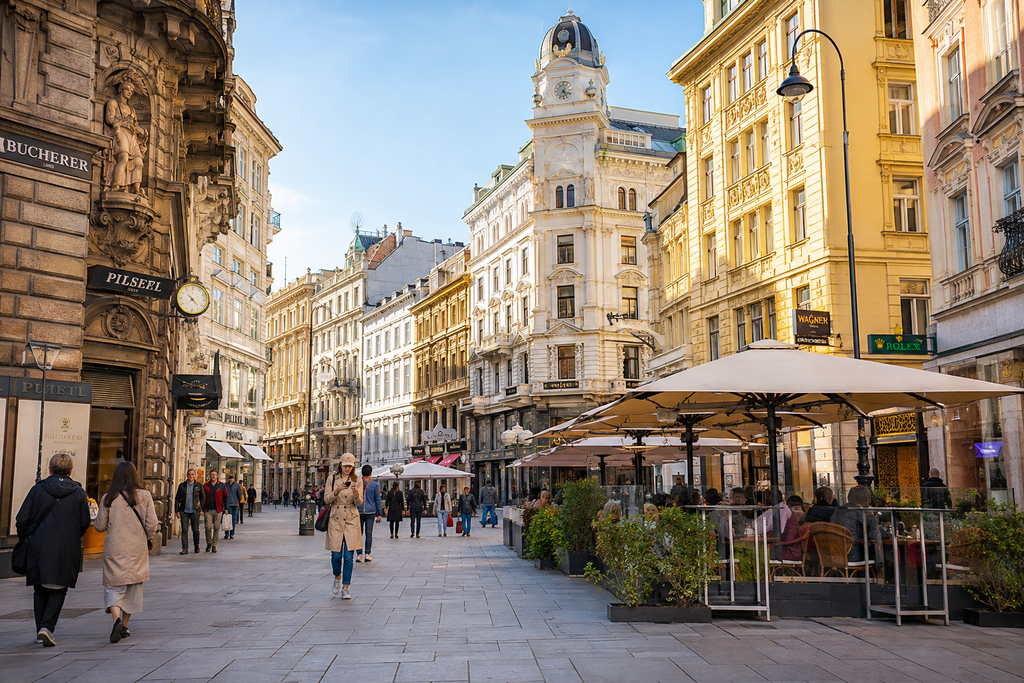
Innere Stadt: Maximum Convenience, Maximum Bill
The 1st District puts St. Stephen’s Cathedral, the Hofburg, restaurants, and shops within walking distance. It suits short visits and location-first travelers. Expect premium rates, delivery noise, and opinionated bells.
Neubau and Mariahilf: Food, Shops, and Better Evening Texture
The 6th and 7th Districts near Naschmarkt and the MuseumsQuartier offer restaurants, cafés, boutiques, and fast transit. They provide central access without sleeping inside the imperial display case.
Leopoldstadt: Green Space and Family Logic
Across the Danube Canal, the 2nd District offers the Prater, transit, apartments, and often better value. Check the real walk to the U-Bahn; district names cover considerable ground.
Landstraße and Wieden: Practical, Connected, Underestimated
The 3rd and 4th Districts around Belvedere and Hauptbahnhof suit airport or rail connections. Ask about street-facing rooms, air-conditioning, elevators, and renovation noise.
FIND FLEXIBLE VIENNA HOTELS ON BOOKING.COM
My Tip: Book refundable rooms early for May, June, September, and December. Recheck before cancellation closes; loyalty to an expensive rate is no virtue.
What Does Vienna Cost? Realistic 2026 Daily Budgets
These planning ranges are per person, assuming two travelers share a double room where relevant. Concert tickets, cocktails, Christmas weekends, and an uncontrolled relationship with Sachertorte will move the total.
Budget Traveler: €80–€130 per Day
- Hostel bed or shared basic room: €30–€60
- Bakery breakfast, market lunch, simple dinner: €30–€45
- Public transportation averaged daily: €4–€10
- One paid attraction or free alternatives: €0–€25
- Water, coffee, and extras: €10
Comfortable Midrange: €170–€300 per Day
- Shared midrange double: €70–€140 per person
- Coffeehouse breakfast and two restaurant meals: €55–€90
- Transit and occasional taxi: €10–€25
- Palace, museum, tour, or performance: €25–€65
- Drinks and miscellaneous costs: €15–€30
High-Comfort or Luxury: €350+ per Day
Central upscale hotels, tasting menus, premium concerts, private guides, and taxis can carry the daily total beyond €500 without requiring a monocle.
Typical Vienna Prices
- Bakery pastry: €2–€4.50
- Coffeehouse Melange: €4.50–€6.50
- Slice of cake: €5.50–€8
- Sausage-stand meal: €6–€11
- Casual restaurant main: €14–€24
- Wiener Schnitzel in a traditional restaurant: €20–€32
- Local beer or house wine: €4.50–€7
- Supermarket water: €0.80–€2, often plus deposit
- Public toilet: commonly €0.50–€1
- Major museum or palace: usually €20–€42
Important: Prices were checked in August 2026 and change. Follow each official ticket link before publishing or traveling, especially for timed-entry attractions.
The 10 Best Things to Do in Vienna
1. Walk the Historic Center Before the Shop Doors Rise

Begin at Stephansplatz around 7:00. Carts rattle, bakery vents release warm yeast, and Graben has not become a wall of shopping bags. Pass the plague column, Kohlmarkt, and Michaelerplatz into the Hofburg courtyards. One polished kilometer compresses medieval lanes, Baroque wealth, and imperial power.
Return to St. Stephen’s Cathedral. Its patterned roof looks cheerful; the interior feels cool and severe. Respect services. In 2026, the cathedral visit, catacombs, north-tower elevator, and 343-step south tower each cost €8. Check current times and prices.
Choose one tower: the South Tower for exercise and rooftops; the North Tower for an elevator and Pummerin bell. Catacomb tours reveal bishops, Habsburg organs, and bones below the center.
My Tip: Do this walk early, then revisit after dark. The same streets feel ceremonial at dawn and theatrical at night. Early morning is also one of the best free things to do in Vienna.
2. Give Schönbrunn Palace Half a Day, Not a Panicked Hour
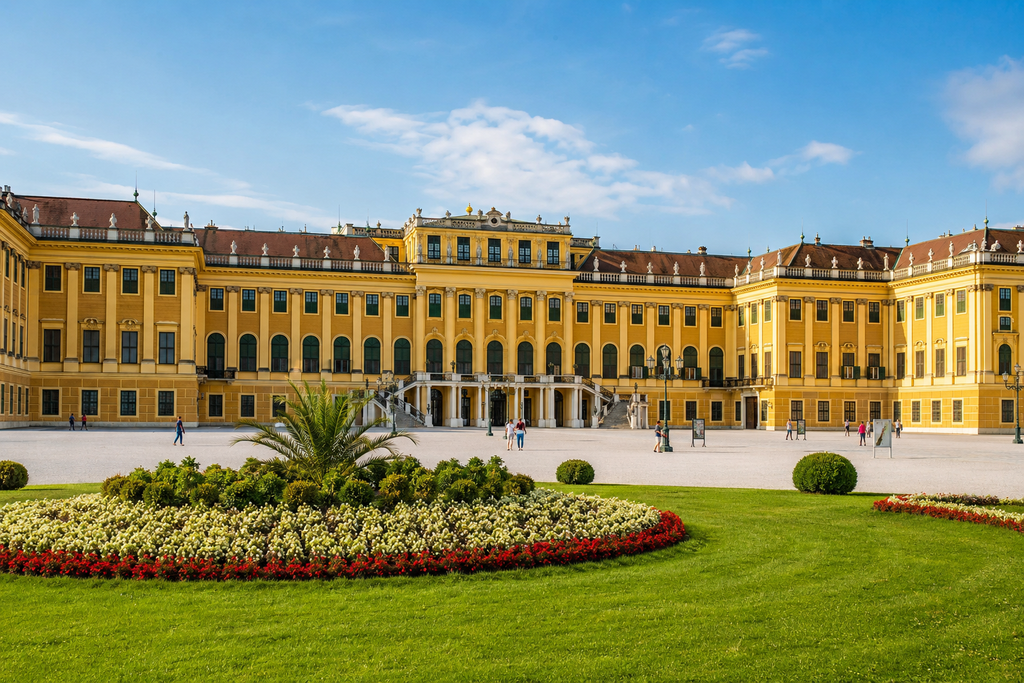
Schönbrunn Palace stretches wide enough to make monarchy look like infrastructure. The Habsburg summer residence is linked with Maria Theresa, Franz Joseph, and Elisabeth. Gilded rooms alternate with personal spaces; gardens climb toward the Gloriette, where your calves submit a complaint.
Reserve a timed entry. In August 2026, State Apartments cost €30 for about 40 minutes; the 75-minute Palace Ticket cost €42 with audio guide. The €49 Classic Pass added selected gardens. Prices are seasonal; check official tickets.
The main park is free and opens earlier. Walk to Neptune Fountain and the Gloriette, then enter at your booked time for cooler air and fewer headset groups.
Allow four to five hours. Families can add the children’s museum or zoo, not both. Eat beforehand and carry water; café queues consume diplomatic patience.
COMPARE SCHÖNBRUNN PALACE TOURS ON GETYOURGUIDE
3. Meet the Habsburgs at the Hofburg, Then Question the Branding
The Hofburg grew across centuries. Its courtyards hold museums, presidential offices, the Spanish Riding School, the Austrian National Library, and enough family history for several streaming series.
The Sisi Museum and Imperial Apartments examine Elisabeth: intelligent, restless, athletic, grieving, and trapped by court expectations. In 2026, timed adult admission was €20; guided entry cost €25. Confirm on the official ticket page.
With Schönbrunn, consider the €60 Sisi Pass covering three imperial attractions within a year. Calculate first; unused admission is expensive optimism.
Book early and allow 90 minutes. Pair it with the National Library State Hall or Burggarten, not another palace. Upholstery appreciation is finite.
4. Stand Before Klimt’s The Kiss at the Upper Belvedere

Reproductions flatten Gustav Klimt’s The Kiss into merchandise. Before the original, shifting gold separates from skin and the embrace feels tender yet unstable. Wait for photographers to move.
The Upper Belvedere also holds Schiele, Kokoschka, and Monet. Built for Prince Eugene of Savoy, its formal garden makes an excellent approach.
Adult admission was €23 in August 2026; under-19s entered free. Check the official Upper Belvedere page for timed tickets and changes.
Reserve early or late afternoon. Start with Klimt, then slow down elsewhere. Schiele’s exposed nerves and Messerschmidt’s grimacing heads counter the gold.
5. Pick One Great Museum Instead of Collecting Cloakroom Tickets

The Kunsthistorisches Museum, or KHM, is my traditional-collection choice. Its staircase causes emotional surrender. Inside wait Bruegel, Vermeer, Velázquez, Caravaggio, Titian, and the strange Kunstkammer.
Choose the Bruegel Gallery, two painting schools, and Kunstkammer. Sit under the dome. Museum fatigue ends with blankly watching a duke while thinking about lunch.
Tickets cost €22 online or €24 onsite in 2026; under-19s enter free. Verify the official KHM page.
For modern work, choose the Leopold Museum, mumok, or MuseumsQuartier. Its free courtyard works well at sunset. Collection density is not a personal challenge.
6. Hear Vienna Perform, Even If Opera Sounds Like Homework
Music in Vienna extends beyond men in wigs on chocolate: opera, orchestras, chamber music, jazz, and experimental stages. Choose what you enjoy, not what cultured travelers supposedly endure.
At the Vienna State Opera, same-day standing tickets begin around €4 and include subtitle screens. Wear good shoes, arrive early, and check official ticket guidance. Regular opera pauses in July and August.
If nothing fits, a 40-minute tour reveals the staircase, state rooms, and auditorium. Adult tours cost €18 in 2026; reserve on the official tour page.
Treat costumed-agent “Mozart concerts” cautiously. Check the venue, musicians, program, seating, cancellation, and recent reviews before buying.
BROWSE WELL-REVIEWED VIENNA CONCERTS AND MUSIC TOURS
7. Use a Coffeehouse as Intended: Slowly
A Viennese coffeehouse is café, reading room, and waiting room for history. You pay for the right to remain. Try a milk-foamed Melange or whipped-cream-topped Einspänner; never request “just coffee.”
Café Central has architecture and queues. I prefer Café Sperl, Jelinek, Hawelka, or Korb. Use the official coffeehouse guide, then verify hours.
Order Apfelstrudel, curd-filled Topfenstrudel, firm-crumbed Gugelhupf, or Sachertorte, whose fame exceeds its moisture. Unsweetened cream helps its dense glaze.
Ask for the bill—zahlen, bitte—when ready. Coffee and cake commonly cost €10–€15. Bring a book and stay until the room stops feeling like an attraction.
8. Eat at Naschmarkt, Then Find Dinner Somewhere Else
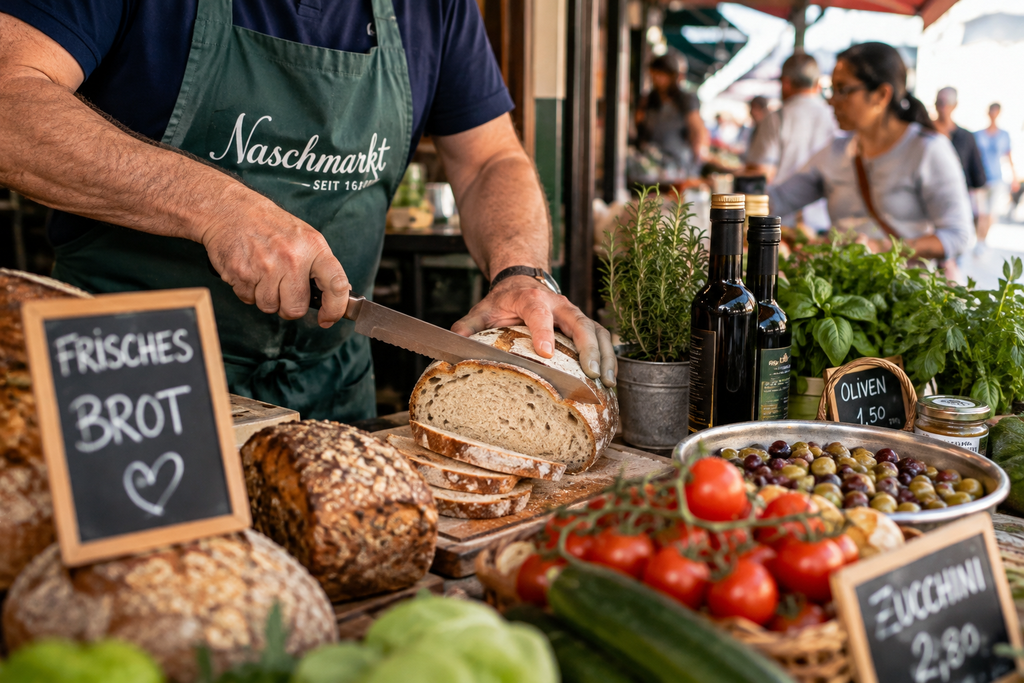
At Naschmarkt, vendors call across fruit, brine catches the nose, fish flash silver, and spices perfume the air until a cigarette edits matters. Visit weekday morning or early Saturday, when the flea market adds cameras, porcelain, and questionable paintings.
Sample olives, cheese, bread, or falafel, but compare prices. Ask before accepting mixed plates or food sold by weight. Retail stalls close Sunday; some restaurants differ.
The market is international and commercial, not pure Viennese tradition. For dinner, find a neighborhood Beisl for Wiener Schnitzel, Tafelspitz, or goulash. Veal schnitzel should arrive thin, blistered, and administratively oversized; lemon sharpens its buttery crust.
For less, order a smoky, cheese-filled Käsekrainer at a Würstelstand. Bite carefully; cheese exits at metalworking temperature.
9. Ride the Giant Ferris Wheel and Walk the Green Prater

The Prater has two personalities: flashing, fried-sugar Wurstelprater and the meadow-filled Green Prater, crossed by runners on Hauptallee.
The Vienna Giant Ferris Wheel has turned since 1897. Red cabins reveal spires, towers, tracks, and park canopy. Online options began near €14.50 and ordinary tickets at €17 in 2026; check official tickets.
Ride near sunset, then walk Hauptallee. Park entrance is free; rides charge separately. Families should set a budget because small prices reproduce under colored lights.
10. End in the Vineyards at a Real Heuriger
Vienna grows wine inside city limits, an excellent administrative loophole. Nussdorf, Grinzing, Sievering, and Stammersdorf hold vineyards and Heurige serving their own young wine.
A genuine Heuriger displays a pine branch and Ausg’steckt. Order Gemischter Satz and buffet food—pork, spreads, salads, cheese, bread. Pricing may be by weight.
Take transit to Nussdorf, follow a marked path onto Nussberg, then descend to a tavern. Wear grippy shoes and confirm rotating opening days.
Use the official Heuriger guide, check fall events, and return by tram rather than driving.
FIND SMALL-GROUP VIENNA FOOD AND WINE EXPERIENCES
What to Eat in Vienna, Beyond the Cake Cabinet
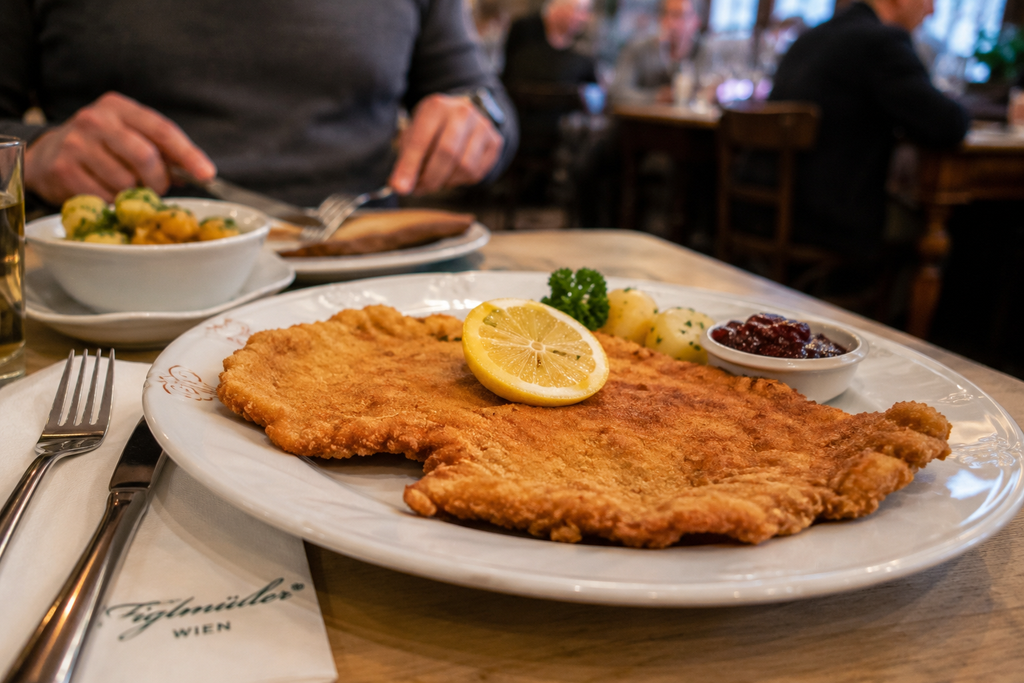
Wiener Schnitzel should be veal unless labeled otherwise; the coating separates slightly from the meat, creating an airy crust rather than a damp jacket. Pork versions are common and cheaper. Tafelspitz is boiled beef served with broth, root vegetables, apple-horseradish, and chive sauce—gentler and more interesting than its name suggests.
Try Käsespätzle, soft egg noodles with cheese and crisp onions; goulash with deep paprika warmth; Semmelknödel bread dumplings; and seasonal asparagus, mushrooms, or game. At a sausage stand, Käsekrainer provides salt, smoke, and molten danger.
For sweets, add Kaiserschmarrn, torn pancake with powdered sugar and plum compote; Apfelstrudel; Buchteln, soft yeast buns; and Marillenknödel, apricot dumplings in season. Share desserts if you want to continue moving under your own power.
Vegetarians eat well at modern restaurants, though traditional menus can lean heavily toward meat. Vegans should research ahead but will find many options in Neubau, Mariahilf, and central districts. Mention allergies precisely; glutenfrei, laktosefrei, and Nussallergie are useful terms. Service charges are included, but tip by rounding up or adding roughly 5–10%.
Getting Around Vienna Without Needing a Car

The U-Bahn, trams, and buses are integrated within the central zone. A €3.20 single ticket permits a one-direction journey with transfers but no stopover. The 24-hour ticket costs €9.70; digital seven-day tickets start at €25.20. Confirm current options through Wiener Linien or the WienMobil app.
Digital tickets are generally activated for the selected period. Paper tickets may require validation before the first ride; read the instructions. Plainclothes inspectors work across the network. “I am visiting” is biography, not a ticket.
The U-Bahn runs roughly 5:00 a.m. to midnight, with overnight service every 15 minutes on Fridays, Saturdays, and nights before public holidays. Night buses cover other periods. Stand right on escalators and walk left. Eating is not permitted on subway trains.
Walking works well inside the center, but cobbles punish thin soles. Cycling is better along marked routes than around tram tracks. A rental car is unnecessary within Vienna and creates parking, vignette, and traffic problems. Rent one only for a wider Austrian road trip.
A Three-Day Vienna Itinerary That Respects Lunch
Day One: Cathedral Stone, Imperial Rooms, and Cake
Walk Stephansplatz, Graben, and the Hofburg before 9:00. Visit St. Stephen’s Cathedral and choose one tower or the catacombs. Continue to a timed Sisi Museum entry, then eat lunch at a Beisl away from Kohlmarkt.
Spend the afternoon at the Kunsthistorisches Museum or in the MuseumsQuartier, not both. Stop for coffee and cake. In the evening, attend the Vienna State Opera, a concert you have properly researched, or walk the Ringstrasse by tram and on foot.
Day Two: Schönbrunn Without Palace Fatigue
Reach the Schönbrunn gardens early, walk to the Gloriette, then use a reserved palace time. Leave by early afternoon and rest. Later, browse Naschmarkt, inspect the Otto Wagner façades along Linke Wienzeile, and eat dinner nearby.
If energy remains, see the illuminated Vienna State Opera and Albertina terrace. If not, sit somewhere with wine. Recovery is part of itinerary design.
Day Three: Klimt, Prater, and Viennese Wine
Book the earliest practical Upper Belvedere slot and spend two focused hours with the collection. Take public transit to the Prater, ride the Giant Ferris Wheel, and walk part of the green avenue.
In late afternoon, travel to Nussdorf for a vineyard walk and dinner at an open Heuriger. In poor weather, replace the vineyard with the Austrian National Library, Wien Museum, or another carefully chosen museum. Do not punish yourself for rain by sprinting through five indoor attractions.
My Tip: Reserve only one timed major attraction each morning and one each afternoon. Everything else becomes optional. Vienna improves when the schedule contains margins.
Vienna for Solo Travelers, Couples, Families, and Travelers with Mobility Needs
Solo travelers will find public transit straightforward and dining alone normal, especially at cafés, markets, and counter seats. Use usual late-night caution, watch drinks, and choose a well-connected hotel rather than a romantic bargain beside an awkward transit gap.
Couples should book fewer palaces and one longer evening. Share cake, walk the vineyards, or dress up for a performance. Relationship harmony rarely improves during a third consecutive audio guide.
Families benefit from the Prater, Schönbrunn Zoo, children’s museum, parks, and free admission for under-19s at several federal museums. Verify family tickets and elevator access. Carry coins for toilets and snacks.
Travelers with limited mobility will find most U-Bahn stations equipped with elevators, but outages occur. Historic buildings may have cobbles, ramps, alternate entrances, limited lifts, or tour restrictions. Contact each attraction with precise questions about step-free routes, seating, accessible toilets, and companion policies. The Vienna State Opera notes that its standard guided tour is not suitable for reduced mobility, while performances offer separate access arrangements.
Safety, Scams, and Etiquette
Vienna is generally safe, but crowded trams, stations, Christmas markets, and major sights attract pickpockets. Close bags, avoid storing a wallet in a rear pocket, and keep phones away from opening train doors. Use licensed taxis or reputable apps and confirm the price arrangement.
Ticket sellers in costume may pressure you around tourist zones. Decline politely and buy from official venues or established platforms. Inspect restaurant menus near major squares for prices and cover charges. At markets, confirm weight-based prices before accepting prepared plates.
Trams can approach quietly from behind. Cross tracks deliberately and never stop on them for a photograph. Cyclists use marked lanes seriously; a bicycle bell is information, not an opening to philosophical debate.
At churches, dress and speak respectfully, avoid services unless attending, and never block worshippers. Ask before photographing people. Say Guten Tag, Bitte, and Danke. Viennese service can be formal, but directness is not necessarily dislike.
Save 112 for general emergencies, 133 for police, 144 for ambulance, and 122 for fire. Keep your insurance details and passport copy separate from the originals.
What to Pack for Vienna
- Comfortable shoes with grip for stone and museum floors
- Light rain shell and compact umbrella
- Layers, even in spring and fall
- Warm coat, gloves, and waterproof footwear in winter
- Sun protection and refillable bottle in summer
- Smart-casual outfit for opera or a good restaurant; formal wear is rarely required
- European Type C/F plug adapter
- Power bank for transit and museum tickets
- Small coin supply for toilets and lockers
- Prescription medicine in original packaging
My Tip: Leave luggage space for nothing more ambitious than chocolate, wine, or a museum book. Vienna sells many objects that seem essential after two glasses of Gemischter Satz.
Travel lightly.
Sustainable Travel in Vienna Without Turning It Into Theater
Vienna makes lower-impact choices unusually easy. Use trains, trams, walking, and cycling instead of taxis. Drink tap water and refill your bottle. Stay longer rather than stacking multiple short flights and rushed city breaks.
Choose locally owned restaurants, neighborhood bakeries, genuine Heurige, and guides who work in small groups. Visit popular attractions at off-peak times, then spend money outside the 1st District. Respect residential courtyards and vineyard paths; neither exists as a private photo set.
Skip daily towel changes, reduce buffet waste, and sort trash according to your accommodation’s system. Return deposit bottles and cans. At markets, carry a reusable bag and decline unnecessary packaging.
Use free public parks responsibly. Do not feed wildlife, leave picnic waste, or enter planted areas for photographs. At the Prater, walk or cycle the green park rather than treating it solely as an amusement zone. The official Vienna City Card carries the Austrian Ecolabel, but calculate whether its transport and discounts suit your plan before buying.

Important: Sustainability also includes people. Do not turn bargaining into sport, photograph workers without permission, or block sidewalks with group poses. Spend fairly, move thoughtfully, and remember that your holiday occupies somebody else’s Tuesday.
Vienna Travel Guide FAQ
Is Vienna Worth Visiting?
Yes, especially for architecture, art, music, café culture, parks, and efficient transport. It suits first-time European travelers as well as repeat museum addicts.
What Are the Best Things to Do in Vienna for First-Time Visitors?
Prioritize the historic center, Schönbrunn Palace, one Hofburg attraction, the Upper Belvedere, one major museum, a coffeehouse, the Prater, and a Heuriger.
Is Three Days Enough for Vienna?
Three full days cover the essentials without constant rushing. Four days allow vineyards, neighborhoods, or a second major museum.
Is Vienna Expensive?
It is moderately expensive by Central European standards. Public transit and free parks offer value; central hotels, palaces, coffeehouses, and performances raise costs quickly. Budget roughly €80–€130, midrange €170–€300, or high-comfort €350+ per person daily.
What Is the Best Area to Stay in Vienna?
Choose the Innere Stadt for shortest walks, Neubau/Mariahilf for restaurants and character, Leopoldstadt for the Prater and value, or Landstraße/Wieden for connections.
Do I Need a Vienna City Card?
Not automatically. Compare its included transportation period and attraction discounts with the separate 24-hour or seven-day Vienna transit ticket and your actual sightseeing list.
Can I Drink Vienna Tap Water?
Yes. Carry a refillable bottle unless a local notice says otherwise.
Is Vienna Safe for Solo Female Travelers?
Generally, yes. Use normal city precautions, stay aware late at night, protect drinks and valuables, and choose accommodation near reliable public transit.
Do I Need Cash in Vienna?
Carry some. Cards are common, but small cafés, market stalls, taverns, lockers, and toilets may require cash or coins.
Should I Rent a Car in Vienna?
No for a city-only trip. Public transportation is faster and avoids parking. Consider a car only for a broader rural itinerary where rail connections do not suit.
What Should I Book in Advance?
Reserve flexible accommodation, Schönbrunn, the Upper Belvedere, the Sisi Museum, opera or concert tickets, and airport pickup if arriving late. Reconfirm hours near your date.
The Part Where Vienna Finally Loosens Its Collar

The easiest version of Vienna is a sequence of polished nouns: palace, waltz, Klimt, schnitzel, cake. You can purchase that city efficiently and leave with excellent photographs. The better version appears between those nouns. It is the scrape of a café chair after two quiet hours, the sour edge of apricot in a dumpling, a tram door closing exactly when the timetable said it would, and grape leaves flickering above apartment blocks on Nussberg.
Plan the expensive pieces carefully. Book a flexible hotel, secure the palace time slots you genuinely want, check the 2026–2027 airport construction, compare insurance, and set up data and payment cards before departure. Those decisions create room for spontaneity later; they do not eliminate it.
If this guide saved you from the wrong airport train, a soggy schnitzel, or four palaces in one punishing afternoon, subscribe to A Tiny Traveler. I share candid city guides, realistic budgets, useful itineraries, and the mistakes I would rather you avoid. Follow A Tiny Traveler on Pinterest for upcoming Austria travel guides, European city breaks, maps, food ideas, and practical trip-planning posts you can save before the next fare sale rearranges your calendar.
My last image of Vienna is not a chandelier or a carriage. It is an evening tram bending past Schottentor while rain turns the rails silver. A passenger folds his newspaper, someone steadies a paper bag of bread, and the doors open with a soft mechanical sigh. The city is still formal. Still precise. But after coffee, cake, art, and one glass of young wine, you begin to recognize the joke. Step aboard.
Frank


