

The first thing Hoi An gave me was not a lantern-lit revelation. It was a near collision with a woman carrying enough herbs on her bicycle to season a medium-sized country. She rang her bell, I performed a graceless sideways hop, and a paper cup of coffee sloshed over my hand. She laughed. I laughed. The coffee was sweet enough to repair diplomatic relations. Within five minutes, the street smelled of wet stone, grilled pork, incense, and somebody’s breakfast stock simmering behind a blue wooden door.
That is the useful truth about Hoi An: the famous photographs are accurate, but incomplete. Yes, the walls are mustard yellow. Yes, silk lanterns glow above the Hoai River after dark. Yet the town becomes far more interesting when you stop treating it as a backdrop and notice what keeps happening around the edges: a tailor marking chalk lines on dark wool, an old man feeding fish from a doorway, the clack of bowls at dawn, flood marks climbing the timber inside a centuries-old house.
This complete Hoi An travel guide walks you through the entire trip, from choosing the right month and hotel area to ordering cao lau without confusing it with every other noodle bowl in Vietnam. I will explain how to reach Hoi An from Da Nang Airport, what the Hoi An Ancient Town ticket covers, where to stay, what to eat, realistic daily budgets, common scams, useful day trips, sustainable choices, and a three-day itinerary that does not turn your holiday into competitive sightseeing.
Come for at least three nights. Four is better. Hoi An rewards the traveler who leaves an hour unscheduled, rents a bicycle, and follows a lane simply because it smells of woodsmoke and basil. It also punishes poor planning with midday heat, evening crowds, questionable tailoring decisions, and rain capable of entering a ground-floor room without knocking. Let us prevent those parts.
Hoi An at a Glance, for People Who Already Have Too Many Tabs Open

- Country: Vietnam
- Region: Central Vietnam, in Da Nang Municipality, beside the Thu Bon River
- Nearest airport: Da Nang International Airport (DAD), roughly 30 kilometers away
- Ideal stay: Three to four nights; five if you want beach time and day trips
- Best general weather: March to May
- Wettest period: Usually September to January, with possible storms and floods
- Currency: Vietnamese dong (VND)
- Planning conversion: Around 26,000 VND equals US$1 in August 2026; check the live rate
- Ancient Town ticket: 120,000 VND for international visitors at the time of writing
- Best ways around: Walking, bicycle, taxi, and Grab
- Known for: Merchant houses, assembly halls, tailoring, lanterns, cao lau, nearby rice fields, and An Bang Beach
Why Hoi An Is More Than Its Lanterns
Hoi An Ancient Town was an international trading port from roughly the fifteenth to nineteenth centuries. Merchants from China, Japan, Southeast Asia, and later Europe left marks on its street plan, temples, warehouses, homes, food, and habits. UNESCO inscribed it as a World Heritage Site in 1999, recognizing both the preserved port town and its blend of local and foreign influences.
Families still worship at ancestral altars, shopkeepers roll linen through old doorways, and flood marks stripe wooden pillars. Beyond the pedestrian streets lie Tra Que, Cam Chau, Cam Thanh, Thanh Ha, and An Bang. Move between these layers. Otherwise, you have visited an attractive shopping district and missed the town.
When to Visit Hoi An Without Melting or Floating Away
March to May: The Sensible Sweet Spot
For many travelers, March, April, and May offer the best balance: sunnier days, manageable humidity, and conditions suitable for cycling and the beach. April is particularly appealing, though good rooms become expensive around holidays. Book early if your dates touch Vietnamese Reunification Day on April 30 or International Labour Day on May 1.
June to August: Hot, Bright, and Best Approached Slowly
Summer brings fierce sun. Explore early, retreat for lunch or a nap, then return after 4:00. Carry water, wear a hat, and confirm that your accommodation’s air-conditioning works.
September to January: Rain Has Opinions
The wet season is cheaper, but Hoi An can flood. Central Vietnam experienced severe flooding in late 2025. Streets may close, tours may be canceled, and riverside accommodation can be affected.
If traveling during these months, choose a hotel with flexible cancellation, ask whether guest rooms are above ground level, monitor official weather warnings, and keep one spare day around flights or trains. Never walk or ride through moving floodwater. Brown water conceals drains, debris, and currents stronger than they look.
February: The Transitional Gamble
February can be cool and damp. Pack a light layer and rain shell. Around Tet, transport and hotels fill, while holiday closures and surcharges are common.
My Tip: Check the forecast twice: once before booking and again 72 hours before arrival. A monthly climate chart cannot see the storm currently considering your beach day.
How Many Days Do You Need in Hoi An?
One day is enough to photograph Hoi An and tell people you went. It is not enough to understand it.
- Two nights: Old Town, one excellent dinner, and either countryside or beach
- Three nights: Old Town, countryside, food experience, and relaxed evenings
- Four nights: Add My Son Sanctuary, An Bang Beach, or a craft village
- Five nights or more: Combine slow mornings, tailoring fittings, Cham Islands, and genuine idleness
I recommend three full days and four nights for newcomers.
Vietnam Visa, Insurance, Internet, and Money
Check Your Entry Rules Before Buying Anything Nonrefundable
Visa rules depend on nationality and can change. Some passport holders qualify for visa-free entry; others need an electronic visa. Vietnam’s official e-visa can be issued for up to 90 days, with single- or multiple-entry options. Apply only through the official government portal, verify every passport character, and ensure your entry point appears on the approved list.
A typo in your name or passport number can become an expensive conversation at check-in.
Travel Insurance Is for the Boring Things That Become Expensive
Medical treatment, a scooter accident, weather disruption, theft, and missed transport can cost far more than your room. Read coverage conditions, exclusions, excesses, and rules for motorbike riding. A policy that excludes your actual activities is decorative paperwork.
Get Connected Before You Need a Ride
An eSIM makes pickup, maps, translations, and Grab easier. Install it before departure when possible, following its roaming instructions.
CHECK VIETNAM eSIM OPTIONS ON TRIP.COM
Cash Still Matters
Hotels and polished restaurants commonly accept cards, while markets, small eateries, ticket counters, tailors, and drivers may prefer cash. Withdraw from ATMs attached to banks when possible, inspect the machine, cover your PIN, and decline dynamic currency conversion if the offered rate is poor.

Vietnamese notes carry many zeros. Separate 20,000 VND and 500,000 VND notes, and count change calmly.
GET A WISE CARD FOR TRAVEL SPENDING
EXPLORE REVOLUT FOR CURRENCY EXCHANGE AND TRAVEL PAYMENTS
My Tip: Carry roughly 500,000 to 1,000,000 VND in smaller notes for food, tickets, water, parking, and markets. Keep the rest in a separate place rather than opening your entire financial ecosystem beside a fruit stall.
Getting to Hoi An: The Airport Is in Da Nang
Hoi An has no airport or railway station. Most visitors arrive through Da Nang, 45 to 60 minutes away depending on traffic and pickup point.
From Da Nang International Airport
A pre-booked private transfer removes negotiation while your brain is three time zones behind your luggage. Confirm the terminal, flight number, luggage allowance, child-seat needs, and waiting time.
Grab and metered taxis are also available. A car commonly costs around 300,000 to 450,000 VND, depending on demand, vehicle, destination, and fees. Use the official app or a recognized taxi desk. Ignore anyone insisting your ride was canceled unless the app says so.
Shared shuttles cost roughly 130,000–180,000 VND per person. Confirm the pickup point; some use the domestic terminal for international passengers.
From Da Nang Railway Station
Trains from Hue, Hanoi, and Ho Chi Minh City stop in Da Nang. From the station, continue by shuttle, taxi, or private car. The coastal rail section north of Da Nang, especially around Hai Van Pass, is worth taking in daylight if your wider route allows it.
COMPARE FLIGHTS AND TRAINS TO DA NANG ON TRIP.COM
By Bus from Elsewhere in Vietnam
Sleeper buses and vans connect Hoi An or Da Nang with destinations including Hue, Nha Trang, and Phong Nha. Operators, arrival points, and vehicle quality vary. Check recent reviews, verify whether the bus reaches Hoi An, and avoid scheduling a tight flight connection after an overnight bus. Optimism is not a transfer strategy.
Where to Stay in Hoi An: Choose the Area Before the Hotel
Ancient Town and Minh An: Walk Everywhere, Hear Everything

Stay near Hoi An Ancient Town if this is a short first visit and you want temples, restaurants, and the river within minutes. Convenience is excellent. So are evening crowds, music, early deliveries, and occasional street noise. Ask for a rear-facing room and check reviews for soundproofing.
Cam Pho: Practical and Close
Cam Pho offers an easy walk to the Japanese Covered Bridge without sleeping directly above the nightly lantern negotiations.
Cam Chau: Rice Fields and a Useful Middle Ground
Cam Chau, between town and beach, offers pools, bicycles, and quieter rice-field mornings. Expect a short ride to major sights.
Cam An and An Bang Beach: Sand First, Old Town Second
Choose Cam An or An Bang Beach if swimming matters more than walking to heritage sites. The Old Town is 10 to 20 minutes away by road. Check seasonal beach conditions and room noise.
Cam Thanh: Water Palms, Resorts, and Distance
Cam Thanh has villas among waterways and nipa palms, but usually requires transport. Check whether bicycles, breakfast, and shuttles are included.
What to Check Before Booking
- Recent reviews for construction noise, mold, drainage, and air-conditioning
- Distance by actual route, not the optimistic straight line on a map
- Pool sunlight; some courtyard pools remain shaded and cool
- Ground-floor flood exposure during the wet season
- Free bicycles, breakfast, airport pickup, and cancellation terms
FIND THE BEST HOI AN STAYS ON BOOKING.COM
My Tip: For a first trip, I would choose Cam Pho for convenience or Cam Chau for balance. Book a refundable rate early, then recheck prices before the cancellation deadline.
What Does Hoi An Cost? Realistic 2026 Daily Budgets
Prices below are planning ranges per person, assuming two people share a double room where relevant. Exchange rates, holidays, weather, and your relationship with rooftop cocktails will alter them.
Budget Traveler: 750,000 to 1,300,000 VND per Day
- Dorm or simple room: 250,000–500,000 VND
- Street food and local meals: 200,000–350,000 VND
- Walking, bicycle, or occasional GrabBike: 30,000–100,000 VND
- Attractions averaged daily: 100,000–250,000 VND
- Coffee, water, and miscellaneous costs: 100,000 VND
Comfortable Midrange: 1,800,000 to 3,500,000 VND per Day
- Shared boutique room: 700,000–1,500,000 VND per person
- Local and polished restaurant meals: 500,000–900,000 VND
- Taxis, bicycles, or transfers: 150,000–350,000 VND
- Tour, spa, or cooking class: 400,000–900,000 VND
- Drinks and extras: 150,000–300,000 VND
Typical Essential Prices
- Local breakfast or banh mi: 25,000–60,000 VND
- Bowl of cao lau or mi Quang: 40,000–80,000 VND
- Casual restaurant main: 80,000–180,000 VND
- Vietnamese coffee: 25,000–60,000 VND
- Local beer: 25,000–60,000 VND
- 1.5-liter water: 10,000–20,000 VND
- Bicycle rental: 30,000–80,000 VND daily, sometimes free at hotels
- Short Grab car ride: roughly 60,000–150,000 VND
- Laundry: around 30,000–60,000 VND per kilogram
- Hoi An Ancient Town ticket: 120,000 VND
Important: Ask the price before ordering seafood by weight, taking a cyclo, boarding an unscheduled boat, or agreeing to clothing alterations. Friendly clarity is cheaper than theatrical outrage later.
The Best Things to Do in Hoi An
1. Meet the Ancient Town Before Breakfast
Arrive around 6:00 or 6:30. Shutters rise. Women arrange greens at Hoi An Central Market. Metal ladles strike pots. The pavement is damp from washing, and delivery scooters thread through streets that will later become pedestrian zones. This is when the town feels most like itself.
Walk Tran Phu, Nguyen Thai Hoc, and riverfront Bach Dang. Look upward at carved vents, timber balconies, and tiled roofs above the souvenir displays.
2. Buy the Ancient Town Ticket and Use It Properly
At the time of writing, the ticket for international visitors costs 120,000 VND. It supports heritage conservation and allows access to selected ticketed monuments according to the current scheme. Inclusions have been described differently as systems evolve, so ask the official counter to mark your map and explain exactly how many sites your ticket covers that day.
Carry the paper ticket, buy only from official counters, dress respectfully, and do not touch altars or old timber.
3. Cross the Japanese Covered Bridge Slowly

The small Japanese Covered Bridge, or Chua Cau, was built in the early seventeenth century and restored most recently before reopening in 2024. It links former Japanese and Chinese quarters and contains a small temple. The structure is modest; that is part of its power. It was built for crossing and community, not to dominate a skyline.
Visit early and inspect it from Nguyen Thi Minh Khai Street. Do not block the narrow passage for a portrait session. History has endured enough.
4. Enter an Assembly Hall, Not Just Its Courtyard
Fujian Assembly Hall, founded in the late seventeenth century, is one of the most elaborate. Coiled incense hangs above red altars, dragon mosaics curl across fountains, and the air carries a resinous sweetness. It was a gathering place for Chinese merchants and remains a religious space.
Also consider the Cantonese and Trieu Chau Assembly Halls, where sea-trade deities reveal the fears of merchants who trusted wooden ships to monsoon seas.
5. Read the Flood Marks Inside an Old House
Tan Ky Old House, Phung Hung Old House, and the Tran Family Chapel show merchant life. At Tan Ky, flood marks turn climate history into something uncomfortably measurable. Tip a helpful custodian, but never feel obliged to buy afterward.
6. Watch the River Without Buying Anything

The Hoai River becomes theatrical after sunset. Lantern boats drift below the bridge, vendors sell paper lights, and reflections break into red and gold strips. It is pretty. It is also commercial, crowded, and occasionally loud. Both statements can coexist.
The monthly Hoi An Lantern Festival usually falls on the fourteenth lunar day; confirm the 2026 date locally, expect crowds, and arrive very early.
For a boat, agree on price, duration, passengers, and lantern inclusion before boarding. Wear the life jacket. For quiet, walk farther from the main bridge.
Sustainable Tip: Skip releasing a lantern onto the river unless the operator guarantees responsible collection and nonpolluting materials. A wish does not become more sincere because it later snags on a riverbank.
7. Eat Through Hoi An Central Market
Visit Hoi An Central Market early, when fish prices fly over chopping boards and herbs spill from baskets. Wear shoes with grip, keep bags zipped, ask prices, and request permission before photographing workers.
8. Cycle to Tra Que and the Rice Fields

Tra Que Vegetable Village lies about three kilometers from the Ancient Town. Local farmers have cultivated herbs and vegetables here for centuries, traditionally enriching the soil with river weed. Go early by bicycle, join a responsible farm or cooking experience, and stay on lanes rather than riding over field edges.
Through Cam Chau, ducks dispute ditches and buffalo chew with an accountant’s gravity. Carry water and avoid busy roads after dark.
9. Spend Half a Day at An Bang Beach
An Bang Beach is roughly four to five kilometers from the center. Go before 10:00 or late afternoon, rent a lounger if you want shade, and order seafood only after checking whether prices are per dish, portion, or kilogram.
Respect warning flags and currents. During rough months, the beach may be eroded or unsafe for swimming. Lunch still works, unless rain is traveling horizontally.
10. Choose a Cam Thanh Basket-Boat Tour Carefully
The nipa palms of Cam Thanh have fishing and wartime history. Choose a small-group operator employing local rowers, with life jackets and no forced performances. Ask whether spinning is optional. Your inner ear has rights.
COMPARE WELL-REVIEWED HOI AN TOURS ON GETYOURGUIDE
11. Make Something at Thanh Ha Pottery Village
At Thanh Ha Pottery Village, workshops demonstrate hand-shaped ceramics. Choose a family-run experience, ask before photographing, and buy only pottery you can carry safely. Prioritize the working village over another ticket stub.
12. Order Tailored Clothes Without Losing Your Mind
Hoi An tailoring can be excellent, but speed is not quality. Compare recent reviews, inspect seams and labels, bring reference images, and allow two fittings. Pay a deposit when possible. Check movement, zippers, lining, hems, pockets, and fabric in daylight. Never skip a fitting because a driver waits. Crooked trousers may follow you for years.
My Tip: Commission one test item before ordering an entire wardrobe. If the first shirt is excellent, continue. If it makes you resemble a nervous hotel curtain, stop.
13. Take a Cooking Class That Begins at the Market
A good Hoi An cooking class explains sourcing, technique, and regional history. Small groups mean more stove time and fewer strangers sharing one carrot. Check the menu, dietary needs, transport, and whether you cook individually. Avoid bundled wildlife attractions.
14. Visit My Son Sanctuary at Opening Time

My Son Sanctuary, about 40 kilometers from Hoi An, was a religious and political center of the Champa Kingdom. The surviving brick tower-temples reflect Hindu influence and date across many centuries. Bomb damage remains visible, giving the landscape a difficult second history.
Leave early. A knowledgeable guide matters because weathered masonry does not explain itself. Stay on marked paths; established visitor routes are managed.
BOOK A GUIDED MY SON DAY TRIP FROM HOI AN
15. Consider the Cham Islands Only in Suitable Weather
The Cham Islands, part of a UNESCO Biosphere Reserve, suit calmer months, often March to September. Choose an operator respecting marine zones and safety. Never touch coral, feed fish, or take shells. Bring a reusable bottle; island communities have long worked to reduce plastic waste.
What to Eat in Hoi An, One Bowl at a Time
Cao Lau: The Dish You Came For

Cao lau combines thick, chewy rice noodles, slices of pork, herbs, bean sprouts, crisp crackers, and a small amount of deeply savory broth. It is not soup. The pleasure comes from contrast: soft pork, resistant noodles, cool greens, and a brittle crunch that collapses under the chopsticks.
Origin stories vary. Eat at a busy counter and add chili slowly; Central Vietnamese heat can arrive politely, then occupy your throat.
Com Ga Hoi An: Chicken Rice with More Going On
Com ga Hoi An pairs turmeric-colored rice with shredded chicken, herbs, green papaya, and sharp dressing. Mix everything before adding sauce.
White Rose Dumplings
Banh bao banh vac, commonly called White Rose dumplings, have translucent rice wrappers folded around seasoned shrimp or pork, topped with crisp shallots. They are delicate, slightly sticky, and easy to underestimate until the plate is empty.
Mi Quang
Mi Quang combines wide noodles, concentrated broth, herbs, peanuts, rice crackers, and meat or shrimp. The broth should coat, not drown.
Banh Mi
A strong Hoi An banh mi crackles around hot fillings, herbs, pickles, chili, and sauce. Seek fast turnover and bread that has not waited around becoming philosophical.
Wontons and Local Sweets
Wontons reflect Chinese trading connections. For dessert, try che: beans, jelly, coconut milk, fruit, and ice in improbable harmony.
Food Safety Tip: Drink sealed, properly treated, or safely refilled water rather than tap water. Choose busy stalls with high turnover, eat food cooked hot, wash or sanitize your hands, and use judgment with raw items. Ice at established businesses is generally commercially produced, but ask if uncertain.
Getting Around Hoi An
Walking is best inside the historic core. Cars are restricted, and motorbikes are excluded during designated pedestrian hours, which commonly cover morning and late afternoon through evening. Schedules can change, so follow local signs.
Bicycles suit countryside and beach routes. Test brakes and lights, wear a helmet, and avoid headphones.
For Grab or taxis, check the plate and route. Rent a motorbike only when licensed, experienced, insured, and properly helmeted.
For My Son, Da Nang, Hue, or Hai Van Pass, confirm private-car stops and waiting time in writing.
COMPARE CAR RENTALS AND DRIVER OPTIONS WITH GETRENTACAR
A Three-Day Hoi An Itinerary That Leaves Room to Breathe

Day One: Old Walls, Strong Coffee, Sensible Bedtime
Begin at 6:30 with Hoi An Central Market, then walk Bach Dang and Tran Phu. Buy the heritage ticket when counters open. Visit the Japanese Covered Bridge, Tan Ky Old House, and Fujian Assembly Hall before lunch.
Eat cao lau, return to your hotel during the hottest hours, then come back around 4:00 for shops, galleries, and coffee. Watch dusk beside the river. Take a lantern boat only if it genuinely appeals; declining is also an activity. Finish with com ga and one slow circuit of the quieter lanes.
Day Two: Bicycles, Basil, and the Sea
Leave early for Cam Chau rice fields and Tra Que Vegetable Village. Join a short farm or cooking experience, or simply cycle respectfully through public lanes. Continue to An Bang Beach for lunch and a swim if conditions are safe.
Return before dark, eat outside the busiest riverfront strip, and complete any tailoring fitting.
Day Three: Choose Your Own Sensible Obsession
Choose My Son Sanctuary, the Cham Islands in suitable weather, or Cam Thanh and Thanh Ha. Do not combine them. Geography will win.
Finish shopping and fittings, eat a dish you missed, then find a quieter river edge beyond the brightest boats.
My Tip: Add a fourth day for doing almost nothing. Travel memories often form in the gaps between attractions, usually while waiting for coffee or hiding from rain beneath an awning.
Hoi An for Solo Travelers, Couples, Families, and Travelers with Mobility Needs
Solo travelers can join a food tour, share late-return plans, and use app-based rides instead of dark rural lanes.
Couples should resist overscheduling. A sunrise ride and long lunch beat six monuments and an argument about map orientation.
Families benefit from a pool and short activity blocks. Confirm child seats and life jackets in advance.
Travelers with limited mobility face uneven surfaces, high thresholds, narrow interiors, and stairs. Ask precise questions about step-free access, bathrooms, vehicle entry, and walking distance. “Accessible” is too vague.
Safety, Scams, and Etiquette
Hoi An is generally safe, but petty theft and opportunistic overcharging occur. Keep phones away from the road edge, close bags in crowds, and use your hotel safe for passports and spare cards. Carry a copy of your passport separately.
Agree prices before cyclos, boats, custom work, and seafood by weight. Photograph tailoring orders and check bills calmly.
Road traffic is the largest everyday hazard. Cross steadily and predictably. Use bicycle lights at night.
Dress modestly at temples and assembly halls. Cover shoulders and knees when requested, remove hats in worship spaces, and never pose on altars. Ask before photographing residents, especially inside homes and markets.
Do not give money to children, book orphanage visits, or support captive-wildlife encounters. Choose reputable community organizations.
Save the local emergency numbers: police 113, fire 114, ambulance 115. Ask your hotel which clinic or hospital they recommend, and contact your insurer promptly for significant treatment.
What to Pack for Hoi An
- Lightweight, breathable clothing
- Respectful temple outfit covering shoulders and knees
- Comfortable sandals or shoes with wet-surface grip
- Compact rain shell and dry bag in wetter months
- Reef-safe sunscreen, hat, and sunglasses
- Reusable water bottle
- Mosquito repellent
- Small first-aid kit and prescribed medicines
- Universal adapter and power bank
- E-reader or book for the midday retreat
- Space in your luggage if tailoring is part of the plan
My Tip: Pack one outfit suitable for a fitting and a restaurant. Hoi An is casual, but measuring trousers over damp swimwear is a level of intimacy nobody requested.
Sustainable Travel in Hoi An Without Making a Performance of It
Heritage streets, islands, farms, and river systems bear the cost of tourism long after your photos upload. Useful choices are usually quiet and specific.
- Buy the official Ancient Town ticket because entrance revenue supports conservation.
- Stay at locally owned properties or hotels with credible waste, water, and employment practices.
- Refill water safely instead of accumulating small plastic bottles.
- Refuse plastic bags and unnecessary packaging, especially before visiting the Cham Islands.
- Choose small-group tours that pay local guides, farmers, rowers, and craftspeople fairly.
- Do not touch coral, disturb wildlife, enter rice fields, or fly drones without permission.
- Eat seasonal food, avoid wasteful lantern releases, and walk or cycle when safe.
- Stay longer. Fewer rushed transfers reduce transport impact and spread spending beyond one evening.
Important: Bargaining can be appropriate in markets, but turning a small difference into a contest is ugly. Negotiate with humor, accept “no,” and remember the amount may matter more to the maker than to you.
Hoi An Travel Guide FAQ
Is Hoi An Worth Visiting?
Yes, if you allow two full days and explore beyond the center. Come for food, architecture, craft, cycling, and a slower rhythm.
Can You Visit Hoi An as a Day Trip from Da Nang?
Yes. Arrive before 8:00, rest at midday, and stay through dusk.
Do You Need the Hoi An Ancient Town Ticket?
Protected sites require the official ticket, which supports conservation. The international price is 120,000 VND; verify current inclusions.
What Is the Best Area to Stay?
Choose Cam Pho for access, Cam Chau for balance, or An Bang for the beach. Ask about wet-season flood exposure.
Is Hoi An Safe for Solo Female Travelers?
Generally, yes. Use app-based rides, share late-return plans, and choose well-reviewed accommodation.
Can You Drink Tap Water in Hoi An?
Do not drink untreated tap water. Use sealed, boiled, properly filtered, or verified refill water.
Is Grab Available in Hoi An?
Yes. Walk outside pedestrian areas for pickup and confirm the plate before entering.
Should You Rent a Scooter?
Only with a valid license, relevant insurance, and real local-traffic experience.
What Should You Book in Advance?
Before peak dates, book accommodation, airport transport, limited tours, and guides.
The Part Where Hoi An Refuses to Become Just a Photograph
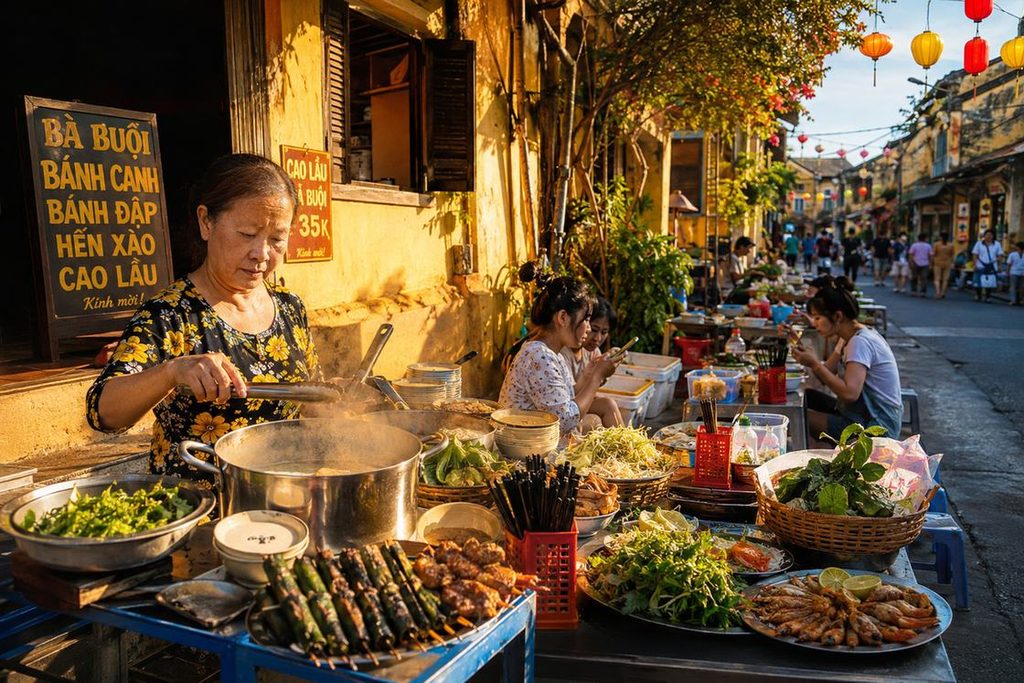
The easiest Hoi An is purchasable by bedtime: yellow wall, silk lantern, wooden boat, tailored shirt. The better town appears in negotiations between river and timber, resident and visitor, old trade and new tourism.
Give it morning. Buy the heritage ticket. Eat where chopsticks live in a metal cup. Cycle slowly enough to smell mint at Tra Que. Accept that rain may alter the plan. Hoi An has spent centuries adapting to water, commerce, and confident strangers.
If this guide saved you from a bad transfer, rushed itinerary, or trousers resembling anxious curtains, subscribe to A Tiny Traveler. I share honest guides, practical budgets, food worth crossing a street for, and mistakes I would rather you avoid. Follow A Tiny Traveler on Pinterest for upcoming Vietnam travel guides, itineraries, maps, and packing ideas.
My final image of Hoi An is not the main bridge at full glow. It is a side street after rain. A woman pedals past with herbs rising from her basket, somebody lifts a pot lid, and steam slips into the evening like a secret the town has no intention of explaining. You can keep walking. That is usually where the good part begins.
Frank


