

Is Cambodia worth visiting? Here is an honest Cambodia travel guide explaining why it may not be the best choice for first-time Southeast Asia travelers, plus costs, safety, Angkor Wat, transport, food, hotels, scams, and who should still visit.
There is a peculiar moment that happens on a first trip to Cambodia.
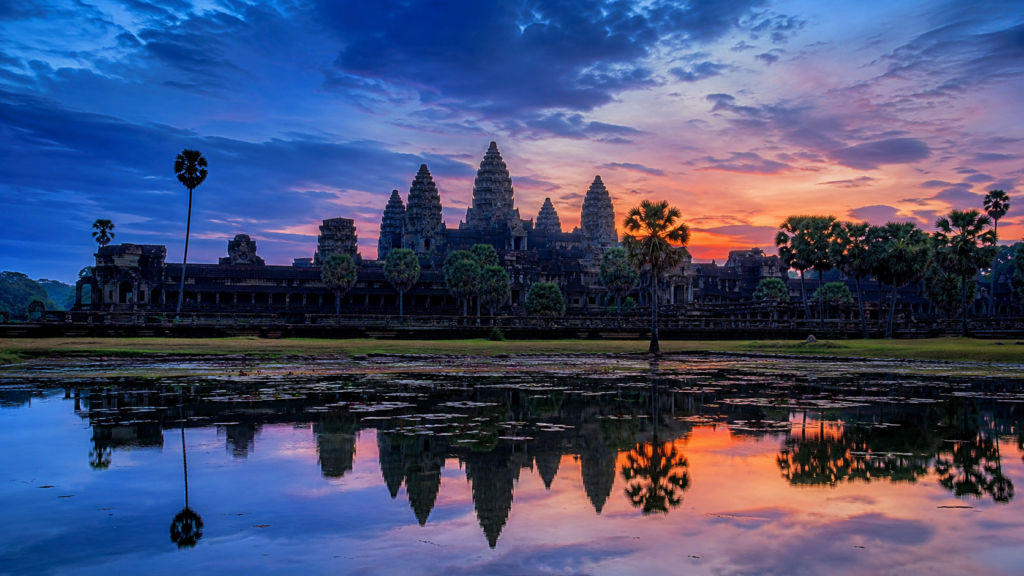
You have probably spent months seeing photographs of Angkor Wat reflected in a lotus pond while the sky turns orange behind those five familiar towers. Then you finally arrive in Siem Reap, your alarm explodes at 4:15 in the morning, you crawl into a tuk-tuk looking like someone recently exhumed, and forty minutes later you’re standing in the dark with several hundred other people holding phones above their heads.
The sun comes up. The temple slowly appears. And yes, Angkor Wat is extraordinary. I won’t manufacture some fashionable contrarian argument that it isn’t. But Cambodia as a whole? That is a more complicated conversation.
Because if you have never traveled around Southeast Asia before and you’re choosing one country for your first big trip, Cambodia would not be my first recommendation for most people. Not because Cambodia is bad. Not because Cambodians aren’t welcoming. And certainly not because the country lacks history, food, beaches, countryside, or places capable of stopping you mid-sentence. It does. The problem is that Cambodia often asks more from a traveler while giving you fewer of the easy wins that neighboring countries provide.
And that is what we’re going to talk about.
Not the polished tourism-board version. Not the melodramatic “NEVER GO TO CAMBODIA!” nonsense designed to harvest clicks. Just the useful question:
Is Cambodia worth visiting for you — especially if this is your first trip to Southeast Asia?
Grab a coffee. This may annoy a few people.
Good.
Is Cambodia Worth Visiting? The Short Answer Nobody Likes
Yes, Cambodia is worth visiting.
But Cambodia is not necessarily worth choosing as your first or only Southeast Asian destination.
Those are two very different statements.
If you have already traveled through Thailand, Vietnam, Malaysia, or Indonesia, Cambodia can be fascinating precisely because it is rougher around the edges. The slower infrastructure becomes part of the experience. The historical complexity becomes something you actively want to understand rather than an interruption between cocktails.
But a first-time traveler often wants something else.
You want your first Asian trip to feel adventurous without requiring a minor degree in logistics.
You want street food that is easy to identify.
You want transportation that makes sense.
You want beaches that don’t require three transfers and a prayer to the ferry gods.
You want plenty of places to visit if Plan A collapses.
Thailand, for example, can give a nervous first-timer Bangkok, northern mountains, ancient cities, islands, national parks, night markets, trains, domestic flights, hostels, luxury resorts and a mature tourism network in one trip.
Cambodia has wonderful places.
It simply isn’t as effortless.
And if you’re flying halfway around the planet with ten precious vacation days, effort matters.
1. Cambodia Makes You Work Harder for the Trip
My biggest reason for hesitating to recommend Cambodia for first-time travelers has nothing to do with any single attraction.
It’s friction.
Tiny pieces of friction accumulate.
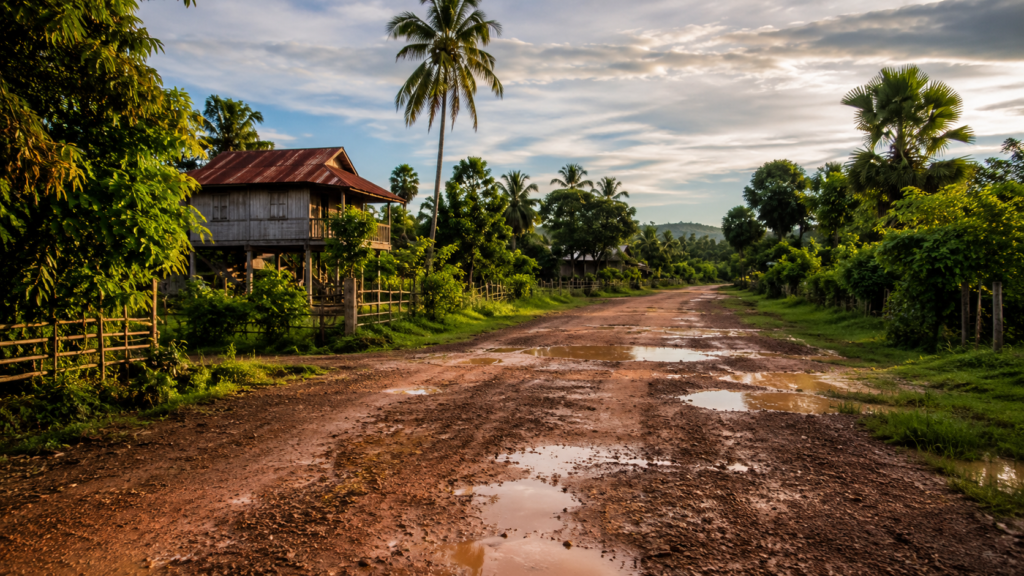
Getting between cities takes longer than the map suggests. Public transportation isn’t as extensive as in some neighboring countries. Outside Phnom Penh and Siem Reap, tourism infrastructure becomes patchier. On islands, cash and connectivity can require advance planning. A journey that appears pleasantly straightforward while sitting at home with Google Maps can develop several extra chapters once you’re actually there.
Cambodia’s official tourism information currently puts the Phnom Penh–Siem Reap bus journey at roughly six to seven hours, typically around US$10–20.
Six hours isn’t disastrous.
But put two or three of these transfers into a short itinerary and suddenly a considerable slice of your vacation involves watching roadside petrol stations pass your window.
Flights can help, but airports introduce transfers of their own. The newer Siem Reap–Angkor International Airport is well outside central Siem Reap, meaning an apparently quick flight still involves additional ground transport.
Where first-timers notice this most
You may notice it when:
- Moving between Phnom Penh, Siem Reap, the south coast and islands.
- Trying to construct a packed seven-day itinerary.
- Traveling during heavy rain.
- Visiting rural areas without private transportation.
- Arriving late and negotiating onward transport while tired.
- Discovering that cheap and convenient are not always traveling together.
None of this makes Cambodia impossible.
Far from it.
But your first Southeast Asian trip is supposed to seduce you a little.
Cambodia sometimes hands you paperwork and tells you to get in the van.
Make arrival easier
This is one area where paying slightly more can dramatically improve the trip. If you’re arriving jet-lagged with bags, arranging a private airport transfer removes one annoying variable.
BOOK A CAMBODIA AIRPORT TRANSFER WITH WELCOME PICKUPS
For international flights, I would also compare fares rather than relying on one airline website.
COMPARE FLIGHTS TO CAMBODIA ON TRIP.COM
2. Angkor Wat Is Both Cambodia’s Greatest Strength and Its Biggest Travel Problem
Here’s the awkward bit.
Angkor Archaeological Park is one of the strongest arguments for traveling to Cambodia.
It may also be the reason many travelers struggle to build a satisfying Cambodia itinerary beyond Siem Reap.
The archaeological complex is enormous. You are not visiting one temple. You’re dealing with dozens of temples, reservoirs, gates, towers, forests, collapsed corridors and carved stone faces spread across a huge landscape.
The official Angkor Enterprise ticket prices are currently:
- 1-day Angkor Pass — US$37
- 3-day Angkor Pass — US$62
- 7-day Angkor Pass — US$72
For most people, three days is the sensible choice.
One day turns your visit into archaeological speed dating.
Seven is fantastic if you’ve developed a sudden obsession with twelfth-century Khmer architecture.
Three gives you room to breathe.
Angkor Wat deserves more than sunrise
Your first morning might include Angkor Wat itself.
Then there’s Bayon, where enormous stone faces stare down at you with the mildly amused expression of someone who has watched tourists make poor footwear choices for 800 years.
There is Ta Prohm, where tree roots crawl through collapsed stone.
Preah Khan deserves time.
So does Banteay Srei.
And this is exactly why temple fatigue becomes real.
By temple number twelve, your brain may begin categorizing structures as:
Big temple.
Tree temple.
Faces temple.
Other big temple.
That isn’t the temples’ fault.
It’s ours.
Hire someone who knows what you’re looking at
This is one place where I strongly recommend spending money on a knowledgeable guide rather than walking around reading five-line plaques.
A good guide transforms piles of sandstone into political intrigue, religion, engineering, kings, wars and symbolism.
FIND TOP-RATED ANGKOR WAT TOURS ON GETYOURGUIDE
Official tourism information puts a licensed English-speaking guide at around US$40–50 per day, while a tuk-tuk for the Angkor Small Circuit commonly costs around US$18–25 per day. (tourismcambodia.org)
Spend the money.
You crossed continents to get here. Understanding what you’re staring at is worth more than another souvenir elephant made of suspiciously shiny wood.
3. Phnom Penh Is Important. It Is Also Not an Easy Holiday City.
Then you arrive in Phnom Penh.
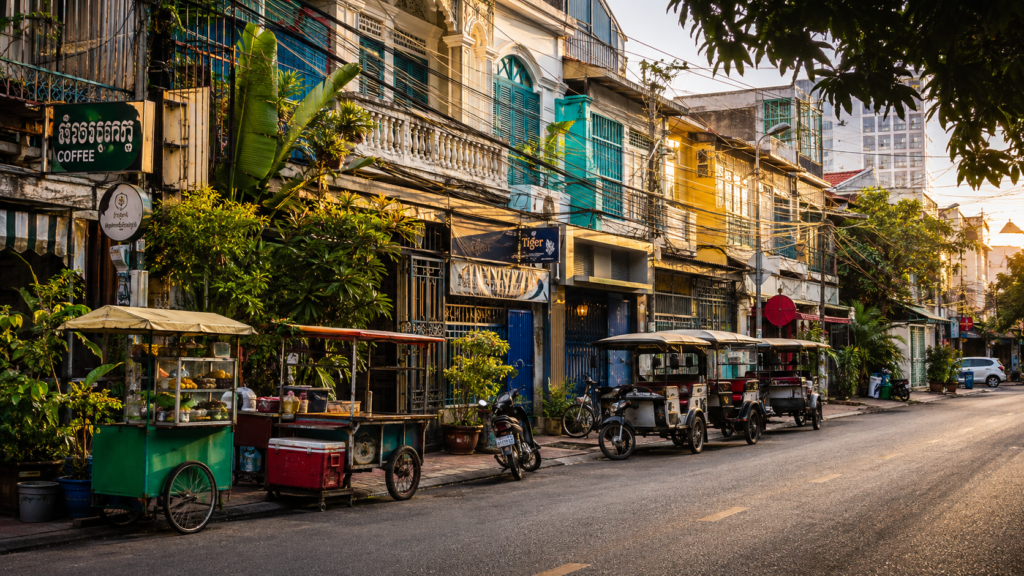
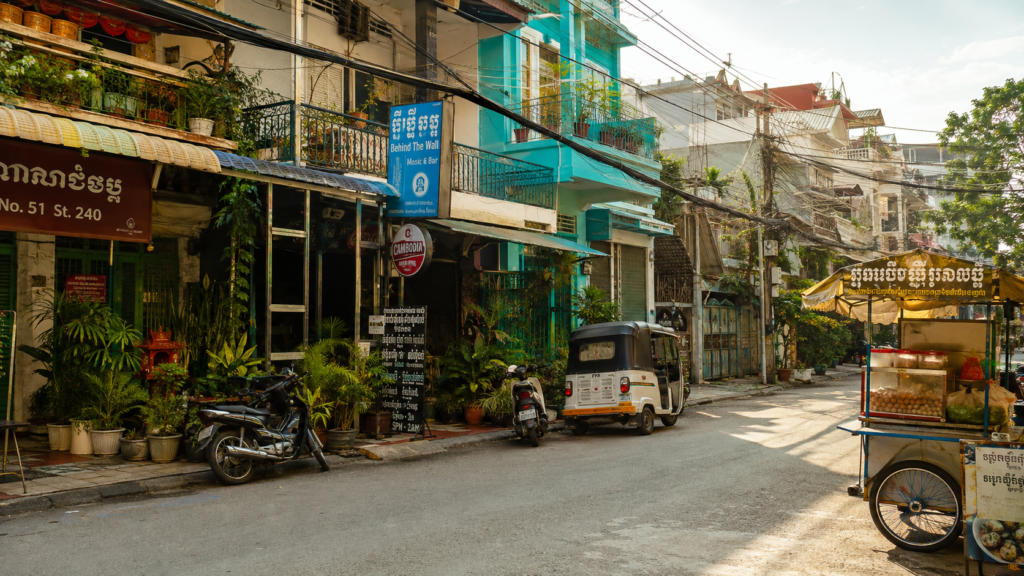
The traffic gets louder.
Motorcycles slide through gaps that don’t appear to exist.
A tuk-tuk rattles beside you. Someone sells fruit under a faded umbrella. A delivery truck stops where traffic apparently still intends to flow.
The city has a pulse that can be fascinating.
But Phnom Penh isn’t designed to gently ease inexperienced travelers into Southeast Asia.
Its most important attractions include some of humanity’s darkest history.
The Tuol Sleng Genocide Museum, located in the former S-21 prison, and the Choeung Ek Genocidal Center, commonly called the Killing Fields, document the Khmer Rouge period.
These aren’t attractions you tick off.
You go quietly.
You read.
You listen.
And afterwards, you may need a while.
That historical weight matters because understanding modern Cambodia without understanding the Khmer Rouge era leaves an enormous blank page. But it also means that a typical tourist day in Phnom Penh can be emotionally exhausting in ways a first-time vacationer wasn’t necessarily expecting.
The city has another side, of course.
There is the Royal Palace, the riverside, local markets, cafés, temples and neighborhoods where normal daily life is far more interesting than any organized attraction.
But don’t expect Bangkok with fewer skyscrapers.
Phnom Penh is Phnom Penh.
Treat it on its own terms.
4. Cambodia’s Beaches Are Good — But They Aren’t the Easiest Beaches in Southeast Asia
Someone will now be shouting at the screen:
“What about Koh Rong?”
Fair question.
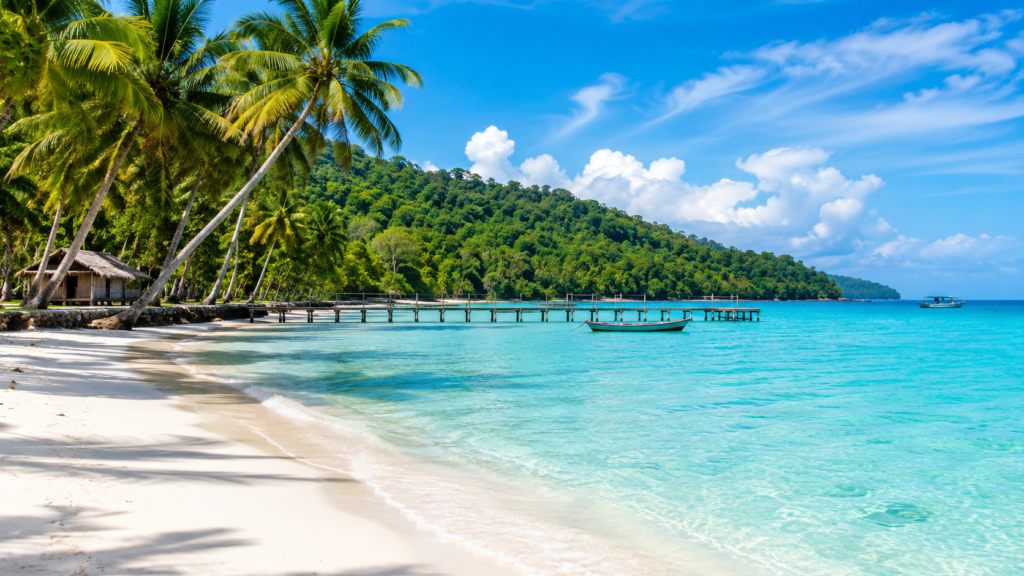
Koh Rong and Koh Rong Sanloem can give you pale sand, clear water and considerably less concrete than many famous Asian beach destinations.
I like that.
The problem isn’t that Cambodia has bad islands.
The problem is competition.
Southeast Asia is absurdly spoiled for coastline.
A first-time traveler can choose islands in Thailand, beaches across Vietnam, resorts in Malaysia, or thousands of islands across Indonesia.
Cambodia’s islands usually require additional travel through the southern coast, often via Sihanoukville, followed by a ferry.
That may be worth it if your trip lasts two or three weeks.
On a one-week vacation?
Suddenly you’re using an entire morning getting somewhere you’ll leave two mornings later.
There are practical issues too.
Cambodia’s tourism guidance notes that Koh Rong and Koh Rong Sanloem do not have reliable ATM access, meaning you should bring sufficient cash from the mainland. (tourismcambodia.org)
Again: manageable.
But it’s another thing you need to know.
Where to stay
Island accommodation varies enormously, so I prefer booking something with recent reviews, clear ferry instructions and verified facilities rather than arriving with the romantic plan of “we’ll figure it out.”
Romance is lovely.
Romance while carrying 17 kilograms of luggage down a sandy path at 1 p.m. is less convincing.
SEARCH CAMBODIA HOTELS AND ISLAND RESORTS ON BOOKING.COM
5. The Weather Can Absolutely Humble You
Cambodia doesn’t merely get hot.
There are days when the air seems to have been cooked.
Walk around Angkor in the middle of a hot afternoon and your shirt begins negotiations for independence from your body.
The broadly drier season runs from around November through April, while March through May can become particularly hot. The wetter months generally bring heavier rain, fuller landscapes and fewer tourists, with weather-related disruption possible during the wet season. Cambodia’s official tourism guidance identifies November to February as the most comfortable dry-season period, while Australian travel advice notes that severe storms and flooding can disrupt transportation during the wetter part of the year. (tourismcambodia.org)
This creates another first-timer dilemma.
Go in peak season and you’ll have more comfortable conditions but more visitors and potentially higher accommodation prices.
Go in the greener months and you’ll pay less, but rain may interfere with plans.
Go during the hottest period and you may discover that archaeological enthusiasm has a temperature limit.
My temple survival rule
Do major outdoor sightseeing early.
Get out around sunrise.
Return to your hotel during the savage part of the afternoon.
Swim.
Nap.
Question your life choices in air-conditioning.
Go out again later.
Trying to maximize sightseeing from 7 a.m. until 6 p.m. is how vacations turn into endurance sports.
6. Cambodia Is Cheap — Until You Start Adding the Pieces
You’ll frequently hear that Cambodia is one of Southeast Asia’s cheapest countries.
That isn’t wrong.
It isn’t the whole story either.
Official Cambodian tourism guidance currently suggests these approximate daily Cambodia travel budgets per person, excluding international flights and major one-off costs:
| Travel Style | Typical Daily Budget |
|---|---|
| Backpacker | US$25–35 |
| Mid-range traveler | US$50–90 |
| Comfortable traveler | US$150+ |
A basic meal can indeed be inexpensive.
A market bowl of noodles may cost around US$1.50–2.50.
A mid-range restaurant main course often runs around US$5–9.
A large bottle of water is roughly US$0.50.
A short tuk-tuk trip might be approximately US$1.50–3.
An hour-long massage often sits around US$6–12. (tourismcambodia.org)
Lovely.
Now add:
Angkor Pass.
Airport transportation.
Guides.
Intercity buses.
Ferries.
Tours.
Occasional private drivers.
Travel insurance.
ATM charges.
Suddenly the difference between Cambodia and some neighboring destinations becomes smaller than the backpacker legend suggests.
A realistic Cambodia budget
For a comfortable first trip, I would personally plan roughly US$70–100 per person per day, plus international flights and major entrance fees.
That gives you room for:
- A pleasant hotel with air-conditioning.
- Restaurant meals mixed with cheaper local food.
- Tuk-tuks without negotiating every fifty cents.
- A proper guide at Angkor.
- Comfortable intercity transport.
- An occasional tour.
- Beer, coffee and the inevitable afternoon coconut.
Trying to travel Cambodia on the absolute minimum is possible.
But if this is your annual vacation rather than a six-month backpacking expedition, I don’t see the point of winning the Cheapest Human in Siem Reap Award.
7. Cambodia’s Two-Currency System Is Weirdly Good at Making You Feel Bad at Mathematics
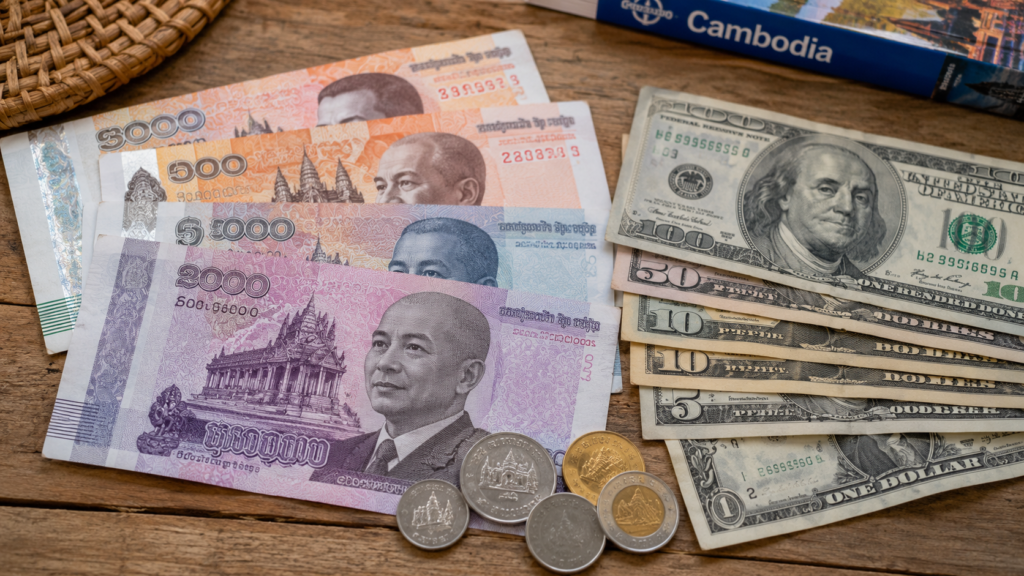
Cambodia’s national currency is the Cambodian riel — KHR.
But US dollars are also widely used in tourism.
The commonly used working rate is about 4,000 riel to US$1, with tourist-facing hotels, tours and restaurant prices often quoted in dollars. Small change frequently comes back in riel because US coins are not part of everyday circulation. (tourismcambodia.org)
You get used to it.
Eventually.
At first, your wallet looks as though three different vacations have collided inside it.
One practical issue matters enormously:
Damaged US dollar notes may be refused.
A tear, mark or damaged corner can turn perfectly legitimate money into a piece of paper nobody wants.
Inspect your cash carefully.
ATM fees can also bite. Tourism guidance puts typical withdrawal charges at roughly US$4–6, potentially before your own bank adds anything. Card payments may also carry surcharges in some businesses. (tourismcambodia.org)
How I would handle travel money
Bring more than one bank card.
Keep cash in decent condition.
Withdraw larger amounts rather than paying repeated ATM fees.
Keep some riel for smaller purchases.
And use a travel-focused money service when the exchange economics make sense.
CHECK REVOLUT FOR TRAVEL SPENDING
Neither product magically eliminates every fee. Check your own account terms and local ATM charges before withdrawing.
Your money deserves slightly more attention than “the machine said yes, so we’re fine.”
8. The 2026 Cambodia–Thailand Border Situation Changes the Conversation
This is the section that dates fastest, so check official travel advice again immediately before traveling.
As of August 17, 2026, the security situation near the Cambodia–Thailand land border remains a significant consideration following fighting in 2025.
Current UK travel advice warns against all but essential travel within 20 kilometers of the Thailand border and says land crossings between Cambodia and Thailand remain suspended. (GOV.UK)
Australian Smartraveller currently takes an even more cautious position, advising against travel within 50 kilometers of the border in several provinces and recommending a high degree of caution for Cambodia generally because of recent conflict-related security risks. (Smartraveller)
That does not mean all of Cambodia is a war zone.
It isn’t.
And portraying the whole country that way would be irresponsible.
But it does mean itineraries involving overland travel between Thailand and Cambodia require far more attention than older travel blogs may suggest.
Those old posts telling you to “just take the bus from Bangkok across the border” may now be spectacularly outdated.
Landmines are also not a historical footnote
Unexploded ordnance and landmines remain present in some rural and border areas. UK travel advice specifically warns travelers not to stray from main routes in affected rural locations. (GOV.UK)
The obvious rule:
Stay on established roads and marked trails.
Don’t wander into fields because you’ve spotted an interesting ruin.
Don’t pick up unfamiliar metal objects.
Don’t treat mine-warning signs as optional suggestions.
This isn’t something that should frighten you away from ordinary tourist routes around Siem Reap or central Phnom Penh, but it absolutely belongs in a responsible Cambodia travel guide.
9. Road Safety Is One Reason I Wouldn’t Make Cambodia My First Asian Driving Holiday
Cambodian traffic has its own rhythm.
After a while you start understanding it.
The first day?
Not so much.
Motorbikes weave.
Vehicles overtake.
Pedestrians negotiate crossings through eye contact and optimism.
Australian travel advice warns that fatal road accidents, particularly on provincial highways, are common, recommending particular caution and avoiding nighttime road travel where possible. (Smartraveller)
I would therefore think carefully before renting a scooter simply because somebody at your hostel says, “Mate, it’s easy.”
People who begin sentences with “Mate, it’s easy” are responsible for a worrying percentage of travel-insurance paperwork.
Check that:
- Your license is legally valid.
- Your insurance covers the vehicle.
- You understand helmet requirements.
- You are actually experienced.
- You aren’t learning to ride a motorbike on Cambodian roads.
If you are genuinely qualified and still want a rental car, compare reputable providers and read insurance exclusions carefully.
COMPARE CAR RENTALS WITH GETRENTACAR
For most first-time visitors, though, I would use drivers, buses, tuk-tuks and organized transfers.
Your holiday doesn’t become more authentic because you personally fought a truck for road space.
10. Cambodia’s Food Deserves More Attention Than It Gets
One criticism I won’t make is that Cambodian food is boring.
That claim usually means somebody ate fried rice beside Pub Street four nights in a row and then conducted an international culinary investigation from their bar stool.
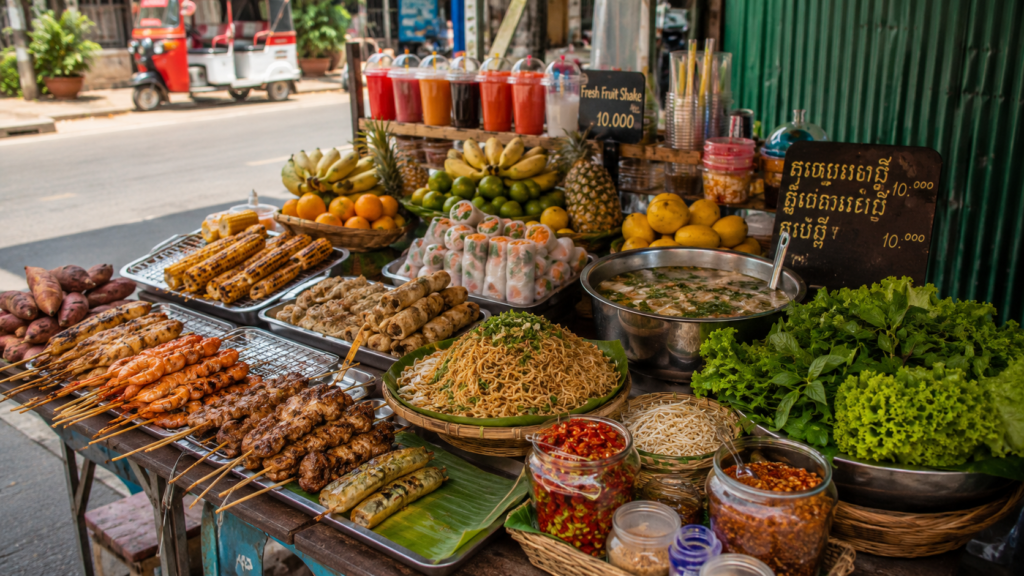
Khmer food can be terrific.
Try kuy teav, the breakfast noodle soup where fragrant broth, herbs, lime and meat come together without needing fireworks.
There is fish amok, often associated with a softer coconut-and-spice profile.
Beef lok lak brings seared beef together with pepper, lime and vegetables.
Nom banh chok, frequently called Khmer noodles, is worth seeking out in the morning.
And then there is the pepper.
Kampot pepper can have an almost floral aroma before the heat arrives and taps you firmly at the back of the throat.
The problem for first-time travelers is accessibility.
Thailand’s food culture has been exported so aggressively that many visitors arrive already knowing pad thai, green curry, mango sticky rice and tom yum.
Vietnam gives you pho and bánh mì as an easy doorway.
Cambodian cuisine often requires a little more curiosity.
Good.
Curiosity is why we travel.
One sustainable food tip that actually helps
Eat at locally owned restaurants, markets and family-run businesses, particularly outside the most tourist-saturated streets.
Your money remains closer to the people producing the experience.
Also bring a reusable bottle where filtered-water refill stations are available rather than buying endless tiny plastic bottles.
Cambodia does not need your personal contribution to a mountain of discarded 500 ml containers.
11. Healthcare Is Another Area Where Cheap Travel Can Become Very Expensive
Nobody books a trip because they’re excited about medical infrastructure.
Still. We should talk about it.
Australian government travel advice states that public-hospital medical facilities in Cambodia can be below international standards and that treatment may become expensive. (Smartraveller)
Mosquito-borne illnesses, including dengue, are another practical consideration, while rabies exposure and food- or water-borne illness require sensible precautions. (Smartraveller)
That doesn’t mean you should walk around dressed like you’re investigating a biological incident.
Do the basic things properly.
Use mosquito repellent.
Drink safe water.
Be sensible about food hygiene.
Talk to an appropriate medical professional about vaccinations before your trip.
And buy insurance.
Please.
Travel insurance isn’t the sexy affiliate link
It also might be the most useful one.
Your policy should cover your destination, activities, medical expenses, evacuation where applicable and any motorbike use if you intend to ride.
COMPARE CAMBODIA TRAVEL MEDICAL INSURANCE WITH VISITORSCOVERAGE →
And check government travel warnings before purchasing, because traveling against official advice can affect insurance coverage. UK travel guidance explicitly warns that policies can be invalidated when travelers enter areas against applicable government advice. (GOV.UK)
Read the small print.
I know.
I’d rather eat the instruction manual for a refrigerator too.
Read it anyway.
12. The Internet Problem Is Easy to Fix Before You Land
You don’t need to spend your first hour in Cambodia wandering around an airport hunting for a SIM card while half asleep.
Buy data before arrival.
You’ll immediately need connectivity for:
- Hotel directions.
- Translation.
- Maps.
- Ride-hailing.
- Messaging drivers.
- Checking bus information.
- Looking up restaurants.
- Banking alerts.
- Asking why your tuk-tuk appears to be moving directly away from your hotel.
Local SIM cards can be inexpensive — tourism guidance suggests roughly US$5–10 for a SIM with generous data — but an eSIM is often easier for a short trip. (tourismcambodia.org)
CHECK CAMBODIA eSIM OPTIONS ON TRIP.COM →
Install it before departure and follow the activation instructions carefully.
Nothing says modern international explorer like landing in another country and immediately forgetting the password to your email account.
13. So Who Probably Shouldn’t Choose Cambodia First?
Here is my actual argument.
Cambodia is probably not your ideal first Southeast Asia destination if you:
You have only five to seven days
You’ll probably spend too much time moving around.
If you insist, keep it simple: Siem Reap plus Phnom Penh, or even just Siem Reap and Angkor.
You want effortless island hopping
There are easier countries for this.
You are anxious about transportation
Cambodia is completely manageable, but more planning helps.
You want an enormous variety of attractions packed into one short trip
Cambodia’s headline attraction is unusually dominant.
Angkor is world-class.
The rest of the country rewards slower, more curious travel rather than checklist tourism.
You are traveling primarily for nightlife, shopping and polished tourism infrastructure
Other regional capitals and resort destinations provide far more choice.
You expect Southeast Asia to look like social media
This one applies everywhere, frankly.
Real countries contain traffic jams, rubbish, construction, complicated politics, bad weather and ordinary Tuesdays.
Cambodia doesn’t exist to provide a tropical backdrop for your linen shirt.
14. And Who Should Absolutely Visit Cambodia?
Now we get to the people for whom everything I’ve complained about becomes almost irrelevant.
You should seriously consider Cambodia if:
- Angkorian history genuinely interests you.
- You enjoy archaeology.
- You are willing to travel slowly.
- You like countries that require observation rather than instant gratification.
- You’re comfortable arranging drivers and transfers.
- You have already traveled elsewhere in Southeast Asia.
- You want to learn about twentieth-century Cambodian history respectfully.
- You care about locally owned tourism.
- You don’t panic when transportation is imperfect.
- You have ten days or longer.
And particularly:
Go if you are the kind of traveler who enjoys understanding a place rather than merely seeing it.
Cambodia rewards that.
The moment I remember most wasn’t actually sunrise at Angkor Wat.
It was a small market encounter after I hopelessly mangled a Khmer phrase while trying to buy fruit. The woman behind the stall stared at me for a second, burst out laughing, corrected me several times and finally handed me another piece of pineapple.
My language skills had not improved.
My pineapple inventory had.
Travel often works like that.
The major monuments get you onto the plane.
The insignificant moments are the ones that quietly survive the flight home.
15. What Cambodia Actually Costs: Essential Prices at a Glance
For planning purposes, here are useful 2026 Cambodia travel costs based on current tourism guidance:
- Budget traveler: approximately US$25–35/day
- Mid-range traveler: approximately US$50–90/day
- Comfortable traveler: approximately US$150+/day
- Market noodle soup: approximately US$1.50–2.50
- Mid-range restaurant meal: approximately US$5–9
- Local draft beer: approximately US$0.50–1.50
- 1.5-liter bottled water: approximately US$0.50
- Short tuk-tuk ride: approximately US$1.50–3
- Angkor tuk-tuk, full day: approximately US$18–25
- Licensed English-speaking guide: approximately US$40–50/day
- Massage: approximately US$6–12
- SIM card/data: approximately US$5–10
- ATM withdrawal fee: commonly approximately US$4–6
And separately:
- Angkor 1-day pass: US$37
- Angkor 3-day pass: US$62
- Angkor 7-day pass: US$72
(Angkor Enterprise® Official Site)
Book accommodation before peak periods
Good hotels in Siem Reap can represent excellent value compared with many major Asian destinations, especially if you book intelligently.
FIND THE BEST CAMBODIA HOTEL DEALS ON BOOKING.COM →
For hotels, flights and transportation in the region, I would also compare rates on another major platform rather than assuming one website always wins.
COMPARE CAMBODIA HOTELS, FLIGHTS AND TRANSPORT ON TRIP.COM →
Check cancellation conditions.
Saving four dollars isn’t impressive if your entire booking becomes non-refundable.
16. Cambodia Entry Requirements: Don’t Arrive With a 2019 Blog Post Open on Your Phone
Visa rules change.
Border situations change.
Entry systems change.
And search results have a nasty habit of keeping ancient travel articles alive forever.
Many visitors require a tourist visa for Cambodia. The official Cambodian eVisa system currently lists a tourist eVisa at US$35, with single-entry validity and a stay of up to one month; eligibility varies, so confirm the requirements for your own passport. (eVisa Cambodia)
There is also the Cambodia e-Arrival system.
Cambodia’s General Department of Immigration states that travelers can submit the Cambodia e-Arrival within seven days before arrival or on arrival, and that submission is free. (Immigration)
Use the government system.
Not a suspicious website with twelve flashing buttons offering an “urgent Cambodian entry document” for US$79.
Before departure, check:
Passport validity.
Visa requirements for your nationality.
Cambodia e-Arrival requirements.
Current border restrictions.
Travel insurance conditions.
Airline requirements.
Government travel advice.
That fifteen-minute check can save you several hours of airport misery.
17. If You’re Going Anyway, This Is the Cambodia Itinerary I’d Recommend
If you’ve reached this point thinking, “Frank, all your warnings have somehow made me want to visit more,” excellent.
You’re probably Cambodia’s type of traveler.
For a first Cambodia trip, I would aim for around 10 days rather than sprinting through the country.
Days 1–4: Siem Reap and Angkor
Give Angkor proper time.
Do one sunrise.
Not three.
Unless sleep has offended you personally.
Explore Angkor Wat, Bayon, Ta Prohm, Preah Khan and some quieter temples rather than racing through everything.
Take breaks.
Spend time in Siem Reap itself.
Eat Khmer food away from the most obvious tourist strip.
BOOK AN ANGKOR TOUR ON GETYOURGUIDE →
Days 5–7: Phnom Penh
Travel to Phnom Penh and allow at least two full days.
Visit historical sites respectfully.
Walk the riverfront.
Explore markets.
Eat.
Watch normal city life.
Don’t schedule the Tuol Sleng Genocide Museum and Choeung Ek between brunch and cocktails as if they’re ordinary sightseeing stops.
Give yourself emotional space.
Days 8–10: Kampot
Instead of forcing an island into a short itinerary, I like the idea of slowing down in Kampot.
Eat crab with local pepper.
Explore the surrounding countryside responsibly.
Sit beside the river.
Do less.
There is an underrated art to doing less on vacation.
If you have two full weeks, then add Koh Rong or Koh Rong Sanloem, subject to current transport and travel-advice conditions.
Because of the current Cambodia–Thailand border situation, I would not build a 2026 itinerary around crossing overland between Thailand and Cambodia without verifying that crossings have reopened. Current official advisories say they remain suspended. (GOV.UK)
18. Sustainable Travel in Cambodia Without Turning It Into a Personality
Sustainable tourism does not require you to travel with a bamboo toothbrush prominently displayed in every photograph.
A few sensible decisions matter much more.
Stay locally when possible
Independent hotels and guesthouses can keep a larger share of tourism income within Cambodian communities.
Hire Cambodian guides
At Angkor, a local licensed guide doesn’t merely improve your visit.
You’re paying for expertise.
Avoid exploitative orphanage tourism
Children are not tourist attractions.
Be cautious with voluntourism projects that involve vulnerable children or ask short-term visitors to perform work requiring professional training.
Never buy archaeological objects
Cambodia’s heritage belongs in Cambodia.
Not on your bookshelf because somebody at a market swore the carving was “very ancient, special price.”
Reduce plastic
Carry a reusable bottle and refill it where safe filtered water is available.
Choose ethical wildlife experiences
Don’t pay for animal entertainment simply because somebody has attached the word sanctuary to it.
Research first.
Spend beyond the tourist bubble
A locally owned restaurant, driver, café, market stall or craft producer generally creates a more direct economic connection than buying everything through international chains.
Respect temples
Cover shoulders and knees where required.
Don’t climb restricted structures.
Don’t treat religious sites as photography studios.
And perhaps don’t spend fifteen minutes arranging your partner’s flowing dress while a monk is trying to walk past.
The monk has places to be.
19. The Part Where I Admit Cambodia Is Better Than This Headline Makes It Sound
If you came here asking “Is Cambodia worth visiting?”, I don’t want you leaving with the wrong answer.
Cambodia is absolutely worth visiting.
Angkor alone belongs among the most important archaeological landscapes you can visit anywhere in Asia.
Phnom Penh asks difficult questions about history that travelers should be willing to hear.
Kampot slows the tempo.
The islands offer an entirely different mood.
Khmer food deserves considerably more international attention.
And Cambodian people shouldn’t be reduced to either the country’s tragedies or the tourism industry’s smiley clichés. Cambodia is a modern country containing young entrepreneurs, farmers, office workers, monks, students, hotel staff, artists, drivers, parents, musicians, cooks and people trying to get through Tuesday afternoon just like everybody else.
My argument is narrower.
For most travelers making their very first trip to Southeast Asia, I think there are easier countries to start with.
Thailand usually gives first-timers a broader menu of experiences with mature transportation and tourism infrastructure.
Vietnam can deliver extraordinary food, major cities, coast, mountains and long overland journeys in one trip.
Malaysia is remarkably approachable for travelers who value transportation, multilingual cities and varied food.
Then come to Cambodia.
Come when you have stopped needing everything to be easy.
Come when a six-hour bus ride no longer feels like a vacation failure.
Come when you don’t need ten attractions before lunch.
Come because you genuinely want to spend three mornings examining temples rather than because Angkor Wat appeared on a list titled “47 Places You Need to See Before You Die.”
And when you do come, don’t rush.
Sit down.
Order the noodles.
Ask the guide another question.
Leave the phone in your pocket for five minutes at Angkor.
Watch the late light catch the stone instead of immediately trying to turn it into content.
That, for me, is when Cambodia begins making sense.
It isn’t the easiest country in Southeast Asia.
It isn’t the neatest.
It doesn’t always give immediate gratification.
And that may be exactly why your second or third trip to Southeast Asia should include it.
One Last Thing Before You Go
Travel blogs have spent years convincing us that every destination is perfect.
It isn’t true.
No country is perfect for everyone.
And pretending otherwise isn’t useful.
The best travel advice sometimes isn’t “go.”
Sometimes it’s “not yet.”
For many first-time visitors to Southeast Asia, that is how I feel about Cambodia.
Start somewhere that makes the mechanics of Southeast Asian travel easier. Learn how tuk-tuks work. Learn how tropical heat changes your day. Learn that a timetable can occasionally be more of a philosophical suggestion. Learn to eat breakfast from places without an English menu.
Then come to Cambodia.
Come curious.
Come prepared.
Come slowly.
Because once Cambodia stops having to compete with your expectations of what a first Asian holiday should look like, you may notice something much more interesting:
The country was never trying to win that competition in the first place.
And if you enjoy travel writing that tells you where is genuinely worth your time, what things actually cost, which mistakes to avoid, and when a famous destination may not be right for you, subscribe to A Tiny Traveler.
I have plenty more coming — honest destination guides, practical itineraries, hotel advice, food worth crossing streets for, expensive mistakes you can avoid making yourself, and occasional complaints about waking up at 4 a.m. for sunrise photographs.
Subscribe to A Tiny Traveler and follow along on social media so you don’t miss the next guide.
I’ll keep doing the research.
You can concentrate on finding your passport.
SUBSCRIBE TO A TINY TRAVELER →
FOLLOW A TINY TRAVELER ON PINTEREST →
See you somewhere interesting.
Preferably after breakfast.
Frank


