

Discover the 10 best day trips from Rome, including Pompeii, Tivoli, Florence, Naples, Orvieto and Assisi. Includes transport, costs, itineraries and practical 2026 travel tips.
Rome has a strange effect on your sense of time. You arrive planning to spend three sensible days ticking off the Colosseum, Pantheon, Vatican Museums and a heroic amount of pasta. Then suddenly it is Thursday, you have eaten carbonara four times, your feet have filed a formal complaint, and you are wondering what exists beyond the Grande Raccordo Anulare.
Quite a lot, as it happens.
One of the reasons I love using Rome as a base is that you can wake up beside a two-thousand-year-old ruin, drink an espresso while standing at a bar, jump on a train and—before lunch—be looking into the crater-shadowed streets of Pompeii, eating pizza in Naples, wandering beneath medieval towers in Orvieto, or watching fountains behave with absolutely no restraint at Villa d’Este.
And you do not necessarily need another hotel, a suitcase, or a complicated Italian road-trip plan involving twenty-seven toll booths and an argument with a Fiat.
These are the 10 best day trips from Rome I would actually consider worth sacrificing a full day in the capital for. Some are ridiculously easy. A few demand an early alarm. One or two are ambitious enough that your smartwatch may congratulate you repeatedly. I’ll show you how to get there, what each trip costs, what to see, where the time disappears, who each destination suits, and when taking a guided tour makes far more sense than trying to DIY everything yourself.
The Best Day Trips from Rome at a Glance
| Day Trip | Travel Time from Rome | Best For | Typical Day Budget |
|---|---|---|---|
| Tivoli | 40–60 min | Villas, gardens, Roman history | €35–€80 |
| Ostia Antica | 40–50 min | Ancient Rome without Pompeii crowds | €30–€60 |
| Orvieto | 1–1.5 hrs | Medieval streets, food, cathedral | €45–€90 |
| Florence | 1.5 hrs high-speed | Renaissance art and architecture | €80–€180 |
| Naples | 1–1.25 hrs high-speed | Pizza, street life, history | €65–€140 |
| Pompeii | 2–2.5 hrs | Archaeology and Roman history | €80–€160 |
| Assisi | 2–2.5 hrs | Medieval Italy, churches, slow travel | €55–€110 |
| Civita di Bagnoregio | 1.5–2 hrs by car | Photography and hill-town scenery | €55–€120 |
| Castelli Romani | 30–50 min | Wine, lakes and Roman countryside | €40–€100 |
| Sperlonga | 1.5–2 hrs | Beaches and summer escapes | €45–€90 |
My easiest first-timer picks: Tivoli, Ostia Antica, Orvieto and Naples.
My choice for history obsessives: Pompeii.
My choice if Rome has exhausted you: Sperlonga or the Castelli Romani.
My choice if you only want one major city: Florence.
Before You Escape Rome: Budget, Transport and the Boring Stuff That Saves Money
Rome itself is not cheap anymore, particularly if you sleep within strolling distance of the Trevi Fountain and believe every restaurant displaying laminated photos of spaghetti deserves your money.
A sensible daily budget looks roughly like this:
Budget Traveler
Expect around €60–€90 per person per day excluding accommodation.
That might cover:
- Coffee and cornetto: €3–€5
- Pizza al taglio or sandwich lunch: €7–€12
- Casual dinner: €15–€25
- Gelato: €3–€5
- Local public transport: roughly €1.50 per single ticket
- Attractions: €15–€30 depending on your plans
Mid-Range Traveler
Allow around €100–€160 per person per day excluding accommodation, particularly if you want a seated lunch, cocktails, museum tickets and the occasional taxi.
Comfortable Trip
With private transfers, guided tours, better restaurants and premium attraction tickets, you can quite easily spend €200+ per person per day.
Accommodation is the wild card. Prices change dramatically by month. April, May, September and October can be surprisingly expensive, while August occasionally produces deals because half of Rome appears to flee Rome.
TIP: Stay reasonably close to Roma Termini, Monti, Repubblica or a convenient metro connection if you plan several day trips. Saving €15 on a hotel means very little when you need a taxi across town at 5:45 a.m.
CHECK THE BEST ROME HOTEL DEALS ON BOOKING.COM →
If you land tired, carrying luggage and unwilling to learn Roman public transport within ten minutes of clearing immigration, a pre-arranged transfer can also save considerable hassle.
BOOK YOUR ROME AIRPORT TRANSFER WITH WELCOME PICKUPS
For trains, compare schedules before you commit. High-speed Frecciarossa and Italo fares can climb sharply near departure, whereas regional fares tend to be more predictable.
COMPARE ITALY TRAIN OPTIONS ON TRIP.COM
And one small administrative sermon: buy travel insurance before you need travel insurance. A missed connection is annoying. A medical emergency abroad is financially interesting in all the wrong ways.
CHECK TRAVEL INSURANCE OPTIONS WITH VISITORSCOVERAGE
1. Tivoli: When Roman Emperors and Renaissance Cardinals Compete for Attention
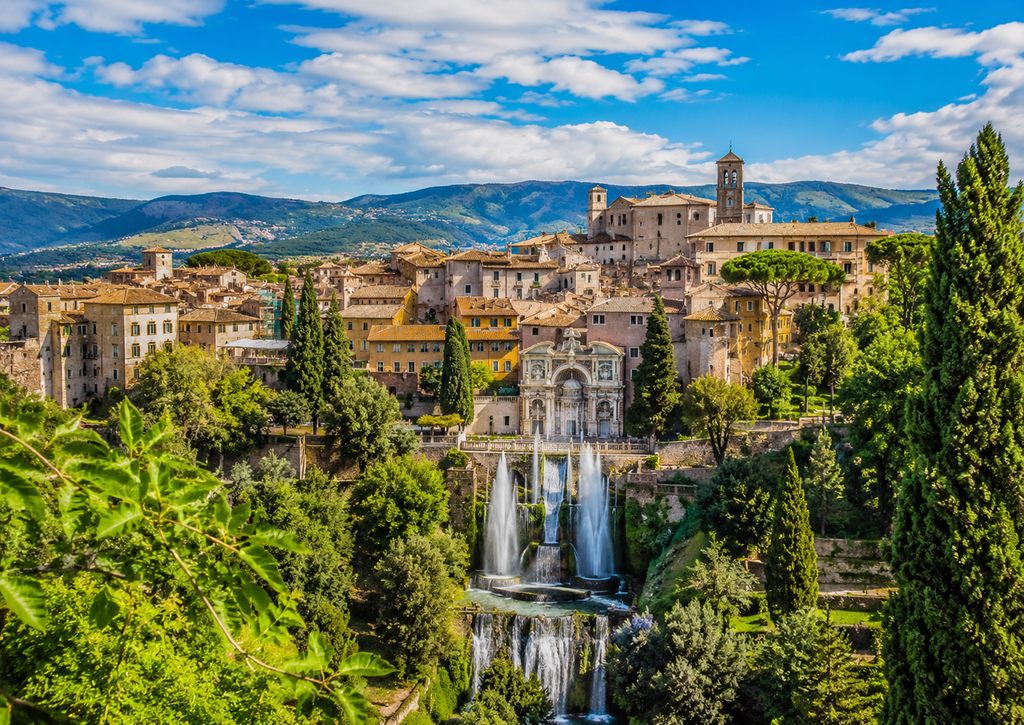
If you only take one easy day trip from Rome, I would put Tivoli very close to the top.
The town sits east of Rome and gives you two completely different historical worlds: Hadrian’s Villa, where an emperor essentially built himself an architectural greatest-hits album of the Roman Empire, and Villa d’Este, where Renaissance landscaping apparently became a competitive sport.
Why Tivoli Is Worth a Day
Hadrian’s Villa, or Villa Adriana, was built for Emperor Hadrian during the second century AD.
Calling it a “villa” feels rather inadequate.
My mental image of a villa involves six rooms, a lemon tree and perhaps an overconfident swimming pool. Hadrian’s Villa covers an enormous archaeological area filled with baths, residences, gardens, pools, libraries and ceremonial spaces.
Then you have Villa d’Este.
This is where the day changes completely.
Instead of broad Roman ruins, you get steep terraced gardens, mossy stone, dark tunnels and water appearing from practically everywhere. The fountains hiss, pour, gurgle and crash. Around the Hundred Fountains, tiny streams run beside you while damp air takes the edge off a hot Lazio afternoon.
How to Get from Rome to Tivoli
Regional trains leave Rome for Tivoli, commonly from Roma Tiburtina.
Allow roughly 40–60 minutes, depending on the service.
The catch is that Hadrian’s Villa is outside the historic centre, so visiting both villas independently requires some coordination with local buses or taxis.
This is one of those day trips where a tour can genuinely improve the experience rather than simply placing you behind someone holding an umbrella.
SEE TIVOLI, VILLA D’ESTE & HADRIAN’S VILLA TOURS ON GETYOURGUIDE
A Good Tivoli Itinerary
Morning: Visit Hadrian’s Villa before the strongest heat.
Lunch: Head into Tivoli’s historic centre for pasta, porchetta or a long lunch involving things cooked with olive oil and absolutely no urgency.
Afternoon: Spend two or three hours at Villa d’Este.
Late afternoon: Walk through central Tivoli before returning to Rome.
What It Costs
A DIY day usually falls around €35–€60, including regional transport, entrance tickets and a simple meal.
With a guided excursion, budget closer to €70–€120.
My Tip
Do not wear smooth-soled shoes.
Historic stone staircases plus fountain spray plus enthusiasm can create the sort of travel memory you would prefer not to explain to an insurance company.
Best for: Couples, history lovers, photographers and travelers who want maximum reward for minimum transport drama.
2. Ostia Antica: Pompeii’s Less Famous, More Convenient Roman Cousin

There is something wonderfully unreasonable about standing inside an ancient Roman city before lunch and still being back in central Rome for aperitivo.
That is Ostia Antica.
It was once Rome’s major port city, connected to the movement of grain, oil, wine and practically everything else required to keep an empire fed and functioning.
Today, you can walk its original streets, enter apartment blocks, look down at mosaic floors and sit inside a remarkably intact theatre.
Why I Like Ostia Antica
Pompeii gets the headlines because volcanoes are excellent publicists.
But Ostia Antica gives you something different: a better feeling for everyday urban life.
You see insulae, shops, communal buildings, baths and taverns. The Baths of Neptune contain mosaics where sea creatures twist across black-and-white floors. The ancient theatre still rises in semicircular tiers.
There are umbrella pines overhead. Cicadas grinding away in the heat. Dust under your shoes.
And considerably fewer people trying to photograph the same doorway at once.
The current combined archaeological ticket is €18, covering several sites in the wider archaeological park.
Getting to Ostia Antica
From central Rome, make your way toward the Metromare rail connection and ride to Ostia Antica station.
The total journey is generally around 40–50 minutes, depending on where you begin.
From the station, walk approximately ten minutes to the archaeological entrance.
How Long Do You Need?
Give the ruins at least three hours.
Four is better.
People often underestimate this site because it is close to Rome. Then they arrive, wander for twenty minutes, look at the map and realise ancient Romans were annoyingly good at urban expansion.
Make It a Beach Day Too
In summer, you can continue toward Ostia’s seafront after visiting the ruins.
Do I think Ostia Lido is Italy’s greatest beach?
No.
Italy has Sardinia. It would be a ridiculous argument.
But after several hours walking through dusty archaeological remains, sitting beside the Tyrrhenian Sea with something cold is not a bad development.
Budget
Allow roughly €30–€60 for transport, entry and food.
Best for: Families with older children, history fans, budget travelers and anyone who wants ancient Rome without spending half the day on a train.
3. Orvieto: The Day Trip That Makes You Consider Abandoning Rome Entirely
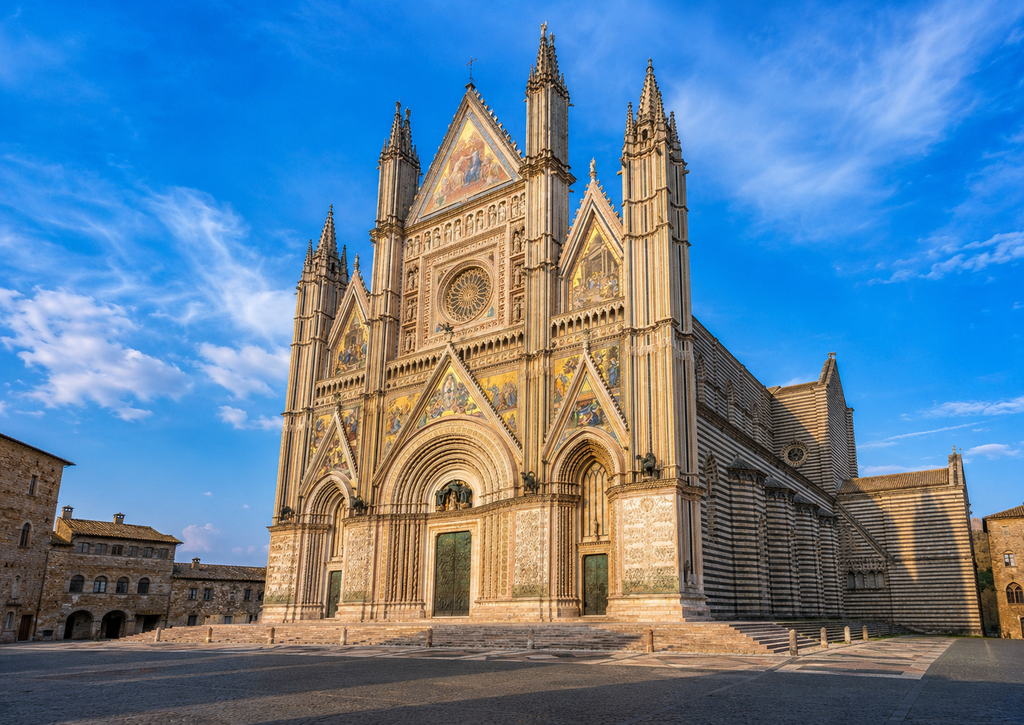
The train emerges from the Lazio countryside, stops below a slab of volcanic rock, and above you sits Orvieto.
That first look is almost annoyingly effective.
The old city stands high above the surrounding Umbrian landscape. You reach it by funicular, bus or a determined uphill effort that I recommend only if your holiday includes voluntary suffering.
The Main Event: Orvieto Cathedral
The façade of the Duomo di Orvieto refuses to behave quietly.
It is striped, sculpted and covered in mosaics. Gold catches the sun. Figures peer out from stone. The building seems to become more complicated the longer you stare at it.
Inside, the San Brizio Chapel contains frescoes by Luca Signorelli depicting the Last Judgment in considerable anatomical detail.
Medieval church decoration was not always subtle.
What Else to See
Do not simply photograph the cathedral and leave.
Walk to St. Patrick’s Well, or Pozzo di San Patrizio, an engineering oddity built with two spiral staircases so people and pack animals could move up and down without colliding.
Explore the medieval lanes around Via del Duomo.
Then investigate Orvieto Underground, where tunnels and caves cut into volcanic tuff reveal cellars, wells and centuries of adaptation below the city.
Getting There
Direct or one-change rail journeys from Rome typically take roughly 75–90 minutes.
From Orvieto railway station, the funicular climbs toward the old town. Trenitalia currently offers an Orvieto Link add-on costing €1.30 each way for the connection toward Orvieto Centro.
Eat Something Proper
This is Umbria. Act accordingly.
Look for umbrichelli, thick handmade pasta often served with tomato, truffle or wild boar sauce.
Order porchetta if you see a good one.
And if you drink wine, Orvieto Classico is the obvious local glass.
Budget
Expect around €45–€90, depending on your train, attraction choices and lunch ambitions.
Best for: Food lovers, couples, photographers and anyone looking for one of the easiest medieval day trips from Rome.
My Tip: Orvieto deserves at least six hours on the ground. Do not schedule it like a half-day attraction.
4. Florence: Yes, You Can Do It in a Day—But You Need a Plan

There will always be somebody online insisting that Florence cannot possibly be visited in one day.
They are correct.
You cannot properly experience Florence in one day.
You also cannot properly experience Rome in four days or Japan in two weeks.
That does not mean you should stay home.
Modern high-speed trains make Florence one of the most ambitious but practical day trips from Rome, with the fastest services reaching Firenze Santa Maria Novella in around 90 minutes.
The Trick: Do Not Try to See Everything
A one-day Florence itinerary should not contain seventeen museums.
Pick your priorities.
For a first visit, I would walk from Santa Maria Novella toward the Duomo, continue to Piazza della Signoria, cross Ponte Vecchio, eat, and finish with one major museum or viewpoint.
Morning: The Duomo District
Start around the Cathedral of Santa Maria del Fiore.
The coloured marble façade is almost absurdly photogenic, but do not spend the entire morning looking at it from one angle while crowds accumulate around you.
If you want to climb Brunelleschi’s Dome, reserve in advance.
Those stairs are narrow.
Very narrow.
There comes a point when you are inside the curvature of the dome with someone’s backpack six centimetres from your face, wondering why Renaissance architects hated knees.
Lunch
Skip restaurants directly facing the biggest monuments unless you have researched them first.
A lampredotto sandwich is the local adventurous option: slow-cooked cow stomach stuffed into bread and often topped with salsa verde.
Prefer less anatomical lunch? Find a schiacciata sandwich.
Afternoon
Choose either:
- Uffizi Gallery for Renaissance painting;
- Accademia Gallery for Michelangelo’s David;
- or a slower afternoon crossing into Oltrarno.
Getting There
Book a morning Frecciarossa or Italo train from Roma Termini or Roma Tiburtina.
Advance high-speed fares can be reasonable. Last-minute fares often are not.
COMPARE ROME–FLORENCE TRAIN TICKETS ON TRIP.COM
Budget
Allow €80–€180 depending on train prices, museum tickets and food.
Best for: First-time Italy visitors who may not return soon, art lovers and travelers comfortable with a fast-paced day.
Skip it as a day trip if: You have more time. Florence is far better with two or three nights.
5. Naples: Loud, Brilliant and Entirely Uninterested in Behaving for Tourists
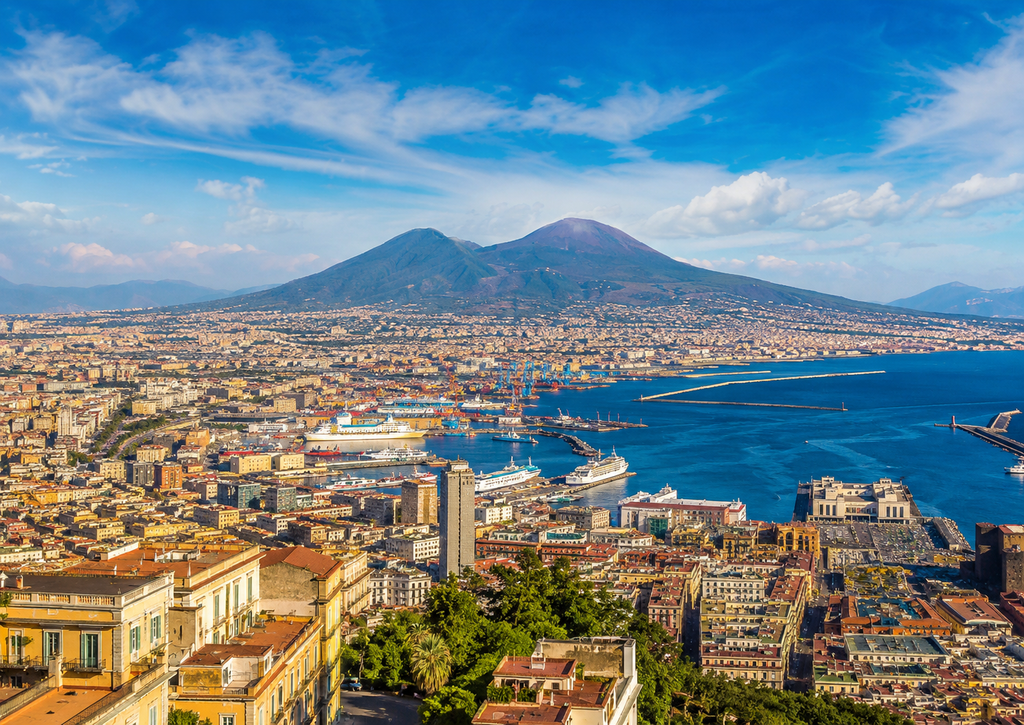
The first rule of a day trip to Naples is to stop expecting a tidier version of Rome.
Naples is Naples.
Scooters nose through gaps that appear physically inadequate. Laundry hangs several stories above your head. Someone is shouting. Someone else is carrying three boxes of pizza. A church doorway opens onto marble and gold while fifty metres away somebody sells phone chargers beside a bucket.
It works on its own terms.
And that is exactly why I like it.
Getting from Rome to Naples
High-speed trains can connect Roma Termini with Napoli Centrale in roughly 70–80 minutes.
That makes Naples one of the best day trips from Rome by train, despite being more than 200 kilometres away.
From Napoli Centrale, either take the metro toward the historic centre or walk toward Spaccanapoli.
What to Do in One Day
Start around Spaccanapoli, the long axis cutting through the old city.
Visit Santa Chiara or the Cappella Sansevero, home to the extraordinary Veiled Christ sculpture.
Walk Via dei Tribunali.
Peek into churches. Watch scooters. Avoid being flattened by scooters.
Then eat pizza.
Not eventually.
Not “if there’s time.”
Eat pizza.
What Naples Pizza Is Actually Like
A proper Neapolitan pizza has a swollen, blistered rim with spots charred almost black. The centre is soft enough that picking up a slice like New York pizza becomes an engineering problem.
The tomato tastes sharp and slightly sweet.
The mozzarella leaks milky liquid.
The dough smells faintly smoky from the oven.
Your first instinct may be to use a knife and fork.
This is not a moral failure.
Add the Waterfront
If you have energy, walk toward Piazza del Plebiscito, the Royal Palace, Galleria Umberto I and eventually the waterfront near Castel dell’Ovo.
On a clear day, Vesuvius sits across the bay like an enormous geographical warning.
Budget
Expect around €65–€140, largely depending on your high-speed train fare.
FIND NAPLES WALKING TOURS & FOOD EXPERIENCES ON GETYOURGUIDE
Best for: Food travelers, solo travelers, photographers and anyone bored by destinations that feel overly polished.
6. Pompeii: A Day Trip That Is Worth the Early Alarm

Pompeii is different.
Plenty of archaeological sites require imagination. You see three stones and a foundation while a sign explains that this was once an important administrative complex.
At Pompeii, you walk along streets.
You enter houses.
You see counters where food was sold, election notices painted on walls, courtyards, ovens, baths and stepping stones worn by feet long gone.
Then you look up.
Mount Vesuvius is still there.
How to Get from Rome to Pompeii
The classic independent route is:
Rome → Naples by high-speed train → Pompeii area by regional/Circumvesuviana connection.
Depending on connections, allow around two to two-and-a-half hours each way.
That is why I recommend leaving early.
Very early.
The current standard entrance for the ancient city of Pompeii is €20, while the wider Pompei+ ticket is €25.
Visitor numbers are controlled, so buying ahead is sensible during busy periods.
Guided or Independent?
I am normally suspicious when every travel article insists you “must” hire a guide.
Here, though, a guide adds enormous value.
Pompeii is vast.
Without context, one Roman house starts resembling another Roman house after hour three.
A good archaeological guide explains why a tiny detail matters: grooves in a road, political graffiti, the shape of a shop counter, or why certain rooms were positioned where they were.
BOOK A POMPEII DAY TRIP OR SKIP-THE-LINE TOUR ON GETYOURGUIDE
What Not to Miss
Prioritize:
- Forum
- House of the Faun
- Forum Baths
- Amphitheatre
- Via dell’Abbondanza
- House of the Vettii, when accessible
- plaster casts of victims
The casts are not a quirky attraction.
Treat them with some respect. They represent actual people who died here in AD 79.
Summer Warning
Pompeii has relatively little shade.
In July and August, the stone seems to store heat specifically so it can return it through your shoes.
Carry water, wear a hat, use high-SPF sunscreen, and do not schedule your arrival for noon if you have a choice.
Budget
A DIY trip can cost around €80–€130.
Organised Rome-to-Pompeii tours commonly cost more but eliminate multiple connections and are worth considering if you dislike transport puzzles.
Best for: Archaeology lovers, history enthusiasts and first-time visitors to southern Italy.
7. Assisi: A Quieter Day in Umbria

After several days in Rome, silence becomes an attraction.
You notice it in Assisi.
Cars are restricted in much of the historic centre. Stone lanes climb gently—and sometimes not gently—between pale medieval buildings. Church bells travel across the valley.
People come primarily because this is the birthplace of St. Francis, but you do not need to be religious to appreciate the town.
Basilica of Saint Francis
The enormous Basilica di San Francesco is the main landmark.
The complex contains an upper and lower church, with medieval frescoes traditionally associated with masters including Giotto and Cimabue.
Inside, conversations drop naturally toward whispers.
Outside, the view stretches over the Umbrian plain.
Beyond the Basilica
Walk uphill through the historic centre toward Piazza del Comune, where the Roman Temple of Minerva has survived by being absorbed into later buildings.
Continue toward Basilica di Santa Chiara.
If you have time and strong legs, climb toward Rocca Maggiore for one of the best viewpoints around town.
Getting from Rome to Assisi
Rail journeys generally take around two to two-and-a-half hours.
Be aware that Assisi railway station sits down on the plain near Santa Maria degli Angeli, not in the old hill town itself.
From there, take a local bus or taxi uphill.
This small logistical detail has surprised many travelers who stepped off the train expecting Saint Francis to be waiting beside the platform.
What to Eat
Try torta al testo, a flatbread usually filled with cheese, greens, sausage or cured meat.
Local Umbrian menus may also feature truffles, wild boar, lentils and substantial handmade pasta.
Budget
Allow around €55–€110.
Many churches are free to enter, which keeps sightseeing costs lower than in Florence.
Best for: Slow travelers, couples, architecture lovers and anyone seeking a calmer day away from Rome.
8. Civita di Bagnoregio: The Village at the End of a Footbridge
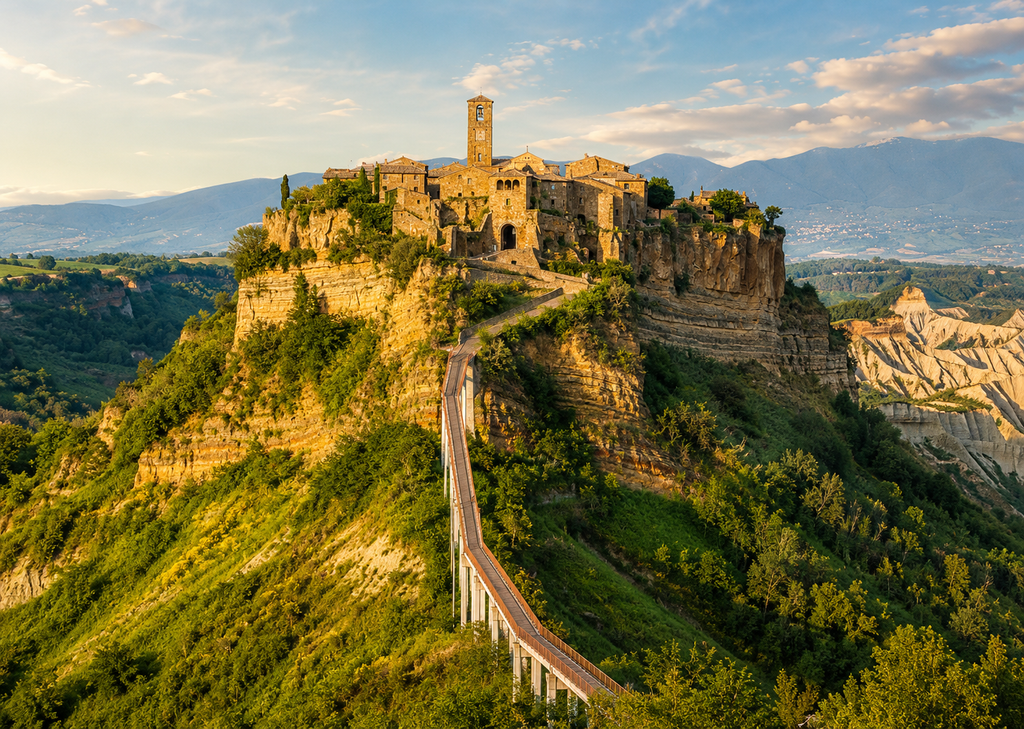
Civita di Bagnoregio looks wildly impractical.
Which, geographically speaking, it is.
The medieval settlement occupies a narrow plateau of volcanic tuff above a deeply eroded valley. The only normal way into the village is via a long pedestrian bridge.
There are no cars waiting on the other side.
No railway station.
No convenient metro.
You walk.
Why Come Here?
Because the approach is extraordinary.
As you start across the bridge, Civita rises ahead like somebody balanced an entire medieval settlement on a cake stand and then forgot to provide another exit.
Once inside, the experience becomes much quieter.
There are stone houses, narrow passages, flowerpots, small restaurants and views dropping suddenly into the valley.
It does not require a checklist of twenty attractions.
That is partly the point.
Getting There
This is the trickiest destination on my list by public transport.
You can combine a train toward Orvieto with onward bus connections, but doing this as a day trip requires careful schedule checking.
A rental car gives you much more freedom and allows you to combine Civita di Bagnoregio with another stop in northern Lazio.
COMPARE RENTAL CARS FOR YOUR LAZIO DAY TRIP WITH GETRENTACAR
If you drive in Italy, remember that historic centres frequently have ZTL restricted-traffic zones. Do not follow Google Maps blindly into one unless you enjoy receiving expensive letters several months after your holiday.
When to Go
Arrive before large tour groups if possible.
Early morning creates a completely different experience from midday.
Late afternoon is excellent too, especially when the rock turns warmer in low light.
Budget
Expect roughly €55–€120, depending heavily on whether you drive, tour or use public transport.
Best for: Photographers, couples, road-trippers and travelers who prefer atmosphere over major museums.
9. Castelli Romani: Wine, Volcanoes and the Roman Art of Leaving Rome
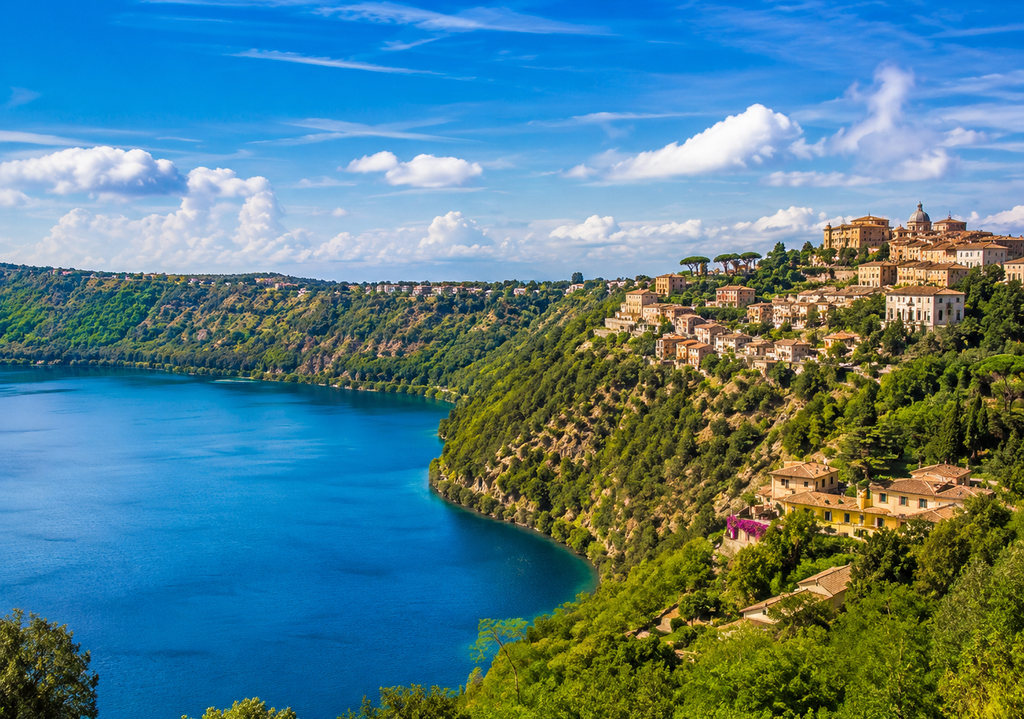
Romans have been escaping Rome for centuries.
They frequently head southeast into the Castelli Romani, a collection of towns scattered around the Alban Hills.
The landscape is volcanic. There are lakes, vineyards, wooded slopes and towns where lunch can become an afternoon project.
Castel Gandolfo
Castel Gandolfo overlooks Lake Albano and is famous for its association with the papal summer residence.
Walk through the compact centre, stop around Piazza della Libertà, then follow viewpoints overlooking the lake.
In warm months you can descend toward the waterfront for kayaking, swimming or an excessively long lunch.
Frascati
If food and wine interest you more than papal history, Frascati is the better target.
The town is associated with Frascati DOC wine, usually white, crisp and extremely cooperative with warm weather.
Look for traditional fraschette, informal places serving cured meats, cheese, porchetta and wine.
There is something deeply satisfying about eating thick slices of porchetta with crackling skin, salty cheese and bread while Rome sits less than an hour away being Rome without you.
Getting There
Regional trains connect Rome with Frascati and Castel Gandolfo.
Travel times are generally around 30–50 minutes, making this one of the least stressful escapes on the list.
Turn It Into a Wine Experience
A structured wine tour works particularly well here because nobody in your group has to volunteer to drive.
BROWSE FRASCATI & CASTELLI ROMANI FOOD AND WINE TOURS ON GETYOURGUIDE
Budget
Expect approximately €40–€100.
More if lunch becomes what Italians diplomatically call “lunch” and other nationalities call “the remainder of the day.”
Best for: Couples, wine lovers, repeat Rome visitors and anyone suffering from museum fatigue.
10. Sperlonga: When Your Brain Has Had Enough of Roman Emperors

Eventually there comes a point when you have seen enough emperors.
Not permanently.
Just until tomorrow.
That is when I send you toward Sperlonga.
This whitewashed coastal town between Rome and Naples climbs above the Tyrrhenian Sea, with narrow staircases twisting between houses and beaches stretching below.
Why Sperlonga Works
You get two very different experiences.
First, there is the old town: white walls, arches, small piazzas, cats behaving like property owners.
Then there is the sea.
The beaches around Sperlonga have clearer water than you usually find near metropolitan Rome, making this a particularly good summer day trip from Rome.
Do Not Miss the Villa of Tiberius
History will find you anyway.
South of town are the remains of Emperor Tiberius’s seaside villa, built beside a natural grotto.
Large sculptural groups discovered here are displayed in the nearby archaeological museum.
Apparently even ancient Roman rulers understood that being emperor was easier with beachfront property.
How to Get There
Take a train from Rome toward Fondi-Sperlonga, then continue by local bus or taxi to the coast.
Allow around 90 minutes to two hours each way, depending on connections.
A rental car is another option, especially if several people are traveling together.
Summer Strategy
If visiting between June and September:
- Leave Rome early.
- Reserve beach facilities if you want a lido.
- Carry cash as backup.
- Stay for dinner if transport connections permit.
- Avoid Sunday afternoon traffic back toward Rome if driving.
Budget
Roughly €45–€90 for a DIY visit.
Add more for beach clubs, seafood or taxis.
Best for: Summer travelers, couples, families and anyone who has started having dreams involving museum audio guides.
Which Rome Day Trip Should You Choose?
If you have time for only one, choose according to what Rome has already given you.
If you still want Roman history, visit Ostia Antica or Pompeii.
If you need gardens and architecture, choose Tivoli.
If you want food and street life, go to Naples.
If you want medieval Italy, take the train to Orvieto.
If your Italy trip somehow excludes Tuscany, Florence is possible—just accept that you are sampling rather than absorbing it.
If you want peace, pick Assisi.
If you have a car and a camera, Civita di Bagnoregio.
If lunch and wine have become your primary cultural research method, Frascati.
And if you are simply tired, hot, and beginning to resent marble, go to Sperlonga and get in the sea.
How Many Day Trips Should You Take from Rome?
For a three-day Rome trip, none.
I mean that.
Rome itself deserves your time.
For four days, take one day trip if you are especially interested in somewhere nearby.
With five or six days, I think one or two excursions work beautifully.
If you have a full week in Rome, three day trips are perfectly reasonable, especially if this is not your first visit.
A combination I particularly like is:
Tivoli + Orvieto + Naples.
You get ancient and Renaissance architecture, a medieval Umbrian city, and a completely different southern-Italian urban experience.
Where to Stay in Rome for Day Trips
If day trips are central to your itinerary, location matters more than having a romantic rooftop view three kilometres from useful transport.
Look around:
Monti
Good restaurants, attractive streets and walking distance from Termini without feeling like you are sleeping inside a railway station.
Repubblica
Extremely practical for transport and central sightseeing.
Termini
Not Rome’s most romantic district, but useful for very early trains.
Choose accommodation carefully; individual streets vary considerably.
Prati
Excellent for the Vatican, although less convenient for repeated departures from Termini.
FIND WELL-RATED ROME HOTELS ON BOOKING.COM
Money in Italy: Avoid Losing €20 at a Time to Tiny Fees

Italy uses the euro.
Cards are accepted widely, but I still carry some cash for smaller cafés, local buses, market purchases and establishments whose card machine appears to suffer mysterious philosophical problems.
When an ATM or card terminal asks whether you want to pay in your home currency, decline dynamic currency conversion and choose euros.
Your bank or travel card will generally handle the conversion more fairly.
For frequent international travelers, services such as Revolut and Wise can be useful for holding euros and reducing unpleasant foreign-exchange surprises.
OPEN A REVOLUT TRAVEL ACCOUNT →
CHECK WISE FOR INTERNATIONAL TRAVEL SPENDING →
Stay Connected Without Hunting for SIM Shops
You will use mobile data more than you expect on these trips.
Train changes.
Bus stops.
Opening hours.
Restaurant research.
The inevitable moment when Google insists your destination is “four minutes away” despite an entire mountain appearing between you and it.
An eSIM lets you arrange mobile data before arrival without removing your physical SIM card.
Download offline maps too. Technology develops a sense of humour precisely when your bus arrives.
Sustainable Day Trips from Rome That Do Not Make Travel Miserable
“Sustainable travel” sometimes gets presented as a choice between saving the planet and enjoying your holiday.
It does not need to be that dramatic.
A few practical choices genuinely help:
Take the Train Whenever It Makes Sense
For Florence, Naples, Orvieto, Assisi, Tivoli and much of the region, rail is usually easier than driving anyway.
You avoid parking, tolls and Rome traffic while reducing the environmental cost of your trip.
Stay Longer Instead of Collecting Places
Do not visit Orvieto for ninety minutes merely because you can.
Slower visits generally mean more money stays with local cafés, restaurants and independent shops—and you actually remember where you went.
Carry a Reusable Bottle
Rome is famous for its nasoni, public drinking-water fountains.
Refill before leaving the city rather than buying new plastic bottles throughout the day.
Eat Locally
Order what the region produces.
Umbrian pasta in Orvieto.
Pizza in Naples.
Porchetta around the Castelli Romani.
Local food is not merely more interesting; it usually requires less elaborate transport and packaging than internationally standardized menus.
Respect Places Where People Actually Live
Civita di Bagnoregio, Assisi, Orvieto and Sperlonga are not theme parks.
Keep noise down on residential lanes, do not block doorways for photographs, and do not fly drones wherever you feel like it.
Your Instagram Reel is unlikely to justify annoying an entire town.
The Part Where Rome Pulls You Back In
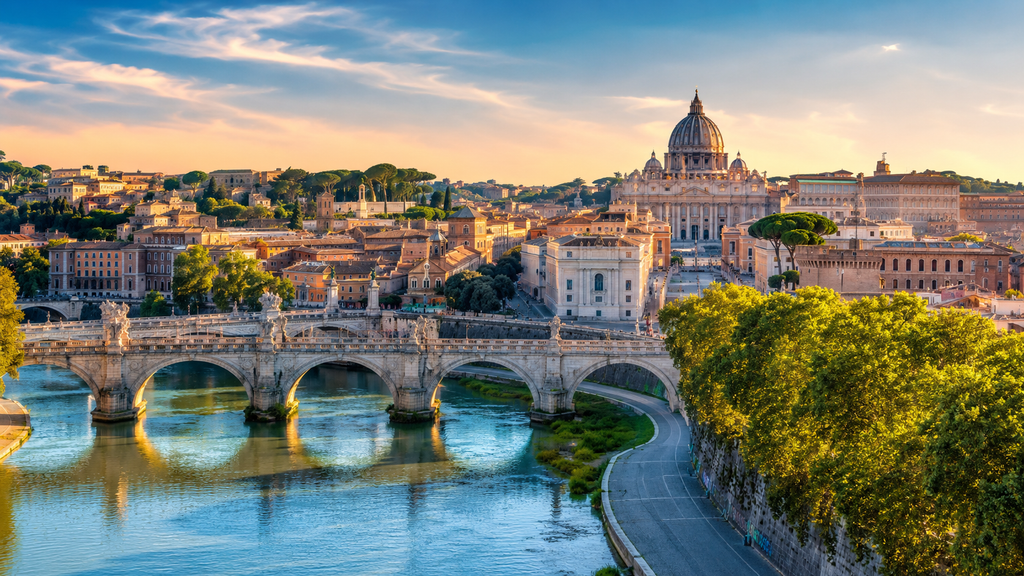
The funny thing about leaving Rome for the day is that it usually makes me appreciate Rome more.
You spend the morning inside the silent remains of Pompeii, then arrive back at Termini with announcements echoing off the platforms and commuters marching toward the metro.
Or you return from Assisi, where stone lanes go quiet after lunch, and suddenly somebody in Rome is leaning on a car horn as though personally responsible for defending Western civilisation.
After Sperlonga, Rome feels dusty and enormous.
After Florence, it feels rougher.
After Naples, strangely, it can feel almost restrained.
That contrast is exactly why these trips work.
You are not simply adding another pin to a map. You start seeing how much Italy changes over remarkably short distances—architecture, food, rhythm, landscape, accents, wine, even the way people occupy a public square.
For a first trip, I would build your itinerary around Rome first and excursions second. Give the capital the days it deserves. Get lost in Trastevere. Walk beside the Tiber after dark. Eat cacio e pepe somewhere that does not employ a man outside holding a laminated menu. Drink espresso standing at the counter because sitting down somehow makes the same coffee three times more expensive.
Then leave.
Take a train to Orvieto and watch the cathedral tiles catch the afternoon sun.
Walk beneath the pine trees of Ostia Antica.
Stand in Pompeii and look toward a volcano that rewrote thousands of lives in a single day.
Eat pizza in Naples while tomato sauce attempts to escape down your wrist.
Or do absolutely nothing historical for once and put your feet in the sea at Sperlonga.
Then return to Rome.
It will still be there—noisy, scratched, magnificent, irritating and probably serving dinner later than you expected.
And chances are, you will already be planning the next train.
And if you enjoy travel guides that tell you what is actually worth your time, what things really cost, which mistakes to avoid and where I would spend my own day, subscribe to A Tiny Traveler.
I have plenty more Italy guides coming—along with practical itineraries, train trips, hotel recommendations, food discoveries and occasional arguments with badly designed ticket machines.
And follow A Tiny Traveler on Pinterest too.
That is where I share new itineraries, destination guides, travel-planning ideas and those places that make you open another browser tab and start checking flight prices when you were supposed to be working.
Subscribe. Save this guide. Follow along on Pinterest.
Your next Italian train is probably leaving earlier than you think.
Frank


