

Discover the 10 best things to do in Amsterdam, from canal cruises and essential museums to local food, practical budgets, transport tips, and a smart three-day itinerary.
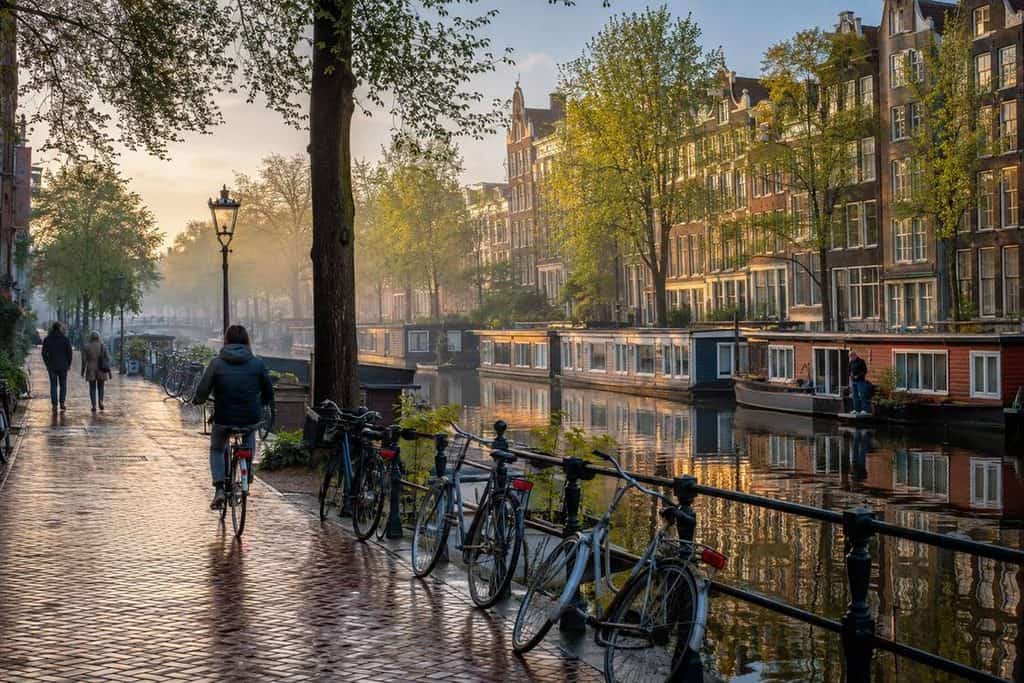
Amsterdam introduced itself to me with a bicycle bell. Not a polite little ding, either. This one arrived directly behind my left shoulder while I was admiring a crooked canal house and standing, with majestic tourist confidence, in the middle of a red cycle lane. I jumped onto the pavement. The cyclist continued without drama. Lesson one: in Amsterdam, the bicycles are not scenery. They are traffic, religion, family transport, and occasionally a very efficient correction to your spatial awareness.
This guide covers the 10 best things to do in Amsterdam for a first visit, but it also handles the less glamorous questions that decide whether a city break works: how early to reserve the Anne Frank House, what museums cost, where to stay, how contactless transport works, and whether the I amsterdam City Card saves money. I have included realistic daily budgets, useful official links, photo directions, sustainable travel advice, and a three-day route that does not require military marching.
Come for the canal houses, certainly. Stay alert for bicycles.
Then give Amsterdam enough time to become stranger, warmer, and more complicated than its postcard image. Three full days is the sensible minimum; four lets you linger. And lingering, preferably with an apple pie or a small beer, is where this city starts earning its keep.
Amsterdam at a Glance, for People Who Already Have Too Many Tabs Open
- Country: The Netherlands
- Province: North Holland
- Nearest airport: Amsterdam Airport Schiphol (AMS)
- Ideal stay: Three full days; four if you enjoy slower mornings or a day trip
- Currency: The euro (€)
- Best first-day plan: Cruise the canal belt, walk through the Jordaan, and finish in a brown café
- Best museum: Rijksmuseum for breadth; Van Gogh Museum for emotional focus
- Most important reservation: Anne Frank House tickets, released every Tuesday at 10:00 CEST for visits six weeks later
- Expected daily spend: About €95–€155 on a careful budget, €210–€340 for comfortable mid-range travel, or €450 and upward for a high-end stay
- Best ways around: Walking, trams, metro, ferries, and bicycles when you are confident in traffic
- Known for: Seventeenth-century canals, merchant houses, major art collections, cycling, brown cafés, and weather that changes its mind before lunch
My Tip: Save museum confirmations offline. Your phone battery develops philosophical objections precisely when a timed-entry scanner is waiting.
Why Amsterdam Is More Than a Row of Pretty Canal Houses
Amsterdam grew around water, trade, engineering, immigration, and a remarkable ability to turn logistical problems into civic identity. Its famous seventeenth-century canal ring was a planned expansion, not decorative scenery. Warehouses, merchant homes, bridges, and narrow plots still show how commerce shaped the city. The wealth also carried a darker account: colonial extraction and slavery helped finance portions of the prosperity now displayed in museums and façades.
That history is not trapped behind glass. Read it in harbour districts, Indonesian restaurants, and neighbourhoods beyond the canal belt. Visit the sights, but cross the IJ, eat in De Pijp, and look beyond your photograph.
The Best Things to Do in Amsterdam
1. Take a Canal Cruise Before You Pretend to Understand the Map
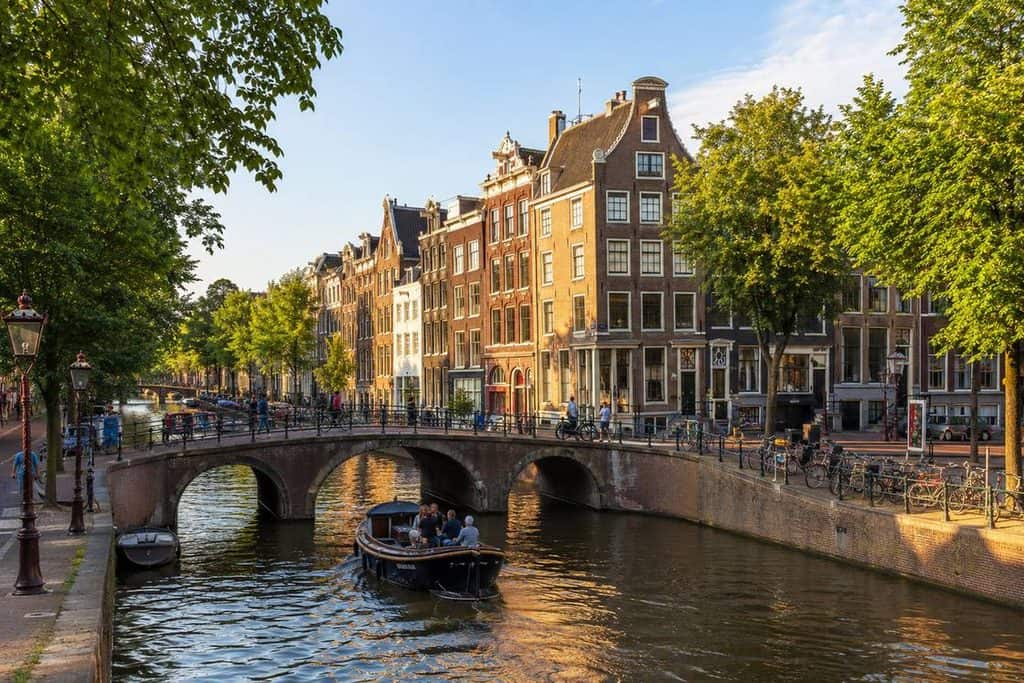
The canal cruise is not merely a tourist ritual. It is an orientation session conducted at six kilometres per hour. From street level, Amsterdam’s canal belt can feel like somebody copied and pasted the same handsome bridge until your internal compass resigned. From the water, the pattern becomes legible: Herengracht, Keizersgracht, and Prinsengracht curve around the old core, while narrow side canals stitch them together.
The seventeenth-century canal ring is a UNESCO World Heritage Site, recognised for its hydraulic engineering and urban planning. Look up at the pulley hooks fixed to the gables. Merchants used them to hoist goods, and residents still use them to move furniture through windows because many staircases appear to have been designed for disciplined cats. Notice the houses leaning forward or sideways. Some tilt intentionally; others have spent centuries negotiating with soft ground and wooden foundations.
Choose a departure near Centraal Station for convenience, near the Anne Frank House to combine activities, or near Museumplein after a museum visit. Evening cruises are romantic, but a morning sailing gives better visibility and quieter water. Sit near the back of an open boat if you want photos without twelve phones held above your head.
My Tip: Book a cancellable slot for your first afternoon. It orients you without demanding much energy after arrival, and rain rarely ruins a covered cruise.
COMPARE AMSTERDAM CANAL CRUISES ON GETYOURGUIDE
2. Meet the Dutch Masters Without Trying to See Every Painting

The Rijksmuseum is what happens when a national collection refuses to fit inside a casual hour. Its galleries cover roughly eight centuries of Dutch art and history, from medieval sculpture and maritime objects to Vermeer, Rembrandt, and the complicated wealth of the seventeenth century. The building itself, designed by Pierre Cuypers, resembles a railway station that married a cathedral and developed excellent taste in tiles.
Go early. The museum opens daily from 09:00 to 17:00, adult admission is €25, and visitors aged eighteen and under enter free. Every visitor needs a timed start, including many cardholders. The official museum guidance says crowds are often lighter before 11:00 or after 15:30; Tuesday and Wednesday tend to be calmer. Reserve through the official Rijksmuseum website, not a mysterious reseller with three exclamation marks in its domain name.
Do not begin with the ambition to “do the whole museum.” That is how cultural appreciation turns into lower-back pain. Start in the Gallery of Honour, see Rembrandt’s The Night Watch, Vermeer’s The Milkmaid, and the dollhouses, then choose one wing based on genuine interest. The free Rijksmuseum app offers themed routes and audio guidance. Two and a half hours feels rich; four hours suits serious art lovers.
The collection also requires honest context. Dutch prosperity did not materialise from clever shipbuilding alone. Trade, colonial extraction, and slavery sit behind portions of the wealth on display. Read the labels. The paintings become more useful when admired without sanding down the history that paid for them.
My Tip: Photograph fewer paintings and spend longer with three. You will remember the crackle of one old face better than a camera roll of eighty rectangles.
3. Visit the Anne Frank House With Preparation and Quiet Attention
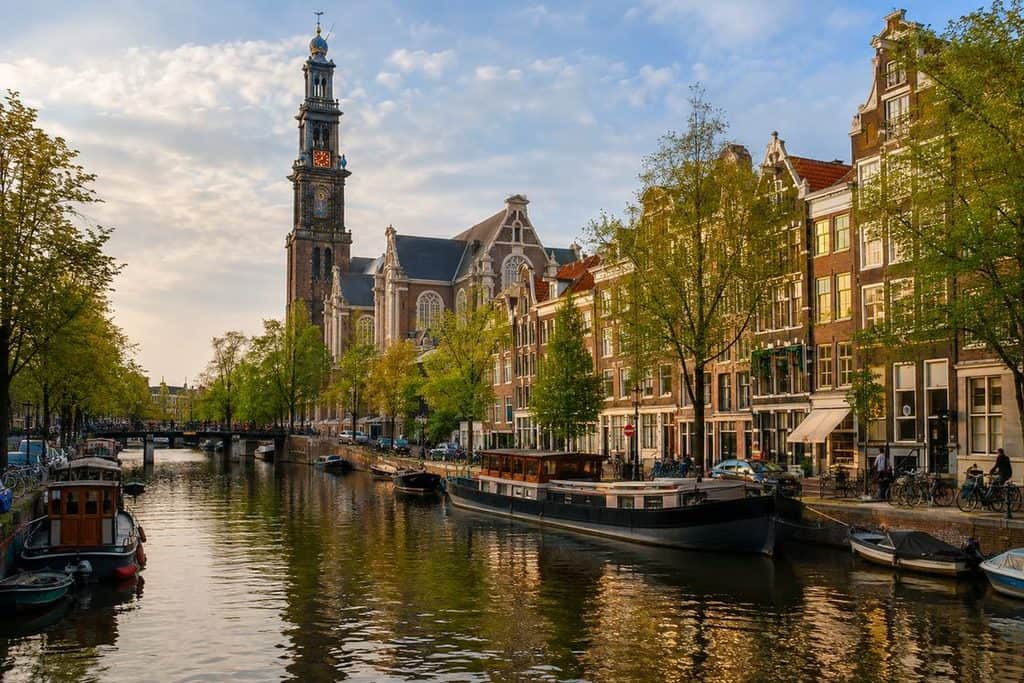
The Anne Frank House is not an attraction to “tick off.” It is a place where ordinary rooms expose the machinery of persecution with frightening intimacy. You move through the former business premises, climb steep stairs, pass the bookcase, and enter the annex where Anne Frank, her family, and four other people hid from Nazi occupation. The space is sparse. That absence does much of the speaking.
Tickets are sold only through the official Anne Frank House website. They are released every Tuesday at 10:00 CEST for a visit six weeks later. Adult admission is €16.50, including the booking fee; ages ten to seventeen pay €7, and younger children pay €1. The museum warns that commercial “Anne Frank tours” do not include entry. If a third-party listing promises otherwise, close the tab.
Allow about an hour inside, though you can move at your own pace. Photography is prohibited. That is a gift, honestly. Nobody is blocking the narrow passage to stage a solemn selfie, and you are allowed to look without turning the moment into content. The included audio tour supplies context clearly.
Accessibility is limited because the historic annex contains many steep stairs. Visitors who cannot access those rooms can explore parts of the museum and the digital annex; check the museum’s accessibility information before booking. The museum suggests a minimum age of ten because of the subject matter and physical setting.
My Tip: Set a calendar alert for ticket-release Tuesday, confirm your time zone, and use only the official seller.
4. Walk the Jordaan and Nine Streets, Then Deliberately Get Slightly Lost

The Jordaan began as a working-class district beyond the wealthy canal ring. Today, its small houses, courtyards, galleries, cafés, and increasingly expensive real estate tell a more polished story, but the street plan still encourages wandering. Start near Noordermarkt, follow Westerstraat, and slip onto quieter canals such as Egelantiersgracht and Bloemgracht.
Be considerate. These photogenic façades are homes, not film sets. Do not sit on front steps, peer through windows, block narrow pavements, or drag rolling suitcases over residential streets at midnight. Spend locally: buy coffee from an independent café, choose a neighbourhood restaurant, and take home something made or sold by people who work here.
My Tip: Walk the Jordaan before 10:00, when delivery vans rather than tour groups create the main obstacles. Return later for dinner and see how the same streets change after the shops close.
FIND WELL-RATED AMSTERDAM HOTELS ON BOOKING.COM
5. Let Van Gogh Be Messy, Restless, and More Than Sunflowers

The Van Gogh Museum works because it follows a life rather than arranging paintings as isolated trophies. You see Vincent van Gogh learning, failing, borrowing, experimenting, arguing through letters, and changing at speed. Famous works appear, including Sunflowers, Almond Blossom, The Bedroom, and The Potato Eaters, but the lesser-known studies make the familiar canvases feel earned.
Adult admission is €25, visitors under eighteen enter free, and eligible EU/EEA students pay €16. All visitors must reserve a timed ticket online through the official museum website. Popular dates sell out, especially weekends, tulip season, and summer. Book at least one to three weeks ahead; earlier is wiser for fixed dates.
Allow two hours. Start with the permanent collection and follow the chronological route. The letters deserve attention because Van Gogh’s popular image as a mad solitary genius is lazy shorthand. He was articulate, observant, financially dependent on his brother Theo, and engaged with other artists. The museum shows labour: repeated drawings, colour experiments, and the stubborn practice behind the myth.
My Tip: Choose the first entry of the day or a late-afternoon slot, and check current opening hours because they vary by date.
CHECK AMSTERDAM MUSEUM TOURS AND TIMED TICKETS
6. Eat Your Way Through De Pijp and Albert Cuyp Market
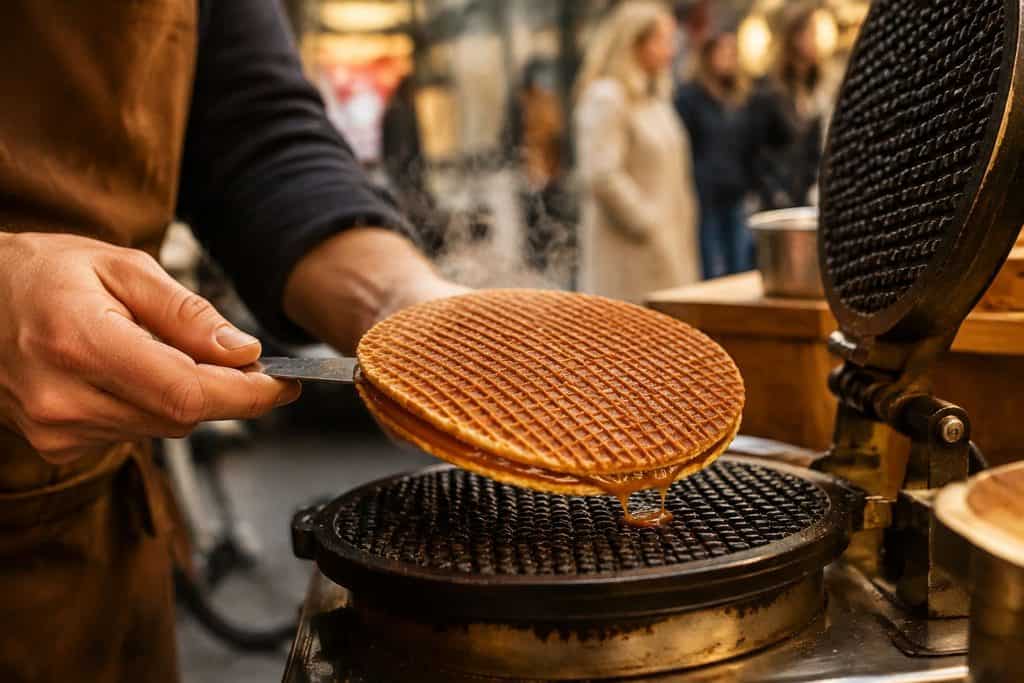
De Pijp is where a food stop becomes lunch, then somehow becomes an entire afternoon. Its centrepiece, Albert Cuyp Market, runs Monday through Saturday, generally 09:30–17:00, and closes Sunday. Stalls sell fish, fruit, fabric, phone cases, flowers, spices, cheese, and enough fried food to test the structural integrity of a paper napkin.
Start with a fresh stroopwafel. The iron presses two thin waffles until their edges crisp, then traps warm syrup between them. Bite too early, and the caramel pulls like molten glue; wait thirty seconds, and it becomes chewy, buttery, and much less dangerous. Try kibbeling, chunks of battered white fish served hot with garlicky sauce. A good piece cracks at the coating and steams inside. Herring is softer and saltier, usually served with chopped onion and pickles. Eat it however you like; nobody awards citizenship for dangling it over your mouth.
Market snacks cost roughly €4–€9 each. A casual sit-down lunch in De Pijp commonly runs €15–€25 before drinks. Arrive around 10:30 for breathing room or after 14:00 for a late lunch. Saturday is full-throttle. Keep your bag closed in tight crowds and step aside before photographing food; the next customer may be trying to buy lunch, not participate in your composition.
Walk off the syrup in Sarphatipark, then continue toward the Amstel River or browse side streets around Gerard Doustraat.
My Tip: Share several snacks instead of committing to the first giant waffle. Market appetite is a limited resource, and fried fish deserves room.
7. Cycle Carefully, or Walk Vondelpark Without Shame

Start in Vondelpark. The broad paths give you room to relearn braking, signalling, and looking over your shoulder without swerving like a startled duck. From there, confident riders can continue south, follow the Amstel River, or explore Amsterdamse Bos. Standard city-bike rental often costs €15–€25 for twenty-four hours, plus optional insurance or deposit. The I amsterdam City Card includes a twenty-four-hour rental at participating businesses.
Follow local rules. Ride in the cycle lane on the right, obey lights, use front and rear lights after dark, signal turns, and cross tram rails at a strong angle so your wheel does not slip into the groove. Never stop inside a cycle lane to consult a map. Pull over. Park only in designated racks or facilities, and use both the wheel lock and chain lock. The city removes badly parked bicycles with brisk administrative confidence.
Avoid weekday rush hours, roughly 08:00–09:00 and 17:00–18:00. Do not cycle after drinking or using cannabis. If the traffic feels stressful, walk. There is no medal for becoming a temporary road hazard. Vondelpark is equally pleasant on foot, particularly in the morning when runners, dogs, parakeets, and coffee cups form the local procession.
My Tip: Book a small guided bike tour on day two, after you have learned where cycle lanes hide and how tram stops work.
BROWSE SMALL-GROUP AMSTERDAM BIKE TOURS
8. Cross the IJ for Amsterdam-Noord, NDSM, and a Better Skyline

Begin with the ferry itself. Wind pushes across the deck, commuters roll bicycles aboard, and the city’s narrow canal scale opens into working water. At Buiksloterweg, the angular white Eye Filmmuseum holds exhibitions, screenings, a shop, and a café facing the river. Even without a ticket, the building and waterfront are worth the crossing.
At NDSM, keep time loose. Browse large-scale street art, check current exhibitions, and sit beside the water. This area changes with events, construction, and weather, so consult the official I amsterdam calendar before visiting. The ferry ride from Centraal is longer than the Buiksloterweg hop; bring a layer because the IJ manufactures wind even on polite-looking days.
My Tip: Cross before sunset, explore in daylight, then watch the city lights appear from the return ferry. The best skyline costs precisely zero euros.
9. Read the Old Centre Beyond Its Neon Reputation
The Old Centre is crowded, messy, historic, commercial, sacred, tacky, and often all five within one block. Begin at Dam Square, where the Royal Palace, Nieuwe Kerk, department stores, pigeons, street performers, and demonstrations compete for attention. The square is not intimate, but it explains Amsterdam as a place of trade, power, ceremony, and public argument.
Walk east toward Oude Kerk, the city’s oldest building, standing inside De Wallen, commonly called the Red Light District. This is still a residential neighbourhood and a workplace. Sex workers are people, not scenery. Never photograph or film workers in windows. Do not shout, block doorways, litter, or behave as though legal tolerance means consequences have taken the evening off. Guided tours are not allowed past sex workers’ windows, a useful sign of how seriously the city treats congestion and dignity.
Visit during daylight first. You will notice medieval lanes, canal bridges, Chinatown around Zeedijk, the Fo Guang Shan He Hua Temple, small bars, and the weight of an old port district. At night, the red windows dominate, crowds thicken, and pickpocket awareness matters. Keep valuables secure and leave if a street feels compressed or aggressive.
My Tip: Go with a reputable history-focused guide, keep groups small, and avoid tours marketed like a bachelor-party dare.
10. Finish With Dutch Comfort Food and a Brown Café

In a brown café, order a local beer, jenever, or something non-alcoholic and let the room do its work. You may hear glasses knocking against wood, low conversation, and a bartender operating with admirable indifference to performance. Try bitterballen, crisp breadcrumb shells filled with a hot beef ragout that can remove the skin from your tongue if approached immediately. Mustard helps. So does patience.
For a fuller meal, look for stamppot in colder months, pancakes, pea soup, or an Indonesian rijsttafel. The latter grew through colonial relationships between the Netherlands and Indonesia; enjoy the dishes while acknowledging that history rather than describing them as an exotic Dutch invention. Amsterdam also excels at Surinamese food, particularly sandwiches and roti, reflecting communities that helped shape the modern city.
A casual dinner generally costs €20–€35 per person before alcohol; a more polished meal lands around €40–€70. Beer commonly costs €5–€7.50, while cocktails can sail past €14. Tap water is safe. Ask whether it is complimentary before assuming, because some restaurants bring bottled water by default.
My Tip: Order one round of bitterballen, wait two minutes, then bite. This advice has prevented more pain than several insurance products.
What Amsterdam Actually Costs Per Day
Amsterdam is expensive, particularly accommodation. The city charges tourist tax at 12.5% of the overnight price excluding VAT, usually collected through your accommodation. Confirm whether the displayed booking total includes it. Weekend rates rise sharply, and tulip season, King’s Day, summer, and major events can make ordinary rooms behave like luxury assets.
Shoestring: €95–€155 Per Person, Per Day
This assumes a hostel dorm or basic room outside the core, bakery and supermarket meals, walking, limited nightlife, and one paid attraction. Expect €40–€80 for a dorm bed, €15–€30 for food if self-catering carefully, up to €10.50 for a day of GVB contactless travel, and €17–€25 for one main activity. Book accommodation early; last-minute “budget” beds often become theoretical.
Mid-Range: €210–€340 Per Person, Per Day
This covers half of a €170–€300 double room, breakfast or coffee, a casual lunch, dinner, public transport, and one or two paid sights. Couples sharing a room gain an advantage. Solo travellers receive the traditional single-person surcharge: the same mattress, one body, very little mercy.
Useful 2026 Price Benchmarks
- Coffee: €3.50–€5; specialty drinks often cost more.
- Bakery breakfast: €7–€15.
- Casual lunch: €12–€25.
- Dinner without alcohol: €25–€45 at a straightforward restaurant.
- GVB one-hour ticket: €3.40; contactless GVB Max caps eligible daily travel at €10.50 when you tap correctly.
- Canal cruise: €17–€40 for most shared one-hour options.
- Rijksmuseum: €25 adult; free for ages eighteen and under.
- Van Gogh Museum: €25 adult; free under eighteen.
- Anne Frank House: €16.50 adult, official online ticket only.
Where to Stay Without Sabotaging the Trip
Choose location based on the trip you want, not on the phrase “city centre” alone. Jordaan and the western canal belt suit first-time visitors who want atmospheric streets and walkability, but rooms are costly. De Pijp offers restaurants, market access, and tram connections with more neighbourhood life. Oud-West sits near Vondelpark, cafés, and Foodhallen. Amsterdam-Noord can deliver newer hotels and river views, provided you are comfortable using ferries or metro. Areas around Sloterdijk or Amsterdam Zuid often cost less and connect quickly by train, tram, or metro.
Book three to six months ahead for spring and summer, sooner for King’s Day. Use a refundable rate while your route settles. Compare the complete amount, including tourist tax and breakfast, then check recent comments about noise, heating, air-conditioning, and construction.
SEARCH AMSTERDAM STAYS ON BOOKING.COM
Getting to Amsterdam and Moving Around Without Drama
Trains link Schiphol Airport and Amsterdam Centraal in roughly seventeen minutes on the fastest direct services. Use the official NS Journey Planner for live times and fares. You can tap in and out with the same contactless bank card or device. Each traveller needs a separate payment method, and you must use the same card to exit.
If you have heavy luggage, young children, limited mobility, or a late arrival, a pre-booked door-to-door transfer can justify the extra cost. A private ride generally takes about twenty-five minutes without heavy traffic and costs far more than the train, so the value is convenience, not arithmetic.
Inside the city, walk first. Use GVB trams, buses, and metro when distances grow. With OVpay, tap the same physical card, phone, or watch when boarding and leaving. Do not tap once with your phone and later with the underlying plastic card; the system sees two payment methods.
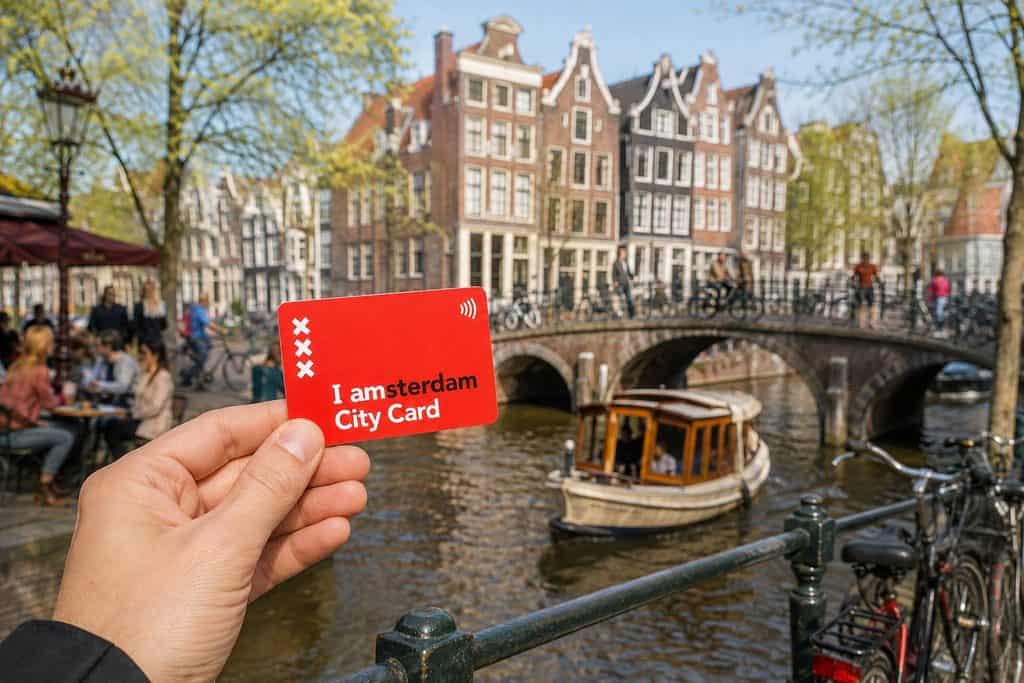
The I amsterdam City Card costs €67 for 24 hours, €94 for 48, €115 for 72, €130 for 96, or €140 for 120. It includes many museums and attractions, a canal cruise, twenty-four-hour bike rental, and unlimited GVB transport. It does not include the Anne Frank House, Van Gogh Museum, airport train, or regional operators. Add your intended admissions before buying. A 72-hour card can work well for museum-heavy travellers; it is poor value if your plan is mainly walking, cafés, and two headline museums it does not cover.
COMPARE RENTAL CARS FOR YOUR POST-AMSTERDAM ROAD TRIP
A Three-Day Amsterdam Itinerary That Leaves Room to Breathe
Day One: Water, Canals, and the Western Centre
Arrive, leave your luggage, and take a late-morning or early-afternoon canal cruise. Walk through the Jordaan, eat lunch around Noordermarkt, browse the Nine Streets, and visit the Anne Frank House at your reserved time. Finish with dinner and a brown café. If you cannot secure museum tickets, take a history walk around the western canal belt and visit the Dutch Resistance Museum on another day.
Day Two: Art, Park, and De Pijp
Enter the Rijksmuseum at 09:00. Eat lunch near Museumplein, then choose the Van Gogh Museum only if you genuinely enjoy concentrated museum days; otherwise, walk or cycle through Vondelpark. Continue to De Pijp, graze through Albert Cuyp Market before closing, and stay for dinner. This ordering reduces backtracking and keeps the most demanding activity in your freshest hours.
Day Three: Old Streets and the Other Side of the IJ
Walk the Old Centre early, entering Oude Kerk or another small museum. Have lunch around Zeedijk, then board the free ferry to Amsterdam-Noord. Choose Eye Filmmuseum, A’DAM LOOKOUT, or NDSM Wharf according to weather and interest. Return at dusk and reserve your final dinner somewhere you noticed earlier, not somewhere an app urgently insists is “nearby.”
Small Decisions That Make the Trip Greener and Kinder
- Travel by train, tram, ferry, foot, or bicycle. The city is designed for them, and the IJ ferries are free.
- Stay longer. Three or four nights distribute the environmental cost of arrival and let you spend beyond the most crowded centre streets.
- Book a certified property. Look for Green Key certification, clear energy policies, refill stations, and credible waste reduction rather than vague green adjectives.
- Carry a bottle and reusable bag. Tap water is safe, and market purchases multiply bags quickly.
- Eat locally and waste less. Choose seasonal menus, share market snacks, and support businesses in Noord, Oost, De Pijp, or Oud-West, not only the canal ring.
- Respect homes and workers. Never photograph sex workers, block bridges, sit on private steps, or leave rubbish beside overflowing bins.
- Choose electric or smaller canal boats. Ask operators about propulsion, group size, and waste practices.
- Park bicycles correctly. Bad parking blocks wheelchairs, prams, residents, and emergency access.
The official I amsterdam sustainable travel guide lists eco-certified hotels, low-waste restaurants, cycling routes, and local initiatives. Sustainable tourism is not about being perfect. It is about causing less friction and leaving more money with the city you came to enjoy.
Money, Data, Insurance, and Other Pre-Trip Details

SET UP REVOLUT FOR TRAVEL SPENDING
COMPARE WISE TRAVEL MONEY OPTIONS
Public Wi-Fi exists, but mobile data makes live transport, timed tickets, maps, and reservation changes easier. Install an eSIM before departure, keep the QR code offline, and confirm that your phone is unlocked and compatible.
COMPARE NETHERLANDS eSIM OPTIONS ON TRIP.COM
Travel insurance matters when your trip contains non-refundable hotels, flights, or cycling. Compare medical cover, cancellation limits, baggage exclusions, excess, and activity terms. Travellers requiring a Schengen visa generally need compliant medical cover of at least €30,000 throughout the Schengen Area; verify current rules for your nationality.
COMPARE NETHERLANDS TRAVEL INSURANCE WITH VISITORSCOVERAGE
Frequently Asked Questions About Visiting Amsterdam
How Many Days Do You Need in Amsterdam?
Three full days cover the main museums, canal belt, two neighbourhoods, and Amsterdam-Noord without excessive rushing. Four days are better if you enjoy long meals, smaller museums, nightlife, or a nearby day trip. Two days work, but every timed ticket becomes a structural beam in the schedule.
What Is the Best Month to Visit Amsterdam?
Late April through May brings tulips, longer daylight, and high demand. June and September balance useful daylight with slightly less pressure than peak summer. October offers copper-coloured trees and frequent rain. Winter is darker, cheaper on some dates, and well suited to museums and cafés. Avoid choosing weather by myth; pack a waterproof outer layer in every season.
Is Amsterdam Safe for Solo Travellers?
Generally, yes. The central risks are bicycle collisions, pickpocketing in crowds, intoxication, and scams rather than violent crime. Watch cycle lanes, secure your phone and wallet, buy museum tickets from official sites, and avoid walking along the canal edge while distracted. Solo travellers should share late-night plans and know how they will return to their accommodation.
Is the I amsterdam City Card Worth It?
It can be, especially for three or more museum-heavy days using GVB transport, the included canal cruise, and bike rental. It is not automatically valuable. List each included attraction you will realistically visit, add ordinary prices, and compare the correct card duration. Remember that the Anne Frank House, Van Gogh Museum, and airport train are excluded.
Should You Rent a Car in Amsterdam?
No, unless mobility requirements make it necessary. Parking is costly, streets are narrow, and public transport is easier. If Amsterdam begins or ends a longer road trip, collect the car on departure day at an airport or outer-city location and return it before your urban stay.
The Part Where the Canal Lights Follow You Home
The best things to do in Amsterdam are not difficult to name. Cruise the canals. Stand before Rembrandt and Van Gogh. Enter the Anne Frank House with humility. Eat fish from paper at Albert Cuyp Market. Cross the IJ. Walk the Jordaan before breakfast. Learn, ideally without bodily harm, that the red path belongs to bicycles.
Yet a good Amsterdam itinerary is less about collecting ten activities than arranging contrast. Follow a grand museum with grass and supermarket sandwiches. Follow the crowded Old Centre with wind on a ferry deck. Follow a serious historical visit with quiet canal walking rather than another queue. The city is compact enough to tempt overplanning, and rich enough to punish it. Leave gaps. Weather will move things around. So will appetite.
That pause matters. It is the difference between visiting a city and merely processing it, between remembering a route and remembering how rain sounded beneath one particular bridge after midnight in October.
If this guide helped you plan, subscribe to A Tiny Traveler for honest city guides, realistic budgets, routes that respect human feet, and travel advice tested against actual logistics. You will receive upcoming articles without needing to hunt through search results while packing.
Follow A Tiny Traveler on Pinterest too, where I share trip-planning ideas, visual itineraries, hotel inspiration, and practical destination tips you can save for later. Send this post to the person joining your trip, especially if that person believes timed tickets can always be purchased “when we get there.”
My last image of Amsterdam is rarely a masterpiece or monument. It is a canal after dinner, windows turning gold one by one, a bicycle rattling over a bridge, and somebody inside a houseboat washing a plate. The city carries on. You stand there for another minute, hands in your pockets, finally aware that the bicycle bell behind you is on the road this time. Progress.
Frank


