

Before you buy the linen shirt, let’s discuss the bridges. Miami has a talent for making places look close on a map, then placing water, traffic, and a very expensive parking garage between them. A little geographical honesty now will save you an argument with your navigation app later.
Here is the useful distinction: Miami is the mainland city; Miami Beach is a separate city across Biscayne Bay, and South Beach occupies its southern end. You can absolutely enjoy both. I just wouldn’t commute between them every time someone mentions lunch.
My version of a good trip gives the ocean its morning, a neighborhood its afternoon, and dinner enough breathing room to become dinner. There is room for Cuban coffee, gallery wandering, garden paths, and the occasional cocktail whose price requires a private moment. Nightclubs are optional. Curiosity isn’t.
This guide to the 10 best things to do in Miami, Florida, is for independent travelers who want beaches, food, culture, and nature without outsourcing their judgment to a ticket bundle. I’ll help you choose what deserves your time, what deserves your money, and what can wait. You do not need to look rich to enjoy this city. You do need a plan for the heat.
Miami, Before You Commit Your Entire Vacation

My recommendation: allow four or five nights. Three full days cover the main city highlights if you make choices. Add another day for the Everglades, and leave space for weather rather than booking every hour.
The ten experiences below cover South Beach, Art Deco architecture, Little Havana, Wynwood, Vizcaya, Pérez Art Museum Miami, Biscayne Bay, Key Biscayne, Coconut Grove, and an Everglades National Park day trip.
Expect roughly $110–$170 per person daily on a careful budget, $220–$350 for a comfortable trip, or $450 and upward for more luxury. Those planning ranges include accommodation, food, local transportation, and ordinary sightseeing. Flights, major splurges, and applicable international visitor park surcharges are extra.
My Tip: Pick one major reservation daily. Fill the surrounding hours with nearby places. Your itinerary should have enough slack for a slow lunch, an unexpected shower, or a painting you actually want to look at.
1. Give South Beach the Morning It Deserves
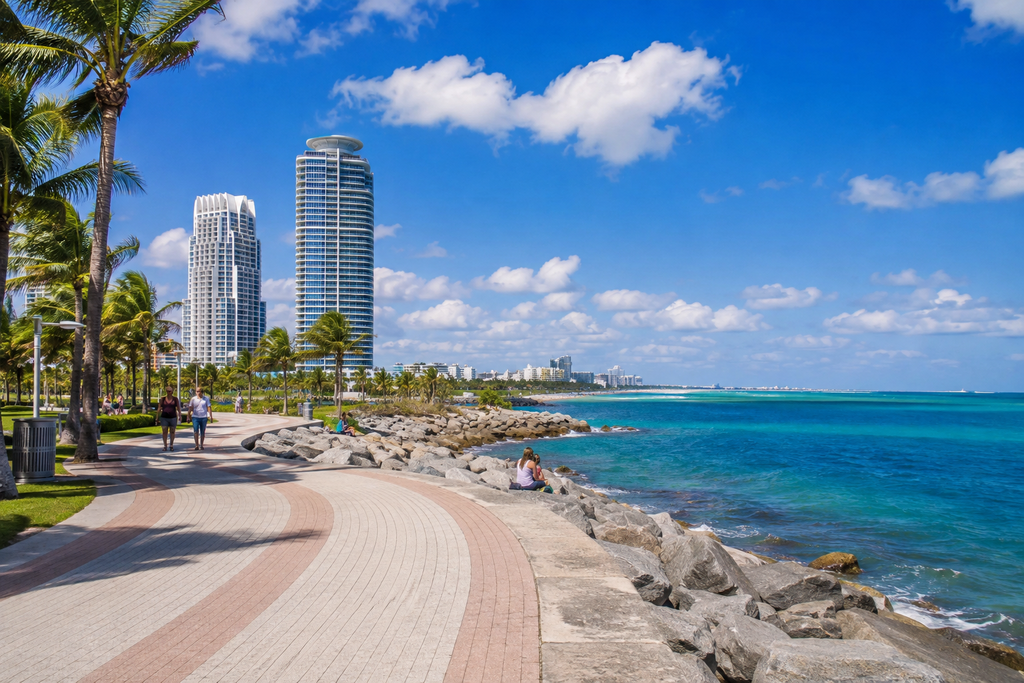
South Beach works best when you treat it as a beach before treating it as a social performance. Start near Lummus Park, where palms separate Ocean Drive from the sand, or head toward South Pointe Park for a walk around the southern tip.
Early light brings out the lifeguard towers’ angular shapes. Joggers pass with impressive purpose. The sand still feels like something you can stand on without questioning your footwear decisions.
I would walk first, eat breakfast, then swim when lifeguards are on duty. Sunrise photography and safe swimming are different appointments. Check the city’s current beach conditions for warnings, surf, and staffed hours.
Saltwater Without the Expensive Extras
Allow two to four hours. Public beach access is free. Chairs, umbrellas, food, and parking cost extra; ask about the full rental price before settling into a lounger that apparently went to business school.
Bring a towel, drinking water, sun protection, and a small waterproof pouch. Leave valuables at your accommodation when possible. If you are traveling alone, don’t assume the stranger beside you has applied for the position of unpaid security guard.
My Tip: Do your longer walk before the strongest heat. Save the shaded lunch stop for midday, and swim near a staffed lifeguard station. Water color tells you nothing reliable about currents.
South Pointe Park also makes a pleasant late afternoon stop, but remember the geography: the ocean-facing beach looks east. For sunset, pay attention to the bay-facing side rather than expecting the sun to drop into the Atlantic.
2. Read Ocean Drive Like a Very Stylish History Book
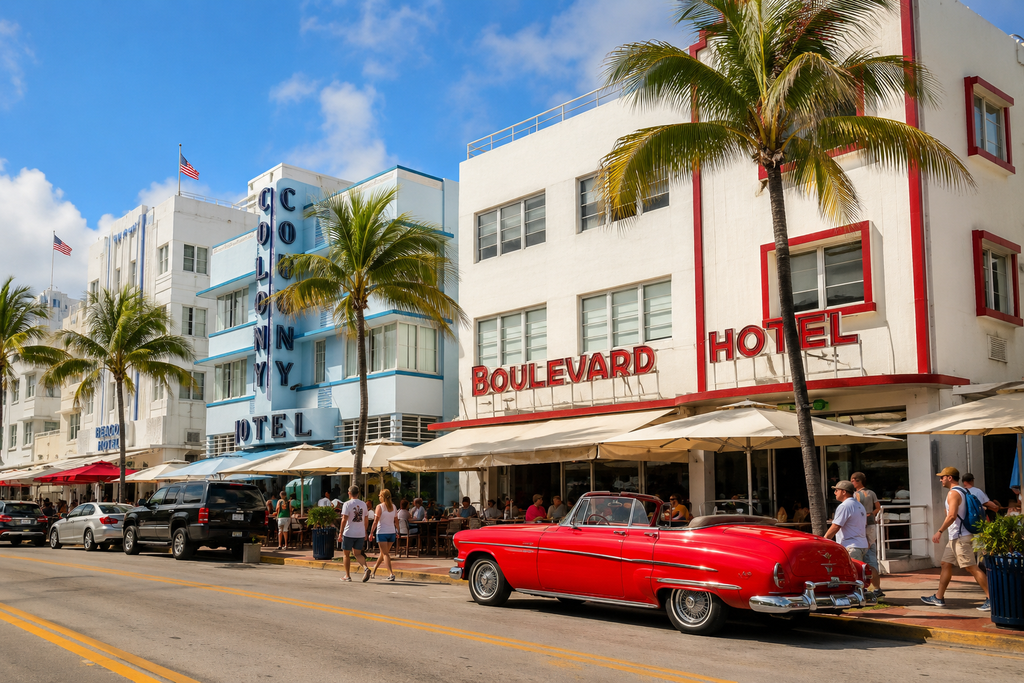
The Art Deco Historic District rewards looking up. Rounded corners, geometric decoration, projecting window shades, and lettering with more personality than most modern logos turn a simple walk into an architectural treasure hunt.
Follow Ocean Drive and nearby Collins Avenue, watching how individual buildings handle corners, entrances, and shade. The point isn’t to photograph every hotel. It is to notice the details that make this particular streetscape recognizable.
I like architecture walks because they slow down the impulse to collect places. Instead of announcing that you have “done” a neighborhood, you start asking why it looks the way it does.
When a Guide Earns the Fee
The Miami Design Preservation League lists an adult Art Deco Walking Tour at $50, lasting roughly two hours and covering approximately 1.5 miles. It departs from 1001 Ocean Drive. Confirm departure times and checkout charges on the official tour page.
Walking the public streets independently costs nothing. A guide adds historical context; it isn’t an admission requirement for looking at buildings.
My Tip: Compare tours by guide expertise, walking distance, language, and group size. A shorter route can be the smarter purchase if heat or mobility makes two hours uncomfortable.
If you prefer booking through GetYourGuide, read the named operator’s description and recent reviews. Check whether the product is an architectural walk, a general sightseeing tour, or an audio download. Those are different purchases.
Find an Art Deco walking tour on GetYourGuide
3. Follow Your Appetite Through Little Havana
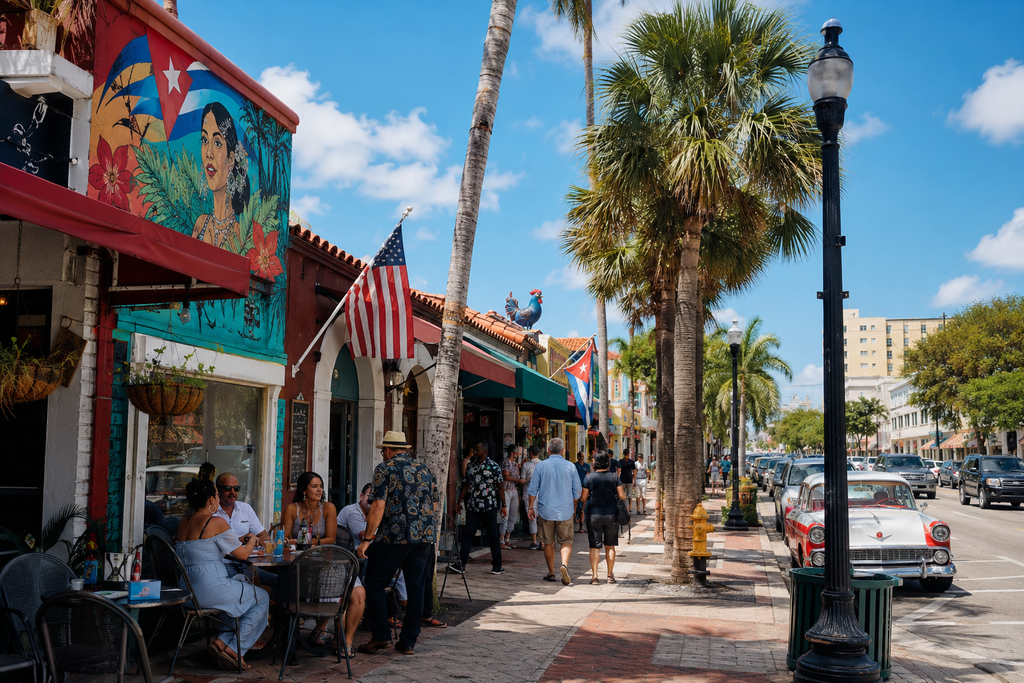
In Little Havana, start around Calle Ocho, particularly the area near Domino Park, then give yourself permission to wander between food stops. Coffee, music, migration, business, and everyday neighborhood life overlap here. None exists purely to decorate your vacation.
The click of dominoes is part of the appeal. Máximo Gómez Park, usually called Domino Park, is a social space where games are taken seriously. Watch respectfully, ask before taking close portraits, and don’t assume an empty chair is yours. The tourism board’s Little Havana guide explains the neighborhood and its landmarks.
Order Something Smaller Than Your Confidence
A cafecito is a small, sweet coffee; a cortadito adds milk. A colada generally comes with little cups for sharing. I would not approach the latter as an individual hydration strategy.
For lunch, a Cuban sandwich brings pressed bread, pork, ham, cheese, mustard, and pickles into a very persuasive argument. At Sanguich, the menu describes house-made ingredients; check the selected location’s current prices before ordering.
The appeal is texture: a thin crust cracking under your teeth, warm cheese pulling against sharp pickle, mustard cutting through the richness. Save room if you want another stop rather than turning lunch into an endurance event.
Allow two to three hours; budget $20–$40 for a casual food wander. A guided tasting tour costs more but can add context and help you order confidently. Confirm included portions, allergies, walking distance, and whether drinks are extra.
Compare Little Havana food tours on GetYourGuide
My Tip: Pay neighborhood businesses for what you enjoy. Buy the coffee, purchase the music, tip the guide. Cultural appreciation works better when somebody local receives more than a photograph.
4. Look Beyond the Selfie at Wynwood

Wynwood is a good place to remember that “street art” describes several different experiences. There are murals visible from public streets, galleries with their own schedules, and the ticketed Wynwood Walls museum campus.
The neighborhood is not an admission-controlled attraction. You can explore public streets without purchasing a Wynwood Walls ticket. Conversely, a neighborhood walking tour doesn’t automatically include entry to the museum.
Inside Wynwood Walls, large-scale murals and gallery spaces make it easy to compare styles in one concentrated visit. Outside, the district includes restaurants, working businesses, traffic, and construction. Keep your eyes on the sidewalk occasionally. Art appreciation is less satisfying after an encounter with a curb.
Choose the Version That Fits Your Interest
Allow 60–90 minutes inside, or two to three hours for the wider neighborhood. Set aside approximately $15–$25 for basic admission as a planning allowance, then check the official admissions page for the live price and inclusions. Packages and activities cost more.
I would pay for a guide if you want to understand technique, artists, and context. If your main goal is a relaxed walk with a few photographs, start independently.
My Tip: Read an artist’s name, stand back, then look closely. Murals often contain details that disappear when you use them only as colorful wallpaper for your own head.
Avoid blocking doorways or stepping into roads for a cleaner frame. Ask before photographing people working, and don’t touch painted surfaces.
Compare Wynwood art experiences on GetYourGuide
5. Let Vizcaya Museum and Gardens Interrupt the Pace

Vizcaya Museum and Gardens is my pick when you want something that feels removed from the beach-and-bar circuit. There are formal gardens, ornate interiors, shaded passages, and waterfront stonework that encourage lingering.
Built as James Deering’s winter home, the estate borrowed from European design traditions and adapted them to South Florida. The museum’s historical material provides useful background before you arrive.
I would give the gardens proper time instead of treating them as the corridor between the entrance and the photograph. Notice weathered stone, the geometry of a path, and how quickly vegetation makes a formal space feel less obedient.
The Visit That Needs Comfortable Shoes
Allow two to three hours. At this check, adult admission is temporarily reduced to $20 during restoration, rather than the regular $25. Review the construction notice and current tickets before booking. The published regular schedule is 9:30 a.m.–4:30 p.m., closed Tuesdays; consult Vizcaya’s visit information for exceptions, accessibility, and entry arrangements.
Garden surfaces, steps, and outdoor heat matter. If you need step-free access, contact the museum about the specific route and facilities rather than assuming “museum” means uniformly accessible terrain.
Some rooms and garden areas are currently closed, and scaffolding affects parts of the exterior. The restoration update explains what remains accessible; check it before planning a particular photograph.
Look beyond the owner’s name, too. Estates required builders, gardeners, household staff, and maintenance workers. Ask whose labor made the attractive rooms function. History becomes more interesting when the furniture stops getting all the attention.
My Tip: Arrive near opening, protect your outdoor time from the hottest part of the day, and check photography rules before bringing portrait equipment. A casual vacation picture and an organized shoot may have different requirements.
Pair this visit with Coconut Grove later, keeping both on the same mainland outing.
6. Give Pérez Art Museum Miami More Than Your Rainy Hour
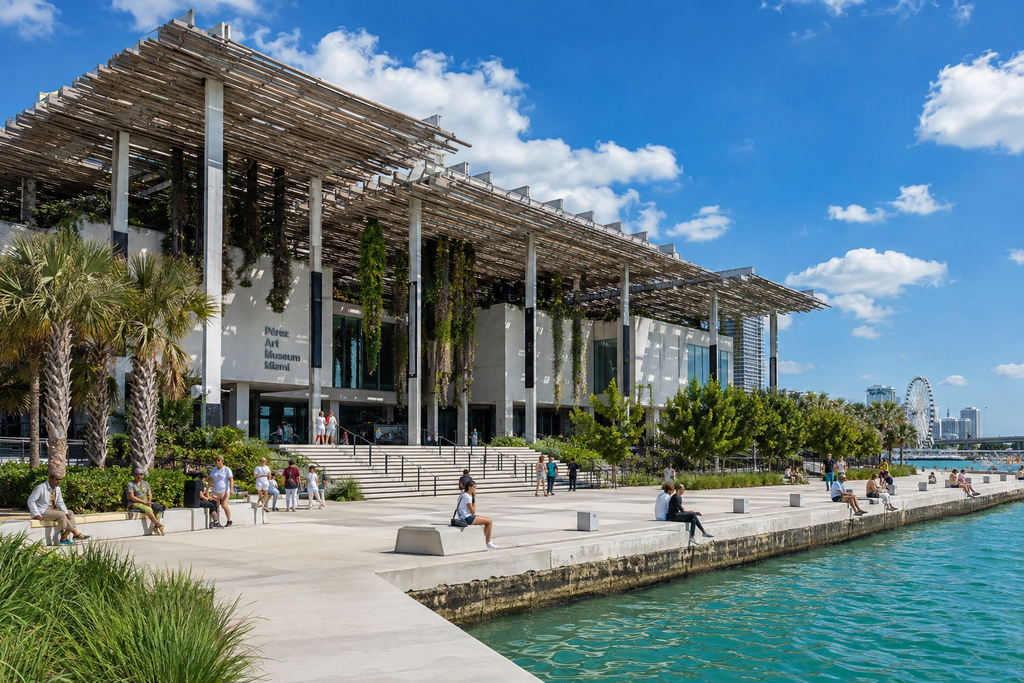
Pérez Art Museum Miami, usually shortened to PAMM, belongs on a cultural itinerary even if the forecast is cooperative. Its modern and contemporary art gives you another way into a city too often reduced to beaches and expensive nightlife.
The waterfront setting helps, but I would resist spending the entire visit outside collecting terrace photographs. Pick an exhibition that interests you, read its introduction, and give a few works sustained attention.
You don’t need an art-history vocabulary. Start with a simpler question: what made you stop? A material, a face, an uncomfortable idea? That is enough to begin.
A Museum With Useful Free Hours
Adult admission is $18. Regular opening is Monday and Friday–Sunday, 11 a.m.–6 p.m., plus Thursday, 11 a.m.–9 p.m. The museum closes Tuesday and Wednesday. Thursday admission after 5 p.m. is free, according to PAMM’s visitor page.
There is also free admission on second Saturdays, with scheduled family activities. Check current arrangements before building your day around them.
Allow around two hours, longer if you enjoy slow gallery visits. Combine it with the nearby waterfront or a later bay cruise, leaving a sensible transfer buffer.
My Tip: Don’t buy an attraction pass until you have checked individual prices and free admission opportunities. A bundle only saves money if it includes things you actually plan to use.
For families, review the exhibitions and activity calendar together beforehand. Giving children one artwork to find can work better than announcing a compulsory afternoon of cultural improvement.
7. See Biscayne Bay Without Buying a Yacht
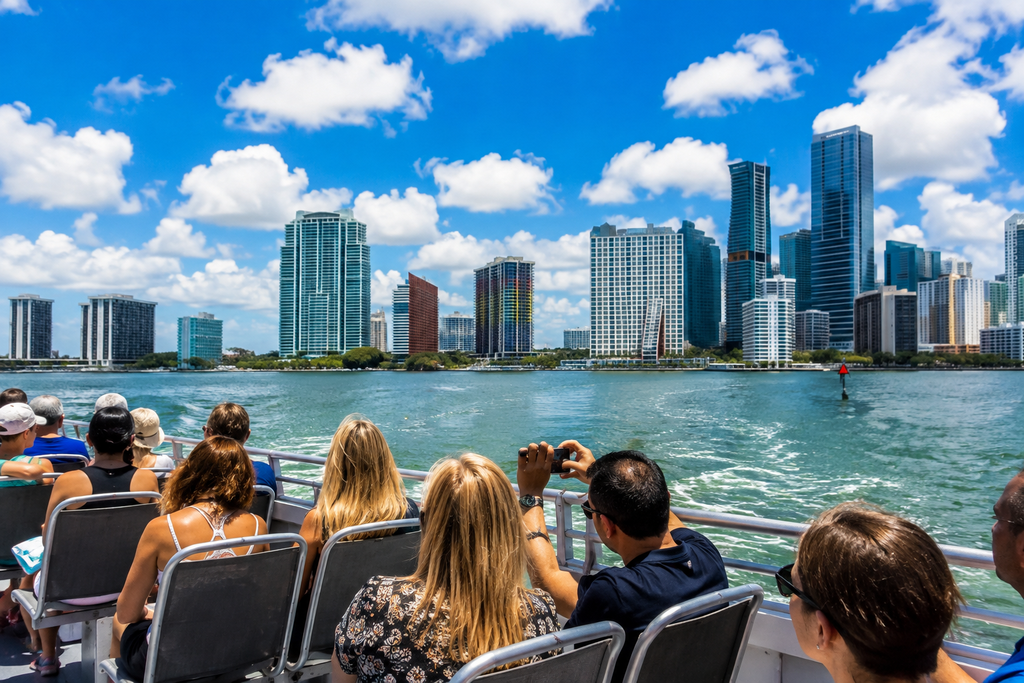
A Biscayne Bay boat tour gives the skyline room to make sense. From the water, you can see how towers, islands, bridges, and port activity fit together. On land, that same relationship often disappears behind a delivery truck.
Many sightseeing cruises leave near Bayside Marketplace. As one example, Island Queen Cruises advertises a 90-minute narrated route with views of the skyline, islands, and waterfront homes; its route description explains what is included.
I would book for the water and city views. Celebrity-house commentary can be entertaining, but property ownership changes, and a distant hedge isn’t necessarily the highlight of your holiday.
Read the Boat Description, Not Just the Sunset Promise
Budget approximately $30–$60 per adult for a standard shared sightseeing trip, with premium products costing more. Confirm departure point, boarding deadline, covered seating, bathrooms, language, and weather cancellation terms.
If a trip is sold as a sunset cruise, check the actual departure time against sunset for your date. Also ask about boarding access if steps, narrow gangways, or motion could cause difficulty.
My Tip: Choose the smallest set of extras you genuinely want. A straightforward cruise may suit you better than a package involving transport, shopping stops, and a meal you didn’t particularly want.
Compare Biscayne Bay cruises on GetYourGuide
For a cheaper water view, investigate the city’s free commuter water taxi between Venetian Marina and Maurice Gibb Memorial Park. Its published service is on weekdays, excluding observed federal holidays. It is transportation, with a limited route, rather than a narrated sightseeing cruise.
8. Trade the Soundtrack for Sea Breeze on Key Biscayne
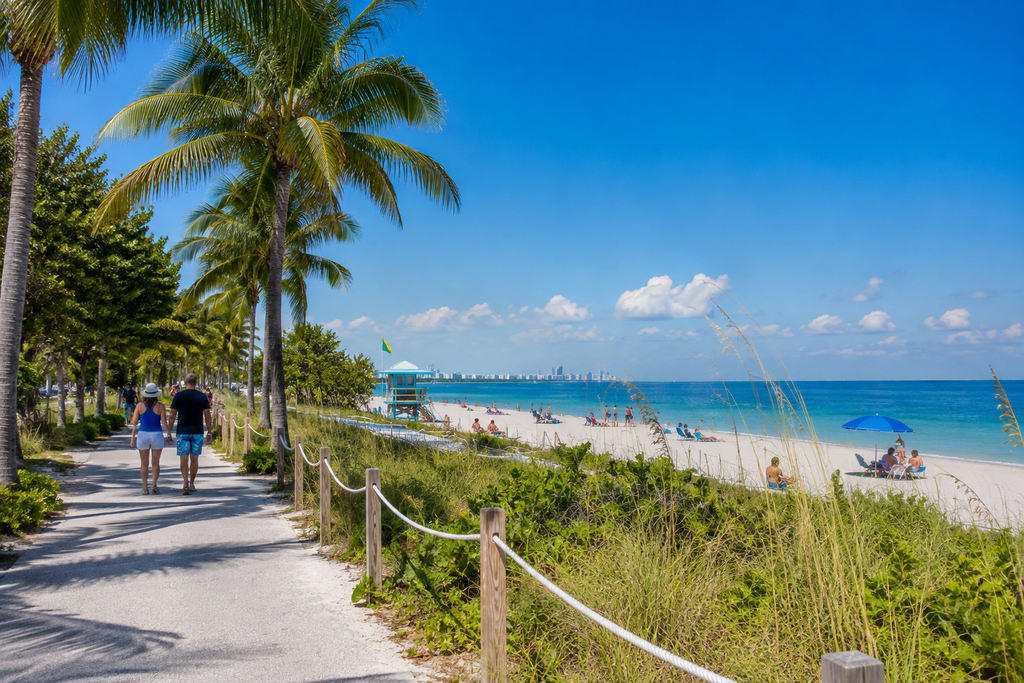
Key Biscayne is where I would send you for a slower outdoor day. The main target is Bill Baggs Cape Florida State Park, at the island’s southern end, reached via the Rickenbacker Causeway.
The appeal is straightforward: beach time, coastal paths, picnic breaks, and the Cape Florida Lighthouse. You can spend an afternoon doing very little without feeling you have somehow failed the destination.
Allow at least half a day, including travel. Weekend traffic and park capacity can complicate access, so an early start helps.
An Island Day With the Costs Explained
The park’s official fees are $8 per vehicle with two to eight people, $4 for a single-occupant vehicle, or $2 per pedestrian or cyclist. It opens 8 a.m. to sundown. Causeway tolls and equipment rentals are separate.
Check the lighthouse information for current tour access and restrictions. Don’t promise children a climb until you have confirmed eligibility and operations.
Bring lunch supplies if you want control over spending. Carry everything out, including the small wrappers that become airborne the moment you stop watching them.
My Tip: Organize your return transportation before committing to a late departure. A scenic island afternoon becomes considerably less romantic when everyone is hungry and waiting for an available ride.
If you want a rental specifically for this day and the Everglades, compare availability through GetRentacar. Check the actual supplier, insurance, deposit, mileage, toll administration, and pickup location before paying.
9. Leave an Afternoon Unhurried in Coconut Grove
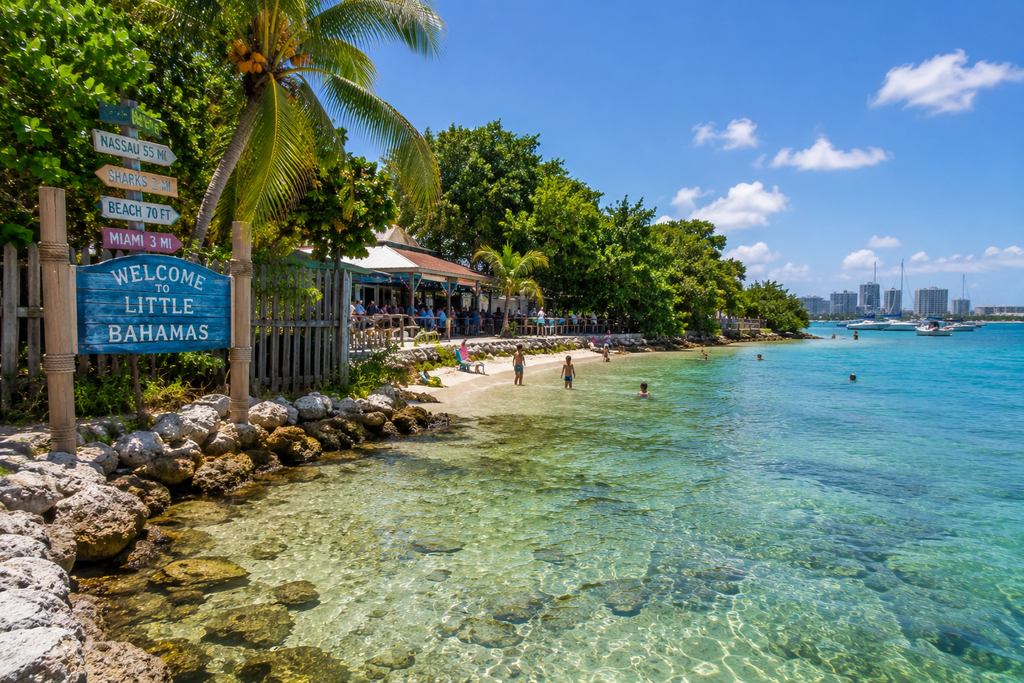
Coconut Grove gives you trees, bayfront parks, places to eat, and an excuse to stop measuring the day in admission tickets. Walk around the village center, browse a little, then head toward Peacock Park.
I would put this after Vizcaya, with lunch or dinner as the anchor. The pleasure is in having enough time to choose a table because you like it, rather than because your next reservation starts in seventeen minutes.
But don’t let attractive shopping streets become the whole story. Coconut Grove’s Little Bahamas reflects the contribution of Bahamian settlers and generations of Black residents. The tourism board’s Village West history guide is a starting point for understanding that history.
A Small Park, a Better Pace
Consider The Barnacle Historic State Park for another low-cost stop. Published grounds admission is $2 per pedestrian or cyclist, with regular opening Thursday–Monday, 9 a.m.–5 p.m. House tours have separate arrangements; check current park information.
Allow two to three hours for the neighborhood, plus any tour or meal. Walking itself is free; dining and shopping determine the rest of the bill.
My Tip: If you explore historic residential streets, remember that people live there. Stay on public routes, keep voices down, and ask before photographing residents or private spaces.
The best reason to come is not another photograph proving that you were here. It is the chance to spend a little time somewhere without needing that proof.
10. Make the Everglades a Real Day Trip

Everglades National Park is outside the city, but it deserves consideration among the best day trips from Miami. It also deserves more thought than clicking the cheapest listing containing an alligator photograph.
For a first visit, Shark Valley offers a 15-mile loop explored by tram, bicycle, or on foot. Allow most of a day, including travel, parking, and the visit. A short walk near the visitor area is a different undertaking from completing the exposed loop.
The official visitor guidance warns that parking fills and recommends arriving 1.5–2 hours before a scheduled tram tour during busy conditions. A reservation does not manufacture a parking space.
Read This Before Budgeting Your Park Day
Standard private-vehicle entry is $35, valid for seven consecutive days. Tram rides and rentals cost extra. Critically, non-U.S. residents aged 16 and older face an additional $100 per person unless covered by an eligible annual pass. Check the park fee page before purchasing anything.
The $250 nonresident America the Beautiful Annual Pass can change the calculation for groups or multiple parks; review official coverage rules. Don’t assume a tour’s headline price includes every applicable charge.
Compare GetYourGuide excursions by their actual location, transport, guiding, fees, and wildlife practices. An Everglades-region excursion is not automatically a visit inside the national park.
Compare Everglades day trips on GetYourGuide
My Tip: Favor observation over animal handling. Bring water, sun protection, insect repellent, and covered shoes. Follow park safety guidance: keep at least 15 feet from alligators and crocodiles, farther when needed, and never feed or approach wildlife for a photograph.
When to Visit Miami Without Arguing With the Weather
December through April is my starting point for comfortable outdoor sightseeing. Expect strong demand and potentially expensive accommodation. March can bring particularly busy periods; check event dates and current city notices before booking.
May and November can offer a useful compromise, but don’t assume shoulder season automatically means low prices. A conference or major event can overwhelm the calendar’s good intentions.
Summer means heat, humidity, and the need for flexible outdoor plans. The Atlantic hurricane season runs June 1–November 30, according to NOAA. That doesn’t mean constant storms, but it does make cancellation terms and weather monitoring worth your attention.
My Tip: Put outdoor activities early, keep an indoor option, and leave room to rearrange. If you hear thunder, head into an enclosed building or hard-topped vehicle; an open picnic shelter is not adequate lightning protection. Follow National Weather Service advice.
Where to Stay: Pick the Neighborhood Before the Pool
South Beach suits a first visit centered on swimming, architecture, and evenings within walking distance. Check recent noise reviews and the distance to the actual shoreline.
Downtown Miami and Brickell suit mainland sightseeing and transit connections. They are not beachfront substitutes. A hotel with a bay view does not necessarily give you a swimming beach downstairs.
Coconut Grove suits travelers who prefer a slower base with restaurants and greenery. Factor in transfers to the beach and other districts.
Before paying, put your hotel and tour meeting points on one map; the most expensive mistake here is sometimes buying the wrong location.
Use Booking.com to compare the total stay price, cancellation deadline, room size, and recent reviews. Check parking, breakfast, resort amenities, and incidental deposits separately. Solo travelers should verify minimum check-in age and whether the advertised price means a dorm bed or a private room.
Find your Miami neighborhood on Booking.com
Cross-check matching dates and room conditions through Trip.com, especially if you are comparing flights at the same time. Keep baggage, payment currency, and cancellation rules consistent; a cheaper-looking result may represent a different product.
Compare Miami flights and hotels on Trip.com
Getting Around Without Funding a Parking Garage
From Miami International Airport, the MIA Mover connects you to the transport hub. Metrorail’s Orange Line serves mainland connections, while Metrobus 150, the Miami Beach Airport Express, serves the beach. Check the airport’s public transportation guidance for your arrival time and destination.
Standard Metrobus and Metrorail fares are $2.25. Eligible contactless journeys cap at $5.65 daily; use the same payment method consistently. Metromover is free around Downtown, Omni, and Brickell. Consult official fares and contactless rules.
The Miami Beach trolley is also free. Check the route and live arrivals rather than assuming every trolley travels where you need.
For luggage-heavy arrivals, families, or late flights, price a Welcome Pickups transfer. Its Miami service advertises flight monitoring and advance booking. Confirm vehicle capacity, child seats, waiting allowances, and the total quote.
My Tip: A car is useful for specific outings, not automatically for every day. Include parking, tolls, fuel, insurance, and deposits when comparing it with transit and rideshares. For walking, assess the actual route; a short distance can still involve unpleasant crossings and little shade.
The Miami Travel Budget With the Small Print Included
These are planning estimates in U.S. dollars, not guaranteed quotes. Accommodation examples assume ordinary dates, not peak events. The careful budget uses a dorm or inexpensive shared room; comfortable and luxury budgets assume two adults sharing accommodation.
| Daily category, per person | Careful | Comfortable | More luxury |
|---|---|---|---|
| Accommodation allowance | $50–$80 | $110–$170 | $230+ |
| Food allowance | $35–$45 | $60–$85 | $110+ |
| Local transportation | $6–$15 | $20–$40 | $50+ |
| Sightseeing | $19–$30 | $30–$55 | $60+ |
| Daily total | $110–$170 | $220–$350 | $450+ |
Solo travelers wanting a private room should budget more. These totals exclude flights, substantial shopping, premium nightlife, and applicable international park surcharges.
Useful everyday allowances include $2–$4 for a small Cuban coffee, $5–$8 for a specialty coffee, $12–$20 for a sandwich, $20–$35 for a casual restaurant main, and $15–$25 for a cocktail. Budget $2–$4 for bottled water, although refilling saves money and packaging. Restaurant prices generally need tax and any tip added unless explicitly included.
My Tip: Check whether service or gratuity has already been added before tipping again. For table service without an included gratuity, budgeting around 18–20% of the pretax bill is a useful starting point. Ask about unclear charges before paying.
Eat Well Without Turning Every Meal Into an Event

I would build your food plans around one proper sit-down meal daily, then leave breakfast and lunch flexible. A neighborhood bakery stop can be more satisfying than another hotel buffet, especially when the pastry sheds half its layers onto your shirt.
Try croquetas for a crisp, savory snack or a guava pastry with coffee. Order modestly first. You can always buy more; you cannot negotiate with an overfull stomach when another interesting counter appears.
My Tip: If you have allergies or dietary requirements, ask about ingredients and preparation directly. Beans, rice, pastries, and vegetable sides aren’t automatically vegetarian or allergen-free. Guided food tours need advance notice, and substitutions should be confirmed before payment.
The Small Things to Pack and Check
Pack comfortable walking shoes, sandals, a hat, sunglasses, sunscreen, a refillable bottle, and a light rain layer. A thin extra layer also helps when indoor air-conditioning seems determined to recreate winter. Bring a power bank and keep your accommodation address available offline.
For international arrivals, check passport and visa requirements through U.S. Customs and Border Protection. ESTA applies only to eligible travelers under the Visa Waiver Program; it is not a universal substitute for a visa. Use official application channels.
Emergency number: 911. Keep essential medication, insurance details, and emergency contacts accessible. Don’t leave medication or electronics baking inside a parked car.
My Tip: Screenshot reservations and meeting points before leaving Wi-Fi. Check the street address, not merely the attraction name, especially for boat departures and tours offering several pickup locations.
Sort Your Cards, Connection, and Cover Before Departure
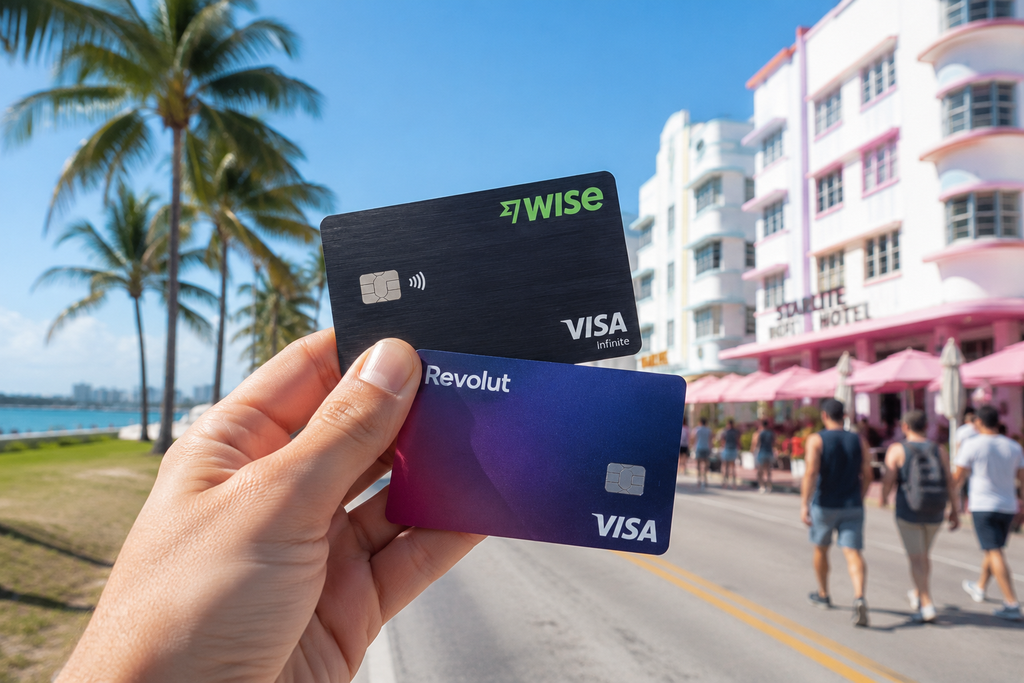
For international visitors, Wise and Revolut are worth comparing with your existing card. Look at eligibility, currency conversion, ATM allowances, plan charges, and card delivery times. Neither should be described as universally free.
Review Wise’s card guidance and Revolut’s exchange information. If offered a currency choice at checkout, choose U.S. dollars rather than accepting a merchant’s home-currency conversion. Carry a backup payment method.
Check Wise for your Miami spending
Compare Revolut plans for your trip
An eSIM on Trip.com can help you navigate and contact drivers without relying on public Wi-Fi. Confirm that your phone is unlocked and compatible, then compare data allowance, coverage network, validity, activation trigger, hotspot permissions, and whether calls are included. The Trip.com eSIM guide explains the basics. Download offline maps anyway.
Find a U.S. travel eSIM on Trip.com
For insurance, compare policies through VisitorsCoverage using your residence, destination, age, and actual trip costs. Travel medical coverage and trip cancellation coverage are different needs. Read exclusions, deductibles, existing-condition terms, and activity coverage. Weather concerns aren’t automatically covered reasons to cancel; consult the hurricane coverage explanation and the policy itself.
Leave Lighter Footprints and Better Neighborhood Receipts
Sustainable travel in Miami starts with practical choices, not a reusable bottle posed beside a rental SUV.
- Group nearby sights. Pair Vizcaya with Coconut Grove, and keep your South Beach plans together.
- Use transit when it serves the trip. Walking and shared transport reduce unnecessary vehicle journeys.
- Carry water and reuse towels. Choose refill opportunities and decline unnecessary daily linen changes.
- Respect dunes and wildlife. Stay on marked access paths, leave shells and plants where they belong, and keep food away from animals.
- Spend locally. Choose neighborhood restaurants, fairly paid guides, and artist-made purchases you actually want.
- Ask before photographing people. A community is not a freely available collection of portrait subjects.
My Tip: Buy fewer disposable beach items. Borrow, rent, or use what your accommodation provides, and return it in good condition.
A Three-Day Miami Itinerary That Leaves Room for Lunch
Day one: Give the morning to South Beach, then explore Ocean Drive’s Art Deco architecture. Rest during the heat and keep dinner nearby.
Day two: Start with Little Havana, then choose Wynwood or PAMM according to your interests and opening days. Add a Biscayne Bay cruise only if the timing feels comfortable.
Day three: Visit Vizcaya and Coconut Grove, or choose a slower Key Biscayne beach day. You cannot comfortably give every place equal attention in three days.
Day four or five: Add the Everglades, the museum you missed, or another beach morning. Check closure days before assigning calendar dates.
Questions Worth Answering Before You Book
Is Miami worth visiting without nightlife? Absolutely. Beaches, architecture, food, museums, gardens, and nature easily fill several days.
Can you visit Miami without a car? Yes, especially with a thoughtfully chosen base. Budget for occasional rideshares and arrange transport separately for distant outings.
Is Miami suitable for solo travelers? Yes, with ordinary city precautions: protect valuables, monitor drinks, use verified rides, and choose well-lit routes at night. Ask your accommodation about the immediate area.
The Part of Miami I Would Leave Unscheduled

I would leave one evening without a ticket, a tasting menu, or a reservation requiring shoes you secretly dislike. Take a walk. Notice which cafe still has people talking outside. Decide whether you want dinner now or another twenty minutes by the water.
You have enough information to make the important choices: a base that matches your priorities, a realistic daily budget, transport that suits your route, and a small number of experiences worth reserving. Start with those. Book accommodation with terms you understand, compare one or two tours you actually want, and handle your airport arrival, connection, and insurance before departure.
Then stop purchasing your vacation for a moment. Miami doesn’t require every hour to be upgraded. A public beach, a neighborhood lunch, and the time to notice what is happening around you can carry more weight than another premium package.
Subscribe to A Tiny Traveler for practical destination guides, honest budget advice, and travel ideas that help you make confident choices. If you want useful planning without the brochure fog, I would love to have you along for the next trip.
Follow A Tiny Traveler on Pinterest, and save this Miami travel guide to your trip-planning board. You’ll have the neighborhoods, costs, and booking advice ready when your dates become real, plus fresh ideas for wherever you head afterward.
Leave a little room in the plan. There should be time for the last swallow of coffee, the scrape of a chair on pavement, and the walk back with salt still drying on your ankles.
Frank


