

A pair of kitchen scissors belongs on Seoul’s unofficial flag. Watch a barbecue server cut pork into tidy pieces above a grill, fat spitting against the heat, and the argument makes itself. This is a city that takes dinner seriously without insisting dinner take itself seriously. I appreciate that. Especially when another plate of something pickled appears.
Then you step outside. A palace roof interrupts the office towers. A cosmetics shop promises a better face. Somewhere upstairs, someone has rented a karaoke room and is making an ambitious attempt at a high note. Seoul refuses to settle on one personality, which is precisely why trying to understand it through a shopping itinerary feels inadequate.
My approach is to give you a few firm plans and plenty of room between them. You need the palace ticket information. You also need time to sit beside the river without evaluating whether sitting counts as sightseeing. It does. I checked with myself.
These are my 10 best things to do in Seoul for first-time visitors, independent travelers, couples, and curious eaters. Alongside the places worth your time, I’ll cover neighborhoods, daily budgets, transport, food, bookings, and the small decisions that keep a promising trip from becoming an expensive series of queues.
Seoul Without the Planning Headache

Allow four to five full days for a satisfying first visit. Three days works if you choose favorites; a week leaves breathing room for neighborhoods and repeat meals.
| What you want | Where I would start |
|---|---|
| Royal architecture | Gyeongbokgung Palace |
| Gardens and history | Changdeokgung Palace |
| Traditional streets | Bukchon and Insadong |
| Market food | Gwangjang Market |
| Skyline views | Namsan and N Seoul Tower |
| Music and nightlife | Hongdae |
| Riverside downtime | Hangang parks |
| Cultural context | National Museum of Korea |
| A rewarding walk | Naksan and Seoul City Wall |
| Shopping and an evening stroll | Myeongdong and Cheonggyecheon |
My Tip: Group nearby places together. A cheap hotel becomes less appealing when you spend the savings crossing the city twice daily.
1. Let Gyeongbokgung Palace Rearrange Your Sense of Scale

Start at Gyeongbokgung, where broad courtyards make the surrounding traffic feel temporarily irrelevant. Look upward: painted brackets beneath the eaves, layered roof tiles, mountains behind the complex. Then look down. The stone surfaces deserve more attention than the procession of phones usually gives them.
This was the principal palace of the Joseon dynasty, and its story includes destruction and reconstruction. Treat it as a place to understand royal power and the city’s changing history, not simply a backdrop for a costume rental.
The ticket, the guards, and the sensible shoes
Standard adult admission is ₩3,000. The palace normally closes on Tuesdays; public holidays can shift that closure. Seasonal closing times vary, with last admission generally one hour earlier. Check the official palace visitor information and admission details.
The Royal Guard Changing Ceremony is normally scheduled for 10 a.m. and 2 p.m., subject to weather and operational changes. Verify the ceremony program before organizing your morning around it.
Allow two to three hours. Gyeongbokgung Station and Gwanghwamun Station are useful access points; check your chosen entrance before leaving the subway.
Hanbok rentals can be enjoyable, and qualifying traditional dress can grant free general admission. But renting clothing to avoid a ₩3,000 ticket is creative accounting. Rent because you want the experience; check fitting, return time, storage, and weather suitability.
My Tip: Explore beyond the busiest courtyard. The quieter edges give you space to notice the details you came to see.
If you want historical context, compare GetYourGuide palace walks by guide credentials, group size, inclusions, and recent reviews. General admission alone is inexpensive; the guide should add understanding.
Compare guided Seoul palace walks on GetYourGuide
2. Make Time for Changdeokgung’s Secret Garden

Changdeokgung Palace rewards a different pace. Its buildings and gardens respond to the terrain rather than forcing everything into a rigid arrangement. That relationship with the landscape helps explain its UNESCO World Heritage significance.
I would choose Gyeongbokgung for ceremonial scale and Changdeokgung for the way a visit unfolds. If history interests you, see both on separate mornings. If palaces make your eyes glaze over after forty minutes, choose one without guilt.
The Secret Garden, also called Huwon, is the reason to plan ahead. Ponds, pavilions, and wooded paths offer a quieter setting, although limited admission does not mean you will have it to yourself.
The garden is a separate booking
For standard adults, palace admission is ₩3,000, with an additional ₩5,000 for the garden. You need palace entry as well as garden admission. A palace ticket does not automatically include the Secret Garden. Check the official ticket conditions.
Garden visits use timed sessions with limited capacity. Reserve through the Royal Palaces and Tombs Center, choose the appropriate language, and confirm collection instructions. Do not assume a third-party palace tour includes garden access.
The usual closing day is Monday, subject to holiday adjustments. Allow two to three hours for palace and garden, including time to find the garden meeting point.
My Tip: Arrive early for your timed session. “I was nearby buying coffee” is unlikely to persuade a ticket inspector.
3. Walk Through Bukchon, Then Sit Down in Insadong
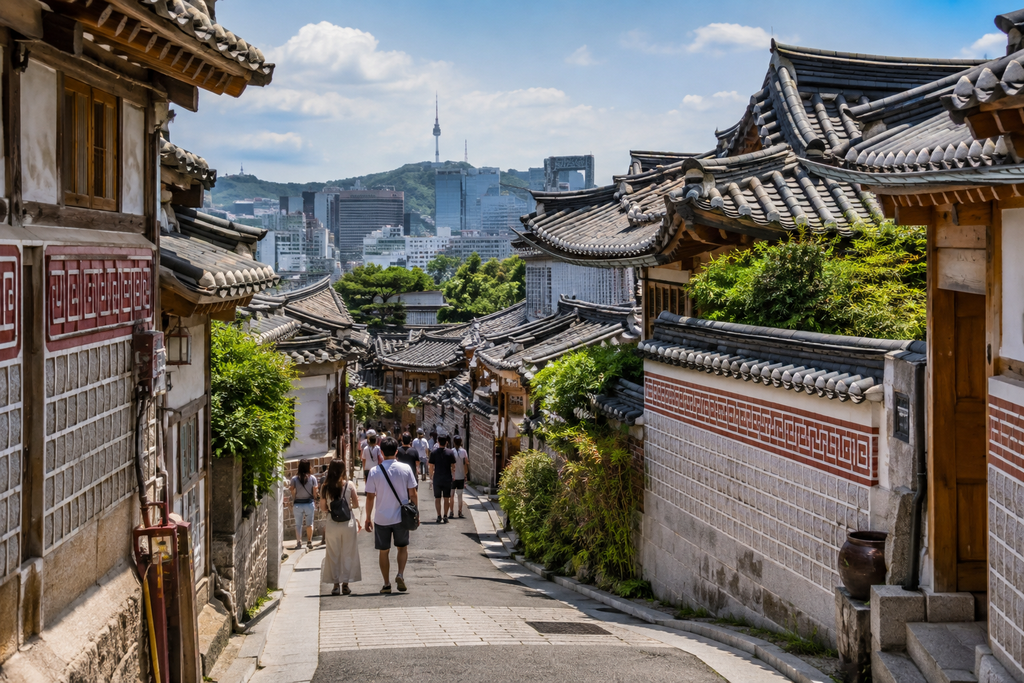
The sloping lanes of Bukchon Hanok Village offer tiled roofs, timber details, and glimpses across the city. They also contain actual homes. Someone behind that handsome door may be trying to work, nap, or carry groceries through a crowd photographing the door.
That changes how you should visit.
A neighborhood has the right to an ordinary afternoon
In the designated red zone around Bukchon-ro 11-gil, tourist visits are restricted to 10 a.m.–5 p.m. Violations can attract a ₩100,000 fine. This is a specific managed area, not a blanket closing time for every nearby street. Read the official Bukchon restrictions and map and obey current signs.
Keep your voice down. Do not lean over walls, enter private courtyards, block doors, or photograph residents without permission. An open gate is not an invitation.
Allow an hour or so, longer if you visit a publicly accessible cultural venue. The slopes and uneven surfaces can be tiring; travelers with mobility needs should map an accessible route rather than follow the crowd uphill.
Afterward, head toward Insadong for tea, galleries, and craft shops. I would spend money on a ceramic cup or something made by an identifiable local maker before another mass-produced souvenir with a flag attached.
Order a tea you have never tried. Ask what it tastes like. Give yourself permission to sit while the cup cools instead of searching for the next photo location.
My Tip: Visit Bukchon after opening, not at dawn. Advice to “beat the crowds” must never override residential access rules.
Anguk Station is a practical starting point for this pairing. Keep the afternoon flexible; craft browsing expands to fill whatever time you give it.
4. Eat Your Way Through Gwangjang Market, One Sensible Order at a Time
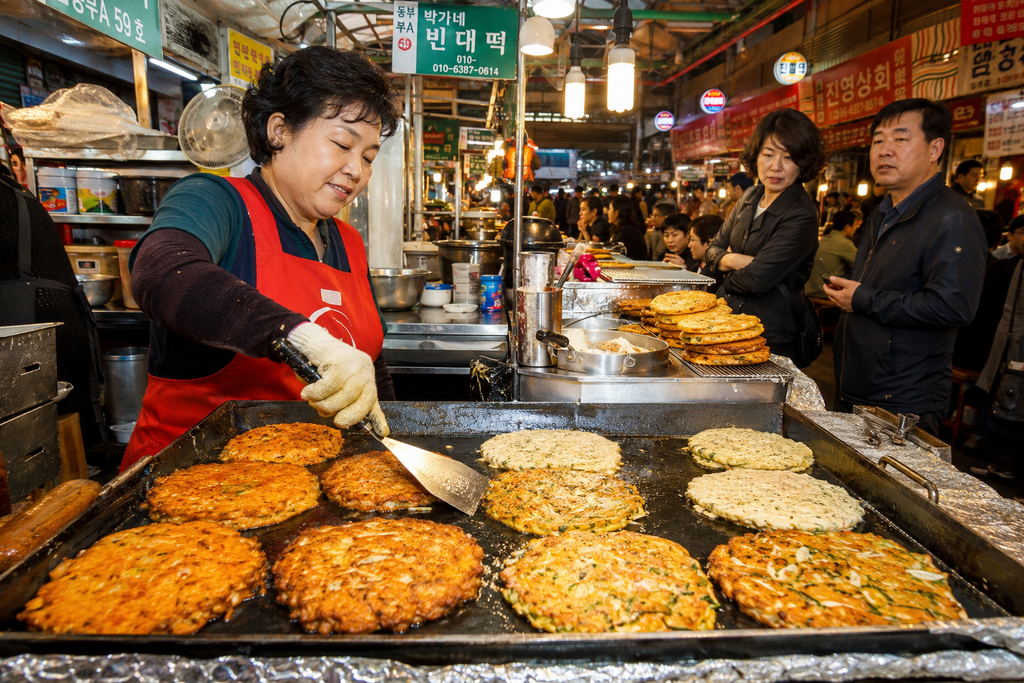
At Gwangjang Market, oil snaps around the edges of pancakes. Metal bowls knock against counters. Steam blurs the space between a cook and a row of waiting stools. Arrive hungry, but resist the temptation to order as though you are provisioning a ship.
The Korea Tourism Organization’s market guide is useful for orientation. Individual stalls keep their own hours; a market opening time does not guarantee your chosen counter is serving.
What I would put on the table
- Bindaetteok: Mung bean pancakes with crisp edges and a softer center. Ingredients vary and can include pork.
- Gimbap: Rice and fillings wrapped in seaweed; smaller rolls make convenient shared bites.
- Tteokbokki: Chewy rice cakes in a sauce that often starts sweet before the chili catches up.
- Kalguksu: Knife-cut noodles, useful when you want a proper bowl instead of another snack.
Budget roughly ₩15,000–25,000 per person for several shared tastes, depending on portions and drinks. This is a planning allowance, not a fixed market menu.
Confirm the price and portion before ordering. Ask whether a displayed price applies to one item, a plate, or a set. Photograph the menu if helpful. Paying attention is less awkward than debating a bill afterward.
For a named starting point, Soonheenae Bindaetteok is listed by the Korea Tourism Organization. It is an option, not a reason to spend your entire lunch waiting in one queue.
My Tip: Start with one savory dish, then reassess. You can always order more. You cannot negotiate extra stomach space.
If unfamiliar ingredients make independent ordering stressful, a GetYourGuide food tour can be useful. Compare the actual tastings, group size, dietary accommodations, and whether drinks are included. Confirm allergies directly before booking.
Find a Seoul food tour that fits your appetite on GetYourGuide
5. Go Up Namsan Before Paying to Go Higher

N Seoul Tower is a landmark you can enjoy in stages. First, get onto Namsan. Then decide whether the paid observatory adds enough to justify the ticket.
The outdoor areas already give you a sense of the city’s size: apartment blocks layered toward distant hills, roads threading through gaps, the river broadening the view. On a hazy day, paying for additional height will not manufacture visibility.
Choose your climb, then your ticket
You can reach the area using walking routes, public transport, or the separately ticketed Namsan Cable Car. These options involve different amounts of walking and waiting. A tower ticket does not automatically cover the cable car.
Standard observatory admission is currently ₩29,000 for adults, with different child and senior rates. Check the official N Seoul Tower prices before comparing discounted offers.
Allow two to three hours, more if you walk uphill, encounter queues, or stay through sunset. Bring an extra layer when temperatures drop; standing still on an exposed viewpoint feels colder than walking between shops.
I would keep this outing weather-dependent. A prepaid, inflexible ticket bought weeks ahead can turn a cloudy afternoon into an exercise in defending your purchase.
My Tip: Compare sunset crowds with an earlier visit. Watching daylight soften is lovely; spending the entire transition in a queue is less compelling.
Check Trip.com for your exact date, then compare the final price, redemption process, cancellation conditions, and inclusions with direct admission.
6. Give Hongdae an Evening Without a Stopwatch
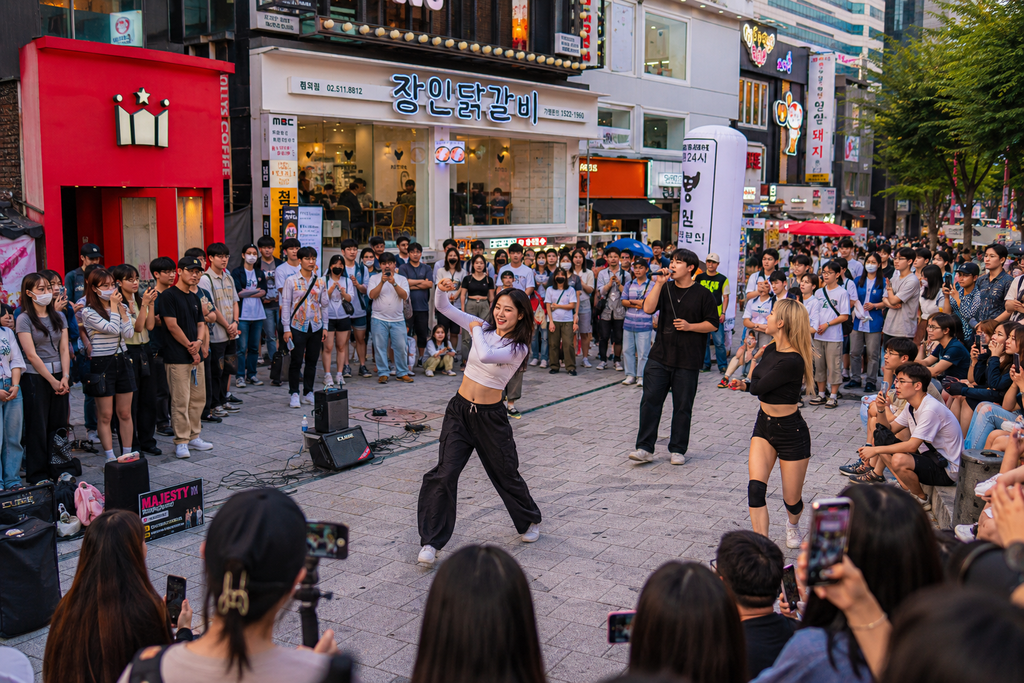
Hongdae is where I would go for a loose evening of music, browsing, food, and possibly karaoke. Around Hongik University Station, the streets shift from clothing shops and restaurants to performances and nightlife.
The city recognizes Hongdae R2 Busking Street as a performance area. What you find depends on the day; a neighborhood is not a show with a guaranteed cast.
Stay for the song, not just the video
If a performance catches you, stop and listen. Keep entrances clear, respect performers’ space, and contribute if you enjoy the set. Filming thirty seconds is easy. Actually paying attention takes marginally more effort.
For a quieter start, explore nearby Yeonnam-dong before heading into the louder streets. Choose a café because you like the menu and atmosphere, not because the dessert has achieved internet recognition.
Later, try a noraebang, a private karaoke room. Check whether pricing is by room, time, or song, and confirm any food or drink minimum. Your friends already know you cannot sing. The room exists to protect strangers from discovering it.
Allow three hours or an evening. Walking and watching cost nothing; dinner, drinks, karaoke, and clubs are separate expenses.
My Tip: Check your last train before ordering another drink. Keep your full hotel address saved in Korean, watch your belongings, and leave overly crowded spaces before they feel difficult to exit.
7. Let the Han River Rescue Your Afternoon

Some of the best things to do in Seoul involve very little doing. Choose a park along the Han River, also called Hangang, and sit down.
Yeouido Hangang Park suits a straightforward riverside break. Banpo Hangang Park is useful if you want to combine that break with the Banpo Bridge Rainbow Fountain when it is operating.
Do not treat separate river parks as neighboring subway exits. Pick one that fits your route instead of trying to collect them all.
The picnic does not need production values
Buy a manageable amount of food, bring a reusable bottle, and find a permitted sitting area. Convenience-store noodles can be fun, but you do not need a delivery app, rented equipment, and an elaborate sunset ceremony to enjoy a riverbank.
The Banpo fountain operates seasonally, with weather and operational cancellations possible. Consult the fountain visitor information and current park notices rather than relying on an old social-media timetable.
Allow one to two hours, longer if you rent a bicycle. Stay out of cycling lanes when walking, and avoid riding if you have been drinking.
My Tip: Pack your rubbish out if bins are full. Leaving a bag beside a bin is still leaving your rubbish behind.
8. Meet a Different Korea at the National Museum of Korea
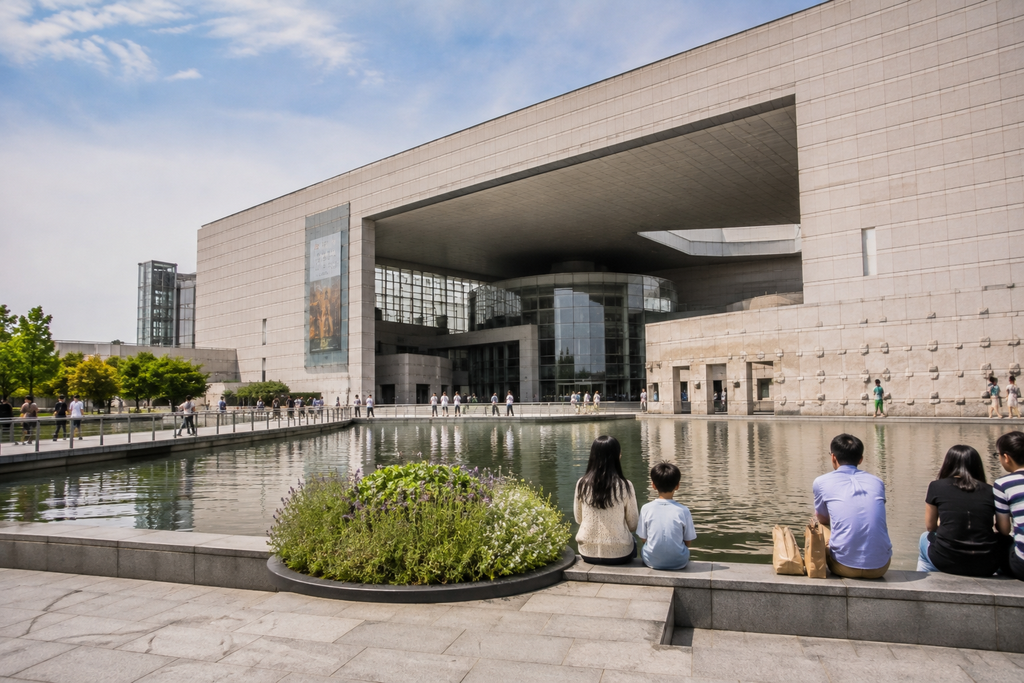
The National Museum of Korea gives the rest of your trip more depth. Palace decoration, ceramics in shop windows, Buddhist imagery: objects that seemed merely attractive begin to acquire context.
I would not attempt every gallery. That is how an interesting morning becomes a slow march past things you no longer have the attention to see.
Pick three interests and follow them
Choose a historical period, a ceramics section, and the Room of Quiet Contemplation, which displays two pensive bodhisattvas. Read the museum’s explanation of the room, then give yourself time to look without reading anything.
There is something useful about meeting an object that does not need you to react immediately. No flashing offer. No countdown. Just a figure deep in thought.
Permanent collection admission is free; special exhibitions may charge separately. Check current museum hours and visitor information. Families should note that the Children’s Museum has a separate reservation system.
Allow two to three hours. Ichon Station is the usual subway approach. Build in a café break if that makes you a more attentive visitor; nobody awards medals for uninterrupted museum attendance.
My Tip: Save this for heavy rain, extreme heat, or poor air quality. An indoor alternative should be something you actively want to do.
9. Follow Seoul City Wall Across Naksan

For a walk that explains the shape of the city, try the Naksan section of Seoul City Wall. The stonework runs beside neighborhoods where daily life continues just below the path.
Pay attention to the wall itself. Changes in the size and arrangement of stones reflect different periods of construction and repair. The view is only half the point.
A city walk with an uphill clause
The official Naksan trail guide describes the route between Hyehwamun Gate and Heunginjimun Gate. Decide where you will join and leave before setting out; “walking the wall” can mean very different distances.
Budget one to two hours for a chosen section with stops. This is more approachable than a full mountain hike, but steps and slopes still matter. Wear shoes with grip, carry water, and avoid icy or slippery stretches.
Late afternoon can work well, provided you leave enough daylight for unfamiliar stairs. After dark, stay on clearly lit public paths and keep voices low near homes.
My Tip: Download your route and choose a turnaround point. You do not have to finish a particular stretch to earn dinner.
10. Browse Myeongdong, Then Walk Beside Cheonggyecheon

Myeongdong is commercial, crowded, and very good at separating shoppers from their budgets. I would still include it on a first visit. Sometimes the obvious shopping district is obvious for a reason.
Go with a short list if you want Korean skincare, clothes, or gifts. Compare pack sizes and unit prices; a large discount sign does not guarantee a useful purchase. The official Myeongdong guide gives the basic layout.
Follow the shopping with some breathing room
Street snacks add to the evening, but convenience and novelty can cost more here. Check prices before ordering, especially if you are buying several items. A snack budget can disappear surprisingly quickly when every snack has a skewer.
After shopping, walk north toward Cheonggyecheon, allowing time for the streets between the district and the stream. The lower paths offer a different perspective on central Seoul, with water moving below road level.
Do not enter closed stream paths or shelter beneath bridges during heavy rain. Water can rise quickly. Follow the city’s Cheonggyecheon safety guidance and posted instructions.
Allow two to three hours for this pairing, depending on your enthusiasm for comparing moisturizer ingredients.
My Tip: Keep receipts and check baggage space before buying in bulk. A bargain that requires an extra suitcase has begun renegotiating the deal.
Book the Useful Things Before the Pretty Things
When to visit Seoul
For walking, I would favor April–May or October–early November. Spring brings flowers and changeable temperatures; fall generally makes long outdoor days more comfortable. Bloom and foliage dates shift annually, so avoid nonrefundable bookings based on a single prediction.
Summer can be hot, humid, and rainy. Winter can be sharply cold, especially beside the river. Read the city’s seasonal climate overview, then check the actual forecast before packing.
My Tip: Build one indoor alternative into every day. The museum is a better response to downpours than arguing with your itinerary.
Where to stay without commuting through your vacation
- Myeongdong or Euljiro: Practical central bases for a first visit, shopping, and multiple sightseeing directions.
- Jongno or Insadong: My preference when palaces, older streets, and walking between cultural sights matter most.
- Hongdae or Yeonnam-dong: Useful for nightlife, cafés, and airport rail access, with street noise worth checking carefully.
- Gangnam: Better when your actual plans are concentrated south of the river; less convenient for repeated palace visits.
On Booking.com, enter your exact dates and occupancy, then use the map before sorting by price. Read recent comments about noise, room size, stairs, and air-conditioning. Check the actual walking route to the station, not simply the distance on a listing.
A refundable rate can be worth paying for while your plans remain uncertain. Compare the cancellation deadline and final total, including taxes and breakfast if you need it.
Find your Seoul base and compare Booking.com rates
From Incheon Airport to your actual hotel
The AREX Express runs nonstop to Seoul Station, taking approximately 43 minutes from Terminal 1 or 51 minutes from Terminal 2. The standard adult one-way fare is ₩13,000. These are train journey times, not airport-to-hotel times. See the official airport transport guide.
The cheaper all-stop airport train may suit you better if you are staying near Hongik University Station. Compare the whole route, including transfers and luggage handling. Airport buses can be convenient when they stop near your accommodation; check Airport Limousine routes and timetables.
For late arrivals, families, or substantial luggage, price a Welcome Pickups transfer. Confirm your airport, terminal, flight number, hotel address, passenger count, luggage allowance, waiting policy, and child-seat needs. Road traffic can change the journey considerably.
Private transfers buy convenience, not a guaranteed faster arrival. Compare the complete quote with public transport for your group.
For flights, compare Trip.com options by baggage, arrival time, layover, and change rules. The cheapest headline fare can lose its appeal after two add-ons.
Compare Seoul flights and total fares on Trip.com
Subway cards, working data, and fewer wrong exits
The standard adult subway base fare using a transport card is ₩1,550, with distance supplements and exceptions. Consult the official subway fares.
A physical Tmoney card usually costs ₩3,000–5,000 before credit. Carry cash for top-ups, and tap when entering and leaving. The official transport-card guide explains the options.

For frequent rides, consider a short-term Climate Card: ₩10,000 for three days or ₩15,000 for five days, plus ₩3,000 for a physical card. Coverage has limits, and validity begins on the charging date. Check the current service area and pass rules, especially for airport journeys.
The airport exception matters: qualifying all-stop journeys can end at Incheon Airport, but you cannot board there using the Climate Card. The AREX Express is separate. A short-term pass also excludes public bicycle rental; read the coverage before assuming everything is bundled.
Use Naver Map for route planning and save your hotel’s Korean address. Leave time for long station corridors and finding the correct exit.
Before buying a Trip.com eSIM, confirm your phone is unlocked and compatible. Compare data allowance, local network, hotspot rules, activation timing, and whether the plan includes calls or only data. “Unlimited” can still involve speed limits.
Follow the purchased plan’s installation instructions and disable unwanted roaming on your home line. Keep the installation details available offline.
Money, insurance, and the rental car question
Carry a backup payment card and some Korean won. Foreign cards are useful but not universally accepted by every terminal or website.
Compare Wise and Revolut against your existing card’s exchange and withdrawal fees. Eligibility, allowances, conversion costs, and account terms vary by country and plan. Local ATM operators can add fees too. Check Wise card guidance and Revolut’s Korea card information.

Choose payment in KRW rather than accepting a terminal’s home-currency conversion. Neither card replaces your transport card, and neither makes every withdrawal free.
Check Wise availability and card costs
Compare Revolut plans for your trip
For insurance, compare VisitorsCoverage plans using your residence, destination, dates, age, and planned activities. Check emergency medical benefits, evacuation, deductibles, exclusions, and cancellation protection separately. Pre-existing conditions are not automatically covered; read the coverage explanation and the actual policy wording.
I would skip a rental car for this city itinerary. If you extend into areas poorly served by transit, check GetRentacar for available vehicles at your actual pickup location. Compare insurance excess, deposits, mileage, parking, and fuel terms. Confirm license and International Driving Permit requirements with the supplier before paying. Availability is not guaranteed.
Check GetRentacar options for a trip beyond Seoul
What a Day in Seoul Actually Costs
These are planning ranges per person per day, including accommodation, meals, local transport, and ordinary sightseeing. They exclude international flights, insurance, major shopping, private transfers, and premium tours.
| Travel style | Daily planning budget | Assumptions |
|---|---|---|
| Budget | ₩70,000–110,000 | Hostel bed, simple meals, public transport, mostly free sights |
| Midrange | ₩140,000–220,000 | Half a shared double room, restaurant meals, paid attractions |
| More comfort | ₩280,000–450,000+ | Higher-category shared hotel, nicer meals, occasional taxis |
Solo travelers using private rooms should add the room cost that a companion would otherwise share. Peak dates, concerts, and holidays can push accommodation well above these ranges.
The small purchases that add up
| Essential | Approximate allowance |
|---|---|
| Simple restaurant meal | ₩10,000–15,000 |
| Casual barbecue meal | ₩25,000–40,000 per person, before substantial drinks |
| Coffee | ₩2,000–6,000 |
| Small bottled water | ₩1,000–2,000 |
| Street snack | ₩3,000–7,000 |
| Hostel bed | ₩30,000–60,000 nightly |
| Midrange double room | ₩130,000–230,000 nightly, room total |
Treat these as estimates, not advertised offers. Read menus and check live room rates. Keep prices in KRW when comparing; your home-currency cost changes with exchange rates and card fees.
My Tip: Give cafés and shopping separate budgets. Otherwise five “small treats” can quietly impersonate an entire day’s spending.
Four Days That Leave Room for Lunch
Day one: Visit Gyeongbokgung, walk through Bukchon during permitted hours, and spend the afternoon in Insadong. Leave the evening easy after travel.
Day two: Book Changdeokgung and Huwon, eat at Gwangjang Market, then walk a chosen Naksan wall section if your legs and the weather agree.
Day three: Explore the National Museum of Korea, take a Han River break, and head to Hongdae for dinner and music. This day involves transit, so avoid extra detours.
Day four: Keep Namsan flexible for visibility, browse Myeongdong, and finish beside Cheonggyecheon if the paths are open.
Swap days around palace closures and reservations. With three days, choose one palace and fewer evening stops. With five, spread out the museums, shopping, and river time rather than immediately adding another destination.
The Details Your Future Self Will Thank You For
Check passport-specific visa and K-ETA requirements through the official K-ETA portal. Temporary exemptions do not apply universally. Travelers required to submit an e-Arrival Card can use the free official service within the permitted three-day window before arrival. Check your eligibility rather than paying an unofficial processing site.
South Korea uses 220V electricity and round-pin outlets. Check device voltage compatibility; a plug adapter does not convert voltage. See the official electricity guidance.
For emergencies, call 112 for police or 119 for ambulance and fire. 1330 provides tourism assistance. Save the emergency contact information before you need it.
Eat confidently, not carelessly
Vegetarian-looking dishes may contain anchovy stock, fish sauce, seafood, or meat. Explain dietary needs clearly and carry a translated allergy card when relevant. Do not assume removing a topping changes the broth.
Solo travelers should check barbecue minimum orders; some restaurants require multiple meat portions. Noodle shops and casual rice dishes are often simpler options when you want dinner without recruiting strangers.
Tipping is generally not expected in ordinary Korean restaurants. Follow the venue’s payment process, keep shared utensils separate where provided, and take your time with unfamiliar food. The official Korean dining guide explains common restaurant customs.
Accessibility needs a route, not a reassuring adjective
If you use a wheelchair, travel with a stroller, or need to limit stairs, confirm the full route: station elevator, street crossing, entrance, bathroom, and return journey. Ask hotels for specific measurements or photographs when necessary. “Accessible” can mean different things to different properties.
Use Seoul’s accessible travel resources and contact attractions directly. Build shorter days around your own energy and mobility. A comfortable museum visit beats an unsuitable hillside route chosen because somebody else called it easy.
Leave the neighborhood better than your picnic spot
Use public transport, combine nearby sights, refill at designated drinking-water points, and bring a reusable shopping bag. Buy less, but buy thoughtfully from local makers and independent businesses.
Order modestly and add more if needed. Respect recycling instructions, avoid disposable picnic equipment when practical, and never leave food for wildlife.
Resident privacy, quiet streets, and fair treatment of workers are part of sustainable tourism. A reusable bottle cannot compensate for treating somebody’s home like a film set.
Two Questions Before You Close Those Browser Tabs
Can I visit Seoul without speaking Korean?
Yes, with preparation. Save addresses, use translation tools, and show written information when pronunciation gets complicated. Learn a polite greeting and thank-you. Never assume every person serving tourists speaks English, and keep requests clear rather than simply louder.
Which Seoul attractions should I book ahead?
Prioritize Huwon timed admission, accommodation, and any particular guided experience you would regret missing. Leave ordinary neighborhood walks and weather-sensitive viewpoints flexible. A full calendar is not proof of a well-planned trip.
Keep One Evening Unclaimed

The temptation with Seoul is to turn your trip into a contest against your saved map. Every district suggests another district. Every meal raises the possibility that a better meal exists two subway changes away. Soon you are sprinting past somewhere interesting because somewhere famous is expecting you.
I would resist that.
Choose the experiences that match your curiosity. Book Huwon if gardens matter to you. Pay for a good food guide if conversation and explanation will improve your evening. Spend extra on a well-located room if it gives you back an hour each day. Save money on viewpoints, river walks, and museums when the free option already delivers what you want.
Before you go, sort your accommodation, arrival route, data, insurance, and a realistic daily budget. Then stop optimizing. You are allowed to return to the same noodle shop. You are allowed to miss a famous café. You are even allowed to sit down without calling it a cultural immersion exercise.
If this guide helped you plan a trip that feels manageable and worth getting excited about, subscribe to A Tiny Traveler. I’ll bring you more practical destination guides, honest planning advice, food discoveries, and useful details that belong in your suitcase before another travel gadget does.
Follow A Tiny Traveler on Pinterest, too, and save this guide to your South Korea travel board. Keep the ideas handy, share them with your travel companion, and come back when it is time to turn those saved places into an actual route.
Leave one evening unclaimed. Somewhere, a pancake is hitting hot oil, a chair is becoming free, and your carefully prepared schedule can wait.


