

Plan a Yerevan trip with honest advice on attractions, hotels, Armenian food, daily costs, transport, safety, day trips, and a four-day itinerary.
The Morning Yerevan Stole My Dignity and Improved My Breakfast
My relationship with Yerevan began with a bakery door that I could not open. I pushed. I pulled. I performed the universal tourist ritual of pretending to read a sign I could not understand. An older man waiting behind me finally tapped the frame and slid the door sideways. No speech, just the faint smile of someone who had watched a grown adult lose an argument with basic carpentry. Five minutes later, I was eating hot gata, dropping buttery crumbs down my shirt, and considering the morning a clear victory.
That episode is a useful introduction to Armenia’s capital. Yerevan explains itself through courtyards, basement taverns, apricot sellers, black-tuff walls, and conversations that begin with directions and end with fruit. The scale is manageable. The history is not: Erebuni Fortress dates to 782 BC.
You can climb the Cascade before breakfast, study manuscripts at the Matenadaran, sit quietly at the Armenian Genocide Memorial, drink strong coffee, and finish with grilled meat scented by charcoal. Still, do not attack the city with a checklist. Leave one evening loose; a quick drink can become cheese, herbs, lavash, and firm advice about tomorrow.
This guide covers where to stay, what to eat, Yerevan trip costs, current transport, a four-day itinerary, and worthwhile day trips. It is for independent travelers—couples, first-time visitors, and solo travelers—who want comfort without surrendering to tourist prices, while knowing what ordinary essentials should reasonably cost.
Yerevan at a Glance, Before Your Browser Acquires 37 Tabs
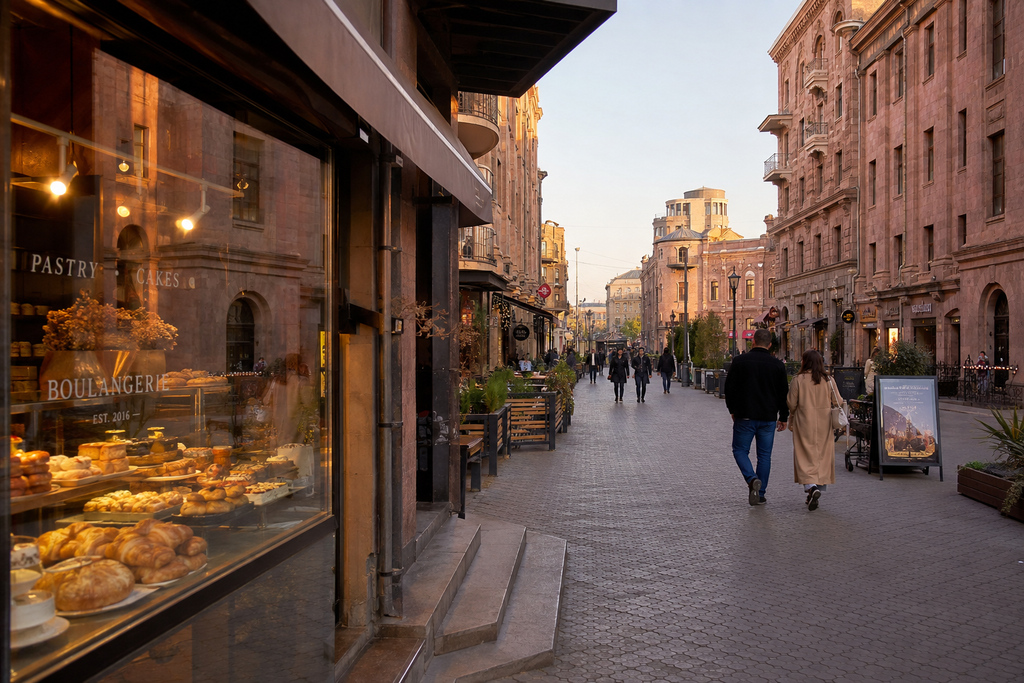
- Country: Armenia
- Language: Armenian; Russian is widely understood, while English is increasingly common in central hotels, restaurants, and tour businesses.
- Currency: Armenian dram (AMD). On September 1, 2026, the official rate was about 364 AMD to US$1; always check the Central Bank of Armenia before converting your budget.
- Ideal stay: Three full days for the city, or four to five days with day trips.
- Best area for a first visit: Kentron, between Republic Square, the Opera, and the Cascade.
- Airport: Zvartnots International Airport (EVN), roughly 12 kilometers from central Yerevan.
- Public transport: 150 AMD for one city ride. Payment is cashless through a bank card, transport card, or the Telcell system.
- Emergency numbers: 112 or 911; police 102; ambulance 103.
- Water: Many locals drink from public stone fountains called pulpulaks. If your stomach is sensitive, start cautiously and use a filtered bottle.
- Plugs: Types C and F, with 230V electricity.
My Tip: Download offline maps, save your hotel’s address in Armenian, and screenshot your first airport route. Mobile data normally works well, but tired brains remain unreliable in every country.
When to Visit Yerevan Without Melting or Becoming a Decorative Icicle
The most comfortable months are usually May, June, September, and early October. Spring brings cafe terraces, green hills on day trips, and occasional rain that arrives without consulting your itinerary. Autumn gives you warm afternoons, cooler evenings, grapes, pomegranates, and market tables that look as though someone spilled a paint box.
July and August can be brutally hot. Average summer conditions may sit anywhere from about 72°F to 97°F (22°C to 36°C), and stone plazas store heat like personal resentment. Plan outdoor sights before 11:00 a.m., retreat for lunch, then reappear after 5:00 p.m. This rhythm is not laziness. It is sound thermodynamics.
Winter is cold, dry, and quieter. Snow in central Yerevan is usually lighter than travelers expect, although nearby mountains tell a different story. Hotel prices may be kinder, museums are peaceful, and bowls of spas suddenly make perfect sense. Pack proper soles: polished stone and icy sidewalks have ended finer-looking walks than yours.
One date deserves warning: Vardavar, usually held in summer, turns the city into a water fight. Children, grandparents, and suspiciously well-equipped teenagers soak strangers in the street. Protect cameras and passports. Resistance is largely ceremonial.
Entry Rules, Flights, and the Paperwork Nobody Wants to Discuss Over Dinner
Visa requirements depend on your nationality and passport. Many nationalities receive visa-free stays of up to 180 days per year, while others need an e-visa or an invitation. Check the Armenian Ministry of Foreign Affairs visa tool and use only the official Armenia e-visa portal.
A temporary rule running from July 1, 2026, to July 1, 2027 also exempts nationals of 111 countries who hold qualifying residence permits from certain listed countries, subject to conditions. Do not assume a friend’s entry experience applies to your passport.
COMPARE FLIGHTS TO YEREVAN ON TRIP.COM
Overland travelers commonly arrive from Georgia, by bus, shared transfer, or a seasonal overnight train. Schedules change; check the official South Caucasus Railway before building a trip around it.
Do not improvise near international borders. Regional conditions can change quickly, and the land borders with Turkey and Azerbaijan should not be treated as ordinary tourist crossings.
From Zvartnots Airport to Central Yerevan
Bus 100 runs between the airport and the center. The official airport lists a fare of 500 AMD, departures every 30 minutes from 6:50 a.m. to 10:00 p.m., and hourly service overnight. You can pay by Visa, Mastercard, or an approved QR ticket.
Elitebus 201 is listed at 300 AMD, generally every 30 minutes from 7:00 a.m. to 10:00 p.m., paid in Armenian cash. Confirm both on the official airport transport page.
A ride-hailing car to Kentron often costs roughly 3,000–6,000 AMD, depending on traffic, demand, and pickup point. Avoid negotiating with random drivers while sleep-deprived. Use the official desk, a recognized app such as GG or Yandex Go, or a prebooked transfer.
Where to Stay in Yerevan: Choose Your Street, Not Just Your Thread Count

Republic Square and Central Kentron
For a first trip, this is the easiest base. You can walk to Republic Square, Vernissage Market, the History Museum of Armenia, Northern Avenue, and dozens of restaurants.
The trade-off is price and occasional evening noise. Check whether your room faces the street, especially in warm months when terraces operate late.
Opera, Cascade, and Tamanyan Street
This area suits cafe people, design people, and anyone who wants the Cascade available for spontaneous sunset attempts. It feels polished without becoming sterile.
You remain within walking distance of the center, while Lovers’ Park and the Matenadaran are close. Hills begin here, so “five minutes away” may contain an unsympathetic incline.
Saryan Street, Pushkin Street, and the Wine-Bar Belt
Stay here if dinner matters as much as sightseeing. Saryan Street has become the city’s wine corridor, while Pushkin Street offers restaurants, bars, and handsome old buildings.
Weekends can be noisy. Read recent guest comments instead of trusting a hotel’s poetic use of “lively neighborhood.”
Arabkir
Arabkir is more residential, usually better value, and useful for longer stays. You will rely more on buses or taxis, but you gain supermarkets, neighborhood bakeries, and less tourist traffic.
Choose a property near a useful transport line rather than saving money on a room that turns every outing into a commute.
FIND A WELL-RATED YEREVAN HOTEL ON BOOKING.COM
What a Yerevan Trip Costs in 2026
Prices below are realistic planning ranges in September 2026, not divine commandments. Festival weekends, summer demand, room style, and your relationship with Armenian wine will move the total.
| Expense | Typical price |
|---|---|
| Hostel bed | 7,000–16,000 AMD |
| Simple private room | 18,000–35,000 AMD |
| Comfortable central hotel | 35,000–75,000 AMD |
| Upscale hotel | 80,000 AMD and up |
| City transport ride | 150 AMD |
| Airport Bus 100 | 500 AMD |
| Central taxi ride | 700–1,800 AMD |
| Coffee | 900–1,600 AMD |
| Quick lunch or lahmajo | 1,500–3,000 AMD |
| Inexpensive restaurant meal | 3,000–5,000 AMD |
| Dinner with drinks | 7,000–15,000 AMD per person |
| Major museum ticket | 1,500–2,500 AMD |
| Small bottle of water | 200–350 AMD |
For a solo traveler including accommodation, I would plan 25,000–40,000 AMD (about US$69–110) per day on a careful budget, 50,000–90,000 AMD (US$137–247) for comfortable central travel, and 110,000 AMD (US$302) or more for an upscale hotel, private transfers, and serious dinners. Couples sharing a room normally reduce the per-person total.
Cards are common in central Yerevan, but carry small dram notes for markets, older taxis, church donations, and rural stops.
When a terminal asks which currency to use, choose AMD and decline dynamic currency conversion. Let your own card provider make the exchange.

GET A REVOLUT CARD FOR SPENDING IN ARMENIAN DRAM
COMPARE WISE CARD CONVERSION AND WITHDRAWAL FEES
Getting Around Yerevan Without Accidentally Touring the Ring Road
Central Yerevan is walkable, though sidewalks can be uneven and drivers may treat painted crossings as philosophical suggestions. Make eye contact, wait for vehicles to stop, and avoid stepping into the street while admiring architecture.
The Yerevan Metro has one main line and only ten stations, but it is fast, inexpensive, and useful for Republic Square, Yeritasardakan, Marshal Baghramyan, and Sasuntsi Davit railway station.
Buses and trolleybuses cover much more ground. A single ride costs 150 AMD under the unified system. Single-use paper QR tickets were phased out; visitors can use an accepted contactless bank card, a reusable transport card, or the Telcell app. Check current packages at Yerevan Transport.
For routes, Yandex Maps is often more helpful than Google Maps for live public transport. GG and Yandex Go are widely used for cars. Enter the destination in the app and check the plate before getting in.
If you rent a car, save it for trips outside the capital. Parking, aggressive lane changes, and cryptic intersections make central driving an unnecessary character-building seminar.
Confirm the deposit, mileage, insurance exclusions, tire coverage, fuel policy, roadside assistance, and permission for unpaved roads. Ask whether your license needs an International Driving Permit. Never assume cross-border travel is included.
Accessibility note: Yerevan is improving, but curb cuts, elevators, sidewalks, and accessible bathrooms remain inconsistent. Confirm the exact room, entrance, and vehicle with providers. At the Cascade, indoor escalators reduce the climb, but they do not solve every wheelchair-access issue between outdoor levels.
The Best Things to Do in Yerevan
1. Let Republic Square Introduce the City Properly

The buildings around Republic Square use pink and cream volcanic tuff, giving the center a warm, dusty color that shifts through the day.
Come once in the morning, when workers cross the plaza and tour groups are still locating their guides, then return after dark when families take over. Seasonal musical fountain schedules vary, so treat the show as a bonus rather than the basis of an evening.
The History Museum of Armenia is the square’s intellectual anchor. Its collections move from prehistoric artifacts through Urartian, medieval, and modern history.
As currently listed, adult admission is 2,500 AMD; it opens Tuesday–Saturday, 11:00 a.m.–6:00 p.m., and Sunday, 11:00 a.m.–5:00 p.m., with last entry earlier. Verify on the museum’s official hours page.
2. Climb the Cascade, but Do Not Make It a Fitness Test
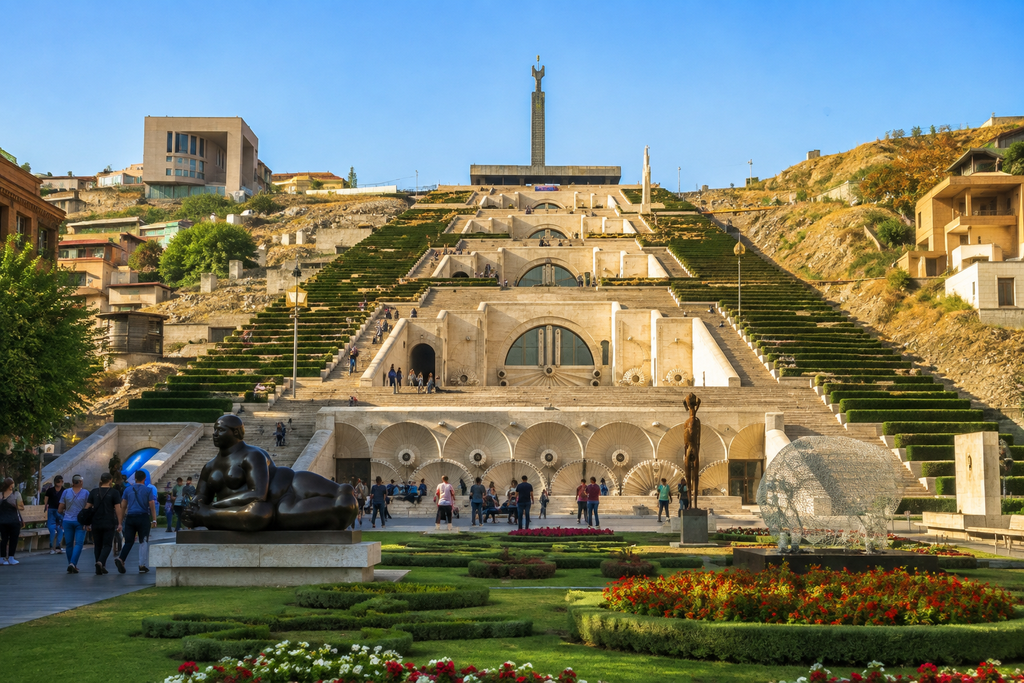
The Cascade Complex is part staircase, part garden, part contemporary-art museum, and part civic living room.
At its base, the Cafesjian Sculpture Garden scatters large works among clipped lawns and cafe tables. Inside, escalators travel through galleries, allowing you to pause at outdoor terraces instead of climbing every step in one heroic, sweaty campaign.
Go in the morning for quieter art, or about an hour before sunset for long light across the city. Mount Ararat appears only when haze and clouds cooperate. It owes you nothing.
The outdoor spaces are free; gallery schedules can change, so check the Cafesjian Center for the Arts before visiting.
My favorite moment came halfway up, when I turned around expecting the famous mountain and saw only gray haze. A local man beside me shrugged and said, “Tomorrow.” Then he offered me sunflower seeds. That small exchange felt more truthful than the view I had planned.
My Tip: Use the indoor escalators for the ascent, stop at each terrace, and walk down outside. Your knees receive art and mercy in equal measure.
3. Read a Civilization at the Matenadaran

The Matenadaran, officially the Mesrop Mashtots Institute of Ancient Manuscripts, holds illuminated gospels, medical texts, maps, legal works, and fragments that survived war, migration, fire, and ordinary human carelessness.
You do not need to be a manuscript scholar. The pigments, handwriting, marginal drawings, and bindings make the pages feel physically alive.
The museum currently opens Tuesday–Saturday, 10:00 a.m.–5:50 p.m., and closes Sunday, Monday, public holidays, and remembrance days. Standard admission is commonly 2,000 AMD.
Check official hours and tickets. A guide is worth paying for because labels cannot fully explain why a particular page matters.
4. Give Tsitsernakaberd the Time and Conduct It Deserves

The Armenian Genocide Memorial and Museum at Tsitsernakaberd is essential, difficult, and not something to squeeze between lunch and cocktails.
The memorial’s twelve stone slabs lean around an eternal flame. The museum below documents the destruction of Armenian communities in the Ottoman Empire through photographs, testimony, documents, and personal objects.
Allow two hours, more if you read carefully. Speak quietly, dress respectfully, and put the performative selfie routine away.
Admission is free, with donations welcomed. Hours change by season: see the official visitor page. The museum is closed on Mondays and selected holidays.
5. Bargain Gently at Vernissage Market

At Vernissage Market, tables carry carved chess sets, silver jewelry, ceramics, carpets, old cameras, Soviet medals, paintings, duduks, and enough pomegranate-shaped objects to furnish a small kingdom.
Weekends bring the largest selection. Go before late afternoon; individual sellers keep their own hours.
Ask before photographing people or close-up merchandise. Bargaining is possible, but this is not combat. If an artisan explains how something was made, listen. The cheapest object is rarely the best souvenir.
For carpets, antiques, or items that may have export restrictions, request documentation and professional advice.
My Tip: Buy from the person who made the object when possible. A short conversation gives the souvenir a life beyond airport security.
6. Eat Your Way Through GUM Market
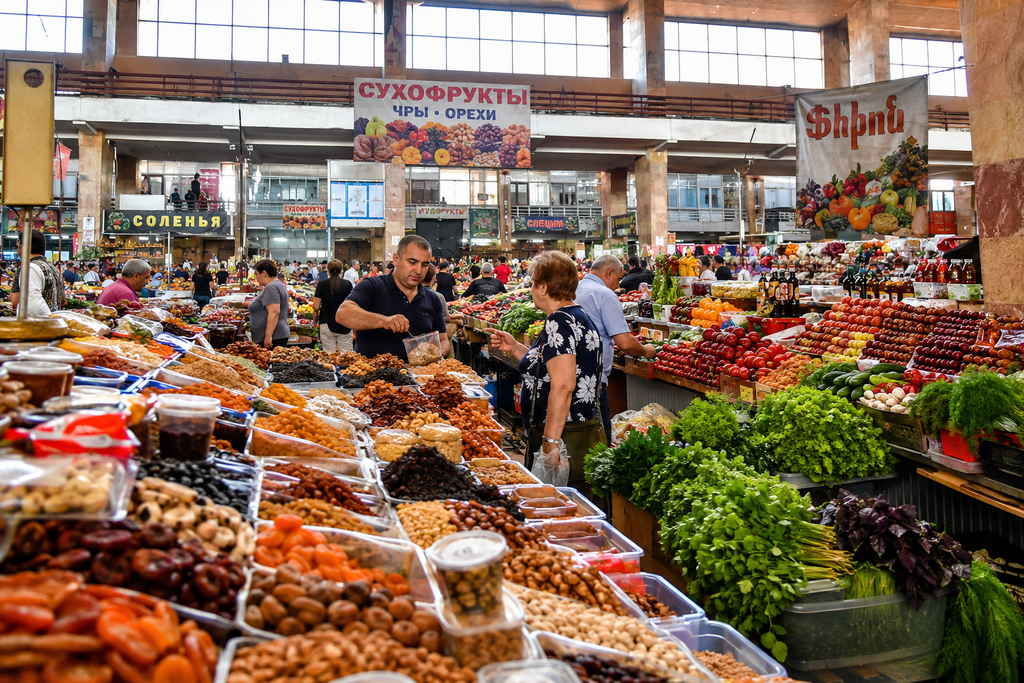
GUM Market, also called Pak Shuka, smells of dried apricots, spices, herbs, cured meat, and fresh lavash.
Vendors stack walnuts inside grape-molasses ropes called sujukh, arrange fruit leather like colored glass, and offer samples with the focus of trained negotiators. The most reliable visiting window is roughly 10:00 a.m.–4:00 p.m., though departments vary.
Try before buying, compare several stalls, and ask the price per kilogram. Bring a reusable bag.
Dried peaches, sour lavash, herbal tea, and vacuum-packed cheese travel more successfully than the ambitious bunch of tarragon you will briefly consider.
7. Find the Older, Rougher City in Kond

Kond sits above the center in a knot of lanes, low houses, patched walls, and stairways that reject straight lines.
It is one of Yerevan’s oldest surviving neighborhoods, but do not treat it as an abandoned film set. People live here. Keep voices down, avoid photographing through windows, and ask before taking portraits.
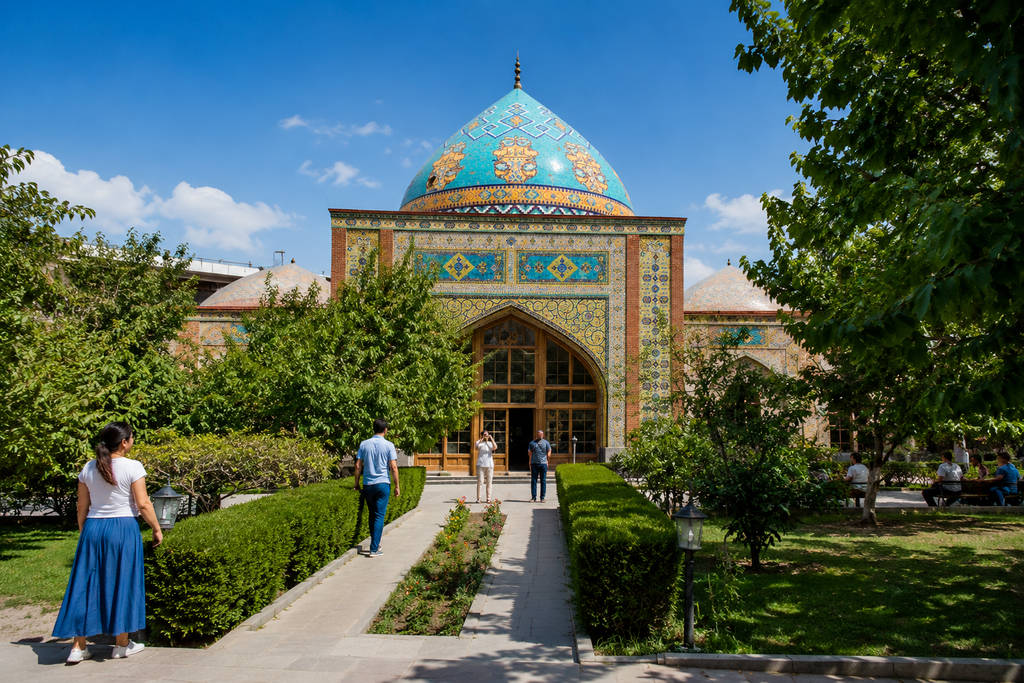
Walk in daylight, wear shoes with grip, and combine the neighborhood with the nearby Blue Mosque.
The mosque’s quiet courtyard, blue tilework, roses, and single minaret offer a different layer of the city’s Persian history. Visitor access pauses for prayer; dress modestly and follow instructions at the entrance.
8. Go Back to 782 BC at Erebuni Fortress
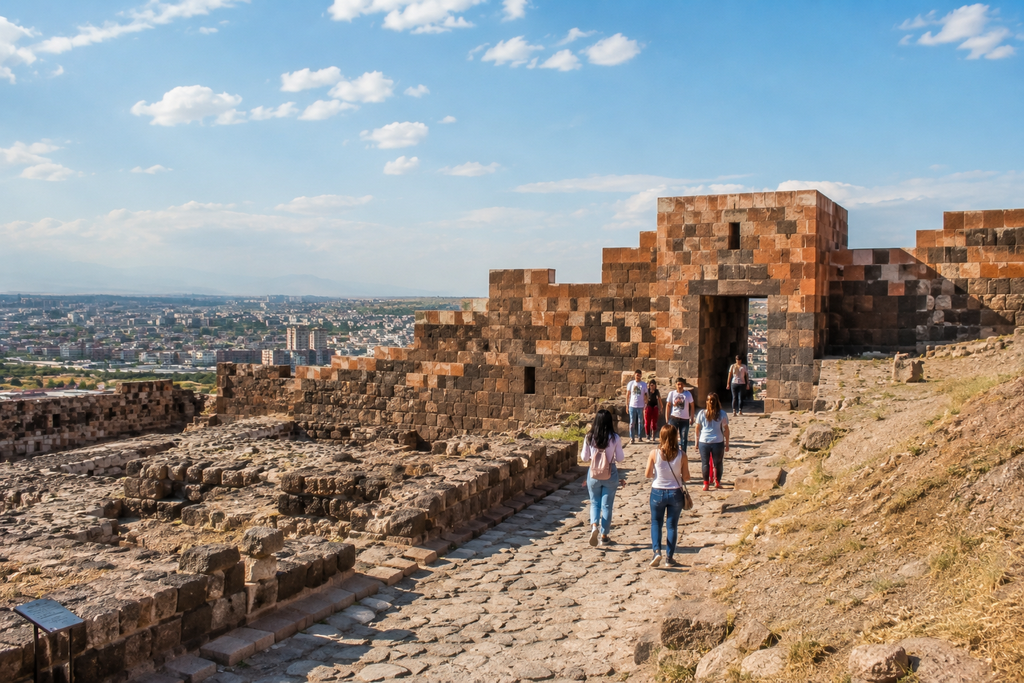
On Arin Berd Hill, Erebuni Fortress marks the official beginning of Yerevan. King Argishti I of Urartu founded it in 782 BC, recording the event in cuneiform.
The museum at the foot of the hill displays pottery, weapons, ornaments, fresco fragments, and inscriptions; the exposed citadel above makes more sense after you see them.
The museum currently lists Tuesday–Sunday, 10:30 a.m.–4:40 p.m., with adult admission of 1,500 AMD. Confirm at the official museum listing.
Bring water and sun protection. The hill has little shade and wind that can turn hats into independent travelers.
9. Follow Abovyan Street, Then Disobey the Straight Line
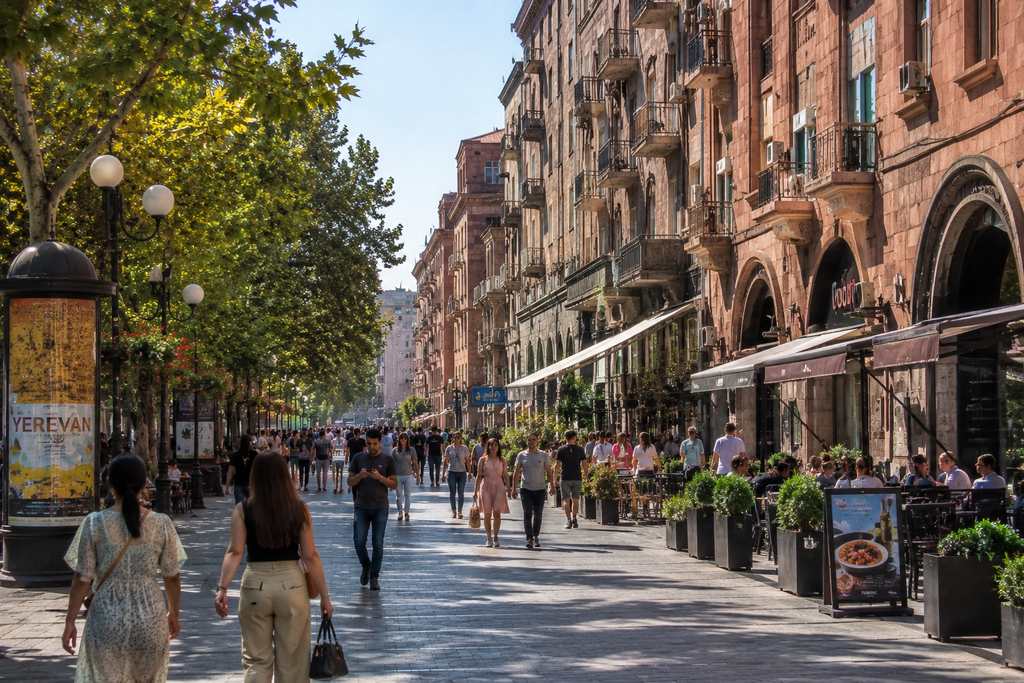
Walk Abovyan Street for facades, courtyards, cafes, and older fragments hiding between newer buildings.
Detour through Charles Aznavour Square, Northern Avenue, the Opera House, and Swan Lake. Then leave the ceremonial route. The smaller cross streets around Pushkin, Tumanyan, and Aram hold galleries, bakeries, bars, and entrance passages that reward curiosity.
Look for Dalan Art Gallery and Restaurant behind an easily missed doorway on Abovyan Street. Even if you do not eat, the courtyard and contemporary Armenian craft displays are worth a pause.
This is how Yerevan works: respectable frontage, then an entire second personality behind it.
10. Spend an Evening on Saryan Street

Armenia has one of the world’s oldest winemaking histories, and modern producers are giving local grapes fresh attention.
Saryan Street is the easiest introduction. Start with a tasting flight at In Vino, ask for indigenous varieties such as Areni Noir, Voskehat, or Kangun, and let the staff explain regions before ordering bottles by label artwork.
Beer drinkers can try Dargett; photography and courtyard people should investigate Mirzoyan Library.
For brandy, visit the ARARAT Museum only if you genuinely enjoy spirits; a tasting at 11:00 a.m. is cultural research until the second glass, when it becomes a scheduling error.
What to Eat in Yerevan, and Why Napkins Matter
Begin with lavash, the thin flatbread baked against the wall of a clay tonir. Fresh from the oven, it is soft, blistered, and faintly smoky.
Wrap it around salty cheese and handfuls of tarragon, basil, and cilantro. This simple combination can make an expensive tasting menu feel needlessly nervous.
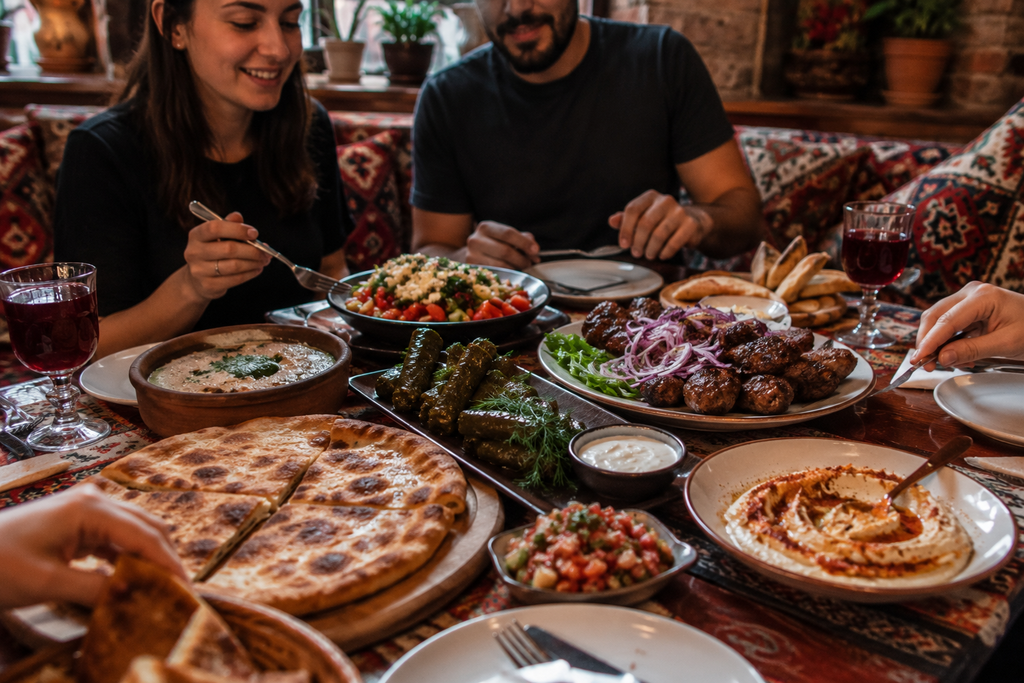
Order khorovats, Armenian barbecue cooked over coals; pork is common, though lamb, chicken, vegetables, and mushrooms all appear.
Good khorovats arrives with blackened edges, sweet onion, herbs, and juices that immediately defeat the structural integrity of your bread.
Dolma brings minced meat and rice wrapped in grape leaves or vegetables. Spas is a tangy yogurt-and-wheat soup, served hot, with herbs and a texture halfway between comfort and repair.
Try lahmajo for a quick meal: thin dough spread with minced meat, tomato, pepper, and herbs, baked until the rim crackles. Add lemon, roll it, and accept that your first attempt may leak.
Ghapama is pumpkin filled with rice, dried fruit, nuts, and spices. Jingalov hats, associated with Artsakh, stuffs bread with a fragrant pile of greens. Finish with flaky gata, apricots, mulberry fruit leather, or sujukh.
For breakfast and traditional dishes, Lavash Restaurant is reliable and lets you watch bread being baked. Gata Tavern leans into Armenian comfort food.
Dolmama offers a more polished interpretation; current menu prices place soups around 2,500–4,500 AMD before service and drinks. Sherep has an open kitchen and a broad menu near Republic Square. Dalan works well for a courtyard lunch.
For a cheaper bite, look for busy neighborhood lahmajo shops and order what is moving fastest.
Vegetarians can eat well with salads, grilled vegetables, beans, cheese, herbs, lentils, spas, and jingalov hats, but confirm whether broths or dolma contain meat.
Vegans should learn “arants mis” (without meat) and ask about butter, yogurt, and eggs rather than assuming.
A Four-Day Yerevan Itinerary That Leaves Space for Lunch
Day 1: Pink Stone and First Impressions
Start at Republic Square before traffic thickens, then visit the History Museum of Armenia.
Walk up Abovyan Street, detour through Dalan, cross Northern Avenue, and pause at the Opera House.
Continue to the Cascade in late afternoon, using the indoor escalators and walking down outside. Eat on Tumanyan Street or Saryan Street.
Do not schedule anything after dinner; let the evening expand.
Day 2: Manuscripts, Markets, and Memory
Reach the Matenadaran at opening and consider a guided visit.
Walk or ride to Vernissage Market, browse without rushing, then continue to GUM Market for dried fruit and a casual lunch nearby.
Spend the later afternoon at Tsitsernakaberd. Keep the evening gentle afterward—coffee, a quiet meal, perhaps a walk around Republic Square.
Day 3: Garni, Geghard, and the Sound of Stone
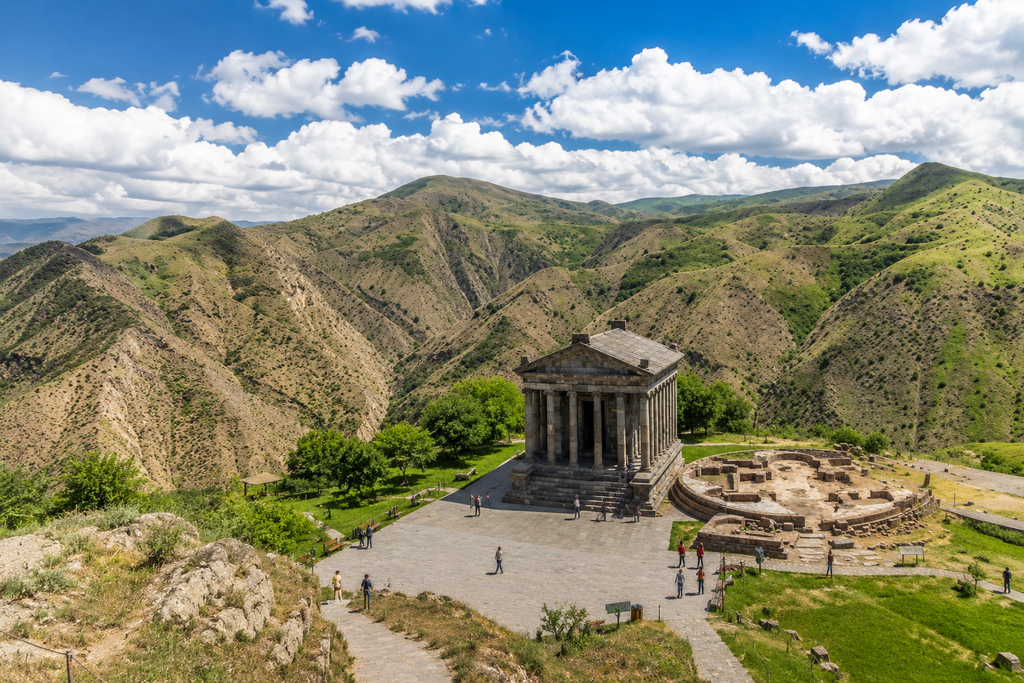
Take a guided day trip to the classical Temple of Garni, the basalt columns of the Symphony of Stones, and Geghard Monastery.
Much of Geghard is carved into rock, and the acoustics inside its chambers can stop a group mid-shuffle. A lavash-baking demonstration adds context rather than merely carbohydrates.
Return to Yerevan for a late dinner.
BOOK A GARNI AND GEGHARD DAY TRIP WITH GETYOURGUIDE
Compare group size, actual entrance fees, meal inclusions, pickup location, walking demands, and cancellation terms.
The cheapest tour can become the longest day if it collects passengers from twelve hotels.
Day 4: Erebuni, Kond, and a Proper Farewell Meal
Take a taxi or bus to the Erebuni Museum, then climb the fortress hill.
Return to the center for lunch before exploring Kond and the Blue Mosque in daylight.
Finish with Armenian wine and a dinner built for sharing. Order one fewer dish than enthusiasm suggests. Armenian portions are excellent negotiators and usually win.
The Best Day Trips from Yerevan
Garni and Geghard make the strongest first day trip. Geghard Monastery and the Upper Azat Valley are UNESCO World Heritage listed, while Garni adds a rare colonnaded classical temple and broad gorge views.
Choose Khor Virap, Areni, and Noravank for monasteries, wine, and a longer road day.
Khor Virap can deliver the classic Mount Ararat view when weather cooperates; Noravank sits among red cliffs; Areni introduces the country’s wine region. Do not promise yourself clear mountain views or wine-tasting restraint.
Choose Lake Sevan and Dilijan for water, forest, and a break from the capital’s heat. Temperatures can drop quickly near the lake, so bring a layer even when Yerevan feels like an oven.
For church architecture, combine Etchmiadzin and Zvartnots, whose cathedral, churches, and archaeological remains form another UNESCO World Heritage property.
Staying Connected, Insured, and Mildly Organized
Local networks include Viva, Ucom, and Team Telecom Armenia. Airport shops sell physical SIMs, generally requiring passport registration.
An eSIM is easier if your phone supports it and is unlocked; install it before departure, but activate it according to the provider’s instructions.
COMPARE ARMENIA eSIM PLANS ON TRIP.COM
Check the data allowance, validity clock, hotspot rules, underlying network, and whether the plan includes calls or only data.
Keep the QR code somewhere other than the phone that needs it. A screenshot inside the same inaccessible email account is not a backup.
Travel insurance matters beyond lost luggage. Day trips involve mountain roads, hiking surfaces, and areas where medical evacuation can be expensive.
Read policy wording for pre-existing conditions, altitude, alcohol exclusions, rental-car excess, electronics, delays, and regional advisories.
Is Yerevan Safe? The Honest, Unpanicked Version
Crime levels in Yerevan are generally low, but pickpocketing, bag theft, card fraud, and poorly lit streets still exist.
Use ATMs inside banks, watch drinks, keep your phone away from the road edge, and order cars through an app. Solo travelers should share live trip details with someone they trust and avoid accepting unregistered rides.
The larger concern is regional security, not ordinary city sightseeing.
The current U.S. travel advisory advises increased caution in Armenia and advises against travel to the border region with Azerbaijan. The UK FCDO also advises against travel on certain roads near the border.
Read both the U.S. Armenia advisory and your own government’s current advice immediately before traveling. Conditions and road restrictions can change.
Public demonstrations occur in central Yerevan. They are often peaceful, but routes can close, and crowds can change character. Stay back, follow local instructions, and do not treat a political gathering as travel content.
Respect churches by covering shoulders and knees when requested, speaking softly, and never interrupting a service for photographs.
At the Blue Mosque, observe prayer access rules. When discussing history or regional politics, listen more than you perform. People here may have direct family experience of war, displacement, or loss.
Sustainable Travel Tips That Do More Than Save a Towel
- Refill a bottle at pulpulaks when you are comfortable with the water, reducing single-use plastic.
- Walk central Kentron, use the metro and trolleybuses, and group distant sights by neighborhood.
- Buy crafts directly from makers at Vernissage and food from independent stalls at GUM Market.
- Stay longer. Four nights with one thoughtful day trip usually supports more local businesses than a rushed two-night checklist.
- Ask before photographing residents, workshops, religious rituals, or market sellers.
- Carry a reusable bag and refuse unnecessary layers of souvenir packaging.
- Use marked trails, take litter home, and never carve names into monastery stone. Your initials are not an archaeological layer.
- Choose small-group tours that state how local guides and communities are paid.
My Tip: The most sustainable purchase is often the thing you will still use in five years: a small ceramic bowl, a scarf, a book, or a properly made wooden object—not twelve plastic magnets staging a coup in your kitchen drawer.
Quick Yerevan FAQ
Is Yerevan expensive?
Yerevan remains good value compared with many European capitals, but central hotels and fashionable restaurants are not automatically cheap.
A careful solo traveler can manage around 25,000–40,000 AMD per day, while a comfortable trip commonly needs 50,000–90,000 AMD including accommodation.
How many days do I need in Yerevan?
Allow three full days for the capital. Add at least one day for Garni and Geghard.
With five days, you can include a second excursion without turning every meal into a refueling stop.
Can I use credit cards?
Yes, cards work widely in central hotels, restaurants, supermarkets, and museums.
Carry cash for markets, rural stops, donations, and backup. Always choose to pay in AMD.
Do I need a car?
Not in central Yerevan. Walk, use public transport, and take app-based cars.
Rent only for a self-guided trip beyond the city, after checking insurance, road conditions, and license requirements.
Is English widely spoken?
You can manage in English in the tourism center, especially with younger staff. Outside it, Armenian or Russian becomes more useful.
Learn barev (hello) and shnorhakalutyun (thank you). The second word is long; effort earns goodwill even when pronunciation requires roadside assistance.
What should I book in advance?
Book your hotel, late-night airport transfer, popular small-group tours, and special restaurants during summer or festival weekends.
Museums generally do not require advance tickets, but guided visits may.
The Part Where Yerevan Refuses a Neat Ending
On my last evening, I returned to the Cascade with no plan beyond sitting down. Children chased a ball between sculptures. Two men argued amiably over a backgammon board.
Somewhere behind me, a coffee grinder started, stopped, then started again. Mount Ararat was still mostly hidden. Naturally.
The city had spent several days teaching me that the thing you expected to see is not always the thing you remember.
You may remember the blue tiles of the Blue Mosque, the weight of the silence at Tsitsernakaberd, or gold pigment on a manuscript page.
More likely, memory will keep something smaller: hot lavash collapsing around cheese and herbs, cold water from a stone fountain, a vendor adding three apricots to your bag after the transaction was finished, or the exact moment evening loosened everyone’s shoulders around Republic Square.
Plan the essentials. Reserve a room in a neighborhood you can enjoy on foot. Buy insurance you have actually read. Book one good day trip.
Then leave enough blank space for Yerevan to interfere.
That is where the city is strongest—not as a collection of landmarks, but as a long table where another plate keeps appearing after you were certain dinner was over.
If this guide helped you plan, subscribe to A Tiny Traveler for honest city guides, realistic budgets, food worth loosening a belt for, and itineraries designed by someone who believes sitting down counts as travel.
Then follow A Tiny Traveler on Pinterest and save this article to your Armenia travel board.
More practical Caucasus travel guides, route ideas, hotel advice, and mildly embarrassing bakery incidents are on the way.
Now tell me: Would you spend your extra day at Lake Sevan, among the monasteries of Vayots Dzor, or back in Yerevan ordering “just one more” plate?
Frank


